Here’s the fix that made the biggest difference for me — and it costs nothing. Stop trimming your nails by feel. Before neuropathy, most of us clipped our fingernails half-watching the TV, letting our fingertips tell us where the nail ended and the skin began. Once those fingertips go numb or fuzzy, that signal is gone. Your eyes have to do the job your fingers used to do.
Everything else on this page grows out of that one change. Better light. Smaller cuts. A way to check the edge that doesn’t depend on your fingertips. Leaving the cuticles alone. And knowing what a nick that’s turning into an infection looks like — because you may not feel it happen.
A note on where this comes from. I couldn’t find any medical body that publishes fingernail advice written for people with neuropathy. So I’ve stitched it together from the American Academy of Dermatology’s nail-care guidance, the NHS, Cleveland Clinic, the American Cancer Society and the National Cancer Institute, plus two groups that teach daily-living skills to people with low vision or tremor. I’m a patient advocate, not a nurse or a doctor, so treat this as a sensible routine, not an official protocol.
Why Numb Fingertips Change the Job
The National Cancer Institute lists “inability to feel pain, such as from a cut or sore” among the signs of nerve damage. Its example is the foot, and the NHS makes the same point about stepping on something sharp. Fingers work the same way. If the clipper bites into skin, you might not flinch — and you might not notice until you see a bead of blood a few minutes later.
That matters because the skin around a fingernail is a common way in for germs. Cleveland Clinic explains that paronychia, an infection of the skin fold around the nail, usually starts when bacteria get in through small cuts in the cuticle or the nail fold. Most of those infections are caused by staph.
Diabetes raises the stakes a little more. The American Diabetes Association says people with diabetes get more bacterial infections than other people, and it names infections around the nails on its list. High blood sugar also dries the skin and weakens its defenses. Poor circulation, including cold hands, can make healing slower too.
None of this means you can’t trim your own nails. It means you trim them differently.
Set Up Before You Pick Up the Clippers
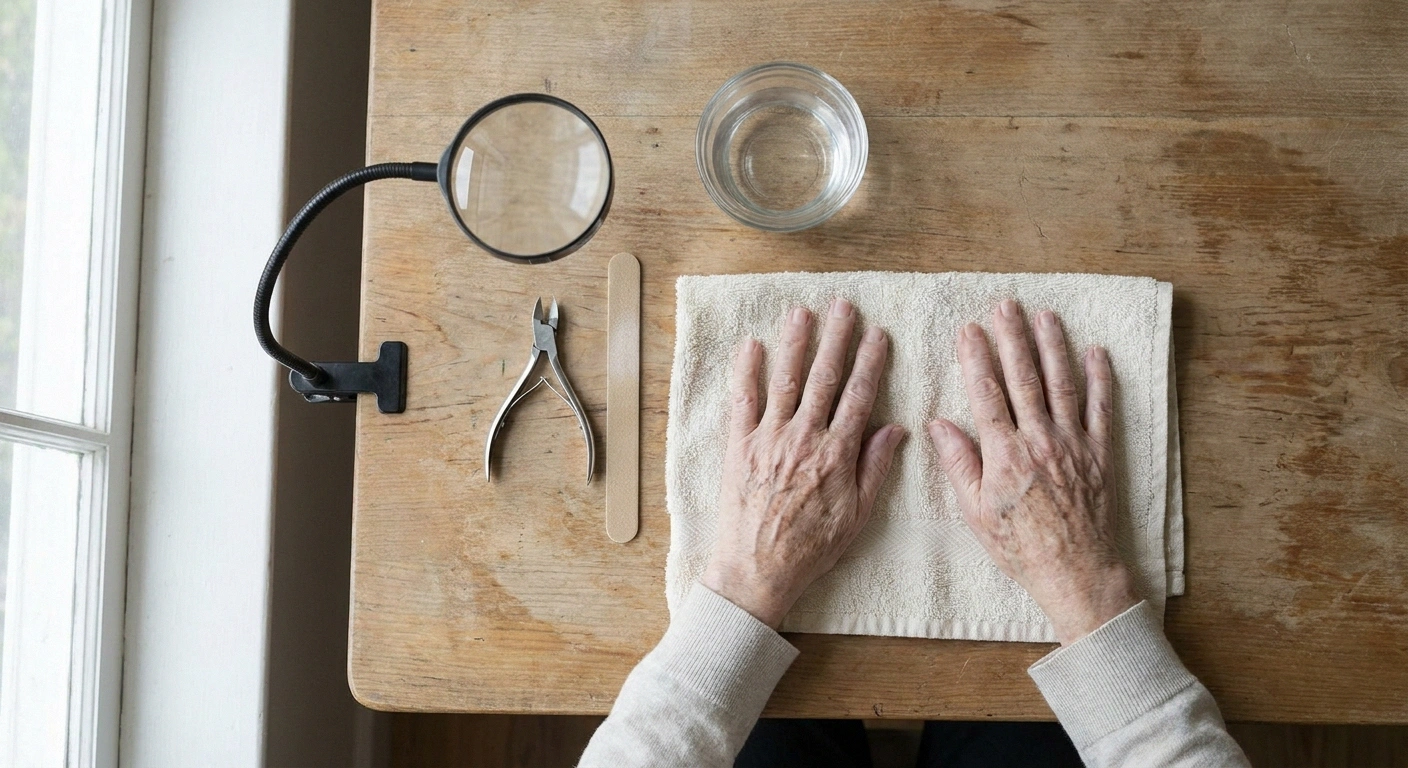
Two things set you up for a nick before you’ve even started: poor light and hard nails. Fix both first.
Trim after a bath or shower. The American Academy of Dermatology (AAD) says this is the best time, because the nails are softer. If a full bath isn’t happening, soak your fingertips in lukewarm water for a few minutes. Test that water with your elbow or a thermometer first, not your numb fingers.
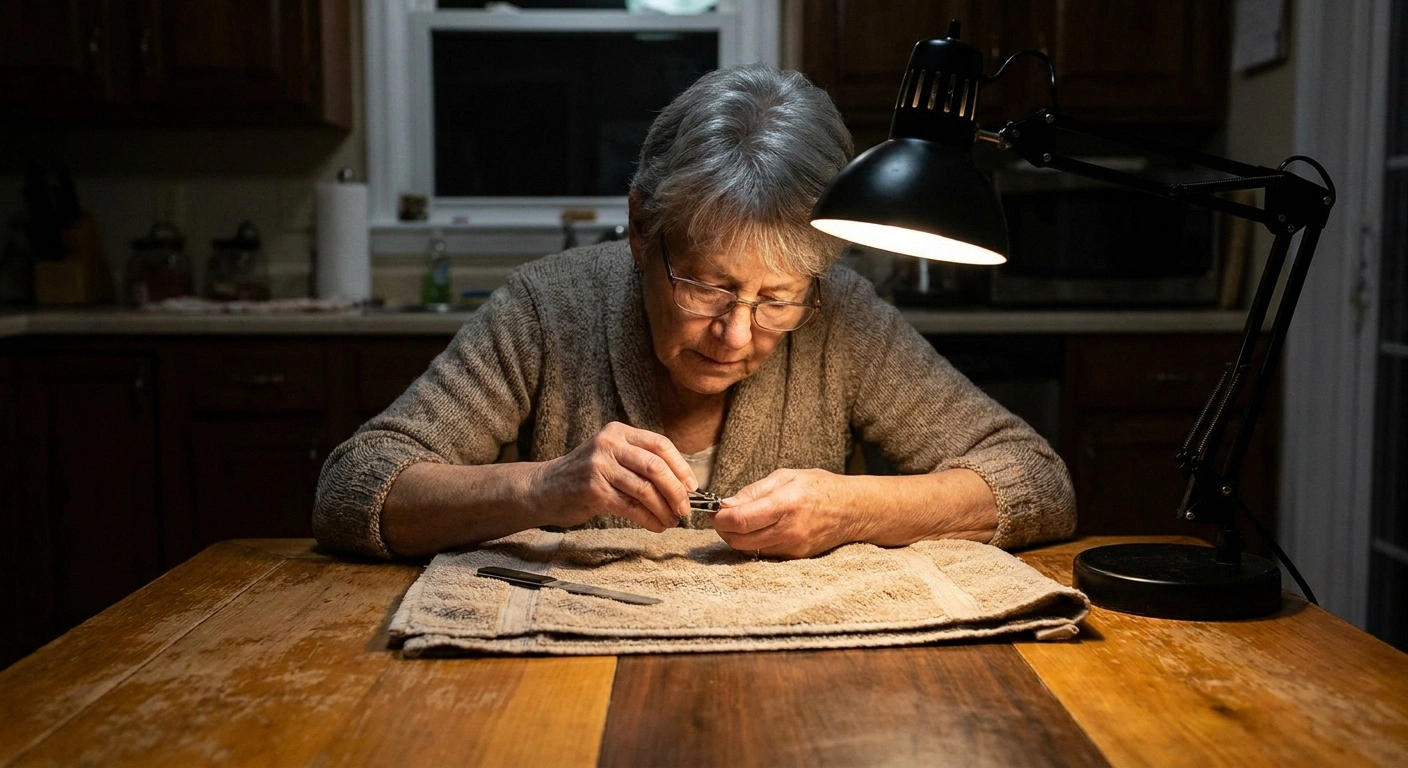
Bring the light to you. A bright desk lamp aimed at your hands beats any overhead bulb. Hadley, a US nonprofit that teaches daily skills to people with vision loss, suggests a magnifying lens on a flexible arm or lamp, or even a video magnifier, if your eyes need the help. This is the opposite of the dim, warm night lights I recommend for the hallway at 2 a.m. Trimming is close work, and close work wants a lot of light.
Sit at a table. Rest your forearms on it and lay a towel down to catch clippings. Trimming on your lap — hands floating in the air, nothing to brace against — invites shaky cuts.
Pick a calm moment. Not right before you need to leave the house. Rushing is how the corner gets cut too deep.
Pick Your Tools
The AAD says fingernails can be cut with either nail clippers or nail scissors, as long as they’re sharp. Hadley adds a useful check: make sure the clippers are large enough for your hands. A tiny travel clipper is hard to steer when your fingers are clumsy. You’ll also want a nail file or emery board, since filing does a lot of the work in this routine.
| Tool | Works well when | Watch out for |
|---|---|---|
| Full-size hand clippers | Grip is fair and vision is good | Tiny travel clippers are hard to steer |
| Nail scissors | Steady hands, sharp blades | Two moving blades near skin; skip with a tremor |
| Tabletop lever clipper | Weak pinch, arthritis, one usable hand | Still look before each press |
| File or emery board | Tremor, blood thinners, thick dry nails | One direction only; back-and-forth weakens nails |
| Electric file | You find it easier to hold | No published evidence it is safer |
Monthly cleaning for any of them: scrub in 70 to 90 percent isopropyl alcohol, rinse, dry (American Academy of Dermatology).
Clean the tools, too. The AAD’s advice is to disinfect them about once a month by scrubbing them in 70 to 90 percent isopropyl alcohol, then rinsing and drying them.
The Trim, One Small Bite at a Time
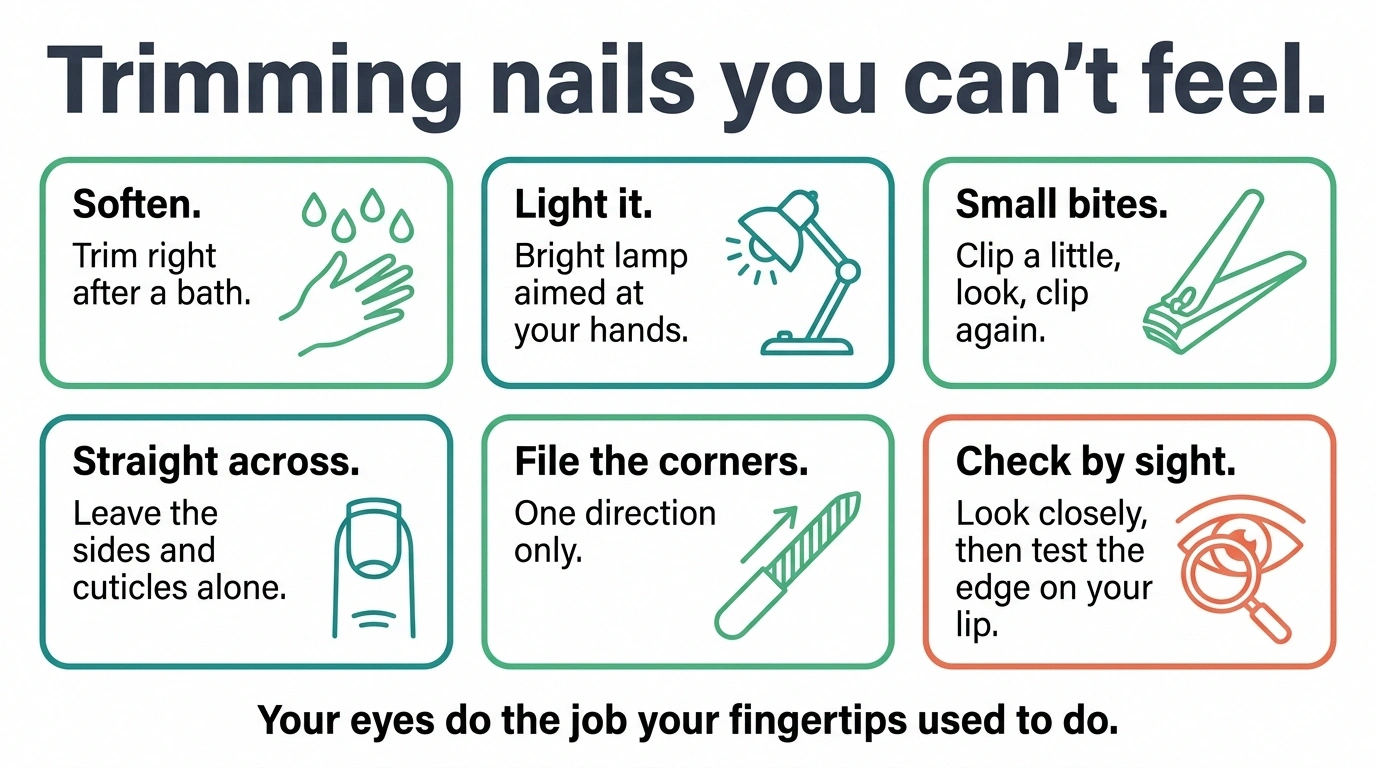
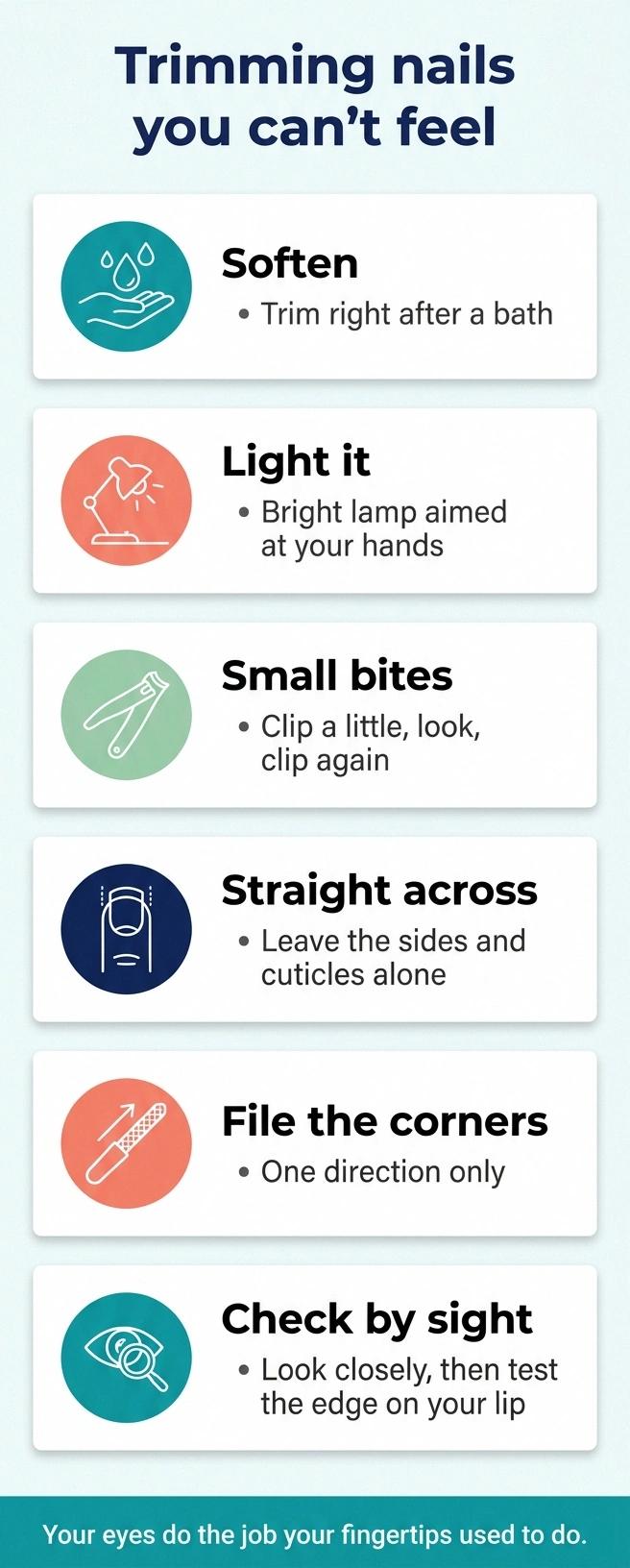
The old way was one confident snip per nail. The safer way is several tiny ones.
- Look first. Find the white tip of the nail and decide how much to take off before the clipper touches anything.
- Take a little at a time. Hadley’s advice is to clip just a bit, look, and clip again until the nail is as short as you like. Several small cuts give you several chances to stop.
- Cut almost straight across. That’s the AAD’s shape for fingernails.
- Leave the sides alone. The NHS says not to cut down the edges of your nails. Don’t dig into the corners with the clipper.
- Round the corners with a file. The AAD suggests slightly rounding the corners, which keeps the nail strong and stops it catching on clothes. A file does this far more gently than a clipper.
- File in one direction. Sawing back and forth weakens the nail, according to the AAD.
- Don’t go too short. Cleveland Clinic warns against cutting nails too short, and short-to-the-quick is exactly where numb fingers get nicked.
- Moisturize afterward. The AAD says this keeps nails flexible.
One more tip about thick or tough nails, the kind that crack instead of cutting cleanly. An NHS trust leaflet on diabetes nail care suggests filing thick nails regularly, and it says filing works best when the nails are dry. Cutting is the opposite: do it when they’re soft. So if your nails are thick, you might file on a dry day and clip after the bath. That timing advice was written about toenails, but the logic carries over.
Checking Your Work Without Your Fingertips
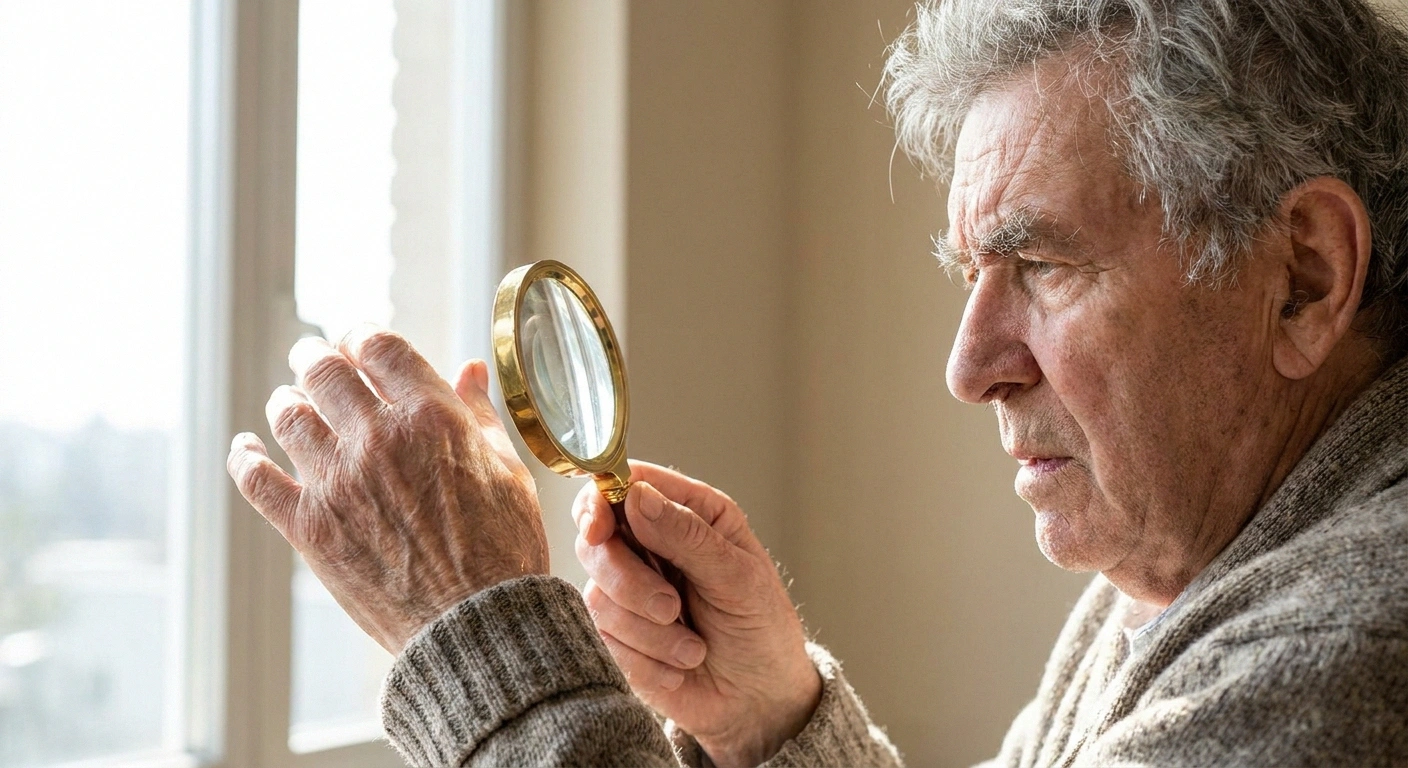
This is the step I’d never thought about until neuropathy took the feeling out of my fingertips. How do you know the edge is smooth when you can’t feel it?
Hadley’s suggestion is to run the tip of the freshly trimmed nail across another finger or your lip. If your other fingers are numb too, that leaves the lip — and honestly, it’s a brilliant check. Lips are packed with feeling. A jagged corner that your fingertip would miss will catch on your lip right away. (Hadley offers both options; the point about picking the lip when your fingers are numb is my own.)
Then look. Turn each finger under the lamp and check three things:
- Any red line or bead of blood along the nail edge or the skin fold?
- Any torn skin at the corners?
- Any sharp hook left where the corner was?
If your eyesight isn’t up to it, ask someone else to look. NIDDK, the federal institute for diabetes and kidney research, gives that advice for checking feet you can’t see well, and it works for hands just as well. The American Cancer Society goes further for people in cancer treatment and suggests checking your hands and feet every day for nail changes.
If you do find a nick, wash it with soap and water and keep an eye on it for the next couple of days. Most small cuts heal without a fuss. The point of looking is to catch the one that doesn’t.
Leave the Cuticles Alone
If I could get one rule onto every bathroom mirror, it would be this one. The AAD says to avoid cutting your cuticles or pushing them back. The cuticle seals the base of the nail, and once it’s cut, it’s easier for bacteria and other germs to get in. The AAD also notes that a nail infection can take a long time to clear.
The sources don’t all agree. Cleveland Clinic allows careful cuticle trimming as long as you don’t cut too close to the nail fold, and the AAD’s own salon page says that if you must push them back, do it only gently after a bath. But when you can’t feel a nick, “careful” is hard to judge. The American Cancer Society tells people in cancer treatment not to cut or trim their cuticles at all because of the infection risk. With numb fingertips, I follow the stricter advice.
The same goes for picking at them. The AAD says a habit of picking at or pushing back the cuticles on your thumbs can leave grooves running down the middle of the thumbnail. If your fingers fidget when you’re not paying attention, it’s worth watching for.
When Your Hands Shake or Won’t Grip
Neuropathy doesn’t just take feeling. It can weaken the small muscles that pinch and steer, and some of us have a tremor on top. Squeezing a small clipper with a wobbly hand? That’s a recipe for a crooked cut.
A few things help:
- Brace your elbows. Tremor UK, a British charity, says that resting your elbows on the table can steady your hands and arms. It also suggests tucking an elbow into your side for grooming jobs like shaving and brushing teeth, which may reduce the shaking. Nails aren’t on its list, but the same posture is worth a try.
- Move the nail, not the file. Hadley suggests holding the file still and moving your fingernail across it, in one direction only. A steady file and a moving finger is easier to control than the reverse.
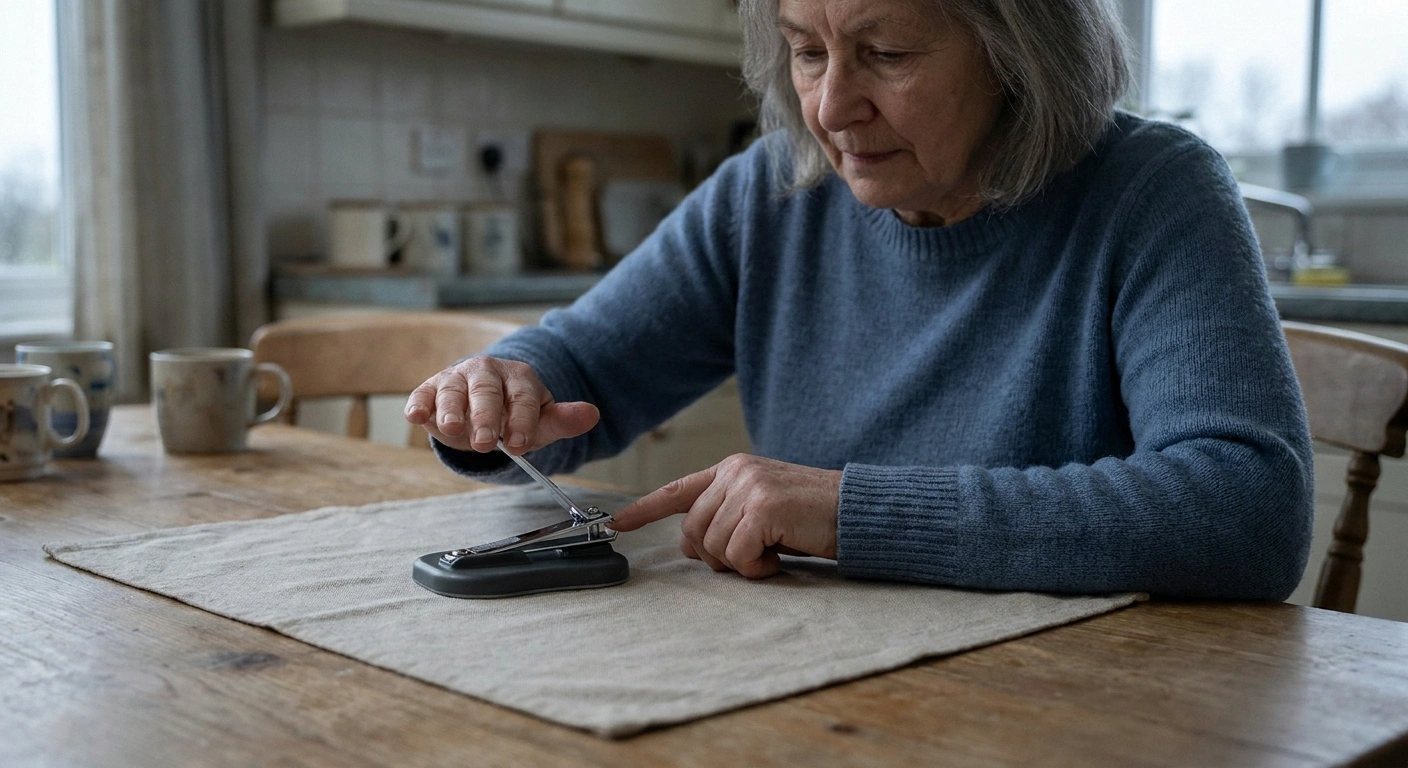
- Use a clipper that sits on the table. Tabletop nail clippers exist for people who can’t grip small tools. The clipper sits on a non-slip base, and you cut by pressing a lever with your palm, so there’s no pinching at all. Some versions also hold an emery board in a clip so you can file with one hand. An occupational therapist can point you toward these.
- Consider filing instead of cutting. If clippers feel unsafe, a regular file used often keeps nails short without any blade near the skin.
Electric nail files and grinders come up a lot in online roundups. I looked for real evidence that they’re safer for people with neuropathy or for older adults and didn’t find any, only product reviews. Some people find them easier — that’s fine. Just don’t buy one expecting it to be a proven safety device.
If You’re Going Through Chemo
Chemotherapy changes the rules in two ways. It can damage the nails themselves, and it can lower the white blood cells that fight infection, so a nick matters more.
The American Cancer Society lists the nail changes chemo can cause: weaker nails, painful nail beds and cuticles, grooves across the nail called Beau’s lines, nails lifting from the bed, and infections, which are more common when nails are cracked. Most of these return to normal within a few months of finishing treatment, though some last much longer.
The American Cancer Society and the National Cancer Institute agree on most of the rules during treatment:
- Keep your nails short. NCI’s reason is to avoid tearing them by accident.
- Don’t cut or trim your cuticles.
- Skip professional manicures and pedicures.
- Avoid nail polish removers and hardeners, which ACS lists separately.
- Tell your care team about any nail symptom, even one that doesn’t hurt.
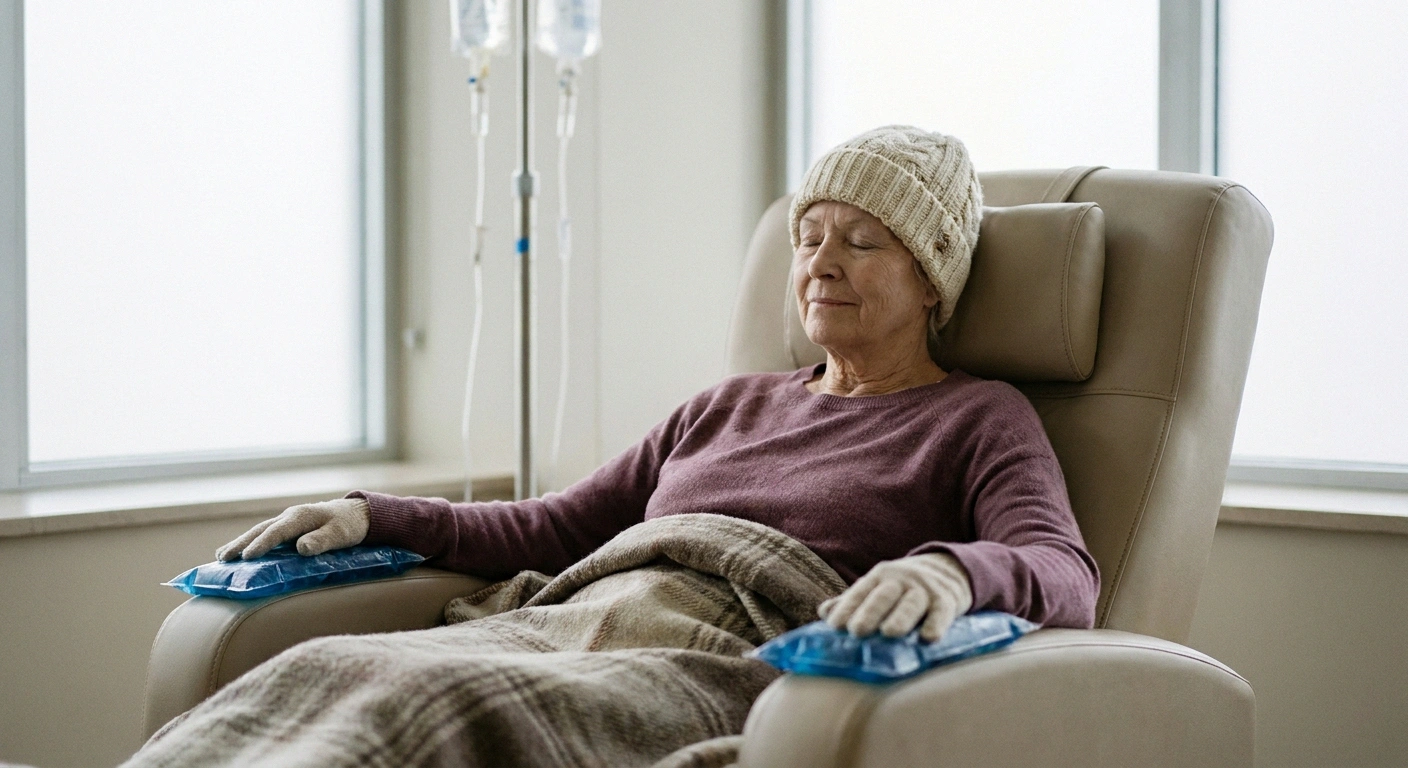
If you’re getting a taxane, especially docetaxel, ask about cold packs. The American Cancer Society describes putting cold packs on the nails for 15 minutes before the infusion, during it, and for 15 minutes after, to help keep the nails from lifting. Ask your nurse before trying it. Frozen gloves are another version of the same idea; a small Japanese study of 23 patients called them effective but uncomfortable. That cooling evidence is about the nails, by the way — whether cooling prevents chemo nerve damage is a separate and less settled question.
How often do taxanes affect the nails? The numbers in the research don’t agree, ranging from about a quarter of patients to roughly half, depending on the drug and the study. I won’t pick one figure; it’s common enough that it’s worth planning for.
The infection piece is the urgent one. NCI says that if you get a cut or scrape during treatment, you should clean it well, and it tells patients to call right away for a fever of 100.5°F (38°C) or higher. Infections during cancer treatment can turn serious fast. If you want a fuller picture of what chemo does to the nerves themselves, our guide to chemotherapy-induced neuropathy covers it.
On a Blood Thinner?
Anticoagulants make your blood take longer to clot, so a small nick bleeds longer than you’re used to. The Agency for Healthcare Research and Quality’s patient guide on blood thinners names scissors directly, along with knives and razors, as tools to use carefully.
A nick on a blood thinner: what to do, in order
- Press firmly with a clean cloth and don’t peek every few seconds.
- When it stops, wash gently and dab on petroleum jelly before covering it, so the dressing won’t stick.
- Note the time. If it simply won’t stop, call your prescriber or get help the same day.
- Keep looking at it for the next two to three days, since a numb finger won’t warn you if it gets infected.
That’s one more reason to file more and clip less. If you do nick yourself:
- Press on it firmly with a clean cloth and keep pressing.
- Once it stops, the AAD’s advice for nail wounds is to put on a little petroleum jelly to keep the wound moist and then cover it, rather than pressing dry gauze straight onto it, which can stick.
- A cut that won’t stop bleeding is a reason to call your doctor. The NHS lists being unable to stop bleeding among the reasons to get help right away on these medicines.
The same habits I use for shaving safely with numb hands apply here: good light, slow strokes, and looking for nicks instead of waiting to feel them.
Signs a Small Nick Has Turned Into an Infection
Here’s what to watch for over the next few days after a trim, especially around a spot you nicked.
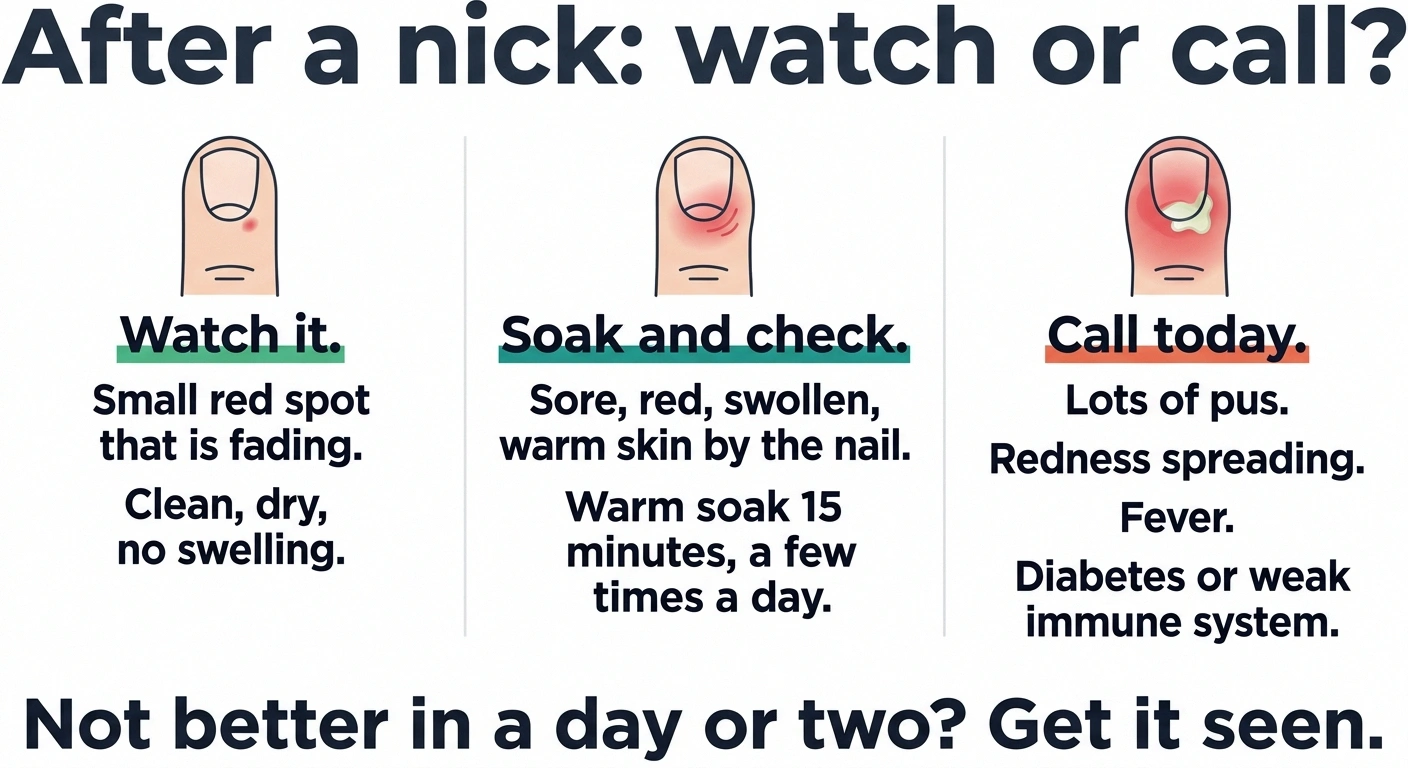
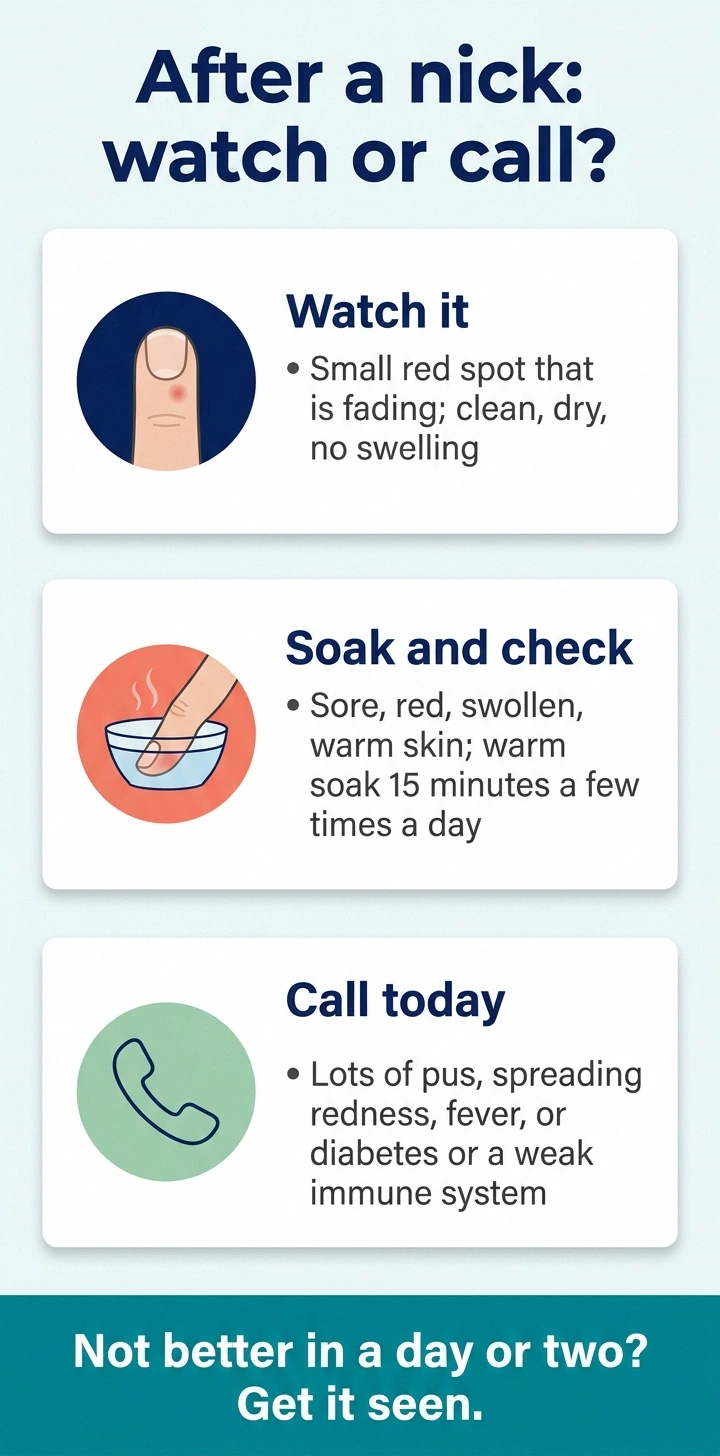
The NHS describes infected skin around a nail as sore, red, swollen and warm. Cleveland Clinic says acute paronychia usually comes on over hours to a few days. For a mild case, it suggests soaking the finger in warm water for about 15 minutes a few times a day, and seeing a provider if it isn’t getting better after a day or two. Check that the soaking water is warm, not hot, with something other than your fingertips.
Get seen sooner if you notice any of these, which the New Zealand health site Healthify lists as reasons to see a doctor:
- a lot of pus
- redness that’s spreading
- a fever
- you’re at higher risk of a serious infection, for example because of diabetes or a weakened immune system
Cleveland Clinic is blunter for people with diabetes, poor circulation or a weak immune system: call at the first sign of infection, rather than waiting the day or two. And whatever you do, don’t squeeze it or cut into it yourself. Healthify warns that this can make the infection worse. Rarely, an untreated nail infection can spread deeper into the finger.
Numbness is the trap here. An infected finger is usually sore — for most people, that soreness is the alarm. If your fingers don’t hurt the way they used to, your eyes have to catch the redness and swelling instead.
Getting Help: Salons, Caregivers and What Medicare Covers
There’s no prize for doing this alone. If trimming has become a struggle, handing it off is a perfectly good plan.
Three things to say before anyone else trims your nails
- “I can’t feel my fingertips well.”
- So they know a nick won’t make you flinch, and they need to watch, not wait for you to react.
- “Please don’t cut my cuticles.”
- Cut cuticles are an open door for the bacteria behind nail-fold infections.
- “How do you clean your tools?”
- The American Academy of Dermatology suggests asking, or bringing your own set.
A family member or caregiver. The same steps apply: good light, small cuts, sides left alone, cuticles untouched, a look afterward. If caring for someone else has started to wear you down, we have a page on caregiver burnout with neuropathy that’s worth reading too.
A nail salon. Outside of chemo, a salon can be fine if you’re careful about it. The AAD suggests checking that the technician is licensed where your state requires it, that the stations look clean, and that hands are washed between clients. Ask how they clean their tools, or bring your own. Tell them not to cut your cuticles, and tell them you can’t feel your fingertips well, so they’ll know you won’t flinch if they nick you. During chemo, skip the salon, as covered above.
What Medicare covers. Probably not this. Medicare.gov says Medicare doesn’t usually cover routine foot care, and trimming, cutting or clipping nails is on that list. There’s an exception for people with certain conditions, such as diabetes with nerve or circulation problems, but the CMS rules are written for legs and feet and require specific findings documented by the clinician. When it does apply, you pay 20% of the Medicare-approved amount. I found no Medicare route that covers fingernail trimming.
Nail Changes Worth Showing Someone

Since you’ll be looking at your nails more closely now, it helps to know which changes deserve a professional’s eye. Based on the AAD and the NHS:
- A new or changing dark streak under a nail. The AAD says it’s time for a skin cancer check with a dermatologist.
- Nails curving down over rounded fingertips, called clubbing. The NHS says it can be a sign of a number of long-term conditions.
- A nail lifting away from the skin. The AAD says any lifting nail should be examined; one cause is an aggressive manicure.
- Grooves across the nail, called Beau’s lines. A fever, an injury, chemotherapy or major stress can cause them, and they usually grow out. Lines running the length of the nail, from cuticle to tip, are common and usually nothing to worry about.
If the numbness in your fingers is new or spreading, or you’re not sure it’s neuropathy at all, our guide to numb fingertips walks through the common causes, and the page on hand clumsiness and dropping things covers the grip side. For the bigger picture of what nerve damage does to the hands, see our overview of neuropathy in the hands.
Trimming your nails used to be the kind of chore you didn’t think about. Now it takes ten minutes, a lamp and a little patience. I’ve made my peace with that. Ten careful minutes beats weeks of nursing an infected finger you never felt getting hurt — I’ll take that trade.
Frequently Asked Questions
How do you cut fingernails when your fingertips are numb?
Trim after a bath when the nails are soft, sit at a table under a bright lamp, and take off a little at a time instead of one big cut. Cut almost straight across, leave the sides and cuticles alone, and round the corners with a file. Then check the result by looking closely and by running the nail edge across your lip, which still has feeling.
Is it better to file or clip nails if you can’t feel your fingertips?
Filing keeps the blade away from your skin, so many people with numb or shaky hands file more and clip less. File in one direction only, because sawing back and forth weakens the nail. Thick nails file most easily when dry, while clipping goes best right after a bath.
Should I cut my cuticles if I have neuropathy?
No. The American Academy of Dermatology advises against cutting cuticles or pushing them back, because the cuticle helps keep germs out. The American Cancer Society tells people in cancer treatment not to cut or trim cuticles at all. If you can’t feel a nick, leaving them alone is the safest choice.
Can I get a manicure during chemotherapy?
The American Cancer Society and the National Cancer Institute both advise against professional manicures and pedicures during cancer treatment. Chemotherapy can weaken the nails and lower the white blood cells that fight infection. Keep your nails short at home, leave the cuticles alone, and tell your care team about any nail changes.
What are the best nail clippers for shaky hands or a weak grip?
Tabletop clippers are made for people who can’t grip small tools. They sit on a non-slip base and cut when you press a lever with your palm, and some hold an emery board for one-handed filing. Larger clippers are also easier to steer than tiny ones. Resting your elbows on the table helps steady a tremor.
How can I tell if a nick around my nail is infected?
Watch for skin around the nail that becomes sore, red, swollen and warm. Pus, spreading redness or a fever mean you should be seen promptly, and people with diabetes or a weak immune system should call at the first sign of infection. Don’t squeeze or cut the area yourself.
Does Medicare pay for fingernail trimming?
Generally no. Medicare doesn’t usually cover routine nail trimming. Its exception for people with conditions such as diabetes is written for the legs and feet and requires specific documented findings, so it doesn’t cover fingernails.
About the Author