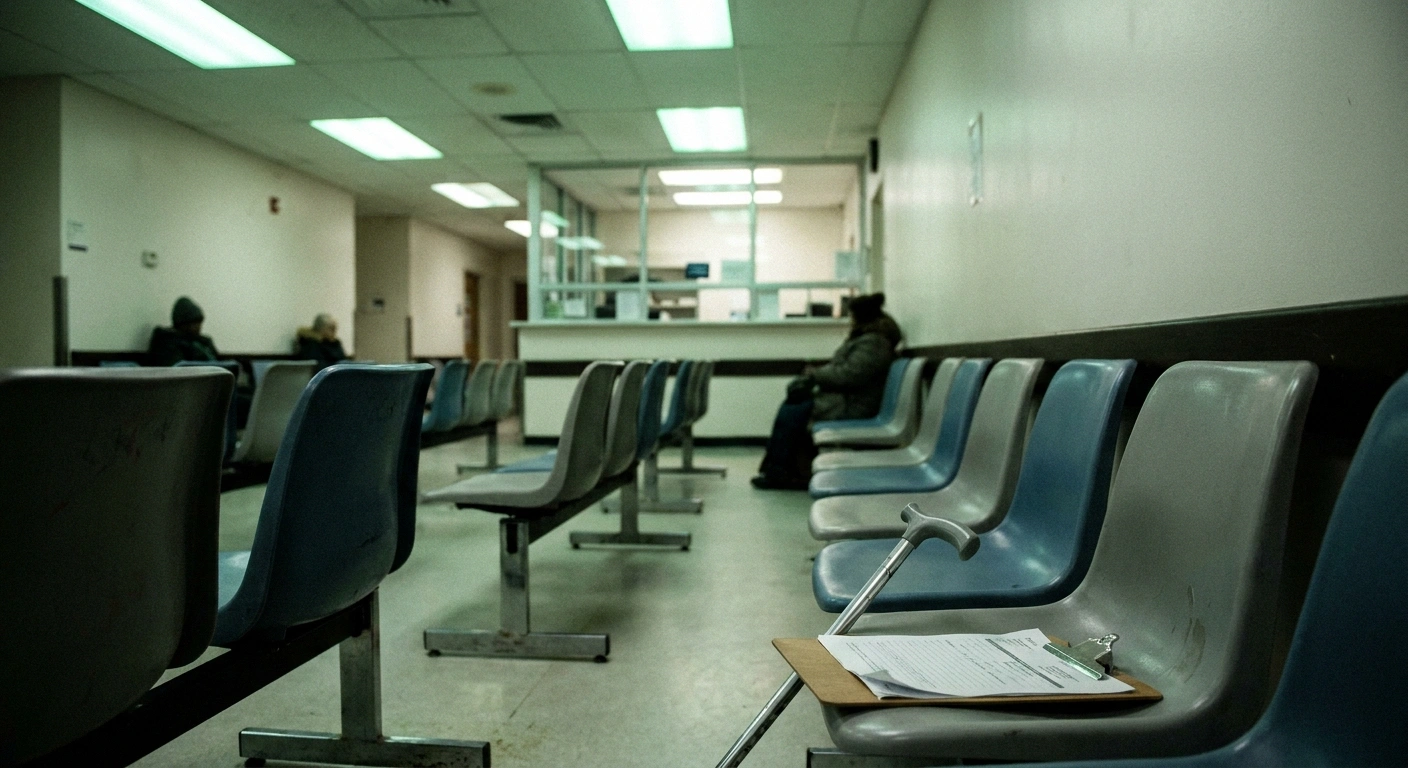
It is 9:40 on a Sunday night and you are sitting in a plastic chair with a clipboard on your knee, trying to remember the dose of the medication you have taken every evening for four years. The person at the desk needs a number. You know the pill is yellow.
Everything that goes wrong in an emergency room visit tends to start there, in the first fifteen minutes, before anyone has examined you. Not because the staff are careless, but because they are working from whatever you managed to tell them while stressed, in pain, and possibly at midnight.
The good news is that this is a solvable problem, and you solve it on an ordinary afternoon when nothing is wrong. What follows is what to prepare, what to say, and the two specific things about neuropathy that emergency departments routinely miss.
This is about how to handle the visit. If you are trying to work out whether to go at all, our guide to neuropathy emergency signs covers which symptoms warrant the trip.
Pack the Bag Before You Need It
Keep a small bag somewhere you can grab it without thinking. A tote by the door works. Inside it:
- Photo identification and your insurance card. Copies are fine and are better than nothing.
- Your one-page medical sheet. The section below covers what goes on it.
- Your actual medication bottles, or clear photographs of every label on your phone. Bottles beat lists, because they carry the dose, the prescriber and the pharmacy without anyone having to trust your recall.
- A pair of your own socks or soft slippers. This matters more than it sounds. More on that below.
- A phone charger with a long cable. Outlets in treatment bays are rarely within arm's reach.
- Reading glasses. You will be handed consent forms.
- A light layer. Emergency departments run cold, and cold tends to make nerve pain worse.
Two things to leave out: jewellery and anything valuable. Clothing gets removed, belongings get bagged, and things go missing in the shuffle.
The One Page That Changes the Visit
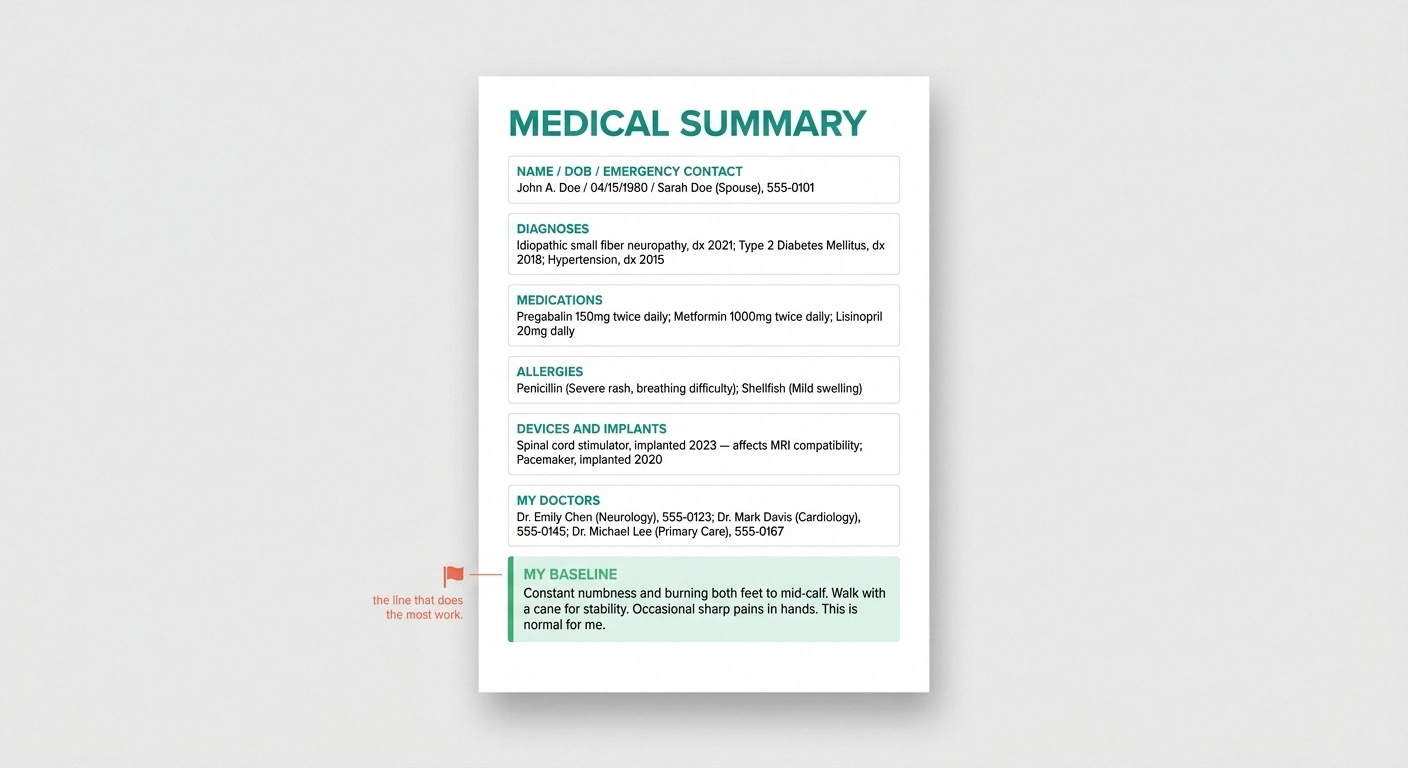
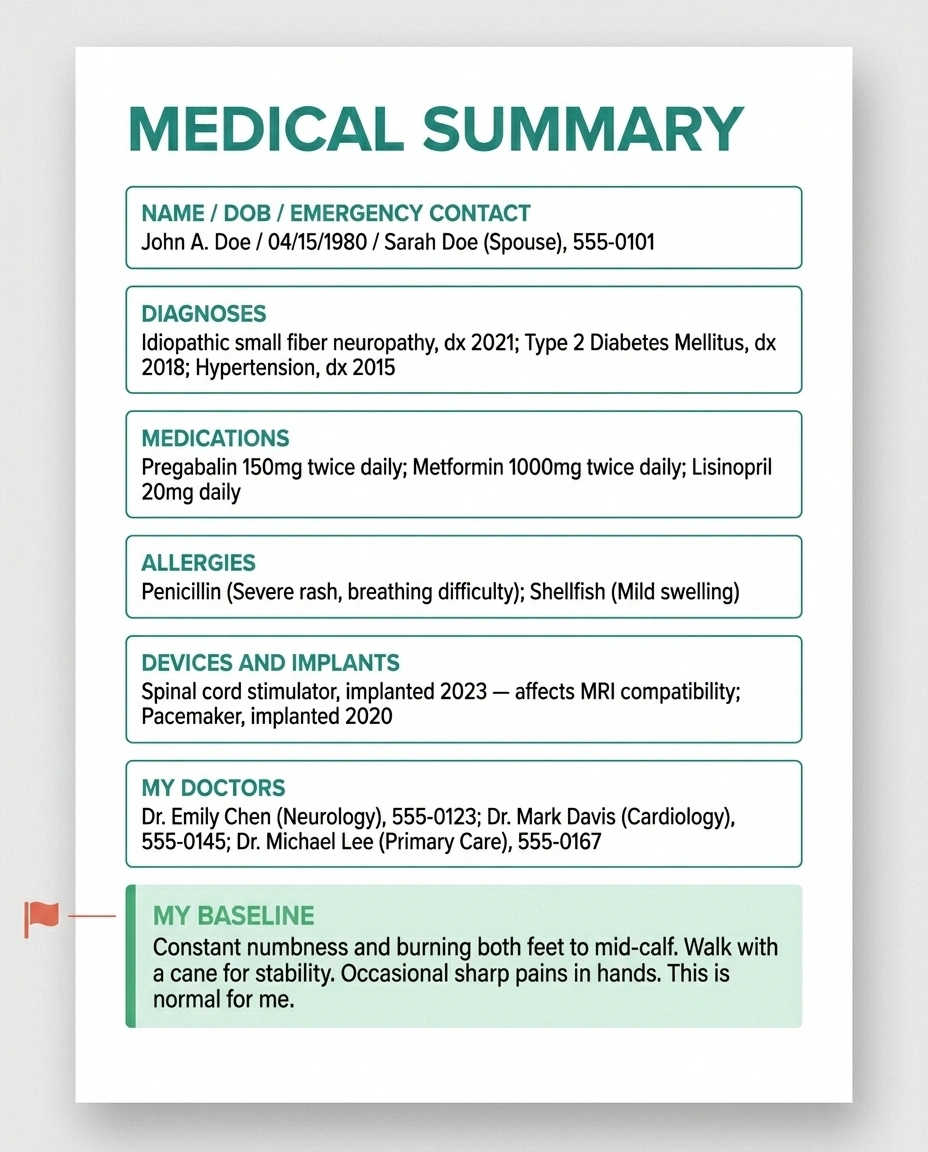
Type it once, print several copies, put one in the bag and one in your wallet. Give a copy to whoever drives you.
Keep it to a single side. Anything longer will not be read.
- Name, date of birth, and an emergency contact with a phone number.
- Your diagnoses, with the neuropathy named specifically. “Idiopathic small fiber neuropathy, diagnosed 2021” tells a clinician far more than “nerve problems”.
- Every medication, with dose and timing. Include over-the-counter items, vitamins and herbal supplements. These interact more often than people expect, and our guide to neuropathy drug interactions covers which combinations matter.
- Allergies and past bad reactions, with what actually happened.
- Devices and implants. Spinal cord stimulator, pain pump, pacemaker, recent nerve block. This directly affects whether you can have an MRI, and it is the thing most often left off.
- Your doctors, with the neurologist named.
- One line describing your baseline. Something like: “Constant numbness and burning in both feet to mid-calf. Normally walk with a cane. This is my usual state.”
That last line does more work than the rest of the page combined. Without it, a clinician examining your feet finds abnormal sensation and has no way to know whether it appeared tonight or six years ago. With it, they can immediately tell what is new.
What to Say at Triage
Triage is a sorting process. A nurse has a few minutes to decide how urgently you need to be seen, and they rank by how critical the presentation appears rather than by arrival order. This is why people who arrive after you sometimes go in before you.
Reads as chronic
“I have neuropathy and my feet have been terrible for years and tonight it got worse.”
Reads as acute
“Since about four o'clock today I cannot lift my right foot properly and I have fallen twice.”
Same person, same night, same condition. The difference is a stated onset time and a named loss of function.
Lead with what changed, not with your history.
Compare these two openings. “I have neuropathy and my feet have been terrible for years and tonight it got worse” invites a wait. “Since about four o'clock today I cannot lift my right foot properly and I have fallen twice” gets attention, because it describes a sudden functional change with a clear onset.
Three things belong in your opening sentence:
- When it started. A specific time, or “about two hours ago”. Vagueness reads as chronic.
- What is different from your normal. Name the baseline, then the change.
- What you cannot do that you could do yesterday. Function is the language triage runs on.
Hand over your one-page sheet at this point. Say something like “this has my medications and my baseline on it.” It takes the pressure off recalling doses from memory and it signals that you are an organised historian of your own condition, which changes how the rest of the visit goes.
Describing Nerve Pain So It Registers
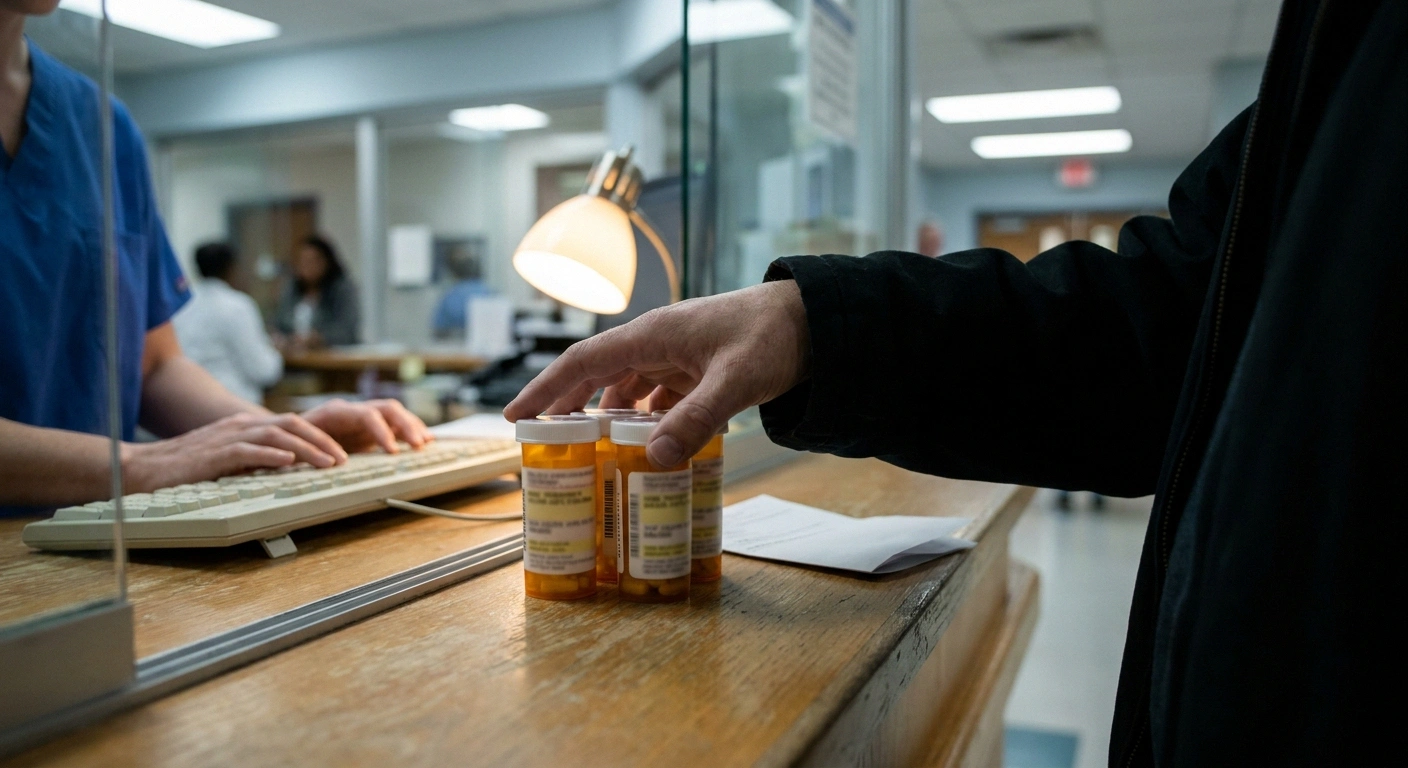
This is where visits go wrong for people with chronic pain, and it is worth being deliberate about.
The U.S. Pain Foundation has been blunt about the reality: for people living with chronic pain, an emergency room trip can turn into being disbelieved. A high number said flatly, with no other detail, is unfortunately read by some clinicians as a request for opioids rather than as information.
The countermeasure is not to understate your pain. It is to describe mechanism rather than magnitude.
Nerve pain has a specific vocabulary, and using it accurately marks you as someone reporting a neurological finding rather than requesting a drug:
- Burning that is constant, not throbbing.
- Electric or shock-like jolts that last under a second.
- Squeezing, like a band or a sock that is not there.
- Pain from things that should not hurt. A bedsheet, a sock, cool air. This one is worth saying out loud in exactly those terms, because it describes a real phenomenon called allodynia, and it is a genuine clinical observation.
Then add the two details that carry the most weight: what is new tonight, and what you have already tried at home. Saying you took your usual evening dose at seven and it did nothing, which has never happened before, is far more informative than any number.
Our guide on talking to your doctor about neuropathy pain goes deeper on being heard in medical settings generally.
Say this sentence early
“I have numbness in both feet and I cannot feel pressure or temperature there, so please check my heels and my feet before I leave.” It takes four seconds and it addresses the single most common way neuropathy patients are harmed during a long emergency department stay.
The Medication Gap Nobody Warns You About
Emergency departments stock what emergencies require. Your specific nerve pain medication may not be on the shelf, and even if it is, home medications are not automatically continued once you are in a treatment bay.
If your visit runs long, or turns into an admission, doses get missed. This is quiet and nobody announces it.
The consequences depend on what you take. Abruptly stopping gabapentin or pregabalin can cause withdrawal effects. Stopping duloxetine abruptly can produce discontinuation symptoms including dizziness and sensory disturbances. Amitriptyline and nortriptyline also have withdrawal effects when stopped suddenly. None of this is dangerous in the way a cardiac event is dangerous, and all of it makes a bad night considerably worse. Our guide to neuropathy medications covers each class.
Ask the question directly, early, and ask it again if your stay extends past when a dose is due:
“My next dose of pregabalin is due at ten. Will I get it here, or should I take my own?”
Never take your own medication without telling someone. The reason is not bureaucratic. If you are given something in the department and you have also self-administered, nobody has an accurate picture, and interactions become genuinely possible. Ask first. Most departments will either supply it or allow you to take your own once it is documented.
If you are admitted, this issue continues onto the ward and gets more complicated, particularly around procedures where you may be told not to eat or drink. Our guide to hospital stays with neuropathy handles that in detail.
Your Feet, on a Gurney, for Nine Hours
Here is the risk nobody mentions at the door, and it is specific to you.
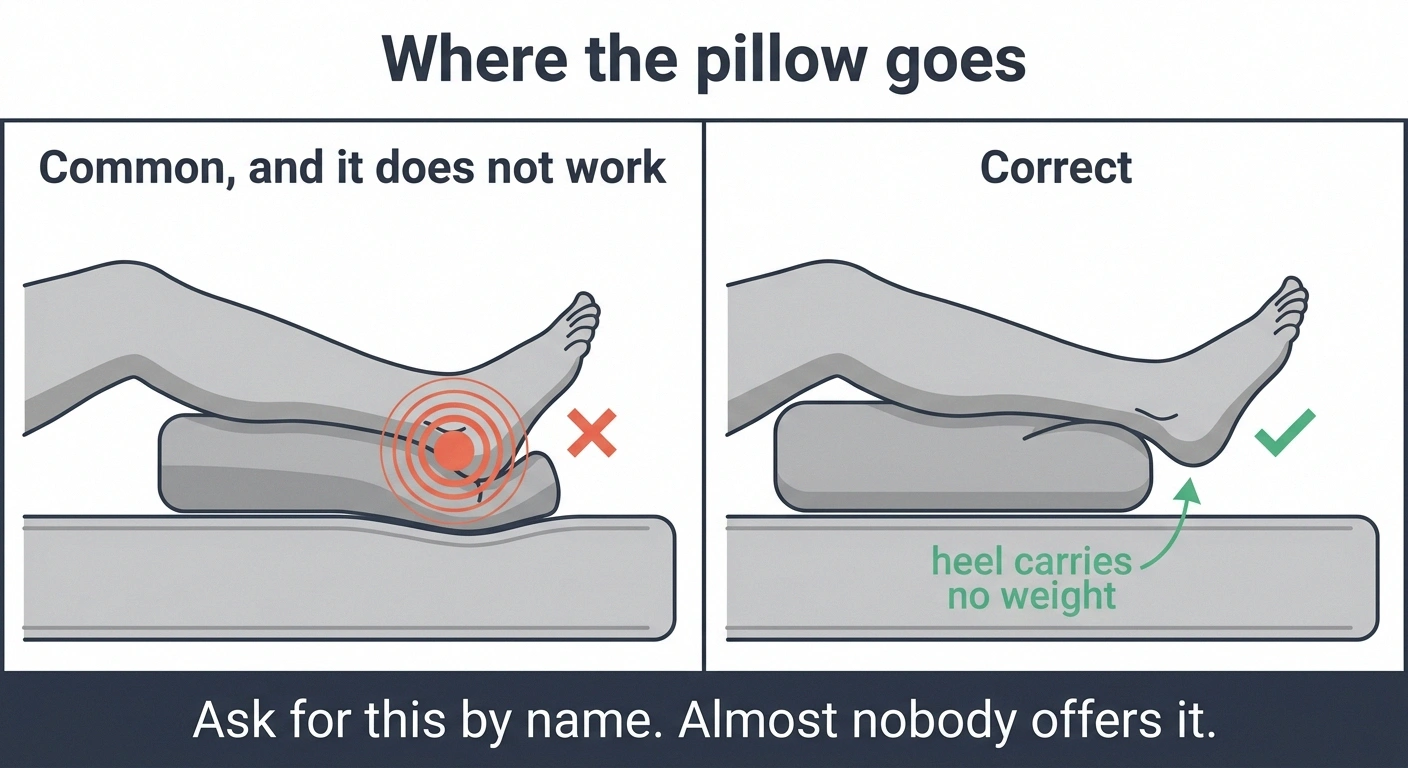
The pillow goes under your calves, not your heels
This is the detail people get wrong. A pillow under the heels still loads them. Placed lengthwise beneath the calves, the heels hang clear of the mattress entirely and carry no weight at all.
| Every 30 min | Shift leg position. Phone reminder if you are alert enough. |
| Keep covered | Your own socks from the bag. Bare feet get cold and get knocked. |
| Before discharge | Look at both heels and between the toes. A red mark still there 20 minutes after pressure is relieved gets reported before you leave. |
Pressure injuries form when tissue is compressed against a hard surface for a sustained period. Normally your body prevents this without conscious effort, because discomfort makes you shift position every few minutes, even in your sleep. That protective mechanism runs on sensation.
With reduced feeling in your feet, the signal does not arrive. You lie still on a thin mattress with your heels pressed down for hours, and skin damage can begin during a single long visit. Heels are especially exposed because they bear concentrated weight on a small area.
Four things reduce the risk, and all of them are easy to ask for:
- Ask for your heels to be offloaded. A pillow placed lengthwise under your calves so your heels float clear of the mattress. Any nurse will do this if asked, and almost nobody thinks to offer.
- Keep your feet covered. Your own socks from the bag. Bare feet on a gurney are exposed to cold and to accidental knocks you will not feel.
- Shift your position deliberately. Set a reminder on your phone if you are alert enough. Every half hour, move your legs and change the pressure points.
- Look at your feet before you leave. Actually look, including the heels and between the toes, the same way you would in your daily foot check. A red mark that does not fade within twenty minutes of relieving pressure needs to be pointed out before you are discharged, not discovered on Tuesday.
This matters most for anyone with diabetes, existing foot changes, or a history of ulcers. A small unnoticed injury on a numb foot is the beginning of a long and entirely preventable problem, and it is how conditions like Charcot foot escape attention in their earliest and most treatable stage.
While You Are Waiting
Waits are long and largely unavoidable. A few things make them less costly.
Stay where staff expect you to be. Wandering off gets your name called with no answer, and you can lose your place in the queue.
Ask about eating and drinking rather than assuming. If a procedure or scan is possible, you may need an empty stomach, and a sandwich at the wrong moment can add hours. One question at the desk settles it.
Keep your feet up when you can. Sitting upright in a chair for hours worsens swelling and pain in most people with lower limb neuropathy. A second chair to rest your feet on is a reasonable thing to ask for.
Note the time of anything new. If a symptom shifts while you wait, write down when. Onset times are one of the most useful things you can provide and one of the easiest to lose track of after four hours in a fluorescent room.
Have someone with you if at all possible. A second person who can advocate while you are in pain is worth more than any preparation on this page.
Before You Leave
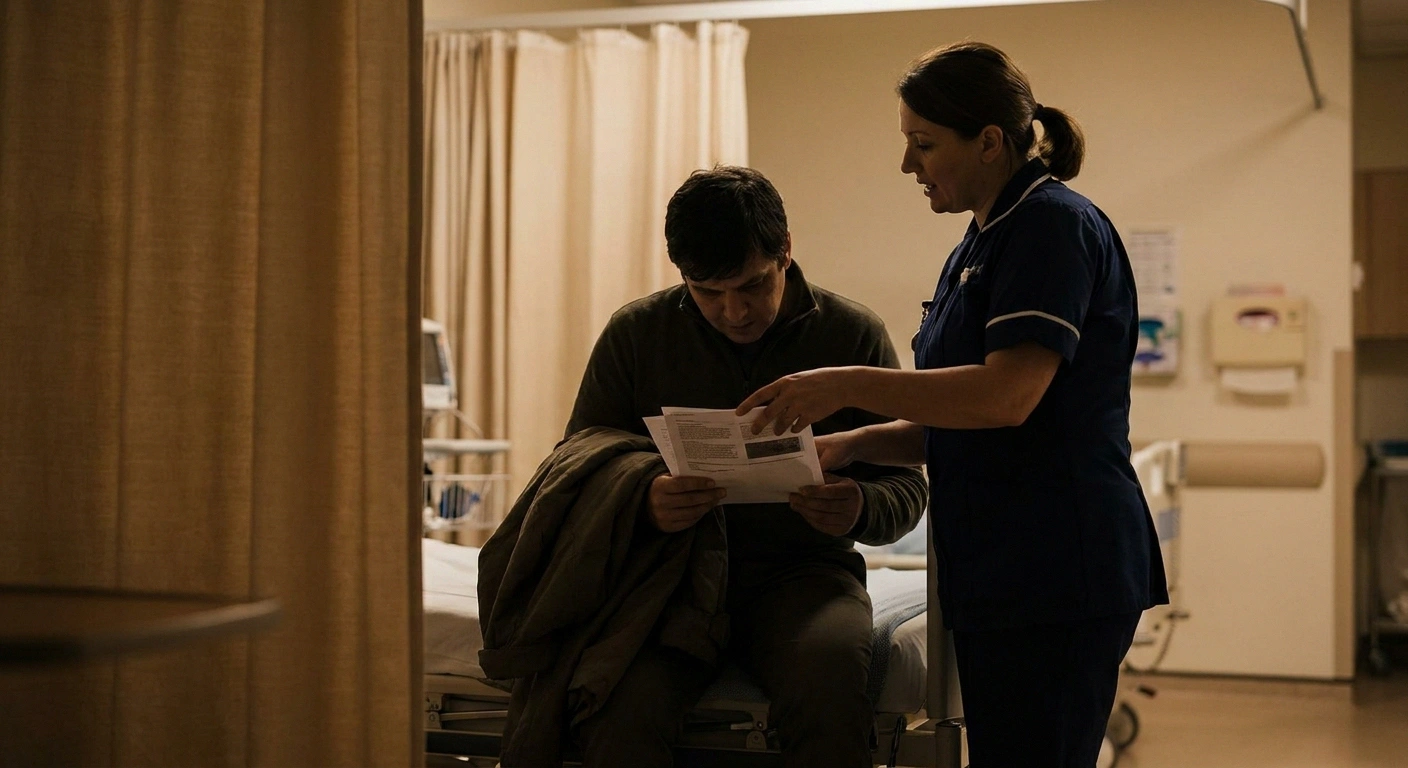
Discharge tends to be brisk. Get five things before you are out the door.
- What they concluded, in plain words. Ask directly: “What do you think caused this?” If the answer is that they ruled out the dangerous things without identifying a cause, that is a legitimate and useful answer. Ask them to write it down.
- What was ruled out, specifically. Your neurologist needs to know which serious possibilities were excluded and by what test, so the work is not repeated.
- Copies of results. Blood work, imaging reports, discharge summary. Do not rely on records reaching your regular doctors automatically.
- What should bring you back. A specific list of return warning signs, not a general instruction to come back if things worsen.
- The medication position. Anything new, anything stopped, anything changed, and whether your usual medications continue unchanged.
When you are home, write a short note about the visit while it is fresh. What happened, what was done, what was said. Adding it to your symptom diary means that at your next neurology appointment you have an accurate account rather than a fading memory of a difficult night.
And then update the one-page sheet if anything changed, and put it back in the bag. That is the whole system. It takes twenty minutes once, and it makes every future version of this night substantially easier.
Frequently Asked Questions
What should I bring to the ER if I have neuropathy?
Photo identification, insurance card, a one-page sheet listing your diagnoses, medications with doses, allergies, devices and your normal baseline symptoms, plus your actual medication bottles or photographs of the labels. Add your own socks or soft slippers, a phone charger with a long cable, reading glasses and a light layer. Leave jewellery and valuables at home, since belongings are bagged and can go missing.
How do I describe nerve pain in the emergency room without being seen as drug-seeking?
Describe the mechanism rather than only the intensity. Use specific nerve pain vocabulary such as burning, electric or shock-like, squeezing, and pain caused by things that should not hurt like a bedsheet or cool air. Then state clearly what is new tonight compared with your normal baseline and what you have already tried at home, including whether your usual medication worked. Specific, concrete detail carries far more weight than a number alone.
Will the emergency department give me my regular neuropathy medication?
Not automatically. Emergency departments stock what emergencies require, and your specific medication may not be on the shelf or may simply not be given during your stay. Ask directly when your next dose is due whether they will supply it or whether you should take your own. Always ask before taking your own medication, so the team has an accurate record and can avoid interactions.
Why do my feet need special attention during a long ER visit?
Pressure injuries develop when tissue is compressed against a hard surface for a sustained period. Normally discomfort prompts you to shift position without thinking about it, but reduced sensation removes that signal. Lying on a thin mattress with your heels pressed down for hours can begin skin damage within a single long visit. Ask for a pillow placed lengthwise under your calves so your heels float clear, keep your feet covered, and change position regularly.
What should I say first at triage?
Lead with what changed rather than with your medical history. State when it started using a specific time, what is different from your usual baseline, and what you can no longer do that you could do yesterday. Triage sorts by how critical a presentation appears, so a sudden functional change with a clear onset time is understood very differently from a long-standing problem that feels worse tonight.
Should I go to the ER or wait to see my neurologist?
Emergency departments are the right choice for sudden weakness, rapidly spreading numbness, new loss of bladder or bowel control, a foot wound with signs of infection, or symptoms following an injury. Gradual worsening of familiar symptoms is usually better handled by your neurologist, who knows your history. Our guide to neuropathy emergency signs sets out which symptoms warrant an immediate visit.
What should I get before I am discharged?
Ask what they concluded in plain words, what serious causes were specifically ruled out and by which tests, and request copies of blood work, imaging reports and the discharge summary. Get a specific list of symptoms that should bring you back rather than a general instruction, and confirm whether any medication was started, stopped or changed. Do not assume records will reach your regular doctors automatically.
Should I bring someone with me?
Yes, whenever possible. A second person can advocate for you while you are in pain, remember what was said, ask questions you did not think of, and fetch help if you have been waiting a long time. Give them a copy of your one-page medical sheet so they can answer questions accurately if you are unable to.
About the Author