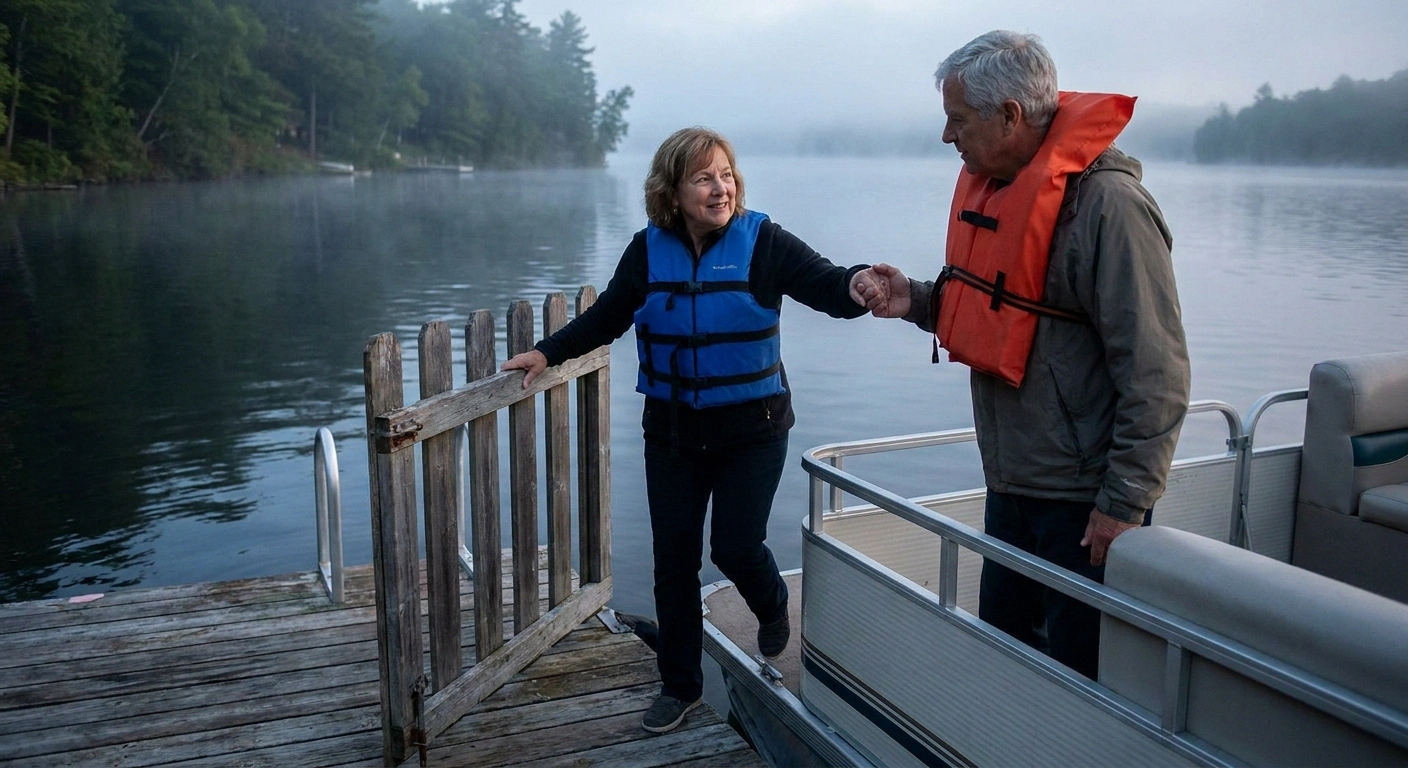
The pontoon sat maybe eighteen inches off the dock, and it would not hold still. Every time a ski boat went by, the gap between the dock boards and the deck widened, then narrowed, then widened again. My brother-in-law Walt had one hand on the boarding gate and the other held out to me, and I stood there in brand-new water shoes doing the arithmetic everyone with numb feet knows by heart: how far, how wobbly, and what happens if my foot lands somewhere I can't feel.
I made it aboard that morning, and I've been back on the water plenty of times since. Neuropathy doesn't have to cost you the lake. What it changes is how you get on, where you sit, what goes on your feet, and which habits you stop leaving to chance. One fact from the U.S. Coast Guard reframed the whole thing for me: most boating drownings don't happen in storms far from land. They happen near shore in calm weather — in the Coast Guard's words, “most within a few feet of safety.”
What follows is the Coast Guard's own safety advice, plus what boating groups, the CDC and nerve research add for people whose feet and hands send weaker signals. Nobody has studied boating and neuropathy directly, so wherever I'm connecting dots myself, I'll say so.
What the Coast Guard's Numbers Say About Ordinary Boat Days
The Coast Guard's newest accident report, covering 2024, recorded 556 boating deaths, the fewest since it began keeping these statistics more than 50 years ago. It's good news — but the lessons are in the details. (As of late September 2026, the report on 2025 is due in mid-October.)
The Coast Guard's boater guide adds that 9 of 10 drowning deaths happen on inland waters — lakes and rivers, not the open sea.
- Drowning is the main danger. Where the cause of death was known, 76% of victims drowned. Where life-jacket use was known, 87% of those who drowned weren't wearing one.
- Small boats dominate. Where boat length was known, 4 of every 5 boaters who drowned were on a boat shorter than 21 feet.
- Going into the water unexpectedly starts many deaths. By my count from the report's tables, incidents that began with a fall overboard or a capsizing account for 249 of the 556 deaths, about 45%.
- Our age group shows up. People aged 60 to 69 had more boating deaths, 97, than any other ten-year age band.
So the dangerous moments are ordinary ones: stepping between a dock and a deck, standing up in a small boat, a passing wake, a life jacket stowed under a seat instead of worn. Those are exactly the moments neuropathy makes harder, and exactly the ones you can plan around.
Why a Rocking Deck Is Harder on Numb Feet
Balance runs on three streams of information: your eyes, the balance organs of your inner ear, and the position signals rising from your feet and ankles. When neuropathy thins out the signal from the feet, the eyes and inner ear have to carry more of the load.
A 1994 study in Diabetes Care measured how much that matters. People with diabetic sensory neuropathy were 66% to 117% less stable than people without it, depending on the test, and the deficit was greatest when vision or inner-ear cues were “absent or degraded.” On a boat, that's exactly the situation. The deck moves, your eyes watch moving water, and your inner ear registers every roll, while the steadying signal from below is already weak. No one has tested this on boats, but it explains why so many of us feel fine on the dock and suddenly unsure the moment we step aboard.
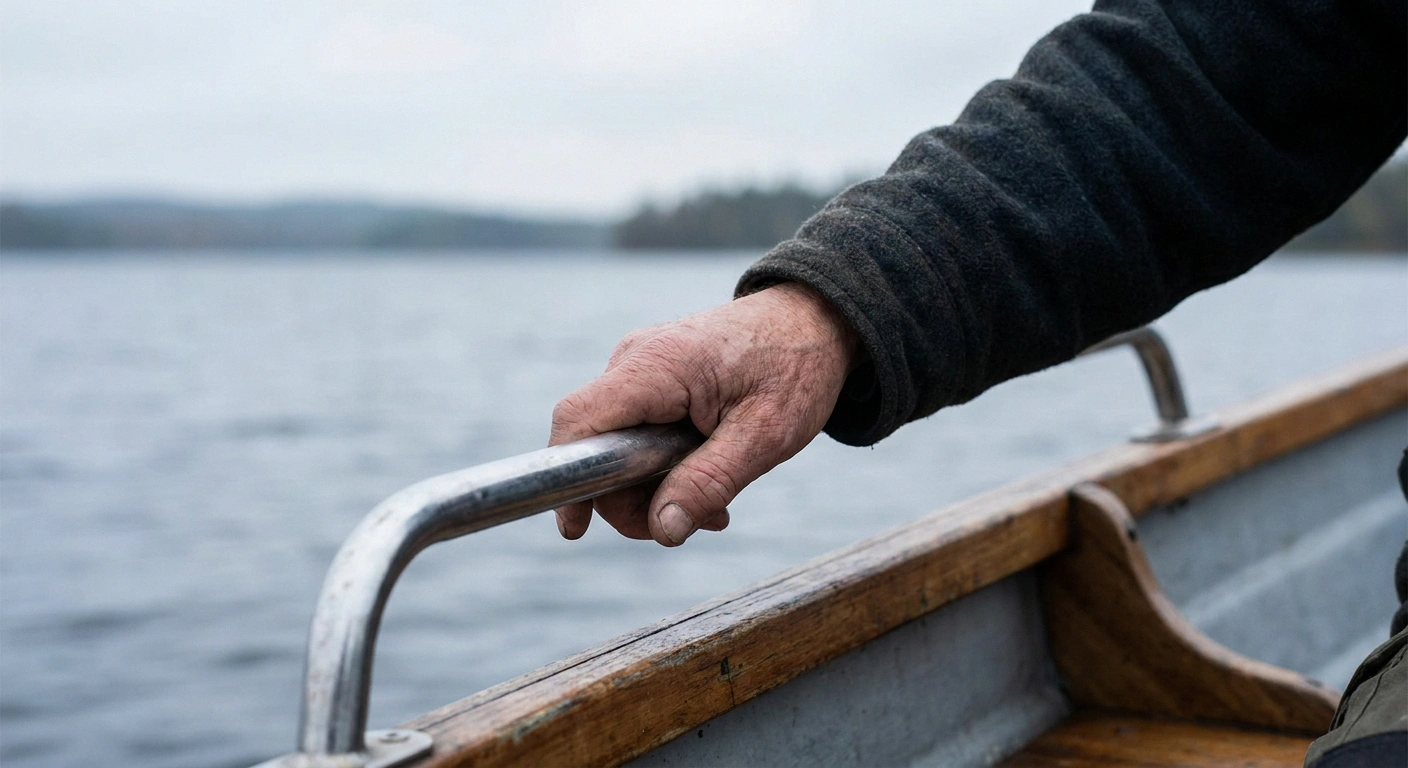
There's a simple countermeasure with research behind it. In a small lab study, people with peripheral neuropathy who rested a fingertip lightly on a stable surface swayed less, and a light touch helped about as much as pressing down hard. It was eight people on dry land, so take it as an explanation rather than proof. Still, it's the physiology behind the oldest rule on any boat: keep one hand for the boat. My guide to balance and fall prevention with neuropathy has exercises that help on land, too.
Slippery footing matters as much as motion does. In a year-long study of 20 older adults with neuropathy, 13 fell, and 69 of the 76 falls they reported involved an irregular or slick surface. A wet deck, an algae-coated ramp and a floating dock are about as irregular and slick as surfaces get.
The Step Between Dock and Deck
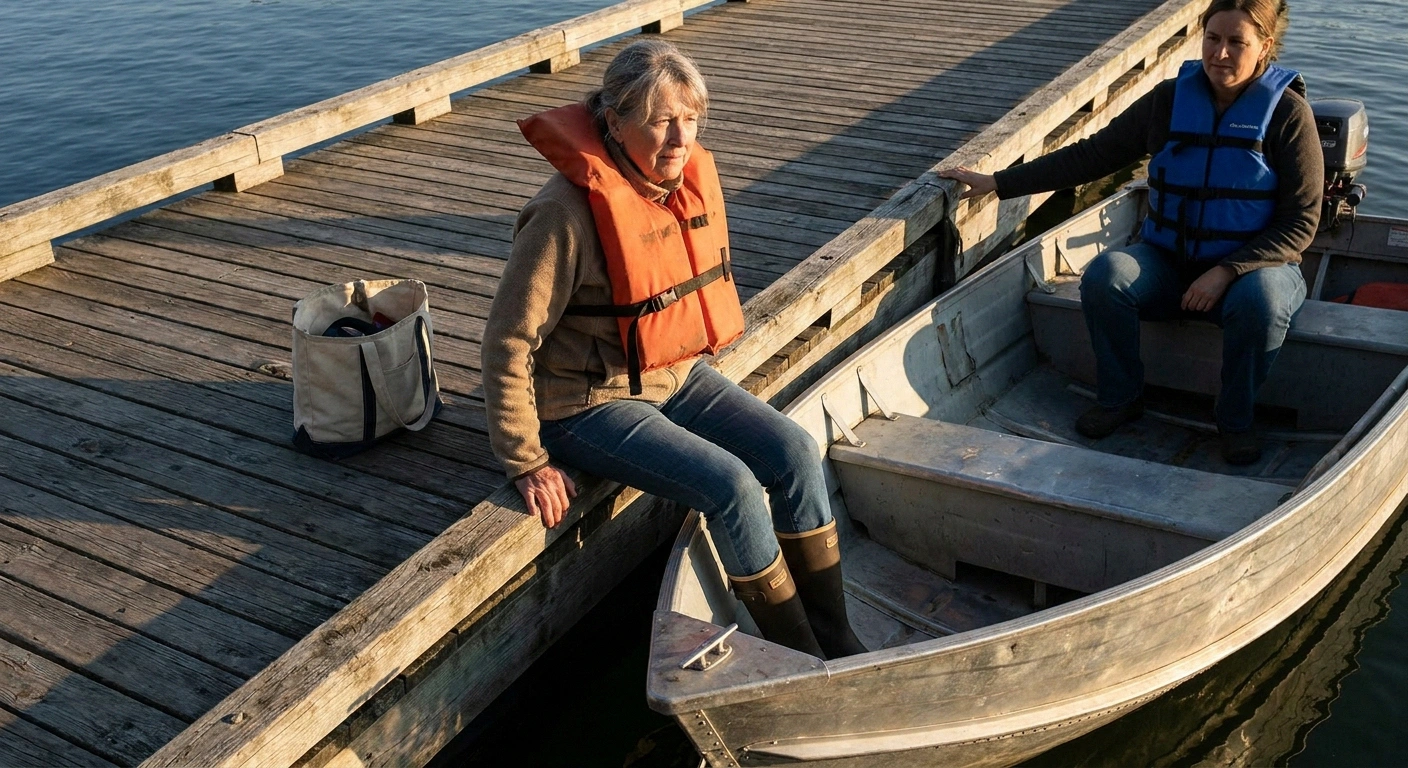
Boating instructors call the steadiest way to move “three points of contact.” The BoatUS Foundation describes it as both feet planted with at least one hand holding on, or, when you're moving about, both hands on something solid like a grab rail while you take one step at a time. With neuropathy, I treat that as a rule from the moment I leave the parking lot.
- Board one person at a time. Let the boat settle before the next person steps on.
- Step toward the middle. BoatUS advises stepping into the center of the boat and keeping your weight low and centered. Planting a foot on the gunwale — the top edge of the side — is how small boats tip.
- Sit first, then take the gear. I have someone hand me the bag or the cooler once I'm seated, so both hands are free for the step itself.
- Say yes to the offered arm. A steady hand from someone already aboard, together with a fixed rail, is the practical version of that fingertip study.
The trip home has its own traps. Light fades, and if you have autonomic neuropathy, the NIDDK notes your pupils may be slow to adjust to changes in light, and that some people feel light-headed when they stand up after sitting. So I carry a small flashlight, sit a moment before I stand to get off, and let someone else step onto the dock first. Many people also feel a brief wobble after a day on the water. The CDC's travel guide calls it mal de debarquement and says the brief version normally fades within a few hours, though it's worth respecting when you're stepping ashore.
Ferries and sightseeing boats are a different situation. A Department of Transportation rule requires passenger-vessel operators to promptly help a passenger with a disability who can't get on or off without assistance, with lifts, ramps, boarding chairs or crew help the passenger agrees to. It doesn't cover boats you rent and drive yourself, so call ahead and ask how boarding works. For big ships, my cruise planning guide covers tender boats and cabins.
Once You're Moving, Sit Down and Stay Low
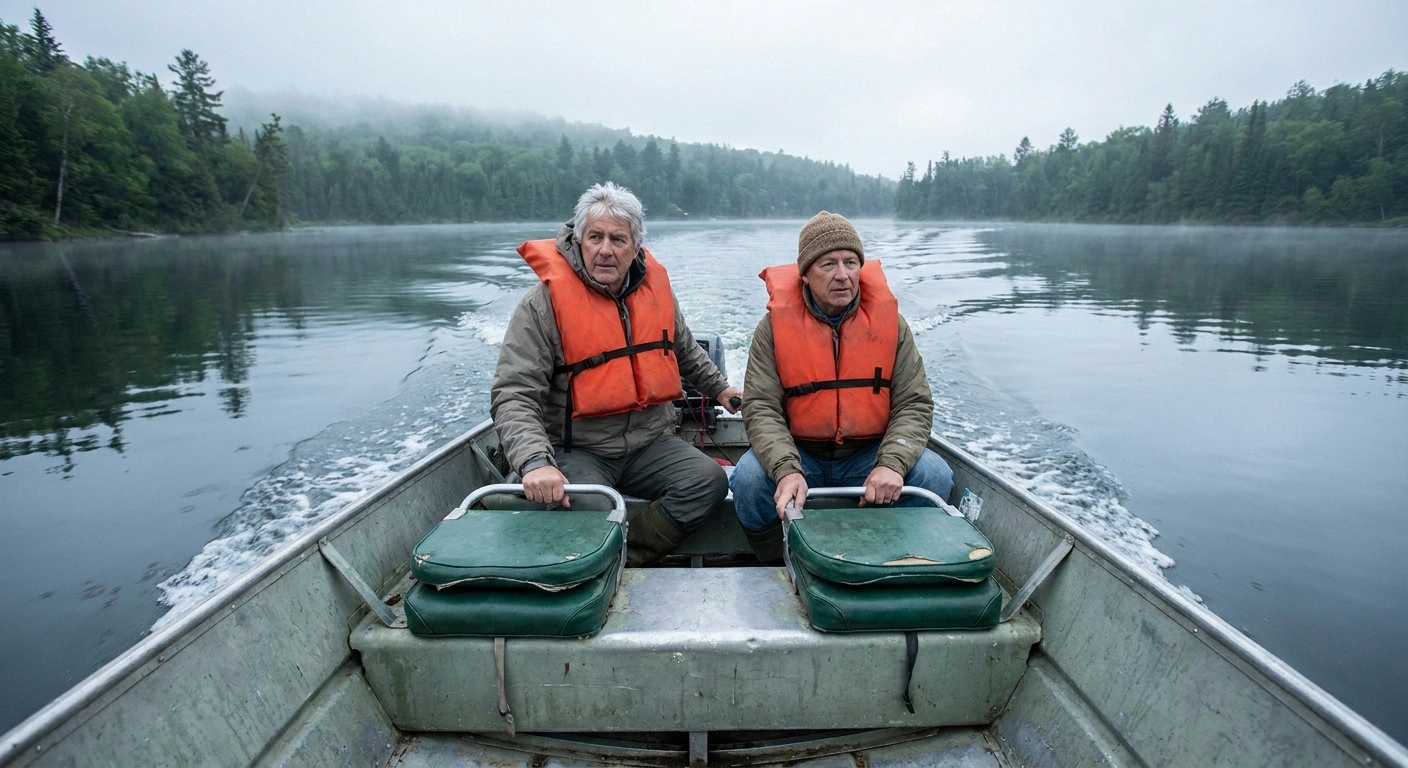
The Coast Guard's boating guide is blunt about passengers: keep them seated, caution them to avoid standing, and keep the load low. Standing raises the center of gravity, and canoes, kayaks and small flat-bottom boats capsize easily. When your feet can't report what the deck is doing, sitting isn't timid. It's good seamanship.
- Take a real seat. BoatUS says never to ride on the gunwales, the bow or the swim platform. In 2024 the Coast Guard counted 33 incidents involving people riding in those spots, with 10 deaths.
- Brace for wakes. Waves and wakes were the primary contributing factor in 122 incidents and 80 injuries that year. When one is coming, both hands go on the seat or a rail.
- Stay off the stern while the engine runs. Carbon monoxide can collect around the rear deck and swim platform, especially while idling or stopped, and the Coast Guard notes its symptoms look a lot like seasickness. If anyone gets a headache, nausea or dizziness back there, shut off the engine or generator if it's safe, move everyone to fresh air, and call for emergency help if symptoms are severe or don't clear quickly.
One delicate point for the men: BoatUS lists standing at the side of the boat to relieve yourself as one of the most common ways people end up overboard. Use the boat's head or a container while seated. Nobody aboard will think twice. And if seasickness is a worry, the CDC suggests keeping your eyes on the horizon and avoiding the spots with the most motion, which on a small boat usually means the middle rather than the bow.
A Life Jacket Only Works If It's Already On
The Coast Guard boils its advice down to one sentence: the best life jacket is the one you will wear. Hardly anyone does. In a 2025 observation study done for the Coast Guard, only 9.7% of adults on the water wore one. Among adults 65 and older it was 11.1%, and among adults on pontoon boats just 1.3%, the lowest of any type of motorboat.
How much does wearing one matter? An analysis of Coast Guard data estimated that a worn life jacket may prevent about one in two boating drownings, if the relationship is truly cause and effect. And “keep it handy” isn't a plan. The National Center for Cold Water Safety says most people find it very difficult or impossible to put one on once they're in the water. A 2018 field study of boaters with disabilities, one of whom had peripheral neuropathy, agreed: jackets were hard to put on and adjust in the water, so they only count as reliable if they're worn the whole time.
Choosing One Your Hands Can Fasten
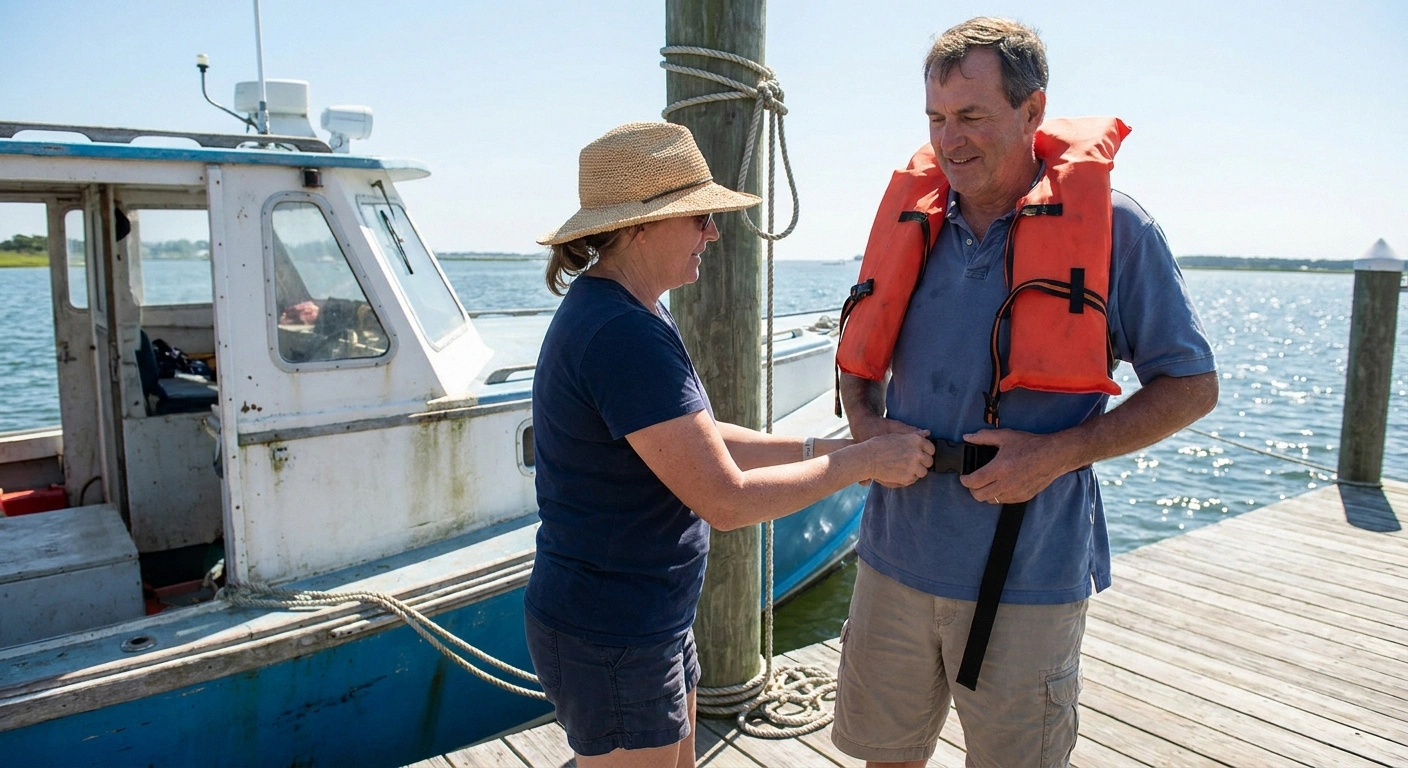
The 2018 study of boaters with disabilities is the most useful thing I've read about choosing a life jacket. Of the 24 problems testers had putting jackets on, 20 involved people with limited use of their arms or hands. Tie straps were hard to tie, and side zippers were harder still for people with limited dexterity. I look for front closures with large buckles and a zipper pull I can find without looking. The report's advice is “try before you buy,” ideally in water, and the Coast Guard's fit test takes one friend: fasten the jacket, have them grasp the tops of the arm openings and gently pull up, and make sure it doesn't ride up over your chin or face.
| Question | Foam (inherently buoyant) | Inflatable |
|---|---|---|
| Floats with no action from you? | Yes | Automatic models inflate once at least four inches under water. Manual models inflate only when you pull the cord. |
| Weak swimmers, less mobile adults | Oregon's Marine Board calls foam the best choice | Coast Guard: not appropriate for weak or non-swimmers, and approved only for ages 16 and up |
| Upkeep | Keep it within reach, not in a plastic bag, a closed compartment or under other gear | Needs a full cylinder and green indicators to count at all. Test the inflator every year; the Coast Guard also suggests an overnight leak check every two months. |
| Cold water | Already floating when cold shock hits | Manual models are a bad match, since the gasp and confusion of cold shock can stop you pulling the cord in time |
| Paddling | No added caution | A Coast Guard Auxiliary paddling course calls inflatables a poor choice |
| Belt-pack styles | Not applicable | Must be pulled over your head after inflating, in the water |
Sources: U.S. Coast Guard life jacket guidance and brochure, BoatUS Foundation, Oregon State Marine Board, National Center for Cold Water Safety, Coast Guard Auxiliary and American Canoe Association.
Newer jackets carry a performance “Level” on the label instead of the old Type I through V codes, with an icon showing whether the jacket will turn an unconscious wearer face up. The Coast Guard asks you to be honest about your swimming, since poor swimmers may need a higher level. Inflatable styles are light and popular, but several agencies are cautious about them for people like us, and the comparison table in this section lays out why. My own choice is foam, fastened before I leave the car.
If You End Up in Cold Water
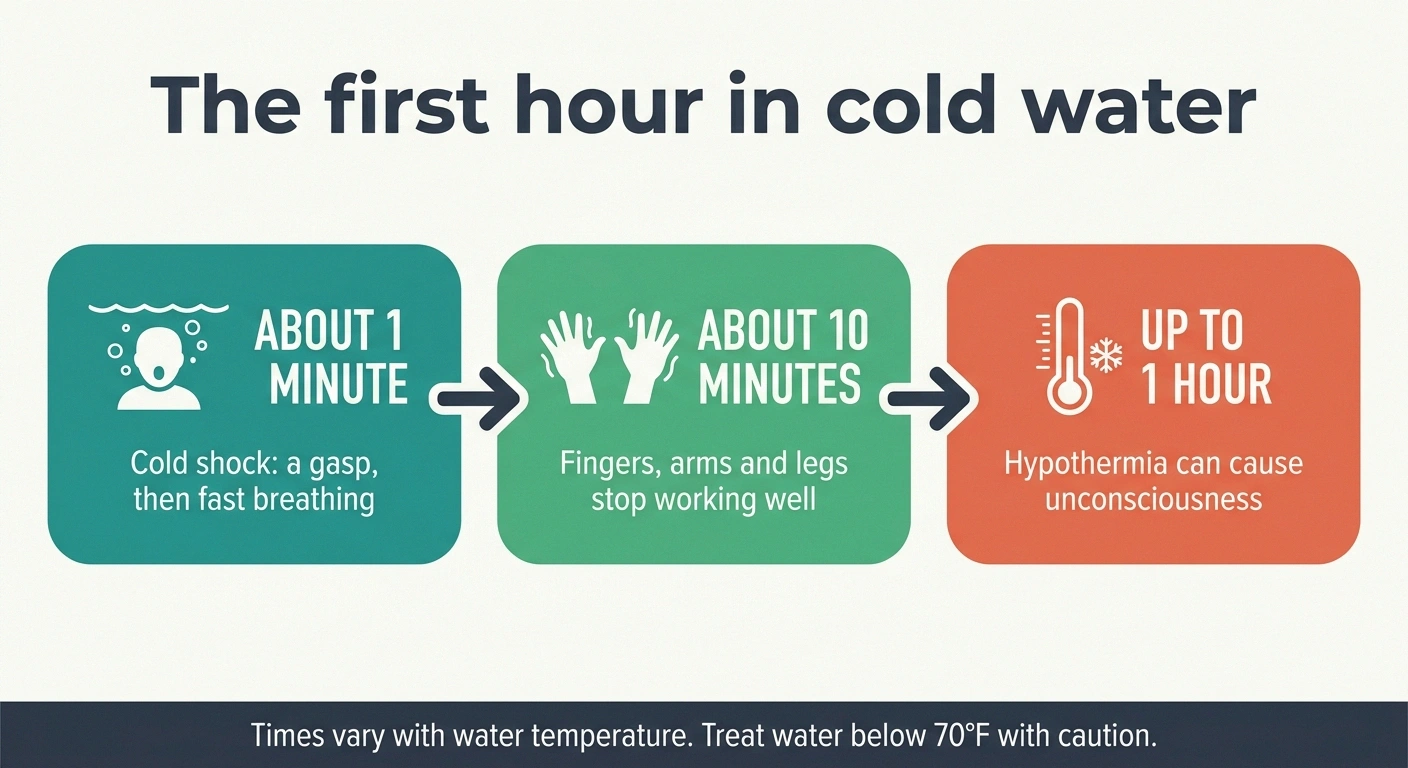
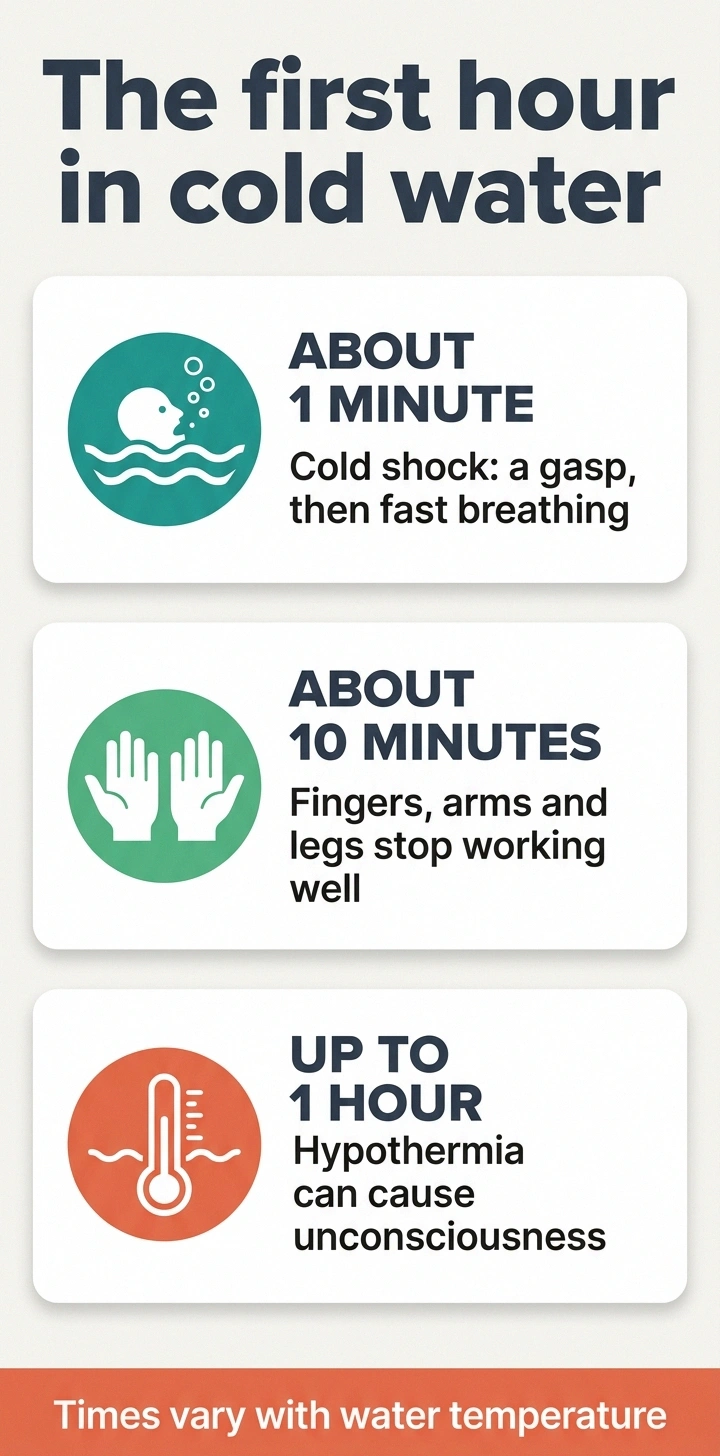
Cold water is where neuropathy and boating overlap most sharply. The Coast Guard describes three phases. First comes cold shock, a sudden deep gasp and rapid breathing that passes in about a minute. Over roughly the next 10 minutes, you lose the effective use of your fingers, arms and legs. And depending on the water temperature, hypothermia can bring loss of consciousness in as little as an hour.
That first minute is the one that drowns people. The National Center for Cold Water Safety says many drown within 6 to 10 feet of where they went in, even though they know how to swim, because cold shock takes away control of their breathing. The center also warns against treating “1-10-1” as a countdown: near freezing, useful movement can be gone within two to ten minutes, and your ability to help yourself declines the entire time. It advises treating any water below 70°F with caution. By my count from the Coast Guard's 2024 tables, incidents in water below 70°F ended in a death about once in every five, compared with about once in every ten in warmer water.
Here's where our nerves come in. Neuropathy can blunt your ability to feel cold, according to the NIDDK, so the water may be colder than it feels. And in very cold water, the center says, hands can go numb and useless in under a minute. If your fingers are already numb on a good day, I wouldn't count on fastening a buckle, zipping a jacket or finding an inflator cord after a fall. That's my conclusion, not a study's, but it's why my life jacket stays fastened from the car until I'm back on the dock. If you do go in wearing one, the Coast Guard says to keep it on, pull your knees to your chest and hug the jacket, and get in or onto the boat as soon as you can.
Shoes, Hot Metal, and the Evening Foot Check
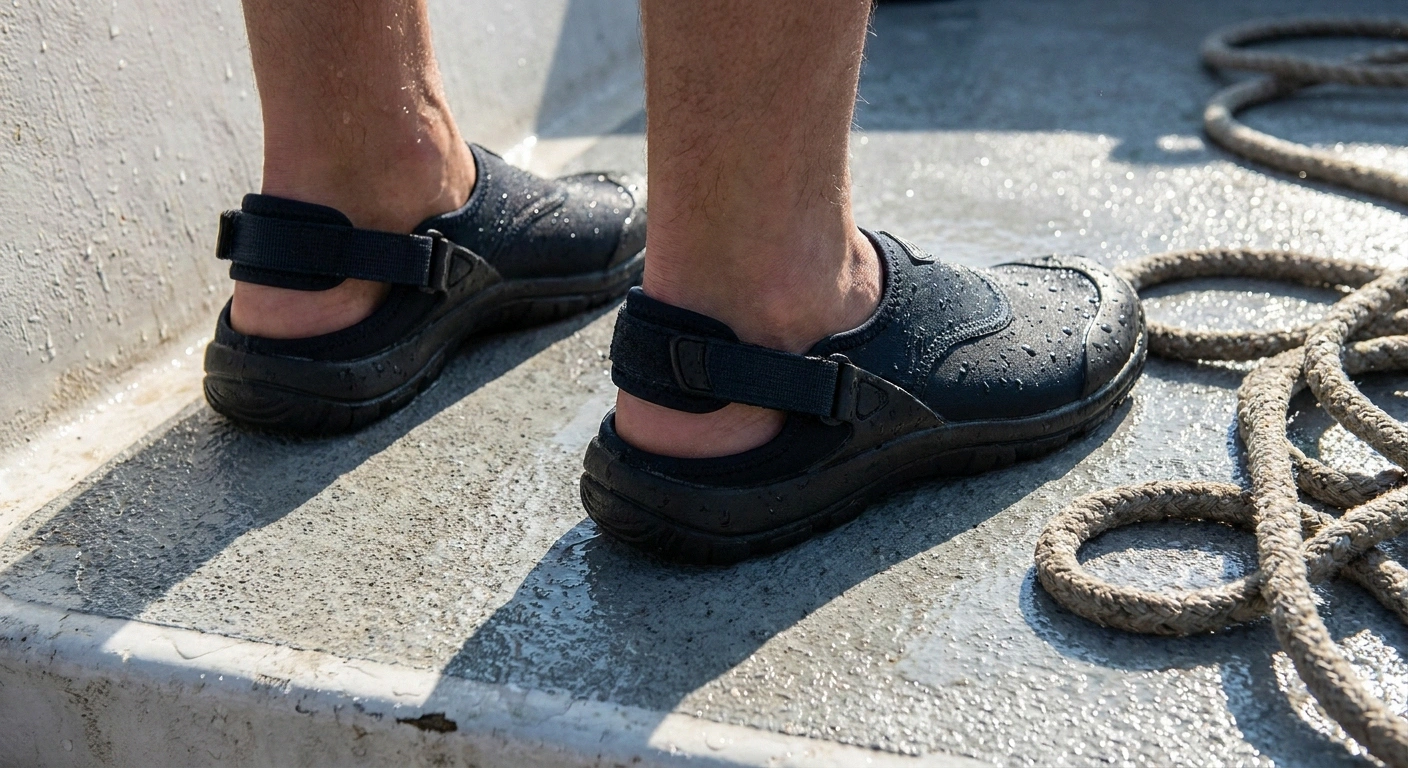
If foot-care experts agree on one rule, it's this: never barefoot. The American Diabetes Association's 2026 Standards of Care advise against walking barefoot and against open-toed shoes, and the NIDDK adds a warning that fits a sunny dock perfectly. With nerve damage, the agency warns, you can burn your feet without realizing it. The agency also suggests sunscreen on the tops of your feet.
Sun-baked surfaces get hotter than most of us would guess. In desert testing in Las Vegas on a 120°F afternoon, sun-exposed metal reached 144°F and sand 143°F. Those are extremes, not typical deck temperatures, but an Australian study found every unshaded surface it tested could cause significant burns to the soles with enough contact time, even on overcast days, while shade prevented permanent injury entirely. Think metal ladders, cleats and dock hardware in the afternoon, and the sand at a beach launch.
The American Canoe Association lists cuts to the soles among the most common paddling injuries, and its course says paddling shoes should be closed-toed and fastened, with thick soles, secure enough to stay on if you end up swimming. Clogs that slip off don't qualify. I look for a closed toe, a heel strap or laces that truly hold the shoe on, a thick grippy sole that drains, and a smooth lining where sand can't collect and rub.
A pebble you can't feel can rub a sore by lunchtime, so the NIDDK's routine is worth borrowing after every boat day: check the inside of your shoes before putting them on, dry carefully between your toes, and look over both feet in the evening when the shoes come off. A mirror helps with the soles, and a burn, a cut, a blister or spreading redness should be cleaned, covered and checked promptly, since infections can move fast in feet that can't feel them. My neuropathy foot care guide walks through the full routine, and walking on the beach with neuropathy covers hot sand in more detail.
Heat, Sweat, and the Shade Under the Canopy
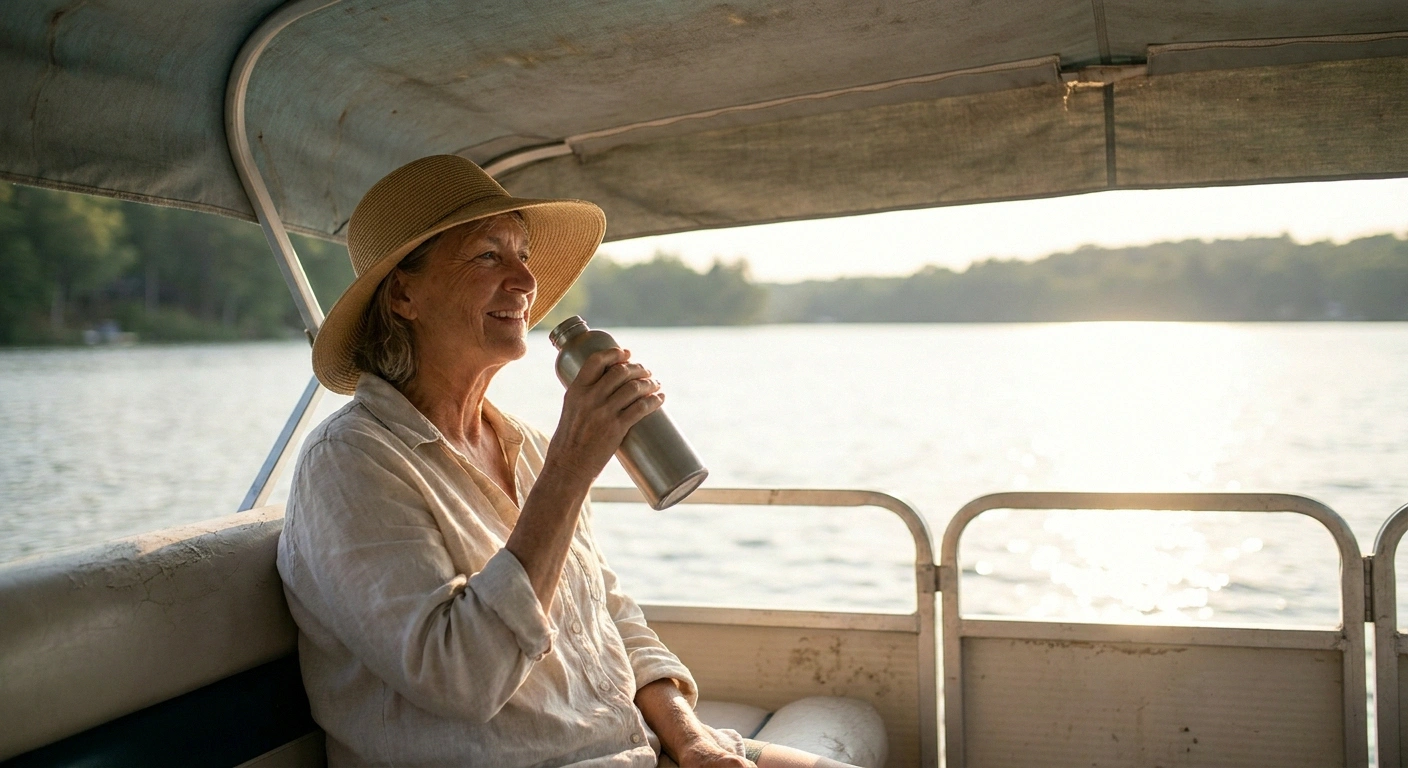
Out on open water there's rarely shade unless you bring it, and that matters more with neuropathy. Autonomic nerve damage can affect sweat glands, the NIDDK explains, and when they don't work properly, the body may not be able to control its temperature. The CDC adds that people 65 and older are more prone to heat illness, partly because more of us take medicines that affect sweating. Its guidance for clinicians names antihistamines with anticholinergic properties, which reduce sweating, and lists duloxetine among the medicines that can increase it.
- Sit under the canopy or an umbrella in the middle of the day, and favor morning or evening outings.
- Drink water before you're thirsty, and go easy on alcohol, caffeine and sugary drinks. If you're on a fluid limit for heart or kidney disease, follow that plan instead.
- Wear loose, light-colored clothing and a hat with a brim all the way around.
- Use a broad-spectrum sunscreen of SPF 15 or higher. UV rays reflect off water and reach you even on cloudy days.
Heat illness can look like seasickness or carbon monoxide exposure: dizziness, headache, weakness, nausea. If someone aboard feels off, get them into shade and fresh air and start cooling them, and call 911 for confusion, fainting, chest pain or trouble breathing. My hot-weather tips for neuropathy cover the rest of summer.
Seasickness Remedies and Nerve-Pain Medicines on the Same Day
This is the part of boat-day planning I see skipped most often, and it's where five minutes with a pharmacist pays off. According to the CDC's travel health guide, every medicine used for motion sickness has side effects, and the most common is drowsiness. Scopolamine, the prescription patch worn behind the ear, is slightly less sedating than the over-the-counter pills dimenhydrinate (original Dramamine) and meclizine (Bonine), while promethazine is the most sedating of all. Everyday allergy pills such as cetirizine and loratadine don't work for motion sickness.
Now add a nerve-pain medicine to the same day. In gabapentin's postherpetic neuralgia trials, 28% of people reported dizziness (versus 8% on placebo) and 21% sleepiness (versus 5%). In pregabalin's diabetic neuropathy trials, dizziness ran 21% versus 5%. Duloxetine's label says orthostatic hypotension, falls and fainting have been reported at recommended doses. None of this is a reason to give up the lake — but stacking drowsiness on drowsiness on a moving deck deserves a plan, and whoever runs the boat or drives home shouldn't be the one who took something sedating.
For adults 65 and older, the American Geriatrics Society's Beers Criteria list dimenhydrinate and meclizine among medicines older adults should generally avoid, and they list scopolamine as highly anticholinergic. The same criteria warn against stacking three or more brain-active medicines, a group that counts gabapentin and pregabalin, because falls and fractures become more likely.
So take your full medicine list to your pharmacist and ask whether a seasickness remedy is a sensible match for your nerve-pain medicine. The CDC suggests trying a dose at home before a trip, since side effects vary from person to person, and notes these medicines work best taken before the motion starts. Skip alcohol, which it says makes motion sickness worse. Ginger's evidence is weak and contradictory, and acupressure wristbands have tested no better than placebo. My guide to traveling with neuropathy medications has more on timing doses around a trip.
Why the Cooler Stays Dry on Our Boat
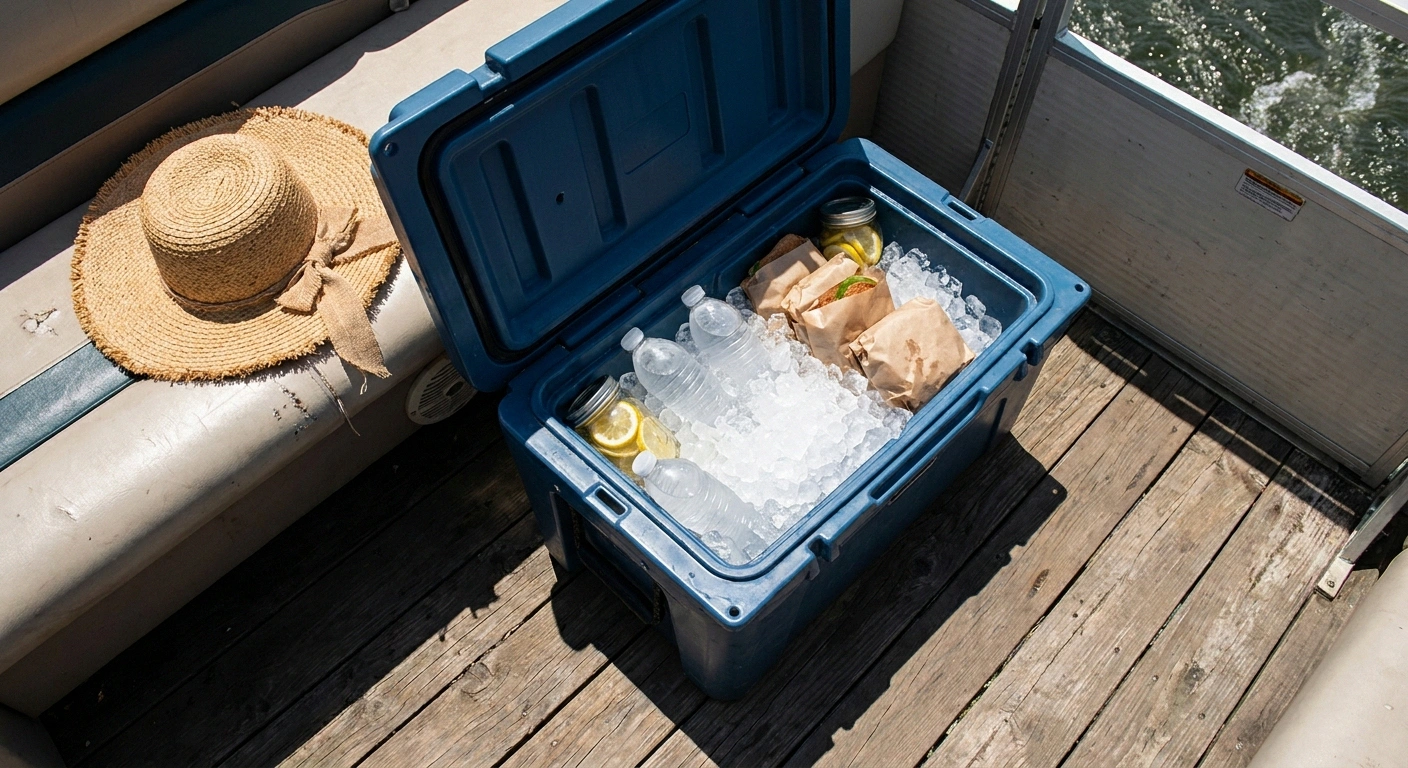
Alcohol was the leading known contributing factor in 2024 boating deaths. Where the primary cause was known, it led in 20% of them, 92 deaths in all. The Coast Guard says motion, vibration, engine noise, sun, wind and spray speed up a drinker's impairment, and that in boating deaths involving alcohol, more than half the victims capsized or fell overboard. It adds a cruel twist — alcohol creates a false feeling of warmth that can keep someone in cold water from getting out before hypothermia sets in.
State boating officials say those same “stressors” intensify the effects of some medications, too, and the Coast Guard says there's no safe threshold for drinking and operating a boat. For passengers, the medicine labels speak for themselves. Pregabalin's is the strictest, with no alcohol at all while you take it. Gabapentin's asks you to check with your prescriber before drinking, and duloxetine's cautions against heavy drinking as a liver risk. There's more in my piece on neuropathy and alcohol limits.
Kayaks and Canoes Ask More of Your Balance
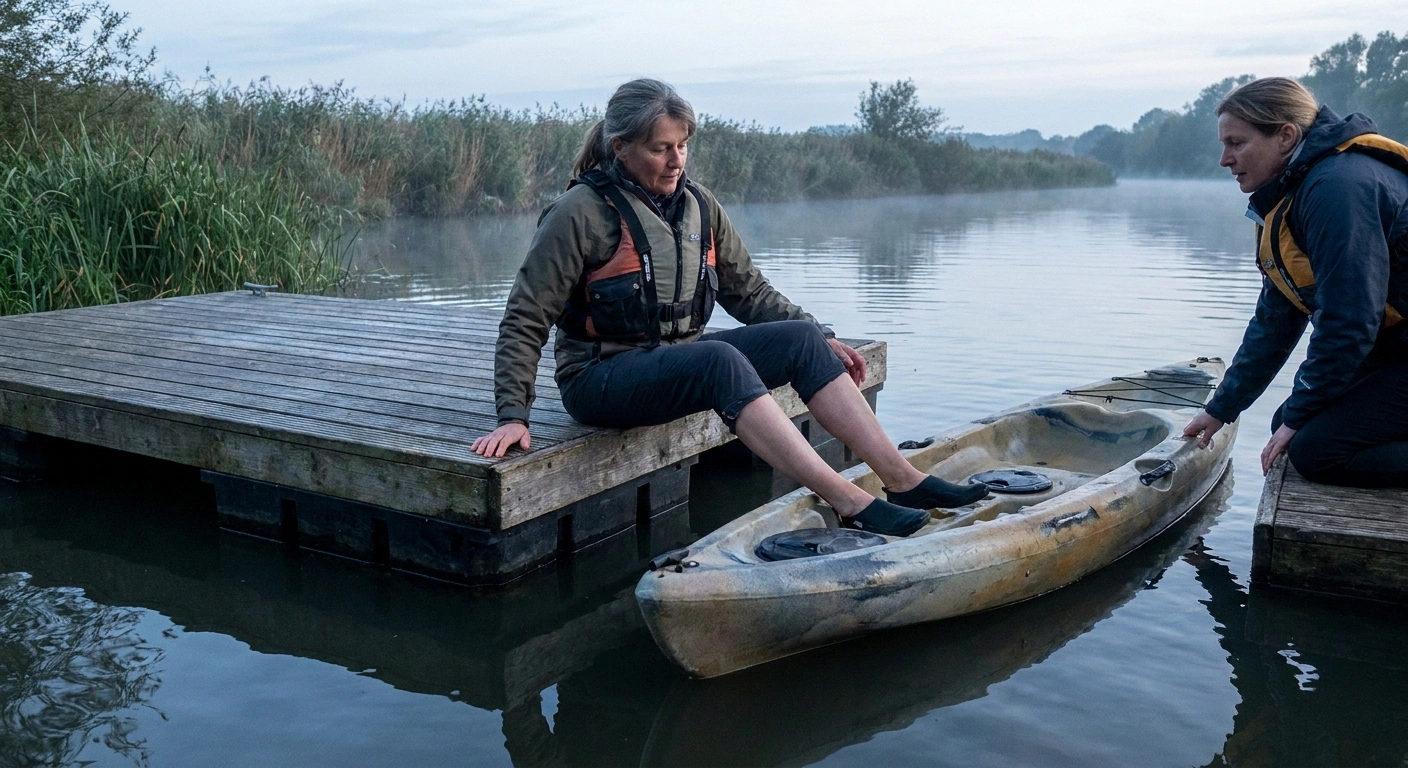
Paddling is wonderful exercise, and plenty of people with neuropathy love it. But paddlecraft accounted for 26% of 2024 boating deaths, and 87% of the people who died in kayaks drowned. The American Canoe Association's course notes that boarding and exiting send many beginners for an unexpected swim, because your center of gravity is higher than normal while you do it. Its rule for boarding or shifting position is two hands and one foot, or both feet and one hand, on the boat at all times.
- Sit-on-top kayak
- Broad and stable on calm water, doesn't flood easily, and is easy to climb back onto after a swim.
- Sit-inside kayak
- Also stable on calm water, but it needs added flotation and can be very hard to empty and re-enter once it swamps.
- Required gear
- A Coast Guard-approved life jacket and a sound-producing device, ideally a whistle attached to the jacket.
- Company
- Always paddle with another paddler. The Coast Guard Auxiliary course says three is an even better number.
- The classic trap
- A warm day, cold water, and paddling alone. Warm air makes cold water feel harmless, and it isn't.
From a dock, the ACA's method for a kayak is to sit on the dock with your feet in the cockpit, put one hand on the dock and the other at the back of the cockpit, and lower yourself in using your arms. For a canoe, it suggests squatting beside the boat, holding both gunwales, and leaning your weight over the center line. A friend holding the boat steady makes either one easier. When it comes to choosing a kayak and a paddling plan, the card in this section has the details, and the ACA also trains instructors in adaptive paddling for people with physical disabilities, so it's worth asking a local outfitter or club whether anyone there has that training.
What to Settle Before You Leave the Dock
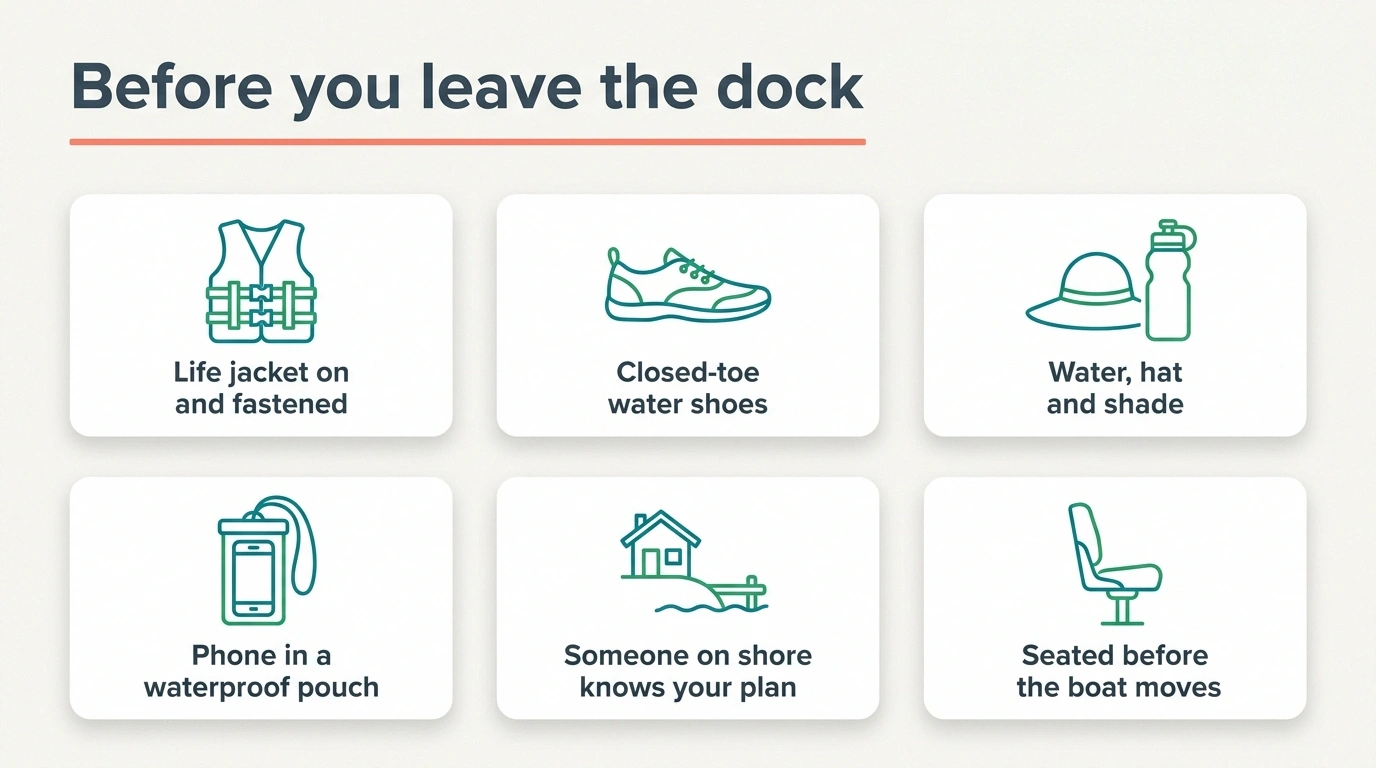
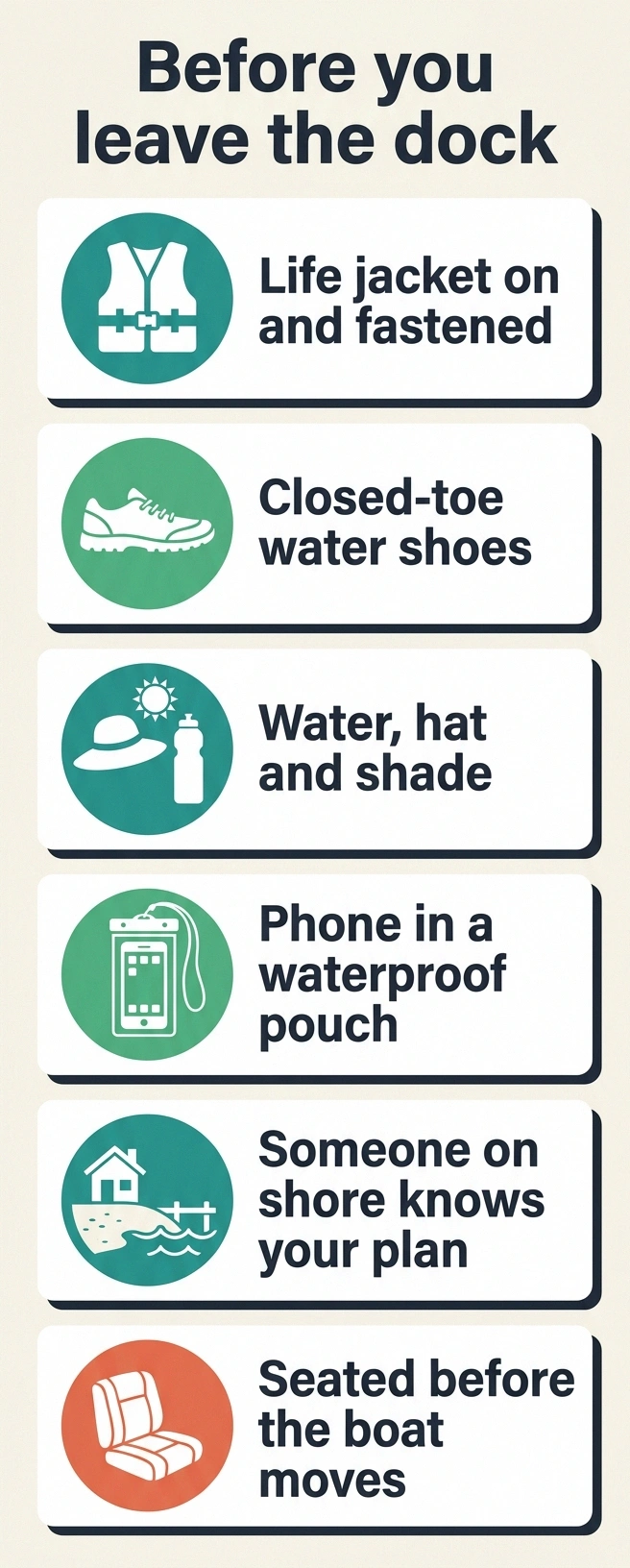
Where the operator's training was known, 69% of 2024 boating deaths happened on boats whose operator had never taken a boating safety course. State and NASBLA-approved courses are offered across the country, some free and online, and they're worth taking even if you'll mostly be a passenger. The Coast Guard Auxiliary and the U.S. Power Squadrons also offer free vessel safety checks.
A few habits cost nothing. Leave a float plan with someone on shore: where you're going, who's aboard, what the boat looks like and when you'll be back. Carry more than one way to call for help that works when wet, such as a marine radio plus a phone in a waterproof pouch clipped to your life jacket, remembering that numb or chilled fingers may not manage a phone in the water. That's why a boating partner and a float plan matter even more. And whoever drives a boat under 26 feet should use the engine cut-off switch link, which federal law generally requires, with some exceptions, when running on plane.
None of this takes the joy out of a morning on the water. Walt still teases me about the checklist taped inside the lid of my boat bag. I don't mind a bit. I'm the one who steps back onto the dock with dry shoes, a steady hand on the rail, and ten toes I've actually looked at.
Frequently Asked Questions
Can you go boating if you have peripheral neuropathy?
Many people with neuropathy still enjoy boating. The main adjustments are boarding with three points of contact and help from someone aboard, staying seated while the boat is moving, wearing a life jacket the whole time, protecting your feet with closed-toe water shoes, and asking your pharmacist how any seasickness medicine fits with your nerve-pain medicine.
What kind of life jacket is best if my hands are numb?
No single type is best for everyone. Several agencies steer weak swimmers and less-mobile adults toward foam life jackets, which float without any action from you. Look for front fastenings you can manage, try the jacket on in the water before relying on it, and wear it the whole time you are out, because putting one on in the water is very difficult.
Are inflatable life jackets safe for older adults?
The Coast Guard approves inflatable life jackets only for people 16 and older and says they are not appropriate for weak or non-swimmers. They must be armed and checked, and the inflation mechanism should be tested every year. Oregon's Marine Board does not recommend them for less mobile adults, and manual inflatables are considered a poor choice for cold water because cold shock can keep you from pulling the cord in time.
Can I take Dramamine or a scopolamine patch with gabapentin or pregabalin?
That is a question for your pharmacist, who can check your full medicine list. All motion sickness medicines can cause drowsiness, and gabapentin and pregabalin commonly cause dizziness and sleepiness, so the effects can add up. For adults 65 and older, the American Geriatrics Society lists dimenhydrinate and meclizine among medicines to generally avoid. The CDC suggests trying any seasickness medicine at home before a trip.
What shoes should I wear on a boat if I have neuropathy?
Wear closed-toe water shoes with a thick, grippy sole and a strap or laces that keep them on your feet, even if you end up in the water. Never go barefoot on docks, decks or sand, since sun-heated metal and sand can burn feet you cannot feel. Check your feet every evening after a boat day, including between the toes.
Why do I still feel like I'm rocking after a boat ride?
A rocking or swaying feeling after time on the water is common and usually fades within a few hours. Hold a rail and let someone go ahead of you onto the dock while it passes. If it lasts for days, mention it to your doctor, and get urgent care if it comes with one-sided weakness, slurred speech, a severe headache or trouble walking.
How cold is too cold if I fall in the water?
The National Center for Cold Water Safety advises treating any water below 70 degrees Fahrenheit with caution. Cold water can cause a gasp reflex within the first minute and can take away the use of your hands, arms and legs within minutes, which is why a life jacket needs to be on before you ever fall in.
About the Author