Some proteins in your blood behave differently depending on temperature. Cryoglobulins are the clearest example. At body temperature they stay dissolved and cause no trouble. Cool them a few degrees and they clump together into solid particles. Warm them again and they dissolve back.
That single property explains a great deal about this condition. It explains why symptoms flare in cold weather. It explains why so much of the damage lands in the smallest, coolest, most peripheral blood vessels, which happen to be the ones feeding the nerves in your hands and feet. And it explains the most consequential thing on this page, which is why the blood test for cryoglobulins comes back negative so often in people who genuinely have them.
One important qualification before going further, because temperature is a memorable idea and it is easy to over-apply. Cold is a trigger and an amplifier, not the whole disease. Underneath it sits an immune process that keeps producing these proteins whatever the weather, and the inflammation they set off in blood vessel walls runs on its own. That is why the kidneys can be affected in a warm room, why symptoms do not vanish in summer, and why keeping your hands warm is a genuinely useful measure rather than a treatment. Staying warm manages the trigger. It does not touch the cause.
Here is how a temperature-sensitive protein ends up causing nerve damage, what the two very different neuropathy patterns look like, how the testing goes wrong, and what treatment actually targets.
A Protein That Changes State
Cryoglobulins are immunoglobulins, the same family of proteins your immune system uses as antibodies. What makes them cryoglobulins is a physical quirk rather than a function. Below normal body temperature they precipitate out of solution. The name is literal: cryo for cold, globulin for the protein class.
Having them is not automatically a disease. Small quantities turn up in healthy people. The problem starts when there are enough of them, and when they precipitate inside blood vessels rather than harmlessly in a test tube.
Precipitated protein inside a small vessel does two things. It physically obstructs flow, and it triggers inflammation in the vessel wall. Inflammation of a blood vessel is vasculitis, and that is the term you will see attached to this condition: cryoglobulinemic vasculitis.
Where does it get cold enough for this to happen? The parts of you furthest from your core and closest to the outside air. Fingers, toes, ears, the skin of the lower legs. Those are exactly the regions where cryoglobulinemia announces itself, and the geography is not a coincidence.
How the Damage Reaches Your Nerves
Peripheral nerves have their own dedicated blood supply, a network of tiny vessels called the vasa nervorum that runs along and into each nerve trunk. Nerve tissue has a high metabolic demand and very little tolerance for interruption. Cut the supply and the fibres downstream begin to fail within hours.
Two mechanisms have been proposed for the nerve damage in this condition, and they work together. Cryoglobulins deposit in the vasa nervorum, and where hepatitis C is involved, the virus drives vasculitis in those same vessels.
This is nerve injury by starvation rather than by direct attack. Nothing is chewing on the myelin. The wiring is being cut off from its blood supply, and the fibres die back from the far end.
Two consequences follow. The damage is axonal, so nerve conduction studies show a pattern of axonal loss rather than demyelination. And because vessel blockage is patchy rather than uniform, the resulting neuropathy can be strikingly asymmetric, which is unusual and diagnostically useful. Most peripheral neuropathies are broadly symmetric. This one does not have to be.
Three Types, and Why the Number Matters
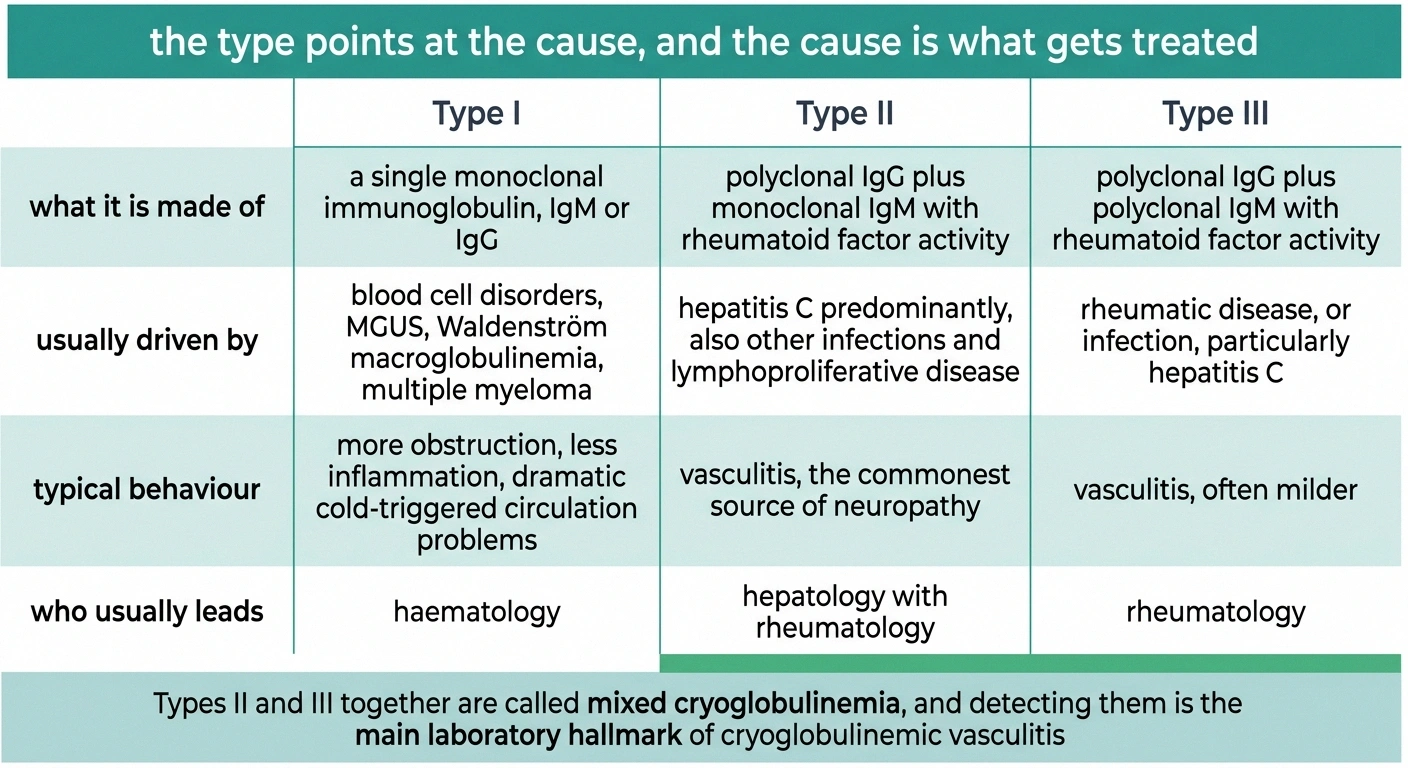
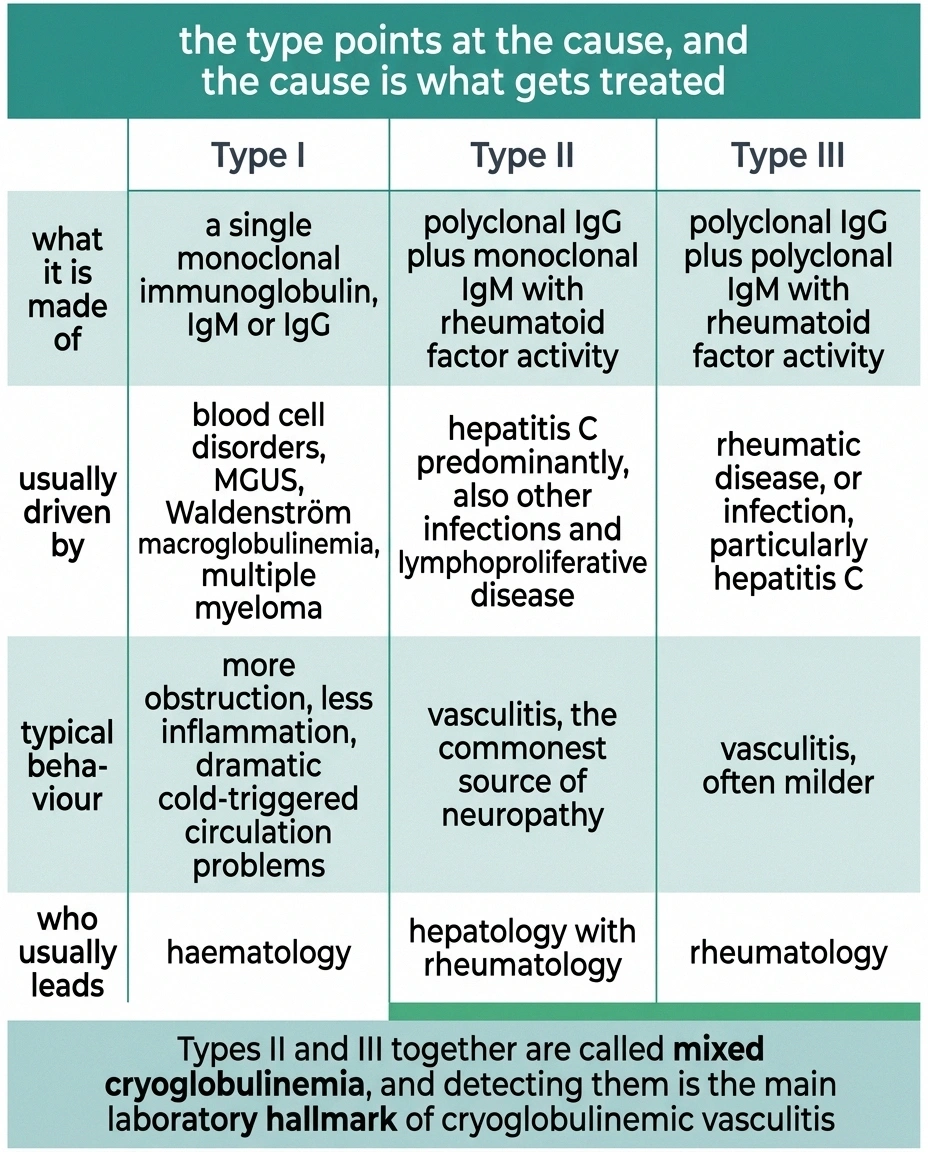
Cryoglobulinemia is sorted into three types by what the cryoglobulins are made of. The type points at the underlying cause, which is what treatment targets.
Type I is a single monoclonal immunoglobulin, either IgM or IgG. It is rare, and it turns up in the setting of blood cell disorders: monoclonal gammopathy of undetermined significance, Waldenström macroglobulinemia, and multiple myeloma. Type I tends to cause more obstruction and less inflammation, and it produces the most dramatic cold-triggered circulation problems.
Type II mixes polyclonal IgG with a monoclonal IgM that has rheumatoid factor activity. It is predominantly associated with hepatitis C infection, though other viruses, rheumatic diseases and lymphoproliferative disorders can also drive it.
Type III mixes polyclonal IgG with polyclonal IgM, also with rheumatoid factor activity. It arises in the context of rheumatic disease or secondary to infection, again particularly hepatitis C.
Types II and III together are called mixed cryoglobulinemia, and detecting them is the main laboratory hallmark of cryoglobulinemic vasculitis. The mixed types are the ones that most often produce neuropathy, and hepatitis C sits behind a large share of them. If hepatitis C is part of your history, our page on hepatitis C and nerve damage covers the broader relationship, of which cryoglobulinemia is one mechanism among several.
Autoimmune conditions account for much of the rest. Sjögren's syndrome, lupus and rheumatoid arthritis all appear on the causative list.
Two Different Neuropathies Under One Name
The literature describes two clinical pictures, and telling them apart matters because they carry different urgency.
Gradual, symmetric, sensory
Tingling and painful burning building over months in both legs, roughly matched left to right. This is the commoner picture and the one most people with hepatitis C associated disease develop.
Timeframe: raise it at the next scheduled appointment, with the rash and joint symptoms mentioned in the same sentence.
Sudden, asymmetric, with weakness
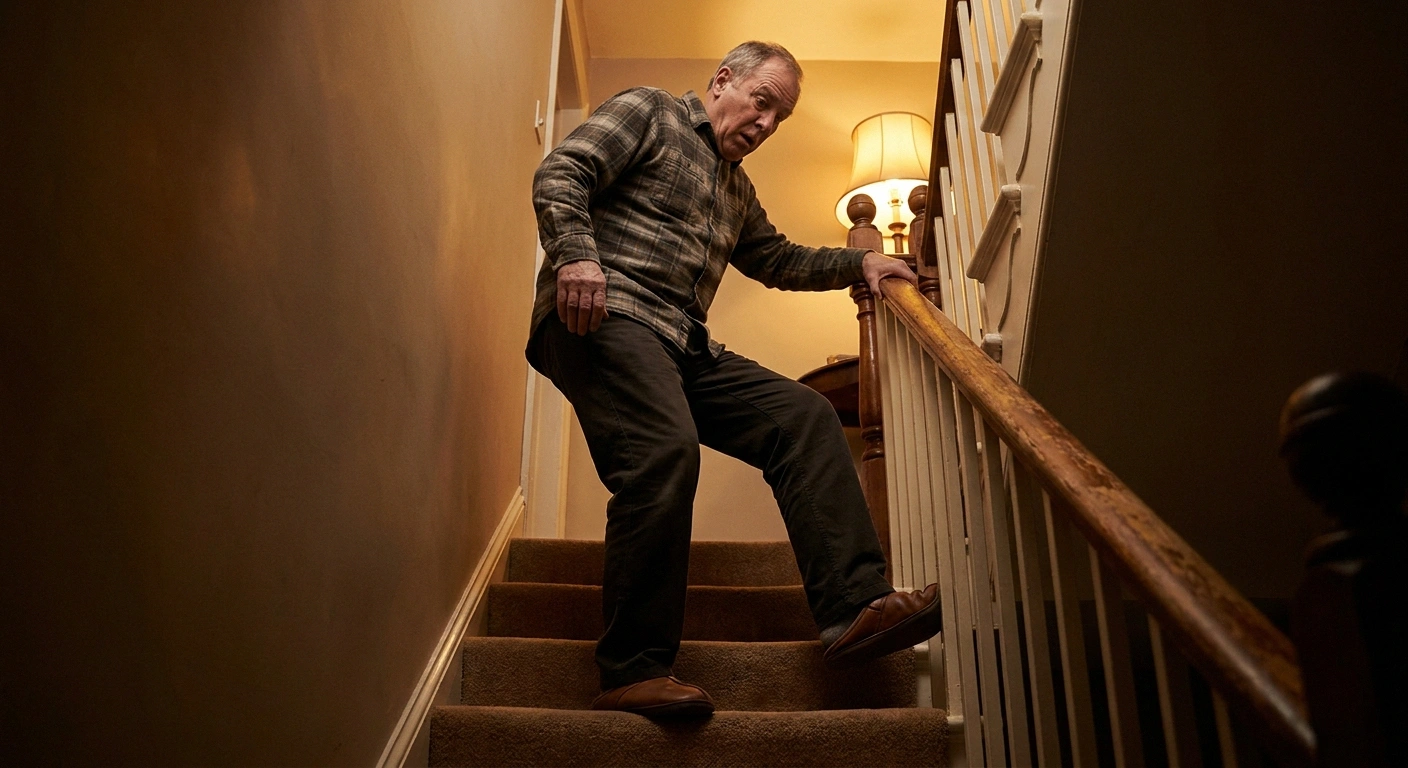
One nerve territory failing over days rather than months. A foot that stops clearing the step. A wrist that will not lift. A hand that loses grip on one side only.
Timeframe: same week, not the next routine slot. Vasculitic nerve infarction can be limited if the inflammation behind it is treated, and that window closes.
The common one is a distal sensorimotor polyneuropathy with primarily sensory features. It begins as paraesthesia and painful dysesthesia in the legs, symmetric or nearly so, developing gradually. It feels like the neuropathy most people have heard of, and it is the presentation most patients with hepatitis C associated cryoglobulinemia develop.
The other is mononeuritis multiplex. Individual named nerves fail, one at a time, in a stepwise fashion. A foot drops over a weekend. Weeks later a wrist weakens. The pattern is asymmetric, often involves all limbs eventually, and comes with severe motor deficit alongside painful sensory symptoms. This is what happens when the vasculitis blocks specific vessels supplying specific nerves.
Mononeuritis multiplex is the pattern that should move fast. Sudden loss of function in a single nerve territory, particularly with weakness rather than only numbness, is a same-week conversation rather than a wait-and-see. Vasculitic nerve infarction can be limited if the underlying inflammation is treated, and the window is not indefinite.
Many patients end up somewhere in between, with an asymmetric axonal polyneuropathy or a multifocal picture accompanied by other signs of systemic vasculitis.
Signs That Show Up Outside the Nerves
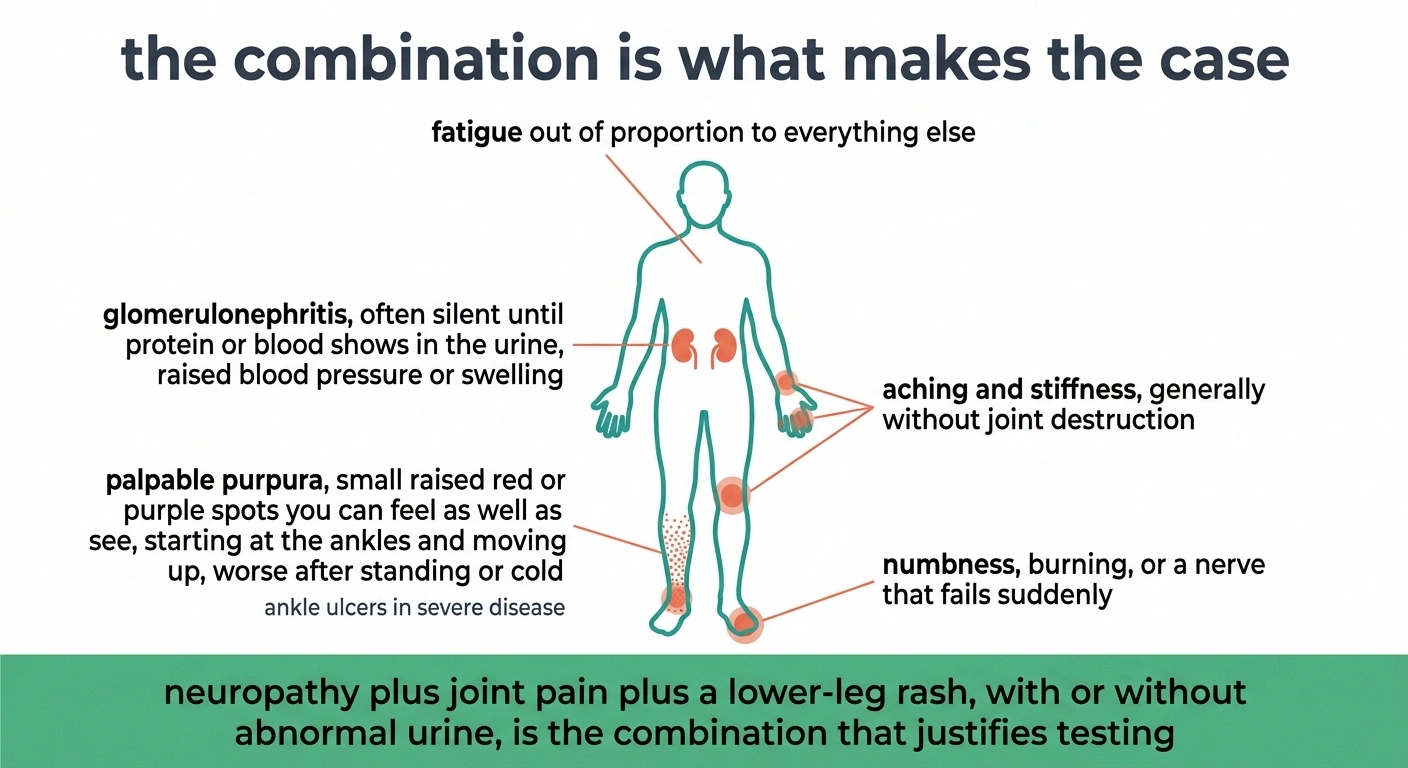
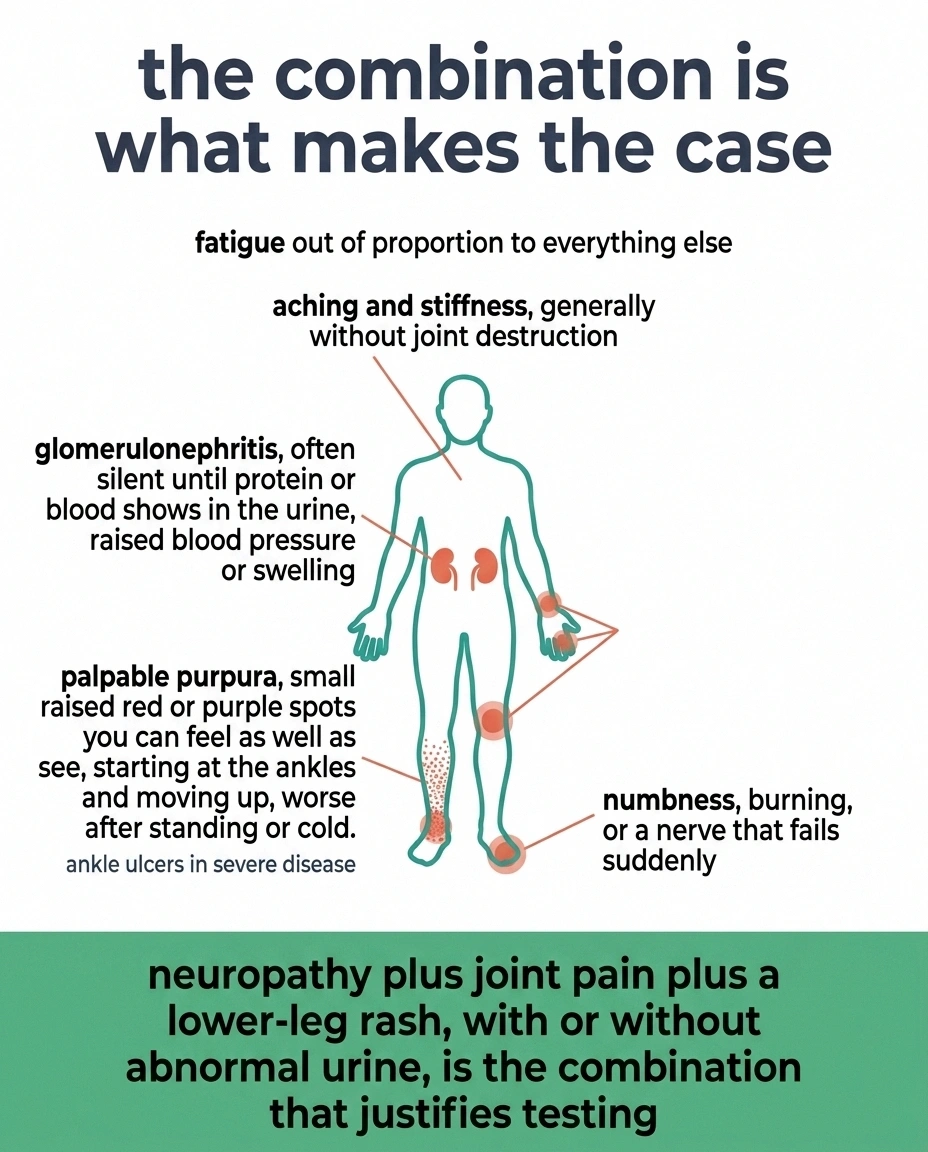
Cryoglobulinemia is rarely a purely neurological illness, and the non-neurological signs are often what secures the diagnosis.
Skin. Palpable purpura on the lower legs is the classic finding: small raised red or purple spots you can feel as well as see, usually starting at the ankles and moving upward, often worse after standing or after cold exposure. Retiform purpura, a net-like or branching pattern, appears in some cases. Ulcers can develop at the ankles in severe disease.
Joints. Aching and stiffness, commonly in the hands and knees, generally without the joint destruction seen in rheumatoid arthritis.
Kidneys. Cryoglobulins deposit in the filtering units and cause glomerulonephritis. This is often silent until it shows up as protein or blood in the urine, high blood pressure, or swelling. It is one of the more serious complications and a reason urine testing belongs in the workup. Nerve problems arising from kidney disease itself are a separate mechanism, covered in our page on uremic neuropathy.
General. Fatigue and weakness that seem out of proportion to everything else.
The combination that should prompt the question is neuropathy plus joint pain plus a lower leg rash, with or without abnormal kidney findings. Any one alone means little. Together they are a specific enough picture to justify testing.
The Blood Test That Fails If the Tube Gets Cold
This section is the reason to send this article to someone.
Worth saying out loud at the draw
“This one is a cryoglobulin sample. Does it need a pre-warmed tube and warm transport?”
A phlebotomist who runs this test regularly will already know. One who does not will check, which is the entire point of asking. It costs eight seconds and it is the difference between a usable result and a repeat draw in six weeks.
Four supporting results strengthen the case when the direct test is equivocal, and none of them depend on sample temperature: a low C4 with a relatively preserved C3, a positive rheumatoid factor, hepatitis C antibody plus viral RNA, and serum protein electrophoresis with immunofixation. Worth having drawn at the same visit.
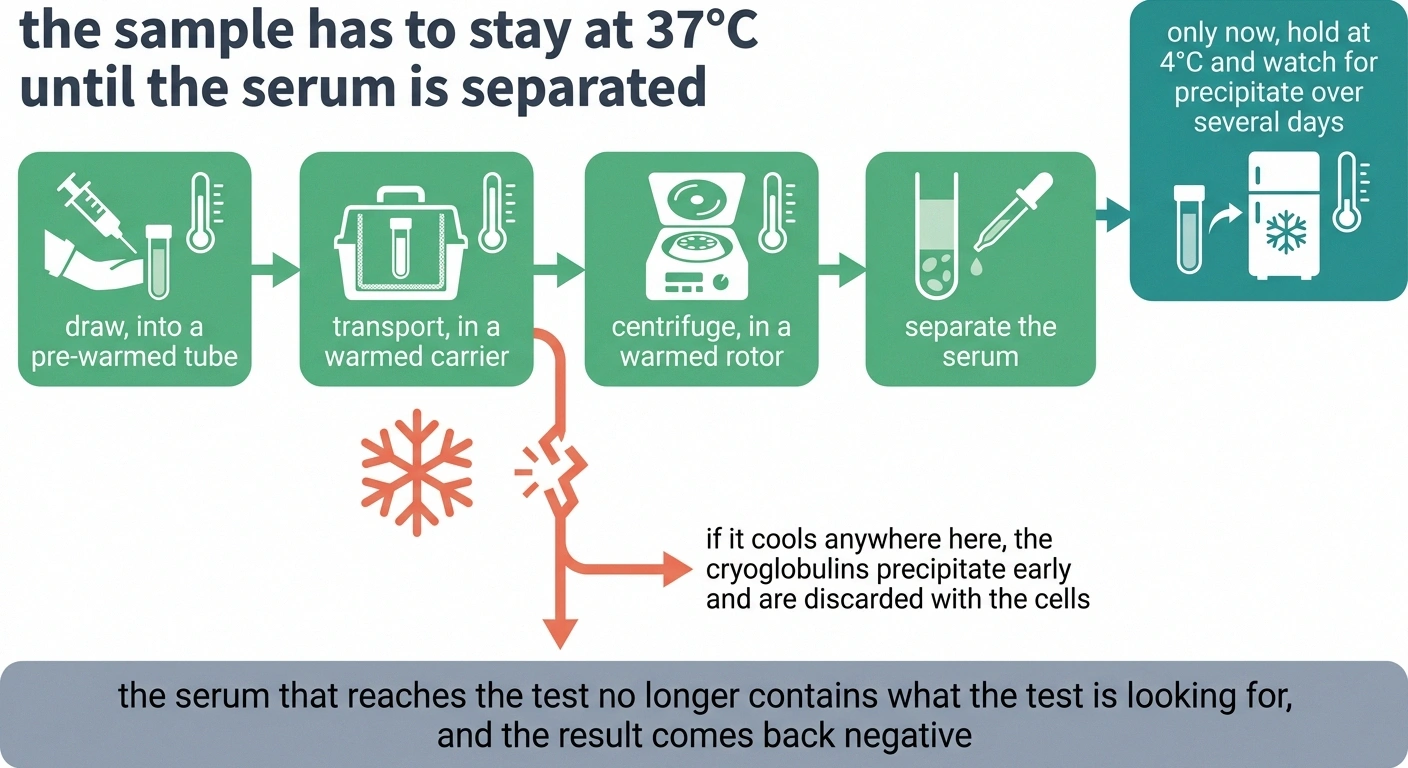
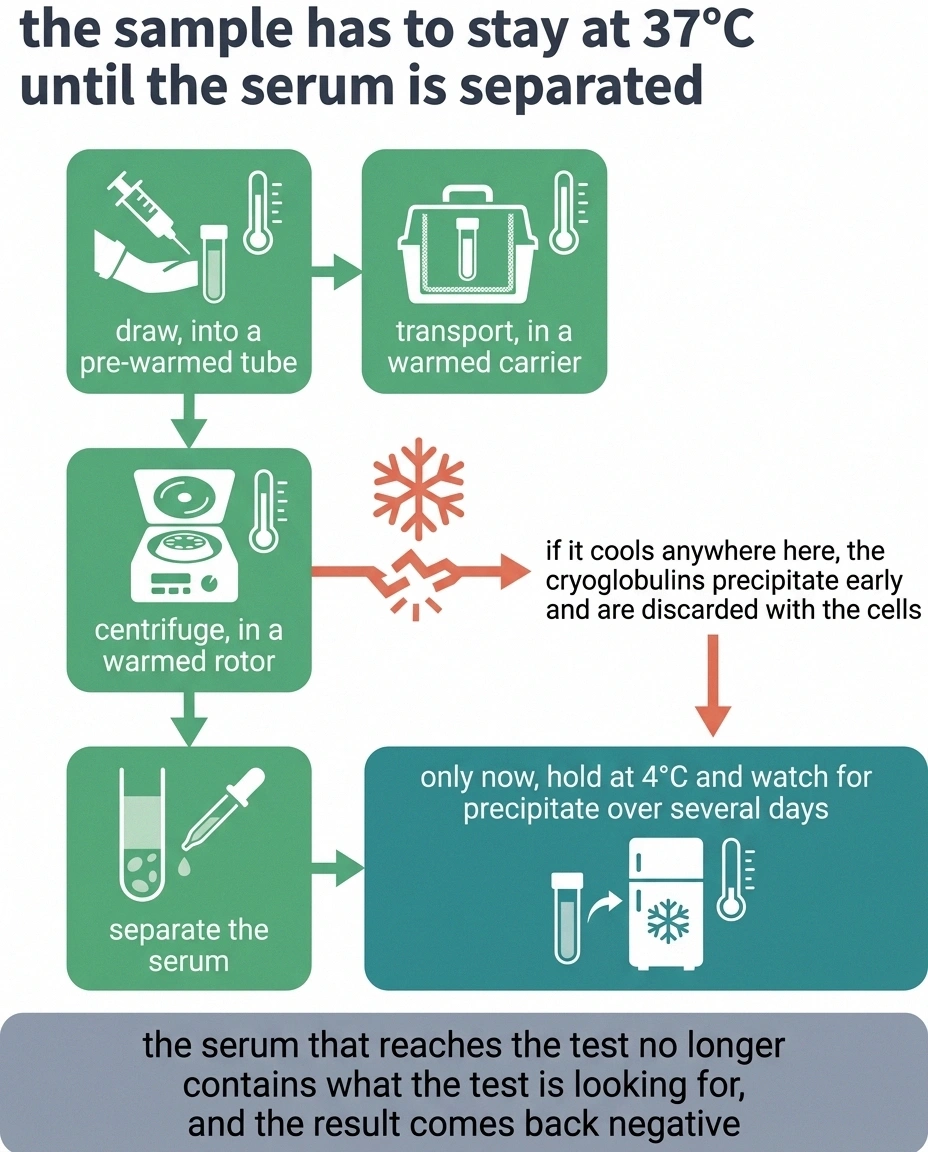
The cryoglobulin test works by exploiting the same property that causes the disease. Blood is drawn, the serum is separated, and the serum is then held at 4°C and watched for several days to see whether a precipitate forms.
The trap is in what happens before the cold step.
The sample has to be kept at 37°C from the moment it is drawn, through transport, through centrifugation, and through separation of the serum. If it cools at any point in that chain, the cryoglobulins precipitate early and get discarded with the cells rather than remaining in the serum that gets tested. The precipitate is thrown away before anyone looks for it.
The result is a negative test in a person who has cryoglobulins.
This is not a rare theoretical concern. Keeping the sample warm to avoid premature precipitation, and thereby preserve the yield for identification, is a standard instruction in the laboratory literature precisely because failing to do it produces false negatives. The same handling problem affects cold agglutinin testing for the same physical reason.
What this means practically. A cryoglobulin test drawn at a routine outpatient lab, left on a bench, and driven to a central facility in an ordinary specimen bag has a meaningful chance of coming back falsely negative. Labs that run this test regularly use pre-warmed tubes, a warmed transport container, and a warmed centrifuge.
If clinical suspicion is high and the test came back negative, two questions are worth asking. Was the sample kept at body temperature from draw to separation? And can it be repeated at a laboratory that runs cryoglobulin testing routinely rather than occasionally?
Supporting tests help make the case when the direct test is equivocal. A low C4 complement level with a relatively preserved C3 is characteristic. Rheumatoid factor is often positive because the monoclonal IgM in mixed cryoglobulinemia has rheumatoid factor activity. Hepatitis C antibody and viral RNA testing is essential given how much of the mixed disease it drives. Serum protein electrophoresis with immunofixation identifies a monoclonal component. Our list of blood tests worth having on record for unexplained neuropathy covers where these sit alongside the standard panel.
Treating the Cause, Not the Nerve
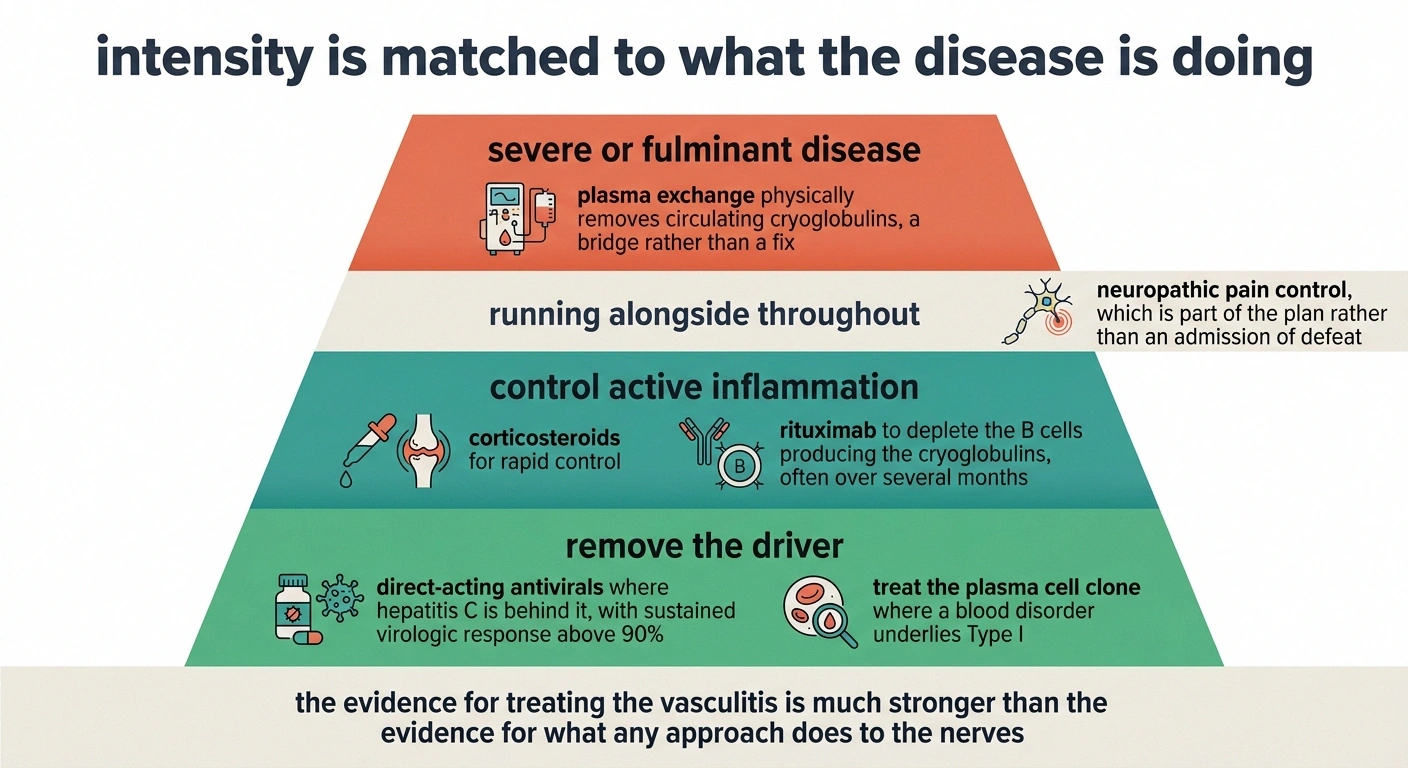
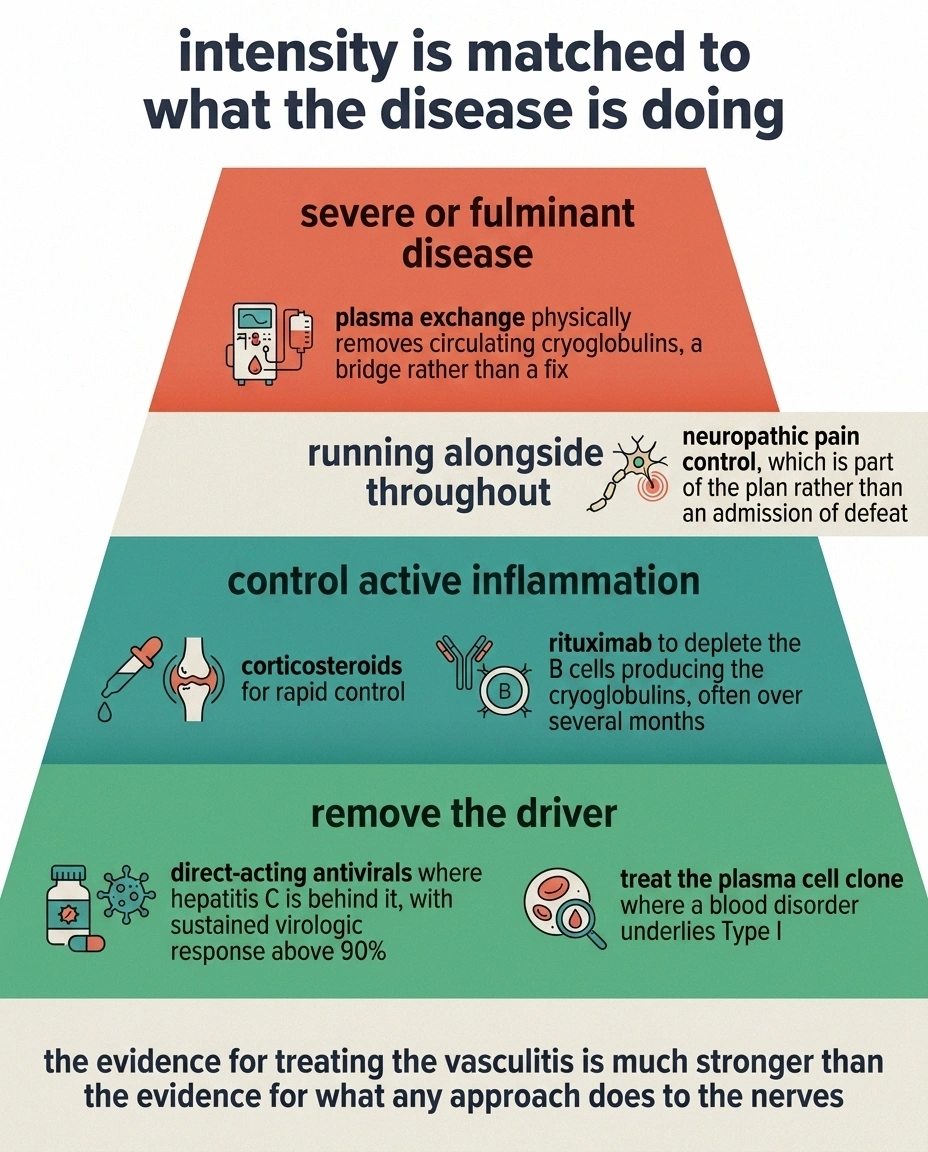
Treatment aims at whatever is producing the cryoglobulins, with the intensity matched to how much damage is being done.
When hepatitis C is the driver, direct-acting antivirals are the foundation. These achieve sustained virologic response rates above ninety percent, and removing the viral stimulus removes the reason the cryoglobulins are being made. This transformed the management of a condition that used to be treated with interferon and rarely cured.
When there is active vasculitis, particularly with progressive neuropathy, kidney involvement, or skin ulceration, immunosuppression runs alongside or ahead of antiviral therapy. Corticosteroids control inflammation quickly. Rituximab, which depletes the B cells producing the cryoglobulins, is the main steroid-sparing agent and is often given over several months.
In severe or fulminant disease, plasma exchange physically removes circulating cryoglobulins from the blood. It buys time rather than fixing the underlying production, so it is used as a bridge while slower treatments take effect.
When a blood disorder is behind Type I disease, treatment is directed at that clone, which means haematology rather than rheumatology leads.
An honest note on the evidence. The optimal treatment for hepatitis C related peripheral neuropathy specifically has not been established. The evidence for treating the vasculitis is far stronger than the evidence about what any particular approach does for the nerves. Symptom control matters alongside disease control, and neuropathic pain medication is part of the plan rather than an admission of defeat. Oxcarbazepine has been reported as useful for pain in this specific setting, though that rests on a small literature rather than trial evidence.
When the Virus Is Gone and Symptoms Stay
Curing hepatitis C is a genuine cure of the infection. It is not automatically a cure of everything the infection set in motion.
A cure closes one chapter. These three stay open.
Each of these has been documented after a sustained virologic response, so none of them should be filed automatically under residual damage.
- Purpura that returns or never fully cleared. New crops of spots on the lower legs after the virus has gone suggest cryoglobulins are still being produced, which is a treatable finding rather than a cosmetic one.
- A C4 that stays low or drifts back down. Complement consumption tracks disease activity and moves before symptoms do, which makes it the most useful single number to keep an eye on.
- Nerve symptoms that are still advancing. Regeneration runs at roughly a millimetre a day, so slow improvement is expected and continued worsening is not. Progression after a cure means something is still active.
Cryoglobulinemia can persist after successful antiviral treatment, and cases of it appearing or relapsing after a sustained virologic response are documented. The B cell clone that was producing the cryoglobulins can outlive the stimulus that started it.
Nerve damage is a separate matter again. Axons that have already died do not come back when the cause is removed. Regeneration is slow, incomplete, and measured in months to years, and it happens at roughly a millimetre a day under good conditions. Someone whose neuropathy stops progressing after treatment has had a real success even if their symptoms have not changed much.
Which is why continued monitoring after a cure is reasonable rather than excessive. Persistent or returning purpura, new neuropathy symptoms, or a falling C4 after treatment are worth reporting rather than filing under residual damage.
Living With the Cold Sensitivity

Because temperature is the trigger, temperature management is genuinely therapeutic here rather than merely comforting.
The triggers people miss, because they last under a minute
Brief contact is enough to cool a fingertip several degrees. These are the repeat offenders in an ordinary day, with the swap that removes each one.
| Everyday trigger | The swap |
|---|---|
| Reaching into the freezer | A pair of insulated gloves kept on top of the fridge, where you will actually reach for them |
| Holding a cold drink | An insulated tumbler with a sleeve, which also stops the condensation that keeps the glass cold |
| Cold water at the sink | Running the tap warm first, every time, including for a quick rinse |
| A cold steering wheel | Starting the car a few minutes early, or driving gloves kept in the door pocket |
| A chilly core in a warm room | Layering the torso rather than only the hands, so the body has no reason to pull blood away from the extremities in the first place |
Keeping the extremities warm reduces the precipitation that drives symptoms. That means gloves and warm footwear earlier in the season than other people need them, layering the core so the body has no reason to shunt blood away from the hands and feet, and avoiding direct handling of cold items. Freezer sections, cold drinks held in the hand, and cold water at the sink are all everyday triggers.
Practical adjustments that people report helping: insulated gloves kept by the freezer, running the tap warm before washing up, heated insoles or battery-heated gloves for outdoor time in winter, and warming the car before driving rather than gripping a cold steering wheel. Our guide to managing neuropathy in cold weather covers the general strategies, which apply here with more force than usual because the mechanism is directly temperature-driven.
Two cautions specific to reduced sensation. Never use a heat source you cannot feel accurately, because numb skin cannot tell you when a heating pad or a hot water bottle has become a burn risk. And check the feet daily if there is any history of skin ulceration, since vasculitic ulcers heal poorly and are far easier to prevent than to treat.
Smoking deserves its own line. It constricts small vessels, which is the last thing a circulation already compromised by protein deposits needs.
Frequently Asked Questions
What is cryoglobulinemia neuropathy?
It is nerve damage caused by cryoglobulins, blood proteins that precipitate at temperatures below body temperature. When they precipitate inside the vasa nervorum, the small vessels supplying peripheral nerves, they obstruct blood flow and trigger inflammation of the vessel wall. The nerve fibres downstream are injured by loss of their blood supply, producing an axonal neuropathy that is often painful and can be asymmetric.
Why does cold make cryoglobulinemia worse?
Cryoglobulins are defined by precipitating out of solution when cooled below normal body temperature and redissolving when warmed. Cooling the fingers, toes, ears or lower legs makes precipitation more likely in exactly those small vessels, which is why symptoms concentrate in the extremities and flare in cold conditions. Keeping the extremities warm reduces the trigger directly.
Why did my cryoglobulin test come back negative?
Sample handling is the commonest reason for a false negative. The blood must be kept at 37°C from the moment it is drawn until the serum has been separated. If the sample cools anywhere in that chain, the cryoglobulins precipitate early and are discarded with the cells rather than remaining in the serum that gets tested. If suspicion is high, ask whether the sample was kept warm throughout and whether it can be repeated at a laboratory that performs this test routinely.
What are the three types of cryoglobulinemia?
Type I is a single monoclonal immunoglobulin, IgM or IgG, associated with blood disorders such as MGUS, Waldenström macroglobulinemia and multiple myeloma. Type II combines polyclonal IgG with a monoclonal IgM carrying rheumatoid factor activity and is predominantly linked to hepatitis C. Type III combines polyclonal IgG with polyclonal IgM, also with rheumatoid factor activity, arising with rheumatic disease or infection. Types II and III together are called mixed cryoglobulinemia and are the main laboratory hallmark of cryoglobulinemic vasculitis.
What does the cryoglobulinemia rash look like?
The classic finding is palpable purpura on the lower legs, small raised red or purple spots that can be felt as well as seen, typically starting around the ankles and spreading upward. It often worsens after prolonged standing or cold exposure. A net-like or branching pattern called retiform purpura occurs in some cases, and ankle ulcers can develop in severe disease.
Does curing hepatitis C cure cryoglobulinemia?
Often it helps substantially, because removing the viral stimulus removes the reason the cryoglobulins are being produced, and direct-acting antivirals achieve sustained virologic response rates above ninety percent. But cryoglobulinemia can persist or relapse after successful antiviral treatment, since the B cell clone producing the cryoglobulins can outlive the infection that started it. Continued monitoring after a cure is reasonable.
Is cryoglobulinemic neuropathy reversible?
Partially, and slowly. Treating the underlying cause can stop the process that is damaging nerves, and halting progression is the primary goal. Axons that have already been lost regenerate at roughly a millimetre a day at best, so recovery is measured in months to years and is often incomplete. The evidence base for what any specific treatment does to nerve outcomes is weaker than the evidence for treating the vasculitis itself.
What is mononeuritis multiplex?
It is a pattern in which individual named nerves fail one at a time in a stepwise, asymmetric fashion, rather than the gradual symmetric pattern of a typical polyneuropathy. A foot drop appearing over a weekend, followed weeks later by weakness in a hand, is characteristic. In cryoglobulinemia it reflects vasculitis blocking the specific vessels supplying specific nerves, and sudden loss of function in a single nerve territory warrants prompt assessment rather than watchful waiting.
Which doctor treats cryoglobulinemia?
Usually a rheumatologist leads, because the condition is a vasculitis. Hepatology is involved where hepatitis C is the driver, haematology where a blood disorder underlies Type I disease, nephrology if the kidneys are affected, and neurology for the nerve component. The mixed picture is a large part of why the diagnosis takes as long as it does.
About the Author