My friend Margaret called me this past weekend in genuine distress. The temperature in her part of Virginia had finally settled in around 92 degrees with full humidity for the foreseeable future, and her feet — which had been doing pretty well through May — suddenly felt like she was walking on hot coals every afternoon. “Janet, I haven't changed anything,” she said. “Same diet, same shoes, same meds. What is going on?”
Summer heat is a real, predictable trigger for a lot of neuropathy flares — and almost nobody warns us about it until we are living through one. The good news is that there is a fairly short list of practical things that make a meaningful difference. This article is a Saturday-morning conversation with a friend who is heading into the worst of the summer with sensitive feet, sensitive hands, or both. Nothing complicated. Nothing that requires expensive equipment. Mostly things you can start doing today.
Why Heat Makes Neuropathy Symptoms Worse
Three things stack up when temperatures climb. None of them are the kind of thing you can power through with willpower.
Blood vessels dilate to dump heat. Your body is constantly trying to keep your core temperature near 98.6. When the outside temperature rises, blood vessels in your skin — especially in your hands and feet — dilate to bring warm blood close to the surface so it can shed heat. For nerves that are already irritable, the increased blood flow can crank up burning, tingling, and that crawling-skin sensation.
You get more dehydrated than you realize. Sweat, evaporation, air conditioning sucking moisture out of the air — by mid-afternoon, even people who feel fine are running low on fluids and electrolytes. Dehydration makes nerves more excitable, increases the chance of muscle cramps, and can drop your blood pressure enough to cause dizziness when you stand up. All of those are bad news for someone with peripheral neuropathy or any degree of autonomic neuropathy.
Sleep gets worse. Hot bedrooms wreck sleep. Bad sleep makes nerve pain dramatically worse the next day. The combination of a 78-degree bedroom and feet that already feel hot at night is a recipe for two miserable days — the bad night plus the day that follows.
Add in the standard summer behaviors — being outside more, walking on hot pavement, wearing sandals, drinking more sweet iced drinks instead of water — and you have a perfect storm. The flare is not in your imagination. It is built into the season.
Cool Your Feet First, Cool the Rest of You Second
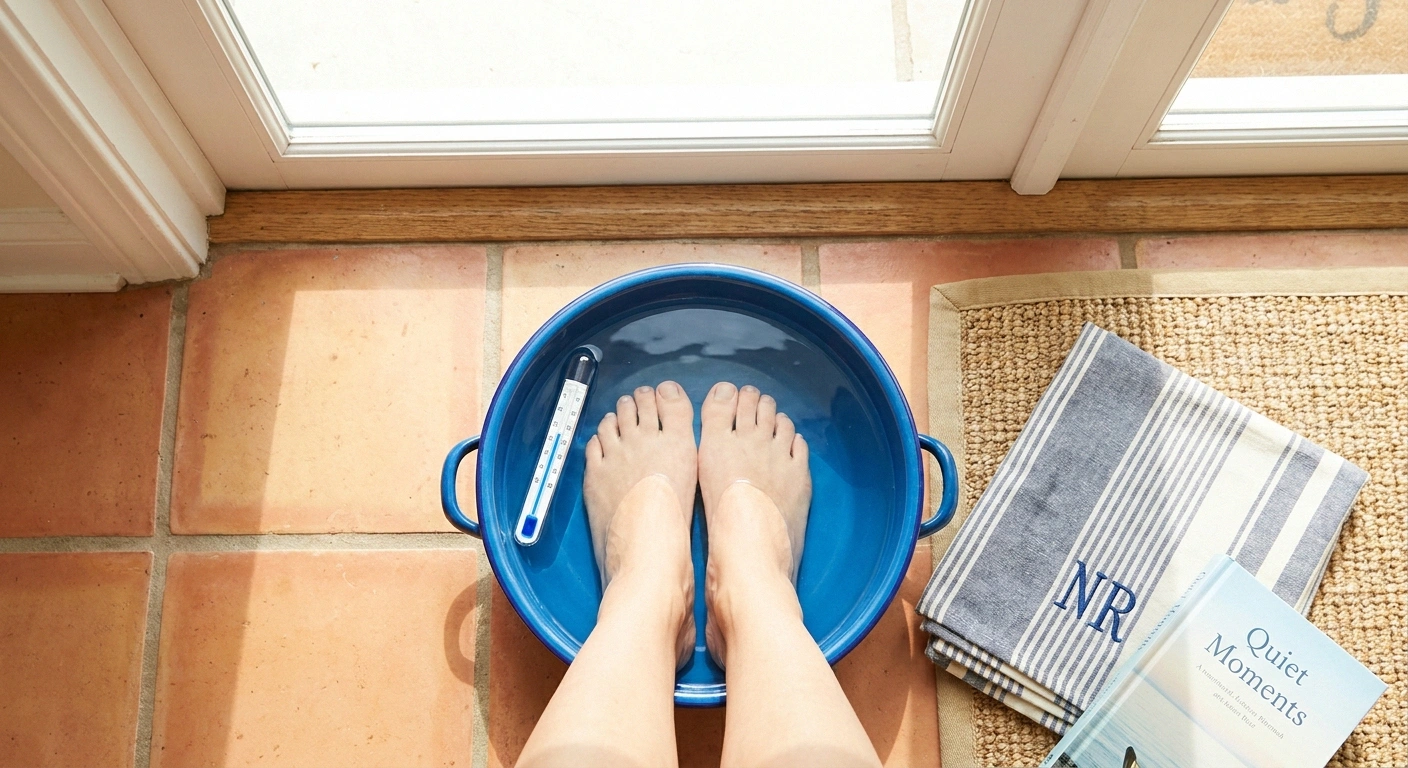
If you have to pick one intervention this summer, this is it: get your feet cool, multiple times a day.
Feet that feel “on fire” calm down dramatically with even brief cooling. Not freezing — never put ice directly on neuropathic feet, because the loss of sensation can let you damage your skin without realizing it. We are talking comfortable cool, not painful cold.
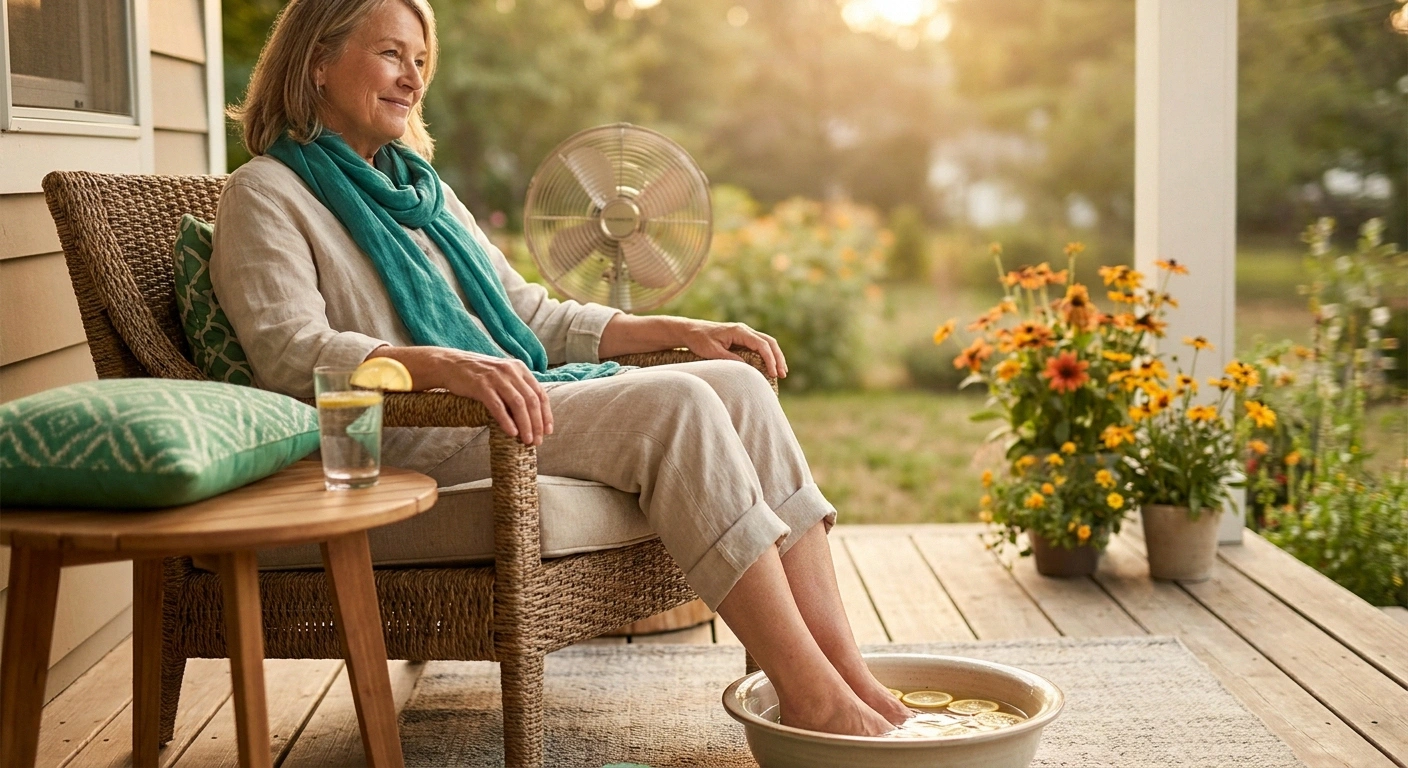
The afternoon foot soak. A shallow basin of cool tap water — 65 to 75 degrees, comfortably cool — for ten minutes. Test the temperature with your wrist or elbow first, never with your feet, because numbness can fool you. Sit in a chair, dip your feet in, read or listen to something for ten minutes. It is a small ritual that produces an outsized benefit. A small portable basin from a discount store is all you need. If you want to make it fancier, there are specific foot soak recipes that some people find helpful, but plain cool water works.
Damp cool washcloth. Run a washcloth under cool tap water, wring it out, drape it across the tops of your feet for ten minutes while you read. Almost the same effect as a soak with zero setup.
Air on bare feet from a small fan. A small clip-on or oscillating fan aimed at your bare feet while you sit. The moving air pulls heat away from the skin. This is what I use on the front porch in the evening when soaking is not practical.
Elevation. Get your feet up. Even slightly above heart level for 15–20 minutes drains some of the pooled blood and reduces the swelling and warmth.
Time the cool sessions around the worst parts of the day — typically late morning if you have been on your feet, and late afternoon when the day's heat has stacked up. Two ten-minute sessions can shift the whole evening.
Hydration That Actually Hydrates
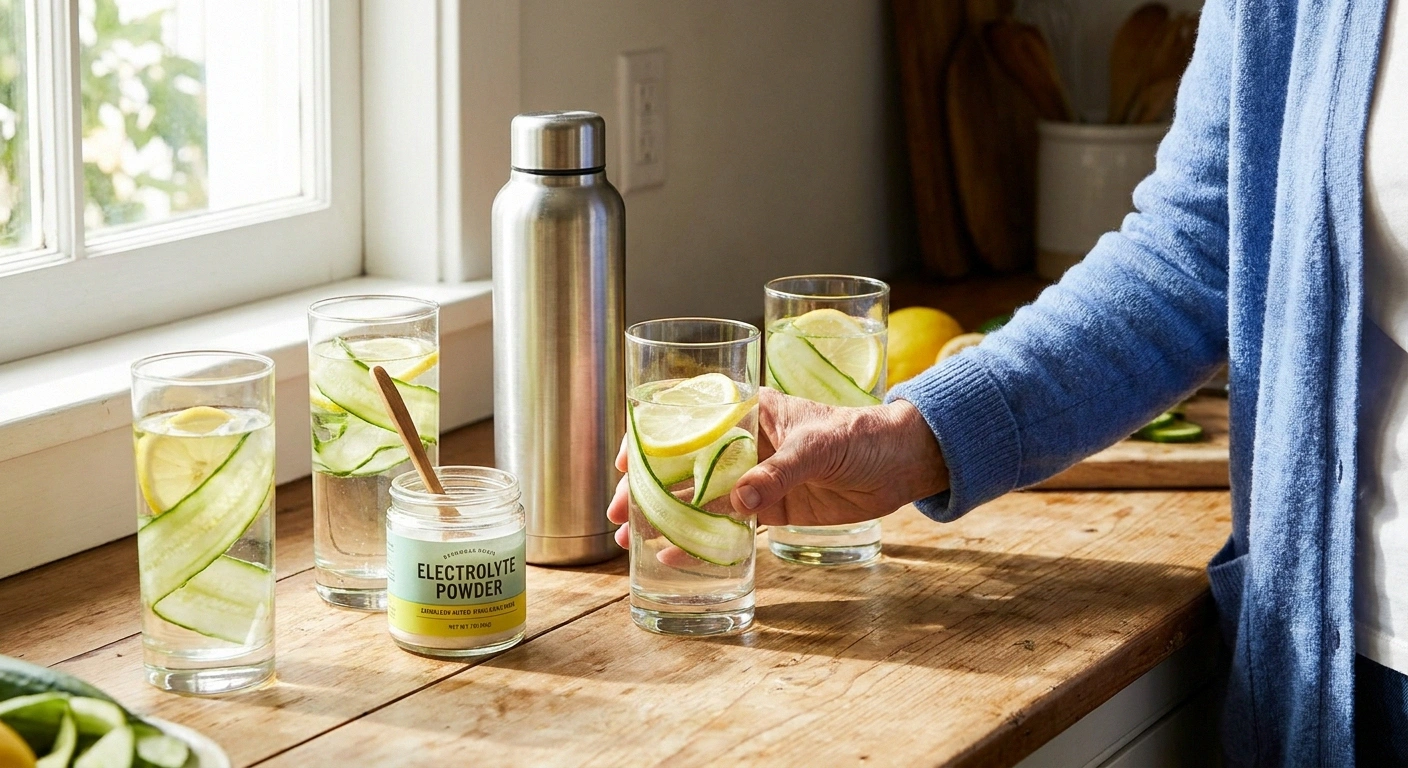
I will say this directly: most of us under-drink water in the summer. We mean to, we forget, the air conditioning fools us, and by 4 p.m. we are halfway dehydrated. The dehydration alone can crank up a flare.
per summer day
well hydrated
thirst comes too late
Aim for a glass of water with every meal and another between meals. Roughly 8 cups across the day is a reasonable target for most adults, more if you are outside or sweating. The rule of thumb that works: your urine should be pale yellow, not dark.
Watch for the “thirst is late” effect. By the time you feel thirsty in hot weather, you are already meaningfully dehydrated. The fix is to drink on a schedule, not in response to thirst.
Add electrolytes when you are sweating. A pinch of salt and a squeeze of lemon in your water bottle is the cheapest electrolyte drink there is. Commercial low-sugar electrolyte drinks (Liquid IV, Nuun, LMNT, generic store brands without added sugar) are fine and convenient. Avoid full-sugar sports drinks if you are diabetic or watching blood sugar.
Iced tea and decaf coffee count. So does sparkling water. They all contribute to hydration. Sweet iced drinks count too but bring all the blood-sugar problems with them.
Skip the “iced coffee three times a day” thing. Caffeine is mildly diuretic. A morning coffee is fine. Three iced coffees and no water is a dehydration setup.
Alcohol especially. A glass of wine in the evening summer heat hits harder than the same glass in February. If you are flaring, dialing back alcohol — or pairing every drink with a glass of water — makes a real difference.
The Right Footwear for Summer Heat
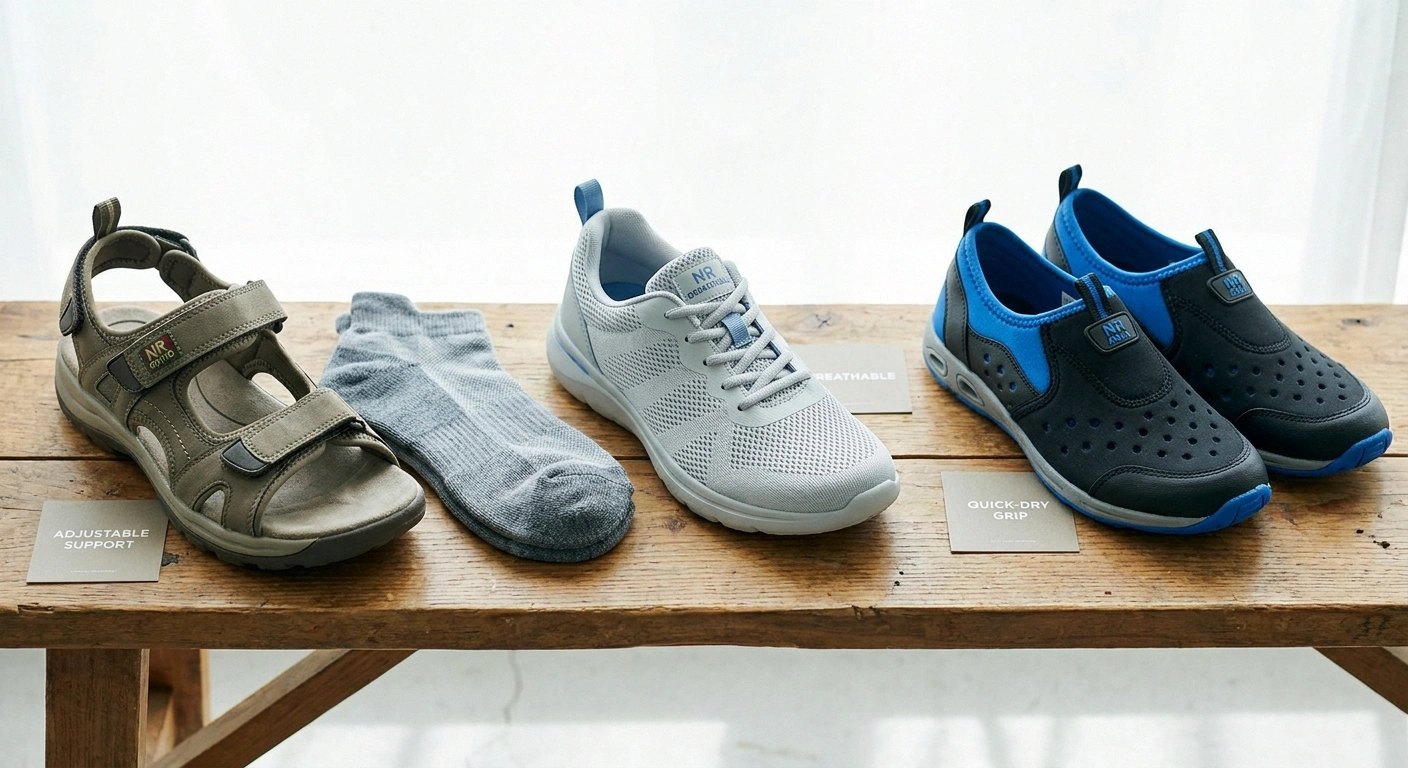
Summer footwear is the place where a lot of neuropathy plans fall apart. Open sandals feel cooler but expose your insensitive feet to cuts, scrapes, and burns. Closed shoes protect feet but trap heat. The answer is not “wear winter shoes in July.” It is to make smart choices about which sandals are safe and how to make closed shoes more breathable.
Sandal rules:
- Closed toe or covered toe is much safer than open toe — protects against stubs and impacts
- A back strap matters — flip-flops let your foot slide all over and increase fall risk
- Cushioned footbed with arch support — not flat slabs
- Adjustable straps so you can accommodate any afternoon swelling
- Brands designed for diabetic or sensitive feet (orthotic-friendly walking sandals) tend to be the right category — they look like “old people sandals” and that is fine
What to avoid: flip-flops, slide sandals, brand-new sandals that have not been broken in, anything with hard plastic straps that can rub a sore.
For closed shoes in summer:
- Mesh upper construction — breathes well
- Moisture-wicking socks — never cotton in summer
- Rotate two pairs so each can dry out for 24 hours between wears
- Take them off and let your feet breathe during meals or extended sitting
If you have not read it, our piece on choosing shoes for neuropathy covers the year-round picture in more detail. Summer just narrows the options to the breathable, supportive end of that range.
Hot Pavement Is the Sneaky Hazard
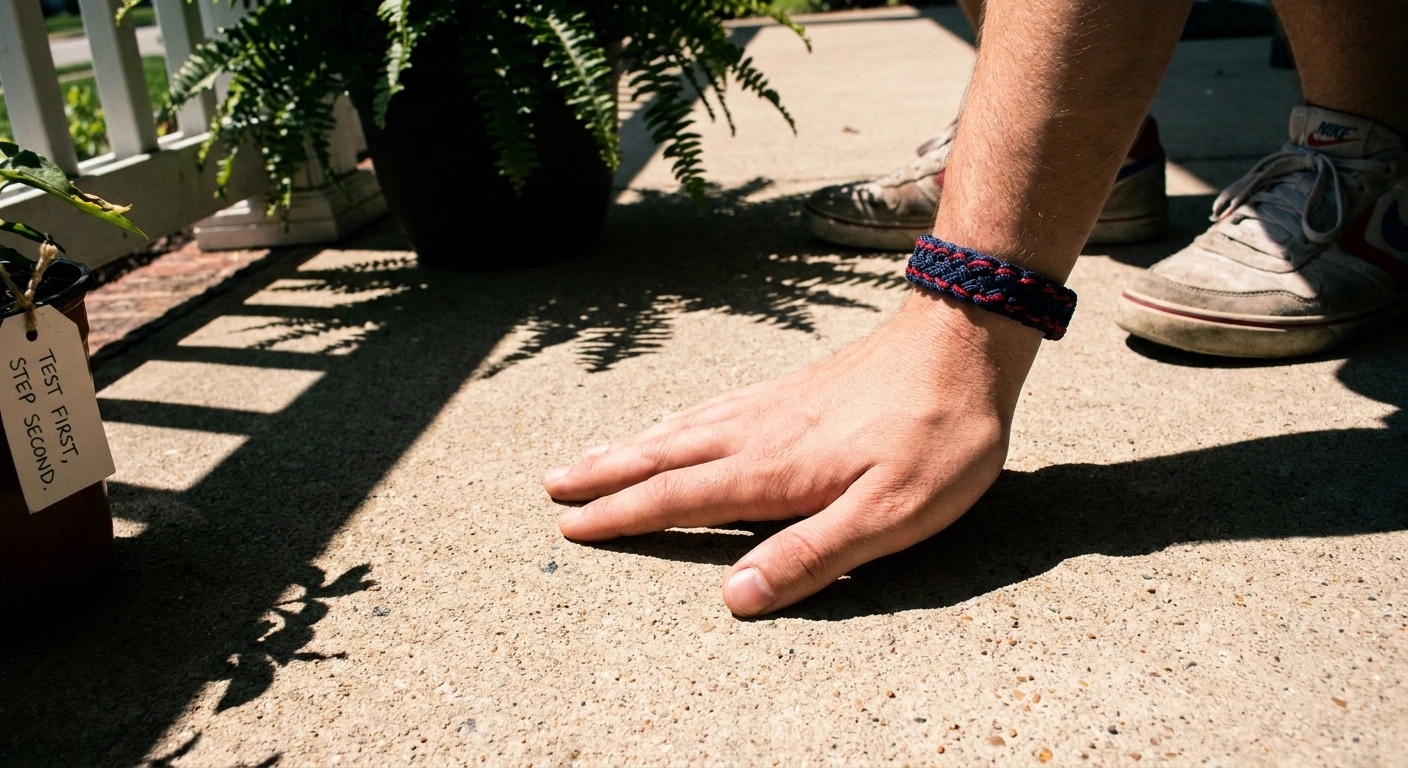
This one catches people off guard. On a 92-degree day in direct sun, the surface temperature of a concrete sidewalk, an asphalt parking lot, or a pool deck can hit 140–160 degrees. That is hot enough to cause a second-degree burn on bare or thinly protected feet — and if you have neuropathy in your feet, you may not feel the burn happening.
The rules:
Never walk barefoot outside in summer. Not from the car to the front door. Not from the pool to the lounge chair. Not on the patio “for a minute.” It only takes seconds on truly hot surfaces.
Test surfaces with the back of your hand. Quick touch with your hand or the back of your wrist before stepping on a surface in flimsy footwear. If it feels hot to your hand, it is too hot for your feet.
Walk early or late. Morning walks before 9 a.m. and evening walks after 7 p.m. avoid the worst pavement heat. Midday walks in summer are when most foot burns happen.
Choose shaded paths and grass when possible. Grass stays cooler. A tree-lined sidewalk is dramatically cooler than an open concrete one.
Slip-on water shoes for the pool deck and beach. Cheap, breathable, protect your feet from hot tile and sand. Worth every dollar.
Bedroom and Sleep Hygiene in Heat
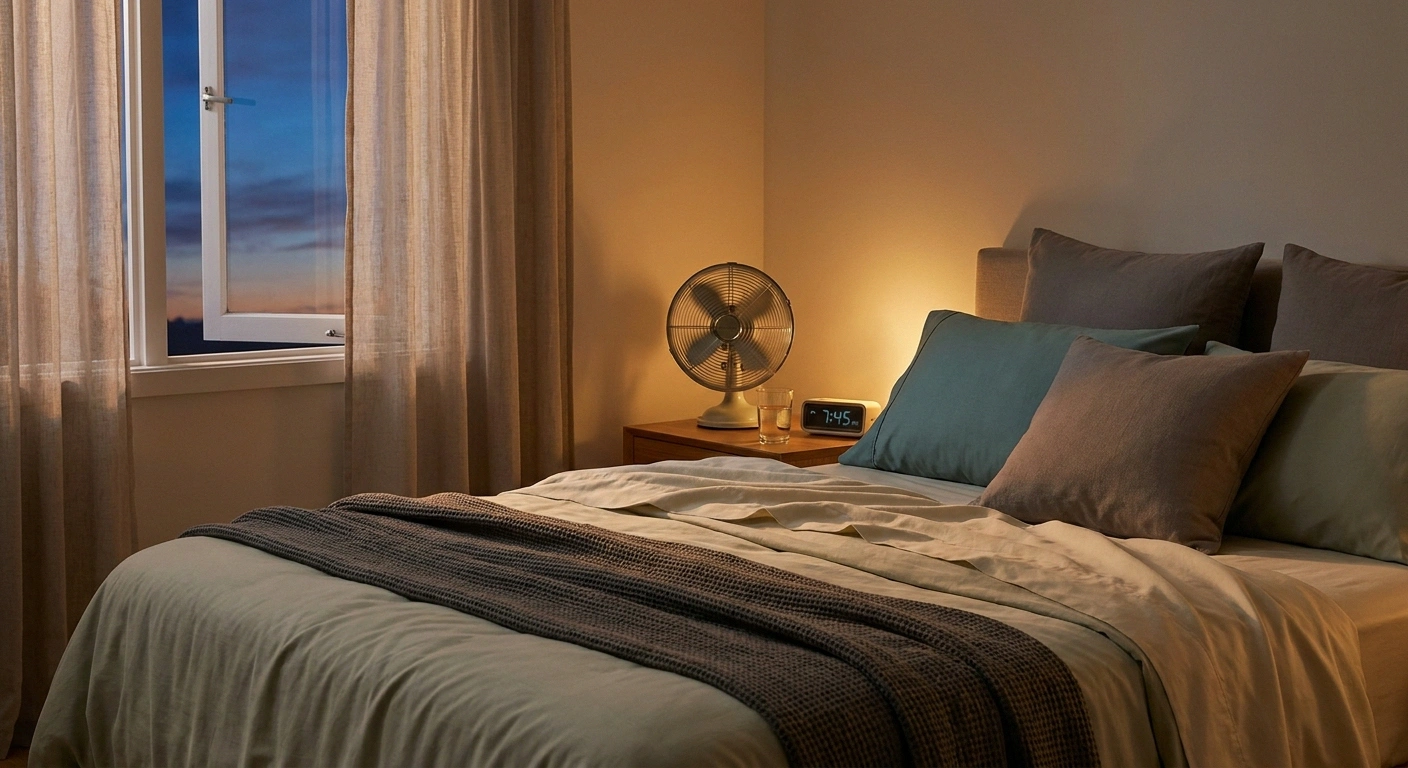
If your bedroom is in the high 70s overnight in summer, your sleep is going to suffer — and the next day's nerve symptoms will reflect it. Neuropathy already gets worse at night for most people. Heat makes that worse.
Get the room to 68–72 degrees if you can. Air conditioning is the cleanest path. A window unit in the bedroom even if you do not cool the rest of the house. A ceiling fan or a tower fan helps a lot if AC is not an option.
Cooling sheets and a moisture-wicking nightshirt. Bamboo, eucalyptus, and linen sheets all sleep cooler than cotton. A simple moisture-wicking athletic shirt as pajamas can be a small revelation.
Keep a small fan aimed at your feet. Many people sleep better with a fan moving air across their feet specifically. The cool air on the most painful body part calms things down.
Cool washcloth on the back of the neck. A washcloth from the freezer (in a plastic bag) draped behind your neck for the first 10 minutes after lying down can drop your core temperature enough to help you fall asleep faster.
Light, breathable bedding. A thin top sheet only, with a quilt nearby if you cool off overnight. Heavy comforters are summer enemies for hot feet.
Avoid late-evening alcohol. Beyond the dehydration angle, alcohol disrupts the cooling phase of sleep and increases overnight temperature.
Managing Outdoor Activities Without Triggering a Flare
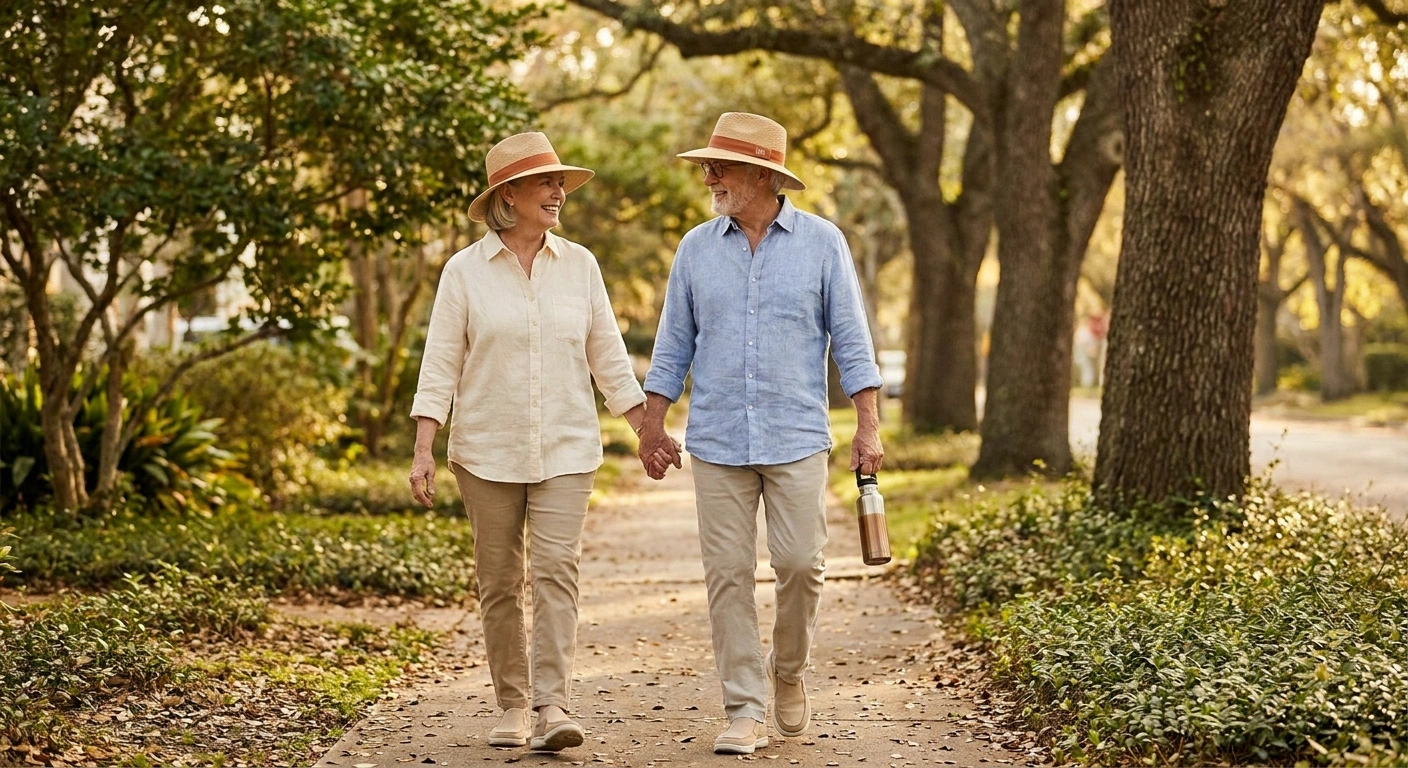
Summer is when your neighbors are gardening, your grandkids want to swim, and family gatherings move outside. Total avoidance is no fun and not necessary. A few habits make outdoor time work:
Plan around the heat curve. Mornings (before 10 a.m.) and evenings (after 6 p.m.) are usually 10–15 degrees cooler than peak afternoon. Schedule outdoor activity at the cool ends of the day whenever you can.
Pace yourself in shorter blocks. Twenty minutes outside, ten minutes inside cooling off, twenty minutes outside. Beats one long stretch in the sun followed by a flare that ruins the next day.
Take a water bottle everywhere. Filled, with you, sipped continuously. Many people benefit from a small insulated bottle that keeps water cold for hours.
Use shade strategically. A wide-brimmed hat. A patio umbrella. Walking on the shaded side of the street. Carrying a small folding stool for breaks. None of this is a big production — it is just thoughtful placement.
Light-colored, loose-fitting clothing. Linen, lightweight cotton, technical hiking fabrics. Dark clothes absorb more heat. Tight clothing blocks evaporative cooling.
Cool wrist and neck spots. A small ice pack on the inside of your wrist or the back of your neck cools your whole body faster than anything else. Some people carry a damp bandana to put on the neck on hot afternoons.
Listen to your feet. If the burning is escalating, it is the signal — go inside, sit down, soak your feet, hydrate. Do not push through it. Pushing through doubles the next day's flare.
Watch Out for These Heat-Specific Trouble Signs
Most summer flares are uncomfortable but not dangerous. A few situations warrant more concern:
Confusion or feeling “off.” Especially in older adults, the combination of heat and dehydration can produce confusion that is mistaken for a stroke or a urinary infection. If a family member starts acting confused on a hot day, get them cool and hydrated first, then get medical attention.
Stopped sweating. If you have been outside and your skin suddenly goes dry and hot when it should be sweating, that is a sign of heat exhaustion approaching heat stroke. Get out of the heat, get fluids in, cool the body actively, and call for help if it persists. People with autonomic neuropathy can have impaired sweating, which raises their risk.
Severe leg cramps with weakness. Combined heat and dehydration can drop electrolytes enough to produce severe cramping and weakness. Electrolyte replacement and cooling usually fix it, but if it does not resolve, get evaluated.
Dizziness or fainting on standing. Especially common in people with autonomic neuropathy. The combination of heat-dilated blood vessels and dehydration drops your blood pressure when you stand up. Stand slowly, sit if you feel lightheaded, hydrate.
A foot wound you didn't notice. The single most important checkup you can do all summer is the daily foot inspection — five minutes after your shower or before bed, looking at the tops, soles, and between the toes for cuts, blisters, scrapes, or anything that does not look right. Summer multiplies the chances of a missed injury because of more barefoot moments and hot surfaces.
A Simple Daily Summer Routine for Sensitive Feet
Here is the kind of routine I recommend to friends and family when they ask. Nothing complicated. Pick a few of these and stack them into your day.
Morning:
- Glass of water on rising, before coffee
- Walk before 9 a.m. if walking is part of your routine
- Apply foot lotion to clean dry feet (heat plus humidity dries skin out faster than you would expect)
- Put on moisture-wicking socks and breathable shoes
Midday:
- Glass of water with lunch
- Sit down for 15–20 minutes during the hottest part of the day; elevate feet
- Cool washcloth on feet or short foot soak if symptoms are picking up
Afternoon:
- Glass of water between lunch and dinner
- Plan an outdoor activity for the cooler evening hours, not 3 p.m.
- Test hot surfaces with your hand before walking on them
Evening:
- Light dinner with hydrating foods (cucumber, watermelon, salad, soup)
- 10-minute cool foot soak before bed
- Daily foot inspection during or after shower
- Bedroom cooled to 68–72 degrees
- Small fan aimed at feet through the night
That is it. Eight habits, none of them difficult, that together change the texture of a summer day for sensitive feet.
The Hopeful Part
I want to close with what I told Margaret on the phone Saturday. Summer flares are temporary. The body adapts somewhat after the first two or three weeks of consistent heat. The combination of cool foot soaks, real hydration, smart footwear choices, and air-conditioned sleep can take a flare from a daily catastrophe to a manageable seasonal background hum.
This is not about powering through. It is about cooperating with what your body is doing. Your nerves are telling you that the heat is too much for them. You listen. You cool them. You hydrate. You sleep in a cool room. You wear footwear that protects you. You walk early. You sit in the shade.
By the time we get to mid-September, most of the summer flare will have backed off. Until then, the habits in this article are the playbook. Margaret called me Wednesday to say she had been doing the cool foot soaks twice a day and sleeping with a fan on her feet, and she was already feeling 30% better — not 100%, but enough that the season felt survivable. That is the realistic target. Survivable. Manageable. Not perfect — better.
Frequently Asked Questions
Is it the heat or the humidity that makes neuropathy worse?
Both, working together. Heat dilates blood vessels and dries you out. Humidity prevents your sweat from evaporating, which means your body cannot cool itself as efficiently. The combination is harder on your nerves than either alone. A 95-degree dry day is uncomfortable; a 90-degree humid day is harder on the body.
Can I still take a hot shower in summer?
A warm shower is fine. A scalding-hot shower can make a flare worse and is also a burn risk for insensitive feet. Test the water with your hand or elbow before stepping in, and lean toward warm rather than hot in the summer months. Some people find a cool-water rinse on their feet at the end of a shower very helpful before bed.
Are there foods that help in summer specifically?
Water-rich foods help with hydration: cucumber, watermelon, melon, berries, leafy salads, gazpacho, cold soups, and any veggie or fruit with high water content. Light, fresh meals tend to sit better than heavy meals when you are warm. Avoid very salty or very sugary foods during the day, which can pull water out of your tissues.
Should I change my neuropathy medications in summer?
Do not change your medications on your own. Some medications — including some antidepressants used for nerve pain, some blood pressure medications, and some diuretics — can affect how you handle heat. If you notice you are running unusually hot, dizzy when standing, or struggling to sweat, talk to your prescriber about whether your medication dose or timing needs a summer adjustment.
Are cooling socks or cooling slippers worth it?
The “cooling” socks and slippers on the market are usually mildly helpful at best — they tend to be just moisture-wicking fabric with marketing. A cheaper and more effective alternative is a thin moisture-wicking athletic sock combined with a cool foot soak or a damp washcloth. Save your money for a small fan and an air conditioner.
Will swimming help my feet in summer?
It often does — cool pool water on hot feet feels wonderful, and the buoyancy takes pressure off sensitive feet. Two cautions: never walk barefoot on pool decks or locker room floors (hot tile, fungus, sharp edges you cannot feel), and check your feet carefully after swimming for any unnoticed scrapes. Pool shoes are the answer.
I am in a place where it is humid and hot for months. How do I get through it?
The same habits, sustained. Indoor air conditioning is essential — even a single air-conditioned room you can retreat to in your house. Build your outdoor activity around dawn and dusk. Treat hydration as a daily medical task, not an afterthought. Make the cool foot soak a non-negotiable part of your day, like brushing your teeth. The cumulative effect of doing these things every day is real.
What if my air conditioning is broken or I cannot afford it?
Many areas have summer cooling assistance programs through utility companies, social services, or senior centers. Public libraries and shopping malls offer a free cooling place during the hottest part of the day. A wet towel on the back of the neck, a small fan, and cool foot soaks make a significant difference if you cannot get indoor cooling. Sleeping in the coolest room of the house — often a basement or a lower-floor room — also helps.
About the Author