A flat tire on a dark two-lane road is a nuisance for most drivers. For someone who can’t feel their feet, it’s a different problem entirely. You may need to stand on gravel, wait in the cold, open small packages with stiff fingers, and keep your blood sugar steady for longer than you planned. The standard trunk kit doesn’t account for any of that.
So this is a kit list written for us. It keeps the basics that every emergency agency recommends, then adds the swaps and extras that matter when your nerves don’t send reliable warnings. Most of it costs less than a tank of gas, and you can put it together in an afternoon.
Why a Standard Car Kit Misses What Neuropathy Needs
The checklists from state emergency offices and the National Weather Service are good. They cover a first aid kit, blankets, a flashlight with spare batteries, water, snacks, warm clothing, a phone charger, and something for traction in snow. Keep all of it.
| Usual kit item | Swap or add | Why it matters |
|---|---|---|
| Handheld flashlight | Headlamp with one large button | Hands stay free; nothing to drop in the dark |
| Incendiary road flares | Battery LED flares | No sparks or hot drips near feet that can’t feel heat |
| Hand warmers | Mittens, hat, blankets first | Layers can’t cause a burn you don’t notice |
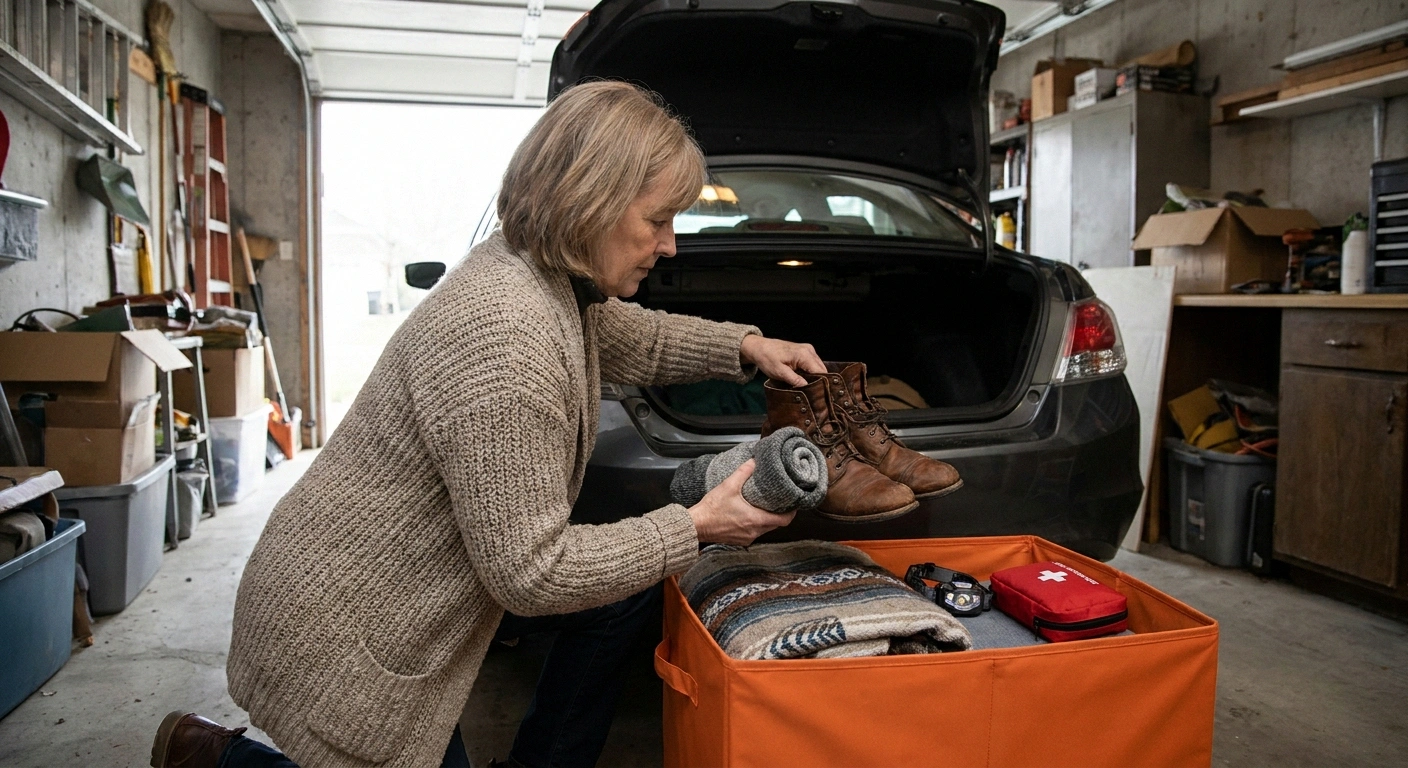
| Whatever shoes you drove in | Thick-soled trunk boots and wool socks | Gravel, glass and hot asphalt go unfelt |
| Candy for energy | Glucose tablets plus nut packs | Measured carbs for a low, slow fuel for a long wait |
What they assume, though, is a driver with normal sensation — feet that ache when they’re cold, fingers that flinch from heat. That assumption quietly shapes the whole list.
Take hand warmers. They show up on winter kit lists everywhere, and for most people they’re harmless. For a person with numb hands or feet, a warmer tucked into a sock is a burn waiting to happen, because the skin can’t report that it’s getting too hot. Johns Hopkins Medicine makes a related point about the cold: most people who get frostbite don’t notice it at the time, because the frozen tissue is already numb. Neuropathy puts you a step behind on both ends of the thermometer — too hot and too cold.
Then there’s dexterity. A kit full of tiny zippers, shrink-wrapped batteries and flares with fiddly caps is a test your fingertips may fail in the cold. And footwear rarely makes the list at all, even though the shoes you drove in (soft slip-ons, maybe, or the comfortable pair with a thin sole) may be the worst possible thing to walk a gravel shoulder in.
None of this means you shouldn’t drive. Plenty of us drive safely for years, and my article on driving safely with neuropathy covers the habits that make that possible. It just means your kit should be built around the body you actually have.
The Core Kit Every Car Should Carry
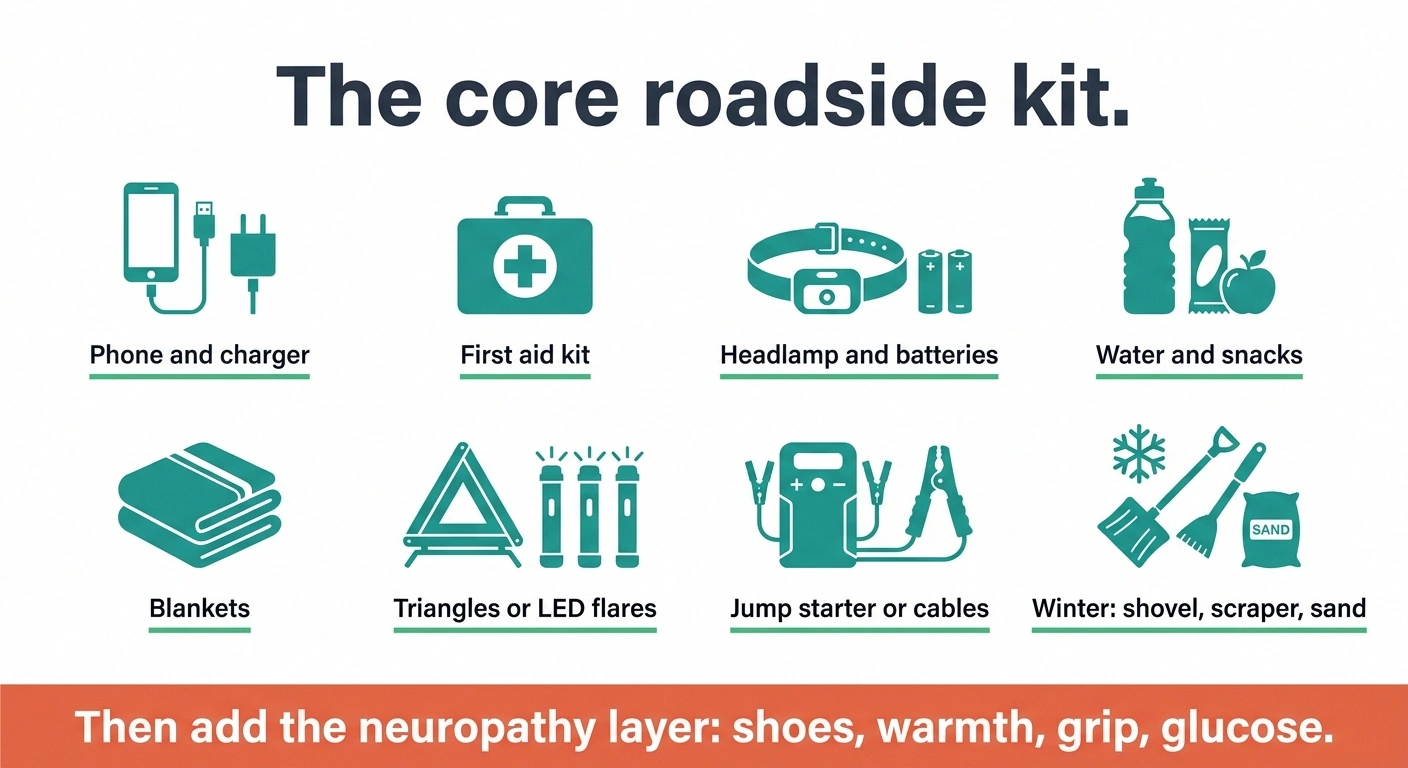
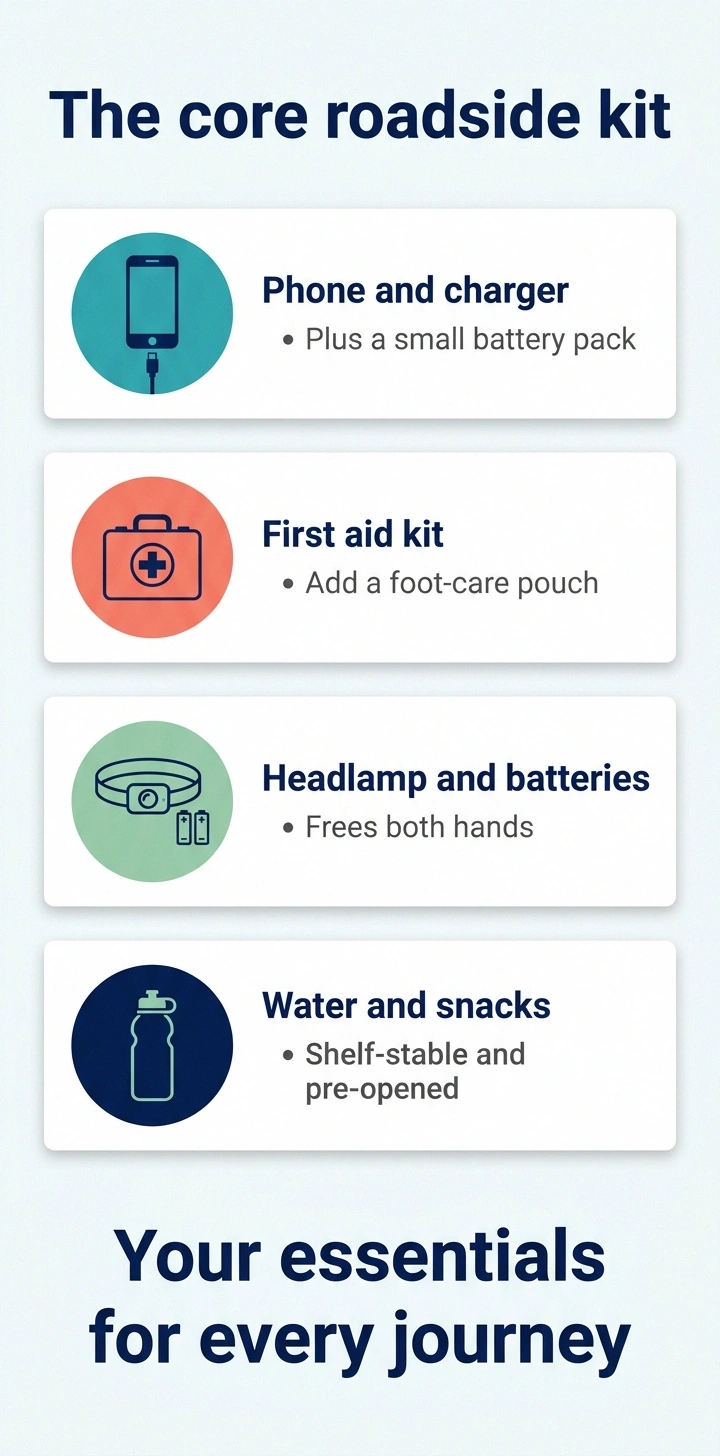
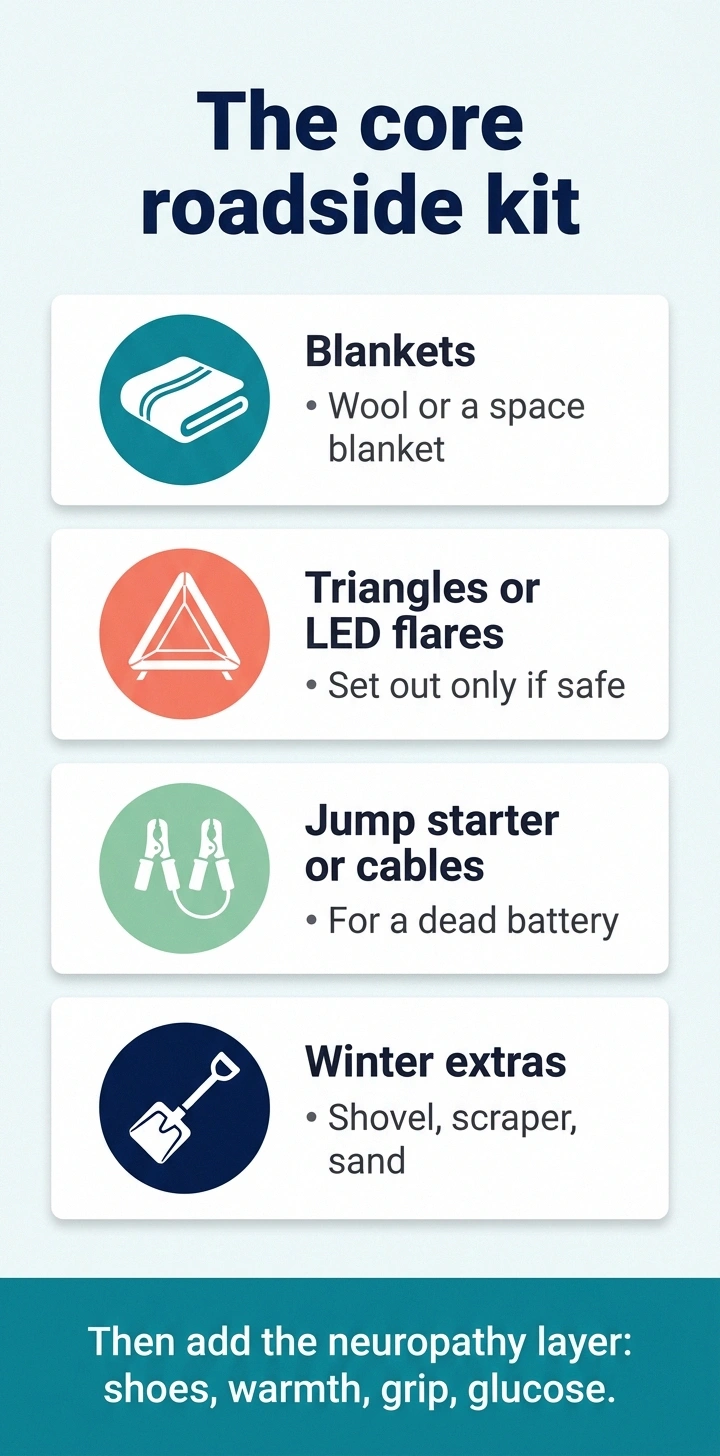
Start with the items nearly every agency list agrees on. These handle the common breakdowns — a dead battery, a flat, a slide into a snowy ditch.
- A charged phone and a charger that fits your car. A small battery pack is worth adding, since a dead phone is the one failure that makes every other problem worse.
- A first aid kit, with a few extras for your feet (more on those below).
- A flashlight or headlamp with spare batteries, or a rechargeable one you top up monthly.
- Water and a few non-perishable snacks.
- Blankets, or a sleeping bag if you drive rural roads in winter.
- Reflective triangles or battery-powered LED road flares.
- Jumper cables or a portable jump starter.
- For winter: an ice scraper and snow brush, a small folding shovel, and a bag of sand or cat litter for traction.
That’s the foundation. Everything that follows is the neuropathy layer on top of it. If you only get the core kit done this week, you’re already ahead of most drivers on the road.
One small habit makes the core kit far more useful: write your roadside assistance number, your insurance policy number and an emergency contact on a card and tape it inside the lid. Scrolling a phone with cold, numb fingers to find a policy number is miserable. A card is instant.
Keeping Numb Feet Safe If You Have to Wait
This is the part most lists skip, and for us it may be the most important.
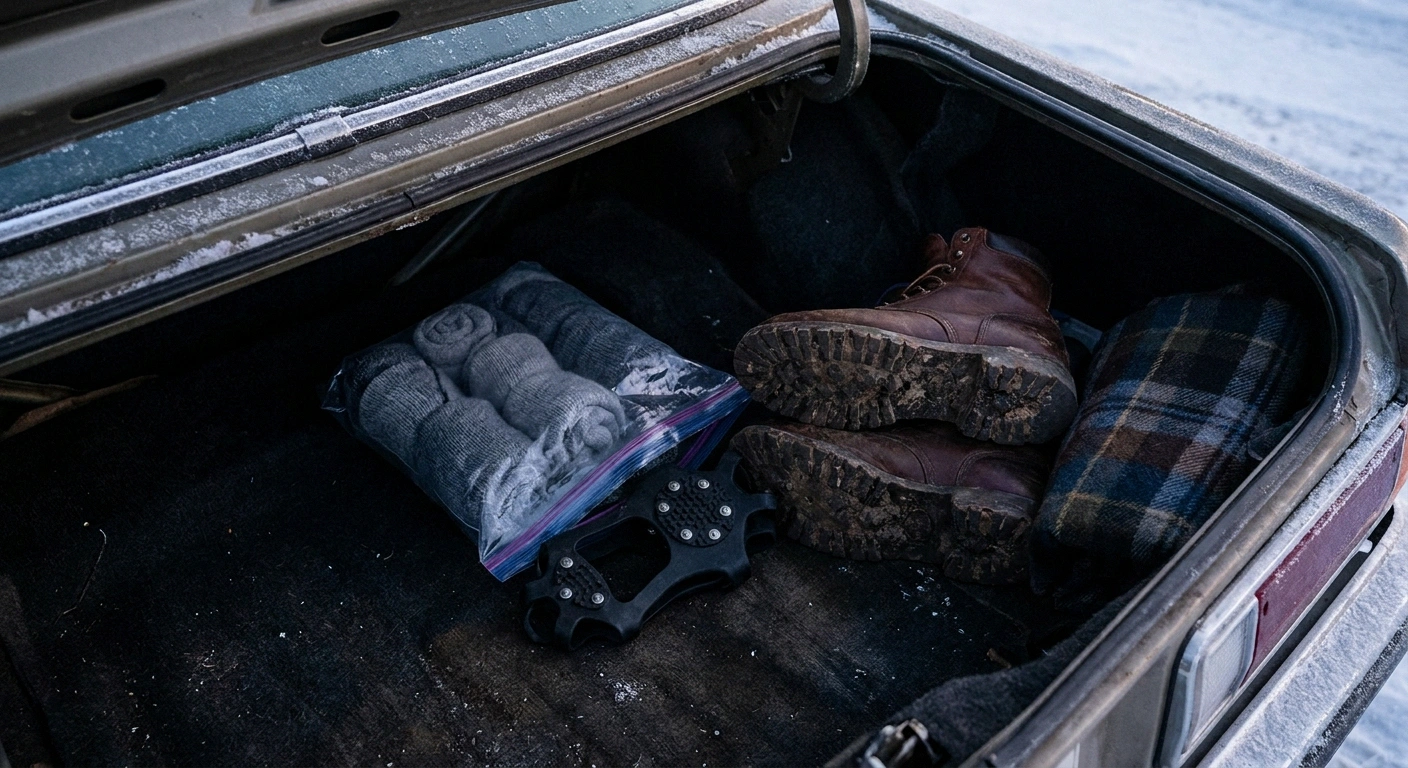
If you ever have to get out of the car, your feet meet broken glass, gravel, ice, slush or hot pavement. With reduced feeling, you may not notice a stone in your shoe or a wet sock until the damage is done. So pack a dedicated pair of shoes that live in the trunk:
- Sturdy, closed shoes or boots with a thick, grippy sole, a half size roomy so they fit over thick socks.
- Two pairs of dry wool or wool-blend socks in a zip bag. Wet socks pull heat out of feet fast, and you won’t always feel that they’re wet.
- Slip-on ice cleats if you live where roads freeze. The tips in my guide to walking on ice and snow with neuropathy apply on a road shoulder too.
Then add a small foot-care pouch to the first aid kit: a few non-stick dressings, paper tape, antiseptic wipes, and a compact mirror. That last item sounds odd until you need it. If you’ve been standing in the cold or stepped on something, a mirror lets you check the soles of your feet in the car without contorting yourself. It’s the same habit as a daily foot inspection, just done on the roadside.
And here’s a rule I’d tape to the dashboard if I could: once you’re back home after a long wait in the cold, look at your feet before you warm them. Pale, waxy, gray or hard patches of skin are worth a call to your doctor the same day, not next week.
Warmth Without Burns
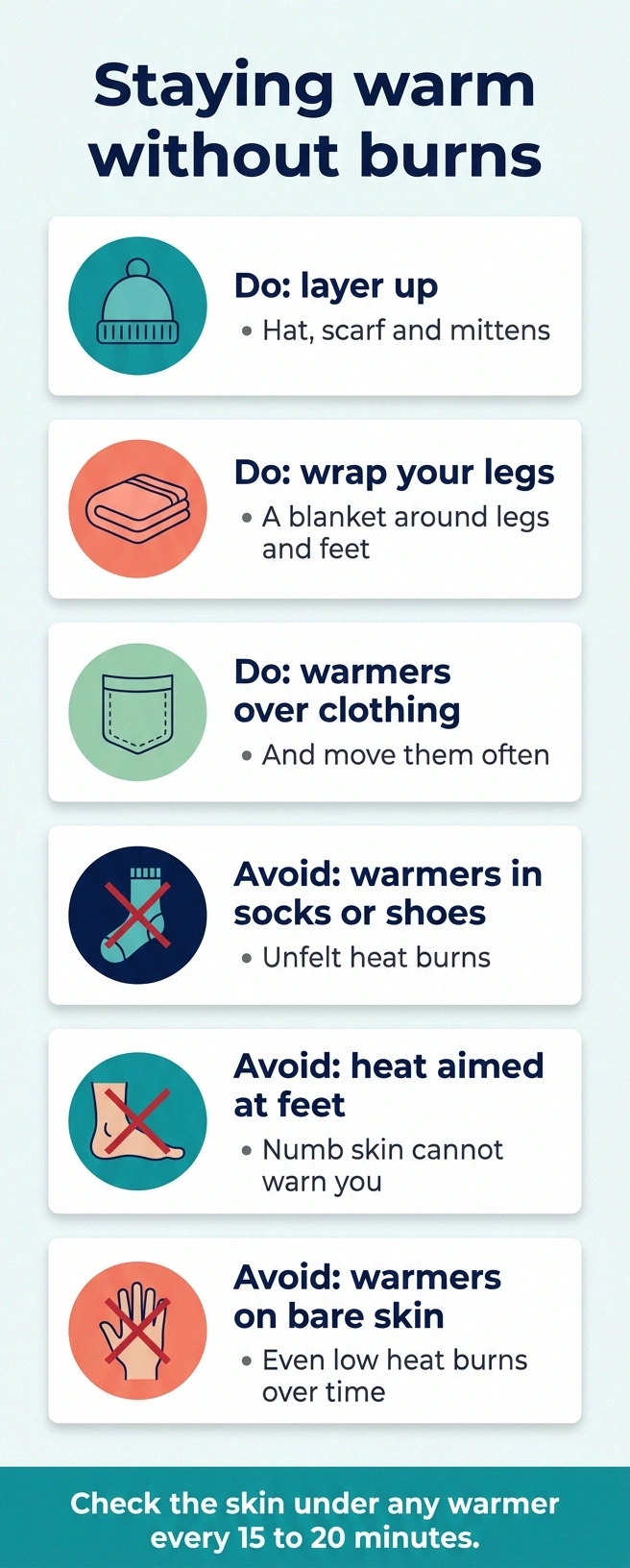
Staying warm while you wait is where neuropathy changes the rules the most.
Every year, people with diabetes end up in burn units after trying to warm cold feet. An Air Force medical article on the subject put it bluntly: without normal heat sensitivity, it’s easy to burn yourself without knowing. The same applies to the gear in a car kit.
Disposable hand warmers. The packaging on one popular brand says the warmers can reach about 158°F (70°C), and it tells people with diabetes, nerve damage or circulation problems not to use them unless a physician directs it. Another brand’s label notes that low-temperature burns can happen without any symptoms at all. If you keep them in your kit (and many of us do, for a passenger or for emergencies), follow three rules:
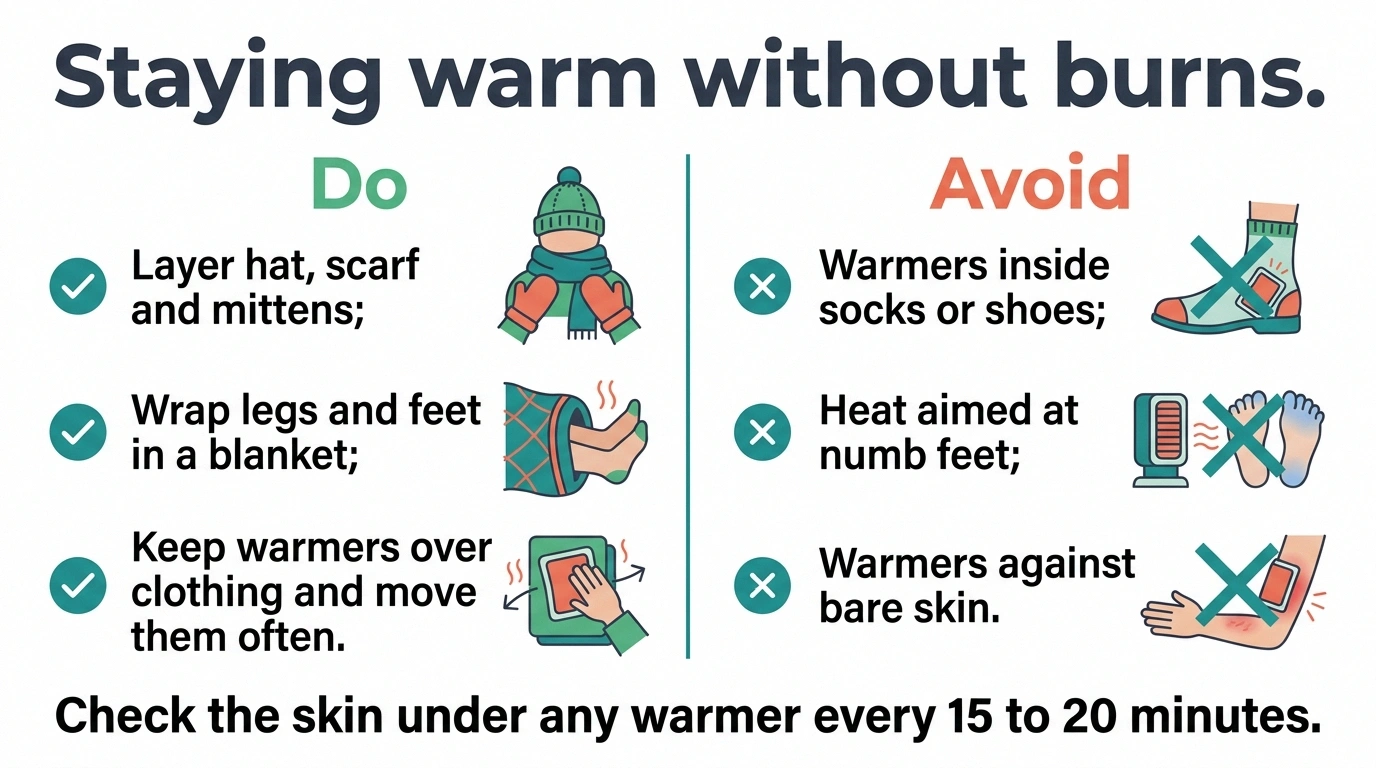
- Never put a warmer directly against skin, and never inside a shoe or sock.
- Hold it in a gloved hand you can see, or drop it into a coat pocket over a layer of clothing.
- Move it every 15 to 20 minutes and look at the skin underneath.
Rechargeable hand warmers. These deserve extra caution — more than most people realize. In 2026, about 1.5 million rechargeable hand warmers from one brand were recalled after reports of overheating that included 350 burn injuries and 15 fires. If you own one, check the recall list for your model before it goes back in the car.
What actually works better for us: layers. A wool hat, a scarf, insulated mittens (warmer than gloves), and an emergency blanket or two. Mylar space blankets fold to the size of a deck of cards and trap body heat well. A real wool or fleece blanket is bulkier but more comfortable for a long wait. Wrapping your lower legs and feet in a blanket on the floor of the car beats aiming any heat source at them.
I’d skip heated seat cushions and plug-in foot warmers for the kit entirely, for the same reason I’m cautious with heating pads at home. My piece on heating pad safety explains why steady, unfelt warmth against numb skin is the risky kind.
Grip-Friendly Tools for Fumbling Fingers
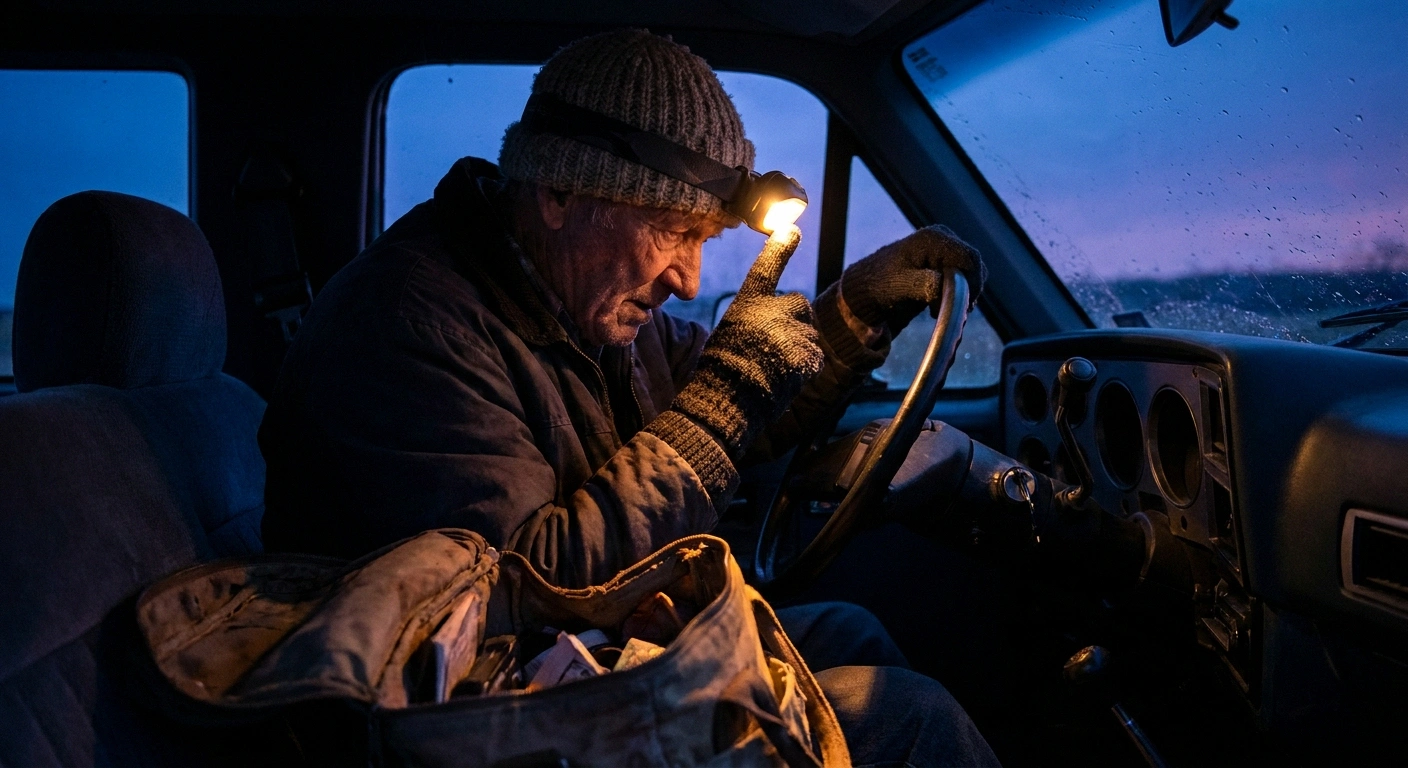
When your fingertips are numb, the cold makes them worse. Small buttons, thin wrappers and twist caps become genuinely hard. So choose your gear with your hands in mind.
- A headlamp instead of a handheld flashlight. It frees both hands and can’t be dropped in a ditch. Look for one with a single large button you can press through a glove.
- LED road flares instead of burning ones. Traditional flares need a striker cap and throw off sparks and very hot drips, which isn’t what you want near feet that can’t feel heat. Battery LED flares switch on with a twist or a big button and are reusable.
- Gloves with touchscreen fingertips, so you can make a call without bare fingers. My guide to using a smartphone with numb fingers has more tricks for tapping accurately.
- Pre-opened packaging. Take batteries out of their blister packs, cut the shrink wrap off snack bars, and put everything in zip bags with pull tabs. You can do this at the kitchen table in five minutes. In a cold car it could take twenty.
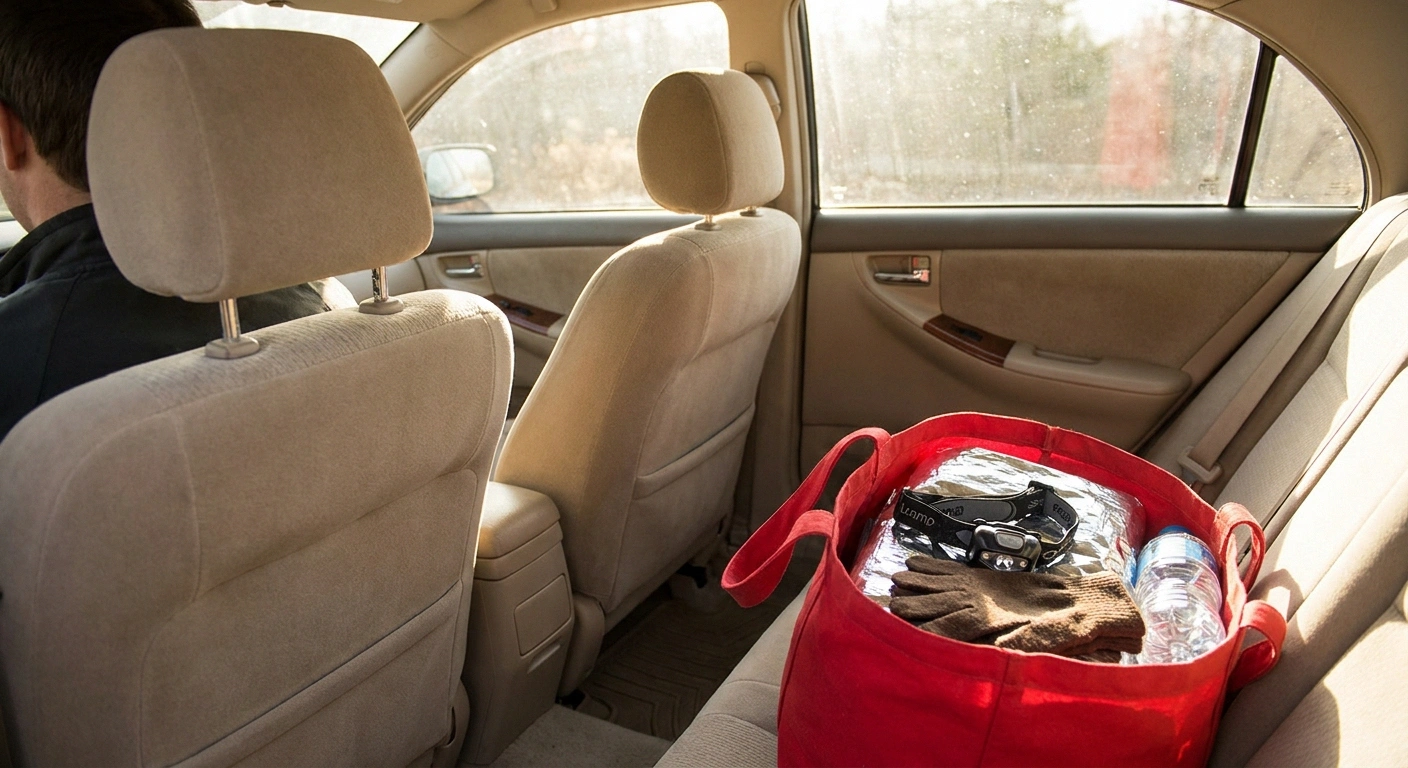
- A bright, soft-sided bin with big handles to hold it all. Bright colors are easier to find in a dark trunk, and big handles are easier to grab than a narrow strap.
A pair of thin work gloves with a grippy palm coating is also worth adding for changing a tire or handling a jumper cable. They protect skin you won’t feel getting scraped.
Medicines, Snacks and Blood Sugar
The Massachusetts winter car kit list includes “necessary medications,” and for many of us that line needs some thought.
What 15 grams of fast carbohydrate looks like
- 3 to 4 glucose tablets (most are 4 grams each; read your package)
- 1 tube of glucose gel
- Half a cup of regular juice or regular soda, if you keep a small can in the grab bag
Recheck after 15 minutes and repeat if you’re still low. Once you’re back in range, eat one of the slower snacks so the number holds while you wait.
First, the ones that don’t belong in the trunk. Insulin shouldn’t be stored in a car kit at all. The FDA advises not to use insulin that has frozen, and Harvard Health notes that insulin can freeze in a car in extreme cold and can be damaged by several hours in a hot summer car. Many other medicines carry storage limits too. Keep your daily medicines in a small pouch that travels with you, in your bag or coat, so they come in and out of the car when you do.
Second, what does belong in the kit if you have diabetes:
- Glucose tablets or gel, which hold up to temperature swings better than candy or juice boxes. The American Diabetes Association’s “15-15 rule” for a low is 15 grams of fast-acting carbohydrate, then a recheck after 15 minutes.
- Slower snacks for a long wait: nut packs, crackers, peanut butter packets.
- A spare meter and strips if you can manage one, in an insulated case.
- A printed list of your medicines, doses and conditions, folded into the glove box. If a paramedic reaches you before you can talk clearly, that list speaks for you.
My article on traveling with neuropathy medications covers longer trips, refills on the road, and keeping a few days’ extra supply with you.
Hot-Weather Swaps for Summer Breakdowns
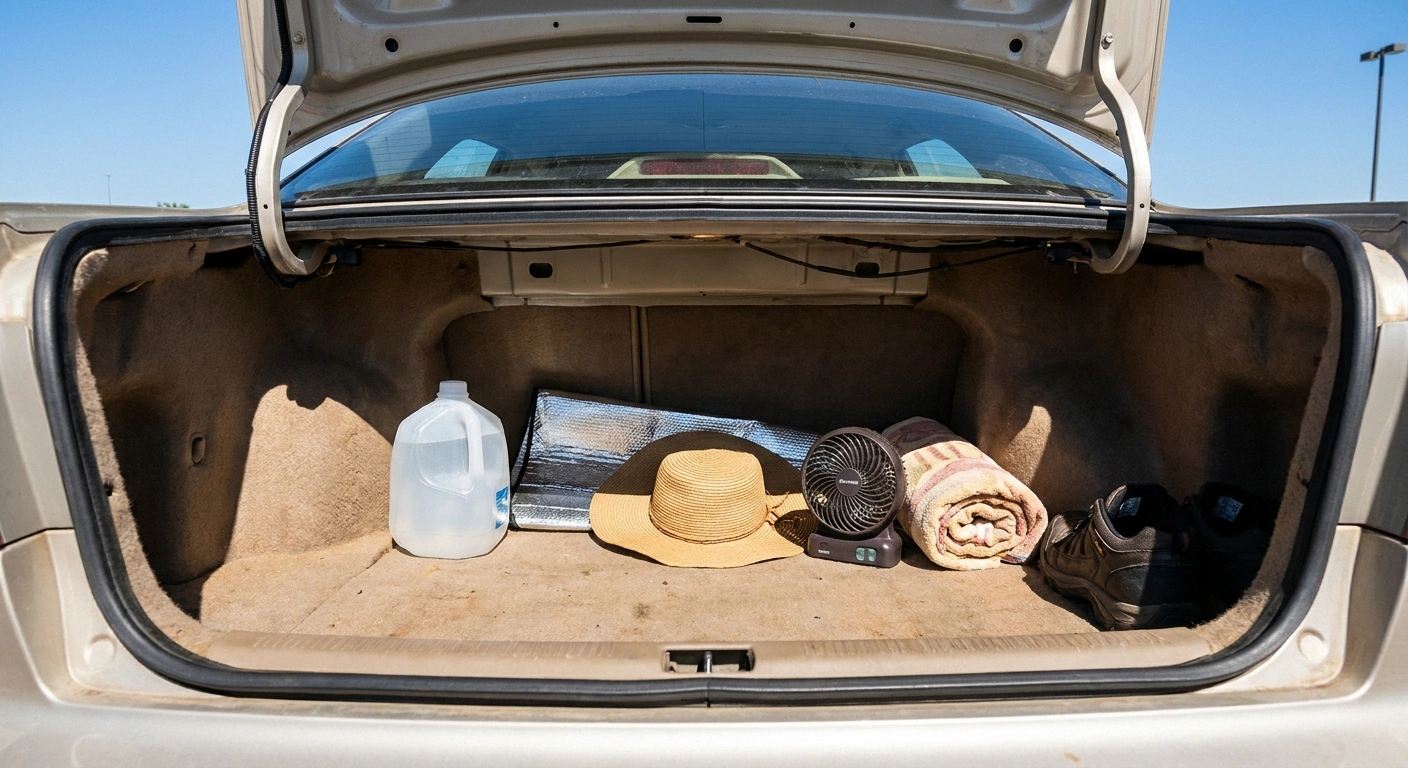
Breakdowns aren’t only a winter problem. A stalled car on a summer highway heats up quickly. NHTSA’s heatstroke safety materials warn that a car’s interior can rise about 20°F in just 10 minutes.
Some of us face an extra twist here. Autonomic neuropathy can reduce sweating in the feet and legs, which leaves the body fewer ways to shed heat. Pair that with feet that can’t feel hot asphalt, and a summer wait on the shoulder carries its own risks.
So twice a year, swap some kit items for the season:
- More water, at least a gallon, kept in a shaded spot.
- A wide-brimmed hat and a light, long-sleeved shirt.
- A folding sunshade for the windshield.
- A battery-powered fan or a simple folding paper fan.
- A small towel you can wet and drape over your neck.
Keep the trunk shoes in the kit all summer. Asphalt in direct sun can get hot enough to burn skin, and that’s exactly the kind of injury numb feet don’t report.
What to Do While You Wait for Help
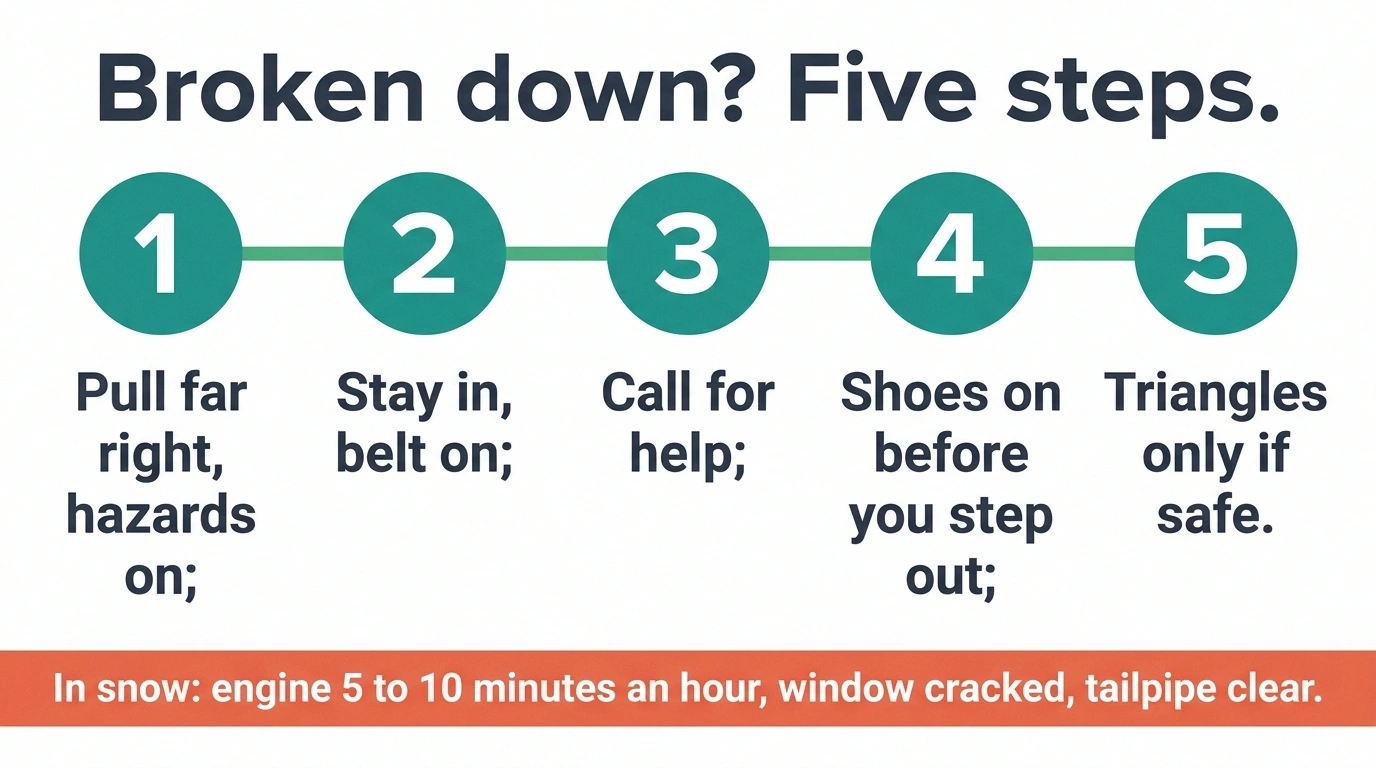
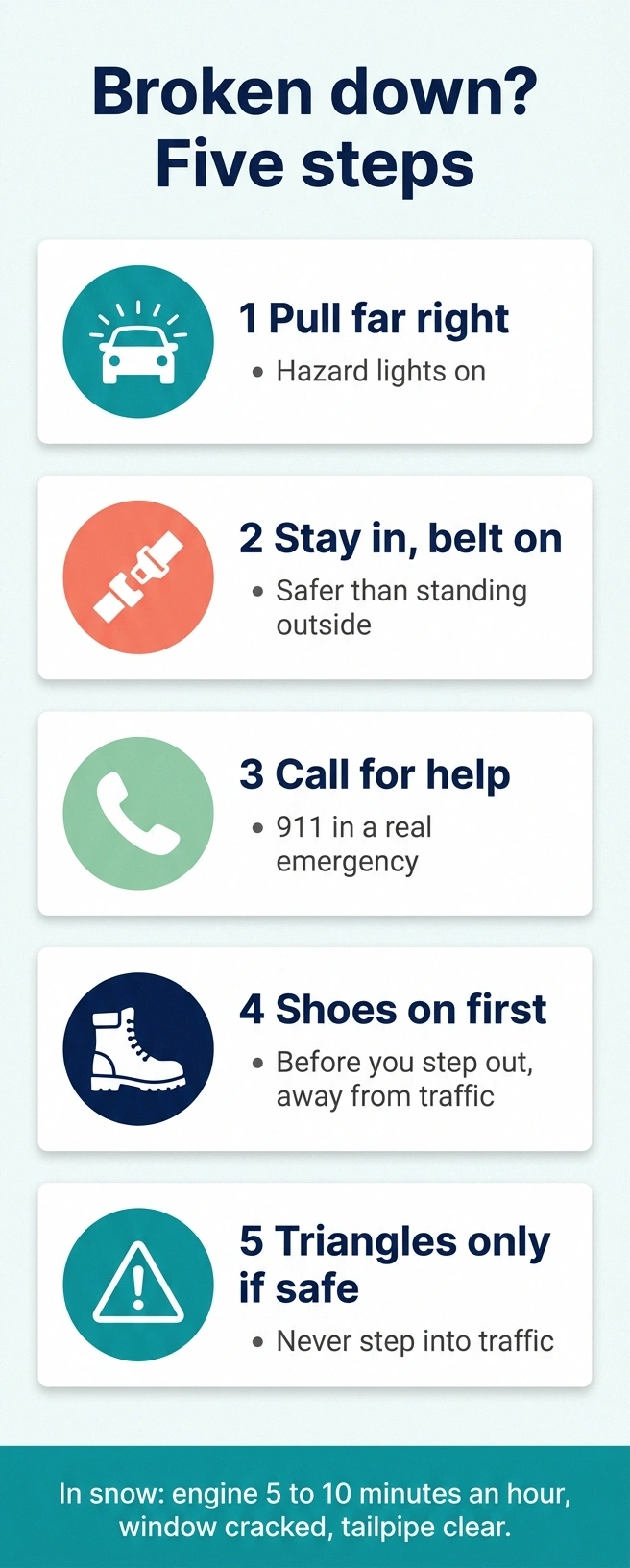
The gear only helps if you use it well. The core advice from AAA and state highway safety offices is the same for everyone, and it suits us especially well because it keeps us off our feet.
- Pull as far right as you safely can and turn on your hazard lights.
- Stay in the car with your seat belt on unless you absolutely have to leave. A car is far better protection than a body if another vehicle drifts onto the shoulder.
- Call for help. Massachusetts’ guidance is to try 911 first in a real emergency; otherwise, call your roadside service.
- If you must get out, put on the trunk shoes first if you can reach them, and exit on the side away from traffic.
- Set out triangles or LED flares only if you can do it without stepping into traffic. Agencies disagree on whether drivers should place them at all, so let safety decide.
In winter, add the carbon monoxide rules. Michigan’s State Police advise running the engine only 5 to 10 minutes each hour for heat, cracking a window slightly, and checking that the tailpipe is clear. The CDC warns that carbon monoxide can build up quickly inside a car when snow blocks the exhaust. Carbon monoxide has no smell, so the rule isn’t optional.
While you wait, move what you can. Wiggle your toes, flex your ankles and press your feet into the floor every few minutes. You may not feel much — that’s the point — but the movement keeps blood flowing to feet that can’t tell you they’re getting cold. For more on that problem, see my guide to neuropathy in cold weather.
A Grab Bag Up Front, the Big Kit in Back
Here’s a lesson from a woman in my support group who slid into a snowbank one January. Her kit was excellent. It was also in the trunk, and the trunk was jammed against the snow. She sat for forty minutes with nothing but the coat she was wearing — and a bin of excellent supplies she couldn’t get to.
So split your kit in two.
The grab bag rides behind the passenger seat or on the floor, within reach of the driver’s seat. It holds what you’d need in the first hour: phone battery pack, headlamp, gloves, a hat, a space blanket, glucose tablets, water, your medicine pouch (when you’re in the car), and the info card.
The trunk bin holds the bulky items: jumper cables, shovel, traction sand, triangles or LED flares, the trunk shoes and socks, extra blankets, the first aid kit and the seasonal extras.
If you can only reach one, the grab bag should be enough to keep you safe until help arrives. That’s the test I’d use when you pack it.
Checking and Refreshing the Kit Twice a Year
A kit that’s been sitting for three years tends to have dead batteries, stale snacks and a phone cable for a phone you no longer own. Pick two dates and stick to them — not “when I get around to it.” Many people use the weekends when the clocks change in spring and fall.
What goes in and out at each check
- Fall check (clocks go back)
- In: ice scraper, folding shovel, traction sand, ice cleats, wool blanket, extra socks. Out: the summer fan and sunshade.
- Spring check (clocks go forward)
- In: an extra gallon of water, wide-brimmed hat, sunshade, small towel. Out: shovel and sand, unless you drive mountain roads.
- Both times
- Glucose tablets and snacks by date, batteries tested, phone pack charged, trunk shoes tried on with the socks you’d wear.
At each check:
- Test the headlamp and LED flares, and recharge the battery pack and jump starter.
- Swap snacks, water and glucose tablets that are near their dates.
- Rotate the winter and summer items.
- Try on the trunk shoes. Feet change, and shoes that pinch can cause sores you won’t feel.
- Update the medicine list and the info card.
- Open every zip bag with gloves on. If you struggle at the kitchen table, you’ll struggle on the roadside.
That last step is my favorite, because it’s the only one that tests the kit against your actual hands. A good kit isn’t the one with the most items. It’s the one you can use when you’re cold, a little scared and short on feeling in your fingers.
Frequently Asked Questions
What should be in a car emergency kit if I have neuropathy?
Start with the standard items: phone charger, first aid kit, headlamp, water, snacks, blankets, jumper cables and reflective triangles or LED flares. Then add sturdy trunk shoes with dry wool socks, a foot-care pouch with a small mirror, insulated mittens and a hat, glucose tablets if you have diabetes, gloves with touchscreen tips, and packaging you have pre-opened so numb fingers can manage it.
Are hand warmers safe if I have neuropathy?
Use them with great care. Some brands state that their warmers can reach about 158 degrees Fahrenheit and advise people with diabetes or nerve damage not to use them without a physician’s direction. Never place a warmer against bare skin or inside a sock or shoe, keep it over a layer of clothing, and check the skin underneath every 15 to 20 minutes.
Should I keep insulin in my car emergency kit?
No. Insulin can freeze in a cold car and can be damaged by several hours in a hot one, and the FDA advises against using insulin that has been frozen. Carry insulin and other daily medicines in a pouch that comes in and out of the car with you, and keep glucose tablets in the kit instead.
Should I stay in my car if it breaks down?
In most cases, yes. AAA advises pulling as far right as possible, staying inside with your seat belt on and hazard lights flashing, and leaving the car only if you absolutely must. If you do get out, exit on the side away from traffic and put on sturdy shoes first if you can.
How long can I run the engine for heat if I am stranded in snow?
Michigan State Police advise running the engine only 5 to 10 minutes each hour, cracking a window slightly, and making sure the tailpipe is clear of snow. A blocked tailpipe can let carbon monoxide build up quickly inside the car, and the gas has no smell.
How do I protect numb feet while waiting in the cold?
Keep dry wool socks and insulated boots in the kit, wrap your lower legs and feet in a blanket, and move your toes and ankles every few minutes. Do not aim heaters or warmers at your feet. Once home, look at your feet before warming them, and call your doctor the same day if you see pale, waxy, gray or hard patches of skin.
How often should I check my car emergency kit?
Twice a year is a good rhythm, such as when the clocks change. Test lights and flares, recharge battery packs, replace snacks and water near their dates, swap seasonal items, try on the trunk shoes, update your medicine list, and practice opening every bag while wearing gloves.
About the Author