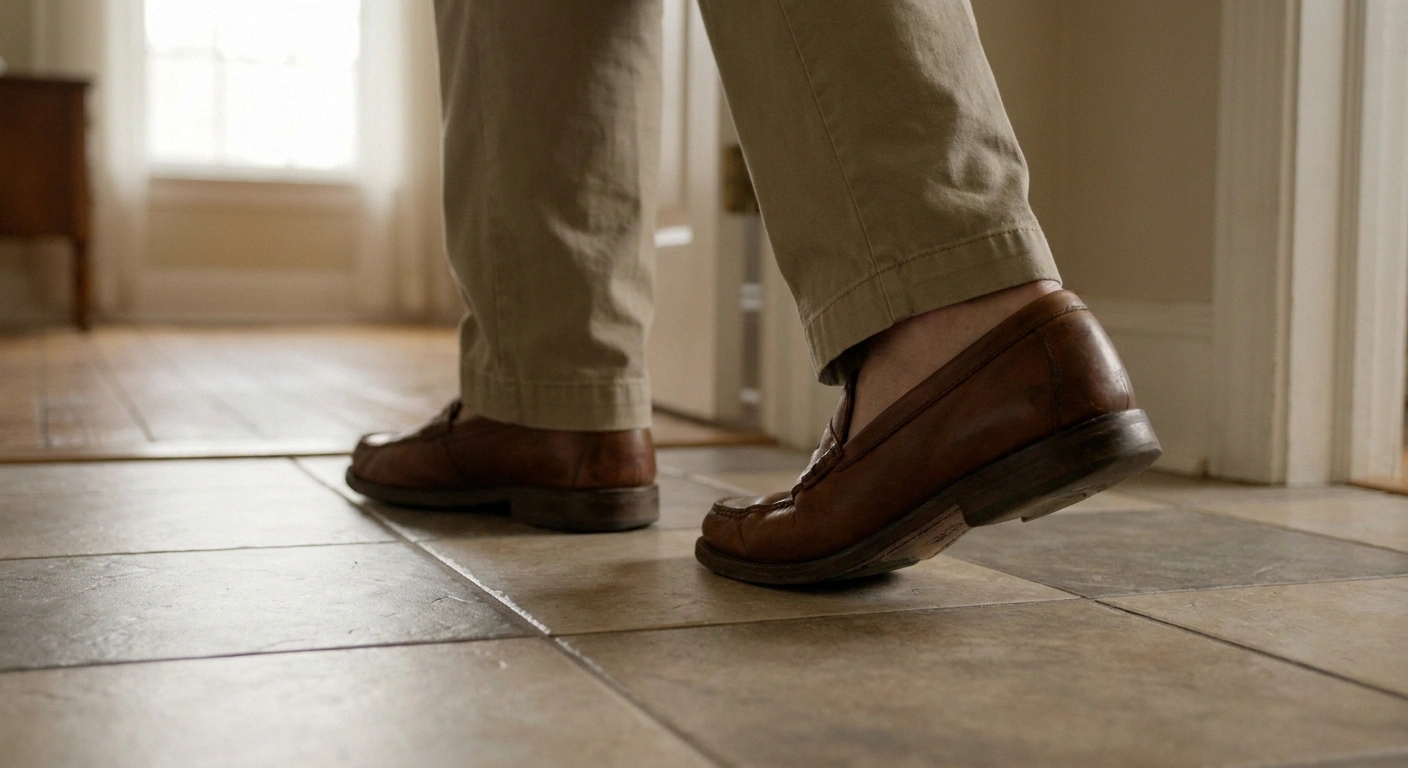
It’s often someone else who hears it first. A grandchild asks why one of your shoes is “clapping.” A spouse mentions, half joking, that they can tell which room you’re walking toward from the sound alone. Or you catch it yourself on a quiet tile floor late at night: heel, then a flat, hard slap as the front of your foot lands, over and over, on one side or both.
That sound is worth paying attention to — it isn’t a quirk of your shoes or a bad habit you’ve picked up. In most cases it means the muscles that lift the front of your foot have lost some strength, and the reason they’ve lost it tells you a great deal about what’s going on in your nerves.
I’m a patient advocate, not a doctor. I’ve spent years reading the research and sitting with people who were sorting out their own feet, and the slap is one of the most useful clues I know — free, audible and honest. Below I’ll explain what makes the noise, how it differs from full foot drop, the handful of causes that account for most cases, what testing usually looks like, and which versions of this symptom mean you shouldn’t wait for a routine appointment.
What Actually Makes That Slapping Sound
Think about a normal step for a moment. Your heel touches down first. Then, instead of the front of your foot crashing to the floor, it lowers gently, like a door with a soft-close hinge. The “hinge” is a group of muscles along the front of your shin, led by one called the tibialis anterior. Their job is to lift your toes and forefoot when you swing your leg forward, and then to let the foot down slowly once the heel lands.
One signal, four places it can be interrupted
- 1. The L5 root in the lower back
- Squeezed by a bulging disc or a narrowed spinal canal. Often brings leg pain along the outside of the calf.
- 2. The sciatic nerve in the thigh
- Less common. Usually hurt by a hip injury or hip surgery rather than everyday pressure.
- 3. The peroneal nerve at the outside of the knee
- The most common pressure point in the leg. Sensitive to leg crossing, kneeling, squatting, casts and fast weight loss.
- 4. The far nerve endings near the ankle
- Where long-standing polyneuropathy reaches first, usually in both legs and after years of numb feet.
When those muscles weaken, the controlled lowering is the first thing to go. The heel lands, the muscle can’t hold the forefoot back, and the front of the foot drops all at once — no hinge, just gravity. That’s the slap.
Doctors call the strength these muscles provide dorsiflexion, which simply means pulling the top of your foot up toward your shin. The muscles get their orders from the peroneal nerve (also called the fibular nerve), which wraps around the outside of your knee just below the joint. The nerve signals start much higher, in the lower back, at a spinal level called L5. So a problem anywhere along that line, from the back to the knee to the long nerve endings near the ankle, can produce the same noise.
That’s why the slap on its own can’t tell you the cause. The other details around it can.
Foot Slap, Foot Drop and the Steps in Between
People use “foot slap” and “foot drop” as if they mean the same thing, and they’re closely related. But it helps to think of them as points along a scale rather than two separate problems.
| Stage | What you notice | Practical meaning |
|---|---|---|
| Slap only | Noise on hard floors, quieter on carpet | Book a routine check and start trip-proofing |
| Slap plus toe catching | Scuffed shoe toes, near-trips on thresholds | Ask about a brace before the first fall |
| Steppage gait or full drop | Knee lifted high, foot hangs when the leg swings | Prompt specialist visit and a brace fitting |
A quick tell: look at the toes of your most-worn shoes. Wear on one toe only often matches the weaker side.
At the mild end, the muscle can still lift your foot during the swing, so your toes clear the floor, but it can’t lower the foot smoothly after the heel lands. That’s when you hear the slap but don’t trip much. Further along, the muscle can’t lift the toes high enough in the swing, either. The toes start catching on rugs, door thresholds and the edge of a stair. Your body then works out a fix on its own: you lift your knee higher than usual so the dangling foot clears the ground. That high-knee walk has a name, steppage gait, and MedlinePlus describes it as the classic walking pattern of foot drop.
At the far end is complete foot drop, where the front of the foot hangs and can’t be raised at all. My longer article on peroneal neuropathy and foot drop covers that end of the scale in depth, including recovery after surgery and injury.
Where you sit on the scale matters for two reasons. It tells your doctor how much strength has been lost, and it tells you how much your fall risk has changed. A slap with good toe clearance is a warning. A slap plus regular toe catching is a fall waiting for a dark hallway.
Clue One: One Foot or Both?
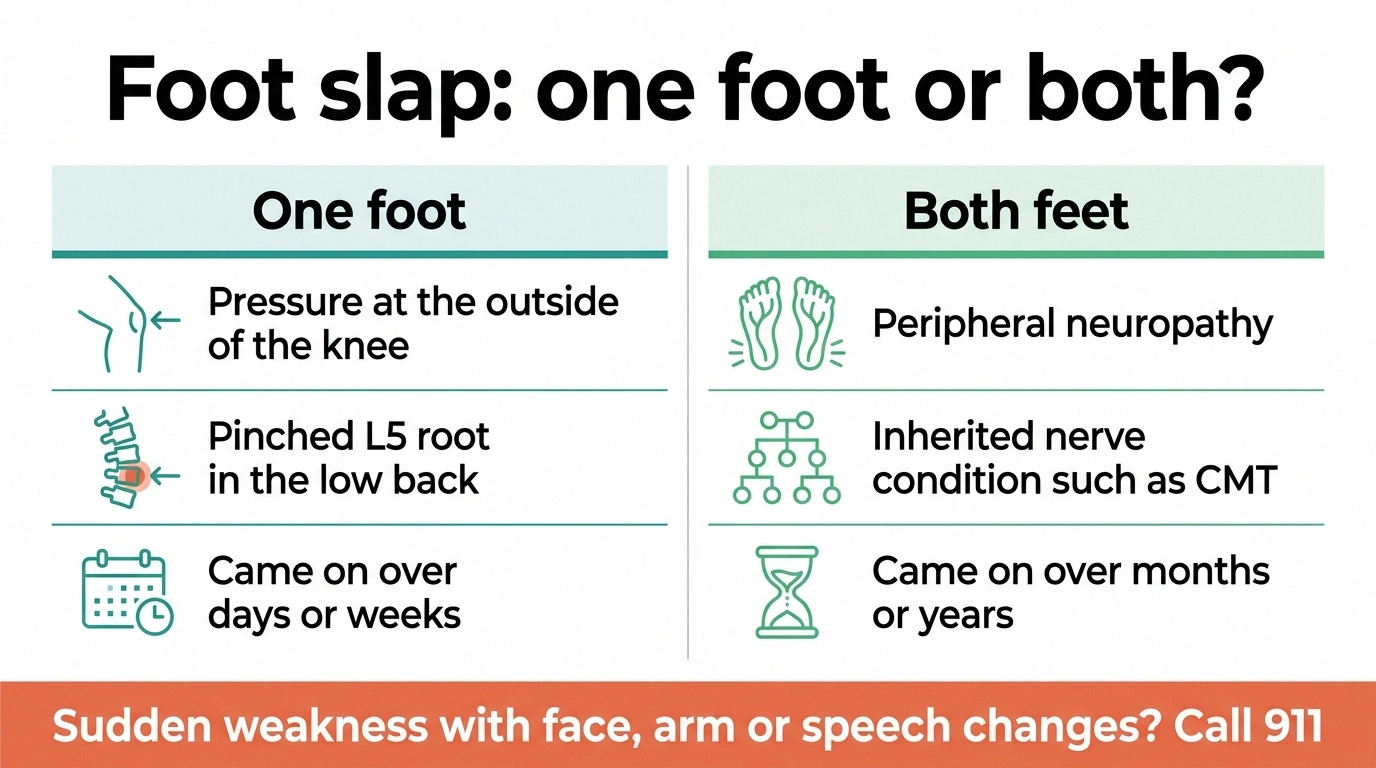
This is the single most useful question you can answer at home, and it sorts the causes into two big groups.
One foot slapping usually points to a problem with one specific nerve or one nerve root. The two front-runners are pressure on the peroneal nerve at the outside of the knee and a pinched L5 root in the lower back. Both tend to affect one leg at a time.
Both feet slapping, especially if it crept in slowly, points toward something that affects nerves throughout the body. That’s the territory of peripheral neuropathy, including the most common kinds linked to diabetes, as well as inherited nerve conditions.
Two more questions sharpen the picture. Did it come on over hours or days, or over months and years? And is there numbness too, and if so, where? Numbness on the top of the foot and the outer shin tells a different story from numbness in both soles that started years ago. Keep your answers in mind as you read the next few sections. They’ll help you see which description fits you best.
When the Nerve at the Knee Gets Squeezed
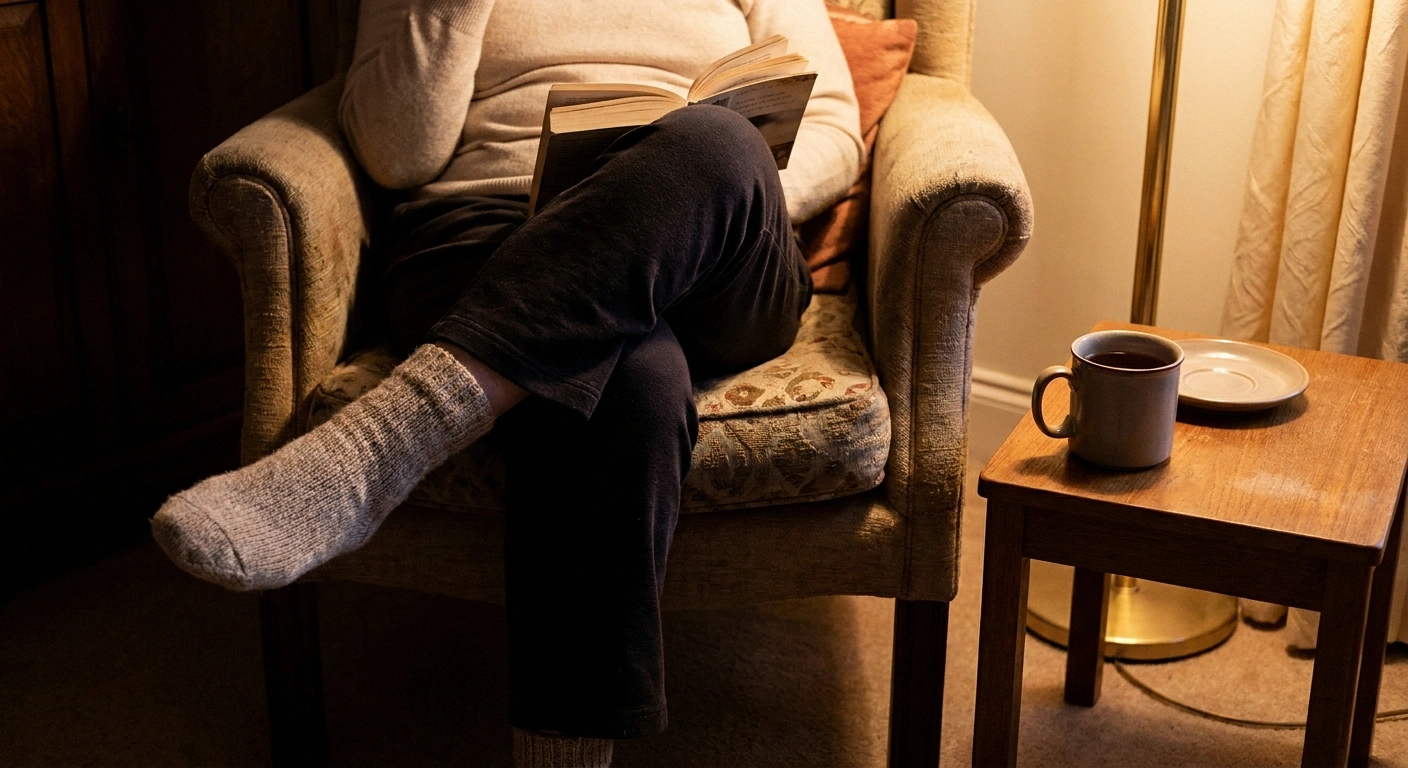
The peroneal nerve has an awkward route. Just below the knee, on the outside of your leg, it winds around a bony bump called the fibular head, lying close to the skin with very little padding. Press on that spot for long enough — a crossed leg, a long kneel — and the nerve stops passing messages properly.
StatPearls, the NIH-hosted clinical reference, calls peroneal neuropathy the most common compression nerve injury in the leg. The usual culprits are ordinary things: long stretches of squatting or kneeling (carpet layers and farmworkers come up again and again in the medical literature), a cast or tight brace, and diabetes, which makes nerves more vulnerable to pressure. A 2023 review in the Journal of the Korean Neurosurgical Society adds two everyday triggers that surprise most people: habitual leg crossing and a lot of weight lost quickly. Losing weight thins the fat that normally cushions the nerve at the fibular head.
Knee replacement is another route. StatPearls cites rates of roughly 0.3 to 4 percent for peroneal nerve problems after total knee replacement.
The pattern that hints at the knee looks like this:
- It’s one leg, and the slap appeared fairly quickly, often after a period of crossing your legs, kneeling or recent weight loss.
- Any numbness sits on the top of the foot and the outer side of the shin. The sole usually feels normal.
- Lifting the foot is weak, and so is turning the foot outward. Turning it inward is fine.
- There’s usually little or no back pain.
The good news is that this cause is often the most fixable. MedlinePlus notes that once the pressure is removed, the nerve can recover, though it may take several months to improve. If it doesn’t, surgery to free the nerve is an option for some people.
When the Problem Starts in Your Lower Back

The L5 nerve root leaves the spine low in the back and joins the nerves that eventually become the peroneal nerve. A bulging disc or narrowing of the spinal canal can press on it, and StatPearls lists L5 radiculopathy among the most common causes of foot drop overall.
Because the L5 root feeds more muscles than the peroneal nerve alone, the weakness spreads a little wider. That’s the detail doctors use to tell the two apart — and you can feel some of it yourself. With an L5 problem, the muscle that turns your foot inward is often weak too, and so is a hip muscle on the side of your buttock that keeps your pelvis level when you walk. With a knee problem, those two muscles are spared.
Other hints that the back is involved:
- Pain running from the back or buttock down the outside of the leg, though some people have surprisingly little back pain.
- Symptoms that change with sitting, bending or standing.
- Numbness that runs along the outside of the calf onto the top of the foot.
Sorting these two apart can be tricky even for clinicians, which is why the testing section below matters. If you’d like a fuller picture of how a pinched root differs from nerve damage in the feet, my guide to radiculopathy versus neuropathy walks through it side by side.
When Neuropathy Reaches the Ankle Muscles
Most people think of peripheral neuropathy as a problem of feeling: numbness, tingling, burning. That’s usually how it starts. But the same nerves that carry sensation from the feet also carry commands to small muscles, and when damage goes on long enough, strength can start to slip as well — slowly, and usually toes first.
A 30-second heel walk, done safely
Stand facing a kitchen counter with both hands resting on it. Lift the front of both feet and take five small steps sideways on your heels only.
- One forefoot sinks back to the floor while the other stays up: weakness on that side.
- Both sink, or you can only hold them up for a step or two: weakness on both sides.
- The foot lifts but the toes stay curled down: toe weakness tends to come first in neuropathy, before the ankle.
Skip this if you’ve fallen recently or can’t stand without support. It is the same test a doctor uses in the exam room, so note what you saw and bring it to the appointment.
A review of polyneuropathy in the Canadian Medical Association Journal describes the typical order. In the common “length-dependent” kinds, where the longest nerves fail first, weakness follows sensory loss. It shows up first in the muscles that lift the toes, and later in the muscles that lift the ankle. So a slapping gait in someone who has had numb feet for years fits neatly with neuropathy that has moved from sensation into strength.
The pattern here is different from the knee and the back:
- Both feet, usually fairly evenly, even if one side seems a bit worse.
- Numbness, tingling or burning in both feet that came first, often by years.
- A slow change over months or years, not days.
- Sometimes weakness in the small foot muscles, so toes start to curl or the foot looks thinner.
Diabetes is the best-known cause, but it’s not the only one. Vitamin B12 shortage, heavy drinking, some chemotherapy drugs, thyroid problems and inflammatory nerve conditions can all do the same. Diabetes also makes a nerve more sensitive to pressure, so it’s entirely possible to have a background neuropathy and a squeezed nerve at the knee on top of it. In that case one foot may slap far more than the other, which can muddy the “one foot or both” clue.
Inherited Causes: The Family Foot

Sometimes the clue isn’t in your own history but in your family’s. Charcot-Marie-Tooth disease, usually shortened to CMT, is a group of inherited nerve conditions, and foot drop is one of its signature features.
The National Institute of Neurological Disorders and Stroke lists the typical signs: weakness in the foot and lower leg that makes lifting the foot hard, a high-stepping walk with frequent tripping or falling, and foot shapes such as high arches and hammertoes. It usually starts in the teens or early adulthood, but symptoms can appear at any age, and they tend to progress slowly.
Think about CMT if you’ve always been a little clumsy on your feet, if you’ve had high arches since childhood, if your lower legs are noticeably thin, or if a parent, sibling or grandparent walked with the same slap. Plenty of people reach their sixties without a name for it — having been told for decades they just had “weak ankles.” The NINDS notes that high-top shoes or boots can support weak ankles and that many people use braces to stay mobile. You’ll find more on diagnosis and daily life in my article on hereditary neuropathy and CMT.
Signs That Mean Today, Not Next Month
Most foot slap develops slowly and can be checked at a regular appointment. A few versions can’t wait. This is the section I’d ask you to remember even if you forget the rest.
Three facts that speed up urgent care
- The exact time the weakness began, or the last time you were sure your foot worked normally. Stroke treatment decisions depend on it.
- Everything else that changed, even if it seems unrelated: speech, vision, an arm, your bladder, numbness between the legs.
- Your medicine list, especially blood thinners and diabetes medicines. A photo of your pill bottles on your phone works.
Call 911 right away if foot weakness appears suddenly along with any of these: a drooping face, weakness or numbness in an arm, slurred or confused speech, sudden trouble seeing, or a severe headache. A stroke can show up as a dragging foot, and treatment works best in the first hours.
Go to the emergency room if new foot weakness comes with numbness in the groin, inner thighs or “saddle” area, new trouble controlling or starting urination, or loss of bowel control. Cleveland Clinic describes this combination, called cauda equina syndrome, as a medical emergency in which a disc or other problem squeezes the bundle of nerve roots at the bottom of the spine.
Also get same-day care if a slapping or dropped foot follows a knee injury, a fracture or a hard workout and comes with severe, building pain and a tight, swollen shin. Pressure building inside the muscles of the leg (compartment syndrome) can starve the peroneal nerve of blood, and it needs treatment within hours.
Weakness that spreads quickly over days, climbing from both feet into the legs, is another reason not to wait. That pattern can belong to Guillain-Barré syndrome, an inflammatory nerve condition that is treatable but needs prompt hospital care.
What the Doctor Will Check
The first visit is mostly hands-on, and it’s more revealing than people expect. Your doctor will likely watch you walk, ask you to walk on your heels, and test the strength of each movement at the ankle and hip separately: lifting the foot, turning it in, turning it out, pushing down, and pushing your leg out to the side. Comparing those movements is how they begin to tell a knee problem from a back problem from a body-wide neuropathy.
| Movement tested | Knee (peroneal) | Back (L5 root) | Polyneuropathy |
|---|---|---|---|
| Lifting the foot | Weak | Weak | Weak, both sides |
| Turning the foot out | Weak | Often weak | Varies |
| Turning the foot in | Normal | Often weak | Varies |
| Pushing the leg out to the side (hip) | Normal | Can be weak | Normal |
| Numbness | Top of foot, outer shin | Outer calf onto top of foot | Both feet, soles included |
Typical patterns only. Mixed pictures are common, which is why nerve testing often settles it.
They’ll also map where you feel touch and pinprick, tap your reflexes, and press along the outside of the knee to see whether it sets off tingling. Expect questions about leg crossing, kneeling, weight changes, surgery, alcohol, diabetes, medications and family members who walked the same way.
From there, the usual next steps are:
- Nerve conduction studies and EMG. These measure how well signals travel along the nerve and how the muscle responds. They’re often the test that pins down where the problem is. I’ve explained what to expect in my article on EMG and nerve conduction studies.
- Imaging. An MRI of the lower spine if an L5 root is suspected, and sometimes ultrasound or MRI of the knee to look at the nerve itself.
- Blood tests when both feet are involved, usually covering blood sugar, B12 and thyroid as a starting point.
- Genetic testing when the story points toward CMT.
If you’ve noticed the slap recently, write down the date it started and anything that changed around that time. That small note can save a lot of back-and-forth.
Braces, Shoes and Physical Therapy
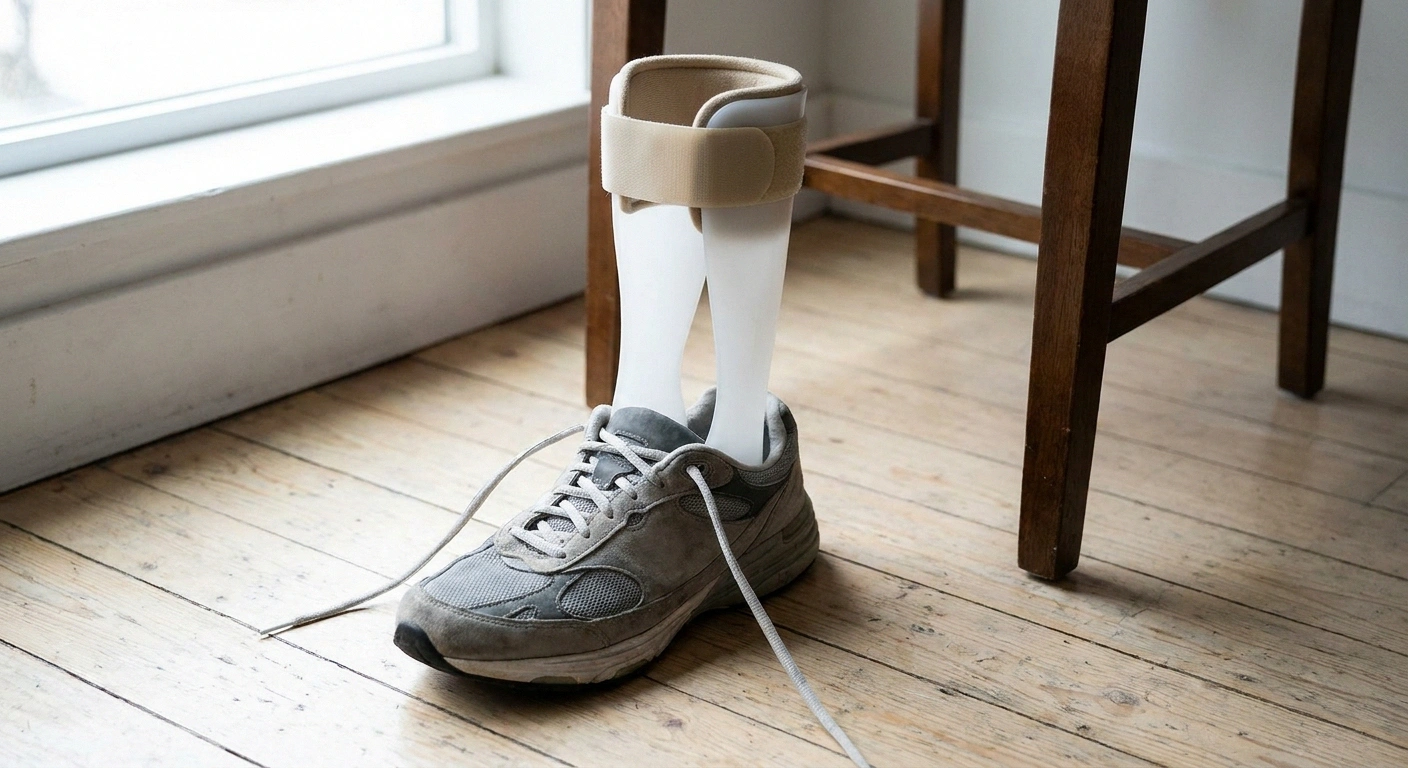
The NINDS is clear that foot drop is a symptom, so treatment depends on the cause. Taking pressure off a squeezed nerve, treating a disc problem or getting blood sugar under control comes first. But while that happens, and sometimes for good, three tools make walking safer.
An ankle-foot orthosis (AFO). This is a lightweight brace, usually plastic or carbon fiber, that fits inside your shoe and up the back or front of your calf. It holds the foot up during the swing so your toes clear the floor, and it controls how fast the forefoot lands, which quiets the slap. Mayo Clinic and the NINDS both list bracing as a mainstay. Some are off-the-shelf; others are custom-molded. A brace changes how a shoe fits, so it’s worth reading up on shoes that work with an AFO brace before you buy.
Physical therapy. A therapist can strengthen the muscles that still work, stretch a tight calf (which tends to get shorter when the foot hangs), and retrain your walking pattern. When weakness comes from a nerve that’s recovering, exercise helps keep the muscle ready for when signals return. My piece on physical therapy for neuropathy covers what sessions usually include.
Electrical stimulation. Small devices worn below the knee can stimulate the peroneal nerve at the right moment in each step, lifting the foot. Research comparing them with braces has mainly been done in people whose foot drop comes from stroke or multiple sclerosis, where the nerve below the knee still works. The NINDS describes this option as suitable for only a small number of people with foot drop, so it’s a question to raise with a specialist, not a first stop.
For a lasting drop that doesn’t improve, surgeons can sometimes free a trapped nerve or move a working tendon to take over the lifting job. These are specialist decisions, usually made after months of watching how the nerve recovers.
Walking Safely While You Sort It Out
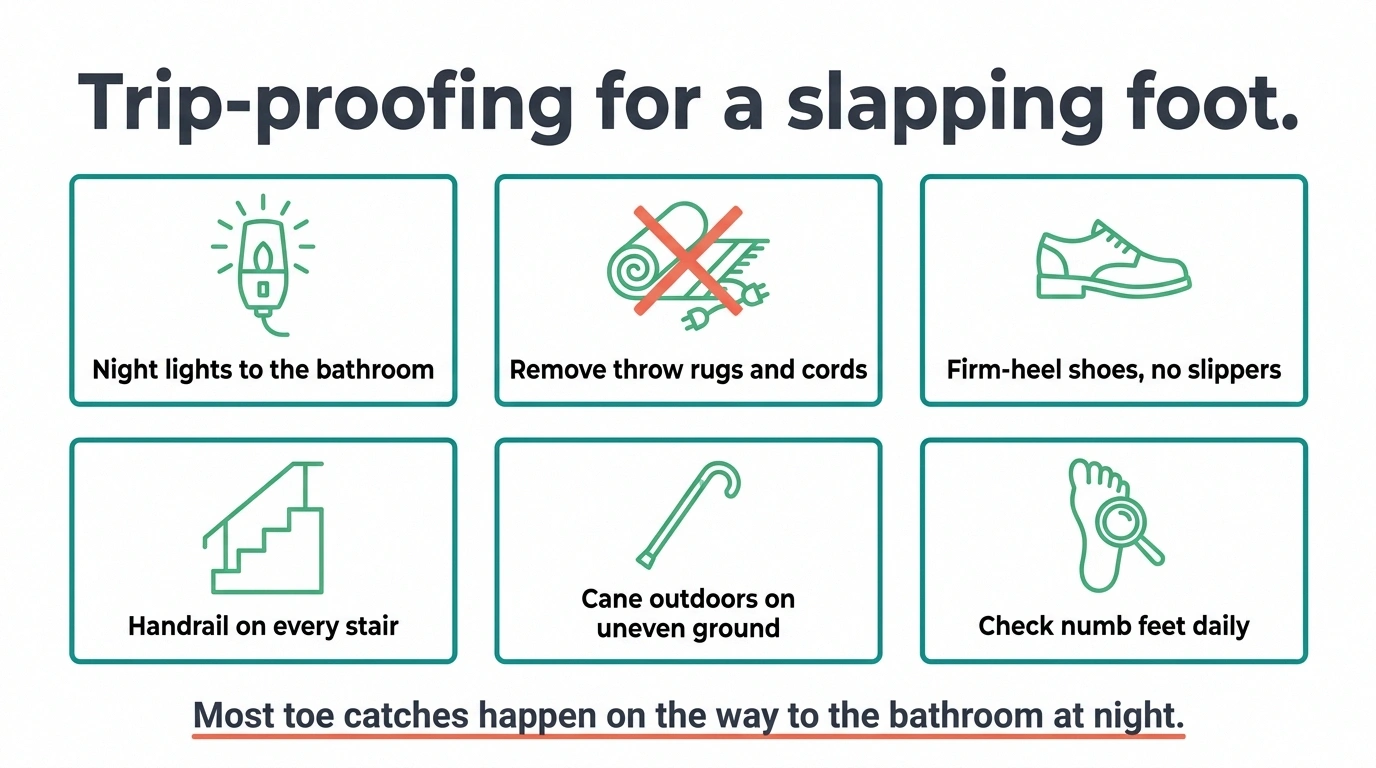
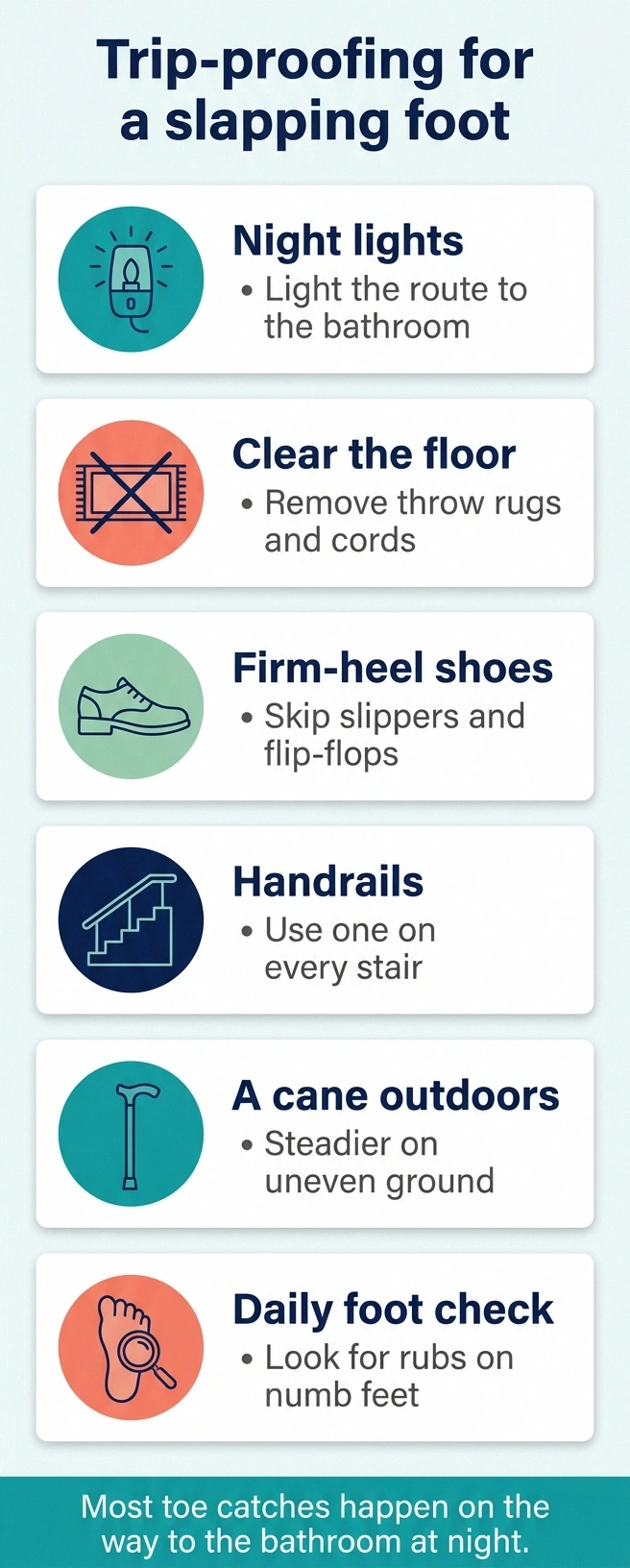
The slap itself is harmless — the trip that follows it isn’t. Foot drop has a well-established link with falls, and if you also have numb feet, you may not feel your toes catch until you’re already off balance. A few changes make an outsized difference:
- Light the path at night. Most toe catches happen on the way to the bathroom in the dark. Plug-in motion lights along that route are cheap insurance.
- Clear the trip zone. Throw rugs, cords and raised thresholds are the classic snags. Tape down or remove what you can.
- Choose shoes with a firm heel and a secure fit. Slippers and flip-flops are the worst offenders, because a weak ankle can’t grip them and they slide forward under your toes.
- Lift deliberately on stairs. Lead with the stronger leg going up, and use the handrail every time.
- Consider a cane early, especially outdoors on uneven ground. It’s far easier to adopt one before a fall than after.
- Check your feet daily if they’re numb. A foot that drags can rub against shoes in new places.
My article on balance and fall prevention with neuropathy goes further, with exercises and a room-by-room checklist.
If you take one thing from all this, let it be that the sound is information. It’s your body telling you which muscles are struggling, and with a few questions answered, it often points straight to why. That’s a much better place to start than worry.
Frequently Asked Questions
Why does my foot slap when I walk?
A slapping foot usually means the muscles at the front of the shin that lift the foot have weakened. After the heel lands, they can no longer lower the front of the foot gently, so it drops onto the floor with a slap. The weakness usually comes from a nerve problem, most often pressure on the peroneal nerve at the outside of the knee, a pinched L5 nerve root in the lower back, or peripheral neuropathy.
Is foot slap the same as foot drop?
They are closely related. Foot slap is often an early or milder form of foot drop, when the foot can still lift enough to clear the floor but cannot be lowered smoothly. In fuller foot drop the toes catch or drag, and many people start lifting the knee higher to compensate, which is called steppage gait.
Can neuropathy cause foot slapping?
Yes. In the common forms of peripheral neuropathy, weakness tends to follow numbness, first in the muscles that lift the toes and later in the muscles that lift the ankle. This usually affects both feet and develops slowly over months or years. Inherited nerve conditions such as Charcot-Marie-Tooth disease can also cause it.
Can crossing my legs cause foot slap?
It can. Habitual leg crossing presses on the peroneal nerve where it wraps around the outside of the knee, and it is a recognized cause of peroneal nerve palsy, especially after significant weight loss. Stopping the pressure often lets the nerve recover, though improvement can take several months.
Is sudden foot drop an emergency?
It can be. Call 911 if foot weakness appears suddenly with face drooping, arm weakness, or speech trouble, since these can be signs of stroke. Go to the emergency room if it comes with numbness in the groin or saddle area or new bladder or bowel problems. Sudden foot drop after a leg injury with severe pain and swelling also needs same-day care.
Will foot slap go away on its own?
It depends on the cause. When pressure on a nerve is removed or a disc problem settles, the nerve often recovers partly or fully, though it can take several months. Slap caused by a slowly progressive neuropathy or an inherited condition is less likely to go away, but a brace and physical therapy can make walking much safer.
What kind of brace helps a slapping foot?
The usual choice is an ankle-foot orthosis, a lightweight brace that fits inside the shoe and holds the foot up so the toes clear the floor and the forefoot lands more gently. They come in off-the-shelf and custom-molded versions, and a physical therapist or orthotist can help match the type to how weak the foot is.
About the Author