Most trips go wrong in the same three places. The curb outside the house, the overhead bin, and the stretch of hallway between the elevator and your room. None of them has anything to do with what you packed — all of them have to do with how much it weighs and how hard it is to grab.
I learned this the slow way. My first trip after my feet went numb, I packed exactly the way I always had, which meant one big bag stuffed to the zipper and a purse that could have anchored a boat. I made it through the airport fine. Then I stood in a hotel lobby trying to tip that suitcase over a raised threshold with fingers that couldn’t feel the handle, and I realized the packing had been the easy part.
So this isn’t a list of what to bring. You already know you need socks. It’s a way of packing that starts from your hands, your feet and your balance, and works outward from there to the clothes.
Start With the Bag, Not the Clothes
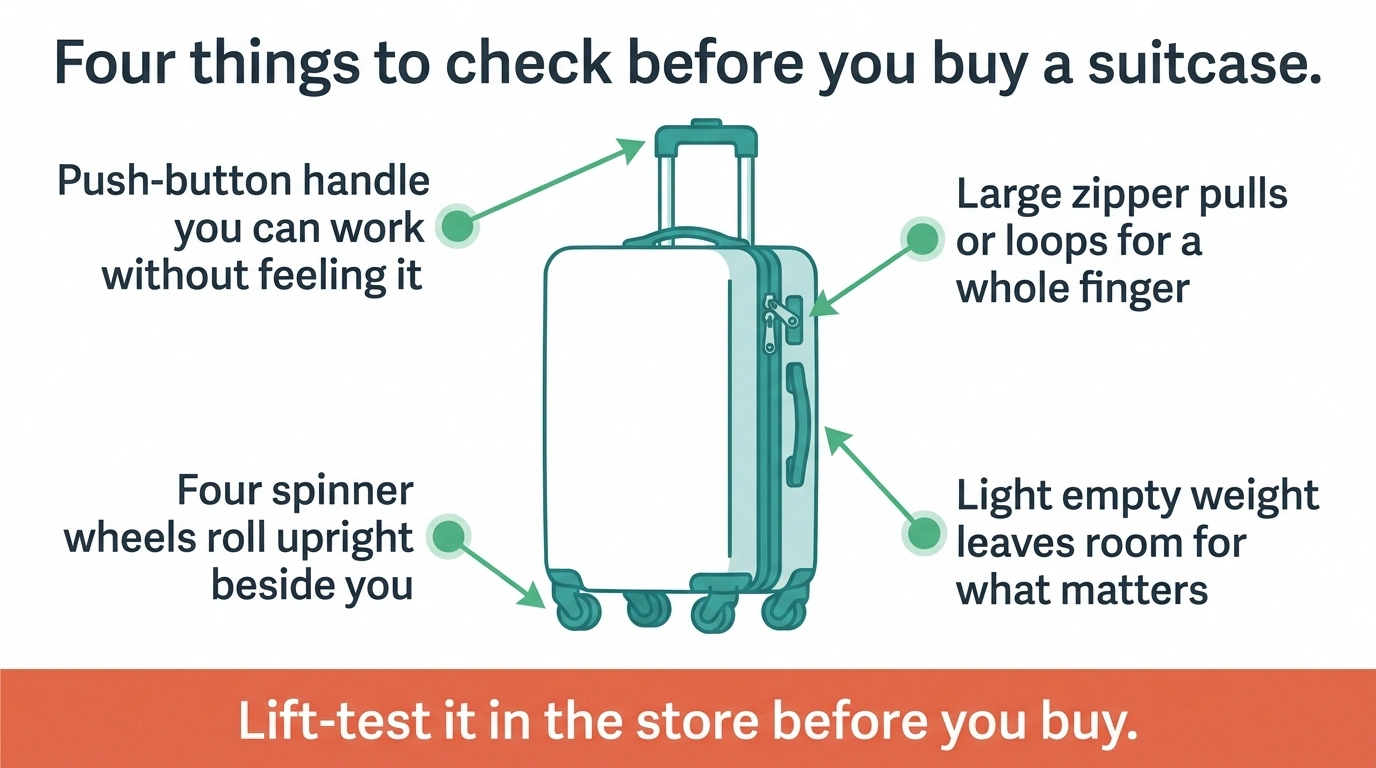
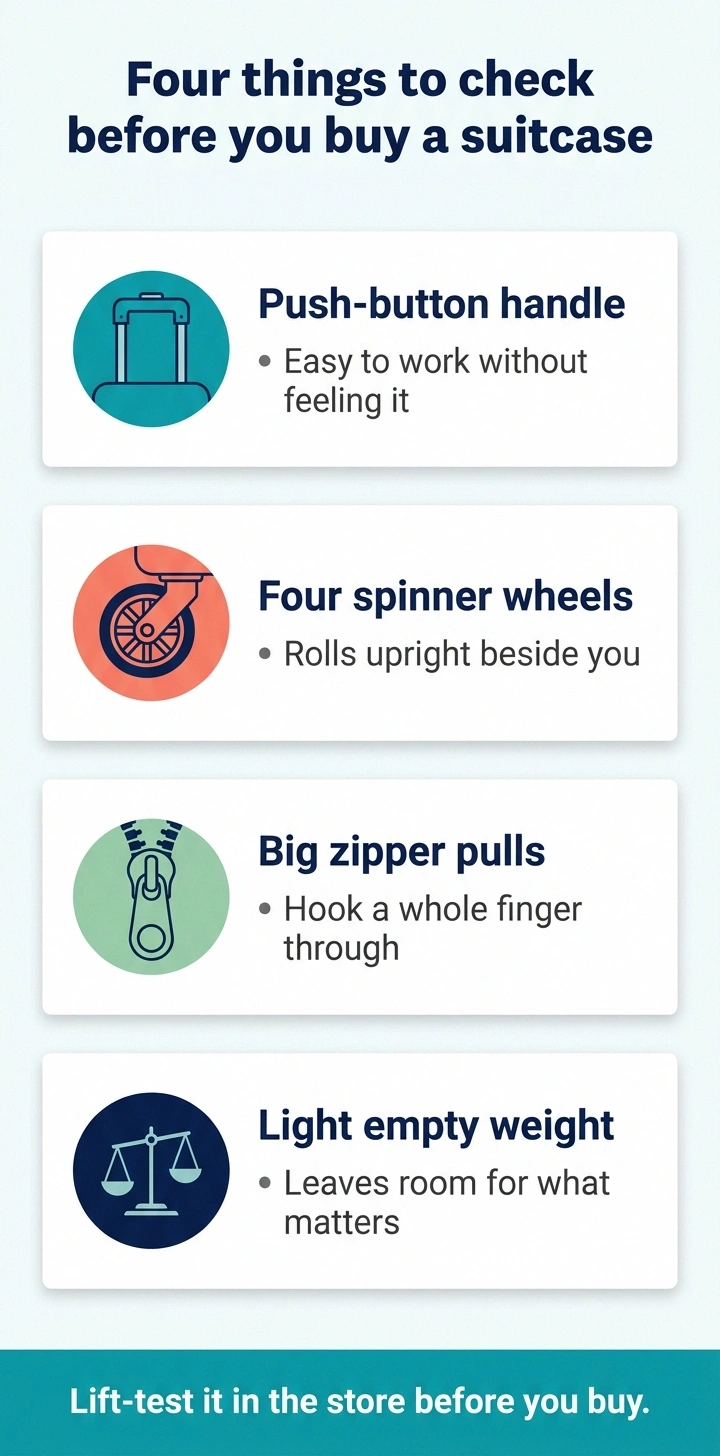
The suitcase you own decides more about your trip than anything you put in it. A heavy bag eats into your weight budget before you’ve added a single shirt, and an awkward one makes every curb and doorway harder than it needs to be.
When I shop for luggage now, I look at four things, in this order:
- Empty weight. Many lightweight carry-ons weigh somewhere around 5 to 8 pounds empty. Every pound the bag doesn’t weigh is a pound you can spend on clothes — or simply not lift. AAA’s travel writers give the same advice: buy the lightest bag you can find in a sturdy line.
- Four wheels, not two. A spinner rolls upright beside you. A two-wheeler has to be tipped back and pulled, which puts the weight on your wrist and pulls your body slightly sideways with every step. If your balance is already shaky, that sideways pull matters.
- A handle you can work without feeling it. Push-button telescoping handles are easier than the slide-and-squeeze kind when your fingertips are numb. Try the handle in the store with your eyes closed. If you can’t tell whether it clicked, keep looking.
- Zippers with something to hold. Big pulls, or loops you can hook a finger through. Tiny metal tabs are a daily fight.
Hard shell or soft? Honestly, it depends on your hands — and your back. Soft bags have outside pockets that save you from opening the whole case, and they squeeze into tight spots. Hard shells protect what’s inside and wipe clean, but most of them open like a clamshell, which means laying the bag flat on the floor or a bed. If bending down to the floor is hard for you, a soft upright bag with a front pocket can save a lot of stooping.
Size is the other half of this. The most common U.S. carry-on size is 22 by 14 by 9 inches, and AARP’s packing guide is built around fitting a week into exactly that. You don’t have to go carry-on only. But a smaller bag puts a natural ceiling on how heavy it can get, and that ceiling is your friend.
Find Your Real Lifting Number Before You Pack
Here’s the step almost everyone skips. Before you pack a single thing, figure out how much you can lift safely on a tired day, not a good one.
| Step | What to do | Stop and note the weight if |
|---|---|---|
| 1 | Load the empty bag with about 10 pounds of books or cans | You have to lean or twist to get a grip |
| 2 | Lift it from the floor to a chair seat, knees bent | Your feet shuffle to catch your balance |
| 3 | Lift from the chair up to a kitchen counter | Your shoulders or lower back feel it |
| 4 | Add 3 to 5 pounds and repeat | The handle slips or you cannot tell if your grip is closed |
| 5 | Take your stop weight and subtract a few pounds | That lower number is your packing limit for a tired travel day |
Have someone in the room the first time you try this, and stand on a non-slip floor in your usual shoes.
Do it at home, with someone nearby. Put a few books or canned goods in the empty suitcase, stand it on the floor, and lift it onto a chair seat using both hands, knees bent, bag close to your body. Then lift it onto a counter. Add weight a little at a time until the lift feels like real effort or you feel your footing shift. Stop there. That’s your number — and the honest version is a bit less than that, because you’ll be lifting at the end of a long travel day, in shoes, in a crowd.
A luggage scale costs very little and saves a lot of guessing. Weigh your test load, then weigh the packed bag before you zip it for good. Most major U.S. airlines cap a checked bag at 50 pounds in economy, but that’s the airline’s limit, not yours. Plenty of us top out well below it.
Why fuss over this? Because heavy bags hurt people. The American Academy of Orthopaedic Surgeons points to Consumer Product Safety Commission figures of more than 85,000 luggage-related injuries treated in a single year, mostly strains in the back, neck and shoulders from over-packed bags. Add numb feet that can’t sense a shift in your weight, and a bag that swings or slips can take you down with it. My piece on neuropathy, balance and falls goes into why the feet matter so much for staying upright.
Once you know your number, you pack to it — not to the size of the bag.
Making Zippers, Clasps and Cubes Work for Tired Hands
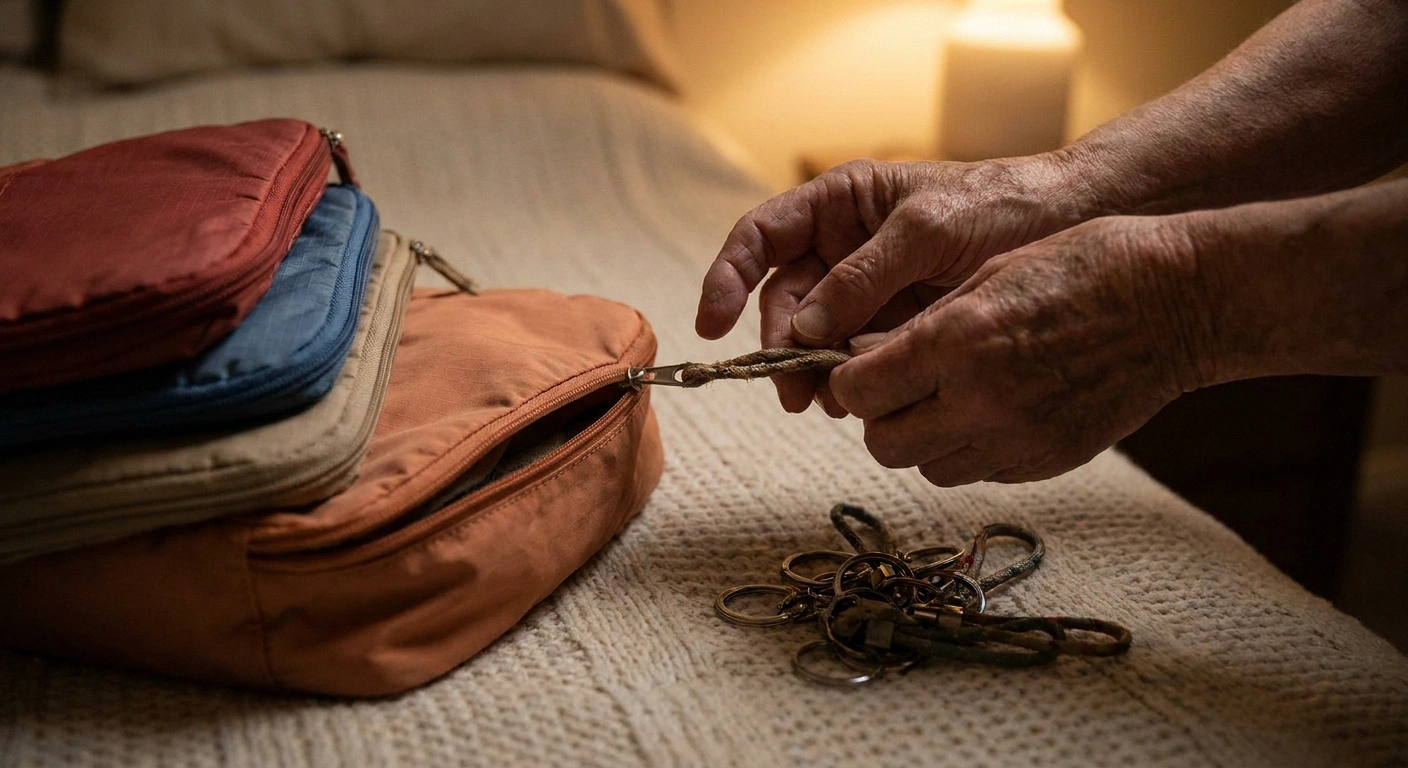
If your fingertips are numb or tingly, small fastenings become the slowest part of any trip. A few cheap changes fix most of it.
Start with zipper pulls. Clip-on pulls, a loop of cord, or even a key ring threaded through each zipper tab gives you something to hook with a whole finger instead of pinching. Do every zipper on the bag, the toiletry case and your purse. It takes ten minutes and you’ll use them dozens of times a day.
Packing cubes are the other quiet hero. AARP describes them as mini drawers, and that’s exactly how they work for hands that don’t grip well. Instead of digging through a bag by feel, you lift out the one cube you need. Look for cubes with a fabric handle on top and a zipper that runs smoothly the whole way around. Mesh tops help too, because you can see what’s inside without opening it.
I color-code mine — one color for tops, one for underwear and socks, one for sleepwear. When I can’t trust my fingers to tell fabric apart, I can trust my eyes to tell blue from gray.
A few more hand-friendly habits:
- Swap twist-top and pump bottles for flip-top ones, and open every new tube once at home so the foil seal is already gone.
- Choose clothes with fewer tiny buttons. Pull-on pants and knit tops travel well and dress fast.
- Put your pills into a weekly organizer you’ve already tested, not one with stiff lids you’re opening for the first time on the road.
- Pack a pair of thin gloves if your hands get cold. Cold makes numb fingers clumsier still.
If hand symptoms are a big part of your neuropathy, my overview of neuropathy in the hands covers grip, dexterity and what tends to help day to day.
What Stays Within Arm’s Reach
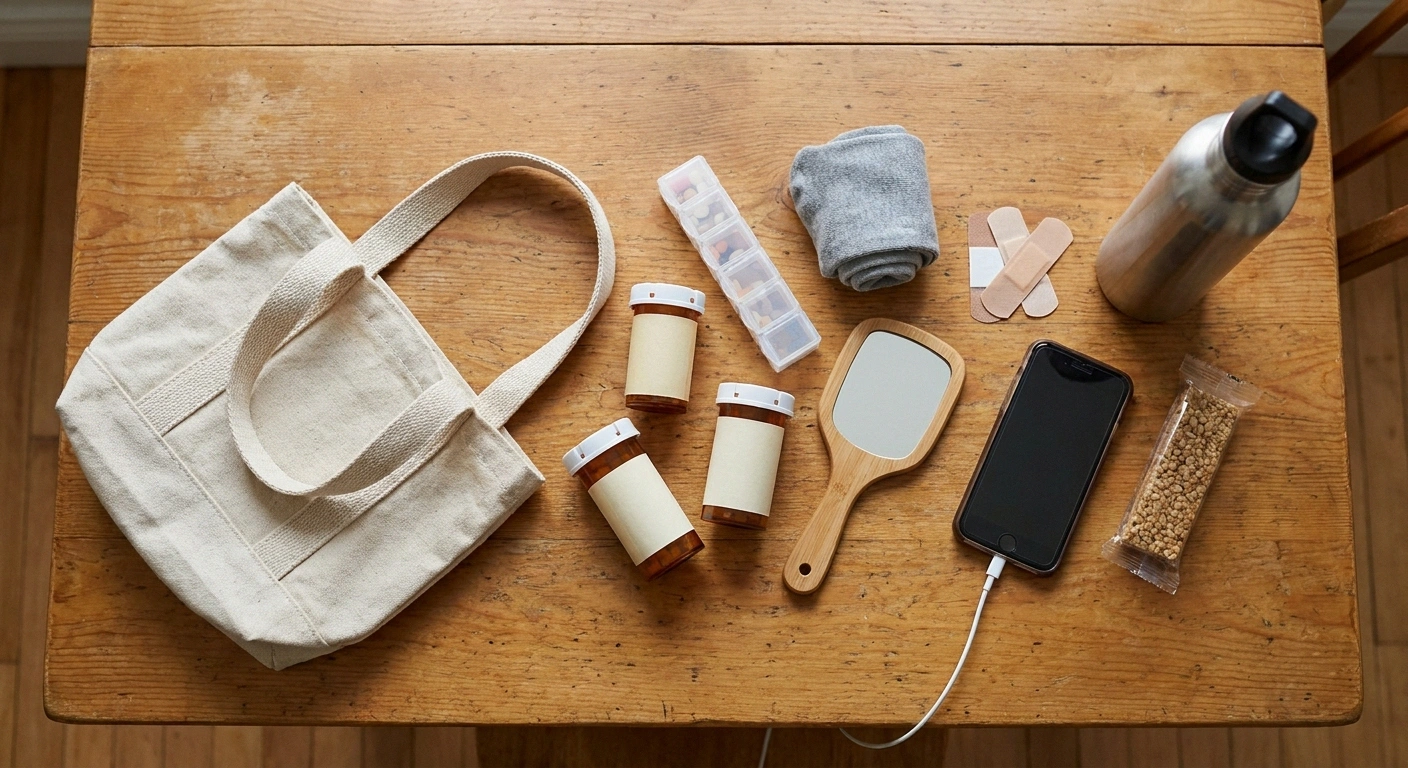
Some things never go in the big bag — not once, not even on a short drive.
Your medicines are first on that list. The CDC’s travel guidance says to keep medicines, and especially prescriptions, in your carry-on, in their original labeled containers, with a copy of your prescriptions that includes the generic names. A checked bag can be delayed for days. Your nerve medication shouldn’t be delayed with it. Johns Hopkins adds a sensible extra: pack enough for the whole trip plus a few days more, in case your trip home slips.
The TSA doesn’t actually require pills to stay in their original bottles, but some states have their own labeling rules, and labeled bottles make screening quicker. Liquid medicines are allowed above the usual 3.4-ounce limit; just tell the officer you’re carrying them before screening starts. I’ve written more about the security line itself in getting through airport security with neuropathy, and about timing doses across time zones in traveling with neuropathy medications.
Beyond medicine, my within-reach bag holds:
- A spare pair of socks (the seamless kind I wear every day)
- A small foot-check mirror and a couple of bandages
- A snack and a water bottle
- Phone, charger and a printed list of my medicines and doctors
- A light layer, since planes and buses run cold
Keep that bag small enough to sit on your lap or slide under the seat in front of you. A personal item you have to wrestle into an overhead bin isn’t really within reach.
Shoes Take the Most Room, So Plan Them First
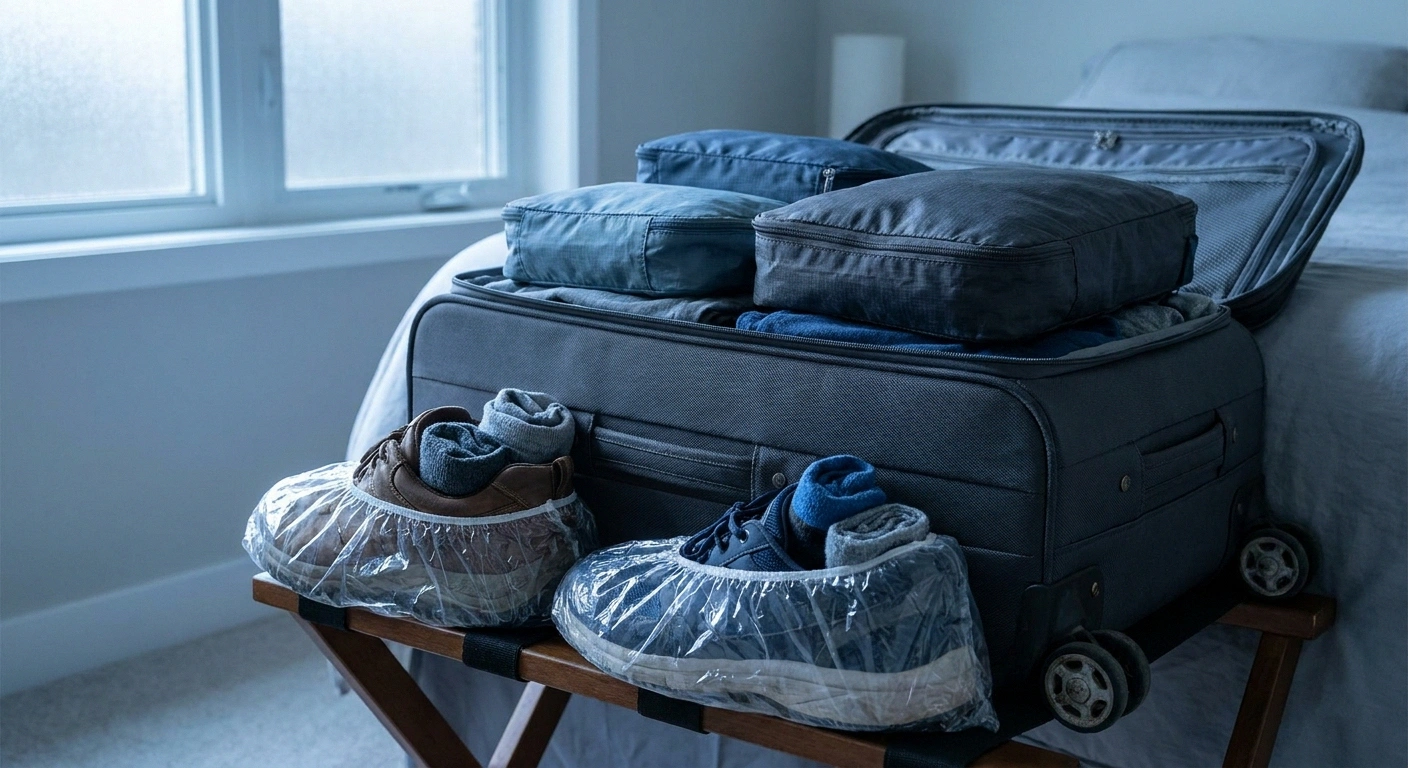
Shoes are heavy, bulky and, for those of us with numb feet, not optional. So I plan them before anything else and build the rest of the bag around them.
The rule I follow: wear the heaviest pair. AAA suggests the same thing for boots and coats, and it works just as well for supportive walking shoes. They’re on your feet instead of in your weight budget.
Then pack one more pair — ideally a slightly different shape — so you can switch if one starts rubbing. Breaking in new shoes on a trip is a gamble I don’t take anymore. A blister on a foot you can’t feel can go unnoticed for a whole day of sightseeing, and that’s how small problems become big ones. Anything you pack should already have a few weeks of wear behind it.
The third pair people forget is something for indoors. Hotel carpets hide pins, earring backs and the occasional shard of glass, and bathroom tile gets slick. A light house shoe or slipper with a real sole, not a fuzzy sock-style one, keeps your feet covered from the bed to the bathroom at night.
To save space, stuff socks inside the shoes and slip each pair into a shower cap or a thin bag so the soles don’t touch your clothes. Put them along the bottom edge near the wheels. Heavy things low and close to the wheels make a rolling bag steadier and less likely to tip.
The Small Foot Kit That Earns Its Space
Here’s where packing for neuropathy really differs from packing for anyone else. At home, you probably check your feet every night in the same chair with the same light. On a trip, everything about that routine changes, which is exactly when it’s easiest to skip.
One sandwich bag, six items
- Long-handled or fold-out mirror
- Lets you see the soles in a hotel bathroom without lifting your foot onto the counter.
- Blister dressings and a few plain bandages
- Cushioned blister dressings stay on longer than strip bandages on a walking day.
- Travel tube of moisturizer
- For tops and soles only. Skip the spaces between the toes, where moisture invites infection.
- Nail clippers and an emery board
- The TSA generally allows nail clippers in carry-on bags. Trim nails a day or two before you leave, not the night before a long walk.
- Two pairs of spare seamless socks
- Swap socks at midday if your feet got damp. Wet socks are a common cause of travel blisters.
- Small flashlight or phone light
- Hotel bathroom lighting is often dim. Good light is what makes a skin check worth doing.
A tiny foot kit makes the check happen anyway. Mine fits in a sandwich-sized zip bag and weighs almost nothing. It’s what lets me look at my feet in a strange bathroom at 10 p.m. without hunting for anything.
The reason it matters is simple. You’ll probably walk more on a trip than you do at home, in shoes that have been wet, on surfaces you don’t know. The feedback that would normally tell you a sock has bunched or a seam is rubbing isn’t there. A daily look is the substitute. If you do find a blister or a reddened spot, my guide to blister care for numb feet walks through what to do and which signs mean it’s time to see someone that day rather than after you get home.
One firm caution while we’re on feet. Don’t pack a heating pad or hand warmers meant to go inside socks. Numb feet can’t feel a burn starting, and travel nights in a cold room are when people reach for them. Extra wool socks and a blanket are the safer warmth.
Lifting, Rolling and Handing Off the Heavy Moments
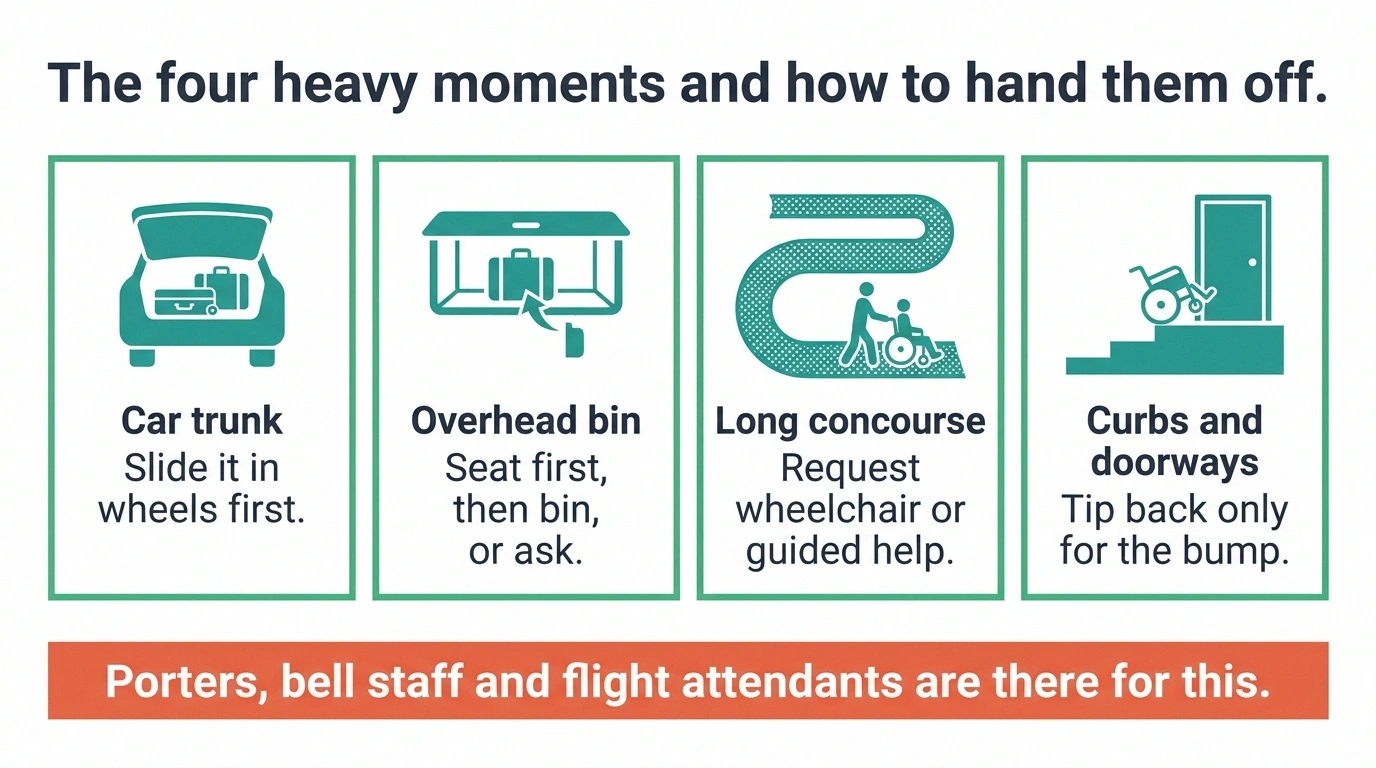
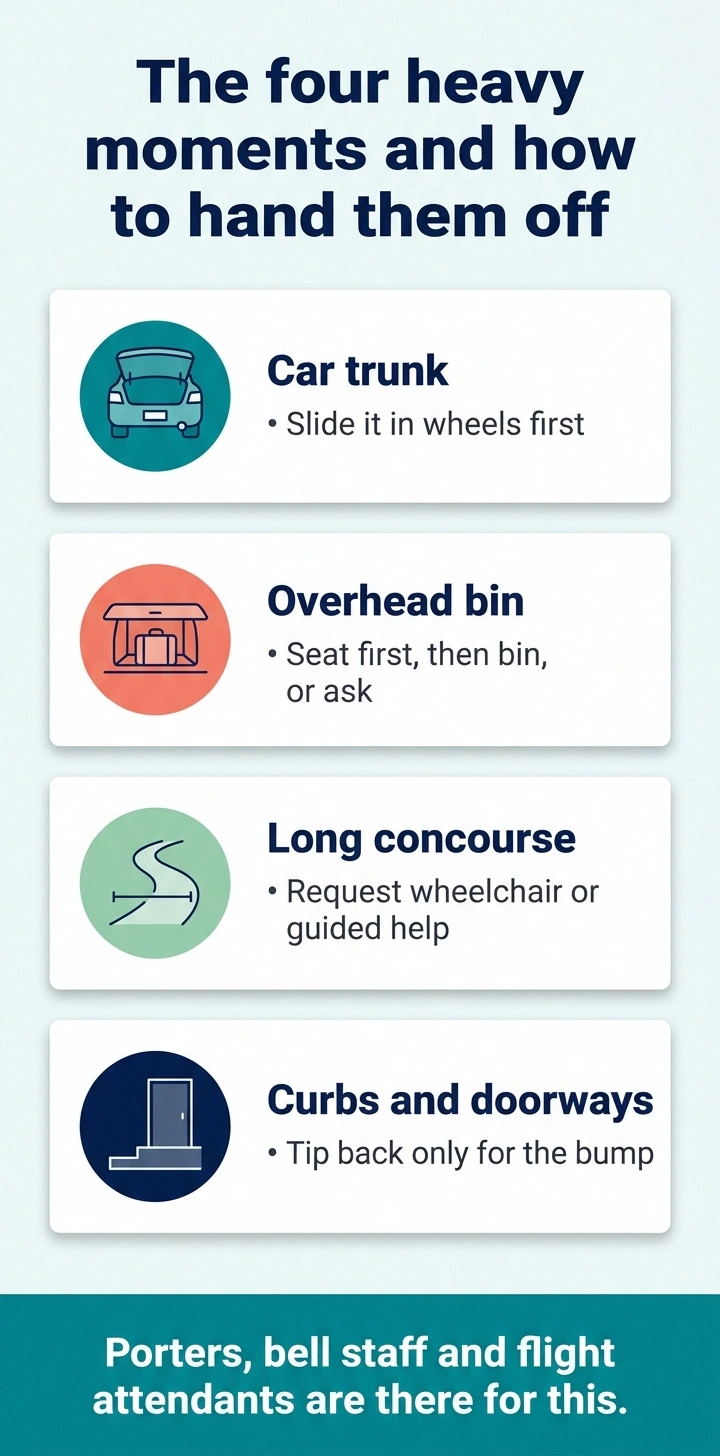
Even a well-packed bag has to be moved, and a few moments on every trip are harder than the rest. I plan for each one before I leave.
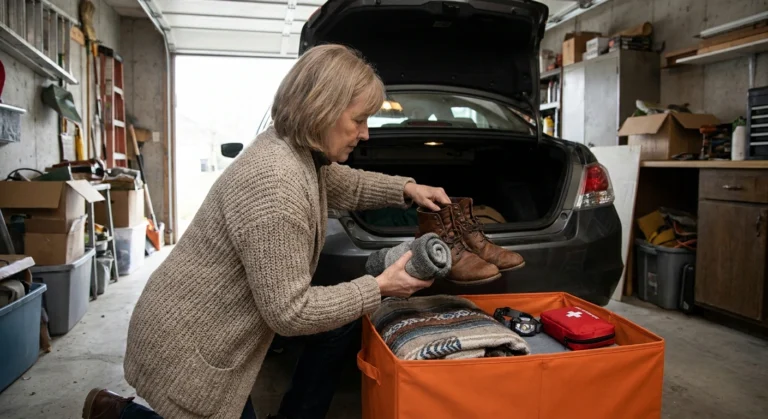
The car trunk. Back the car close, slide the bag rather than lift it when you can, and tip it in wheels-first so you’re never holding the full weight in the air. If someone’s driving you, let them load. That’s not weakness — that’s logistics.
The overhead bin. The orthopaedic surgeons’ advice is to lift the bag onto the seat first, then from the seat into the bin, in two smaller lifts instead of one big one. Better still, ask. The U.S. Department of Transportation tells travelers with disabilities to let flight attendants know if they need help stowing or getting down a carry-on bag. You don’t need to explain your diagnosis. “I have nerve damage in my hands and feet and could use a hand with this bag” is plenty.
The long walk. Airports and big train stations can mean a mile or more on hard floors. Wheelchair or guided assistance is available on request at U.S. airports, and the DOT says airlines can’t require you to give advance notice that you have a disability, though asking ahead makes things smoother. Accepting a ride for the long concourse leaves your feet and your balance fresher for the hotel at the other end. My broader neuropathy travel tips cover booking and seating choices that make these stretches easier.
The curb and the doorway. Spinners hate raised thresholds and broken curbs. Tip the bag back onto two wheels just for the bump, keep one hand free if there’s a rail, and take it slow. Curbside check-in, porters and hotel bell staff exist for exactly these moments. Budget a few dollars for tips and let them do it.
There’s one more piece of moving to plan for, and it happens in your seat. The CDC notes that trips longer than about four hours by plane, car or bus raise the risk of blood clots in the legs, and it suggests moving your legs often and walking around every one to two hours. If you already wear compression socks, keep them in the within-reach bag. If you’re at higher risk for clots, it’s a good question for your doctor before a long trip.
Pack Over Three Days, Not One Evening
Neuropathy and fatigue often come as a pair, and the night before a trip is a terrible time to spend three hours bending over a bed. I split packing into three short sessions instead.
Roughly 30 to 45 minutes a day
- Three days out: shoes chosen, clothes laid out at table height, phone photo taken. Refill any prescription that will run short during the trip plus a few extra days.
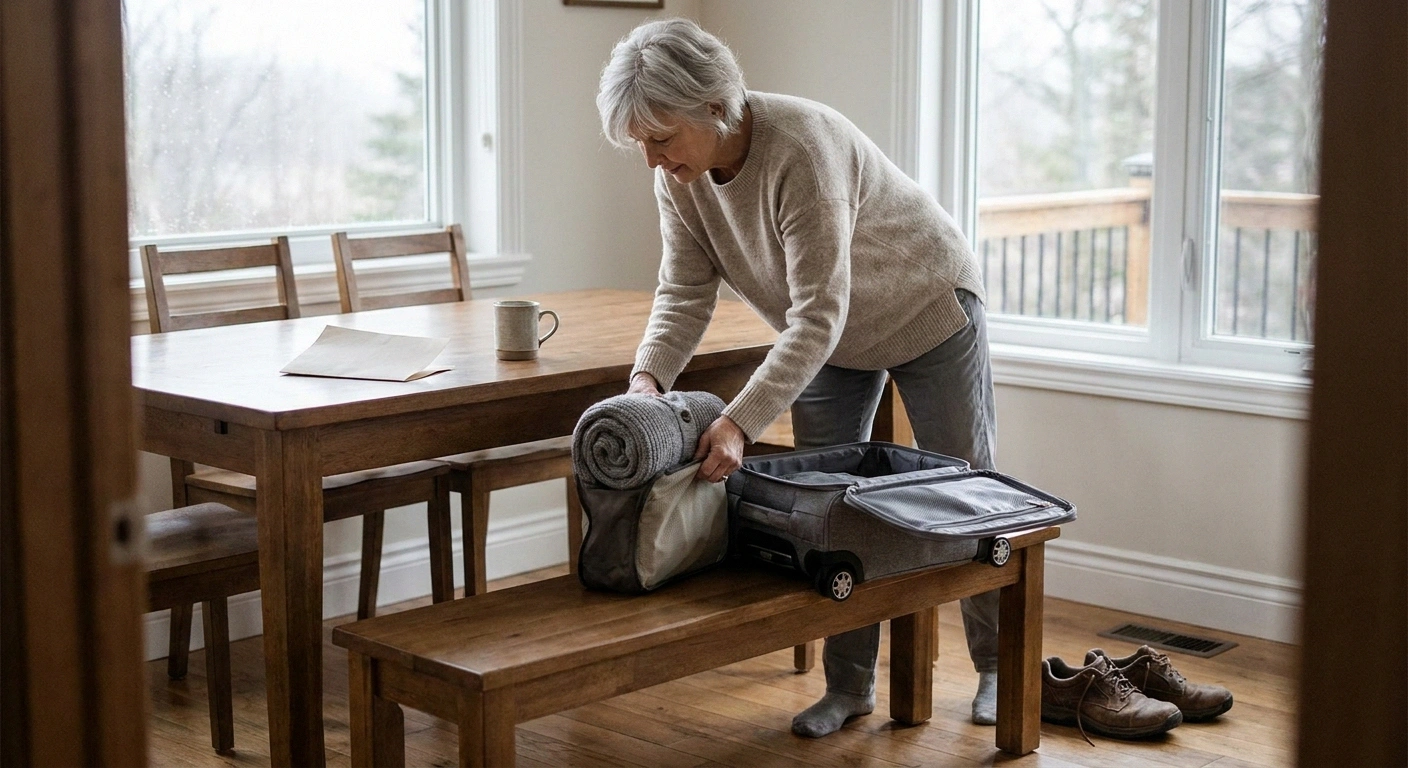
- Two days out: cubes filled, bag packed on a bench or chair, heavy items low by the wheels, bag weighed against your limit.
- The day before: pill organizer checked against your medicine list, foot kit and chargers into the carry-along bag, printed list of medicines and doctors on top.
- Departure morning: only toothbrush, glasses and the clothes you slept in. If you are flying, request wheelchair or guided assistance now if you did not when booking.
Day one is for decisions. I lay out the shoes first, then the clothes, on a table or a chair I can reach without bending. I take a phone photo of the pile so I’m not rethinking it later.
Day two is for the bag. Cubes get filled at the table, then go into the suitcase while it’s sitting up on a bench or a sturdy chair, never on the floor. Heavy items go low near the wheels. Then I weigh it. If it’s over my number, something comes out tonight, not at the check-in counter.
Day three is for the small stuff and the within-reach bag. Medicines, chargers, foot kit, documents. I check the pill organizer against my list, then I’m done, with a whole evening left to rest.
If pacing is something you’re working on in general, my guide on managing neuropathy fatigue with pacing uses the same idea for everyday tasks.
Unpacking So the Room Is Safe Tonight
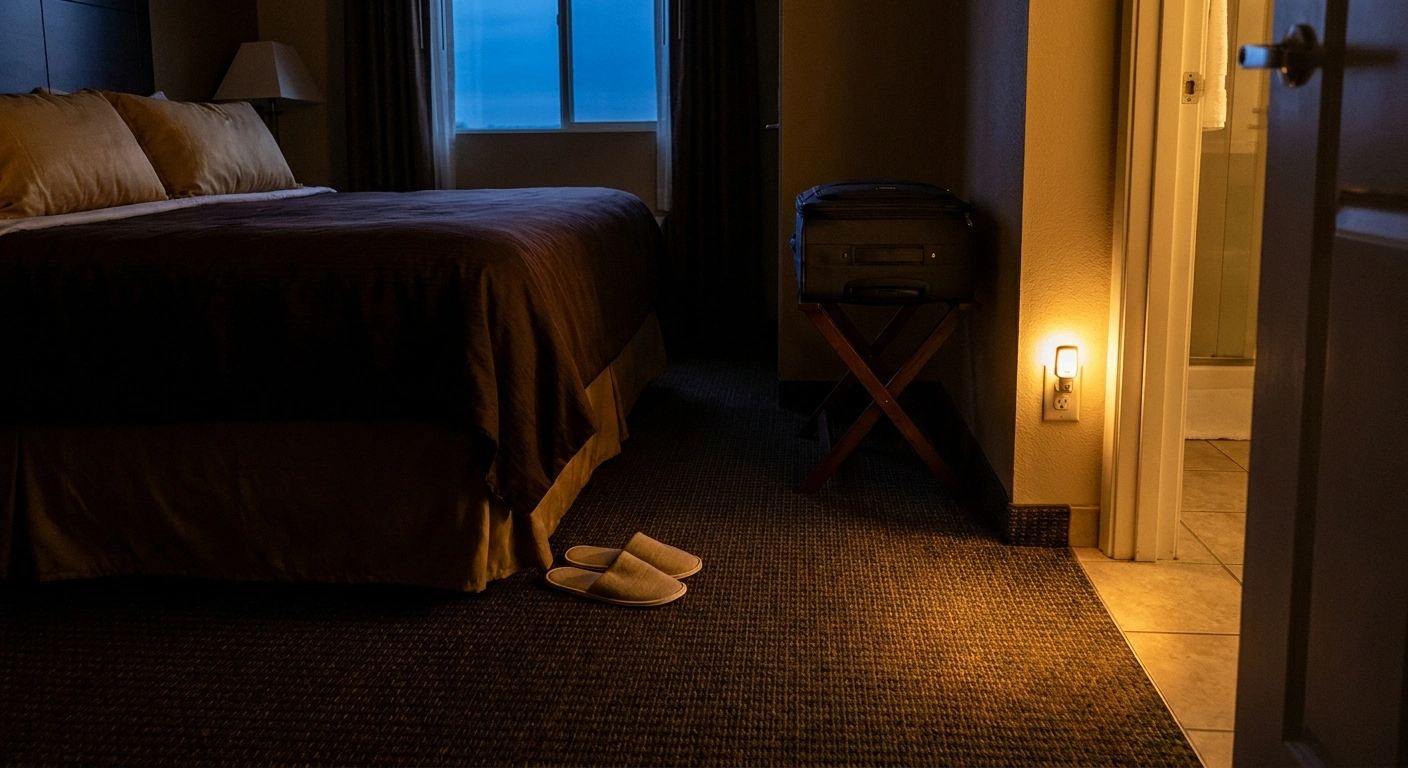
The last stretch of packing is unpacking, and it’s the part that keeps you safe overnight.
When I walk into a hotel room, I do three things before I collapse on the bed. First, I put my house shoes right beside the bed where my feet will land. Second, I clear a straight path to the bathroom and turn on a light in there, or plug in the small night-light I pack. Third, I put the suitcase up on the luggage rack or a chair, never open on the floor where I’ll trip over it in the dark.
Then I unpack only the cubes I’ll need tonight and tomorrow. Everything else can stay zipped. Less mess on the floor means fewer things to catch a numb toe at 3 a.m.
If you’d like a fuller checklist for the room itself, from bathroom grab points to bed height and water temperature, my hotel stay guide covers it.
Packing this way takes a little more thought the first time. After that it becomes a habit, and the trips start feeling like trips again instead of a test of strength. I hope your next one goes that way.
Frequently Asked Questions
How heavy should my suitcase be if I have neuropathy?
There is no single safe number. Test it at home by lifting a partly loaded bag onto a chair and a counter, stop when it feels like real effort or your footing shifts, and pack to a little less than that. Most major U.S. airlines cap checked bags at 50 pounds in economy, but your own limit may be much lower.
What type of suitcase is easiest to handle with numb hands and feet?
A lightweight four-wheel spinner usually works best, because it rolls upright beside you without pulling on your wrist or your balance. Look for a push-button handle, large zipper pulls, and a front pocket so you do not have to open the whole case.
Should my neuropathy medication go in my carry-on or checked bag?
Carry-on. The CDC advises keeping medicines, especially prescriptions, in your carry-on in their original labeled containers, with a copy of your prescriptions. Pack enough for the trip plus a few extra days in case you are delayed.
Will a flight attendant help me lift my bag into the overhead bin?
You can ask. The U.S. Department of Transportation tells travelers with disabilities to let flight attendants know if they need help stowing or retrieving carry-on bags. Lifting the bag onto the seat first and then into the bin also makes it two smaller lifts.
How can I make zippers easier to open with numb fingers?
Add clip-on zipper pulls, cord loops or key rings to every zipper so you can hook a whole finger through instead of pinching a small tab. Packing cubes with fabric handles and mesh tops also cut down on digging by feel.
What foot care items should I pack for a trip?
A small kit with a mirror for checking the soles, a few bandages and blister dressings, moisturizer for the tops and soles of your feet, nail clippers and spare seamless socks. Skip heating pads or hand warmers meant for inside socks, since numb feet cannot feel a burn starting.
How many pairs of shoes should I bring?
Usually three: wear your heaviest supportive pair, pack a second broken-in pair so you can switch if one rubs, and bring a light indoor shoe with a real sole for the hotel room. Avoid breaking in new shoes on a trip.
About the Author