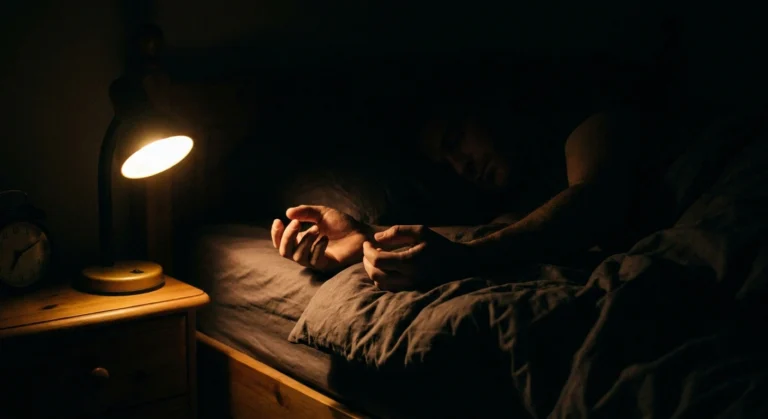
The first time it really scared me, I was getting up from breakfast. Coffee mug in one hand, reading glasses in the other, I stood up the way I had stood up ten thousand mornings before. This time the kitchen tilted. The light went gray at the edges. My knees softened, and I put my free hand on the counter so hard I bent my thumbnail back. I stood there bent over my own elbow, waiting for my body to come back to me, thinking very clearly: this is not just lightheadedness. Something is actually wrong.
If you have neuropathy and you have felt that feeling, where standing turns the world into a watercolor for a few seconds, I want to share what I have learned. There is a name for it: orthostatic hypotension, and when it comes from nerve damage it has its own subtype called neurogenic orthostatic hypotension. The good news is that this is one of the more treatable problems we run into.
What Orthostatic Hypotension Actually Is
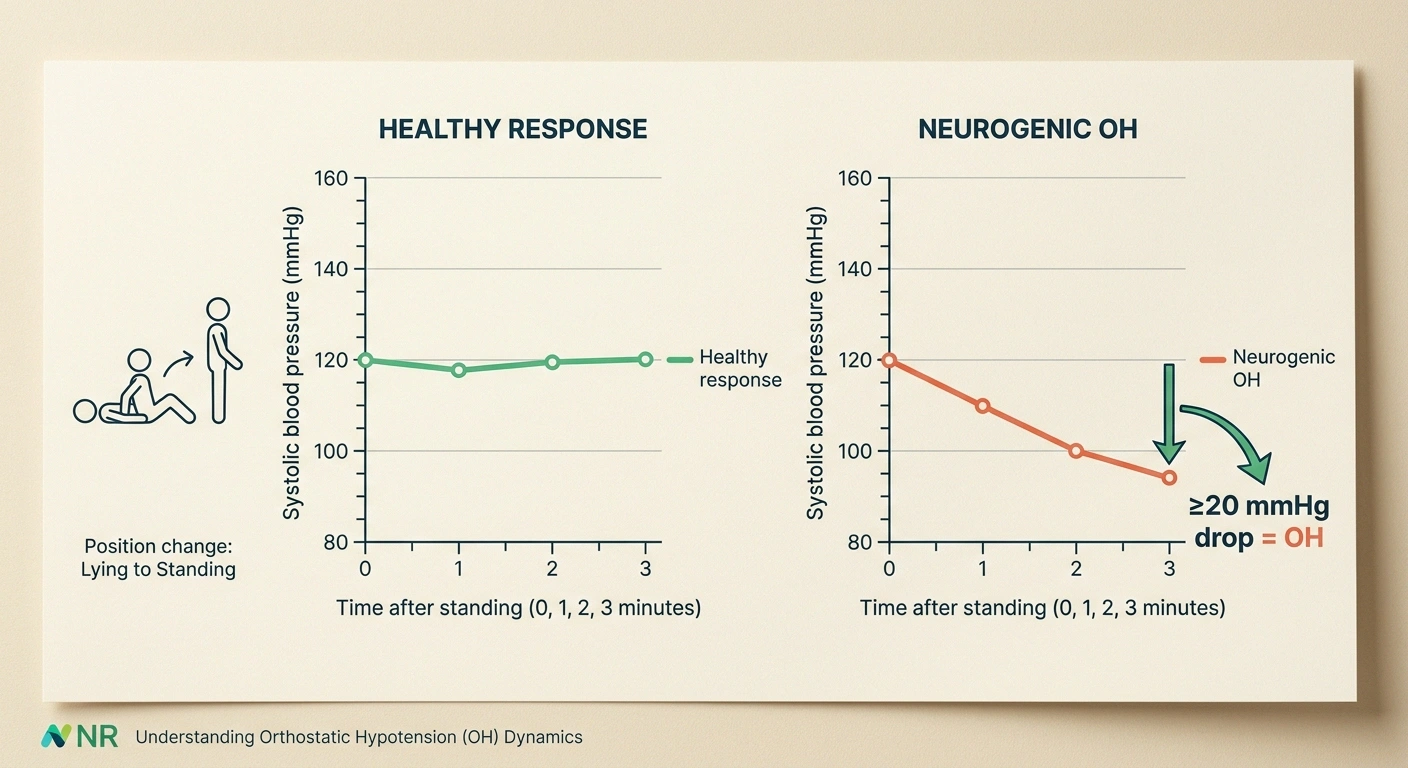
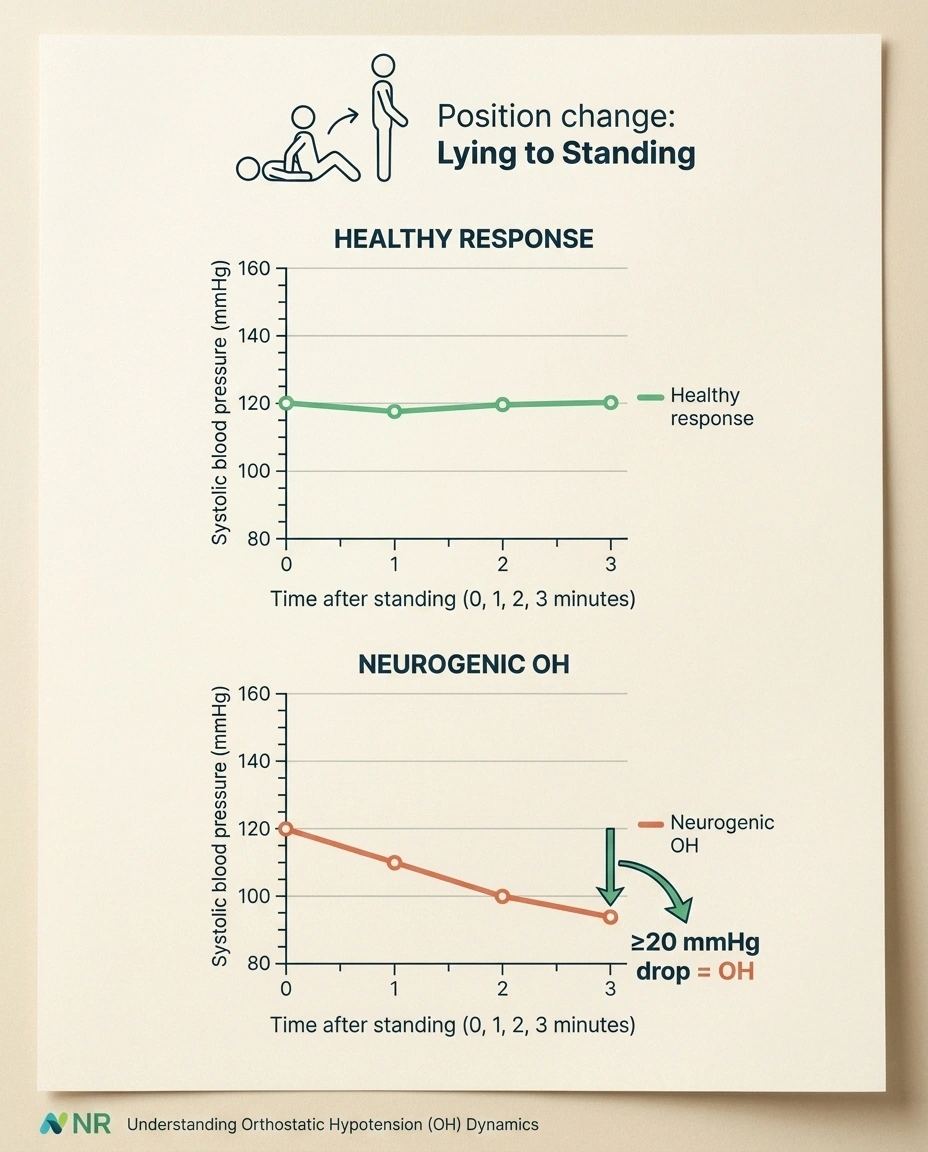
Orthostatic hypotension, which I will call OH from here on, is a sustained drop in blood pressure when you stand up. The formal definition is a drop of at least 20 mmHg in the top number (systolic) or at least 10 mmHg in the bottom number (diastolic) within three minutes of standing.
The lived experience is simpler. You stand up and gravity pulls a slug of blood into your legs and belly. In a healthy nervous system, your autonomic nerves notice in about a second and a half and tell your blood vessels to squeeze and your heart to beat harder. Pressure stays steady. You do not feel a thing.
When autonomic nerves are damaged, that signal does not arrive properly. Blood vessels do not squeeze. Heart rate does not respond. Blood pools in the lower body, your brain briefly comes up short, and you feel it. When the cause is autonomic nerve damage (not dehydration, blood loss, or medications), doctors call it neurogenic orthostatic hypotension, or nOH. That distinction matters because the treatment plan looks different.
Why Neuropathy Causes the BP-Drop
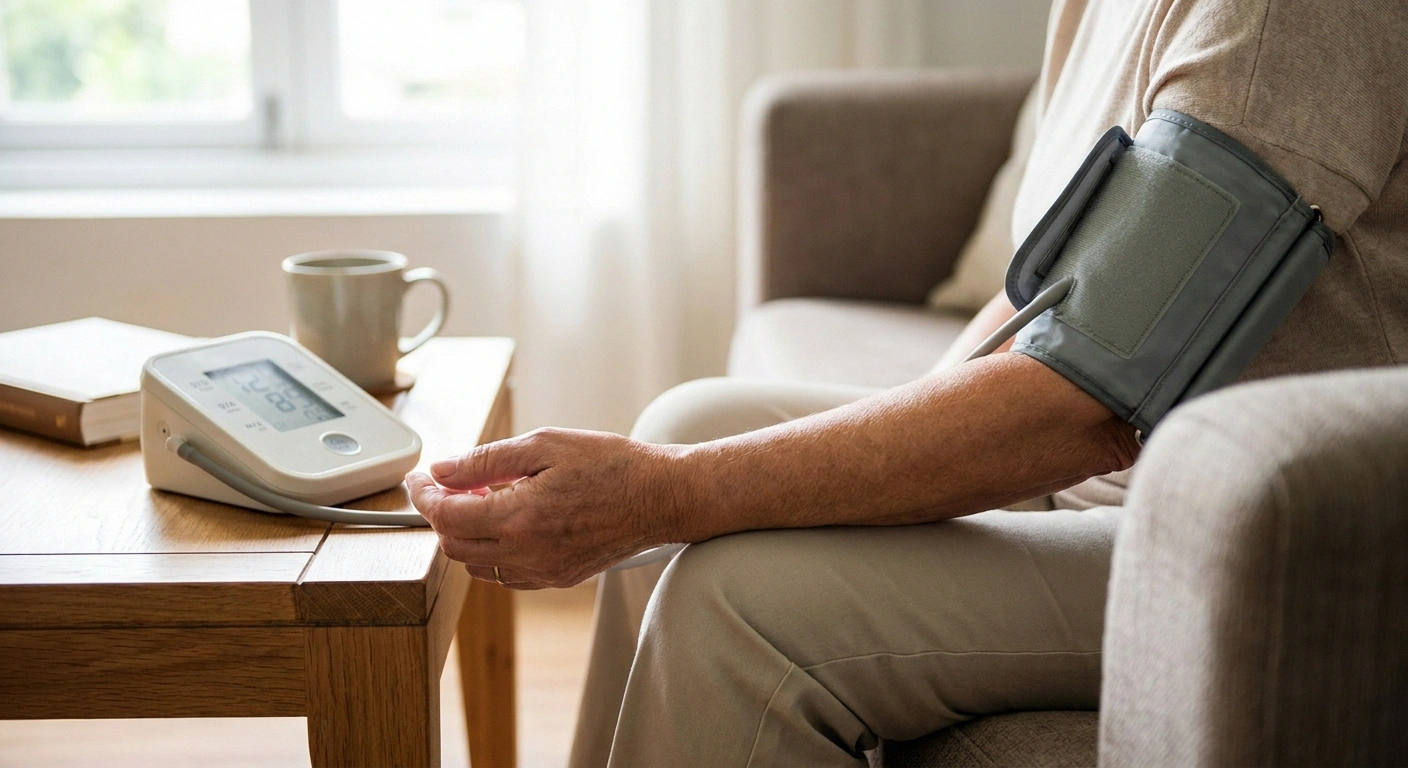
Most of us with neuropathy think first of the small nerves in our feet and hands, the ones that handle touch, temperature, pain, and position sense. But there is another whole branch of the nervous system called the autonomic nervous system. These nerves run the housekeeping: heart rate, digestion, sweating, bladder, and the constant fine-tuning of your blood pressure as you change positions. Our deeper guide on autonomic neuropathy covers this branch in detail.
When peripheral neuropathy damages the autonomic fibers as well as the sensory ones, the automatic blood-pressure response gets sluggish or stops working entirely. The sympathetic nerves that should tell your blood vessels in your legs and abdomen to clamp down when you stand are not delivering the message. Gravity wins. Your brain comes up short on blood. You feel dizzy, or gray-out, or, in worse cases, you faint. The same disease process that took the feeling in your toes can also be the reason your blood pressure cannot keep up when you go from sitting to standing.
Symptoms Beyond “Just Dizzy”
The textbook symptom of OH is lightheadedness on standing. But the picture is broader than that. Here is what to watch for.
- Dizziness or lightheadedness within the first 30 to 90 seconds of standing.
- Vision changes. The world goes gray at the edges, tunnels in, or briefly blurs out. The medical term is “graying out.” The retina is one of the most blood-hungry tissues in the body and is quick to complain when pressure drops.
- The coat-hanger ache. An ache or tightness across the back of the neck and the tops of the shoulders, in the shape of a coat hanger. Your neck muscles complaining that they are not getting enough blood when you are upright. Sitting down eases it.
- Brain fog when standing or walking. Trouble finishing a sentence, losing your train of thought. Sit down and a minute later you feel sharper.
- Fatigue that is worse with upright activity and better with lying down.
- Weakness in the legs when standing. A wobbly “not-quite-there” feeling.
- Falls and near-falls. Often the first sign someone else notices.
- Fainting (syncope). The worst-case version. You actually go down.
The other thing to notice is the pattern. OH from autonomic neuropathy tends to be worse in the morning, after meals, in hot weather, after a hot shower, after exercise, and after alcohol. If your worst spells come right after breakfast, or in July, or after a glass of wine, that pattern is information worth bringing to your doctor.
Diabetic Autonomic Neuropathy: The Most Common Cause
Diabetes is by far the most common reason people show up with neurogenic OH in the US. Long-standing diabetes damages small nerve fibers throughout the body, and the autonomic fibers are not spared. Roughly 20 to 40 percent of people who have had diabetes for more than 20 years develop some degree of autonomic neuropathy, and a meaningful subset of those have OH.
If you have diabetic neuropathy in your feet and you have also started feeling dizzy on standing, do not write it off. Tight blood sugar control does not reverse damage already done, but it can slow further progression, and some people see modest improvement with better metabolic control over time. Diabetic autonomic neuropathy can also bring siblings: gastroparesis, erratic blood sugars, bladder symptoms, and sweating changes. If several of these are showing up together, the picture comes into focus faster.
Other Causes Worth Knowing
Diabetes is not the only road that leads here. Other causes of neurogenic OH worth knowing:
- Parkinson’s disease. A meaningful percentage develop OH, sometimes early.
- Multiple System Atrophy (MSA). A Parkinson’s-like condition with prominent autonomic involvement; OH often severe.
- Lewy Body Dementia. Cognitive symptoms plus autonomic features.
- Pure Autonomic Failure (PAF). Autonomic failure without the motor or cognitive features of Parkinson’s or MSA.
- Amyloid neuropathy. Both transthyretin (ATTR) and light-chain (AL) types can damage autonomic nerves.
- HIV-related neuropathy. From the virus and from older HIV medications.
- Paraneoplastic syndromes. Immune reaction to certain cancers that attacks nerves.
- Hereditary autonomic neuropathies. Rare, often diagnosed earlier in life.
- Autoimmune autonomic ganglionopathy. Antibodies attack the autonomic ganglia; sometimes treatable with immune therapy.
Knowing the cause matters because the treatment options and prognosis vary. Worth seeing a doctor who really knows neuropathy. See our guide on choosing a neurologist.
How Doctors Diagnose It
Diagnosis sounds intimidating but the basics are reassuringly simple, and most testing is non-invasive.
Orthostatic vitals. The bread-and-butter test. You lie quietly for 5 minutes, the nurse checks your BP and heart rate, then you stand up. They re-check at 1 minute and at 3 minutes. A drop meeting the OH definition (20 systolic or 10 diastolic) confirms it. A meaningful clue for nOH: heart rate does NOT rise much. In dehydration-type OH the heart rate jumps; in neurogenic OH the autonomic nerves cannot signal the heart to compensate, so heart rate stays flat.
Tilt-table test. If office testing is normal but symptoms are real, this is the next step. You lie strapped to a table that tilts you to nearly upright while BP and heart rate are continuously monitored. Tilt-table testing catches delayed OH that does not show up until 5 to 10 minutes of standing.
24-hour ambulatory BP monitoring. A cuff that records BP throughout a normal day and night. Useful for spotting how often pressure drops in daily life, and for catching its companion problem, supine hypertension at night.
Autonomic function testing. At autonomic centers, a battery of tests (beat-to-beat BP, Valsalva maneuver, deep-breathing heart-rate variability, and QSART sweat testing) maps which parts of your autonomic system are working and which are not. You usually do not need all of this. The office stand-test plus a good history is often enough to get started.
The Medication Trap — Drugs That Make It Worse
This is the most important section in the article. Before any new prescription, your doctor should do a thorough medication review with you. Many common drugs make OH worse, and sometimes the fix is not a new pill but a change to one you are already taking.
- Chest pain or pressure with the dizziness
- Sudden severe headache (especially “worst of your life”)
- Focal neurological symptoms: one-sided weakness, drooping face, slurred speech, sudden vision loss
- Repeated fainting episodes over a short period
- OH following a head injury
- Black tarry stools or vomiting blood with new or worsening OH
Drugs that commonly worsen OH:
- Blood pressure medications, especially alpha-blockers like doxazosin, plus some beta-blockers and ACE inhibitors at higher doses.
- Diuretics (“water pills”). They reduce blood volume, which is exactly what we do not want.
- Tricyclic antidepressants (amitriptyline, nortriptyline). Ironic, since these are sometimes prescribed for neuropathy pain.
- Alpha-blockers for prostate enlargement, like tamsulosin (Flomax) and terazosin. Designed to relax smooth muscle, the opposite of what we want when standing.
- Nitrates for chest pain.
- Opioids, which lower BP and dull the autonomic response.
- Levodopa and dopamine agonists, standard Parkinson’s medications.
- Erectile dysfunction medications, especially combined with nitrates.
The fix is rarely “stop the drug.” Many are doing important jobs. The fix is often a dose reduction, a timing change (taking a BP pill at bedtime instead of morning), or a switch to a less OH-prone alternative. Drug-related neuropathy connections are also covered in medications that can cause or worsen neuropathy. One thing I cannot say loudly enough: do not stop your blood pressure medications on your own. Bring your full medication list, including over-the-counter products and supplements, to a doctor who is comfortable thinking through autonomic issues.
Non-Drug Strategies That Actually Help

Most patients are surprised how much can be done before any prescription is involved. These are the first-line tools, and for many people they handle the problem on their own.
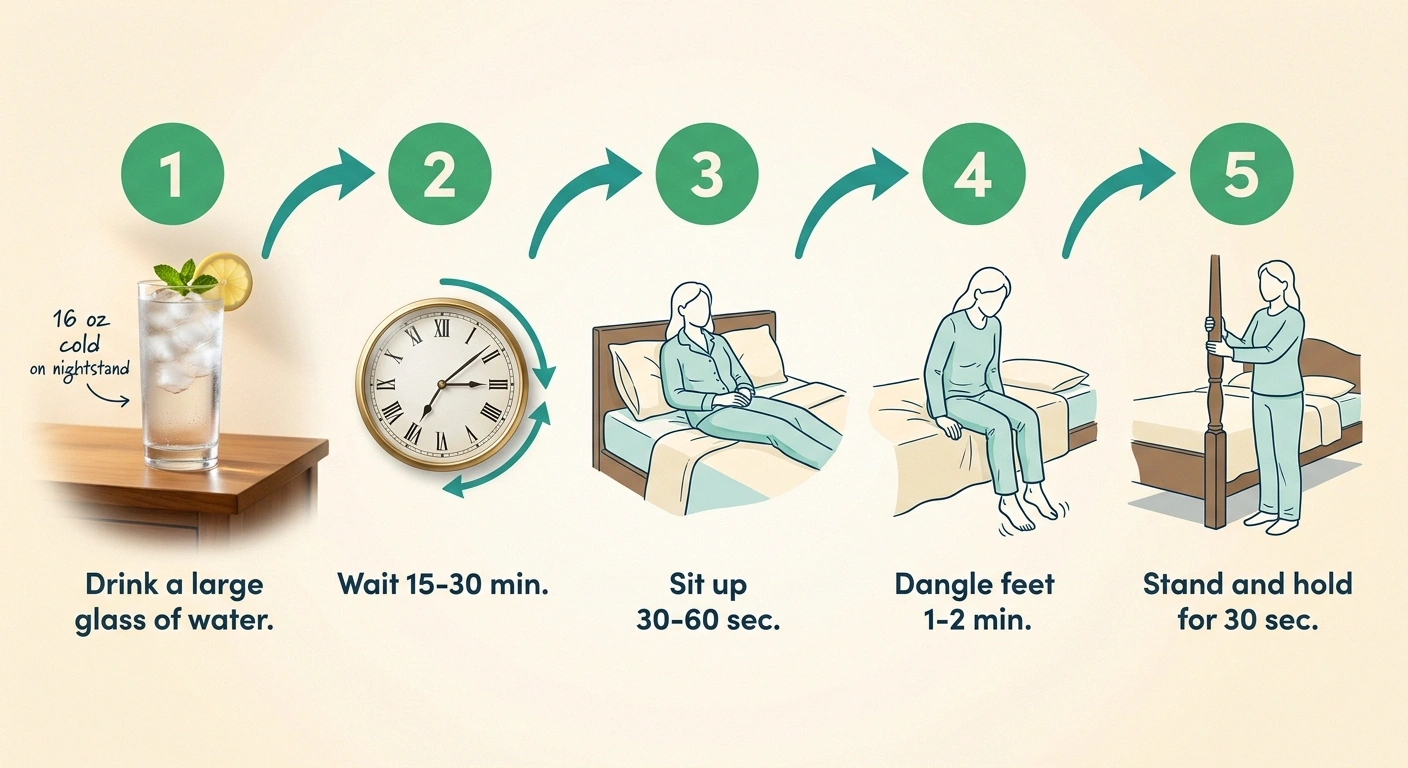
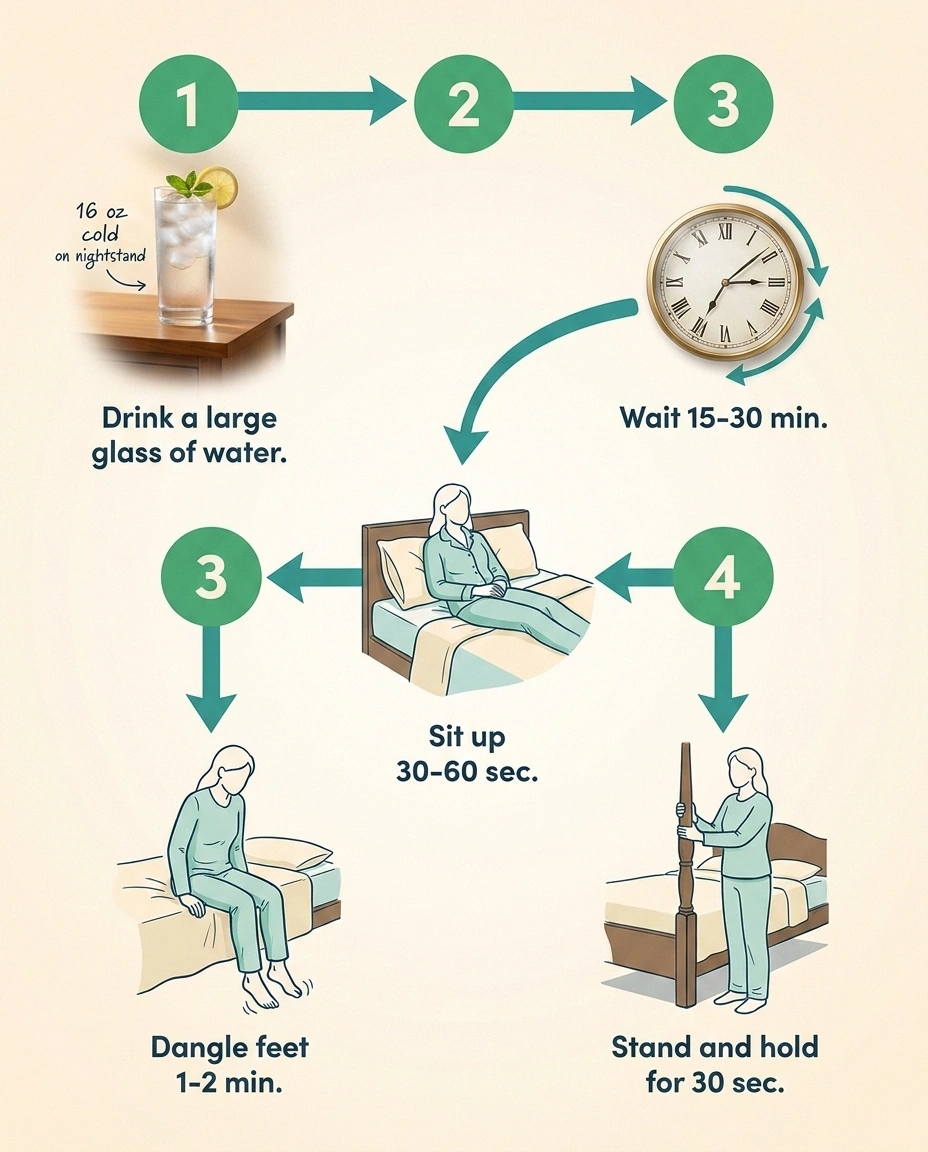
The water bolus. Sixteen ounces of cold water, drunk fairly quickly, raises blood pressure within 15 to 30 minutes through a reflex called the osmopressor response. It is one of the most powerful and underused tools in the toolkit. Keep a 16-ounce glass on your nightstand, drink it before you swing your feet to the floor, then sit on the edge of the bed for a minute or two before standing. Repeat before any time you know you will be standing for a while.
Salt and fluid. If your doctor clears it, aim for 6 to 10 grams of salt per day (1 to 2 teaspoons) and 2 to 3 liters of fluid daily. More volume in the system means more pressure to lose before you start feeling it. Important caution: if you have congestive heart failure, kidney disease, or supine hypertension, salt loading can hurt you. Clear it with your doctor first, every single time.
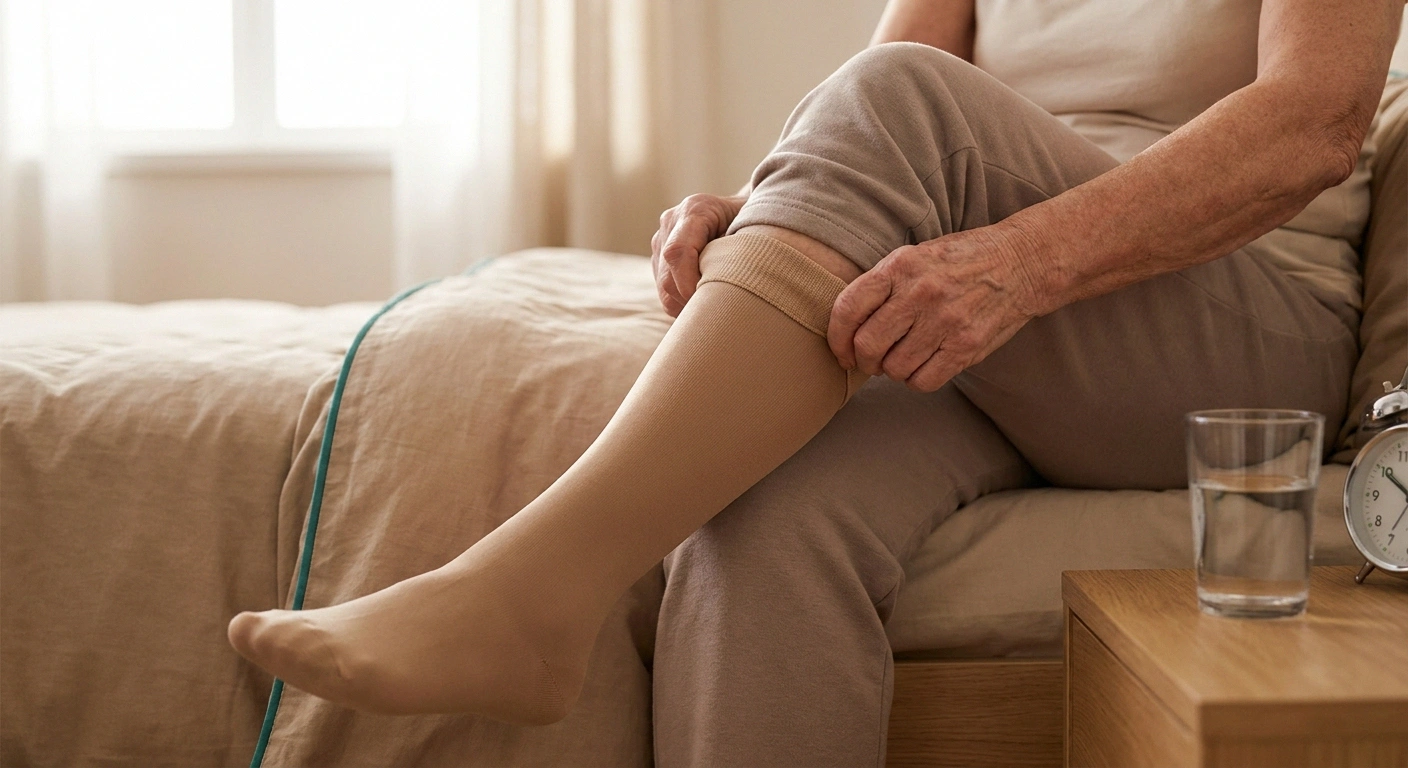
Compression garments. Below-the-knee compression socks do almost nothing for OH because the bigger pooling happens in the thighs and abdomen. What actually works is waist-high graduated compression stockings at 30-40 mmHg, ideally with an abdominal binder. Not the most glamorous outfit, but on bad days it can be the difference between staying upright and not.
Physical countermaneuvers. Tricks that squeeze blood back up to your core when you feel a spell coming on, or before standing:
- Crossing your legs hard and squeezing the thighs together
- Calf pumping (rising up onto your toes repeatedly)
- Hand gripping a rubber ball
- Squatting briefly before rising
- Bending forward at the waist (the “tying your shoe” pose)
Slow stage rises. Forget springing out of bed. Sit up in bed for 30 to 60 seconds, swing your legs over the edge and dangle your feet for a minute or two, stand up holding onto something stable, then stand still for 30 seconds before walking. Walkthrough: our neuropathy morning routine guide.
Head-of-bed elevation. Raise the head of the bed 10 to 30 degrees (4 to 6 inches of blocks under the head posts, or a wedge). This reduces overnight supine hypertension and reduces pressure-driven fluid loss through the kidneys, leaving you better hydrated in the morning.
Smaller, more frequent meals. Large meals pull blood to the gut and drop systemic pressure. Smaller, lower-carb meals plus a small water bolus before eating all help.
Skip the hot shower. Heat dilates blood vessels everywhere. Lukewarm showers, seated if possible, are safer.
Exercise, but think recumbent and supine. Recumbent bike, swimming, water aerobics, and supine yoga build cardiovascular fitness without long upright stretches. Add upright work gradually as conditioning improves.
Medications Your Doctor May Consider
When non-drug strategies are not enough, several medications are used for neurogenic OH. None are perfect. All require monitoring.
Midodrine. The most commonly used first-line drug. An alpha-1 agonist that directly tells blood vessels to squeeze. Typically 2.5 to 10 mg three times a day during waking hours. The cardinal rule: the last dose must be at least 4 hours before bedtime, or supine BP can climb into dangerous territory overnight.
Droxidopa (Northera). FDA-approved in 2014 specifically for symptomatic neurogenic OH. It is a precursor your nervous system converts to norepinephrine, the natural signal molecule the failing autonomic nerves are not making enough of. 100 to 600 mg three times a day. Expensive but effective. Watch for supine hypertension.
Fludrocortisone. A volume-expander that works on the kidneys to retain salt and water. 0.1 to 0.3 mg per day. Watch for low potassium, swelling, supine hypertension, and worsening heart failure. Often combined with midodrine.
Pyridostigmine. A cholinesterase inhibitor that boosts the autonomic ganglia. Smaller benefit than midodrine or droxidopa, but less supine hypertension. A good choice when supine BP is already a problem.
Off-label options: octreotide for postprandial OH, atomoxetine in specialized centers, yohimbine. Reserved for refractory cases. More on escalating to a specialist in our guide on seeing a neurologist.
The Supine-Hypertension Problem and Sleeping Head-Up
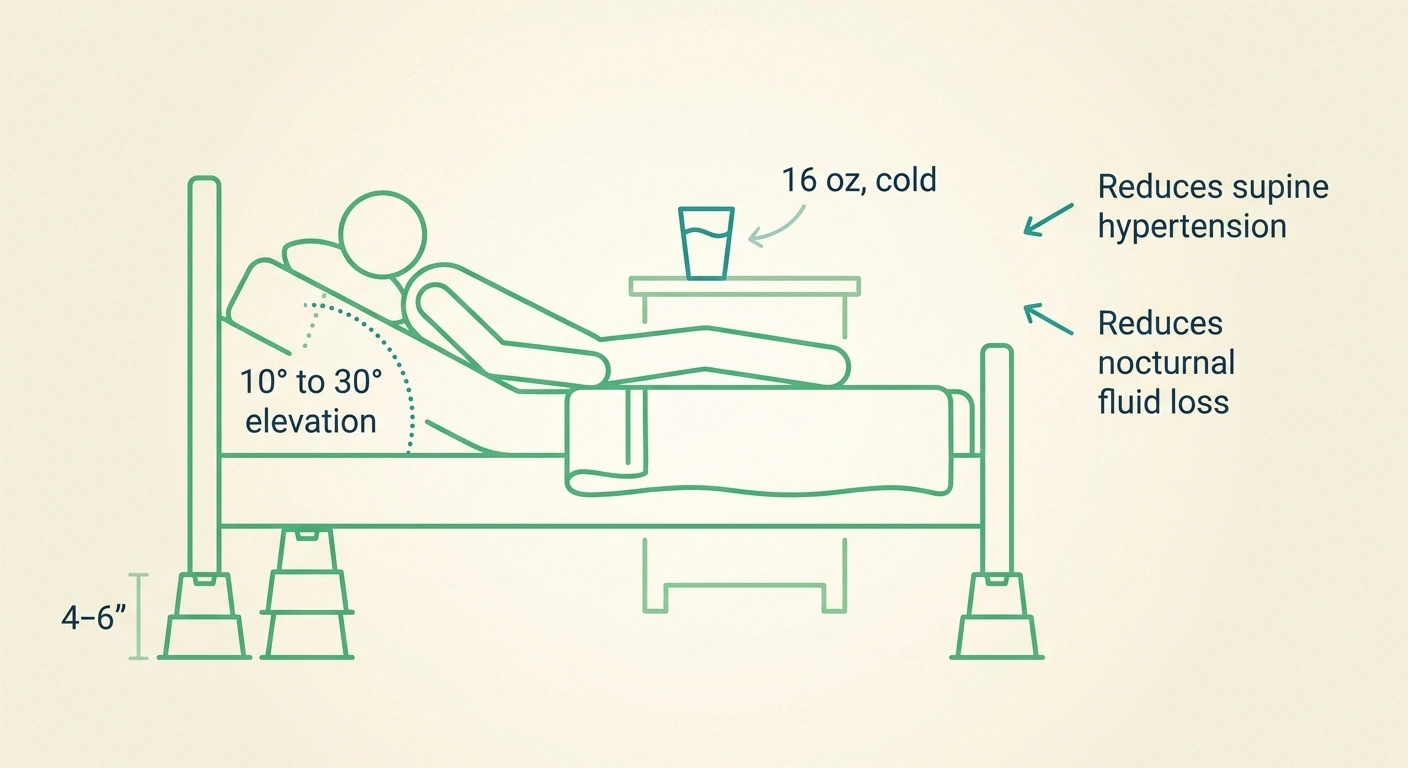
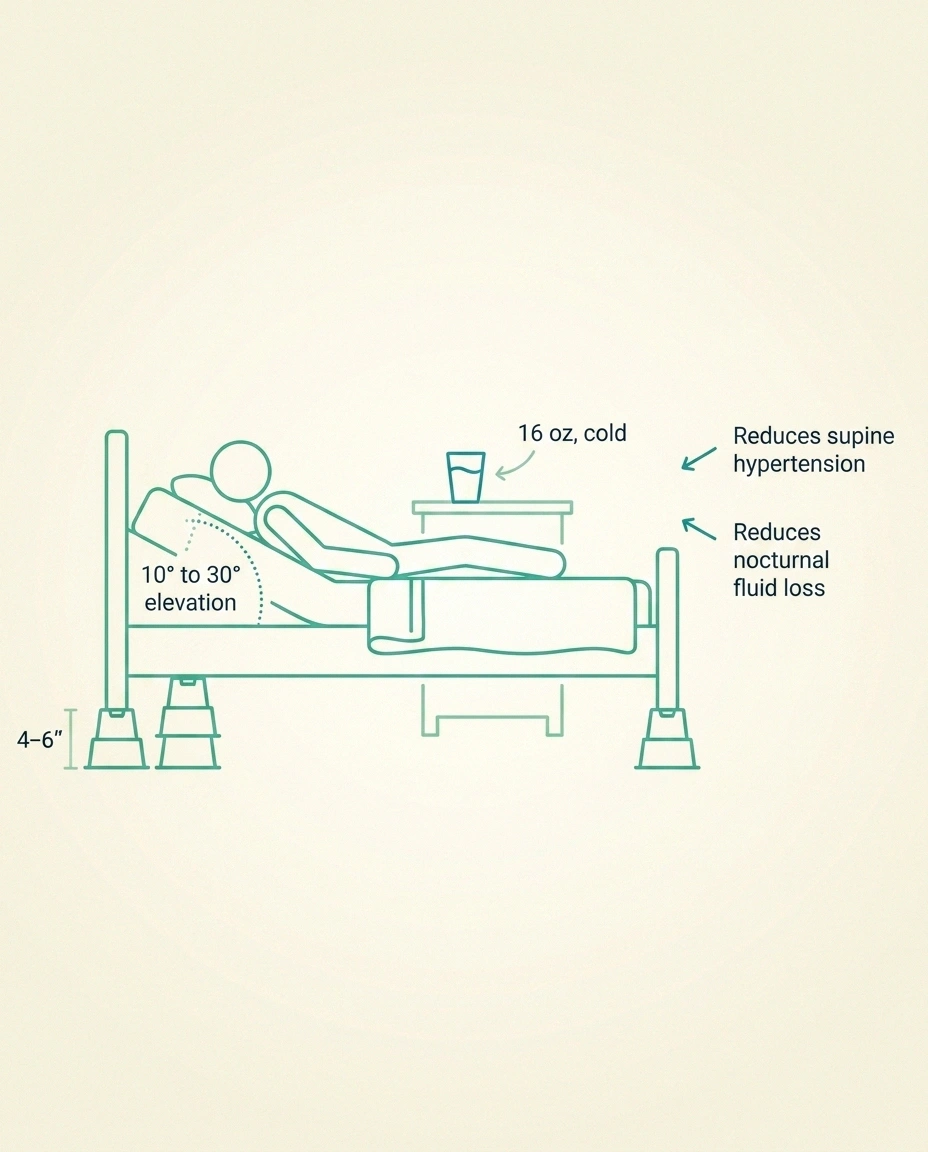
Here is the cruel twist nobody warns you about. Roughly half of people with neurogenic OH also have supine hypertension: BP that climbs too high when lying flat, often over 140 to 150 systolic. The same autonomic failure that lets pressure drop when you stand also makes it climb when gravity stops working against your circulation.
This creates a treatment paradox. The water, salt, and medications that help your standing BP can push your lying-down BP into worrying territory. The classic compromise:
- Sleep with the head of the bed elevated 10 to 30 degrees.
- Schedule OH medications for morning and midday. Last midodrine dose at least 4 hours before bed.
- Bedtime carb snack. Postprandial vasodilation can blunt the supine HTN.
- Short-acting bedtime antihypertensive in select cases. Some specialists use a small evening dose (losartan, short-acting nitrate patch removed in the morning) for severe supine HTN. Requires real expertise and home BP monitoring.
Cardiovascular risk in neuropathy patients is covered in neuropathy and heart disease.
Falls: Why This Matters So Much in Neuropathy
If you have neuropathy, you very likely also have impaired proprioception, that internal sense of where your feet are in space, plus possible weakness or balance challenges. Now add sudden blood-pressure drops that gray out your vision and weaken your legs for a few seconds, several times a day. That combination is why falls in neuropathy patients with OH are not just more common, they are more likely to be serious. Hip fractures, head injuries, fractured wrists. Fall prevention here has to be aggressive.
- Practice the slow stage-rise routine until it is automatic.
- Always have something to grab onto: bed frame, sturdy nightstand, grab bar.
- Bathrooms are the highest-risk room. See bathroom safety.
- Whole-home modifications: night lights, removed throw rugs, contrast-edged stairs. Home safety modifications covers this.
- Know how to safely get up after a fall.
- If you have blacked out, think about driving safety. State DMVs vary, but most require a driving evaluation after a syncope event.
- Bigger picture: balance and falls in neuropathy.
When to Call 911 or Go to the ER
Most OH spells are not emergencies. But some symptoms paired with OH are. Call 911 or go to the ER for any of these:
- Chest pain or pressure with the dizziness or near-fainting.
- Sudden severe headache, especially “the worst headache of your life.”
- Focal neurological symptoms: one-sided weakness, drooping face, slurred speech, sudden vision loss, sudden severe confusion.
- Loss of consciousness, especially after a head injury, prolonged, or repeated in a short period.
- Signs of GI bleeding (black tarry stools, vomiting blood or coffee-ground material) with new or worsening OH.
- Rapid unexplained weight loss with OH, or fever with OH.
- An OH episode that does not resolve when you lie down.
For the broader red-flag set, see neuropathy emergency signs.
Frequently Asked Questions
Can neuropathy really cause low blood pressure when standing?
Yes. The autonomic nerves that tell your blood vessels to clamp down when you stand can be damaged by the same disease process that affects your sensory nerves. The result is neurogenic orthostatic hypotension, common in long-standing diabetic neuropathy, Parkinson’s disease, and amyloid neuropathy.
What is the coat-hanger ache and is it dangerous?
An ache across the back of the neck and tops of the shoulders that comes on when upright and eases when you sit or lie down. The neck and shoulder muscles are not getting enough blood while you stand. Uncomfortable but not directly dangerous, and a strong clue that orthostatic hypotension is the underlying cause.
How much water and salt should I actually use?
Typical targets: 2 to 3 liters of fluid per day and 6 to 10 grams of salt (1 to 2 teaspoons). The water bolus protocol is 16 ounces of cold water drunk 15 to 30 minutes before any anticipated standing, especially in the morning. None of this without your doctor’s sign-off if you have heart failure, kidney disease, or supine hypertension.
Will my blood pressure medications make me dizzier?
They might. Many antihypertensives, especially alpha-blockers like doxazosin, diuretics, and some beta-blockers, worsen OH. So can tamsulosin, tricyclic antidepressants, nitrates, opioids, and Parkinson’s medications. Do not stop these on your own. Bring your full medication list to a doctor familiar with autonomic disorders.
How long does midodrine take to work and how long does it last?
Midodrine works within 30 to 60 minutes and lasts about 3 to 4 hours. That is why it is dosed three times a day during waking hours, with the last dose at least 4 hours before bedtime to avoid supine hypertension overnight.
Can autonomic neuropathy be reversed?
The damage already done usually cannot be reversed, but progression can often be slowed, especially in diabetic autonomic neuropathy with tight blood sugar control. Symptoms can almost always be managed effectively with behavioral changes and, when needed, medications. The goal is functional improvement, not nerve regeneration.
Should I see a neurologist or my regular doctor for this?
Start with whoever knows your history best, usually your primary care doctor or, if you have diabetes, your endocrinologist. If symptoms are severe, standard interventions are not working, or your doctor is not comfortable with the supine-hypertension paradox, ask for a referral to a neurologist specializing in autonomic disorders. It is a small subspecialty and worth seeking out the right person.
The first time I felt that gray-out, I thought I was falling apart. What I have learned since is that this symptom, more than most of what comes with neuropathy, actually responds to treatment. Water on the nightstand. Salt with breakfast. Slow rises. Compression on bad days. A medication if you need one. The kitchen has stayed put ever since.
About the Author