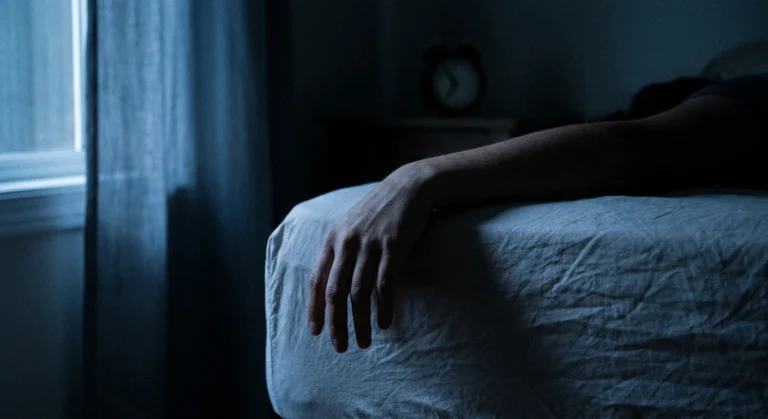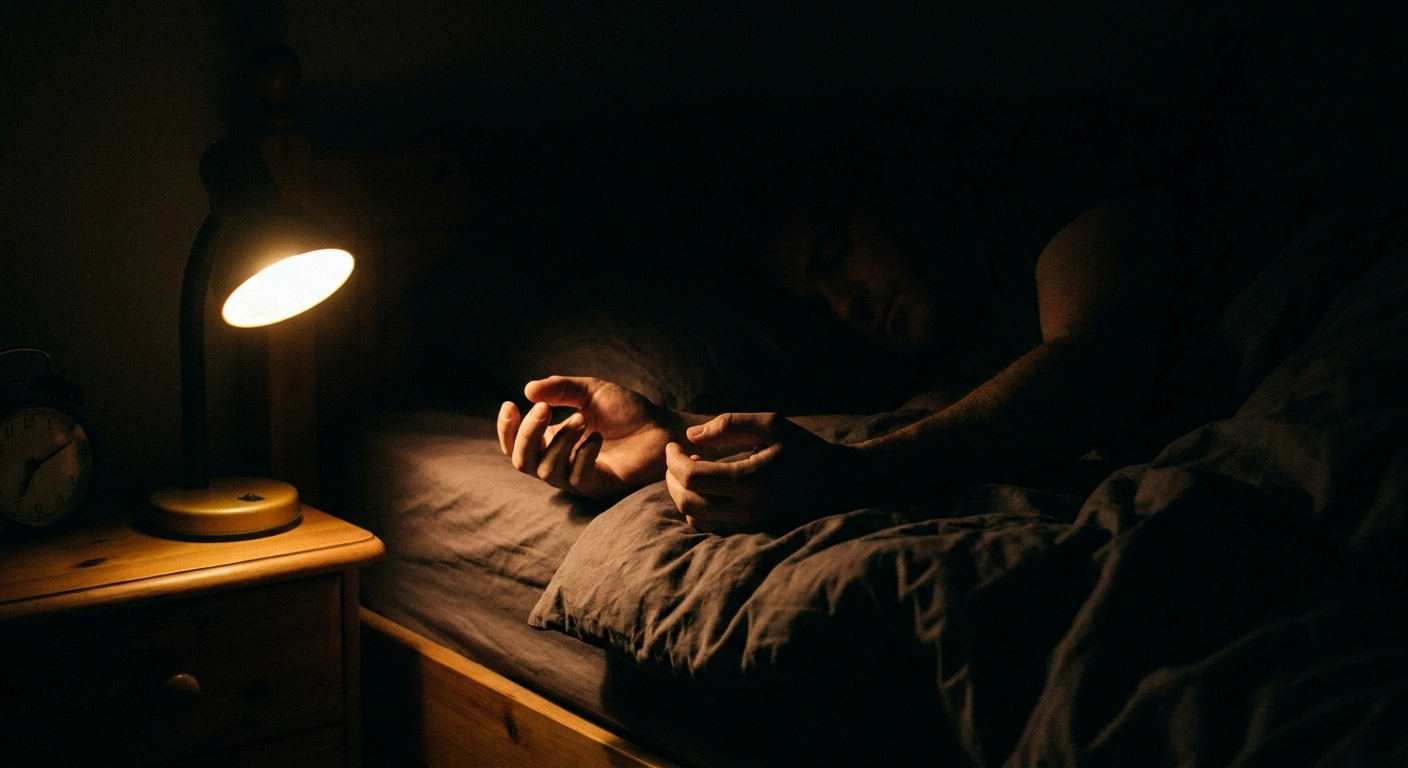
Two in the morning. The house is cold and completely quiet, and your hands are on fire.
Not warm — burning, the way a bad sunburn burns, somewhere under the skin where you can’t get at it. So you do what everybody does: you hang your arm off the side of the bed, or you shake your hand hard like you’re flicking water off it, and after thirty seconds or so it eases enough that you might get back to sleep. Then it comes back.
Feet get most of the attention in the neuropathy world, and fairly, since that’s where most of it starts. But hands at night are their own particular misery, and they have a couple of causes that behave very differently from each other. Sorting out which one you’re dealing with is genuinely worth the effort, because two of them respond to a fix you can start tonight.
Why Darkness Makes It Worse
The obvious explanation is that there’s nothing to distract you, and there’s truth in it. Nerve pain competes for attention all day with everything else — and at midnight it has no competition. But that’s not the whole story, and the rest of it is more useful.
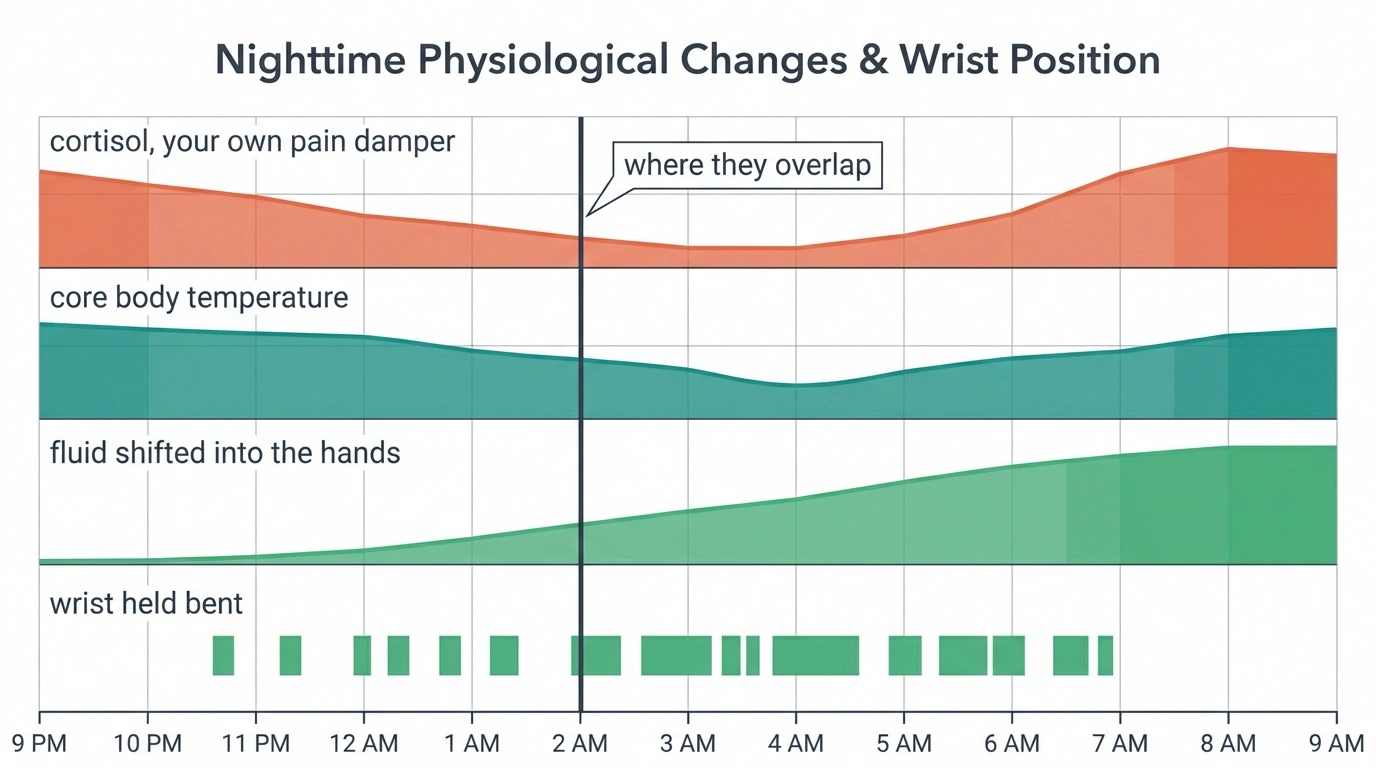
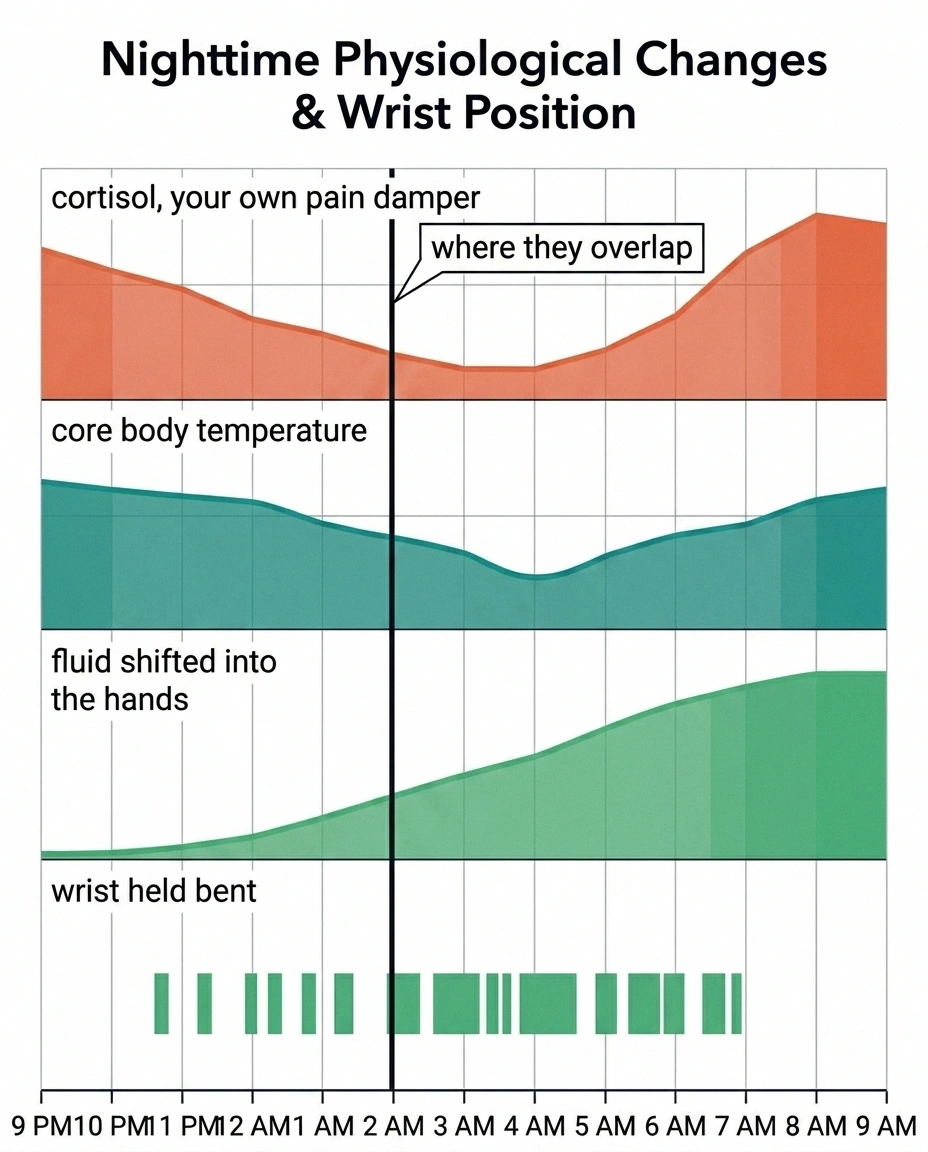
Your body’s own painkillers clock off. Cortisol, which has real anti-inflammatory and pain-dampening effects, follows a daily rhythm. It peaks in the early morning and bottoms out in the evening and overnight. You are, chemically speaking, less protected at two in the morning than at any other hour — and your nerves know it before you do.
Your core temperature drops. Body temperature falls by a degree or so overnight as part of the normal sleep cycle. Damaged nerve fibers, particularly the small ones that carry temperature and burning pain, get twitchy at lower temperatures. Cooler nerve, more spontaneous firing, more burning — a small temperature change with a disproportionate effect.
Gravity changes sides. All day your hands hang below your heart and fluid drains out of them. Lie down and that reverses. Fluid redistributes into the tissues of the hands and wrists over the first few hours of sleep, and inside a tight tunnel at the wrist, a small amount of extra fluid is a meaningful pressure increase.
You stop supervising your wrists. Awake, you’d never hold your wrist folded at forty-five degrees for two hours. Asleep, most people curl their wrists inward without any idea they’re doing it — and hold that position until something wakes them.
Those last two are why the hands have a different night-time story than the feet, and they’re the reason this is worth its own article rather than being folded into why neuropathy gets worse at night generally.
The Question to Settle First
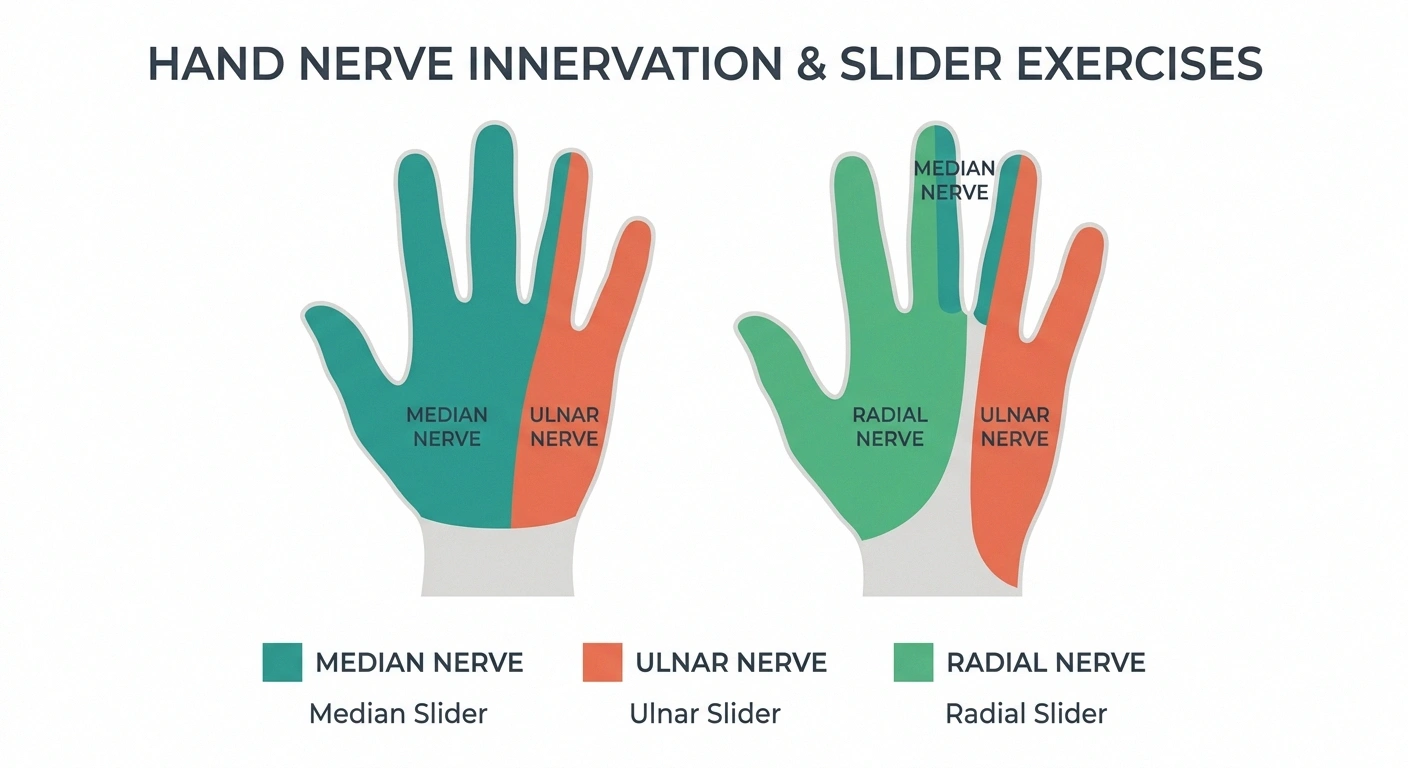
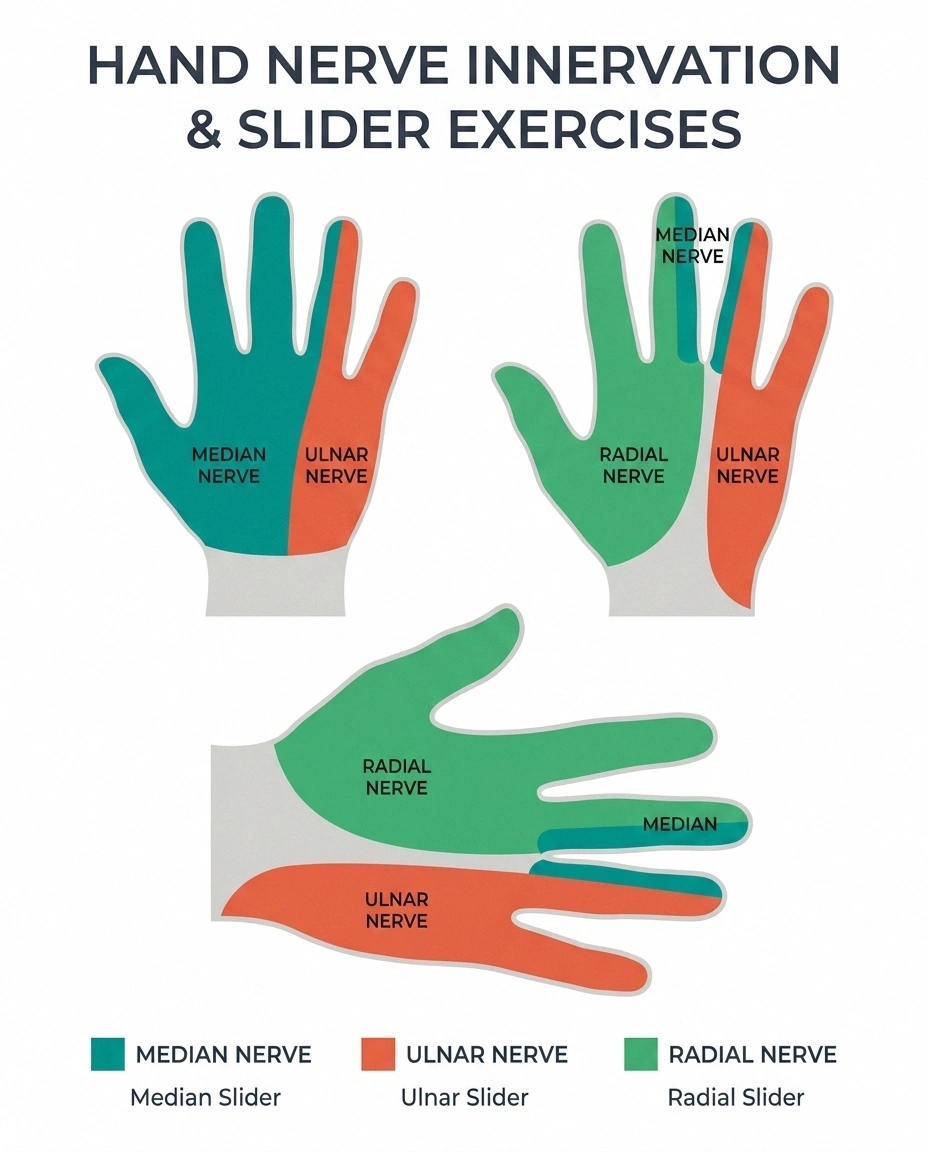
Before anything else, work out which fingers are involved. This one detail sorts most cases into the right pile, and you can do it lying in bed.
Test it in the dark with your thumb: touch each fingertip in turn and note which ones feel different. The ring finger is the informative one, because only compression splits a single finger down the middle.
| Fingers involved | Likely source | First thing to try |
|---|---|---|
| Thumb, index, middle, half the ring. Little finger fine. | Median nerve at the wrist | Neutral wrist splint, 2 to 4 weeks |
| Little finger and the other half of the ring | Ulnar nerve, usually at the elbow | Stop the elbow bending past 90 degrees overnight |
| All fingers, both hands, fading out near the wrist | Length-dependent neuropathy | Bloodwork, starting with B12 and glucose |
| One hand only, or patchy across territories | Needs a proper look | Appointment rather than self-management |
Two patterns at once is common rather than confusing. A nerve already damaged by diabetes is compressed more easily, and both need addressing before either looks like it worked.
Thumb, index, middle, and half the ring finger, with the little finger completely spared. That’s the median nerve’s territory, and it points at carpal tunnel syndrome. The giveaway is the split ring finger. Nerve territories don’t respect finger boundaries, so half of one finger burning while the other half is fine is a compression pattern — not a metabolic one.
Little finger and the other half of the ring finger. That’s the ulnar nerve, and the compression is usually at the elbow rather than the wrist. It gets worse with the elbow bent, which is exactly how most people sleep. Our guide to ulnar neuropathy covers this one, including the elbow-position fix.
All the fingers, both hands, roughly evenly, with a burning that fades out somewhere around the wrist or forearm. That’s the glove pattern of a length-dependent peripheral neuropathy. It’s usually symmetrical, it usually arrived in the feet first, and it doesn’t care which nerve tunnel you’re compressing.
One hand only, or a patchy scatter that ignores nerve territories. This is the pattern that deserves a proper look rather than an assumption. Nerve damage that lands in isolated patches, sometimes called mononeuritis multiplex, has its own list of causes and its own urgency.
There’s an important wrinkle here: these overlap constantly. A nerve that’s already damaged by diabetes is more easily injured by compression, so plenty of people have genuine neuropathy and a genuine carpal tunnel on top of it. Treating one when both are present gets you partial relief, and then people conclude the treatment failed. It didn’t — it only handled half the problem. The comparison in carpal tunnel versus peripheral neuropathy is the place to sort that out.
The Splint Question
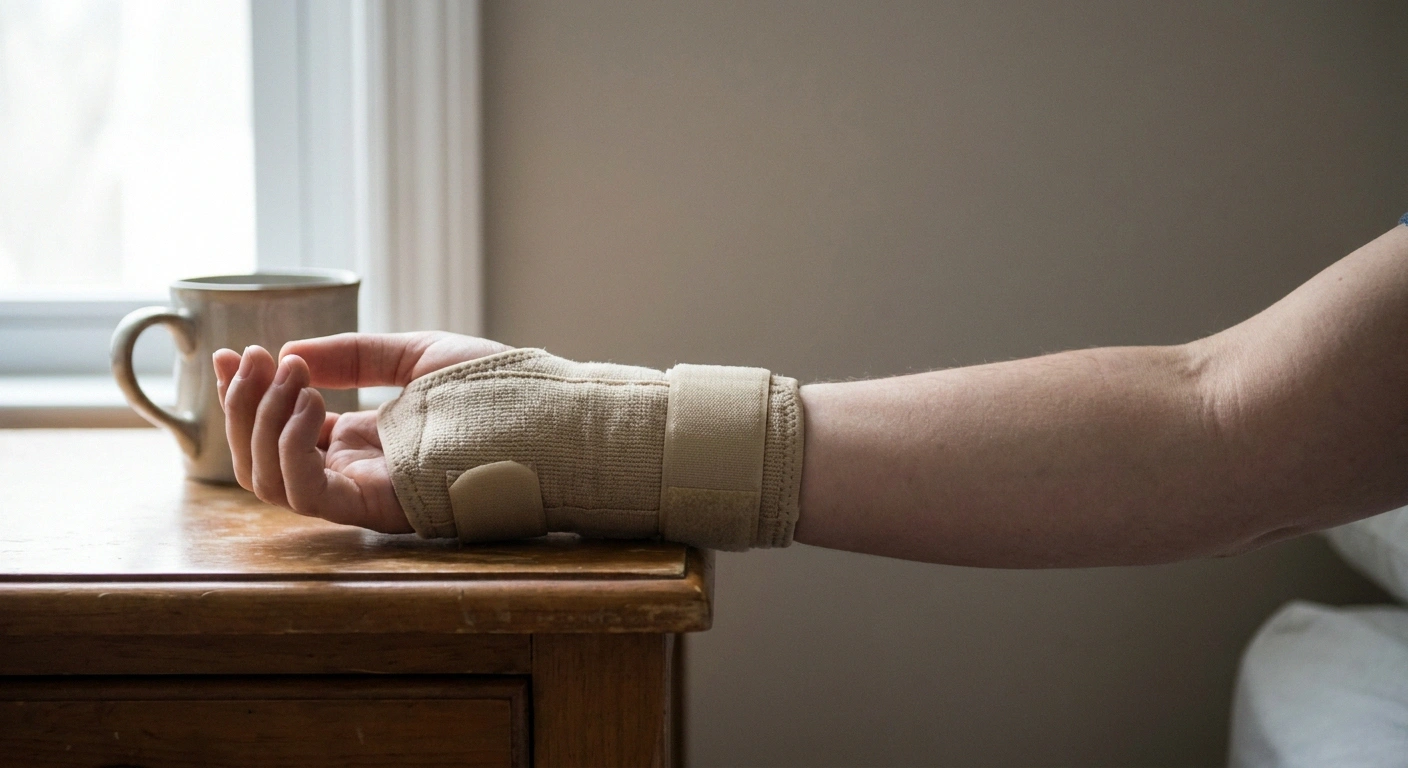
If any part of your pattern points at the wrist, a neutral-position night splint is the highest-value thing in this entire article, and it costs about fifteen dollars.
- “Neutral position” or “0 degrees”
- The phrase that matters. Splints sold for wrist sprains often hold 20 to 30 degrees of extension, which raises tunnel pressure rather than lowering it. If the stay curves, bend it flat.
- Removable metal stay on the palm side
- Lets you adjust the angle yourself. A sewn-in plastic shell does not.
- Ends below the knuckles
- You should be able to make a full fist while wearing it. A splint that blocks the knuckles gets taken off at 3 a.m. and stops working entirely.
- Two hands, not one
- Symptoms are usually worse on one side and present on both. Splinting only the bad wrist is why some people report partial results.
- Roughly 15 dollars
- Price above that buys comfort and materials, not more pressure relief. Fit and angle are what determine whether it works.
The mechanism is straightforward. Pressure inside the carpal tunnel is lowest when the wrist is straight and rises sharply when it’s bent in either direction. A splint doesn’t treat anything — it just stops your sleeping self from folding your wrist for hours at a time.
A few things determine whether it works.
Neutral means neutral. Not slightly extended, which is how a lot of cheap splints are built. The metal stay should hold your wrist flat, in line with your forearm. Many splints can be gently bent to correct this, and it’s worth doing.
The fingers stay free. If you can’t bend your knuckles, it’s too long or too rigid.
Snug, not tight. A splint that leaves marks or makes your fingers tingle more is adding compression rather than removing it.
Give it two to four weeks. Some people notice a difference the first night. Most take a couple of weeks. If four weeks of consistent wear does nothing at all, that’s genuinely useful information: it argues the problem isn’t positional, and points back toward the metabolic causes.
If the ulnar pattern is yours, the equivalent is an elbow extension splint, or the low-tech version, which is a towel rolled and wrapped around the elbow with a bandage to stop it folding past ninety degrees.
The Temperature Trap
Here’s a thing that trips up a lot of people who are otherwise doing everything right.
People argue about this because both camps are right, for different people. Rather than reading opinions, run it. Change one variable and count one outcome.
Week one, warm. Bedroom at 70 to 72 degrees. Thin cotton gloves. Blanket layer covering the hands.
Week two, cool. Bedroom at 65 to 66 degrees. Hands uncovered and out from under the blankets.
Count one thing: how many times you woke because of your hands. Not how it felt overall. A single number per night, written down in the morning before you rationalize it.
A difference of two or more wake-ups per night across the week is a real signal. A difference of one is noise, and the honest answer is that temperature is not your lever.
Standard sleep advice says keep the bedroom cool, around 65 degrees. That advice is sound for the general population and can be actively wrong for burning neuropathic hands, because a cooler room means cooler extremities, and cool small fibers fire more.
The instinct once your hands are burning is to reach for something cold. Cold does bring quick relief, and for some people it’s the only thing that touches it in the moment. But it’s a short loan at a poor rate — and the interest comes due about an hour later. As the tissue rewarms, the burning frequently comes back worse than it started, and the rebound can last longer than the relief did.
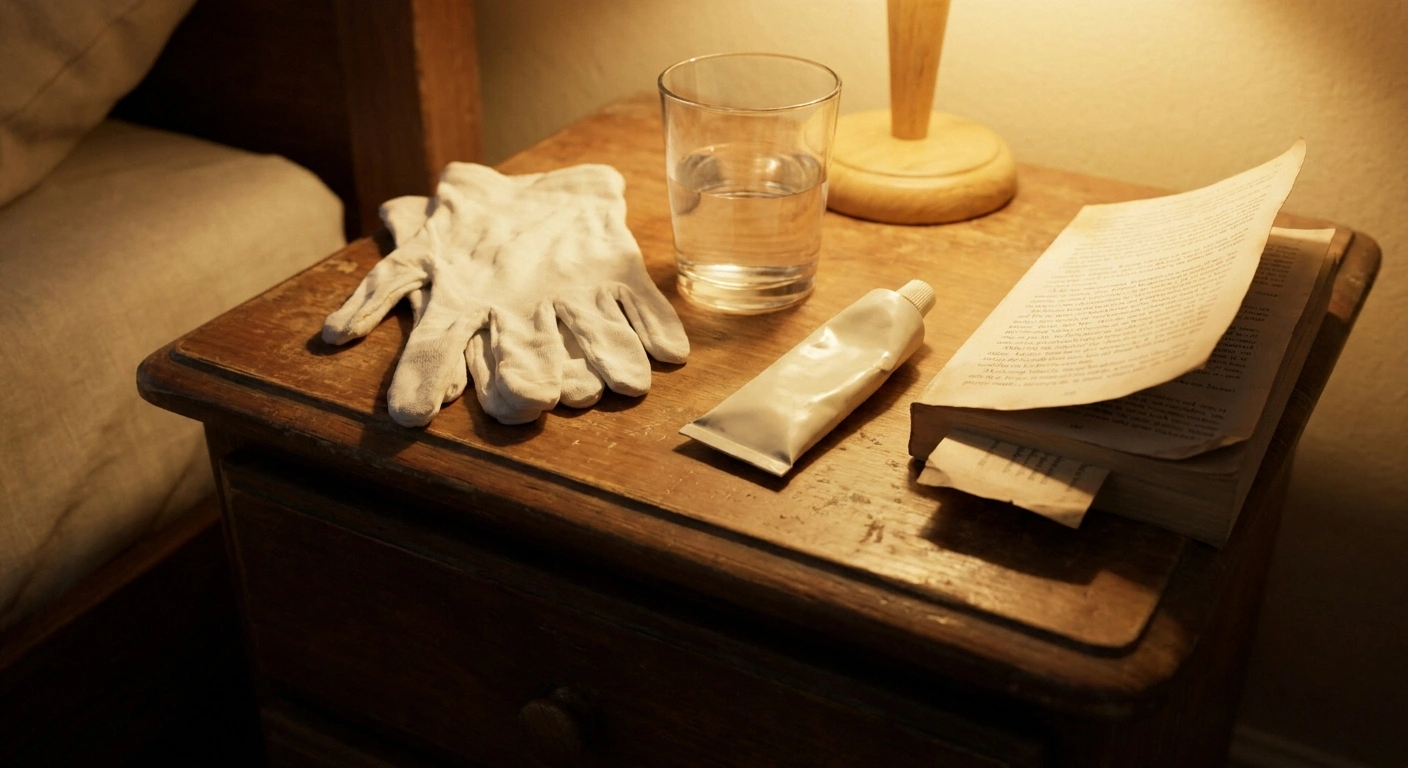
What tends to work better is boring: keep your hands warm and stable rather than swinging between temperatures. Light cotton gloves in bed. A blanket layer at hand level. Room a couple of degrees warmer than the sleep books recommend, and if that means a cooler pillow to compensate, that’s a reasonable trade.
Not everyone fits this pattern. A minority genuinely do better cool, particularly people whose hands run hot and red. Test it deliberately for a week each way rather than guessing.
What Actually Helps at Two in the Morning
You’re awake, they’re burning, and you want the twenty-minute version rather than the strategy. In roughly the order worth trying:
Change the wrist position first. Straighten both wrists, hang your arms straight down beside the bed for thirty to sixty seconds, then lift them above your head for the same. You’re draining fluid one way, then the other. If this reliably works, that’s a strong hint toward a compression component.
Get up rather than lying there. Twenty minutes of lying in the dark waiting for pain to leave usually produces frustration on top of pain. Go to another room, keep the lights low, and do something undemanding until the burning settles.
Warm water, not hot. Hands in comfortably warm water for a few minutes. Test it with your elbow, since neuropathic hands are unreliable thermometers and scald injuries are a real risk.
Move the fingers. Slow open-and-close, making a loose fist and spreading wide, thirty seconds at a time. This pumps fluid out of the hand and gives the nerve some gentle glide.
Compression, if it suits you. Some people find light compression gloves settle the burning, particularly when swelling is part of the picture. Others find any pressure intolerable. It’s cheap to test.
Don’t reach for the phone. Screen light at two in the morning trades a pain problem for a sleep-architecture problem, and you’ll pay for it tomorrow when a bad night makes everything hurt more.
The Daytime Work That Makes the Nights Easier
Night-time hand burning is often built during the day, which is inconvenient but also an opportunity.
Watch the repetitive load. Gripping, typing, knitting, gardening, steering. Tissue that’s been irritated all day swells overnight, and the swelling is what compresses the nerve while you sleep. Breaks every half hour do more than any single intervention here.
Look at salt and evening fluid. Not everyone, but for some people the connection between a salty dinner and a bad night is remarkably consistent. Worth a fortnight of noticing.
Take the alcohol question seriously. Alcohol is directly toxic to peripheral nerves at sustained intake, and even a couple of drinks disrupts the second half of the night, which is when the burning peaks anyway. This is a hard one to hear — it’s also one of the more reliable levers.
Blood sugar, if that’s in play. Overnight glucose runs matter more than a single morning reading, and continuous monitoring has shown a lot of people that their nights are less stable than they assumed.
Build a routine rather than a rescue plan. A consistent wind-down sequence, done nightly whether or not the hands are bothering you, outperforms improvising at two in the morning. Our sleep routine for neuropathy lays out a version worth borrowing.
Causes Worth Actually Testing For
If burning hands are new, worsening, or came on without feet symptoms first, there’s a short list of blood tests that finds a treatable cause in a meaningful minority of people. This is a reasonable thing to ask for specifically.
Requests land better with a reason attached than as a list of tests. Print this, cross off anything done within the last year, and take it in.
- B12, plus methylmalonic acid if under 400 pg/mL. A level in the low-normal band can still be deficient at the tissue level, and MMA is what settles it.
- HbA1c, and a 2-hour glucose tolerance test if it is 5.7 or above. Impaired glucose tolerance short of diabetes damages small fibers, and fasting glucose alone misses it.
- TSH and free T4. An underactive thyroid narrows the carpal tunnel through fluid retention and causes nerve symptoms directly.
- Vitamin B6. Checked for excess, not deficiency. Too much causes the exact neuropathy people take it hoping to prevent.
- Serum protein electrophoresis with immunofixation. Uncommon cause, frequently found late, and it changes the whole treatment path.
- Full blood count, kidney function, liver function. The background panel that catches the rest.
B12, with methylmalonic acid if it’s borderline. A B12 level in the low-normal range can still be functionally deficient at the tissue level, and methylmalonic acid is the test that settles it. Long-term metformin, acid-reducing medication, weight-loss surgery, and a plant-based diet all raise the odds. This is the cause I’d most want ruled out, because it’s correctable and because the window for full recovery isn’t indefinite. Our guide to vitamin deficiencies and neuropathy goes through the full set.
Thyroid function. An underactive thyroid causes fluid retention that narrows the carpal tunnel from the inside, and it can cause nerve symptoms directly. It’s easy to test and easy to treat, and thyroid problems and neuropathy covers the overlap.
Glucose, properly. A fasting glucose alone misses a lot. HbA1c is better, and a glucose tolerance test better still if the suspicion is real, since impaired glucose tolerance short of diabetes damages small fibers.
B6, if you supplement. This is the one people get wrong in the other direction. Too much B6 causes a sensory neuropathy that looks exactly like the one people take B6 hoping to fix — same burning, same hands, opposite cause. Check the labels on everything you take, since it hides in combination products and energy drinks.
A protein screen. A monoclonal protein in the blood is an uncommon but genuinely important cause of neuropathy, and it’s often not looked for until late.
If burning hands and feet both started young, or run in your family, ask about the rarer inherited causes as well. Fabry disease is the classic one, and it’s routinely missed for decades.
When This Needs an Appointment Sooner
Most burning hands are a chronic nuisance rather than an emergency. A few patterns aren’t, and they’re worth knowing.
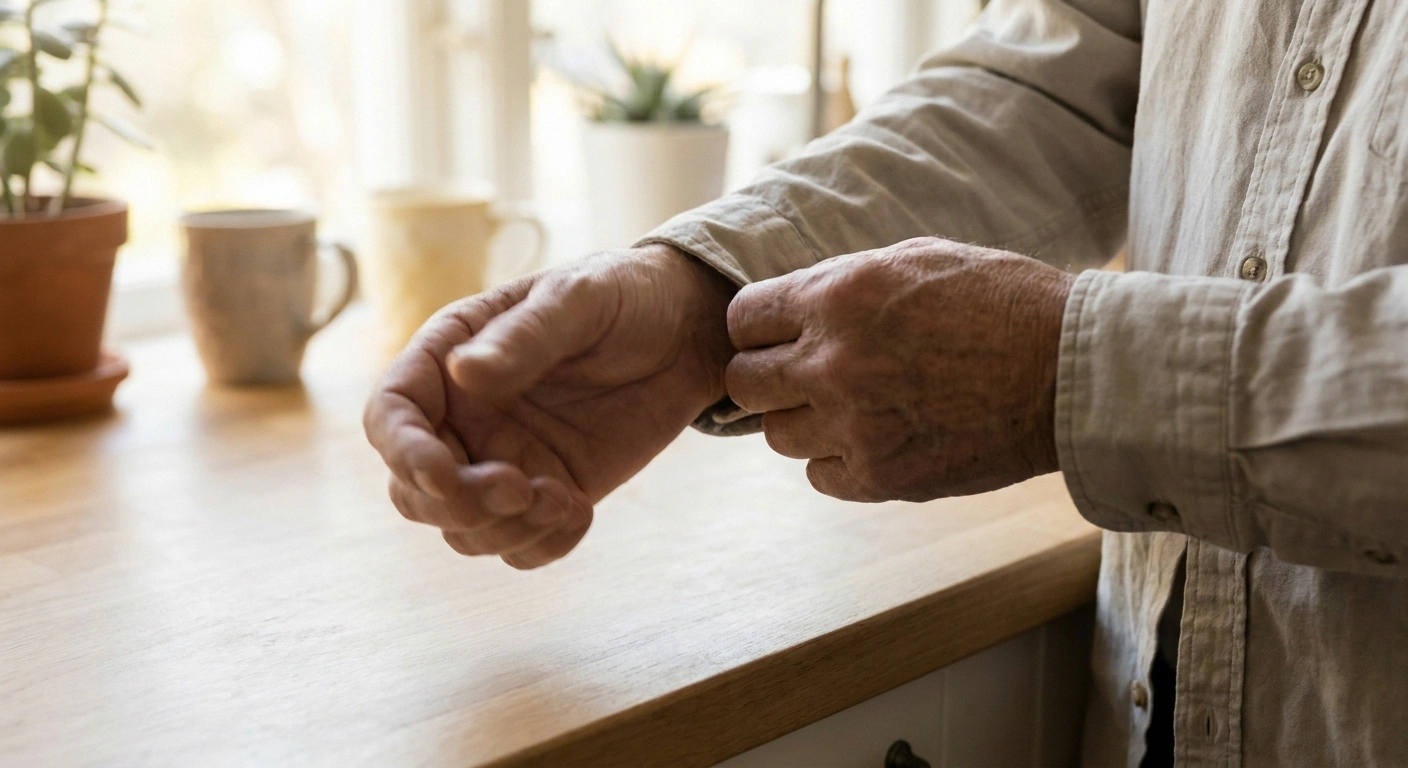
Weakness that you can see or measure, like dropping things, struggling with buttons, or visible flattening of the muscle at the base of the thumb, means the nerve is losing motor fibers. That’s a different urgency from pain alone.
Numbness that’s become dense and constant rather than coming and going has usually been progressing for a while.
Symptoms that climbed the arm rapidly over days, or that arrived with neck pain or weakness elsewhere, need a proper look at what’s happening above the wrist.
And burning in one hand only, with color or temperature changes and swelling, is worth describing to a doctor promptly rather than filing under neuropathy.
Short of those, this is a problem you have real leverage over. The splint, the temperature question, the wrist-position reset, the B12 test. None of them are dramatic — between them they take a lot of people from four wake-ups a night to one, and that difference is the whole of how the next day goes.
Frequently Asked Questions
Why do my hands burn at night but feel fine during the day?
Several things stack up overnight. Your cortisol, which dampens pain, is at its daily low. Your core temperature drops and cool nerve fibers fire more spontaneously. Fluid redistributes into your hands once you’re lying flat, raising pressure inside the carpal tunnel. And most people bend their wrists in their sleep without knowing it, which compresses the median nerve for hours at a stretch.
Does shaking my hands mean I have carpal tunnel syndrome?
It’s suggestive. Clinicians call it the flick sign, and it’s a well-recognized feature of carpal tunnel because the movement briefly changes wrist position and improves blood flow to a compressed nerve. It isn’t proof, since some people with other causes get relief from it too, but combined with a thumb-through-half-the-ring-finger pattern it’s a strong hint.
Should my bedroom be warm or cool if my hands burn?
Most people with burning neuropathic hands do better slightly warmer than standard sleep advice suggests, because cool small nerve fibers fire more readily. A minority whose hands run hot and red do better cool. Test each for a week and track the wake-ups rather than guessing.
Can a night splint make things worse?
It can if it’s the wrong fit. A splint that holds the wrist extended rather than neutral, or one strapped tight enough to leave marks, adds pressure instead of removing it. If a splint increases your symptoms in the first few nights, check the fit and the angle before abandoning the idea.
Is burning in the hands more serious than burning in the feet?
Not more serious, but sometimes more informative. Length-dependent neuropathy typically reaches the feet well before the hands, so hands burning first or alone raises the question of a different mechanism, such as compression at the wrist or elbow, a nerve root problem in the neck, or one of the less common causes worth testing for.
How long should I try a splint before giving up on it?
Two to four weeks of consistent nightly wear. Some people improve within days. If four weeks of correct, consistent use changes nothing, that result is useful in itself, since it argues against a positional cause and points toward the metabolic ones.
Does ice help burning hands?
It helps in the moment and often backfires afterward. As the tissue rewarms, the burning frequently returns stronger than before, and the rebound can outlast the relief. Comfortably warm water and stable temperature tend to produce fewer wake-ups across a whole night, even though the immediate relief is less dramatic.
About the Author