
Your primary care doctor has been managing your neuropathy symptoms for months. They've run blood work, adjusted medications, and offered reassurance. But something doesn't feel right. The numbness is creeping higher than your ankles now. The burning has shifted from occasional to nightly. And you're starting to wonder: is this normal progression, or am I missing something that a specialist would catch?
Knowing when to see a neurologist for neuropathy isn't always obvious. Many people wait too long — not because they're ignoring their symptoms, but because nobody told them what the red flags actually look like. This guide lays out the specific signs that warrant specialist evaluation, explains what a neurologist does differently from your primary care doctor, and walks you through exactly how to prepare for that first appointment so you get the most out of it.
What a Neurologist Does That Your Primary Doctor Can't
Your primary care physician is trained to recognize neuropathy, start initial workups, and manage straightforward cases. That's entirely appropriate — many cases of diabetic neuropathy or vitamin deficiency-related neuropathy can be handled well at the primary care level. But neurologists bring specialized tools, training, and diagnostic capabilities that matter when things get complicated.
of neuropathy cases have no identified cause — a neurologist can dig deeper
Neurologists complete additional years of training focused exclusively on the nervous system. They can perform and interpret electromyography (EMG) and nerve conduction studies — tests that measure how well your nerves are actually transmitting signals. These studies can distinguish between different types of nerve damage, identify whether the problem is in the nerve fibers themselves or the protective myelin sheath around them, and determine the severity and distribution of the damage.
A neurologist can also order specialized tests that most primary care offices don't have access to, including nerve biopsies, skin biopsies for small fiber neuropathy diagnosis, and autonomic function testing. They're more likely to identify rare or unusual causes of neuropathy — autoimmune conditions, hereditary neuropathies, or paraneoplastic syndromes — that a generalist might not think to test for.
Perhaps most importantly, neurologists see neuropathy every day. Pattern recognition matters in medicine, and a doctor who evaluates dozens of neuropathy patients per week will spot subtle findings that a generalist — who sees neuropathy less frequently — might miss.
Seven Signs It's Time to See a Neurologist
Not every person with neuropathy needs a neurologist. But if you're experiencing any of the following, a specialist evaluation is warranted — sooner rather than later.
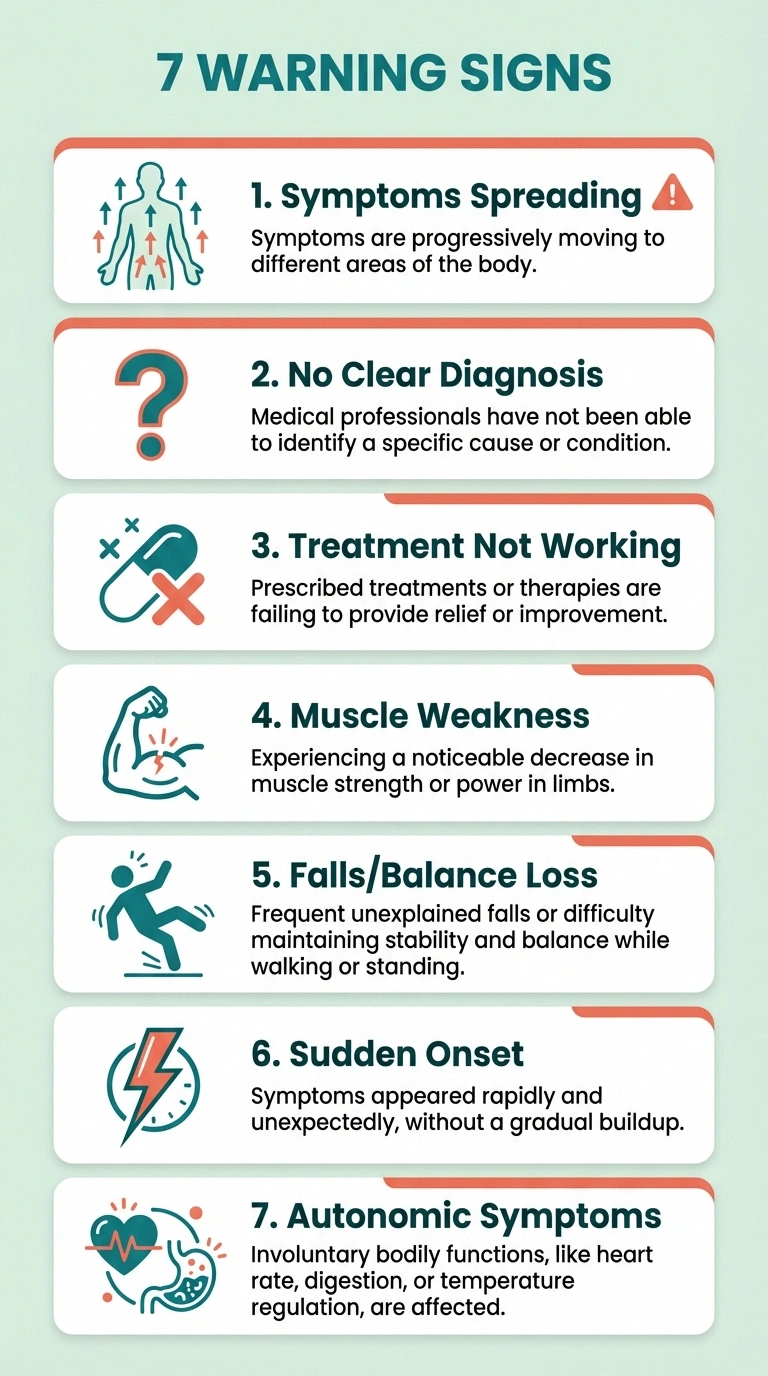
1. Your Symptoms Are Spreading
When neuropathy starts in your toes and stays in your toes for months or years, that's often a stable condition your primary doctor can manage. But when numbness, tingling, or pain begins creeping upward — from toes to feet, feet to ankles, ankles to calves — or when symptoms appear in your hands after starting in your feet, that's a progression pattern that deserves neurological evaluation. The stages of neuropathy follow relatively predictable patterns, and spreading symptoms may indicate the underlying cause isn't adequately controlled.
2. You Have No Clear Diagnosis
Up to 30% of peripheral neuropathy cases are classified as idiopathic — meaning no cause has been identified. If your primary doctor has run basic blood work (glucose, B12, thyroid) and found nothing, a neurologist can dig deeper. They may test for autoimmune markers, genetic conditions, inflammatory processes, or toxic exposures that standard panels don't include. Having a diagnosis — or at least ruling out treatable causes — changes your treatment options significantly.
3. Your Pain Isn't Responding to First-Line Treatments
If you've tried the standard neuropathy medications — gabapentin, pregabalin, or duloxetine — at appropriate doses for adequate trial periods (typically 4-8 weeks each) and your pain remains poorly controlled, a when symptom pattern needs a neurologist instead of guesswork can offer additional options. These may include combination medication strategies, peripheral nerve stimulation, specialized pain management referrals, or identification of an underlying cause that, once treated, may improve the neuropathy itself.

4. You're Developing Muscle Weakness
While sensory symptoms like numbness, tingling, and pain are the most common neuropathy complaints, the development of motor symptoms — muscle weakness, difficulty lifting your foot while walking (foot drop), trouble with fine motor tasks like buttoning shirts, or noticeable muscle shrinking (atrophy) — signals that motor nerves are involved. Motor neuropathy requires specialized assessment because some causes, particularly inflammatory and autoimmune neuropathies, are treatable if caught early. Delaying evaluation can result in permanent motor nerve damage that could have been prevented.
5. You're Falling or Losing Balance
Neuropathy-related balance problems and falls are both dangerous and diagnostically significant. If you're stumbling, needing to hold walls when walking, or have actually fallen, a neurologist can determine whether this is purely from sensory loss in your feet (you can't feel the ground properly), motor nerve damage affecting leg muscles, or a combination. They can also rule out central nervous system causes of imbalance that may mimic or coexist with neuropathy. Fall prevention starts with accurate diagnosis — and falls in people over 60 carry serious fracture risk that makes evaluation urgent.
6. Symptoms Came On Suddenly or Rapidly
Most neuropathies develop gradually over months or years. When nerve symptoms appear suddenly — over days to weeks rather than months — the differential diagnosis changes dramatically. Rapid-onset neuropathy may indicate Guillain-Barré syndrome, vasculitis, severe vitamin deficiency, or other conditions that require urgent evaluation and, in some cases, hospital-level treatment. If your neuropathy symptoms appeared abruptly and are progressing rapidly, seek neurological evaluation promptly — don't wait for a routine appointment.
Seek Urgent Evaluation
If neuropathy symptoms appeared suddenly (days to weeks, not months) and are progressing rapidly, don't wait for a routine appointment. This may indicate Guillain-Barré syndrome, vasculitis, or other conditions requiring urgent treatment.
7. You Have Autonomic Symptoms
If you're experiencing symptoms beyond the typical tingling and pain — dizziness when standing up, abnormal sweating, digestive problems, difficulty with bladder control, or heart rate irregularities — your autonomic nervous system may be involved. Autonomic neuropathy affects the nerves that control involuntary body functions, and it can have serious health implications if not properly managed. A neurologist with experience in autonomic disorders can perform specialized testing (tilt table, sudomotor testing, heart rate variability) to assess the extent of autonomic involvement and guide treatment.
How to Get a Neurologist Referral
The path to a neurologist depends on your insurance and healthcare system. In most cases, you'll need a referral from your primary care doctor. Here's how to make that conversation productive.

Finding the Right Specialist
Ask specifically for a neurologist who specializes in peripheral neuropathy or neuromuscular disorders — not just any neurologist. A headache or epilepsy specialist may not have the depth of neuropathy experience you need.
Be direct with your doctor about your concerns. You might say: “I've noticed my neuropathy symptoms are spreading, and I'd like to see a neurologist for a more thorough evaluation.” Most primary care doctors appreciate when patients advocate for themselves — and a clear, specific request is easier to act on than a vague expression of worry.
If you've been keeping a symptom journal, bring it. Concrete documentation of worsening symptoms, treatment failures, or new symptom patterns makes the case for referral much stronger than a general complaint. Your journal is evidence that something has changed and warrants investigation.
Ask specifically for a neurologist who specializes in peripheral neuropathy or neuromuscular disorders, not just any neurologist. A neurologist who primarily treats migraines or epilepsy may not have the depth of experience with neuropathy that you need. The NeuropathyCommons specialist directory maintained by the Foundation for Peripheral Neuropathy is a helpful resource for finding neuropathy-focused neurologists in your area.
If your primary doctor is reluctant to refer you, you have options. Some insurance plans allow self-referral to specialists. University medical centers often have neuromuscular clinics that accept self-referrals. And a politely firm “I understand your perspective, but I'd still like the referral” is entirely appropriate. You're advocating for your own health care — and that's your right.
What to Expect at Your First Neurology Appointment
Understanding what happens at a neurology visit can reduce anxiety and help you prepare. A first appointment typically lasts 45-60 minutes and follows a predictable structure.

The neurologist will take a detailed medical history, asking about when your symptoms started, how they've changed over time, what makes them better or worse, your medication history, family history of neurological conditions, occupational exposures, alcohol use, and other medical conditions. Be thorough and honest — details that seem irrelevant to you may be diagnostically important.
A neurological examination follows. This typically includes testing sensation in your feet and hands (with a tuning fork, monofilament, or pinprick), checking reflexes, assessing muscle strength and tone, evaluating your gait and balance, and examining coordination. The exam is painless and non-invasive — mostly tapping, touching, and watching you walk.
Based on the history and exam, the neurologist may recommend additional tests. Common ones include nerve conduction studies and EMG (often done at the same visit or scheduled for a follow-up), blood work for autoimmune markers or genetic tests, and occasionally imaging or nerve biopsy. Not everyone needs every test — the neurologist tailors the workup to your specific presentation.
You should expect to leave with a plan: either a preliminary diagnosis, a list of tests being ordered, or both. If the neurologist doesn't clearly explain next steps, ask. “What do you think is going on?” and “What happens next?” are perfectly reasonable questions. Our guide on talking to your doctor about neuropathy offers more tips for productive medical conversations.
Preparing for Your Neurologist Visit
Coming prepared makes a significant difference in the quality of your first neurologist appointment. Here's a checklist of what to bring and do beforehand.
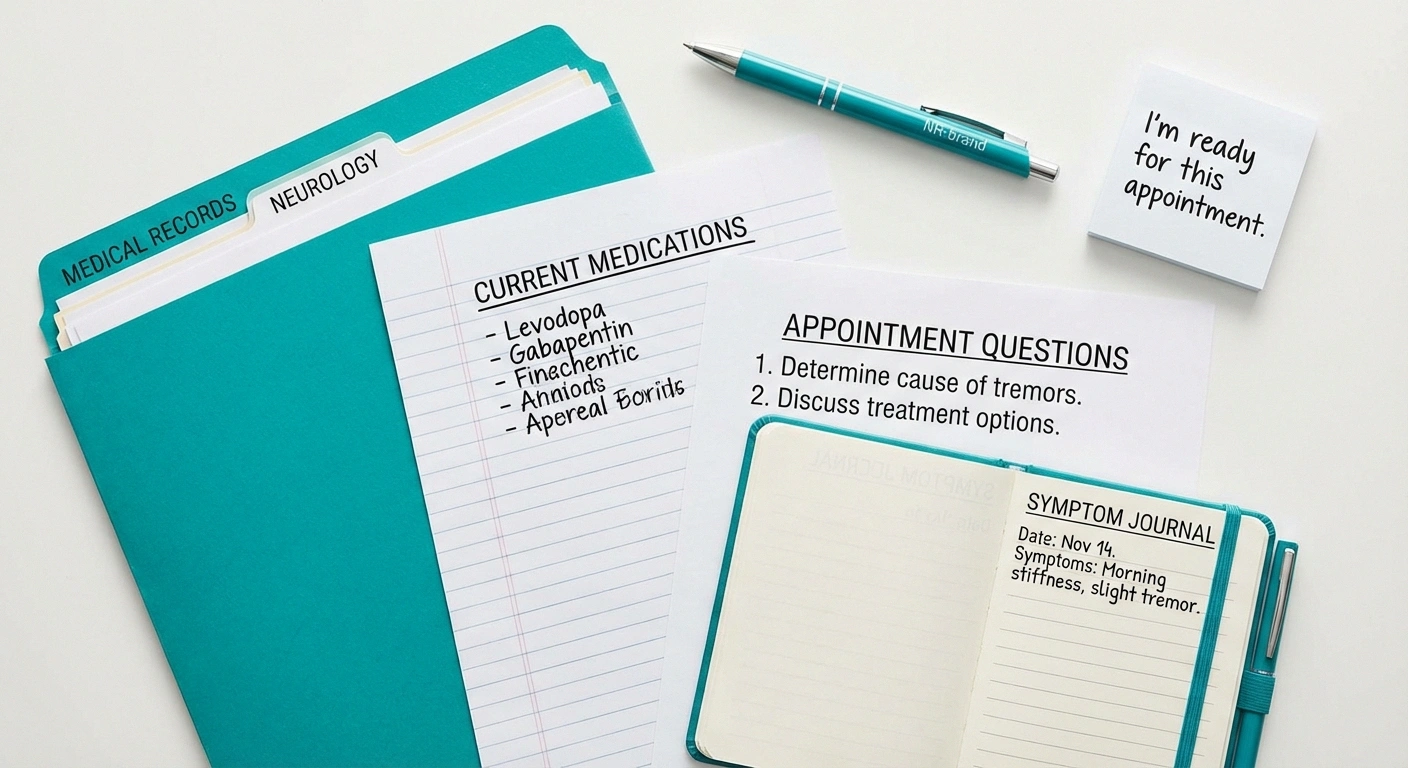
Appointment Prep Checklist
Write a clear symptom timeline with dates
List all current and past medications with doses
Bring copies of lab work and test reports
Prepare a prioritized list of questions
Bring a family member or friend to take notes
Write a clear symptom timeline. When did symptoms first appear? How have they changed? Include specific dates when you can — “numbness started in my toes around June 2024” is more helpful than “it's been a while.”
List all current medications and supplements, including doses. Also list any medications you've tried in the past for neuropathy that didn't work or caused intolerable side effects. This prevents the neurologist from suggesting things you've already tried.
Bring copies of relevant lab work and any imaging you've had done. If your primary doctor ordered blood tests, nerve studies, or MRIs, bring the actual reports (not just the summary). Your neurologist may interpret the raw data differently.
Prepare a list of questions. Don't rely on memory in the appointment — write them down. Prioritize: put your most important questions first in case time runs short. Good starting questions include: “What type of neuropathy do I have?”, “What's causing it?”, “Is it likely to get worse?”, “What treatment options do you recommend?”, and “When should I follow up?”
If possible, bring a trusted family member or friend. They can take notes, help you remember the doctor's recommendations, and may recall symptom details that you forget to mention.
When a Primary Doctor Is Enough
Not everyone with neuropathy needs ongoing neurologist care. Your primary doctor may be the right fit if your neuropathy has a clear, identified cause (like well-managed diabetes or a corrected vitamin deficiency), your symptoms are stable and not progressing, your pain is adequately controlled with first-line medications, and you have no motor weakness, balance problems, or autonomic symptoms.
The Consultation Model
Even with stable neuropathy, a single neurologist visit for baseline evaluation can confirm the diagnosis, rule out complications, and give your primary doctor a clear framework to follow. Think of it as a consultation, not necessarily a permanent transfer of care.
Even in these cases, it's reasonable to see a neurologist once for a baseline evaluation and then return to your primary doctor for ongoing management. That single specialist visit can confirm the diagnosis, rule out complications, and give your primary doctor a clear treatment framework to follow. Think of it as a consultation, not necessarily a permanent transfer of care.
Special Considerations for Specific Populations
Certain groups should have a lower threshold for seeking neurologist evaluation.

Cancer patients and survivors: Chemotherapy-induced neuropathy (CIPN) is common, but neuropathy in a cancer patient can also indicate cancer recurrence or a paraneoplastic syndrome. Neurological evaluation helps distinguish between these very different causes.
Young adults with neuropathy: Neuropathy in people under 40 is less common and more likely to have a treatable autoimmune or genetic cause. Earlier when prognosis needs specialist reassessment evaluation is warranted because identifying and treating these conditions promptly may prevent irreversible nerve damage.
People with family history of neuropathy: If close relatives have neuropathy or Charcot-Marie-Tooth disease, genetic testing through a neurologist can provide diagnostic clarity and inform family planning decisions.
Anyone on medications known to cause neuropathy: If you're taking medications that can cause nerve damage — certain chemotherapy drugs, statins, antibiotics, or anti-seizure medications — and developing neuropathy symptoms, a neurologist can help determine whether the medication is the cause and advise on alternatives.
Frequently Asked Questions
Can a neurologist actually help with neuropathy?
Yes. Neurologists provide more precise diagnosis, access to specialized testing like EMG and nerve biopsy, and broader treatment options than primary care alone. They're especially valuable when the cause of neuropathy is unclear, symptoms are progressing, or standard treatments aren't working.

How long does it take to get a neurology appointment?
Wait times vary by location and demand. In many areas, expect 4-12 weeks for a routine appointment. If your symptoms are rapidly worsening, tell the scheduling office — most practices have expedited slots for urgent cases. University medical centers and telehealth neurology services may offer shorter waits.
Will the neurologist take over my care from my primary doctor?
Not necessarily. Many neurologists provide a consultation and treatment recommendations, then send you back to your primary doctor for ongoing management. Others may want to follow you regularly, especially if your case is complex. The arrangement depends on the severity and complexity of your neuropathy.
Should I see a neurologist or a pain management specialist?
Start with a neurologist if you need a diagnosis or if your neuropathy's cause is unclear. A neurologist focuses on understanding what's happening to your nerves and why. A pain management specialist focuses specifically on controlling pain. Some people benefit from seeing both — the neurologist for diagnosis and monitoring, and the pain specialist for complex pain control.
What if the neurologist can't find a cause?
This happens in approximately 25-30% of cases and is called idiopathic neuropathy. While frustrating, a thorough negative workup is still valuable — it rules out dangerous and treatable conditions. The neurologist can still help manage symptoms and monitor for changes. Some cases that start as idiopathic eventually reveal their cause over time with repeat testing.
Does insurance cover neurologist visits for neuropathy?
Most insurance plans cover neurologist visits with a referral from your primary care doctor. Check your plan for specialist visit copays, which are sometimes higher than primary care copays. Some diagnostic tests like EMG may require pre-authorization. Call your insurance before the appointment to understand your coverage and avoid surprise costs.
Don't Wait Until It's an Emergency
The biggest mistake I see people make with neuropathy is waiting too long for specialist care. They normalize worsening symptoms. They convince themselves it's “just aging.” They assume their primary doctor would have referred them if it was important. But primary care doctors are managing dozens of conditions simultaneously — neuropathy may not be their area of deepest expertise, and subtle progression is easy to miss in 15-minute appointments every few months.

If you recognized yourself in any of the seven signs above, start the referral process. The best case scenario? The neurologist confirms everything is fine and you gain peace of mind. The more common scenario? They find something actionable — a treatable cause, a better medication approach, a test nobody thought to order — that meaningfully improves your quality of life.
Your nerves don't wait for convenient timing. Neither should you. Browse all our guides for living with neuropathy for more practical strategies to manage your daily life.
About the Author