Your bedroom is probably the one room in the house where neuropathy has the most impact—and where a few thoughtful changes can make the biggest difference. The combination of nighttime symptom flares, the need to navigate safely in the dark, bedding that can aggravate sensitive nerves, and the exhaustion of poor sleep all converge in this one room.
The good news is that most of the changes that help don’t require major renovations or expensive purchases. They’re small, targeted adjustments that address the specific ways neuropathy makes sleeping—and getting in and out of bed—harder than it needs to be.
Why Neuropathy Makes Nighttime Harder
Before jumping to the practical changes, it helps to understand why neuropathy symptoms often feel worse at night. This isn’t just in your head—there are real physiological reasons for it.
Why Symptoms Feel Worse at Night
During the day, constant normal sensory input from movement and activity partially overrides the abnormal signals from damaged nerves. At night, when that competing input drops, your nervous system amplifies what remains — including the pain, burning, and tingling of neuropathy. This is a real physiological phenomenon, not psychological. Setting up your bedroom to manage it is a legitimate medical strategy.
During the day, you’re constantly receiving competing sensory input: the sensation of your feet on the floor, your hands on a keyboard, your clothes against your skin. This ongoing stream of normal sensory signals helps partially override the abnormal signals coming from damaged nerves. At night, when you’re lying still and external input drops, your nervous system essentially amplifies whatever signals are left—including the pain, burning, and tingling of neuropathy.
Cooler nighttime temperatures can also trigger more intense symptoms in people whose neuropathy includes temperature sensitivity, while warmth can trigger flares in others. Body position during sleep affects circulation to peripheral nerves. And the psychological effect of lying still with nothing to distract from the pain makes everything feel more intense.
Neuropathy symptoms getting worse at night is one of the most common complaints I hear—and most people find that even modest improvements to their sleep environment produce real improvements in both sleep quality and the intensity of nighttime symptoms.
Choosing the Right Mattress
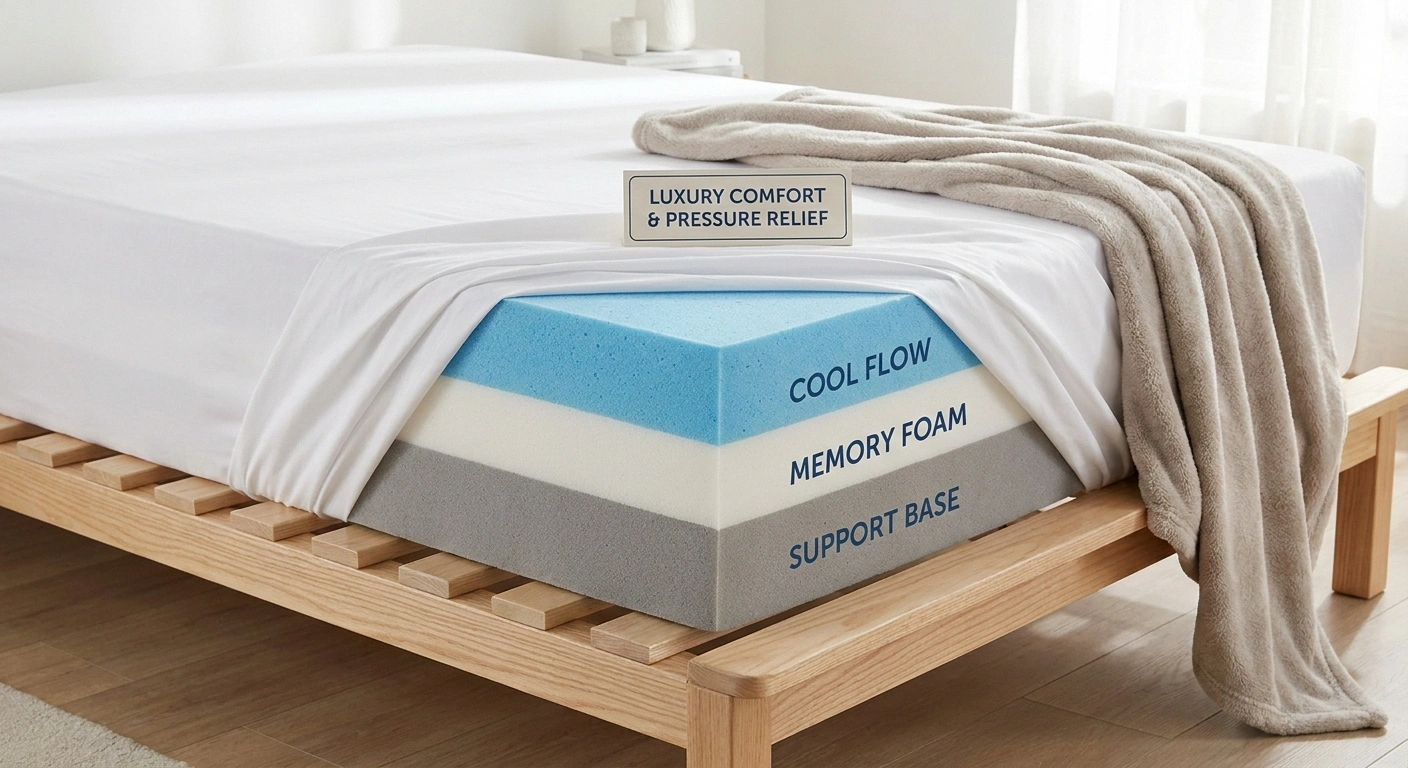
Mattress selection is where most people start, and it’s genuinely important. The wrong mattress can create new pressure points that aggravate sensitive nerves, while the right one provides the pressure relief that lets your body relax despite neuropathy symptoms.
Mattress Types at a Glance
✗ Retains heat — avoid if warmth worsens symptoms
✗ Heavier, more expensive than foam
✗ Variable quality — prioritize foam layer depth
If replacing a mattress isn’t in the budget, a 2–3 inch memory foam or latex topper is the most cost-effective upgrade.
The general principles for mattresses and neuropathy:
- Medium-firm is usually the sweet spot. Too soft, and you sink in ways that create pressure on hips, shoulders, and knees. Too firm, and you’re creating hard contact points under already-sensitive areas
- Memory foam can be excellent for pressure relief—it conforms to your body’s shape and distributes weight evenly rather than creating focal pressure points. The main downside is heat retention, which matters if your symptoms worsen with warmth
- Latex foam offers similar pressure relief with better temperature neutrality. Natural latex is also durable and hypoallergenic
- Hybrid mattresses (foam top layers over a spring core) often balance pressure relief and airflow well
If you can’t replace your current mattress, a quality mattress topper—2–3 inches of memory foam or latex—can meaningfully change the feel without the full cost of a new mattress.
Bedding: Fabric Matters More Than You Think
If you have allodynia—the condition where even light touch becomes painful—your bedding fabric isn’t a small detail. It can be the difference between a night of tolerable rest and one of constant skin irritation.
Fabrics that tend to work best for sensitive skin:
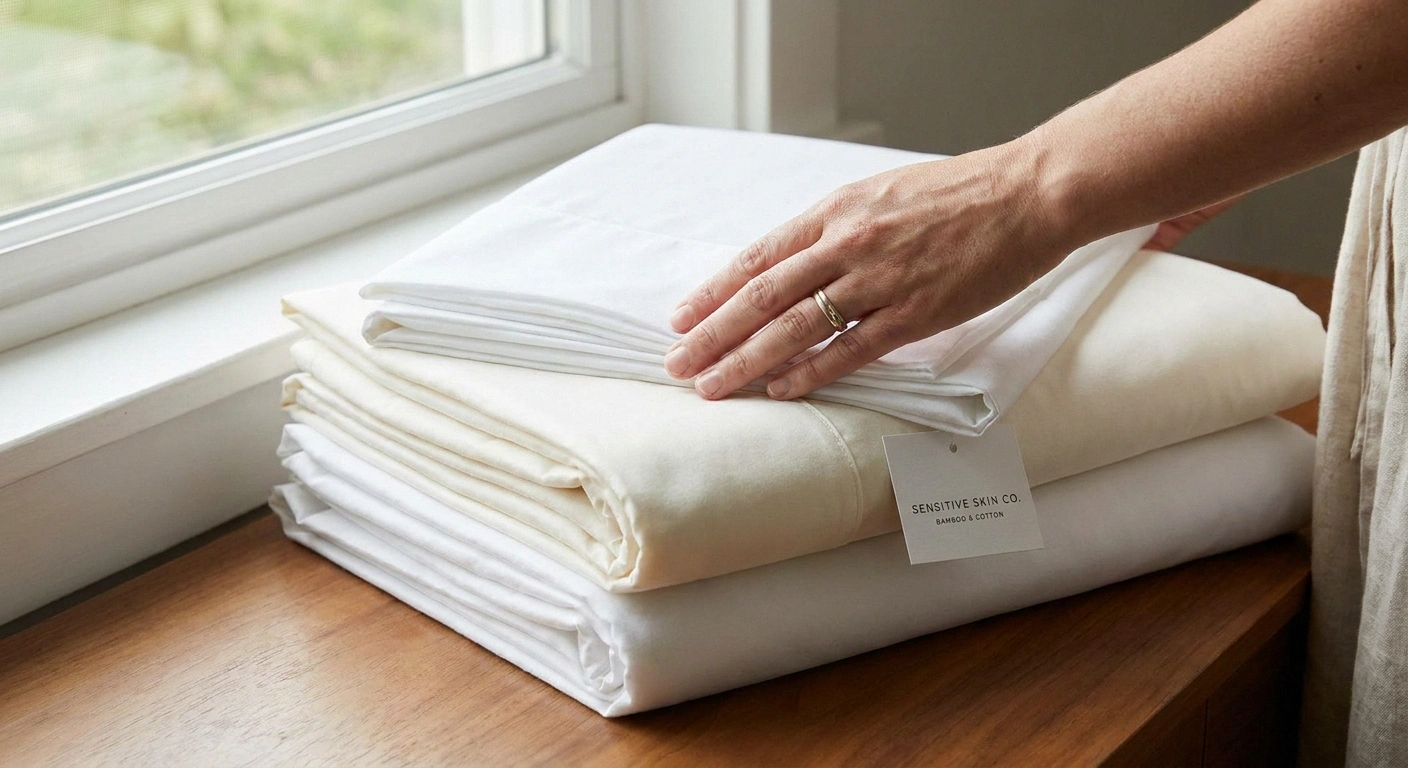
- 100% cotton percale: Cool, smooth, and breathable. Percale weave is crisper than sateen and tends to feel less “clingy” on sensitive skin
- Bamboo-derived fabrics: Extremely soft, moisture-wicking, and temperature-regulating. Many people with allodynia find bamboo sheets particularly comfortable
- Silk or satin: The smoothest option—minimal friction as you move during the night. Particularly helpful if leg movement triggers pain, as these fabrics don’t “catch” like cotton
- Modal: A semi-synthetic fabric made from beech tree pulp that’s exceptionally soft and drapes gently against skin
What to avoid:
- Rough textures, high thread count percale that hasn’t been washed and softened, or any fabric that feels scratchy even to healthy skin
- Polyester blends that trap heat if warmth worsens your symptoms
Thread count matters less than weave and fiber type. A 300-thread count 100% cotton percale often feels better than a 600-thread count polyester blend for people with sensitive nerves.
Blankets and Weighted Blankets: The Right Call for Neuropathy
The weighted blanket question comes up often. These blankets—typically 15–25 lbs—use deep pressure stimulation, which some people find calming and pain-reducing. For certain neuropathy patients, particularly those with restless leg-type symptoms or who find deep pressure soothing, they can help.
However, if you have significant allodynia or hyperalgesia (heightened pain response), the weight of a heavy blanket pressing on your feet and legs may be the opposite of helpful. The pressure itself becomes the problem.
A useful middle ground: lightweight cotton or bamboo blankets that provide warmth without weight. Some people find a small pillow or rolled towel under the blanket at the foot of the bed to create a “tent” over their feet—keeping the blanket off hypersensitive feet entirely while still providing coverage. Bed cradles (small frames that prop blankets off the feet) are a more formal version of this and can be found online.
Foot and Leg Positioning
How you position your feet and legs during sleep affects both circulation to peripheral nerves and the intensity of nighttime symptoms for many neuropathy patients.
Strategies worth trying:
- Leg elevation: For people with swelling or circulatory components to their neuropathy, elevating the legs slightly with a pillow or wedge pillow under the calves can improve venous return and reduce overnight edema that compresses nerves
- Position variation: If you tend to sleep in one position, you may be compressing the same nerves repeatedly. A body pillow can help you maintain a side-lying position comfortably, while a pillow between the knees relieves hip and lower back pressure
- Avoid crossing legs: This creates pressure on the peroneal nerve at the knee, which can worsen leg and foot symptoms. Position pillows deliberately to prevent unconsciously crossing your legs during sleep
If foot pain is the dominant symptom, some people find wearing soft, non-constrictive socks (think: seamless diabetic socks, not tight compression socks) during sleep provides a layer of sensory buffering that reduces the stimulus of even bedsheet contact. Compression socks are generally not recommended during sleep—reserve those for daytime use when you’re upright and walking.
Temperature Control in the Bedroom
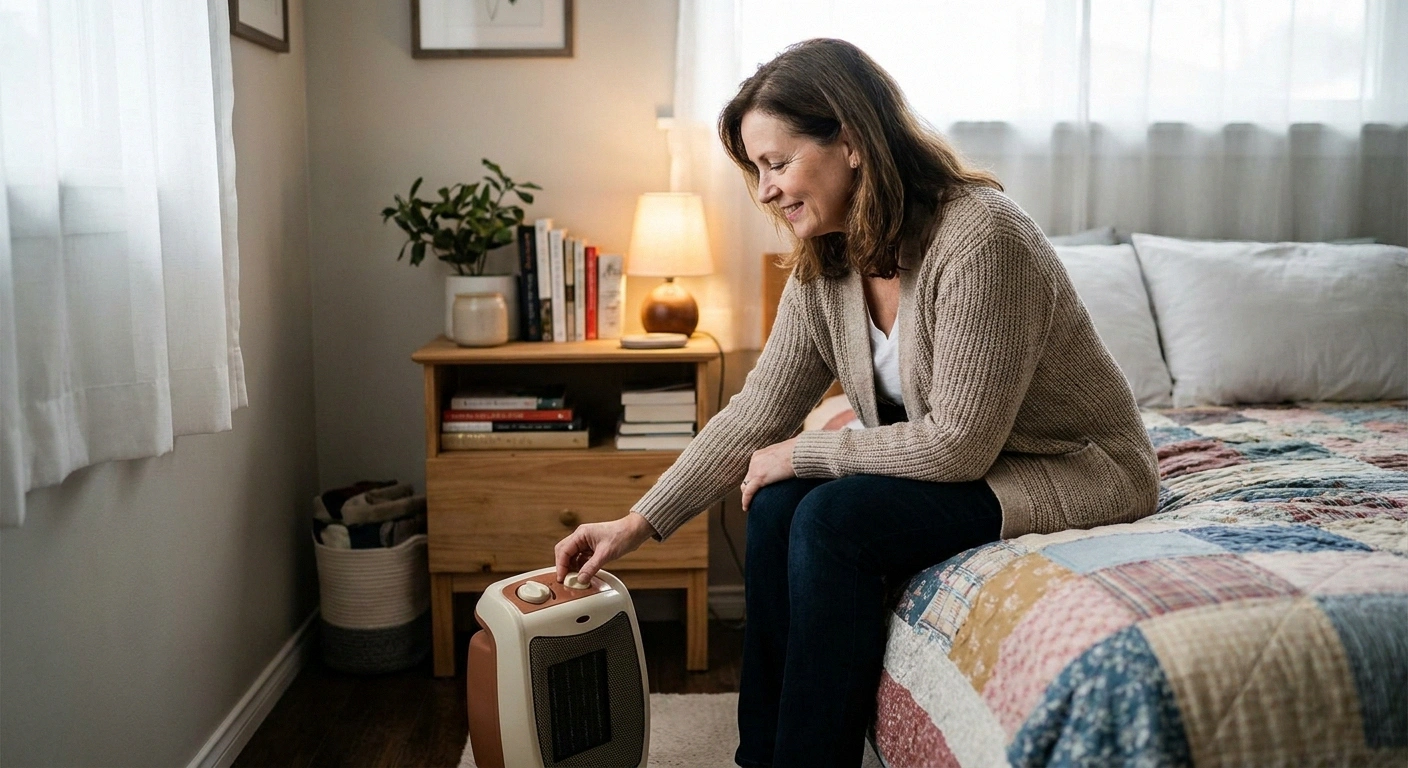
Temperature sensitivity in neuropathy can go either direction—some patients find their symptoms worsen significantly in heat, others find cold intolerable. Your bedroom temperature setup should reflect your personal pattern, not a generic recommendation.
⚠ Burn Risk with Electric Heating
Neuropathy reduces sensation in the feet and legs, which means you may not feel when heat has built up to dangerous levels. Never fall asleep with a heating pad directly on numb skin. If you use an electric blanket, always use the lowest effective setting. Heated mattress pads (which heat from below) are safer than direct-contact blankets for people with reduced leg and foot sensation.
For heat-sensitive patients:
- Set the room cooler—most people sleep better in cooler rooms anyway (65–68°F is commonly cited as optimal for sleep)
- Use a fan for airflow and white noise
- Choose moisture-wicking bamboo or percale sheets over flannel
- Consider a cooling mattress topper if your current mattress retains heat
For cold-sensitive patients:
- Keep the room warmer, or use an electric blanket set to low (not on feet with reduced sensation—fire and burn risk)
- Wear warm socks if foot coldness worsens symptoms
- Flannel sheets may be more comfortable than cotton percale in winter
- A small space heater with a thermostat and auto-shutoff on a bedside table can maintain temperature through the night
If you’re using an electric blanket, heated mattress pad, or heating pad, be especially careful about temperature settings. Reduced sensation in the feet means burn injuries can occur without pain warning—always use the lowest effective setting and never fall asleep with a heating pad directly on numb skin.
Nighttime Lighting and Fall Prevention
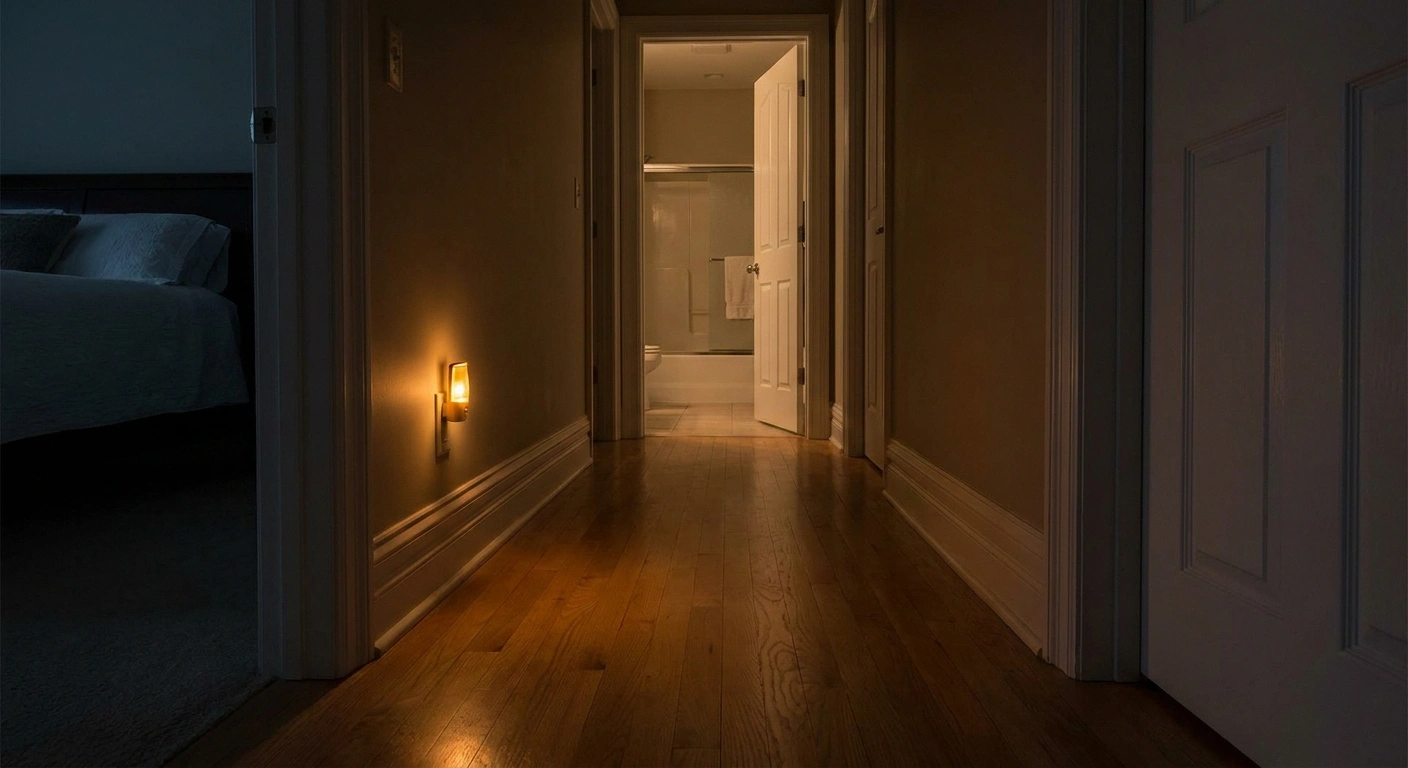
Balance problems and reduced sensation in the feet make nighttime bathroom trips a significant fall risk. This is one of the most important—and most underaddressed—bedroom safety issues for neuropathy patients.
Nighttime Fall Prevention Checklist
- Motion-activated night light beside the bed
- Motion-activated night light in the hallway to the bathroom
- Remove thick or plush rugs — replace with thin non-slip mats
- Clear all trip hazards from the path to the bathroom
- Set bed height so feet reach the floor flat when sitting on the edge
- Keep a sturdy grab point within reach of your sleeping position
- Sit on the edge of the bed for a moment before standing
Fall prevention for neuropathy patients starts in the bedroom:
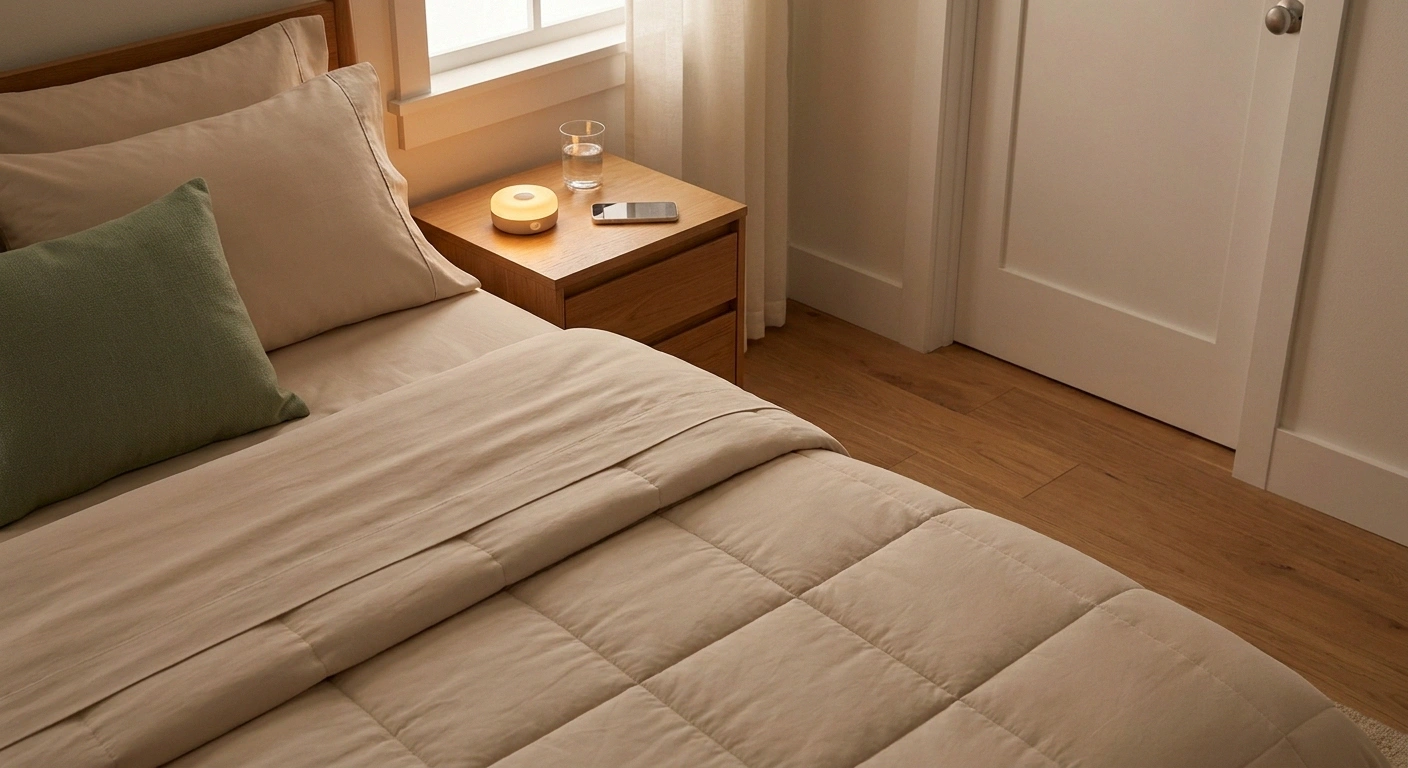
- Motion-activated night lights: Place one in the bedroom near the bed and one in the hallway to the bathroom. Motion-sensing means you don’t have to fumble for a switch before your eyes adjust, and it ensures there’s always a lit path
- Avoid thick or soft rugs: Plush rugs near the bed can be trip hazards for people with foot drop or reduced proprioception. Either remove them or replace with thin, low-pile, non-slip mats with rubber backing
- Clear the path: Make sure the path from bed to bathroom is completely clear. No charging cables crossing the floor, no laundry piles, no shoes or bags left in the way
- Bed height matters: Getting in and out of bed is easier—and safer—when the bed is at a height where your feet reach the floor flat when sitting on the edge. Adjust with risers (to raise) or by removing the frame (to lower)
Accessibility and Practical Arrangements
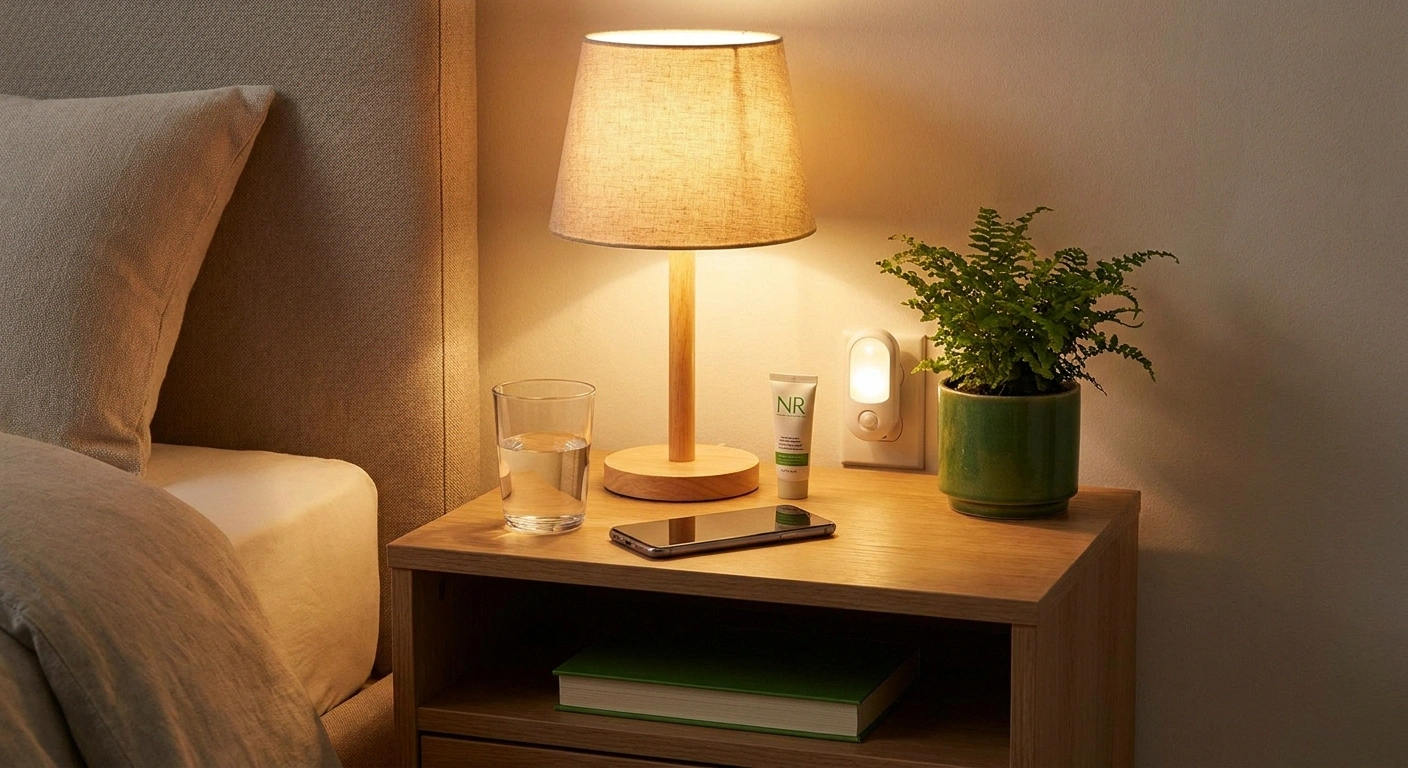
What you keep within reach of your bed can make a real difference on bad nights or in the first moments of waking when symptoms may be at their most intense.
What to Keep Within Arm’s Reach of Bed
Consider keeping close to the bed:
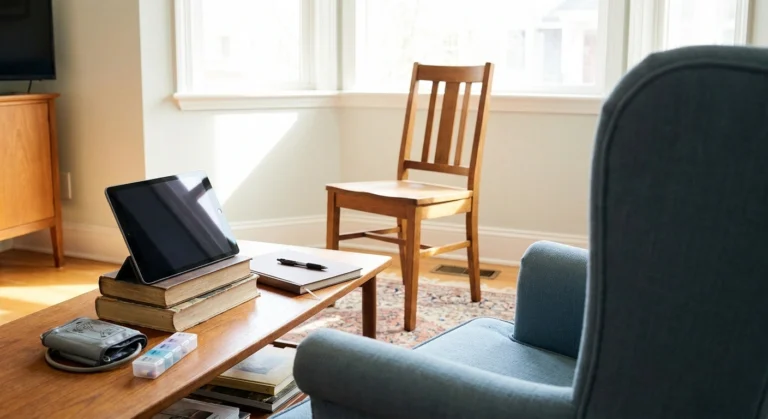
- Your phone—for emergencies, but also for the clock function that avoids bright screens if you check the time in the night
- A glass of water—hydration supports circulation and helps some people manage symptom intensity
- Topical pain relief—if you use capsaicin cream, lidocaine gel, or other topical treatments, having them accessible means you can apply them without getting out of bed during nighttime flares
- Reading glasses if you use them—avoiding having to lean or stretch with unstable footing to reach things on a nightstand
- A bed grab rail or a sturdy piece of furniture within arm’s reach of your sleeping position, to help push up to seated safely if your legs are uncooperative in the morning
Managing Noise and Sleep Disruption
Sleep quality matters as much as sleep quantity for people managing chronic pain. Broken sleep from noise disrupts pain processing in ways that compound neuropathy symptoms the following day.
- White noise machines or fans mask intermittent sounds that cause micro-arousals—the brief awakenings you may not remember but that fragment sleep architecture
- Earplugs can help if a partner snores or if external noise is a problem
- Blackout curtains prevent early morning light from disrupting sleep before you’ve had enough rest—especially relevant if pain has delayed sleep onset in the first place
- Phone on vibrate with face-down: Notification lights and sounds disrupt sleep stages. If you need to be reachable, vibrate settings on a phone under your pillow are less disruptive than screen alerts
Setting Up a Calming Pre-Sleep Routine
The bedroom environment and the hour before bed are connected. Part of making your bedroom neuropathy-friendly is also establishing the signals that tell your nervous system it’s time to wind down.
Neuropathy Wind-Down Routine
60 min before bed: Dim bedroom lights to trigger melatonin production
45 min before bed: Warm (not hot) foot soak to promote circulation and relaxation
30 min before bed: Apply any topical pain relief so it’s fully absorbed by sleep time
15 min before bed: Gentle leg and foot stretches to address overnight stiffness before it starts
Phone on vibrate, face-down: Notification lights fragment sleep — protect what sleep you can get
A consistent routine applied in reverse is what works for sleep: the same sequence of activities each night trains the brain to associate those activities with sleep onset. For neuropathy patients specifically:
- Warm (not hot) foot soak 30–45 minutes before bed—not to the point of overheating sensitive skin, but enough to promote circulation and relaxation
- Gentle stretching or foot exercises that address overnight stiffness before it starts
- Topical treatment application as part of the routine, so it’s fully absorbed by the time you’re in bed
- Dimming lights in the bedroom 30–60 minutes before sleep to support melatonin production
If sleep itself has become a persistent problem—not just nighttime symptom management but actual difficulty falling or staying asleep—our deeper look at neuropathy and sleep disorders covers additional strategies including when to talk to your doctor about pharmacological sleep support.
Frequently Asked Questions
What is the best mattress for someone with neuropathy?
Medium-firm mattresses with pressure-relieving foam layers tend to work best for most neuropathy patients. Memory foam and latex both conform to body contours and reduce focal pressure points. The right choice also depends on temperature sensitivity—memory foam retains more heat, while latex and hybrid mattresses tend to sleep cooler.
Should I use a weighted blanket with neuropathy?
It depends on your specific symptoms. Some people find the deep pressure of weighted blankets calming and pain-reducing. However, if you have allodynia or hyperalgesia—where touch itself is painful—the constant weight may worsen discomfort. Lightweight alternatives, or using a bed cradle to keep blankets off sensitive feet, often work better for allodynia patients.
Why are neuropathy symptoms often worse at night?
During the day, constant normal sensory input from activity partially overrides abnormal nerve signals. At night, when external stimulation drops and you’re still, your nervous system amplifies remaining signals—including pain, burning, and tingling from neuropathy. This is a genuine physiological phenomenon, not psychological.
What should I keep next to my bed if I have neuropathy?
Practical items worth having within reach include: your phone, a glass of water, topical pain relief products you use regularly, a low-powered bedside lamp or motion-sensing night light, and a sturdy grab point for getting up safely. For people who experience significant morning stiffness or weakness, a bed rail or grab bar is worth considering.
How can I prevent falls when getting up at night with neuropathy?
Key steps: install motion-activated night lights in the bedroom and along the path to the bathroom, remove trip hazards like thick rugs or objects on the floor, set bed height so your feet reach the floor flat, and always sit on the edge of the bed for a moment before standing to allow your balance system to adjust before you bear full weight.
Is it safe to use an electric blanket with neuropathy?
With caution. Because neuropathy reduces sensation—especially in the feet—you may not feel when heat has built up to dangerous levels, creating a burn risk without the normal pain warning. If you use an electric blanket, always use the lowest effective setting, never use it directly on numb areas, and strongly prefer heated mattress pads (which heat evenly from below) over direct-contact blankets.
About the Author