I'll admit something up front: I'm the wrong person to tell you what dating apps feel like from the inside. My husband and I met long before anyone swiped anything, and long before my toes started to tingle. So this isn't a report from the front lines — more like notes from the kitchen table.
What I do have is a support group full of people who went back to dating after a divorce, after losing a spouse, or after years of telling themselves they were done with all that. Dating with neuropathy comes up at our table more than you'd guess. The question arrives in a dozen versions, but underneath it's always the same one: when do I tell them, and how do I say it without it becoming the whole story?
Nobody can hand you a rule for that, and I'd be wary of anyone who tried. What I can offer is what the research on sharing a hidden health condition actually found, a few ways of wording it that people in my group have road-tested, and a lot of practical planning that makes an evening out easier on feet that burn or can't feel the floor.
Why This Particular Secret Feels So Heavy
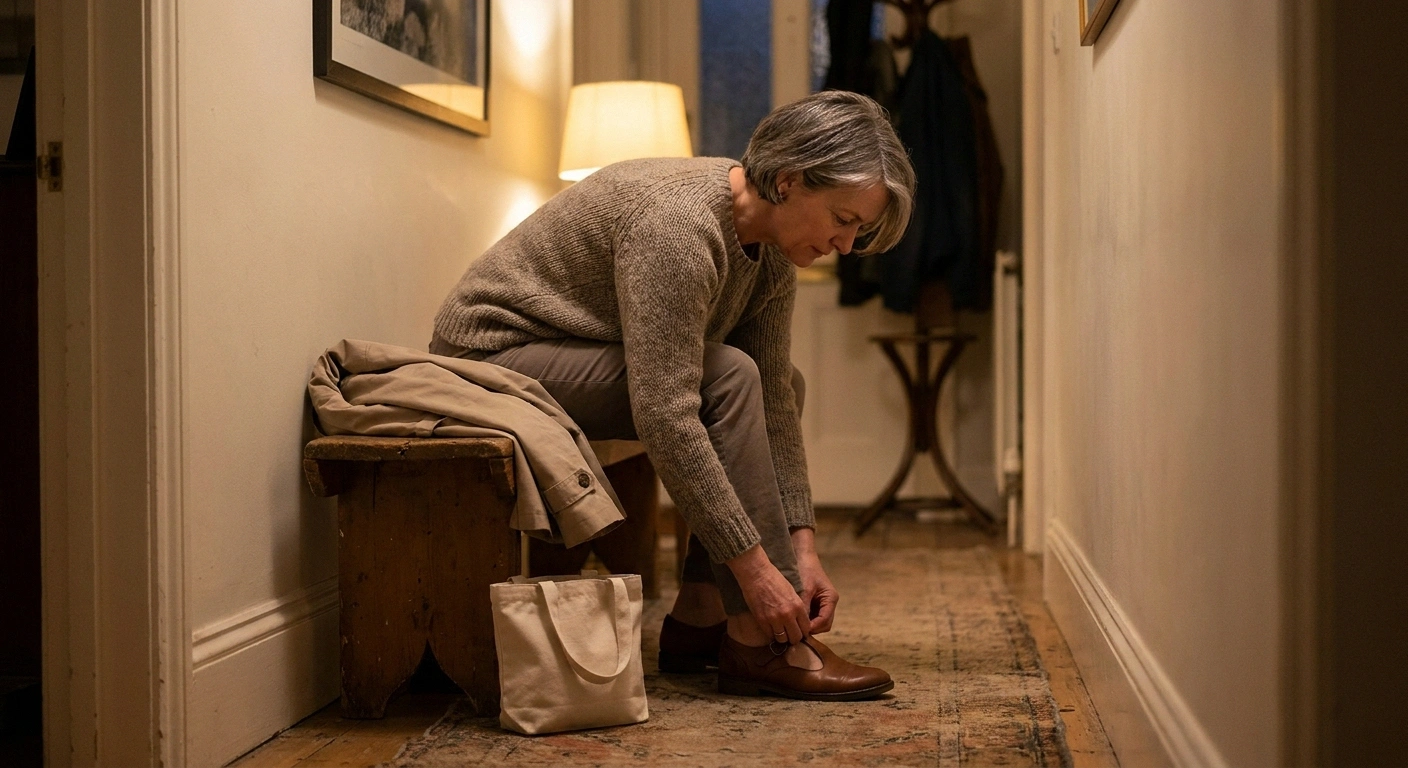
Most of neuropathy can't be seen. You can sit across a table from someone for two hours and they'll never guess that your feet feel wrapped in wet wool, or that you chose the chair nearest the door so you wouldn't have to cross the room twice.
It also doesn't hold still. The National Institute of Neurological Disorders and Stroke describes nerve pain that's sometimes worse at night, touch so sensitive that a person may hurt from the touch of their bedsheets, balance that suffers when the eyes can't help out, and trouble handling heat. Any of those can show up on a date. A hand resting on your knee might feel lovely one week and sting the next.
That combination makes the illness hard to describe to someone new. In a small British study of ten people living with nerve pain, researchers concluded that the “unpleasant and bizarre nature” of the pain sat underneath much of the strain it put on their relationships. I've watched that play out. People don't struggle to say “I have neuropathy.” They struggle with everything that comes after — the moment the other person's face goes blank.
The invisibility cuts both ways, though. It means you get to decide when the subject comes up. That's a real freedom, and it's the part of this I want you to hold on to.
What Researchers Have Learned About Telling
I went looking for studies on dating with neuropathy specifically and came up empty. What does exist is research on people with other conditions you can't see at a glance, such as multiple sclerosis, epilepsy, cystic fibrosis and mental illness. None of it is about our exact situation, and some of the studies are tiny, but a few findings hold up well enough to be useful.
- None of them studied neuropathy. Multiple sclerosis is the closest match, since it also brings pain, fatigue and sensory symptoms nobody can see.
- Several are very small. The MS dating study had 7 people and the amputee study had 4, so treat them as stories worth hearing rather than rules.
- Women in the cystic fibrosis survey were more likely than men to have told a dating partner.
- A type 1 diabetes study sorted people into three styles, open, hesitant and passive (letting it be noticed rather than saying it), but everyone in it was between 12 and 25.
- In an Italian survey of 376 people with rheumatic diseases, about 74% talked about their condition “sometimes,” 19% “always or very often” and 7% “never.”
Why you tell matters more than when. The best-known framework, the disclosure processes model published by researchers Chaudoir and Fisher in 2010, argues that whether telling someone helps you depends a great deal on your goals going in and on how the other person responds. The model names three ways telling can help — it takes away the strain of holding something back, it opens the door to support, and it changes what the other person understands about you.
Constant hiding seems to cost more than openness. In a survey of 288 Americans living with a concealable condition or identity, it was how often people had to actively hide it that went with worse physical and mental quality of life, not how many people knew. The study can't prove cause and effect, but it matches what I hear: the exhausting part is the managing.
People time it differently, and all of them have reasons. In an Irish study of seven adults with MS who were dating, some told a new partner right away, figuring there was no point building something with a person who couldn't handle it. Others mentioned the diagnosis at the same moment they shared another big fact about their lives, such as a child from an earlier relationship. Symptoms, the researchers noted, can push a person to tell sooner than planned. And some felt dating got easier as they got older and more at peace with the condition.
Bad reactions happen, but in the largest survey they weren't the norm. Of 865 adults with cystic fibrosis surveyed in the United States, 73% had told a dating partner. The researchers found negative effects from disclosure were infrequent — though when they did crop up, dating partners and bosses were the likeliest source. Nobody has published a rejection rate for neuropathy, and I won't invent one.
Four Moments to Tell, and What Each One Costs
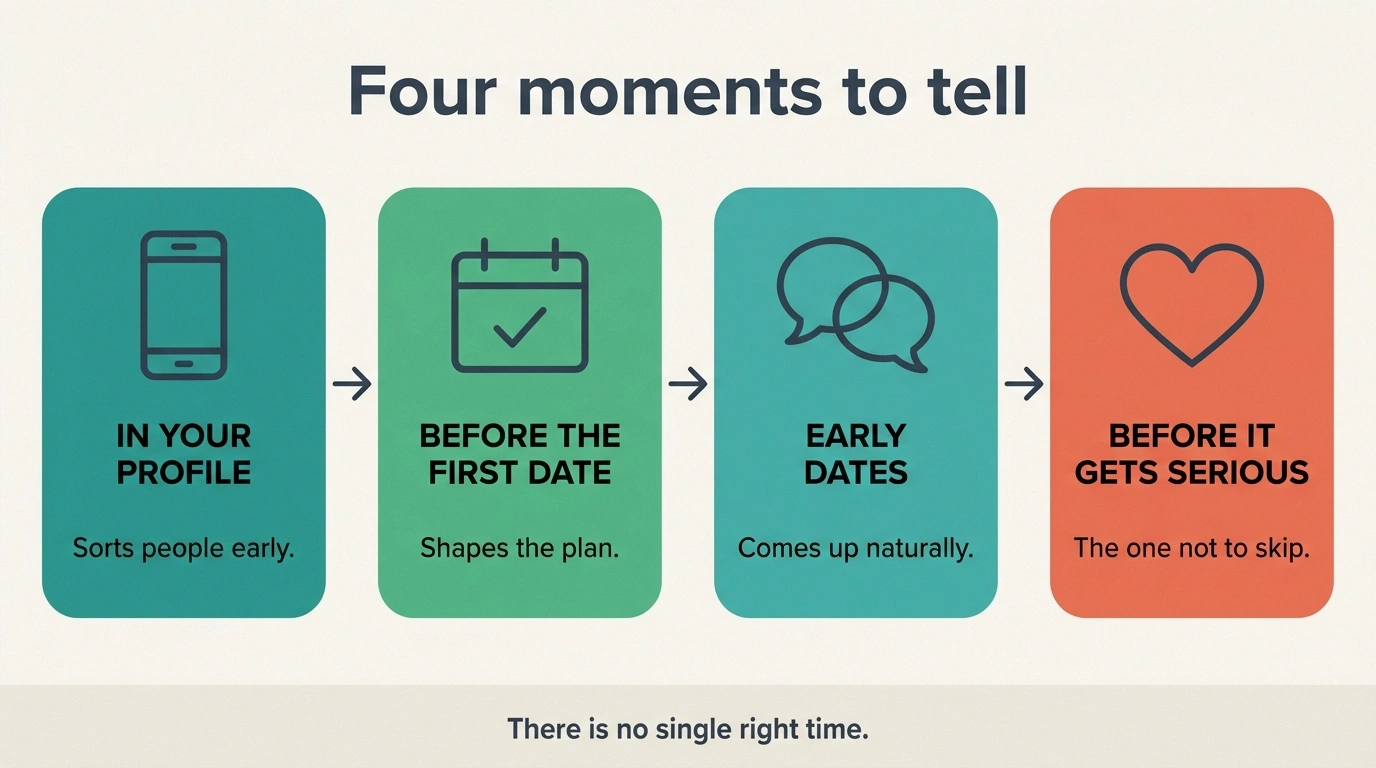
When my group talks this through, the choices usually boil down to four moments. None is wrong. Each one trades something for something else.
In your profile
A line in your profile does the sorting for you. Anyone who can't cope with a nerve condition moves along before you ever watch their face change, which is exactly why four women in a small study of below-knee amputees chose not to hide their prosthetic legs when dating. It screened for the kind of person they wanted. The cost is that a stranger meets your diagnosis before they meet you. It's also fine to leave it out. In a small American study of adults with mental illness who dated online, most deliberately left their health off their profiles, and a study of 320 older adults' dating profiles found that few of them painted a picture of perfect health anyway. What many did highlight was an active, engaged life.
Before the first meeting, when it shapes the plan
If your date suggests a two-mile walk along the river, you've got a practical reason to say something now. Epilepsy researchers call this “preventive” disclosure: people in one study were more willing to tell the more they feared the other person would notice on their own. With neuropathy, that might be a limp, a hand on every railing, or needing to sit down after twenty minutes. A short sentence and a counteroffer are usually all it takes. This is the window I nudge people toward most often, because the disclosure has a job to do. It isn't a confession; it's logistics.
Early on, in conversation
Plenty of people wait for the second or third date, when talk turns to health, work, or why you retired early. By then the other person has heard about your grandkids and your terrible garden. The risk is that waiting can start to feel like hiding, and the longer it goes, the heavier the eventual sentence gets.
Before things get serious or physical
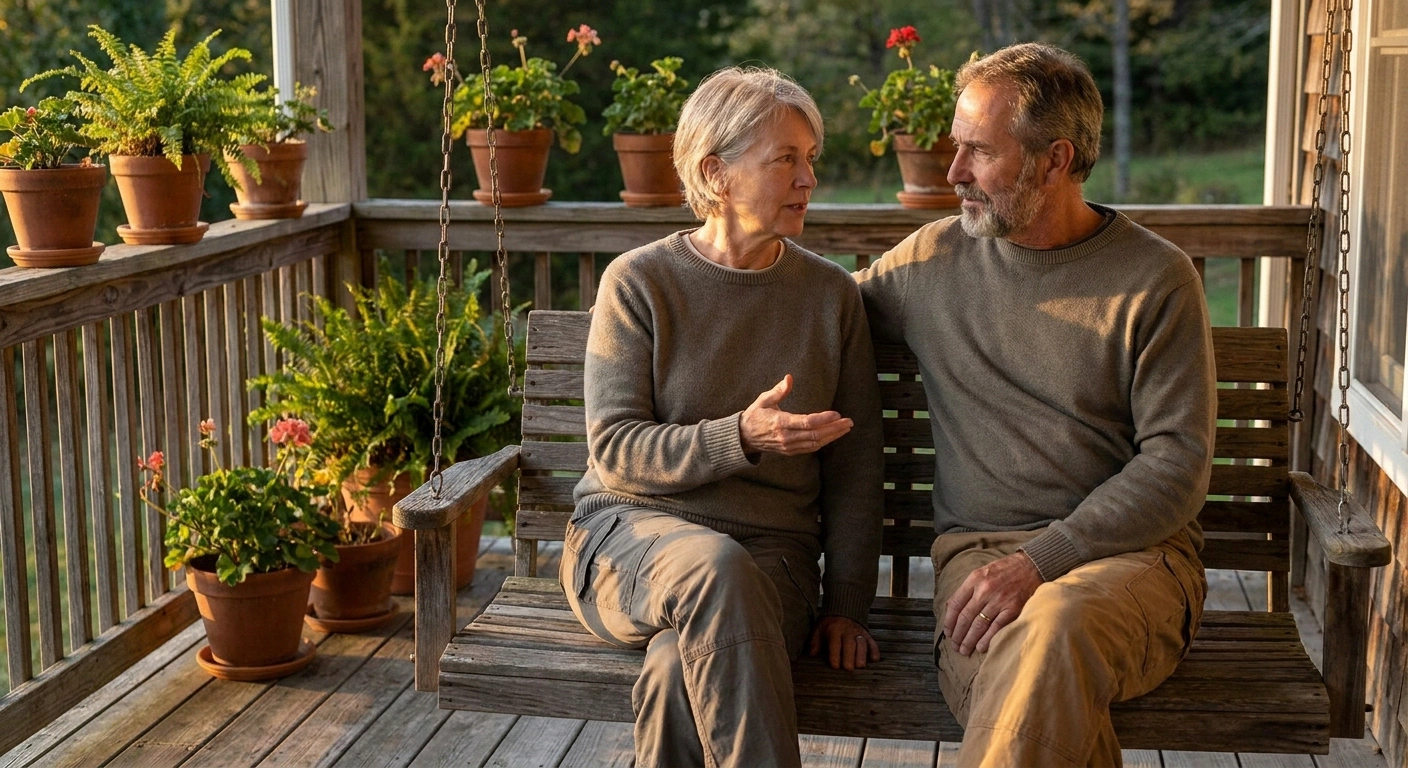
Whatever else you decide, this is the window I'd never skip. Anyone you're considering a future with deserves to know what your evenings look like, which medicines you take and what happens on a bad week. So do you, about them.
Saying It in a Sentence or Two
People who handle this well do the same three things. They name it briefly. They say what it means in practice. Then they hand the conversation back. The diagnosis gets a sentence or two, not a lecture.
There's a name for this in the research. In a study of 49 adults with epilepsy, one of the strategies people described was “making it ordinary”: saying it plainly and moving on, so the listener takes their cue from you.
A few versions to borrow and bend to your own voice:
- For a profile: “I have a nerve condition in my feet, so I'm more of a long-lunch person than a long-hike person. Tell me your favorite place to sit and talk.”
- When a date suggests something your feet can't do: “That sounds lovely, but I have neuropathy, and long walks wear my feet out fast. Could we try the café by the river instead? I'm great company sitting down.”
- On an early date, folded in with other news: “I'm divorced, I've got two grown kids in Ohio, and I have a nerve condition called peripheral neuropathy, which is why I'm careful on stairs. Now, you were telling me about your sister's farm.”
- Before things get serious: “I'd like you to know more about the nerve thing before we go further. Most days are fine. Some evenings the burning gets bad and I'll want a quiet night in, and the medicine I take makes me a little sleepy. I'd rather you hear it from me than figure it out.”
Notice what's missing from all four: an apology. You're describing a condition, not confessing to anything. If you'd like comparisons that help someone understand what the sensations are like, I've collected the ones that work, and the one that backfires, in my piece on explaining neuropathy to the people around you.
And if they ask a follow-up question? Good. Curiosity is a green flag. Answer simply, and if it starts sliding into a medical history you didn't plan to give, smile and say, “That's the short version. I'll tell you the long one another time.”
Planning a Date Your Feet Can Say Yes To
The best first dates I've heard about from our group had one thing in common: the person with neuropathy picked the place, or at least steered the choice. Offering two ideas instead of one keeps it from feeling like a demand. “Would you rather try the new bakery on Main or the museum café?” gives them a real choice, and both options work for you.
- Heels and pointed toes
- Skip them. They put too much pressure on the toes.
- A brand-new pair
- Wear new shoes for only a few hours at first, then look for sore spots.
- A shoes-off house
- The advice is no bare feet and no socks-only walking, indoors or out. Tuck a pair of soled slippers in your bag.
- Patio heaters and fire pits
- Keep your feet well back from heaters and open flames. Numb skin can't warn you.
- Beach or hot pavement
- Keep your shoes on.
People with MS in that Irish study described the same planning load we carry: where to park, what the venue is like, how long the activity runs. Here's how I'd size up a place before saying yes. These are my suggestions, not rules from any study:
- Where will I sit, and how long will I stand? Booths and chairs with arms are your friends. Wine bars with only tall stools, standing-room concerts and long lines are not.
- What's underfoot? Low lighting plus a single step down into the dining room is a classic trap for feet that can't find the edge. Since balance leans harder on your eyes when your feet go quiet, dim rooms and dark parking lots deserve extra thought. Cobblestones, gravel and wet decks can wait until a later date.
- How far is it from the car? A charming restaurant at the far end of a pedestrian street can spend your whole walking budget before the appetizers arrive.
- What time of day? For many of us the evenings are rougher. A long lunch or an afternoon matinee means you show up as your best self instead of your most tired one.
Date ideas that tend to work
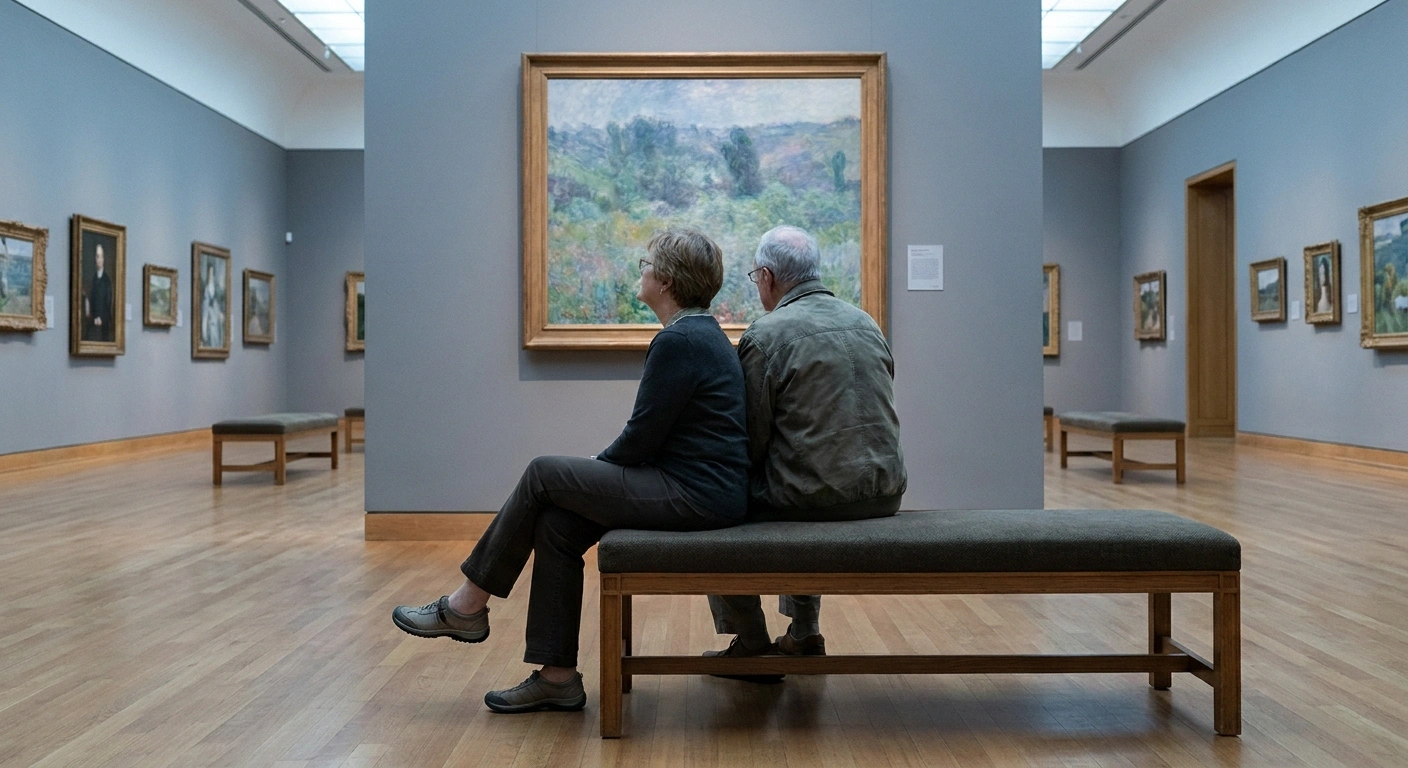
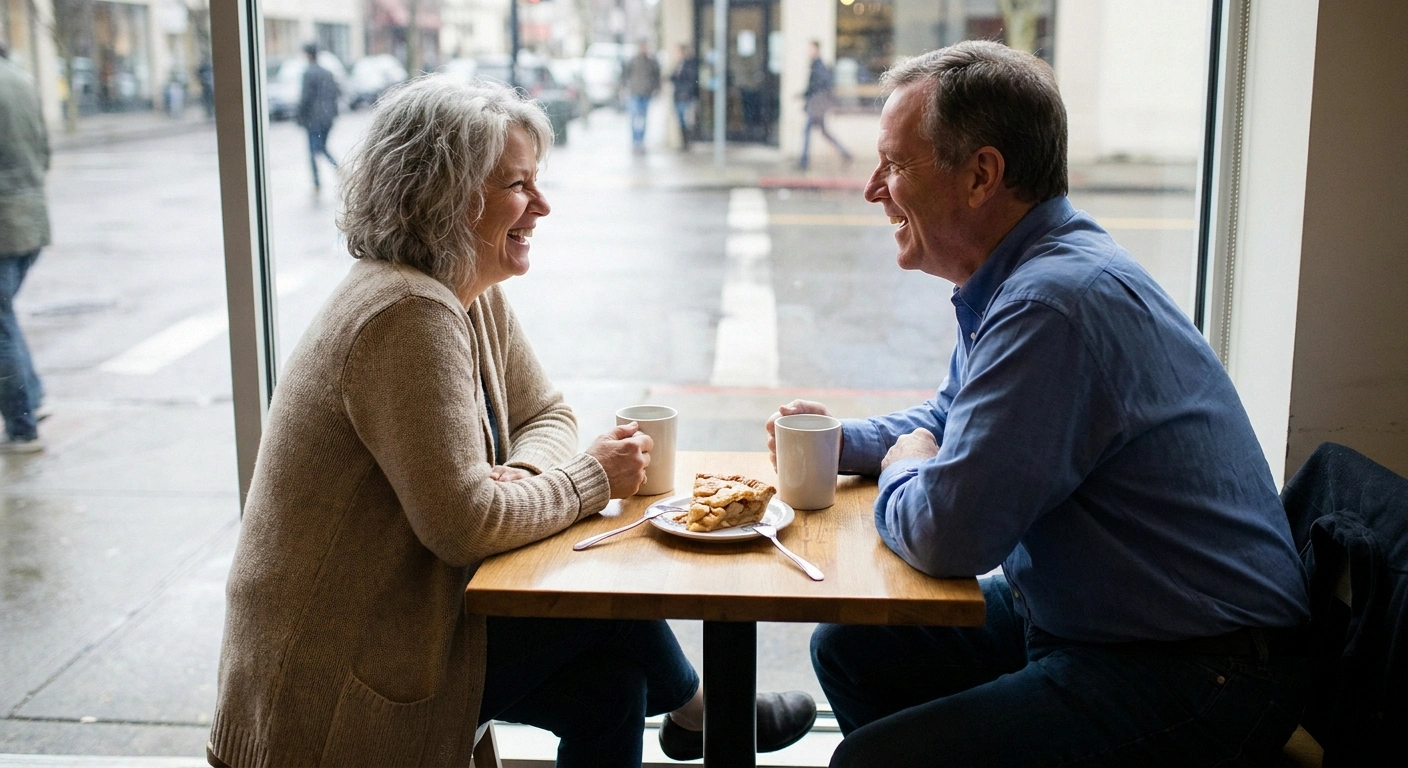
Some ideas that tend to go well: a long lunch in a booth, a museum with benches in every gallery, a scenic drive with a stop for pie, a matinee (my notes on getting comfortable at the movies cover seat choice), a seated painting or cooking class, or a morning farmers market when you have energy to spare and a bench in sight. If dinner is the plan, my guide to eating out with neuropathy covers the restaurant side, from booths to arriving before the rush.
About those shoes
Then there are the shoes. I know the temptation to wear the nice ones — I have a pair of navy flats I adore that my feet have never once forgiven. Wear the broken-in pair instead, because a blister you can't feel on Saturday night can be a real problem by Wednesday. Look your feet over that night and again the next morning, and get any blister, sore, redness or swelling seen promptly, especially if you have diabetes. Falls matter here too. According to the CDC, over a quarter of Americans 65 and older fall in a given year, and fewer than half mention it to their doctor. You don't need a tumble on a first date, and you definitely don't need to keep one secret afterward. If you do fall and hit your head, take a blood thinner, or can't put weight on a leg, get checked right away.
Nerve-Pain Medicine and the Second Glass of Wine
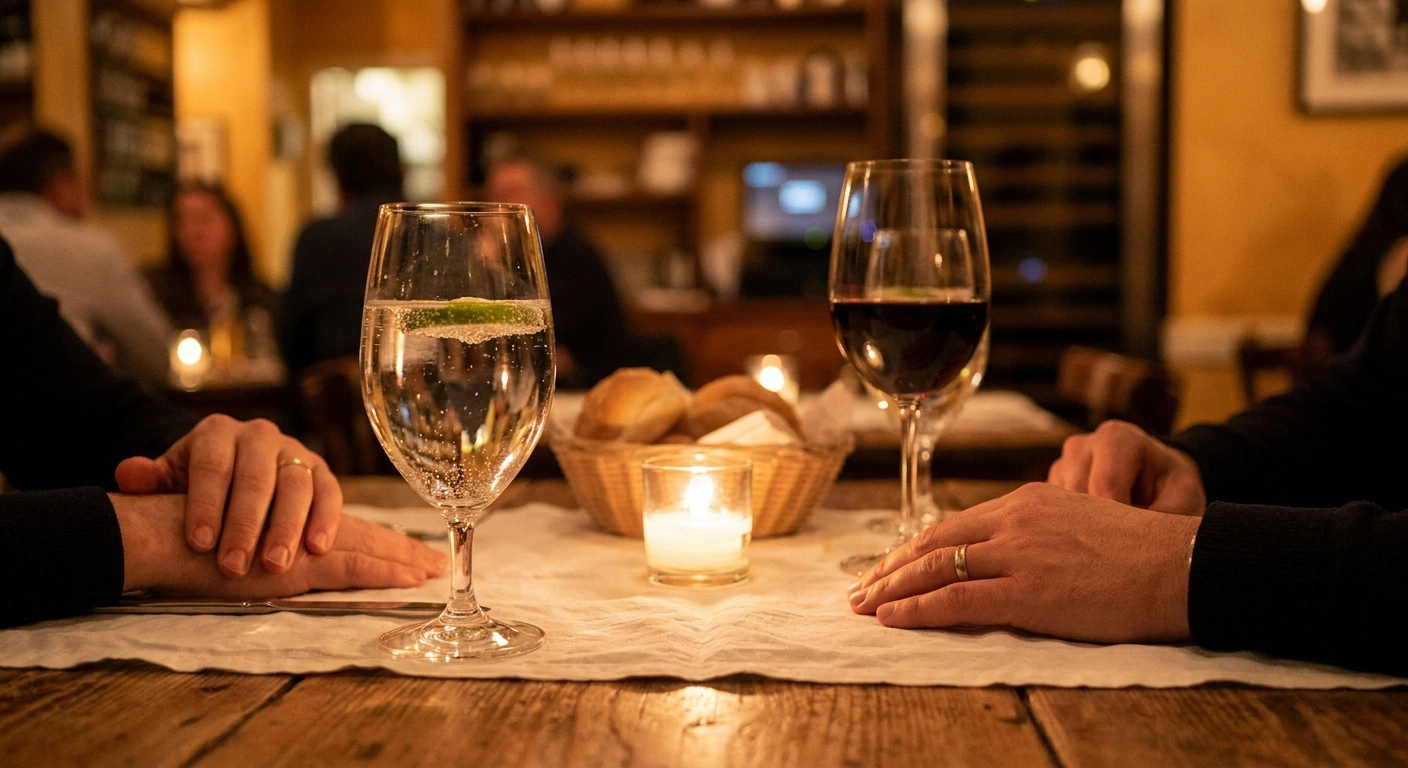
Drinks come up on almost every date, and this is where I'm most careful, because I'm not a doctor or a pharmacist. What I can do is tell you exactly what the labels on three widely used nerve-pain medicines say, because they don't all say the same thing.
| Medicine | Label wording | The concern named |
|---|---|---|
| Pregabalin (Lyrica) | “Do not drink alcohol while taking LYRICA.” | More sleepiness and dizziness |
| Gabapentin (Neurontin) | Do not drink alcohol “without first talking with your healthcare provider.” | Sleepiness or dizziness may get worse |
| Duloxetine (Cymbalta) | “Avoid heavy alcohol use while taking Cymbalta.” | Severe liver injury |
Wording from the FDA-approved labels and Medication Guides as of September 2026. Your pharmacist can tell you how it applies to your own prescriptions and doses.
The pregabalin (Lyrica) Medication Guide is the most direct: it tells patients not to drink alcohol while taking it, since the two together can increase side effects like sleepiness and dizziness. The gabapentin (Neurontin) guide is worded differently — it says not to drink without talking with your prescriber first. Duloxetine (Cymbalta) is its own case. Its label says it didn't add to alcohol's effect on mental and motor skills in testing, but it cautions that heavy drinking while taking it may be linked to severe liver injury, and it says the drug shouldn't be prescribed for people who drink substantially or have chronic liver disease.
Age changes the picture as well. The National Institute on Alcohol Abuse and Alcoholism says older people are more sensitive to alcohol's effects on balance, coordination, attention and driving, and that sedating medicines for pain, anxiety or sleep can raise the risk of falls and injuries further. Put that together with numb feet and a dim parking lot, and the second glass starts to look expensive — even when it's delicious.
So before the date, ask your pharmacist what your own prescriptions mean for a glass of wine, including any other medicines that make you sleepy, such as opioids, sleep aids or anxiety pills, and then decide what you'll order before you're sitting at the table. It's much easier to say “sparkling water with lime, please” when you settled it at home. Nobody is owed an explanation, but if you'd like one ready: “I'm on a medicine that doesn't mix well with alcohol.” That's true, it's short and it ends the topic. My list of alcohol-free drinks that still feel festive has ideas for a glass that looks the part.
When Things Turn Physical

The National Institute on Aging makes a point I love: dating may actually be easier later in life, when you're more confident and surer of what you want. The same agency notes that pain can interfere with intimacy, that it can drain the energy you'd bring to it, and that some pain medicines affect sexual function.
Nerve damage can play a direct part, too. According to the National Institute of Diabetes and Digestive and Kidney Diseases, more than half of men with diabetes will develop erectile dysfunction, and in women nerve damage can contribute to low desire, dryness and painful sex; a prescription or over-the-counter lubricant may help with dryness. Those figures are about diabetes, and there are other causes, so a doctor visit sorts out which pieces apply to you.
Two practical notes. If light touch hurts, tell your partner where it's fine and where it isn't, because they can't feel what you feel. And the NIA is blunt about something people our age tend to wave off: getting older does not protect you from sexually transmitted diseases, so talk about testing and protection with any new partner. For the longer conversation about positions, medicines and communication, see my practical guide to intimacy with neuropathy.
Scammers Read Health Profiles Too
I'd be letting you down if I skipped this part. In a Pew Research Center survey from 2022, nearly half of online daters 50 and older said they had come across someone they believed was trying to scam them. And the scams have moved. According to the Federal Trade Commission, nearly 60% of people who reported losing money to a romance scam in 2025 said it started on a social media platform. Dating apps aren't the only door they knock on.
These are only the losses people reported. The FBI's category also covers scams by fake relatives and friends, and some complaints list no age.
Here's why this matters for us in particular. The FTC says scammers often tailor their pitch to what people share in their profiles, and one of the classic requests is money for “medical expenses.” Someone who has just been open about a health condition is primed to sympathize with a stranger's hospital bill or a sick relative overseas. Kindness is a lovely trait, and scammers know it.
The warning signs the FTC lists are consistent. The person can't meet in person, there's always a reason, and money comes up once trust is built. The single rule worth taping to your refrigerator is theirs: “Never send money or gifts to a sweetheart you haven't met in person.” If something feels off, the agency suggests stopping contact, talking with someone you trust, and doing a reverse image search on the profile photo. The FBI adds a newer twist: scammers are now using AI chat tools to make their messages sound more believable, so polished writing proves nothing.
If Someone Doesn't Take It Well
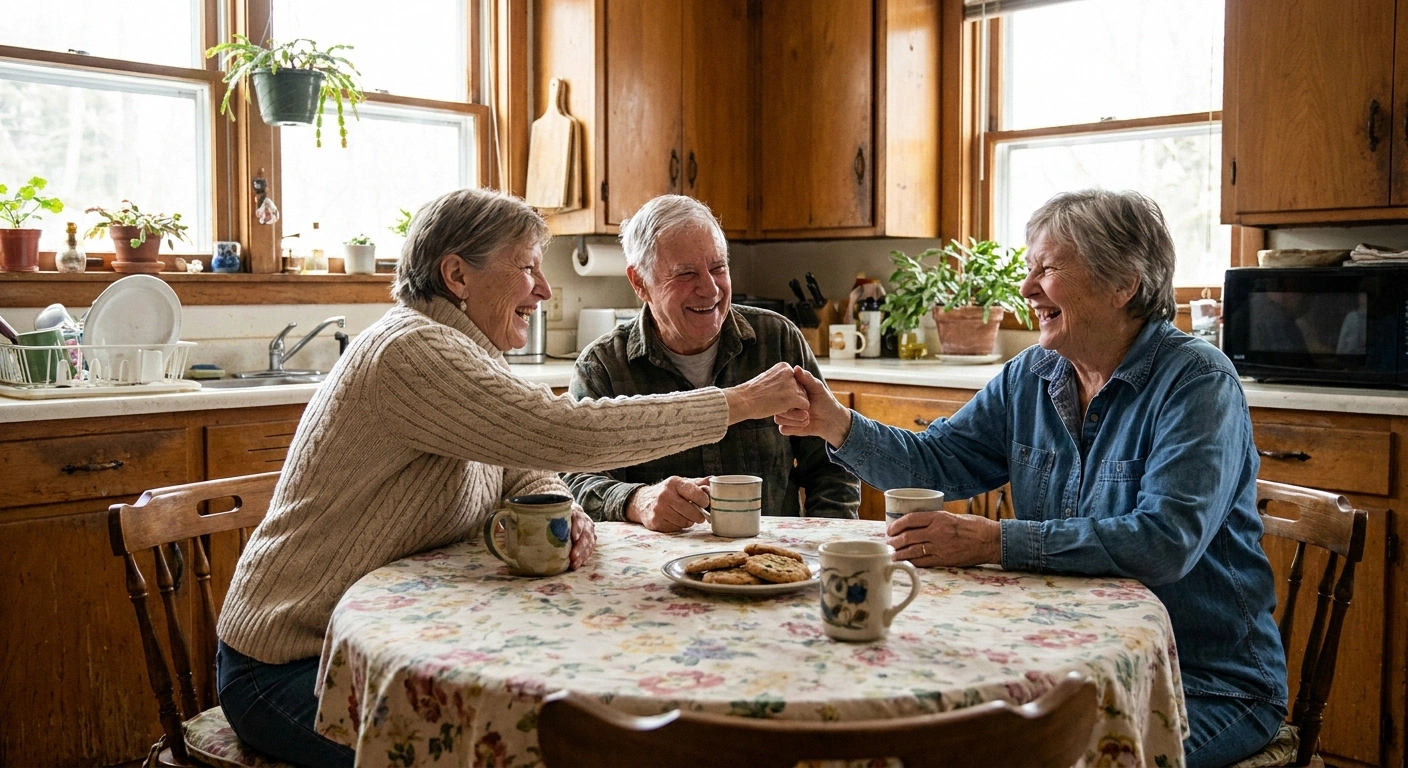
Some people will pull back when they hear the word neuropathy. I won't pretend that doesn't sting. The MS study I mentioned found that telling sometimes did help end a new relationship, and the people in it were honest about how much they feared that moment. But look at what a bad reaction tells you: this person would have found the first hard year together very hard indeed, and you learned it on date two instead of year two.
Researchers who study couples living with chronic pain describe partner responses that help and ones that don't. The helpful ones include believing you when you describe what you feel and encouraging you to keep doing the things you care about. The unhelpful ones include brushing your experience off, and also its opposite, hovering and doing everything for you. Those make a handy checklist for anyone new. A good match asks what makes a good day for you. A poor one either rolls their eyes or — just as tiring — starts treating you like porcelain.
And please don't let one rough reaction send you back into the house. The U.S. Surgeon General's 2023 advisory reported that about half of American adults experience loneliness, and it warned that lacking social connection can raise the risk of early death as much as smoking up to 15 cigarettes a day. The National Institute on Aging lists trouble getting around among the reasons older adults become isolated, which describes a lot of us. If dating feels like too much right now, friendship counts, and so does a support group. I wrote about breaking the isolation chronic pain brings for exactly that stretch.
A Word for the Person Being Told
If you're reading this because someone you're seeing just told you about their neuropathy, thank you for looking it up. That alone puts you ahead of most people — truly. The most helpful thing you can do is ask one practical question, maybe “What makes a good day for you?”, and then let the conversation move on.
Don't try to fix it, don't forward supplement links, and don't treat them as fragile. Offer your arm on the icy steps without making a production of it, pick the restaurant with the good chairs, and keep inviting them to things. If the two of you end up building a life together, my article on keeping a long-term relationship strong through neuropathy picks up where this one leaves off.
Frequently Asked Questions
Should I mention neuropathy in my dating profile?
It is entirely your choice. A short, upbeat line can screen out people who would not handle it well, but leaving it off is also common. In one small study of adults with a mental health condition who used online dating, most chose to leave it out of their profiles.
When should I tell someone I'm dating that I have neuropathy?
There is no single right time. Many people say something before a first date if the plan involves a lot of walking or standing, mention it in conversation over the first few dates, and make sure a partner knows the fuller picture before the relationship becomes serious or physical.
How do I explain neuropathy to a date in simple words?
Keep it to a sentence or two about what it means in practice, then move on. For example: I have a nerve condition that affects my feet, so I do better with plans that let me sit, and I am careful on stairs. Let their questions guide how much more you share.
Can I drink alcohol on a date if I take gabapentin or pregabalin?
Check with your prescriber or pharmacist first. The Lyrica Medication Guide tells patients not to drink alcohol while taking pregabalin, and the Neurontin Medication Guide says not to drink while taking gabapentin without first talking with a healthcare professional. Both warn that alcohol can make sleepiness and dizziness worse.
Does neuropathy affect sex?
It can. Nerve damage, especially from diabetes, can contribute to erectile dysfunction in men and to low desire, dryness or painful sex in women, and some pain medicines affect sexual function too. Talking openly with a partner and bringing it up with a doctor usually opens up practical options.
What are good date ideas if my feet hurt or my balance is off?
Choose plans that let you sit and control the distance: a long lunch in a booth, a museum with plenty of benches, a matinee, a scenic drive, or a seated class. Pick well-lit places with even floors and parking close by, and wear shoes you have already broken in.
How can I tell if an online match is a romance scammer?
Be wary of anyone who keeps finding reasons not to meet in person or who asks for money, gift cards or cryptocurrency for any reason, including medical bills. The Federal Trade Commission advises never sending money or gifts to someone you have not met in person.
About the Author