
For years, my friend Margaret thought she had a stubborn case of IBS. She’d eat a normal meal and feel full for hours afterward, sometimes nauseous, sometimes bloated, occasionally vomiting hours-old food in the evening. She was a Type 1 diabetic for 32 years and assumed her wildly unpredictable blood sugars were just “the way diabetes is.” When her endocrinologist finally ordered a gastric emptying study, the answer came back clean and clear: diabetic gastroparesis. Her stomach was emptying at less than half the normal rate. The IBS label was wrong. The diabetes wasn’t being unpredictable — it was responding faithfully to a stomach that wasn’t emptying when her insulin expected it to.
If any of that sounds like your story — or you’ve been told you have “diabetic stomach issues” without much more explanation — you’re in the right place. Diabetic gastroparesis isn’t really a digestive disease in the way most people think. It’s a form of autonomic neuropathy, the same nerve-damage process that affects your sweat glands, your blood pressure regulation, and your heart rate. And once you understand it that way, both the symptoms and the treatments start making a lot more sense.
What diabetic gastroparesis actually is
Gastroparesis means “stomach paralysis,” but that’s a slight overstatement. In most cases the stomach isn’t fully paralyzed — it’s slowed. The muscular contractions that grind food and push it into the small intestine become weak, uncoordinated, or both. In diabetic gastroparesis specifically, the cause is nerve damage from chronic high blood sugar — the vagus nerve, which controls most of the stomach’s motility, gradually loses function. So do the interstitial cells of Cajal, the specialized pacemaker cells that set the stomach’s contraction rhythm.
Diabetic gastroparesis isn’t really a digestive disease — it’s autonomic neuropathy affecting the vagus nerve and the stomach’s pacemaker cells. Once you treat it like the nerve problem it is, both the symptoms and the strategy start making sense.
The result: food sits in your stomach longer than it should. Sometimes hours longer. That delay produces almost every symptom — the early fullness, the nausea, the bloating, the unpredictable blood sugars, the unintentional weight loss in advanced cases.
Researchers estimate that 30-50% of people with long-standing Type 1 diabetes and about 20% of those with Type 2 have measurable delays in gastric emptying — though symptomatic gastroparesis affects a smaller subset, roughly 5-12%. Many cases are mild and managed with diet alone. Some are severe enough to require devices, feeding tubes, or specialized care. Most sit somewhere in between, and most respond to a thoughtful combination of diet, glucose control, and the right medications. Our broader piece on autonomic neuropathy covers the full umbrella of conditions that gastroparesis belongs to.
Why it’s a form of neuropathy — not “just digestion”
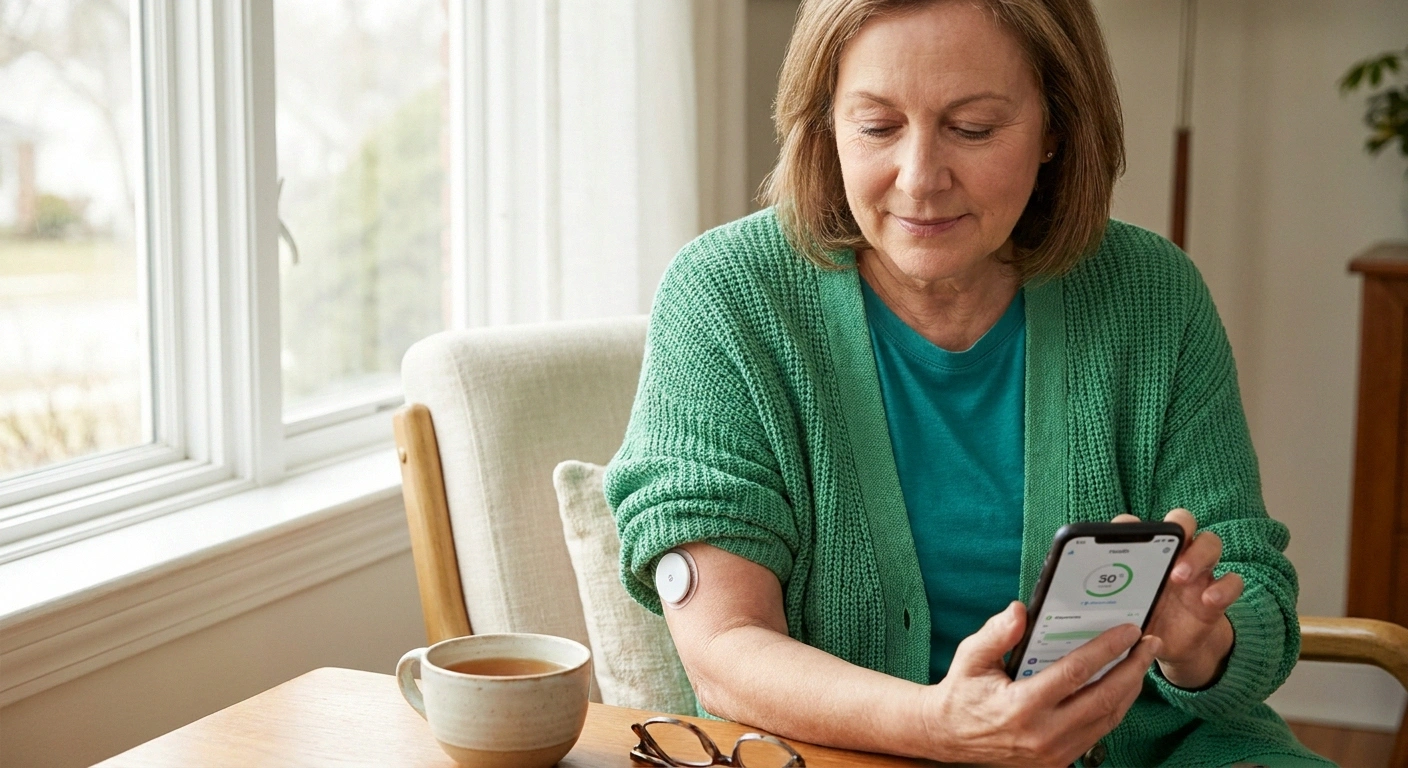
This reframing changes everything about how the condition is approached. Diabetic gastroparesis isn’t a stand-alone digestive problem; it’s part of the same disease process that causes diabetic peripheral neuropathy in your feet. Long-term elevated blood sugar damages nerves throughout the body — and the autonomic nerves controlling your gut are just as susceptible as the sensory nerves in your toes.
Blood glucose over 200 mg/dL measurably slows gastric emptying in real time. That’s why glucose control isn’t just for the long game — it directly affects today’s symptoms.
A CGM showing time-in-range is often more useful than HbA1c alone for managing gastroparesis day to day.
Symptomatic gastroparesis (severe enough to require treatment) affects 5–12% of long-standing diabetics.
That has three big implications worth taking seriously:
1. Glucose control is the foundation, not the optional extra. Tight glycemic control slows nerve damage everywhere, including the vagus nerve. People who get their HbA1c under good control and minimize glucose variability often see gastroparesis stabilize or even partially improve.
2. It often travels with other autonomic problems. Many people with gastroparesis also have orthostatic hypotension (dizziness on standing), sweat-pattern changes, sexual dysfunction, bladder issues, or resting heart-rate abnormalities. If you have one, screening for the others is reasonable.
3. The treatment toolkit overlaps with general neuropathy care. Strict blood-sugar management, B-vitamin status (especially B12, which metformin can deplete — see our piece on metformin and B12 deficiency), and lifestyle optimization help all forms of diabetic neuropathy, gastroparesis included. Our diabetic neuropathy treatment guide goes deeper on the foundational strategies.
The cardinal symptoms — and what they really mean

Gastroparesis can be subtle for years before someone gets a name for it. The symptom list reads like a dozen other conditions until you see the pattern.
Early satiety. Feeling full after just a few bites is one of the most common early signs. People often think they’ve “trained themselves” to eat less, when actually their stomach is filling up because it didn’t empty yet.
Postprandial fullness. A heavy, bloated feeling that lingers two, three, four hours after a meal — long past when food should have moved on.
Nausea, sometimes severe. Often worse in the evening as the day’s meals accumulate.
Vomiting of undigested food. Recognizable food hours after eating it is the most specific clue. People sometimes mention vomiting “the entire lunch” at 6 PM.
Bloating and upper-abdominal pain. A swollen, tight belly that doesn’t track with what you’ve eaten that day.
Unintentional weight loss. When eating becomes uncomfortable and absorption suffers, weight tends to drift down — sometimes significantly.
Erratic blood sugars. This is the diabetes-specific tell. You dose insulin for a meal expecting it to start raising blood sugar within an hour — but the food doesn’t actually empty into your small intestine for several hours. Result: a low blood sugar at the time you expected a high, followed by a stubborn high hours later when the meal finally arrives. Continuous glucose monitor traces from gastroparesis patients are often unmistakable: a slow, late, drawn-out post-meal rise instead of a clean curve.
Loss of appetite and feeling “off” after meals. The body’s signal that something isn’t moving the way it should.
If three or more of these are familiar — especially the undigested-food vomiting or the unexplainable glucose patterns — it’s worth a conversation with your endocrinologist or gastroenterologist about a formal workup. Our neuropathy and digestive problems overview covers the broader GI-neuropathy connection if you want context first.
How it’s diagnosed

Diagnosing gastroparesis takes some work because the symptoms overlap with several other conditions — peptic ulcer, GERD, IBS, functional dyspepsia, and even gastric outlet obstruction. A thoughtful workup rules those out and confirms the motility delay.
Gastric emptying scintigraphy is the gold standard. You eat a standardized low-fat egg-white meal containing a small amount of harmless radioactive tracer, then a gamma camera images your stomach at intervals over four hours. More than 10% retention at the four-hour mark confirms delayed emptying. Two-hour and one-hour measurements help characterize severity.
Wireless motility capsule (a pill-sized device you swallow) can measure transit time through the entire GI tract. Useful when whole-gut dysmotility is suspected.
Breath testing using 13C-labeled octanoate is an alternative when imaging isn’t available, though less commonly used in the U.S.
Upper endoscopy (EGD) is usually done first or alongside motility testing to rule out a mechanical obstruction — a stricture, ulcer, or mass that could mimic gastroparesis symptoms.
Blood work evaluates for other contributors: HbA1c, thyroid function (hypothyroidism slows the gut), B12, electrolytes, magnesium, and a basic metabolic panel.
Medication review is essential. Opioids, GLP-1 agonists (semaglutide, tirzepatide), tricyclic antidepressants, anticholinergics, and some calcium channel blockers all slow gastric emptying. Sometimes “gastroparesis” turns out to be medication-induced and partially reversible. Our piece on tirzepatide and neuropathy covers the GLP-1 GI-slowing angle in detail.
A neurology workup for broader autonomic involvement is sometimes added if you have orthostatic symptoms, bladder issues, or sweating abnormalities alongside the gut symptoms — tilt-table testing, QSART, and heart-rate-variability testing all help characterize the overall autonomic picture.
Diet — the cornerstone of management
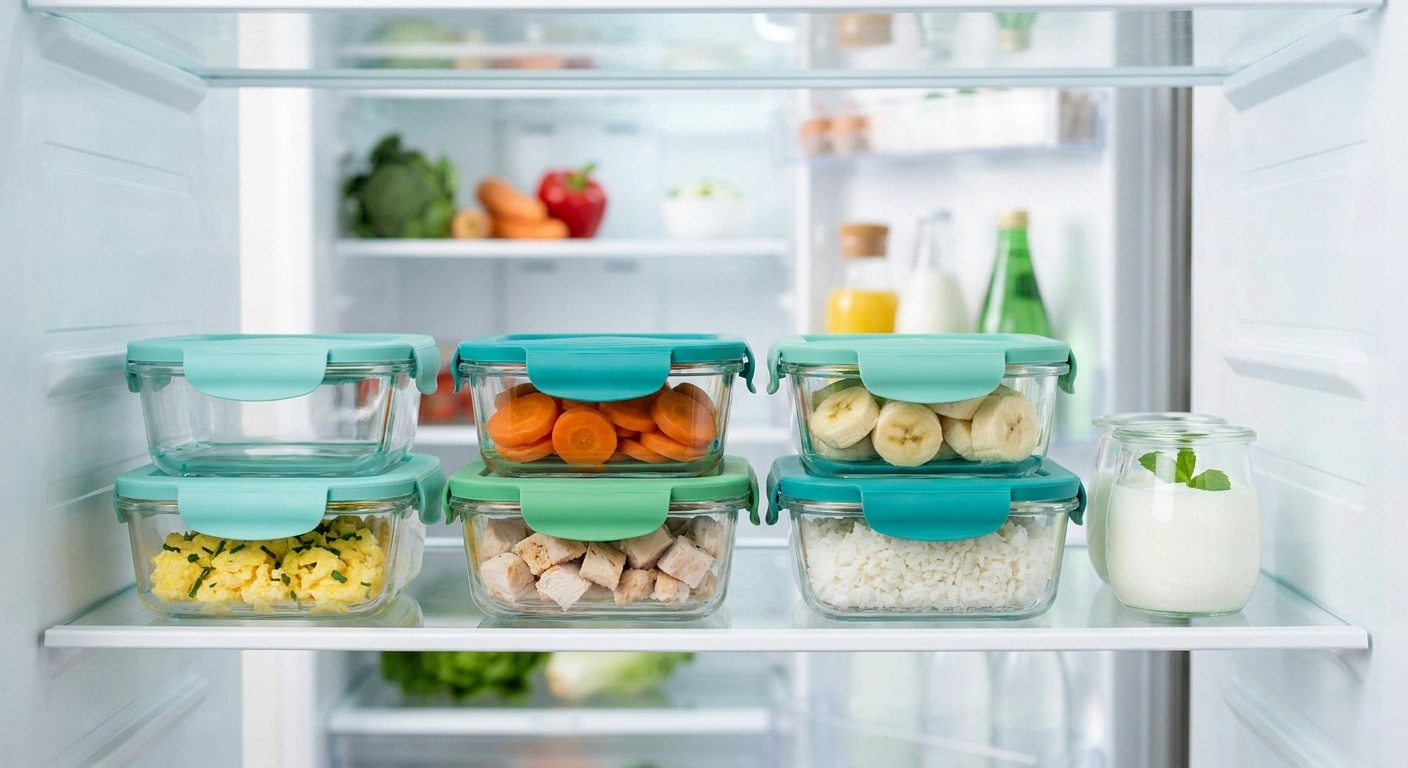
Most people I know with diabetic gastroparesis say diet is the single most impactful intervention they’ve made. Not the most exciting, but the most reliable. The principles are simple, though the daily execution takes practice.
Small, frequent meals. Five or six small meals a day instead of three large ones lets a slow stomach handle volume in manageable amounts. Aim for portions roughly half what you’d normally eat at one sitting.
Low-fat foods. Fat is the slowest-emptying macronutrient and is often the worst offender. Lean proteins, low-fat dairy, and limited oils help. This doesn’t mean fat-free everything — small amounts of healthy fats are fine — but heavy or fried meals reliably trigger flares.
Low-fiber foods. Particularly insoluble fiber: raw vegetables, whole grains, nuts, popcorn, citrus pith. These can form indigestible balls (bezoars) that further obstruct emptying. Cooked, peeled vegetables and refined grains tend to be far better tolerated.
Well-chewed and softer textures. Anything that arrives in the stomach already partly broken down has a head start. Smoothies, soups, scrambled eggs, mashed sweet potato, soft-cooked fish — these are gastroparesis-friendly.
Liquids tolerated better than solids. Many people find a partially liquid diet during flares is the only way they can keep calories in. Protein shakes (low-fat varieties), broths, smoothies, and nutritional drinks are useful tools.
Stay upright after meals. Gravity helps. Sitting upright for one to two hours after eating, and not lying down for at least three hours before bed, both meaningfully improve emptying.
Foods to limit or avoid in flares: raw broccoli, raw celery, popcorn, nuts and seeds, whole apples or oranges with skin, fatty fried foods, carbonated drinks, alcohol, very large meals.
Foods that tend to work well: cooked carrots, mashed potatoes, white rice, white bread, ripe bananas, applesauce, scrambled eggs, lean chicken, low-fat yogurt, smoothies with banana and low-fat protein powder, broths.
Working with a registered dietitian who has gastroparesis experience is one of the best investments you can make. They’ll help you build a rotating set of meals that meet your nutritional needs without flaring symptoms. The neuropathy meal prep guide has some gastroparesis-adaptable recipes worth a look.
Glucose control — the diabetic-specific lever
For people with diabetic gastroparesis, glucose control becomes both more important and more difficult. The catch-22 is real: high blood sugar slows gastric emptying further (it’s been shown that blood glucose over 200 mg/dL measurably delays emptying), and slow emptying makes glucose control harder.
What seems to work for many in our community:
Continuous glucose monitoring (CGM) is nearly essential. The unpredictable, delayed glucose curves of gastroparesis are almost impossible to manage with finger-stick checks alone. A CGM lets you see the slow rise and time your interventions. Our piece on CGMs and time in range explains why time-in-range may matter more than HbA1c for nerve health.
Adjusting insulin timing. The classic 15-minute pre-meal bolus often doesn’t work in gastroparesis because the food hasn’t arrived in the small intestine by the time the insulin peaks. Many gastroenterologists and endocrinologists recommend dosing insulin during or after meals rather than before, or using extended/dual-wave boluses for pump users. This needs to be worked out with your team — don’t change insulin timing on your own.
Tighter overall control reduces progression. Lower glucose variability — fewer high and low spikes — appears to slow the autonomic nerve damage that drives gastroparesis in the first place. The goal is steady state, not just average.
Caution with GLP-1 agonists. Drugs like semaglutide (Ozempic, Wegovy) and tirzepatide (Mounjaro, Zepbound) work in part by slowing gastric emptying — which is exactly the problem gastroparesis patients already have. Many gastroenterologists recommend avoiding these medications in established gastroparesis, or at least using them with great caution. Talk to your endocrinologist about whether your medication regimen is right for you.
Medications and devices when diet isn’t enough

When dietary changes and glucose control don’t get symptoms under control, several medication options are available — each with its own tradeoffs.
Metoclopramide (Reglan) is the only FDA-approved prokinetic for diabetic gastroparesis — but it carries a black-box warning for tardive dyskinesia, a sometimes-permanent movement disorder, with use beyond 12 weeks.
Use the lowest effective dose for the shortest duration possible. Stop and call your prescriber immediately if you notice any abnormal tongue, facial, or limb movements.
Metoclopramide (Reglan) is the only FDA-approved prokinetic medication for diabetic gastroparesis. It speeds gastric emptying and reduces nausea. The catch: it carries a black-box warning for tardive dyskinesia (a sometimes-permanent movement disorder) when used for more than 12 weeks. Most guidelines recommend the lowest effective dose for the shortest duration possible, and stopping if any abnormal movements appear. Worth using when it works; worth respecting the risk.
Erythromycin (the antibiotic, but used at low doses) is a strong short-term prokinetic. Tolerance develops after a few weeks of continuous use, so it’s most useful for severe flares or as a “drug holiday” rotation rather than continuous therapy.
Domperidone is widely used in Europe and Canada but isn’t FDA-approved in the U.S. It’s available through an expanded-access program. Effective, generally well-tolerated, but requires careful cardiac monitoring (QT prolongation risk).
Prucalopride (Motegrity) is FDA-approved for chronic constipation but is being used off-label by some specialists for upper-GI motility. Limited but growing evidence base.
Antiemetics like ondansetron (Zofran), prochlorperazine (Compazine), and promethazine (Phenergan) help manage nausea and vomiting symptomatically — they don’t speed emptying, but they make life livable.
When medications aren’t enough, several procedural and device options exist:
Gastric electrical stimulation (Enterra) — an implanted pacemaker-like device that delivers electrical pulses to the stomach. Best evidence in patients with severe, refractory symptoms after at least a year of failed medical management. Doesn’t typically improve emptying on imaging, but often reduces nausea and vomiting significantly.
Gastric peroral endoscopic myotomy (G-POEM) — an endoscopic procedure that cuts the pylorus (the valve between stomach and small intestine), allowing easier emptying. Growing evidence and increasing availability at academic centers.
Pyloric botulinum toxin injection — a less invasive option with mixed evidence; works for some, not for others, effect lasts a few months.
Jejunostomy feeding tube (J-tube) — for severe gastroparesis with significant weight loss. Bypasses the stomach entirely by delivering nutrition directly into the small intestine.
Investigational therapies include thoracic splanchnic magnetic neuromodulation (currently in pilot trials) and several novel prokinetic drugs in clinical development. Our piece on the neuropathy drug pipeline covers the broader autonomic-neuropathy research landscape.
When gastroparesis becomes an emergency
Most days, diabetic gastroparesis is a chronic, manageable nuisance — frustrating, sometimes painful, but not immediately dangerous. There are situations where it becomes urgent, and recognizing them matters.
- ▸Persistent vomiting that prevents keeping fluids down (DKA risk in diabetics)
- ▸Signs of dehydration — dizziness on standing, dark urine, racing heart
- ▸Sudden severe abdominal pain or a hard, distended belly
- ▸Vomiting blood or coffee-ground material
- ▸Blood sugars you can’t control + ketones present
- ▸Coughing, choking, or shortness of breath after vomiting (aspiration)
Go to the ER if you experience:
- Severe persistent vomiting that prevents you from keeping any fluids down — especially if you’re a diabetic, where dehydration plus poor glucose control can precipitate DKA quickly
- Signs of dehydration — dizziness on standing, sunken eyes, dark or scant urine, racing heart, confusion
- Severe abdominal pain, especially if sudden or accompanied by a distended belly — a bezoar can occasionally cause obstruction
- Vomiting blood or coffee-ground material
- Fever with vomiting
- Blood sugars you can’t control with your usual approach — ketones present, persistent highs, or severe lows you can’t correct
- Aspiration symptoms — coughing, choking, or shortness of breath after vomiting episodes
Our neuropathy emergency signs guide covers the broader red-flag picture for any neuropathy patient.
Living with diabetic gastroparesis — what helps day to day

The honest truth is that gastroparesis can wear on you. Eating becomes work. Social meals get complicated. The unpredictability erodes confidence. Most of us in this corner of the neuropathy community have built a personalized toolkit over time, and a few patterns come up over and over.
Plan meals on a schedule. Five or six small meals at consistent times protects against the slow drift toward malnutrition. Set timers if you need to. Keep go-to options stocked.
Find your safe foods and lean on them. Every gastroparesis patient has a list of foods that consistently work and foods that consistently don’t. Build a rotating menu from your safe list rather than reinventing every meal.
Keep a brief symptom and food log. A simple symptom diary showing what you ate, when, and how you felt afterward will reveal patterns you can’t see in real time.
Walking after meals helps. Even gentle 10-minute walks after eating measurably speed gastric emptying. Our piece on walking for neuropathy covers the broader benefits.
Stay hydrated. Sip fluids throughout the day, not large amounts at meals. Many people tolerate room-temperature liquids better than very cold.
Mental health support. Chronic GI symptoms wear on mood and quality of life. Working with a counselor familiar with chronic illness — and connecting with patient communities — both make a real difference. Our piece on neuropathy and mental health covers what’s helped many in our community.
Plan around symptoms when you can. Social meals, travel, work events — knowing your worst times of day (often evening) and your best (often morning) helps you schedule what you can control.
And from one patient to another: this isn’t a failure of willpower or food choices. It’s nerve damage that happens to express itself in the gut. The patients who do best are the ones who treat it like the autonomic neuropathy it is — partnering with both an endocrinologist for glucose control and a gastroenterologist for motility care, prioritizing tight glucose management, and building a sustainable diet pattern that prevents flares rather than chasing them after they start.
Frequently Asked Questions
What are the first signs of diabetic gastroparesis?
The earliest signs are typically early satiety (feeling full after just a few bites), postprandial fullness lasting two or more hours after meals, unexplained nausea, bloating, and unusually erratic blood sugars — particularly post-meal lows followed by delayed highs. Vomiting of undigested food hours after eating is a more specific later sign. Many people are misdiagnosed with IBS or general indigestion before gastroparesis is identified.
Is gastroparesis a form of neuropathy?
Yes. Diabetic gastroparesis is a form of autonomic neuropathy — nerve damage affecting the vagus nerve and the gut’s pacemaker cells. The same chronic high blood sugar that damages sensory nerves in the feet also damages the autonomic nerves controlling gastric motility. That’s why glucose control, B-vitamin status, and other foundational neuropathy strategies all matter for gastroparesis management.
Can diabetic gastroparesis be reversed?
Mild cases sometimes improve significantly with tight glucose control and dietary management. More advanced cases are usually stabilized rather than reversed, though good management can substantially improve symptoms and quality of life. The earlier glucose control is optimized, the better the long-term outcome — which is why aggressive glycemic management at any stage of diabetic neuropathy is so important.
What foods should I avoid with diabetic gastroparesis?
The hardest foods to digest are typically those high in fat and insoluble fiber: fried foods, fatty meats, raw vegetables (especially broccoli, celery, salad greens), whole grains, popcorn, nuts and seeds, whole fruits with skin, and very large meals. Carbonated drinks and alcohol can also worsen symptoms. Better tolerated: cooked vegetables, white rice, scrambled eggs, lean proteins, smoothies, soft fruits like ripe banana, and small frequent meals.
How long does diabetic gastroparesis last?
It’s typically a chronic condition rather than a temporary one. Symptoms wax and wane in many patients, often correlating with glucose control. With tight glucose management and adherence to dietary strategies, many people achieve good symptom control for years. Periods of stress, infection, poor sleep, or glucose instability often trigger flares that resolve over days to weeks.
Should I avoid Ozempic or Mounjaro if I have gastroparesis?
This is a conversation to have with your endocrinologist. GLP-1 receptor agonists like semaglutide and tirzepatide work in part by slowing gastric emptying, which is exactly the problem in gastroparesis. Many gastroenterologists recommend avoiding these medications in established gastroparesis, or starting at much lower doses with very close monitoring if benefits clearly outweigh risks. Decisions should be individualized — never stop a prescribed medication on your own.
What kind of doctor should I see for gastroparesis?
A gastroenterologist with motility experience for the GI workup and management, and your endocrinologist for the glucose-control side. Academic centers often have motility clinics that combine both. A registered dietitian with gastroparesis experience is also tremendously valuable. If you have other autonomic symptoms — orthostatic dizziness, bladder issues, sweating changes — a neurologist with autonomic-disorder expertise is worth adding to the team.
Does walking after meals actually help gastroparesis?
Yes, modestly but meaningfully. Gentle walking for 10 to 30 minutes after eating measurably speeds gastric emptying in research studies, partly through mechanical movement and partly through autonomic effects. It’s one of the simplest and most consistently helpful interventions in the toolkit, with the bonus of also helping post-meal blood sugar control.
About the Author