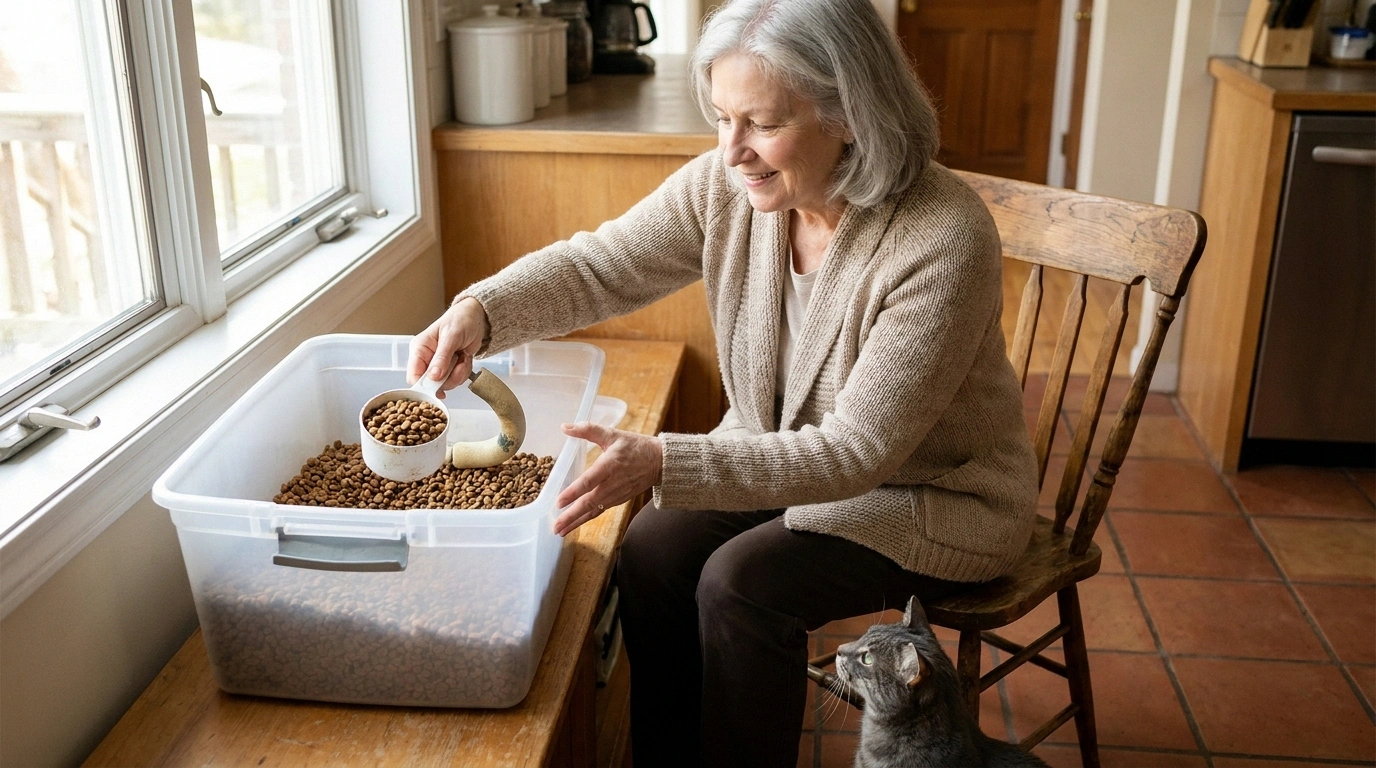
Your cat doesn't know your feet went numb. She knows it's six o'clock, her bowl is empty, and you're the one with thumbs.
That's the thing about pet care. It doesn't pause for a bad nerve day. Food, water, litter, brushing, a nail trim every few weeks: the jobs come around on schedule whether your hands are cooperating or not. And most of them are built around exactly the movements neuropathy makes harder — bending to the floor, pinching a small tab, hoisting a heavy bag, standing steady while something furry weaves between your ankles.
Over the years I've heard more than one person in my support group wonder, quietly, whether they should rehome a dog or cat they love because the chores got hard. Most of the time that isn't necessary. The chores can be rearranged instead — some move up to counter height, some get lighter, a few get handed to someone else — and the animal stays right where it belongs, which is usually on your feet or in your lap.
One quick note before we start. This is about your neuropathy, not your pet's. Search for pet care and neuropathy online and you'll mostly find advice for dogs and cats with nerve problems of their own, which is lovely if your beagle is the patient and no help at all if you are.
Where Pet Chores Collide With Numb Hands and Feet
Before changing anything, it helps to name what's actually making a chore hard. Neuropathy isn't one problem. It's several, and each one catches a different part of pet care.
- You drop the scoop or can't get a lid open
- Grip and pinch strength. Start with thick handles, a lever tab opener, or food in pouches.
- You wobble when you reach down to a bowl
- Balance. Sit on a sturdy stool for floor-level chores instead of bending from standing.
- You find wet patches only after walking through them
- Foot sensation. A rimmed mat under the water bowl and grippy indoor shoes come first.
- You find scratches you don't remember getting
- Skin sensation. Gloves for grooming and litter, then a quick look at your hands afterward.
- You can't tell whether bath water is too hot
- Temperature sense. Let a thermometer do the judging, never your fingers.
Numb feet are the big one. You can't feel a splash of water beside the bowl, a few stray pieces of kibble, or a squeaky toy under your sock, and those are exactly the things that turn a kitchen floor into a slip or a stumble. Balance that depends on feeling the ground gets shakier every time you bend down to floor level, which is where bowls and litter boxes usually live.
Numb or weak hands cause a different set of problems. Pinching a can's pull tab, squeezing nail clippers, holding a brush for ten minutes, gripping a slippery wet dog: all of it asks for fingertip control. Small studies of people with diabetic neuropathy have found weaker fingertip pinch, slower dexterity, and a thinner safety margin in how firmly they hold things, which is the scientific way of saying objects slip. If you've noticed you drop things more than you used to, my guide to neuropathy in the hands explains why the fingertips tend to go first.
Then there's temperature. Many of us can no longer judge hot water accurately, and that matters the day you fill a tub for a dog bath. Finally, reduced sensation means a scratch or a nip can go unnoticed for hours. Pets are wonderful. Their claws aren't always gentle.
Once you know which of those four things is the real issue, the fix usually becomes obvious.
Feeding Without the Heavy Lifting
Dry dog food for big breeds is sold in bags weighing more than 40 pounds. With weak hands and uncertain balance, hauling one from the car, tipping it, and pouring from it may be the riskiest pet chore in the house.
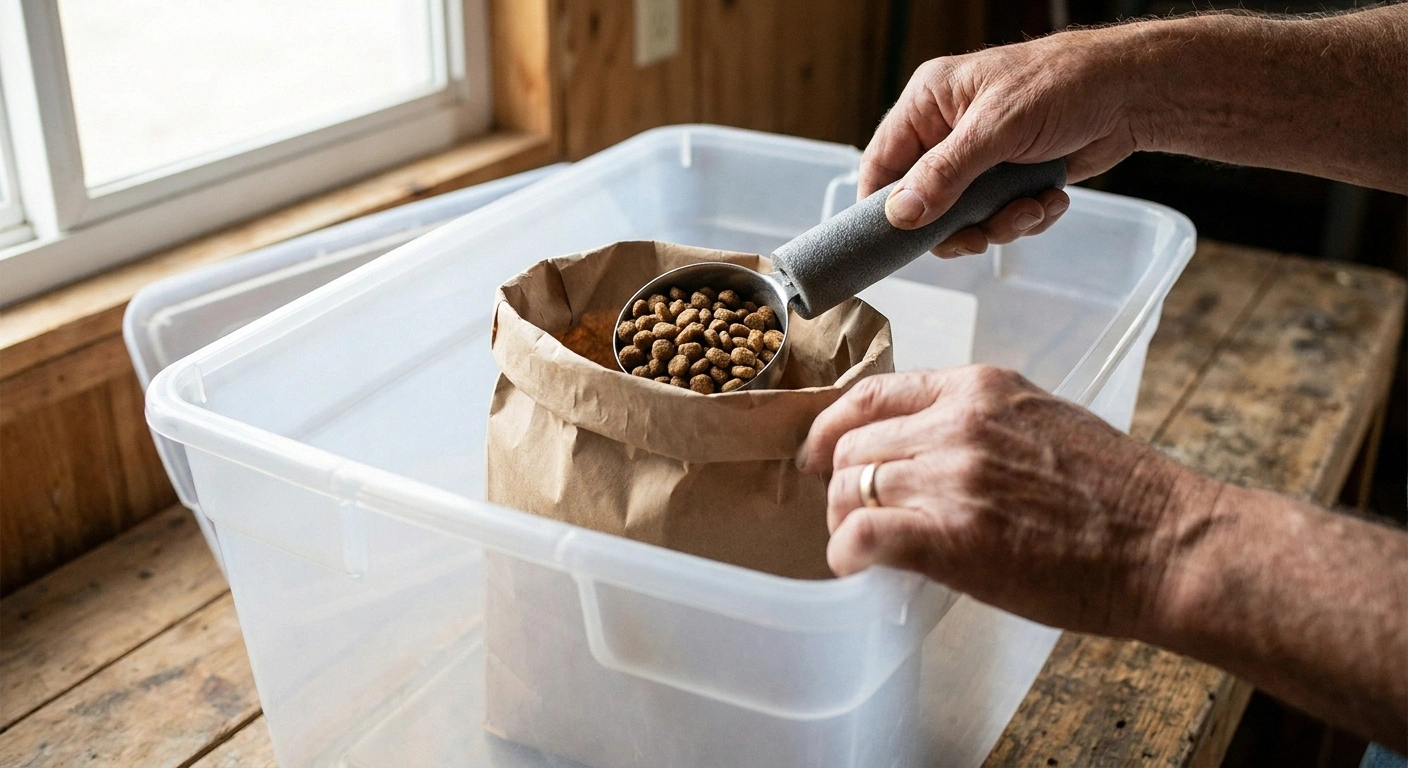
The simplest change is to stop lifting the big bag at all. Many pet stores and online retailers will deliver food on a repeating schedule, and most drivers will set it inside the door if you ask. Once it's home, have a family member or neighbor lower the whole bag into a lidded bin on a sturdy bench or low shelf, so you're scooping from waist height instead of wrestling the bag. The FDA actually recommends keeping the bag inside the bin, so the lot number and best-by date stay handy if the food is ever recalled.
If nobody's around to help, buy smaller bags. They cost a little more per pound, but a bag you can carry against your body with both arms is a bag you won't drop on your foot.
For scooping, use a measuring cup with a thick handle, or wrap a thin handle in the foam tubing sold for building up utensils. It's the same trick I described for eating utensils, and it works for the same reason: a fat handle takes less pinch strength to hold.
Wet food brings its own villain, the pull tab. A small lever-style tab opener slides under the ring and does the lifting for you. An electric can opener handles standard cans. Pouches can be snipped open with spring-loaded scissors that reopen by themselves. My piece on opening jars and packaging covers more of these tools, and nearly all of them work on pet food too.
On a good-hands day, portion several days of dry food into lidded containers. It turns a daily fine-motor job into a weekly one. Opened cans and pouches are a different story, and the FDA advises refrigerating or throwing out leftovers promptly.
Timed automatic feeders can cover a meal on a rough morning. Most handle dry food only, and a dead battery means a missed meal, so keep watching your pet eat most days anyway. A jammed feeder and a pet who has stopped eating look the same from across the room.
Bowl height deserves one caution. A raised bowl means less bending for you, and the bloat research never looked at cats or small dogs. For large, deep-chested dogs, though, a Purdue study that followed more than 1,600 large and giant breed dogs linked raised feeding bowls to a higher risk of bloat, the life-threatening stomach twist vets call gastric dilatation-volvulus. The American Kennel Club advises asking your vet before you raise the bowl for a big dog. If the answer is no, raise yourself instead, with a sturdy chair beside the feeding spot.
Water Bowls and Wet Floors
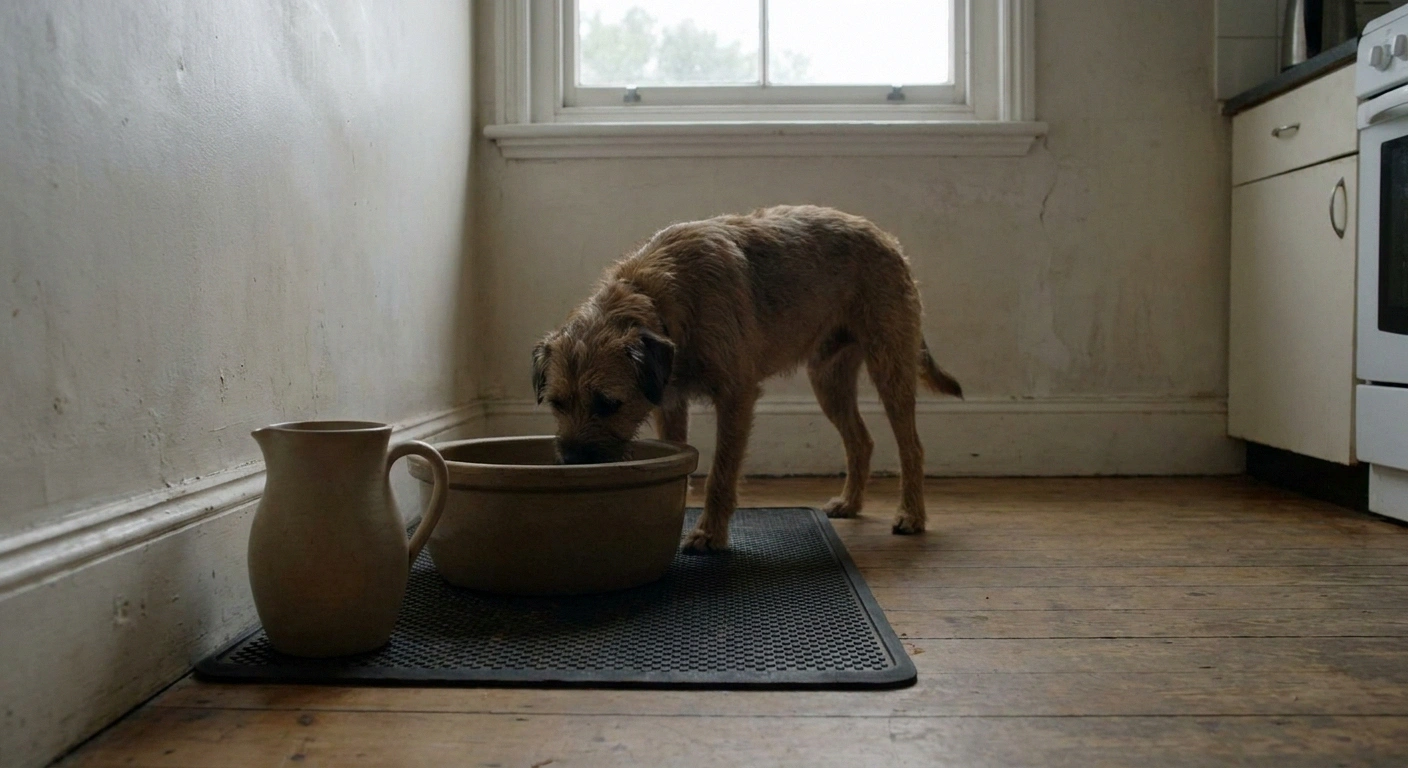
Water is where I'd put most of your attention, because it hits the numb-feet problem head on. Pets splash. Dogs drip from their jowls as they walk away. The floor around a water bowl can stay slick for an hour — and you won't feel a thing if you're padding around in socks.
A few small changes make a real difference:
- Set the bowl on a rimmed tray or a rubber-backed absorbent mat so spills stay contained.
- Move it out of your walking path, especially the route between your bedroom and the bathroom.
- Choose a heavy, wide-based bowl that doesn't slide or tip when a dog noses it.
- Refill with a small pitcher or a watering can instead of carrying a full bowl across the room.
- Wear shoes or slippers with grippy soles. The National Institutes of Health's diabetes institute advises against walking barefoot or in socks alone, even indoors.
And look before you step. When you can't feel wet socks, your eyes have to do the checking. A quick glance at the floor around the bowl every time you pass it becomes a habit within a week or two, the same way checking your feet at night does.
Pet water fountains are popular, and they're worth a thought. The catch for us is upkeep. The American Kennel Club suggests cleaning the bowl daily and changing filters regularly, which usually means taking apart a small pump. If you choose one, pick a model with few parts, and do the cleaning sitting at a table with a towel underneath, not bent over a sink.
Litter Box Care With Less Bending
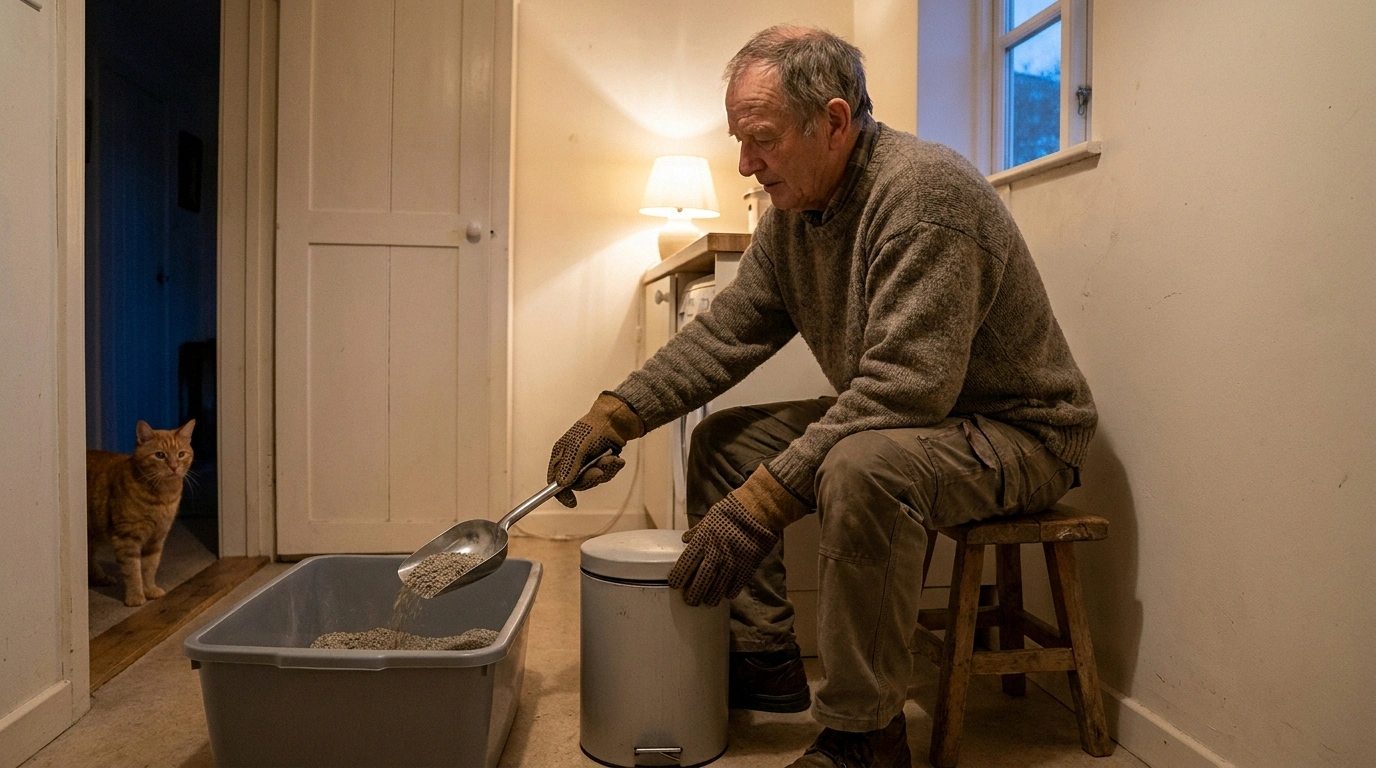
Litter boxes live on the floor for a good reason. Cats need to step in easily, and Cornell's feline health experts point out that older cats and cats with stiff joints need boxes with low sides. So instead of lifting the box up to you, bring yourself down safely.
Sit, don't stoop. A low, stable stool or a sturdy chair beside the box lets you scoop without folding at the waist or balancing on numb feet. Some people prefer a long-handled scoop used standing up, with the other hand on a counter or grab bar. Try both and notice which one feels steadier in your body.
Scoop every day. A daily scoop is a small, light job — a three-day scoop is a heavy one. There's a health reason, too. The CDC recommends changing litter daily because the parasite behind toxoplasmosis doesn't become infectious until one to five days after a cat sheds it. That advice is aimed mainly at pregnant people and anyone with a weakened immune system, and for them the CDC goes further: have someone else change the litter if possible. For everyone else, a daily scoop is still a sensible habit. Wear disposable gloves when you scoop and wash your hands afterward.
Lighten the load. Standard clay litter is often sold in pails and boxes of 35 pounds or more. Lightweight clumping litters are designed to last about as long at roughly half the weight or less, going by the makers' own claims. Cornell also notes that most cats are happy with litter just one to two inches deep, which means less to haul in and less to dump out.
Make disposal easy. Keep a roll of bags and a small lidded step-on trash can right next to the box, so scooped waste goes straight in without a trip across the house carrying a swinging bag.
Self-cleaning litter boxes can cut down the daily scoop, and some people with bad hands love them. They cost considerably more, they still need a waste compartment emptied and fresh litter added, and not every cat accepts the noise and motion. If you try one, leave the old box out for the first few weeks so your cat has a fallback.
Brushing and Grooming With a Weak Grip
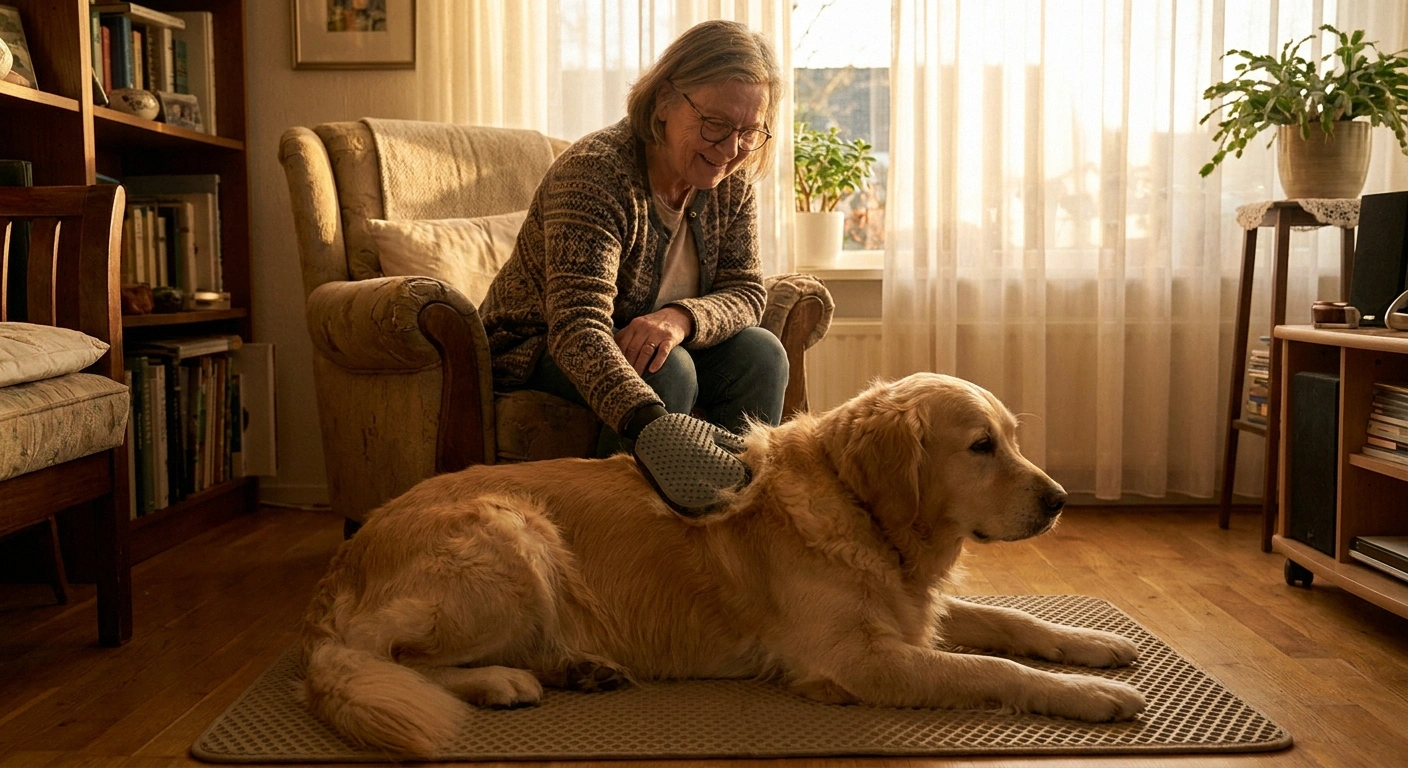
Brushing is one of the nicest parts of having a pet, and plenty of animals come looking for it. It's also a grip marathon. Holding a slim brush handle for ten minutes can leave numb hands aching for the rest of the evening.
A grooming mitt solves most of that — you wear it like a glove, with soft rubber nubs on the palm, and simply stroke your pet, so there's no handle to squeeze at all. If your pet needs a proper brush, build up its handle with foam tubing or choose one with a wide, soft grip.
Keep sessions short. Five minutes a day beats forty minutes once a week, for your hands and for your pet's coat. Sit down to do it, too. Small dogs and cats can be groomed on a towel in your lap, and a larger dog can lie on a non-slip mat beside your chair while you work.
Mats in long fur are the exception — cutting one out with scissors means working right next to the skin, and pet skin nicks easily. With less feeling in your fingertips, you won't always know how close the blades are. A detangling spray and patient finger work can loosen small tangles. Anything tight belongs to a groomer.
Nails, Baths, and Teeth: The Jobs Worth Handing Off
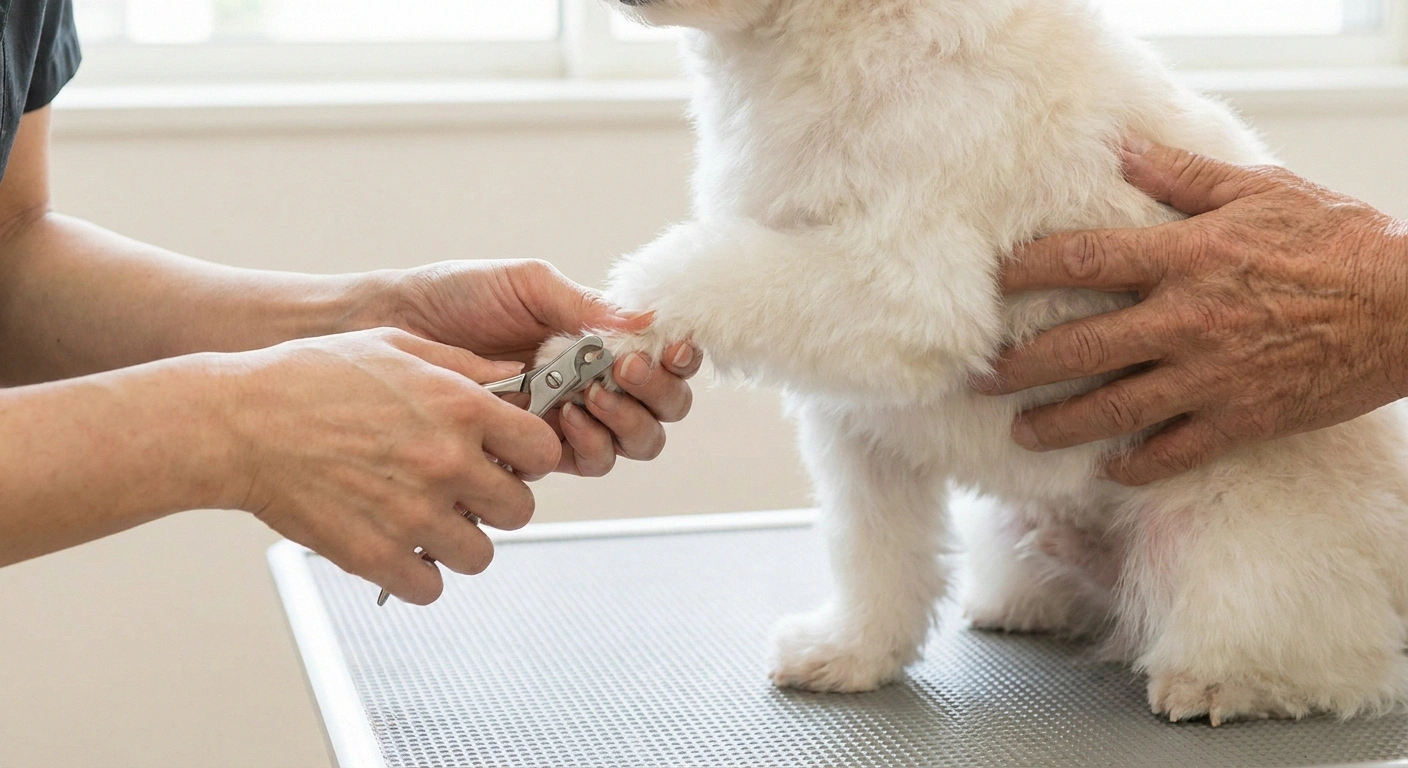
Some pet jobs are mostly about strength or patience. These three are about precision, and precision is exactly what neuropathy takes.
Nails. Inside each nail runs the quick, a core of blood vessels and nerves, and cutting into it hurts your pet and bleeds. A good trim needs a firm hold on the paw, a steady squeeze, and fine judgment about how much to take off. With numb fingertips and a less reliable grip, this is the chore I'd hand off first. Vet clinics and groomers trim nails all day long, and a vet clinic can offer sedation for a pet who panics. Prices vary, so call around. If you'd rather keep doing it yourself, the American Kennel Club suggests getting a hands-on lesson from your vet or a vet tech first, then working in bright light, taking off tiny slivers, and keeping styptic powder within reach. Grinders are less likely to cause bleeding than clippers, but they get warm and can catch in long fur, so they still ask for a steady hand.
Baths. Neuropathy blunts your sense of temperature, so never judge bath water with your fingers. The ASPCA recommends a few inches of lukewarm water for dogs; check it with a bath thermometer or your elbow, the same way diabetes foot-care guides tell you to test your own bath. If you blow-dry, the American Kennel Club advises skipping the hottest setting and holding the dryer at least a foot away. Use a handheld sprayer, put a non-slip mat in the tub for your pet and another on the floor for you, and remember that a wet dog shaking in a slippery tub is a genuine fall hazard for the person leaning over it. Some pet stores have self-serve dog-wash stations with waist-high tubs, and mobile groomers will come to your driveway.
Teeth. Finger brushes are hard to use when you can't feel your fingertips. A long-handled pet toothbrush is easier to control. If brushing isn't realistic, ask your vet which dental chews or water additives are actually worth using for your pet.
Check Your Own Skin Afterward
This part is for you, not your pet. Reduced sensation means a claw scratch during grooming or a playful nip can go unnoticed until it's red and swollen the next day.
- After any dog or cat bite that breaks the skin. The CDC's advice is to wash it right away with soap and water, then call.
- For a cat bite, sooner is better. Cleveland Clinic emergency physicians advise being seen within about eight hours.
- For redness, swelling, warmth, or pain that keeps growing. Signs of infection can appear within a few hours.
- For fever or chills in the days after a bite or scratch.
- For a cut or sore on your foot that isn't starting to heal after a few days, if you have diabetes.
Cat bites deserve special respect. Cat teeth make deep, narrow punctures, and family physicians treat every cat bite as high-risk for infection. In a Mayo Clinic study of 193 people treated for cat bites to the hand, 30 percent ended up in the hospital. Diabetes raises the stakes, too. The CDC lists it among the conditions that raise the risk of serious illness from Capnocytophaga, a germ that lives in the mouths of dogs and cats.
So build in a thirty-second look. After grooming, playing, or giving medicine, check your hands and forearms in good light. If anything broke the skin, wash it right away with soap and running water. If you have diabetes, glance at your feet too, especially if a dog stepped on your toes or a cat kneaded your ankles with claws out. My neuropathy foot care routine already includes a daily check, so it's easy to fold this into it.
Gloves help here as well — thin rubber-dotted gardening gloves protect the backs of your hands during grooming and litter duty, and they improve your grip on slippery things in the bargain.
Keeping Pets From Underfoot
Pets trip up more people than you'd guess. A CDC analysis of emergency room visits from 2001 through 2006 estimated about 86,600 fall injuries a year linked to cats and dogs. Tripping over the animal was the most common story, behind two-thirds of cat-related falls and nearly a third of dog-related ones, and about 1 in 11 dog-related falls came from tripping over a pet item such as a toy or a food bowl.
of these injuries were fractures, the most common diagnosis.
of cat-related falls happened during pet care itself, and likely more, since the activity went unrecorded in most cat falls.
With neuropathy, you can't feel a cat brush past your ankle before you step, so habits have to do the work that sensation used to. My guide to balance and fall prevention covers the bigger picture. For pets specifically, these help most:
- Feed in the same spot at the same time, so your pet waits there instead of escorting you across the kitchen.
- Teach a dog to wait on a mat or bed while you fill the bowl. Even older dogs pick this up with patience and treats.
- Put a small bell on your cat's collar if she tolerates it — hearing where she is counts for a lot when you can't feel her.
- Keep pet beds and toys out of walkways, and toss toys into a basket each evening using a reacher so you aren't bending to the floor.
- Light the route to the bathroom at night with well-placed night lights. Pets love to sleep in hallways, and a sleeping black cat on a dark floor is invisible.
If you walk a dog, a leash that gets tugged or wrapped around your legs is a separate hazard with its own fixes. Researchers who tracked fractures in adults 65 and older linked to walking leashed dogs recommend obedience training so dogs don't lunge, and a dog who pulls is worth a few sessions with a trainer for your sake as much as the dog's.
Getting Help Without Giving Up Your Pet
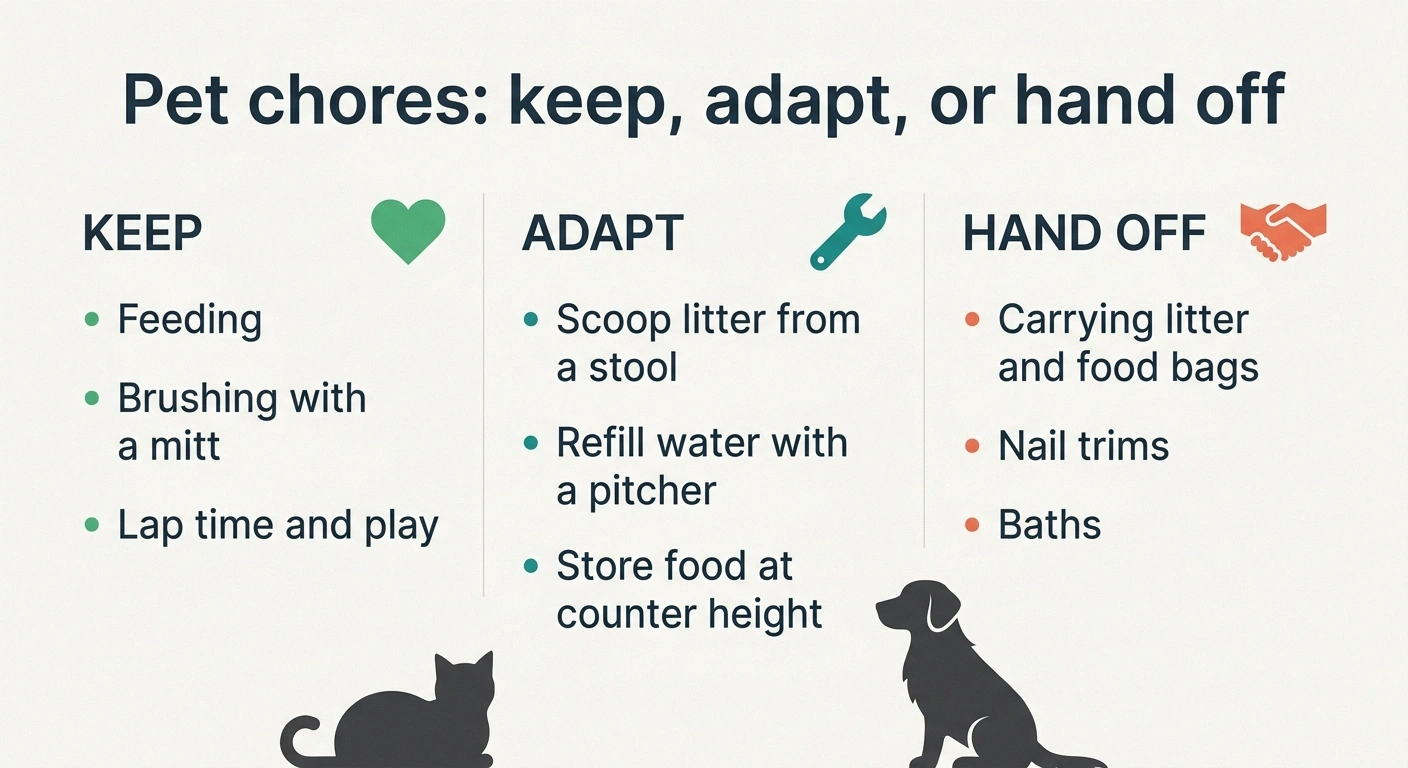
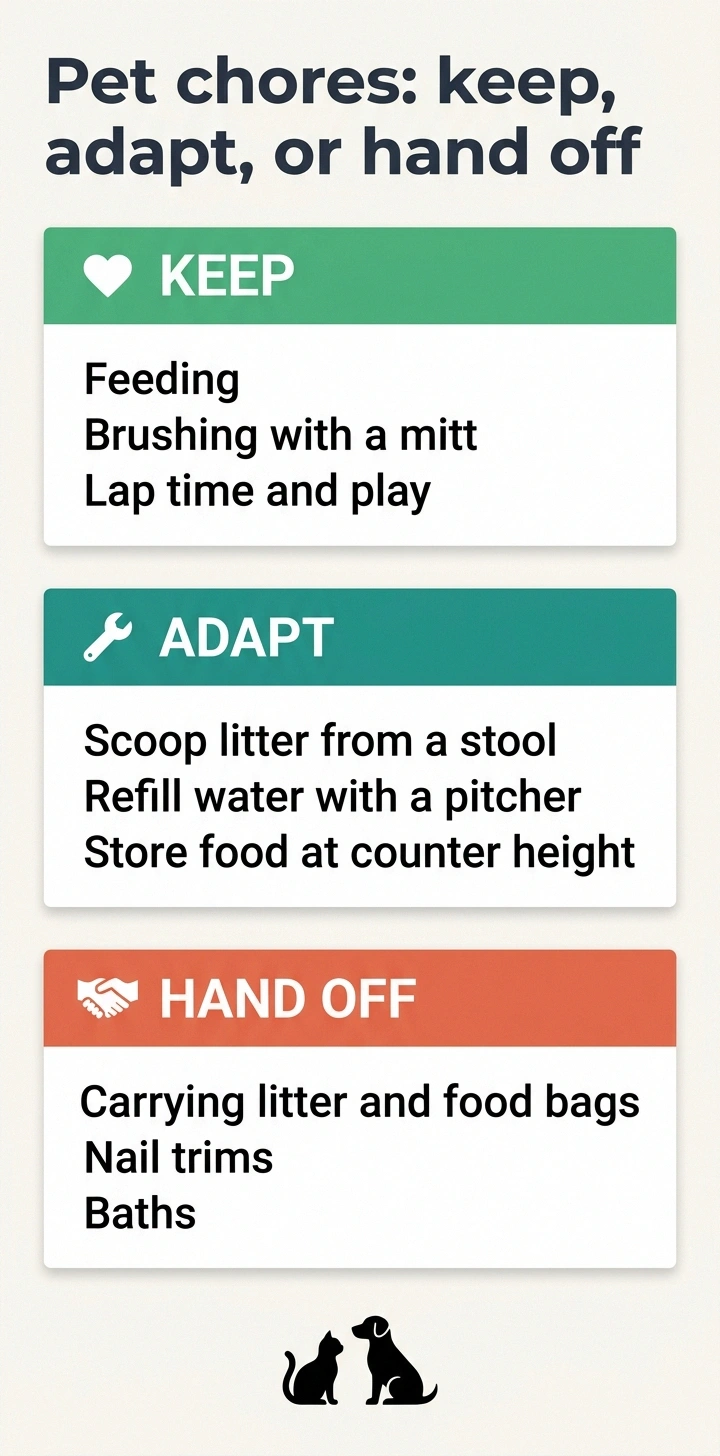
The goal isn't to do every pet chore yourself — it's to keep the pet and the bond, and to spend your limited hand strength on the parts you enjoy.
I find it helps to sort chores into three piles. Keep the ones you love and can manage, like feeding, brushing, and lap time. Adapt the ones you can change, like scooping from a stool. Hand off the ones that are heavy or precise, like hauling litter, trimming nails, and bathing. Then ask for help with that last pile specifically, which is a much easier request than a vague “can you help me with the cat?”
Helpers come in more shapes than you might think. A family member can take a weekly heavy-chores shift. A neighbor's teenager might welcome a few dollars to scoop and haul on weekends. Pet sitters, mobile groomers, and vet clinic nail trims cover the precise jobs, and home delivery takes care of the heavy bags. If you're homebound, it's worth asking your local Meals on Wheels program whether it takes part in Meals on Wheels Loves Pets, which delivers pet food and supplies in some areas. On high-pain days, spread the rest across the day in small pieces; my guide to pacing and energy explains why that works better than pushing through.
One more thing worth doing this week: write a one-page pet care card. List your pet's food and amounts, any medicines and times, the vet's phone number, and the quirks a helper should know. If you ever end up in the hospital or just have a terrible week, someone can step in without guessing.
And don't lose sight of why you're doing all this. In a University of Michigan poll of adults 50 to 80, most pet owners said their animals reduce stress and give them a sense of purpose, and nearly half of those in fair or poor health said their pets take their mind off pain. I wrote more about that in how animal companionship helps with neuropathy, and it's a good read for the days when the chores feel heavier than the love. They never really are.
Frequently Asked Questions
What is the easiest way to clean a litter box with neuropathy?
Scoop once a day while sitting on a low, stable stool beside the box, or use a long-handled scoop while holding a counter. Keep bags and a lidded step-on trash can next to the box, wear disposable gloves, and wash your hands afterward.
How can I handle heavy bags of pet food or litter with weak hands?
Have food and litter delivered, ask someone to lower a whole bag of food into a lidded bin kept at bench height, and switch to smaller bags or lightweight litter. Scooping from waist height is much safer than lifting and tipping a heavy bag.
Should I trim my pet's nails if my fingertips are numb?
It is usually the first chore worth handing off, because cutting into the quick hurts and bleeds. Vet clinics and groomers trim nails routinely. If you trim at home, get a lesson from your vet or a vet tech first, use bright light, take off tiny slivers, and keep styptic powder nearby.
How do I check bath water for my dog if I cannot feel temperature?
Use a bath thermometer or your elbow instead of your hand, and aim for a few inches of lukewarm water. Put non-slip mats in the tub and on the floor, and consider a self-serve dog wash or a mobile groomer for a large dog.
Can pet scratches and bites be dangerous if I have neuropathy?
They can go unnoticed, which gives infection a head start. Check your hands after grooming or play and wash any break in the skin with soap and water. Cat bites are treated as high-risk, so call your doctor or go to urgent care promptly after any bite that breaks the skin.
How do I stop tripping over my cat or dog?
Feed in the same spot at the same time, teach a dog to wait on a mat, put a bell on a cat's collar, keep beds and toys out of walkways, and light the path to the bathroom at night.
Are raised dog bowls a good idea?
They save bending, but a large study of large and giant breed dogs linked raised bowls to a higher risk of bloat. Ask your vet before raising the bowl for a big, deep-chested dog.
About the Author