I own a resistance band set that lived in a closet for eleven months.
It wasn’t laziness. It was that using it required moving the coffee table, finding the bands behind the vacuum, and clearing enough floor to not knock into anything. Six minutes of setup before a fifteen-minute session. On a good day I did it. On the other days, which were most days, I looked at the closet door and decided tomorrow.
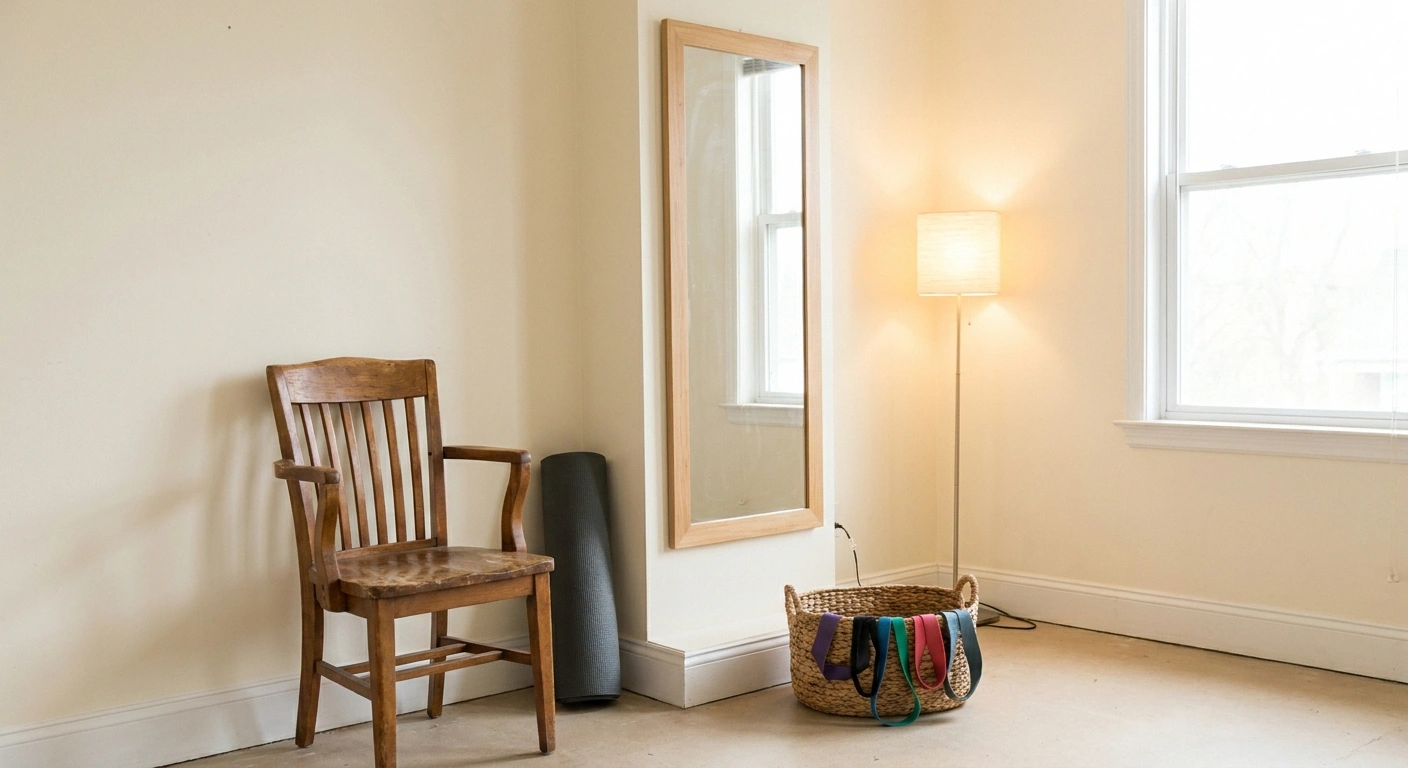
What finally fixed it wasn’t more motivation. It was giving the exercise a place to live — a permanent corner where nothing has to be moved and nothing has to be found.
If you have neuropathy, this matters more than it does for most people, and for a reason that has nothing to do with willpower. Setup friction is only half the problem. The other half is that a space you assemble fresh each time is a space you haven’t checked, and feet that can’t feel a cord or a rug edge need the checking done once, properly, and then left alone.
Here’s how to build one.
Start With the Footprint, Not the Equipment
Before buying anything, find the space.
| Element | Target | Why |
|---|---|---|
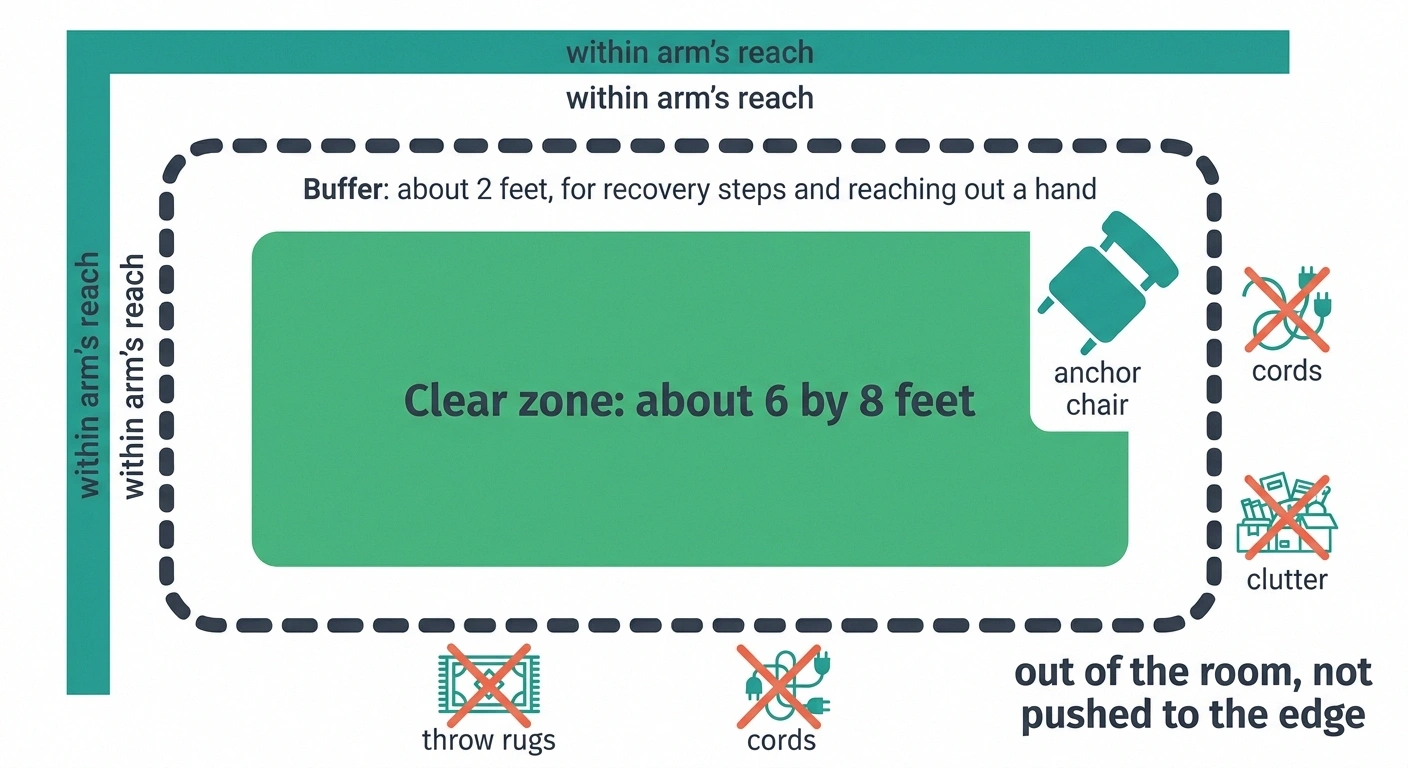
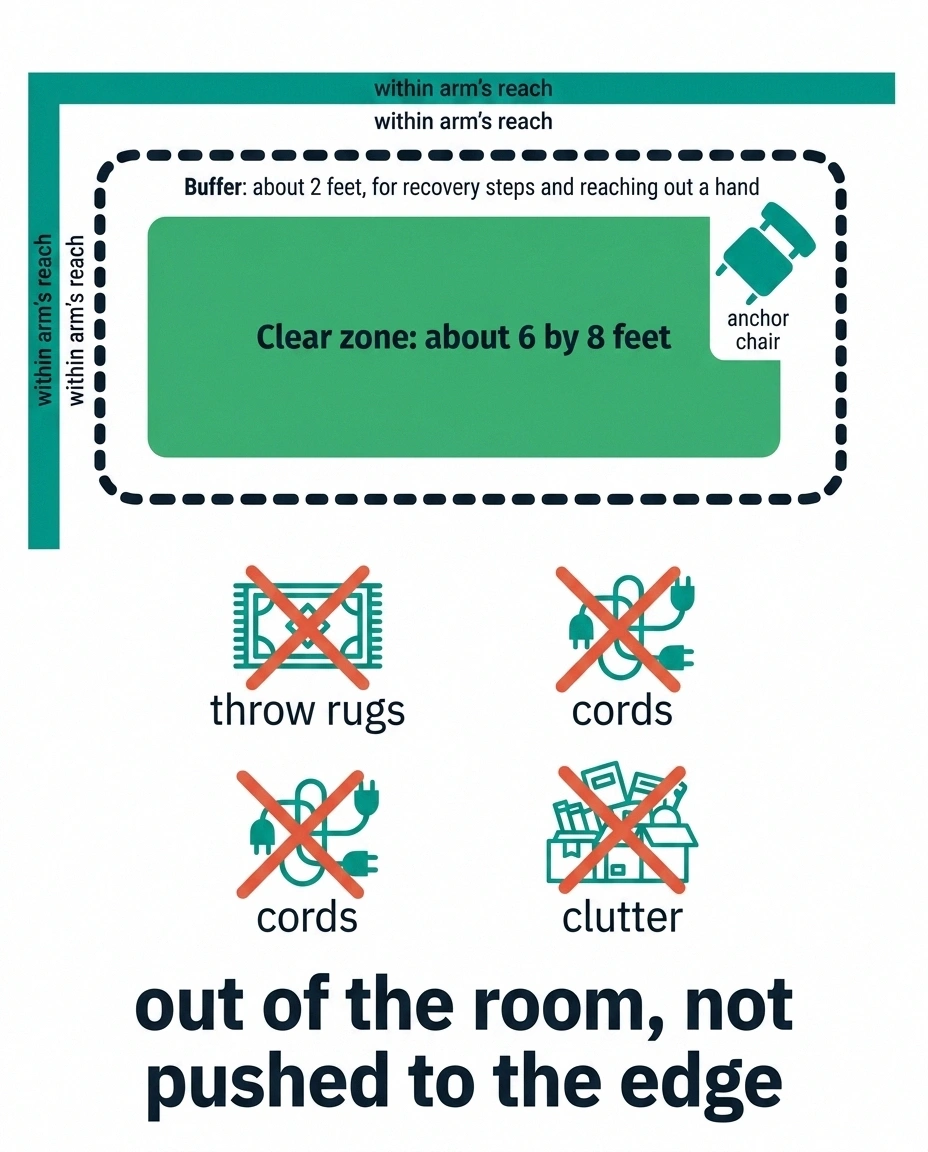
| Clear zone | About 6 by 8 feet | Fits standing, seated and floor work without repositioning |
| Buffer | About 2 feet around | Room for a recovery step and an outstretched hand |
| Support | Within arm’s reach | Two walls, a counter, or a heavy chair. Not “nearby” |
| Mat thickness | Half an inch or more | Comfort on hips and knees, plus grip on both faces |
You want roughly a 6 by 8 foot clear area, plus about two feet of buffer around it. The buffer isn’t wasted room — it’s the space you need when you take a recovery step sideways and your hand goes out. If your clear zone ends exactly where the bookcase begins, you’ve built a hazard rather than a gym.
Within that area, everything goes: throw rugs, extension cords, the basket of magazines, the dog bed. Not pushed to the edge. Out of the room.
Now the piece most guides skip. Pick a corner where you can reach two walls, or a spot beside a countertop or a heavy, non-rolling chair. With reduced sensation in your feet, you should never do standing balance work without something solid within arm’s reach. Not “nearby.” Within reach, without stepping toward it.
Good candidates I’ve seen work: the corner of a spare bedroom, the end of a hallway with a wall on each side, a section of the living room beside the sofa arm, a garage corner if it’s climate controlled. A kitchen counter is genuinely excellent for standing balance work, and it’s free.
Flooring: Hard Floor for Standing, Mat for the Ground
This trips people up, because the instinct is to put down a big soft mat and call it safe. Soft is not the same as stable.
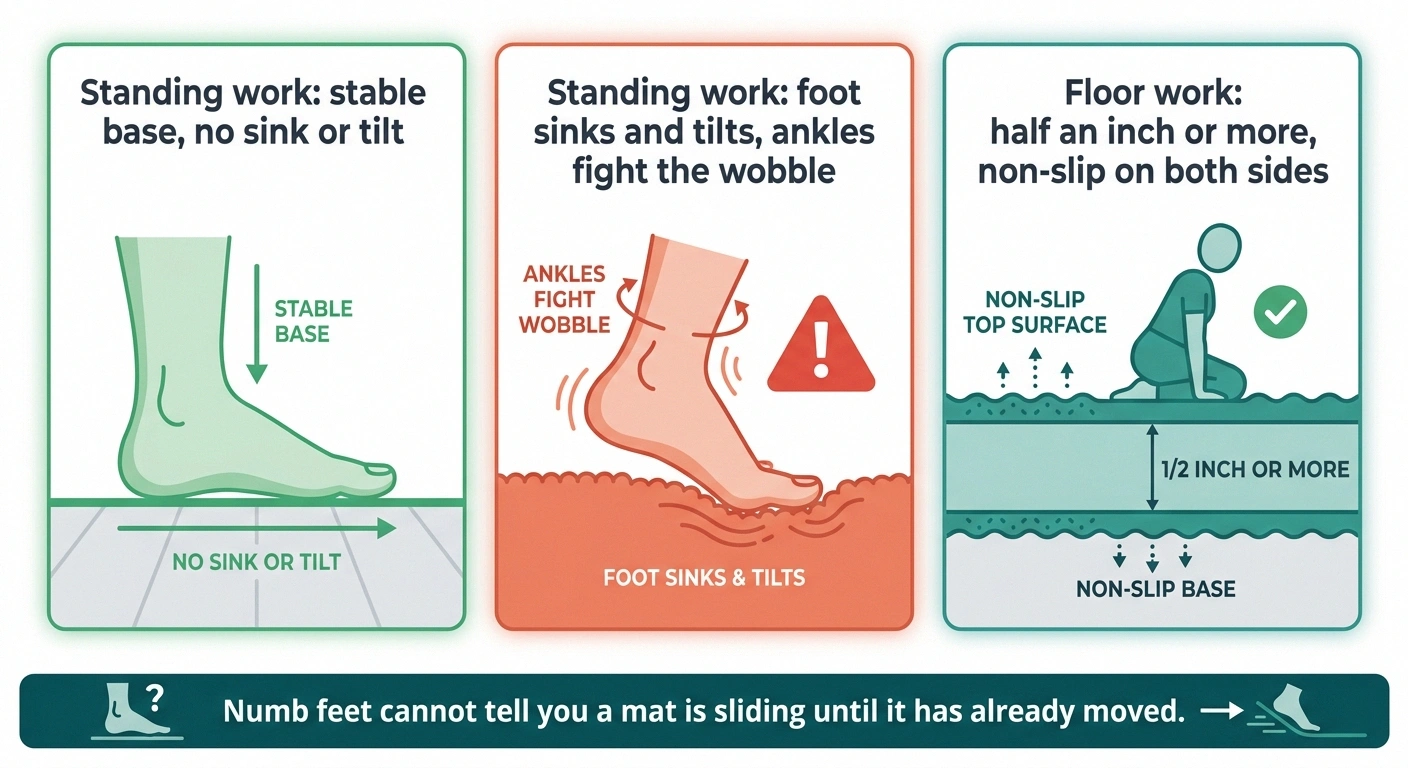
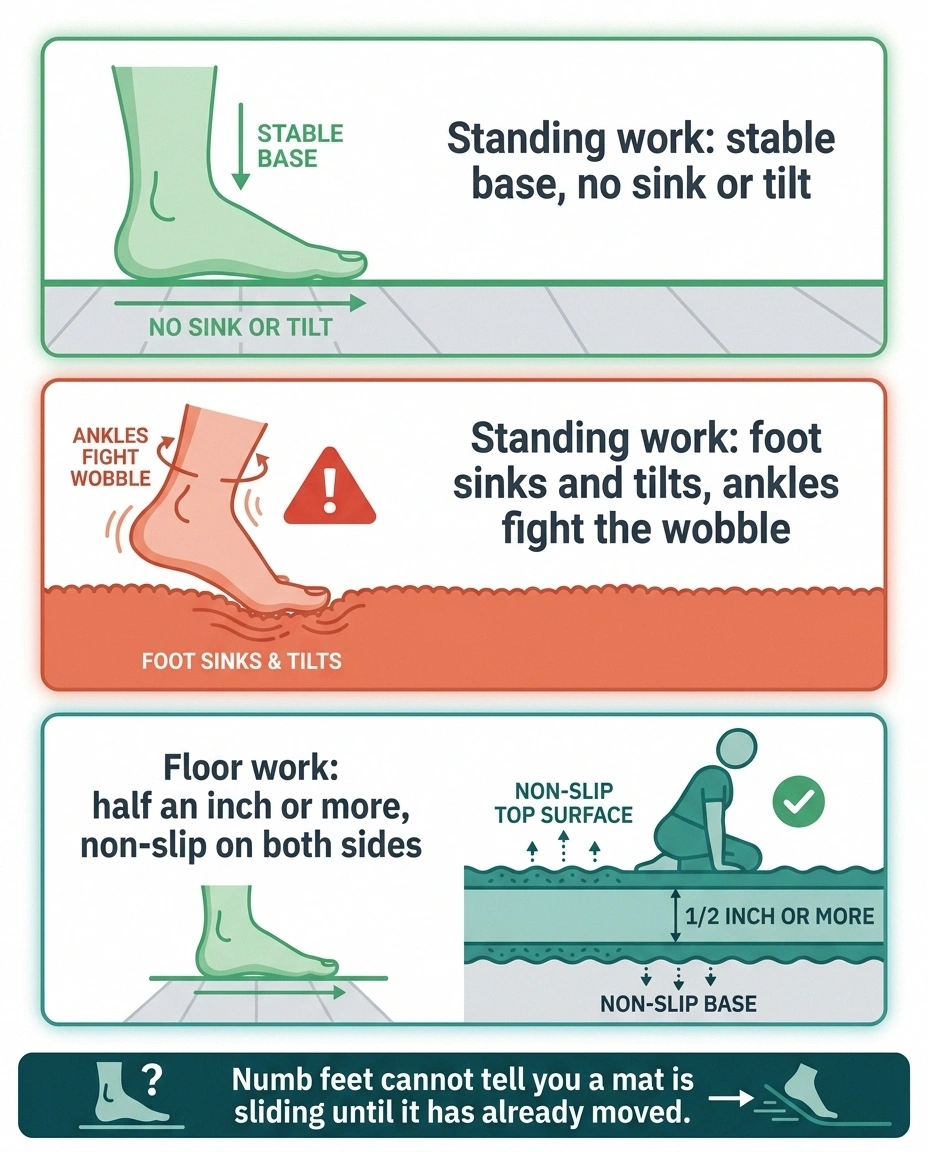
For standing work — balance, weight shifts, heel raises, anything on your feet — hard flooring is better. Thick carpet and cushy foam let your foot sink and tilt, which adds a wobble your ankles have to fight. If your feet already can’t report position reliably, a squishy surface makes an already-hard job harder. Carpet also hides where one surface ends and another begins, and shuffling feet catch on pile edges.
For floor work — anything seated or lying down — you want a mat. Look for two things: at least half an inch of thickness so your hips and knees aren’t grinding, and a genuinely non-slip surface on both sides, top and bottom. Numb feet can’t tell you a mat is sliding until it’s already moved.
The practical arrangement is a mat that lives rolled beside the space, or laid flat off to one side, with the standing zone kept as bare floor.
Light It Better Than You Think You Need To
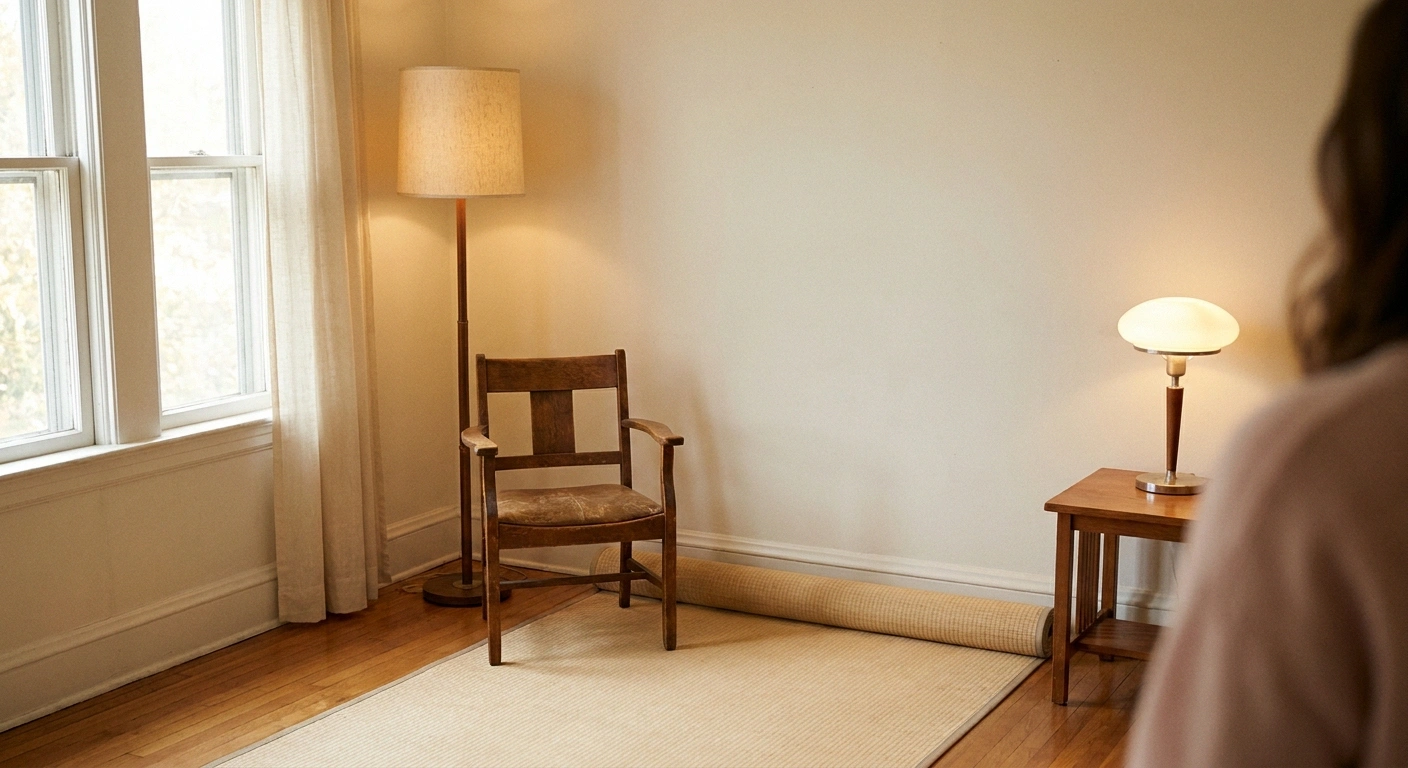
Here’s the thing that reframed this whole subject for me: with sensory loss, your eyes are doing the balancing your feet used to do.
That means lighting isn’t a comfort issue. It’s part of your balance system, in the same way a cane is. Every shadow is a place a hazard can hide, and every glare patch is a moment your vision gives you bad information.
What to aim for: bright, even, from more than one direction. A single overhead fixture casts your own shadow down onto the floor exactly where you’re stepping. Add a floor lamp or two so the light comes from a couple of angles and the shadows fill in.
Avoid setting up facing a window that gets direct sun. Squinting into glare while balancing on one foot is a bad combination, and the sun moves, so a spot that’s fine at nine may be blinding at four.
A Mirror Does More Than You’d Expect
A full-length mirror on the wall of your space is the single most underrated addition, and it’s cheap.
The reason is specific. Proprioception is your sense of where your body is without looking, and it’s often reduced with neuropathy. A mirror hands that information back through your eyes. You can see that your weight has drifted onto one hip, that your knee is caving inward, that you’re leaning back on a squat.
Without the mirror you’re relying on the feedback system that’s compromised. With it, you’re substituting a system that works. Physical therapists use mirrors for exactly this reason.
The Anchor Chair
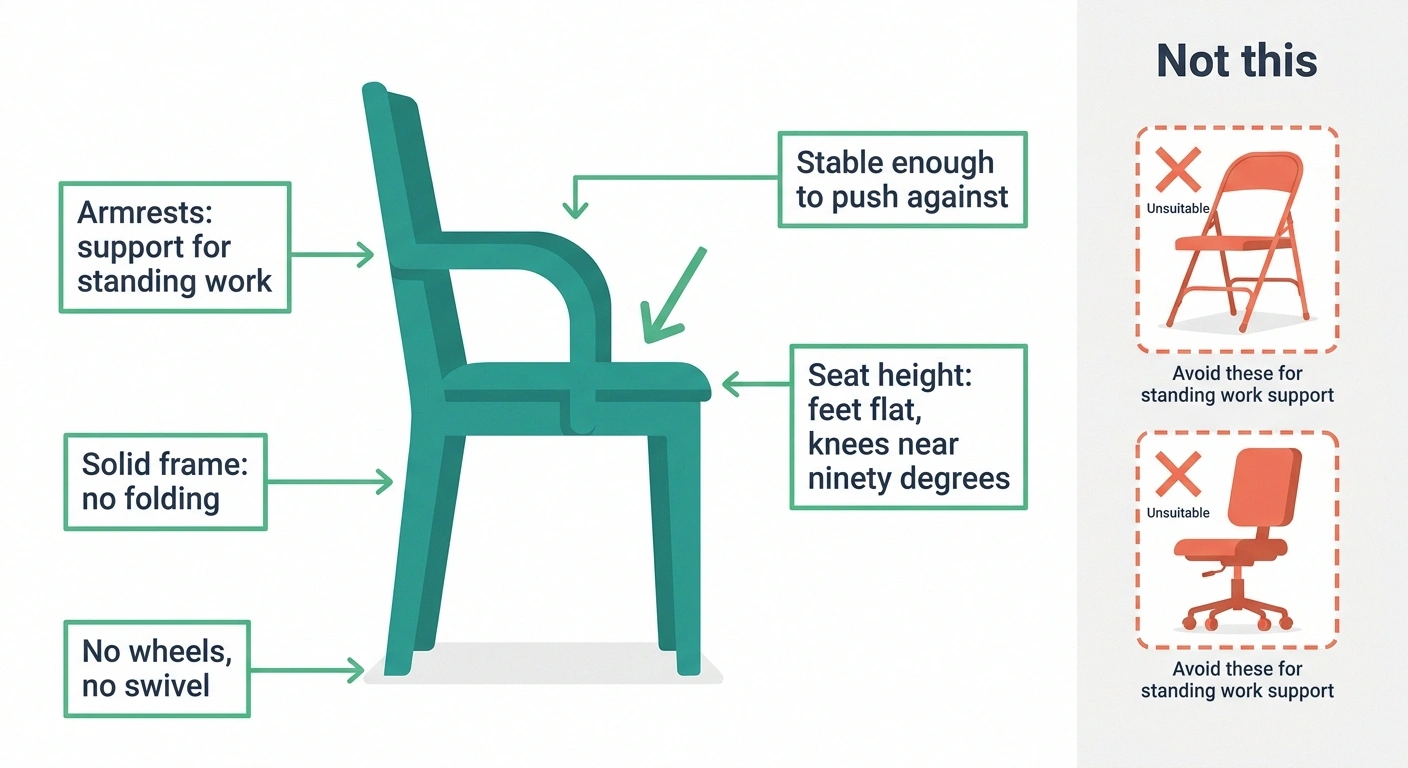
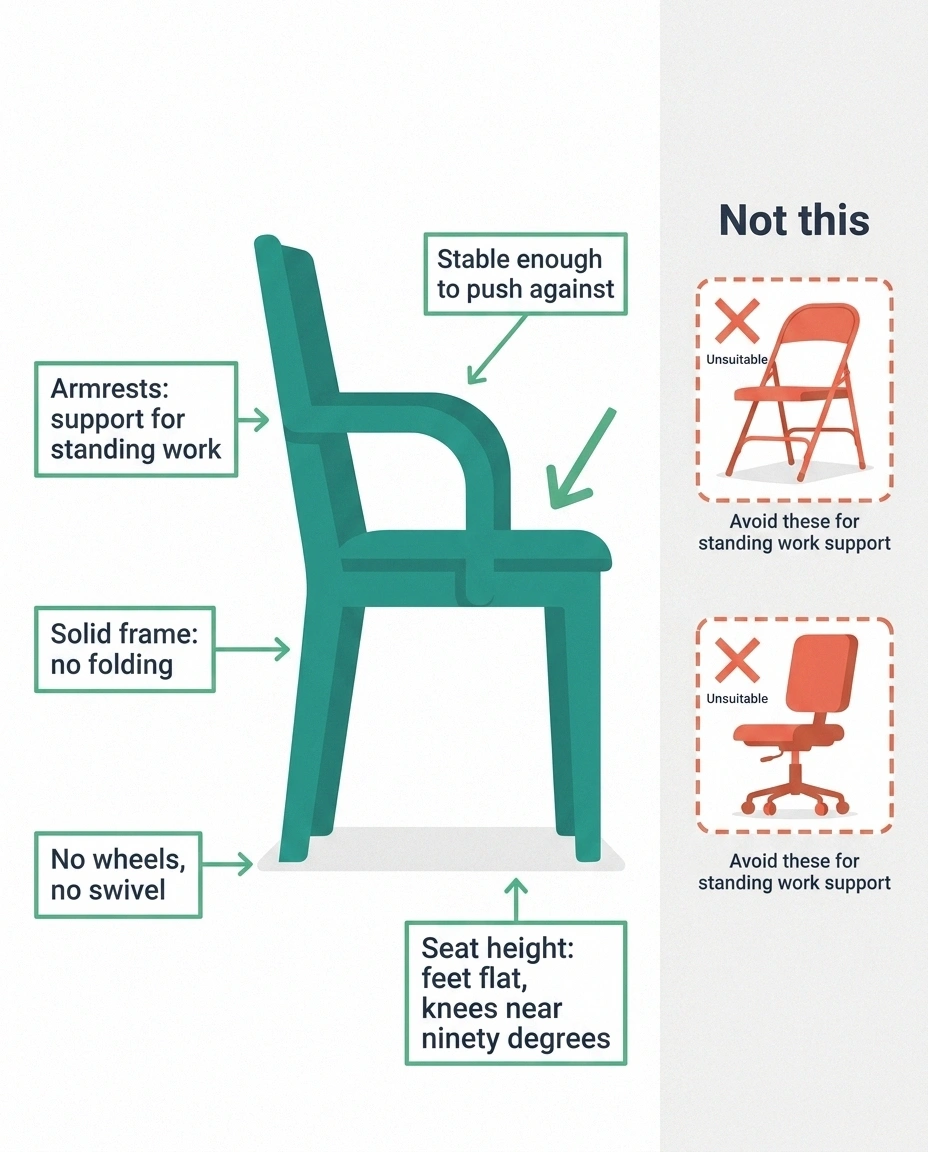
One sturdy chair with armrests earns more space than any piece of equipment you could buy.
It’s the seat for seated work, the support for standing work, the thing you sit on when you need a minute, and the safety margin that makes the whole space usable alone. Get the details right: armrests, a solid frame, no wheels, no swivel, and a height where your feet rest flat on the floor with knees at roughly ninety degrees.
A dining chair usually works. A folding chair usually doesn’t.
If most of your work will be seated, our guide to chair exercises for neuropathy is a good place to start, and the chair you set up here is the one it assumes.
Shoes On or Shoes Off?
I get asked this constantly, and the answer isn’t the one people expect.
Shoes change three things at once: your height, the width of your base, and how the floor reports back through the sole. Train barefoot and spend the day shod and you have practiced a version of balance you never use.
The rule: pick the setup that matches your real day, which for most people with neuropathy means supportive shoes, and keep it consistent. Two named exceptions: floor work done seated or lying down, and specific barefoot foot-strengthening a physical therapist has prescribed.
Most guidance for neuropathy says keep supportive shoes on, even indoors, and that generally holds during exercise. Shoes protect feet that can’t feel injury, they give a stable base, and they provide the grip your soles can’t confirm on their own. Our page on choosing shoes with neuropathy covers what to look for.
The important part is consistency. Shoes change how your foot meets the floor, how tall you are, and how the ground feels. Practicing balance barefoot and then walking around shod all day means you’ve trained a version of balance you don’t actually use. Pick the setup that matches your real life — for most people that’s shoes — and stay with it.
Two exceptions worth naming. Some floor work is easier without shoes, and that’s fine as long as you’re already on the ground. And if a physical therapist has you doing specific barefoot foot-strengthening work, follow their instruction over this article.
The Foot-Check Station
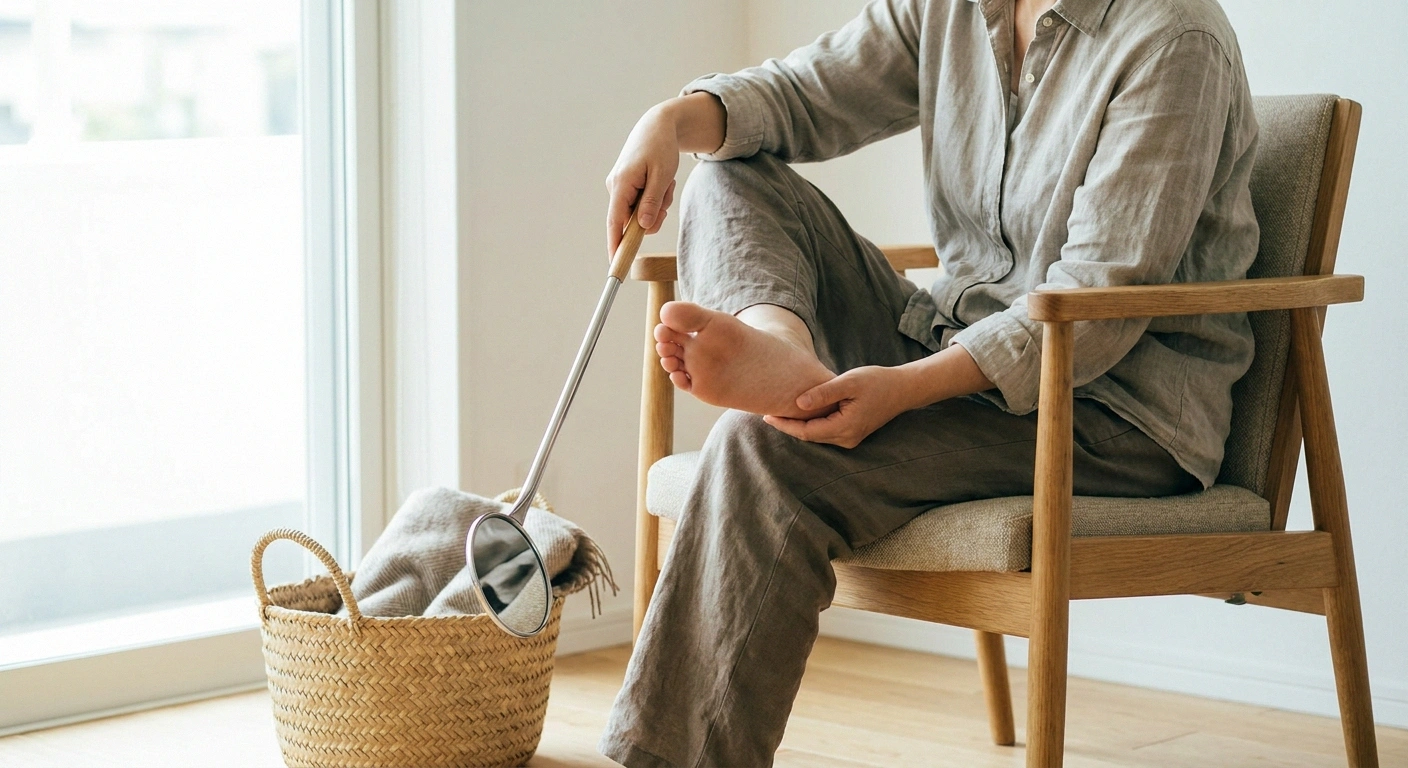
This is the addition that makes the corner specifically a neuropathy space rather than a generic home gym, and it takes about four dollars of hardware.
Keep a long-handled mirror in the corner, along with good light. After every session, sit in your chair and look at the bottoms of both feet.
You’re looking for redness that hasn’t faded, a hot spot, a blister, a scrape, anything new. Exercise is exactly when feet develop friction injuries, and a numb foot won’t report it. The blister you find on Tuesday is a manageable thing. The one you don’t find becomes something much more serious.
Ninety seconds. It’s the highest-value ninety seconds in the whole routine.
The Small Things That Decide Whether You Use It
Water within reach. Put a bottle in the corner. Walking to the kitchen mid-session ends sessions.
- Water bottle
- Walking to the kitchen mid-session is how sessions end early.
- Charged phone
- In the room, on the chair or in a pocket. Not optional if you exercise alone.
- Large-face or voice timer
- Counting reps while concentrating on balance splits attention you need for footing.
- Long-handled mirror
- For the ninety-second foot check after every session. The highest-value habit in the routine.
- A basket or door hook
- Bands and weights visible and off the floor, so nothing in the clear zone can be stepped on.
Room temperature belongs on this list too. Feet with reduced sensation may not report overheating in a stuffy garage or chilling on a cold basement floor, so trust the thermostat rather than the feeling.
Your phone, charged, in the room. If you exercise alone, this isn’t optional. In your pocket or on the chair, not across the house.
A timer with a big face. Counting reps while concentrating on balance splits your attention in a way that isn’t safe. A kitchen timer or a voice assistant does the counting so you can watch your feet.
Temperature. Keep the room moderate. Your feet may not tell you they’re overheating in a stuffy garage or getting cold on a chilly basement floor, so trust the thermostat rather than the sensation.
Somewhere to put things. A small basket or an over-door hook that holds your bands, your light weights and your mirror. Everything visible, nothing stacked on the floor where you’ll step on it.
Building It on a Budget
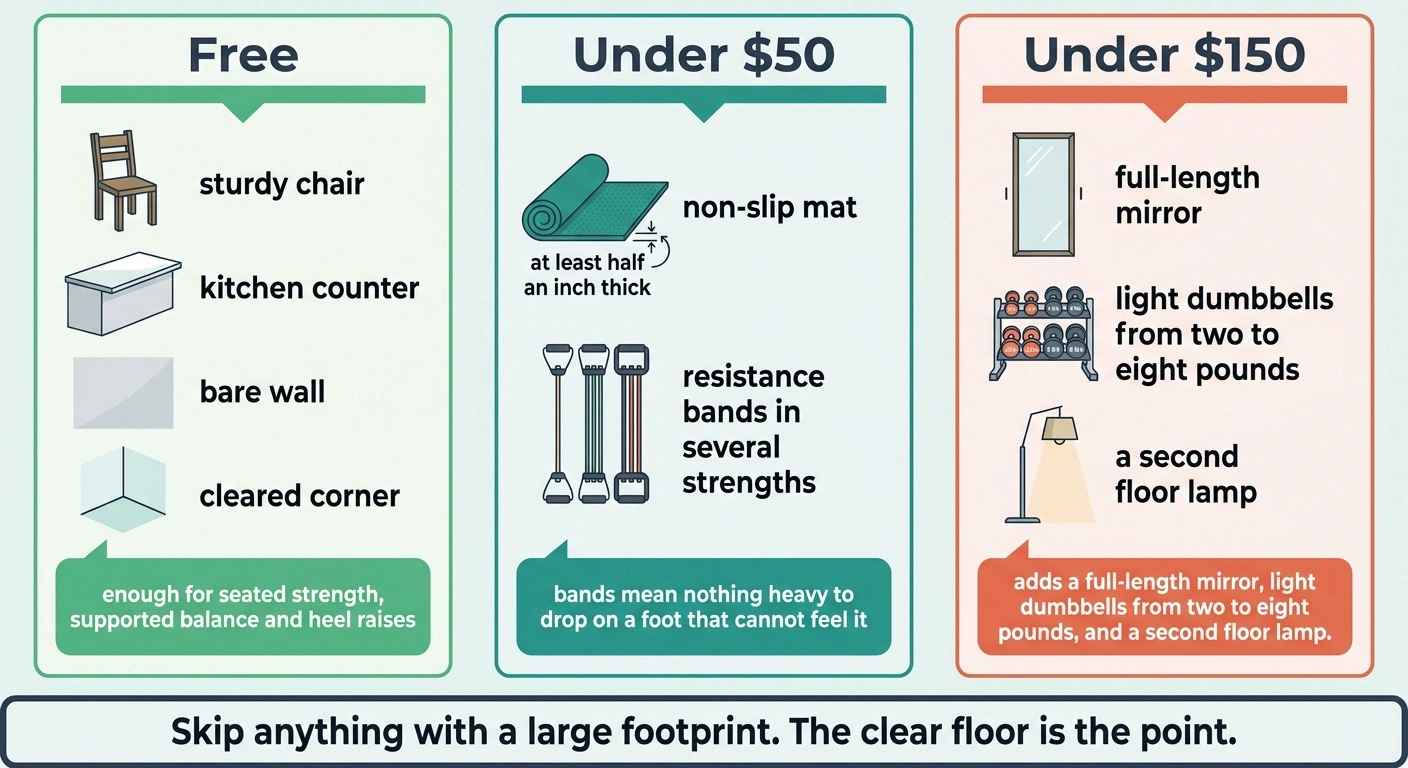
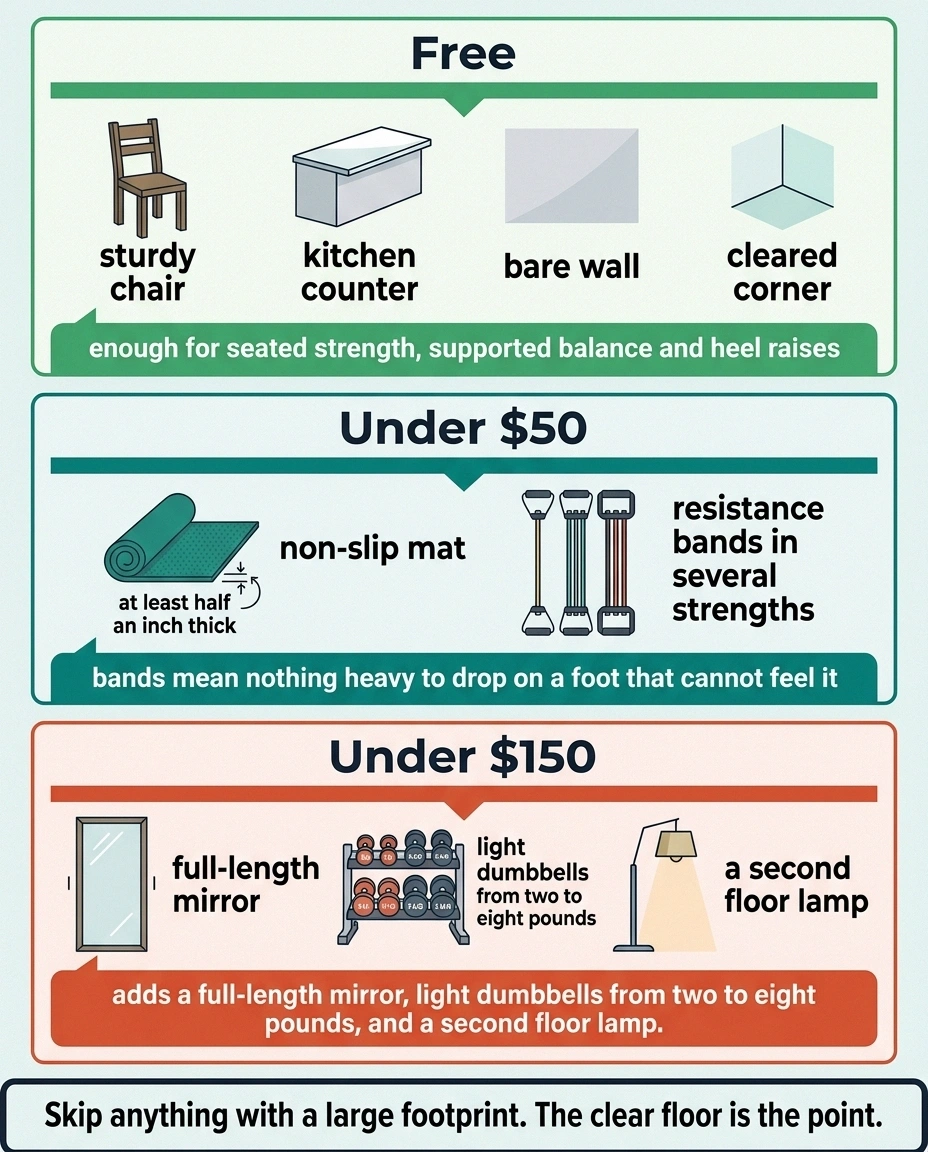
You do not need to spend money to start. Genuinely.
Free. A sturdy chair, a kitchen counter, a bare wall, and a cleared corner. That’s enough for seated strength work, supported balance work, and heel raises. Most people’s first two months belong here.
Under fifty dollars. Add a non-slip mat at least half an inch thick and a set of resistance bands in a few strengths. Bands are ideal for this population — no dropping a weight on a foot that can’t feel it.
Under a hundred and fifty. Add a full-length mirror, a pair or two of light dumbbells in the two to eight pound range, and a floor lamp for the second light source.
What I’d skip: anything with a large footprint that turns your clear zone into an obstacle course. The clear floor is the point.
The Rule That Makes It Stick
One rule, and it’s the one that got my bands out of the closet.
The space stays set up. Always. Not folded away between uses, not reassembled each morning, not doing double duty as the place the laundry gets sorted.
A space that requires setup gets used on good days only, and the days you most need to move are rarely the good ones. A space that’s simply there — lit, clear, chair in place, mat rolled beside it — gets used on the ordinary days too, and ordinary days are where the results actually come from.
Once the corner exists, our guide to the best exercises for neuropathy and our balance and fall prevention guide will give you plenty to do in it. And if you’re thinking about the rest of the house, the room-by-room safety walkthrough applies the same logic everywhere else.
Start with the corner. It’s one afternoon of work and it removes the excuse permanently.
Frequently Asked Questions
How much space do I need to exercise at home with neuropathy?
A clear area of roughly 6 by 8 feet, plus about two feet of buffer on each accessible side, covers standing balance work, floor exercises and seated strength work. The buffer matters as much as the main area, since it gives you room to take a recovery step or reach out a hand without immediately hitting furniture. If a full 6 by 8 is not available, a smaller footprint beside a counter still works for seated and supported standing exercises.
Is carpet or hard floor better for balance exercises?
Hard flooring is better for standing work. Carpet and thick foam allow the foot to sink and tilt, adding instability that the ankles must constantly correct, which is more difficult when position sense is already reduced. Carpet pile can also catch a shuffling foot and obscures transitions between surfaces. Use a non-slip mat only where floor exercises happen, and keep the standing zone as bare, level flooring.
Should I wear shoes to exercise at home with neuropathy?
Generally yes. Supportive shoes protect feet that cannot reliably feel injury, provide a stable base, and give traction your soles cannot verify on their own. More important than the choice itself is consistency, because shoes change your height, your base of support and how the floor feels, so training barefoot and living in shoes means practicing a version of balance you do not actually use. Floor exercises done seated or lying down are a reasonable exception.
What kind of mat should I use?
Look for at least half an inch of thickness for comfort during floor work, and a non-slip surface on both the top and the bottom. The two-sided grip matters specifically with neuropathy, because numb feet will not detect a mat beginning to slide until it has already moved. Thin yoga mats provide inadequate cushioning for hips and knees, while very thick foam mats introduce instability if used for standing exercises.
Why does lighting matter for exercising with neuropathy?
Because when sensation in the feet is reduced, vision takes over much of the work of maintaining balance. Shadows can hide obstacles and glare temporarily removes usable visual information at the moment you need it most. Aim for bright, even lighting from more than one direction, since a single overhead fixture casts your own shadow onto the floor where you are stepping. Avoid setting up facing a window that receives direct sun.
Do I need a mirror in my exercise space?
It is one of the most useful and least expensive additions. Neuropathy commonly reduces proprioception, your sense of limb position without looking, and a full-length mirror substitutes visual feedback for that missing information. You can see weight shifting onto one hip, a knee collapsing inward, or a backward lean during a squat, all of which are difficult to feel with reduced sensation. Physical therapists use mirrors for the same reason.
What should I check on my feet after exercising?
Inspect the soles and between the toes for redness that does not fade within a few minutes, warm spots, blisters, scrapes or any new mark. A long-handled mirror kept in the exercise area with good lighting makes this straightforward from a seated position. Exercise is a common source of friction injuries, and a foot with reduced sensation will not report one, so a routine check after every session catches small problems while they are still small.
About the Author