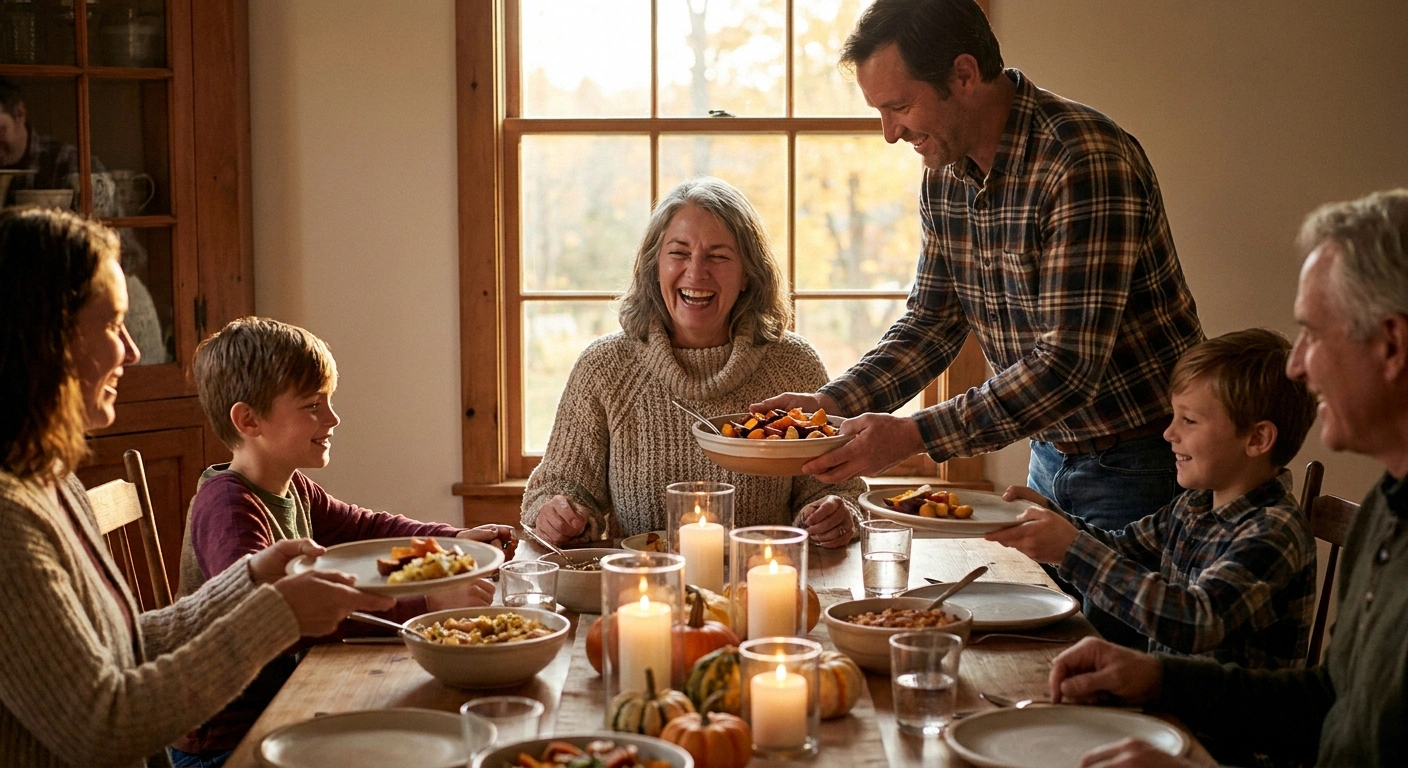
Sometime in late September, the family group text wakes up. Someone posts last year's pie photo, someone else asks about flights, and then the real question lands: whose house this year? For a long stretch the answer was mine — and I loved every loud, crowded minute of it. Then neuropathy moved in, and that question started to feel less like an invitation and more like a test I might fail in front of everyone.
It took me a few holidays to see what was actually going on. Hosting turns out to be thirty small jobs traveling under one big name: planning, shopping, standing at a counter, lifting a hot pan, carrying platters, chatting in the doorway, scrubbing a roasting pan at ten o'clock at night. Neuropathy makes a handful of those jobs genuinely risky and leaves the rest almost untouched. Once I stopped asking “Can I still host?” and started asking “Which jobs are still mine?”, the holidays came back to me.
This is the plan I use now, along with what the fire-safety and food-safety experts want every host to know, adjusted for hands and feet that can't be trusted to report heat or pain. My holiday survival tips were written mostly from the guest's chair. This one is for the person holding the oven mitts.
Sort the Meal Into Jobs Before You Say Yes
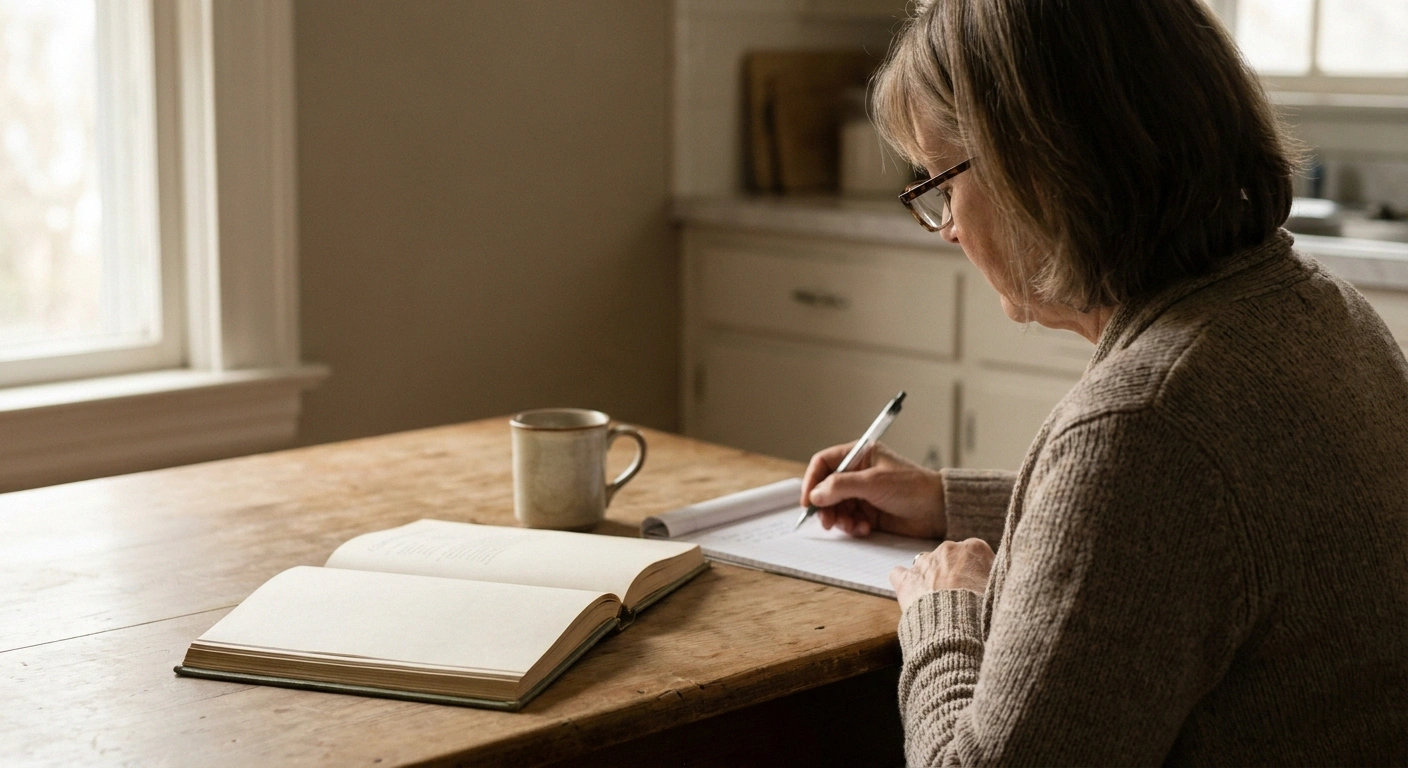
Before I agree to host anything bigger than Sunday supper, I sit down with a pad of paper and write out every job the meal will take. Not the menu. The jobs. “Make the stuffing” becomes chop the onions and celery, tear the bread, stir a hot skillet, lift a full casserole dish into the oven, and lift it back out forty minutes later.
| Job | What makes it hard | Easier version |
|---|---|---|
| Lifting the turkey | Heavy, oven-hot, needs grip and balance at once | Hand off to a named lifter, or roast a breast on a sheet pan |
| Draining potatoes | A heavy pot of boiling water near hands that can't feel a splash | Slow-cooker mash, or lift the potatoes out with a slotted spoon |
| Last-minute gravy | Standing and whisking at a hot stove during the busiest hour | Make it days ahead from roasted wings, then reheat |
| Carrying platters | Hot dishes, a crowded room, feet that misjudge the floor | Serve buffet-style from the kitchen counter |
| Scrubbing the roasting pan | Hot water, grip strength, long minutes at the sink | Soak it overnight and let a helper finish it |
| Menu, table, dessert | Light work that can happen seated and early | Usually worth keeping, done a day or two ahead |
Then every job gets one of three marks:
- Keep it. The parts that bring you joy and that your body still handles well. For me that's planning the menu, setting the table, and my sourdough, which I bake two days ahead.
- Change it. Jobs you can still do if you change how, when, or where you do them. Sitting instead of standing, a lighter pan, a different tool, a different day.
- Hand it off. Jobs that lean hardest on what neuropathy has taken: heavy hot lifting, long stretches on your feet, and anything that depends on feeling heat through your fingertips.
Occupational therapists have their own name for this kind of sorting. One NHS occupational therapy leaflet teaches it as the four P's: prioritise, plan, pace, and position. Arthritis UK boils the prioritising part down to a few questions I now ask about every holiday job. Does it need doing at all? Does it need doing today? Could someone else do it, or help with part of it?
The list does two useful things. It shows you, in plain ink, where the risk actually sits, which is usually in three or four jobs rather than the whole day. And it gives you something concrete to say when a guest asks, “What can I bring?” Most people want an assignment. A polite “Oh, nothing” robs them of the chance to help.
If the hand-off column comes out longer than the keep column this year, that's information, not failure. Co-hosting with a sibling, moving the meal to someone else's house while you bring the pies, or trading the big dinner for a smaller December brunch are all real options that still put you at the center of the table. And if the honest answer this year is no, my piece on declining invitations with neuropathy has kind ways to say it.
Build a Menu That Does Its Work the Day Before
The hardest hour of any holiday meal is the last one. Everything wants the stovetop at once, the gravy needs whisking, the rolls need to come out, and guests drift into the kitchen to chat right where you're trying to turn around with a hot dish. That hour is where burns, spills, and exhausted feet happen — so I plan the menu backward from it.
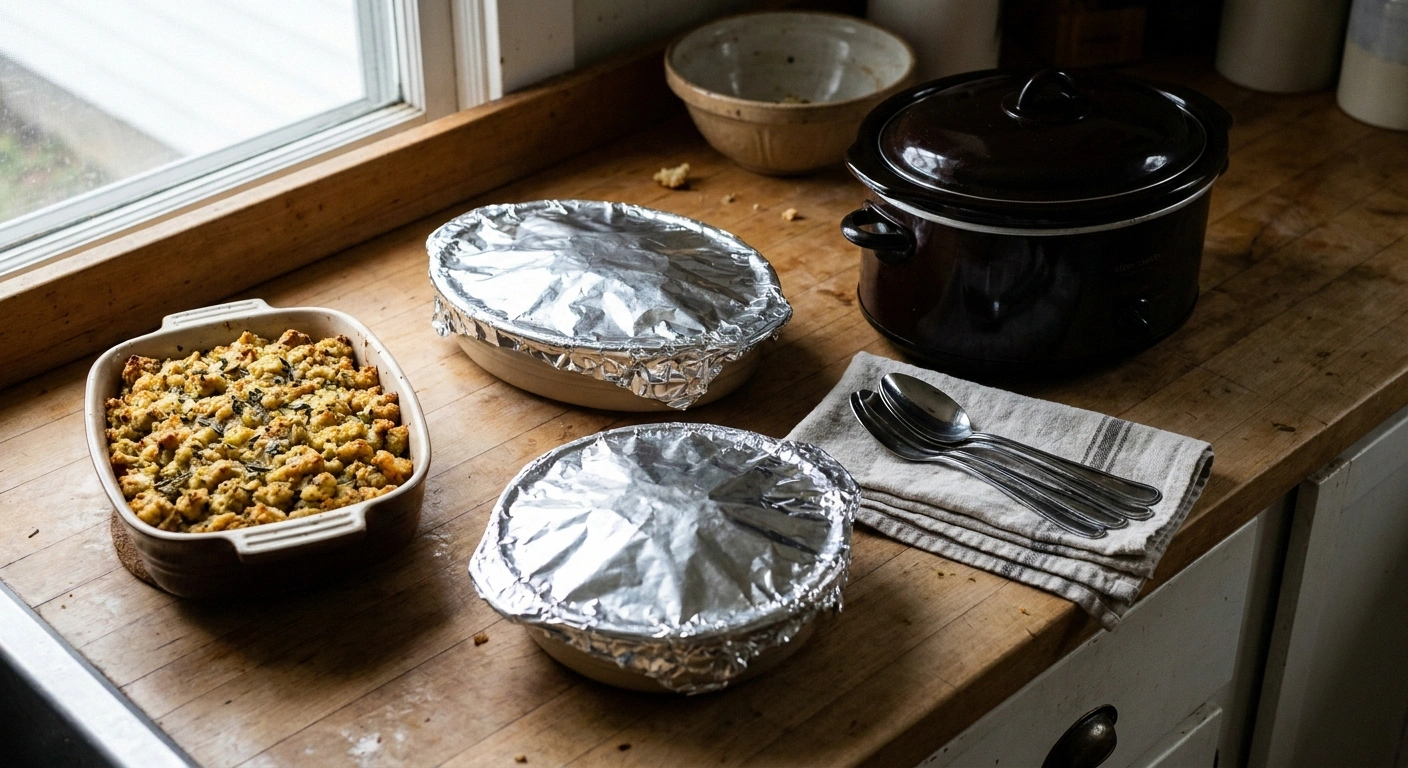
- Casseroles over stovetop dishes. Sweet potatoes, green beans, and stuffing can be assembled a day ahead and baked. An oven doesn't need you standing over it the way a stovetop does, though fire-safety experts still say to stay home, set a timer, and check on it. The USDA actually recommends baking stuffing in a casserole dish rather than inside the bird, which happens to be the easier way to make it ahead.
- Dishes served cold. A big salad, a relish tray, cranberry sauce, and deviled eggs can all be finished the day before and kept in the refrigerator until the doorbell rings.
- One slow cooker job. Mashed potatoes hold well on the warm setting, which frees a burner and saves your wrists from a heavy pot.
- Something store-bought. A bakery pie or a bag of good rolls is not a moral failing. In all my years of hosting, not one guest has asked who made the rolls.
If there's a turkey on the menu, the planning starts earlier than most people expect. The USDA's Food Safety and Inspection Service says to allow about 24 hours of refrigerator thawing for every 4 to 5 pounds, which means a 16- to 20-pound bird needs four to five days in the fridge. Never on the counter — the agency lists only three safe ways to thaw a turkey: the refrigerator, cold water, or the microwave. Cold water means changing the water every 30 minutes and wrestling a heavy, slippery bird in the sink, which is exactly the kind of job neuropathy makes harder.
Food safety matters more than usual when you're pacing yourself, because a host who needs to sit down is also a host whose food sits out. The same agency's rule is to put away turkey, stuffing, and gravy within two hours of coming out of the oven, or within one hour if the room is above 90°F. When dinner is served, I set a timer on my phone. When it chimes, the platters go into the refrigerator, and a guest carries them.
Spread the Work Across Four Days
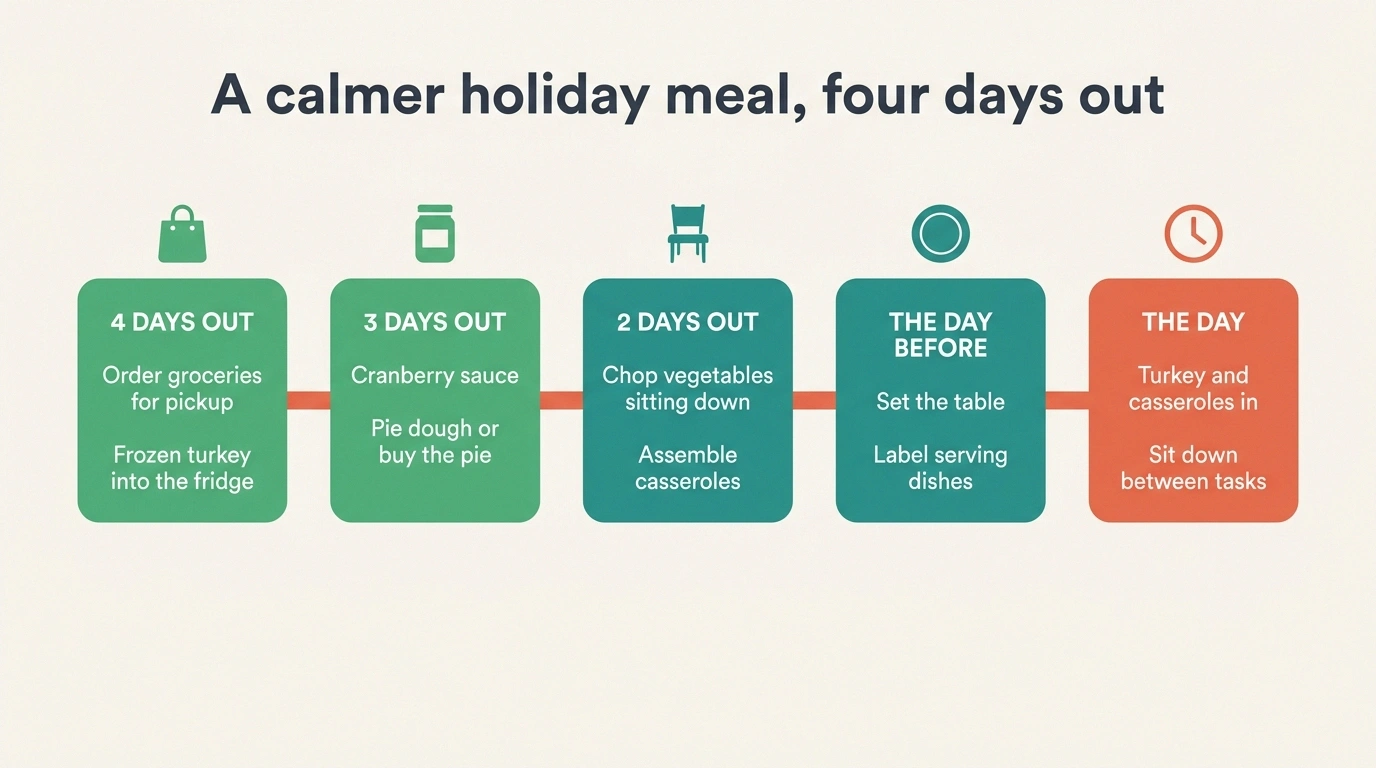
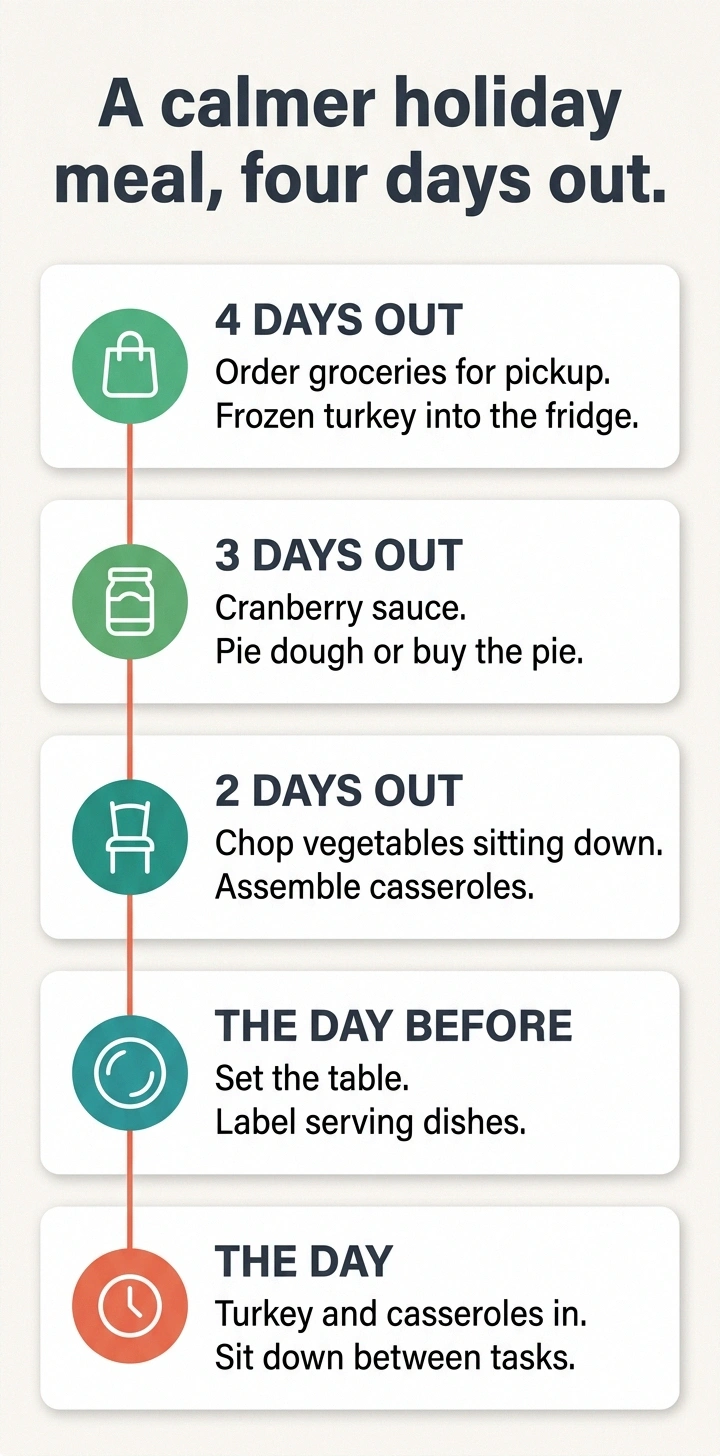
A holiday meal feels enormous because we try to do it all in one day. Spread across four, most of the jobs shrink to something you can do sitting down, with a rest in between. The countdown below is the one I keep taped inside a cabinet door every November.
Four days out, I order groceries for pickup or delivery rather than pushing a heavy cart through a crowded store. If the turkey is frozen and on the larger side, it should already be in the refrigerator by now, sitting on a rimmed tray to catch drips.
Three days out, the no-cook jobs happen: cranberry sauce, pie dough if you make your own, and the grocery bags unpacked at the table rather than the counter. Two days out, I chop vegetables sitting at the kitchen table and assemble the casseroles. The day before, I set the table, bake the bread, and put a sticky note on each serving dish saying what goes in it. That last trick sounds fussy — but it means helpers can plate the food without asking me twenty questions.
On the day itself, my jobs are short: turkey in, casseroles in, sit down, and greet people. Everything else is already done or assigned.
When Your Fingertips Can't Report Heat
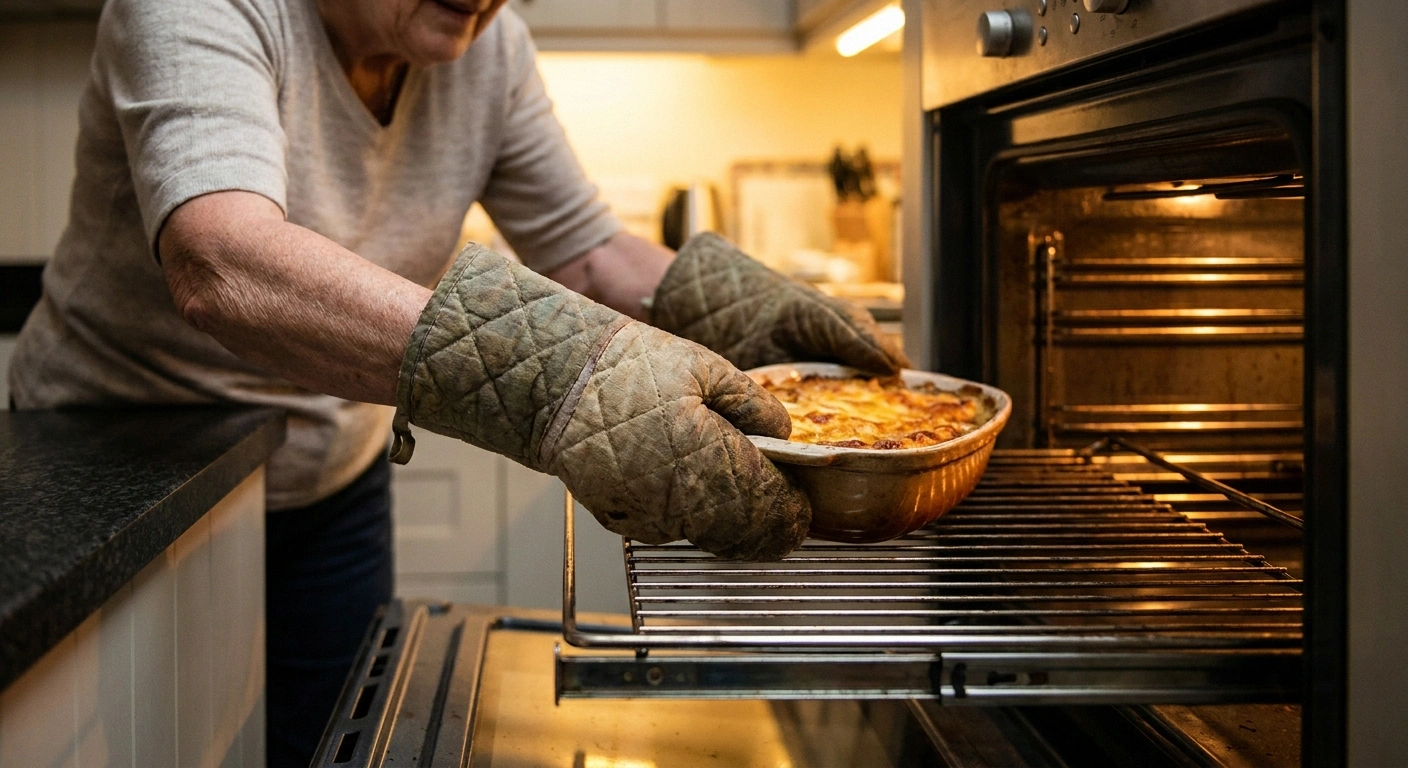
This is the part of hosting that worries me most, so I'll be blunt. When sensation in your hands is dulled, a skillet handle, a baking sheet, or a burst of steam from the pasta pot can burn you before you register that it's hot. The American Burn Association makes exactly this point: when feeling in the hands and feet is reduced, a person may not realize something is too hot until they've already been burned. Feet are the better-documented worry. The National Institute of Diabetes and Digestive and Kidney Diseases warns that with nerve damage from diabetes, “you may burn your feet and not know you did,” and burn studies find that people with diabetes who burn their feet tend to face longer hospital stays and more complications.
Most of the fix is habit. I use oven mitts long enough to cover my forearms for anything that has been near the stove, not just things coming out of the oven. I slide the oven rack out and lift with both hands instead of reaching into the heat. Pot handles get turned toward the back of the stove. I never carry a pot of boiling water across the kitchen — a pasta insert or a slotted spoon lets me lift the food out and leave the water where it is.
And I check food with a thermometer, never with a fingertip. The USDA calls a food thermometer the only reliable way to know food has reached a safe temperature, and for those of us with numb fingers it replaces the old press-and-poke test entirely. For the turkey, that means 165°F in the thickest part of the breast and the innermost part of the thigh and wing, even if the bird came with a pop-up timer.
Stay in the kitchen while anything is on the stovetop. Unattended cooking is the leading contributing factor in home cooking fires, according to the National Fire Protection Association, and Thanksgiving is the peak day of the year for them, at more than three times the daily average. The U.S. Fire Administration found that more than half of Thanksgiving Day house fires happen between 10 a.m. and 5 p.m., right when dinner is being made. The NFPA also strongly discourages oil-filled turkey fryers. If fried turkey is a family tradition, buying one already fried from a store or restaurant keeps the tradition and skips the vat of hot oil.
My full list of kitchen adaptations, from knife grips to cutting boards, lives in my guide to cooking safely with neuropathy. On a holiday, with a crowd in the house, those habits matter twice as much.
The Bird Problem: Lifting, Carving, and Carrying
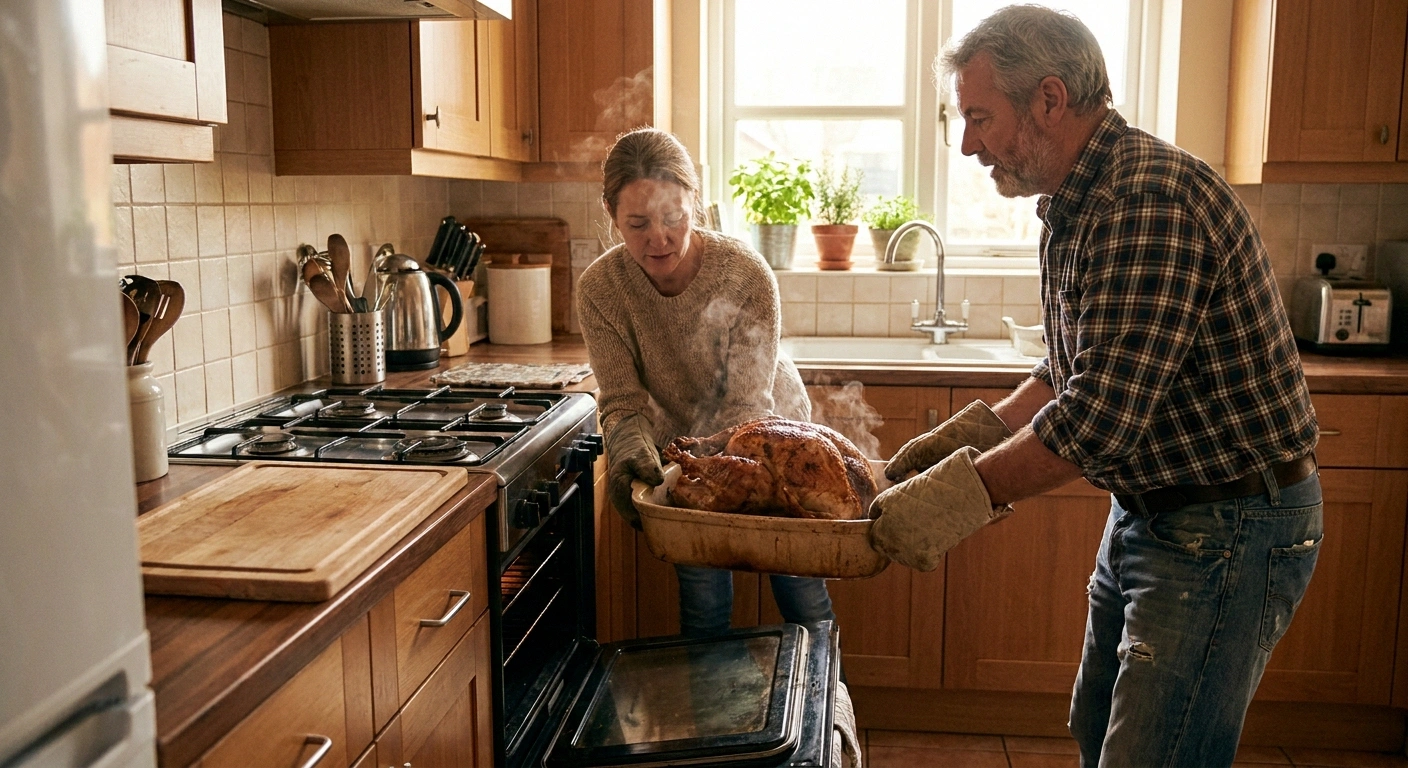
The turkey is usually the heaviest, hottest thing anyone lifts all year. The National Turkey Federation has put the average Thanksgiving bird at about 16 pounds — and that's before you add a roasting pan, a rack, and the juices sloshing underneath. With numb hands, a weak grip, and uncertain balance, that single lift is where I'd put most of the day's risk. The American Burn Association's rule works for any host: lift only what you can easily handle.
So the bird gets planned like a small construction job:
- Choose your lifter ahead of time. Ask a strong, steady guest to be the one who moves the pan in and out of the oven, and tell them the timing so they're in the kitchen when it matters.
- Think smaller. The USDA's rule of thumb is a pound of turkey per person, so a table of eight doesn't need a 20-pound bird. A bone-in turkey breast or a tray of thighs and drumsticks is far lighter, cooks faster, and nobody leaves hungry.
- Never lift a flimsy foil pan by its edges. If you use a disposable pan, set it on a sturdy rimmed baking sheet first, and lift the sheet.
- Let it rest. The USDA suggests letting a roasted turkey stand for 20 minutes before carving, which gives your lifter time to step back and your carver time to sit down.
- Carve sitting down. An electric carving knife and a cutting board on a damp towel let you carve at the kitchen table, or you can hand the knife to someone else and enjoy the applause anyway.
- Serve from the kitchen. Buffet-style service means no one walks a hot, heavy platter around a crowded table.
Your Feet Have a Budget, So Spend It Where It Counts
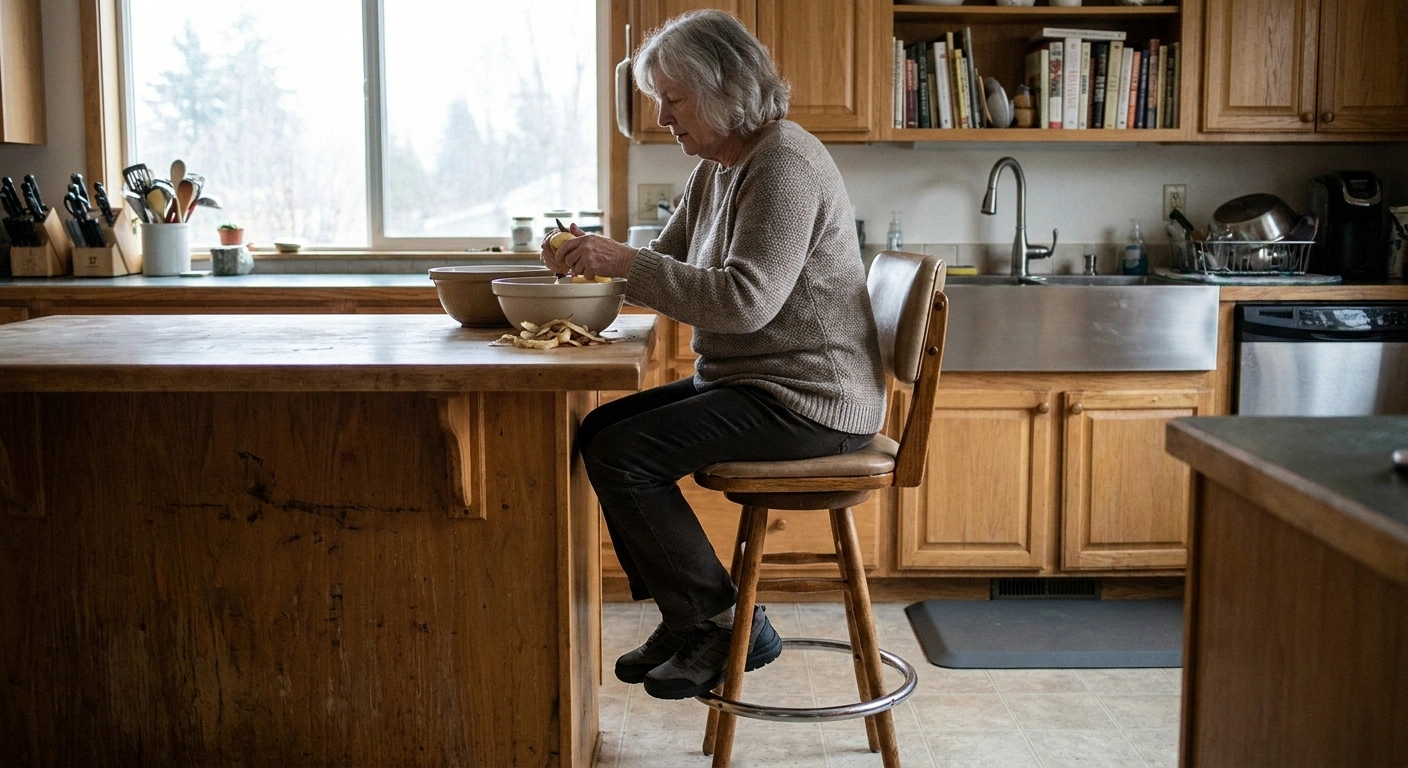
Around the time the rolls go in, the burning or the numbness in your feet goes from background noise to the loudest thing in the room — usually right when the gravy needs you. Standing time is the budget that runs out first, and a holiday spends it fast.
Most of my prep now happens sitting down. Chopping, peeling, stirring, folding napkins, even rolling pie crust: all of it works at the kitchen table. For the jobs that need the counter, occupational therapists often suggest a perching stool, a tall seat that lets you lean and rest at counter height. Choose a sturdy one with non-slip feet, and use it only if you can get on and off it safely. Studies of people who stand for work find moderate evidence that cushioned flooring eases foot and leg discomfort, though none looked at neuropathy. If you try an anti-fatigue mat, pick one with sloped edges that lies flat, since Canada's occupational safety agency warns that a mat that curls or slides becomes a trip hazard and that very thick foam can make standing harder.
Shoes matter as much as the floor. The National Institute of Diabetes and Digestive and Kidney Diseases puts it plainly: “Do not walk barefoot or in just socks – even when you are indoors.” I wear closed-back shoes with cushioned, non-slip soles in the kitchen, never floppy slippers. A dropped fork, a splash of hot grease, or a bit of broken glass can injure a foot that can't feel it, which is why I wrote a whole piece on going barefoot at home with neuropathy. That night, after the last guest leaves, I check both feet for blisters, cuts, or redness I might have missed. Anything I find gets cleaned and covered, and a burn, a deep cut, or spreading redness means a prompt call to my podiatrist or doctor. With numb feet, small wounds can turn serious without hurting.
Rest before you need it. Once the turkey goes in, I sit for twenty minutes whether I feel tired or not. If you've never tried pacing on purpose, my article on pacing and neuropathy fatigue explains why spending energy in small, planned amounts leaves more of it for the evening itself.
Set Up the House So Nobody Falls, Including You
Falls are common enough in later life without a holiday crowd. The CDC says more than one in four adults 65 and older falls each year, and one fall doubles the chance of another. Its own fall-risk checklist names our problem directly: “Numbness in your feet can cause stumbles and lead to falls.” In one small study, researchers tracked 20 older adults with neuropathy for twelve months, and 69 of the 76 falls they recorded happened on uneven or slick ground — which is exactly what a kitchen floor becomes when the gravy boat tips.
- Front door
- A sturdy chair where guests can sit to pull off boots, and a doormat that doesn't slide when you step on its edge.
- Hallway
- Coats and handbags go on a bed, never the floor. Light on from late afternoon.
- Kitchen
- A folded towel within reach of the stove for spills, and your own chair close enough to sit between jobs.
- Dining room
- Hot dishes at least 10 inches from the table edge, and a short tablecloth if anyone uses a walker or cane. The American Burn Association warns that long cloths can snag and pull hot food over.
- Bathroom
- A night light, a non-slip mat, and a clear path from the table so nobody has to hunt for a switch.
- Pets
- A gated room during the meal and the rush of arrivals, when a dog underfoot is most likely to trip someone.
The day before, I walk the route that food and people will travel: front door to coat closet, kitchen to table, table to bathroom. Anything on the floor that doesn't need to be there goes into a bedroom. Throw rugs in the path get rolled up for the day, as I explain in my piece on area rugs and trip hazards. Hall and bathroom lights stay on after dark so nobody has to feel their way through a strange house.
Two more small moves make a real difference. I keep a folded towel on the counter so spills get wiped the second they happen, ideally by someone else, and I put a sturdy chair in the kitchen with my name on it, figuratively speaking. When someone asks where I want them, I can say “anywhere but that chair” and mean it.
Name a Kitchen Captain and Hand Out Real Jobs
For years, the hardest part of hosting with neuropathy wasn't physical at all. It was asking. I'd hover, I'd over-explain — and then I'd end up lifting the pan myself because asking felt like admitting defeat.
What changed things was naming a kitchen captain. One trusted person, usually my daughter, knows the plan, knows which jobs are hers, and runs interference when well-meaning relatives crowd the stove. Other guests get specific assignments ahead of time: rolls, a salad, drinks, or the dishes. Specific requests are easier to say yes to than a general “let me know if you need anything.”
If asking still feels awkward, it may help to know the cooking isn't everyone's favorite part anyway. In a 2025 American Psychiatric Association poll, only about one in four adults said they look forward to preparing holiday meals, while most looked forward to seeing family and to the food itself. Handing someone a job doesn't take the holiday away from them.
You don't owe anyone a medical explanation, but a short one can help people understand why you're sitting while they carry. If you'd like wording for that conversation, my article on explaining neuropathy to family has sentences that work without turning dinner into a medical briefing.
The Drinks Table and Your Medicines
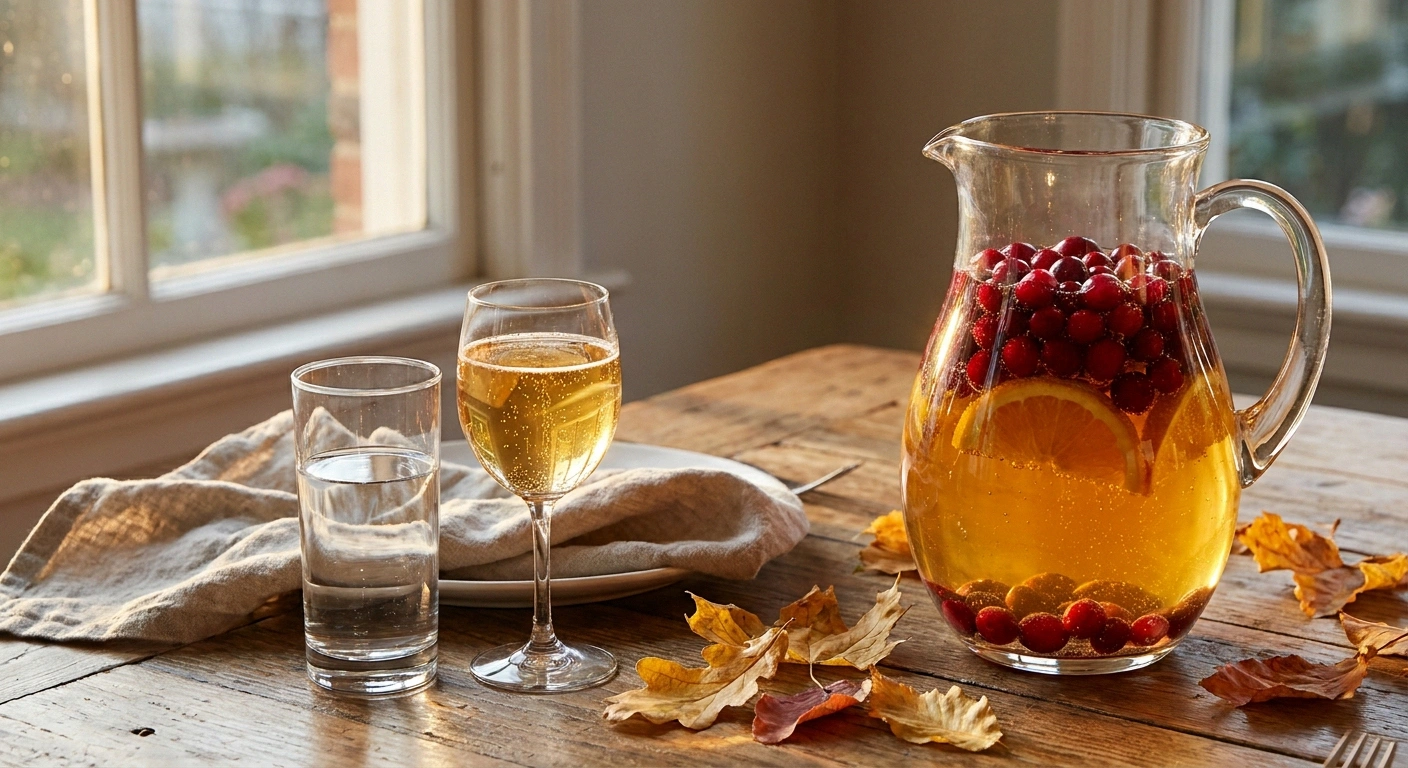
Wine and holiday meals travel together at a lot of tables, and I'm not here to take the glass out of anyone's hand — not even my own. But neuropathy adds two things worth thinking about before the day, not during it.
First, alcohol and nerves have a history. The National Institute of Neurological Disorders and Stroke lists alcoholism among the causes of peripheral neuropathy, and it notes that cutting back on toxins like alcohol can lower the risk of developing it. Second, the medicines many of us take for nerve pain come with alcohol warnings, and they aren't identical. Gabapentin's medication guide says not to drink alcohol without first talking with your prescriber, because the combination can make sleepiness and dizziness worse. Pregabalin's guide says plainly not to drink alcohol while taking it. Duloxetine's guide warns against heavy drinking because of the risk of severe liver injury, and its label lists falls among the reported side effects. In a crowded house, on numb feet, extra dizziness is a fall waiting to happen.
The fire-safety people add one more rule: if you've had a drink or you're feeling drowsy, stay away from the stovetop. That's a good moment to hand the last pan to your kitchen captain.
My own approach is to decide ahead of time what I'll drink, keep a full water glass at my place, and make the non-alcoholic option as festive as the wine. A pitcher of sparkling cider with cranberries floating in it disappears faster than the chardonnay at my house, and my list of alcohol-free drinks for neuropathy has more ideas that still feel like a celebration. If you're not sure how your particular medicines interact with alcohol, your pharmacist can tell you in about two minutes.
Cleanup and the Day After
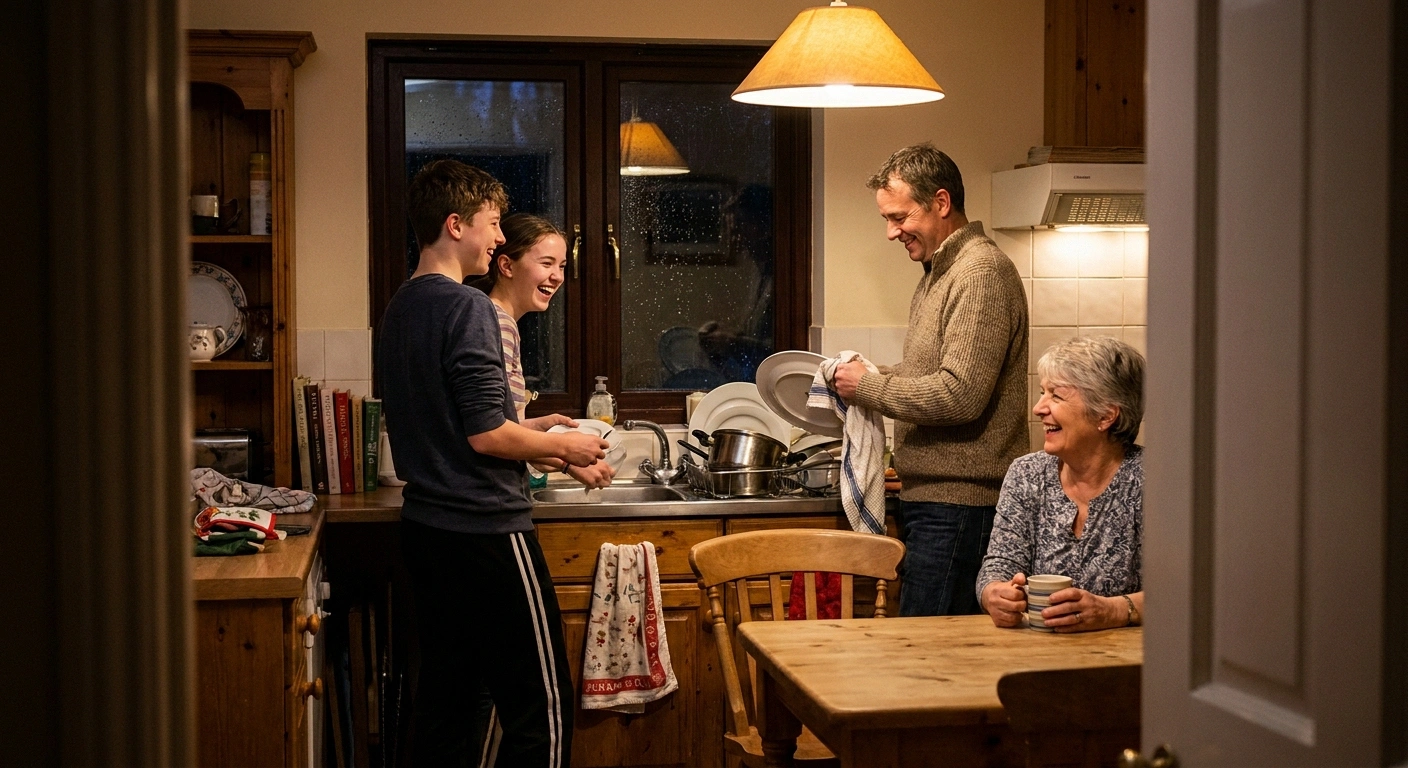
The dishes will wait. Load the dishwasher, let the roasting pan soak overnight, and accept every offer to dry. Hot dishwater is its own hazard for numb hands, so wear grippy dish gloves and let someone else check the water temperature, which is exactly what the National Cancer Institute suggests for people with nerve problems. If you have a kitchen captain, cleanup is the moment to let them run things while you sit with a cup of tea and hear who's changed jobs and who's expecting.
Leftovers do need attention the same evening. The USDA says to divide them into smaller portions and refrigerate them in covered, shallow containers so they cool quickly, then use refrigerated turkey, stuffing, and gravy within three to four days or freeze them. Reheated leftovers should reach 165°F, and a thermometer settles that question without anyone touching the food.
Then protect the day after. I put nothing on the calendar, check my feet again in the morning, and expect a flare. That isn't pessimism — it's the price of a day I chose on purpose, and planning for it means it doesn't knock me flat. The National Institute on Aging notes that enough sleep can reduce pain sensitivity, so I guard the night before and the night after as carefully as the meal itself. Most years I spend the next afternoon in my reading chair with leftover pie and a mystery novel, which is not a bad way to pay.
Frequently Asked Questions
Can I still host a holiday dinner if I have neuropathy?
Many people with neuropathy still host. It helps to split the meal into individual jobs, keep the ones your body handles well, change how you do the harder ones, and hand off heavy hot lifting, long standing, and anything that depends on feeling heat with your fingers.
How can I cook safely when I can't feel heat in my hands?
Use oven mitts that cover your forearms for anything that has been near the stove, slide oven racks out instead of reaching in, turn pot handles toward the back, lift food out of boiling water rather than carrying the pot, and check food with a thermometer instead of your fingertips.
What should I wear on my feet while cooking with neuropathy?
Closed-back shoes with cushioned, non-slip soles protect numb feet from dropped utensils, hot spills, and slippery floors. Federal diabetes guidance says not to walk barefoot or in just socks, even indoors, and it is worth checking your feet for blisters or cuts after a long day of cooking.
How far ahead should I thaw a frozen turkey?
The USDA advises allowing about 24 hours of refrigerator thawing for every 4 to 5 pounds, so a 16- to 20-pound turkey needs four to five days in the fridge. Never thaw a turkey on the counter.
Is it rude to ask guests to bring dishes or help clean up?
No. Most guests would rather have a specific job than a vague offer to help. Assigning dishes and naming one person as your kitchen captain ahead of time makes the day easier for everyone, including you.
How long can holiday food sit out on the table?
The USDA says to put turkey, stuffing, and gravy away within two hours, or within one hour if the room is warmer than 90 degrees Fahrenheit. A phone timer set when dinner is served makes this easy to remember.
Can I have a glass of wine if I take gabapentin, pregabalin, or duloxetine?
Each medication guide says something different. Gabapentin's says not to drink alcohol without first talking with your prescriber, pregabalin's says not to drink alcohol while taking it, and duloxetine's warns against heavy drinking because of liver injury. Check with your pharmacist or prescriber before the holiday.
About the Author