For years my “neuropathy toolkit” was a single drawer in the kitchen with a bottle of gabapentin, a tube of capsaicin cream, and a heating pad I'd had since 1998. When the pain spiked, I'd shuffle to the drawer, root around for whatever felt right that day, and try not to spill the cream while my hands shook. It worked, more or less. It also took about ten minutes of standing at a counter, which is exactly what neuropathic feet don't want you to do during a flare.
The shift came when a friend in my support group used the word “system.” She didn't have a drawer. She had a small basket by the bed, a tray on the coffee table, a kit in her purse. Each one held three or four things, and each one was within arm's reach of where she actually was when the pain hit. She wasn't searching during a flare. She was reaching.
This guide is the toolkit I wish I'd built ten years earlier. Not a shopping list — a system. The point isn't to own more stuff. It's to have the right small things in the places you actually live, so that when the pain spikes you reach instead of search. We'll walk through what belongs in the kit, where to put each piece, what to skip, and how to start if your budget is small or your house is small.
Why a “Toolkit” Beats a Medicine Drawer
Neuropathy is a moving target. The symptom that wakes you at 2 a.m. — burning across the soles — isn't the same one that makes mid-afternoon hard, when your hands buzz and refuse to grip a pen. It isn't the same one that turns a five-minute grocery walk into a balance event. A single drawer of “stuff for the pain” assumes the pain is one thing. It isn't.
A toolkit organizes around the actual moments where pain interrupts you. Bedside, where night pain and morning stiffness live. Living room or favorite chair, where evening burning and restlessness build. Kitchen, where standing time accumulates. Bathroom, where falls and burns hide. Purse or car, for the flare you didn't see coming.
Each of those locations gets a small, dedicated kit — three to six items, no more. The redundancy is a feature, not waste. You're paying for the seconds you don't lose searching during the worst part of the day.
If you've never built a system like this, the natural starting point is the range of natural remedies for peripheral neuropathy — not because you'll use all of them, but because seeing the menu helps you understand what each tool is actually for.
The Four Categories Every Toolkit Needs
Before we sort by location, sort by job. Every effective neuropathy toolkit covers four jobs. If you only have one tool in each category, you have a working kit.
The Four Jobs Every Toolkit Must Cover
1. Physical Relief
Heating pad, ice pack, compression socks, foot soak, TENS unit, lidocaine patches, capsaicin cream. Tools that change what your body feels right now.
2. Sensory Rerouting
Textured ball, vibration pen, foot roller, scented oils, white noise. Competing input crowds out pain signals (gate-control principle).
3. Cognitive Shift
A meditation app loaded and ready, an audiobook, a paperback you're already in, a music playlist queued. The mind doesn't talk pain down by trying.
4. Emergency Flare
Approved rescue meds, dose card, water, one-handed heating pad, a phone with one trusted person on speed dial. Stops a flare from becoming a fall.
Key Takeaway
A neuropathy toolkit is a system, not a shopping list. Distribute small kits (3–6 items each) across the rooms where you actually live: bedside, favorite chair, kitchen, bathroom, and a travel pouch. The point is to reach during a flare — not search.
1. Physical relief. Tools that change what your body is feeling right now. Heating pad, ice pack, foot soak basin, compression socks, weighted blanket, TENS unit, foot massager, capsaicin cream, lidocaine patches.
2. Sensory rerouting. Tools that give your damaged nerves something else to focus on. Textured ball for hand-feet stimulation, vibration pen, scented oils, a familiar sound (white noise machine, audiobook), a soft soft surface to rest feet on. The principle is gate control — competing input crowds out pain signals.
3. Cognitive shift. Tools that move you out of pain spiral and into something else. A meditation app loaded and ready, a guided-breathing card on the wall, a paperback you're already in the middle of, a crossword, a music playlist queued up. The mind doesn't talk pain down by trying. It does it by being elsewhere.
4. Emergency flare. Tools for the worst hour. Rescue meds your doctor has approved (and the dose written on a card, because no one remembers during a flare), a bottle of water, a heating pad you can grab one-handed, a phone with one trusted person on speed dial. This is the kit that stops the flare from becoming a fall.
If you're missing a category entirely, that's where to start shopping. Don't add a fourth heating pad if you don't have any cognitive-shift tools.
Bedside: Where Night Pain Lives
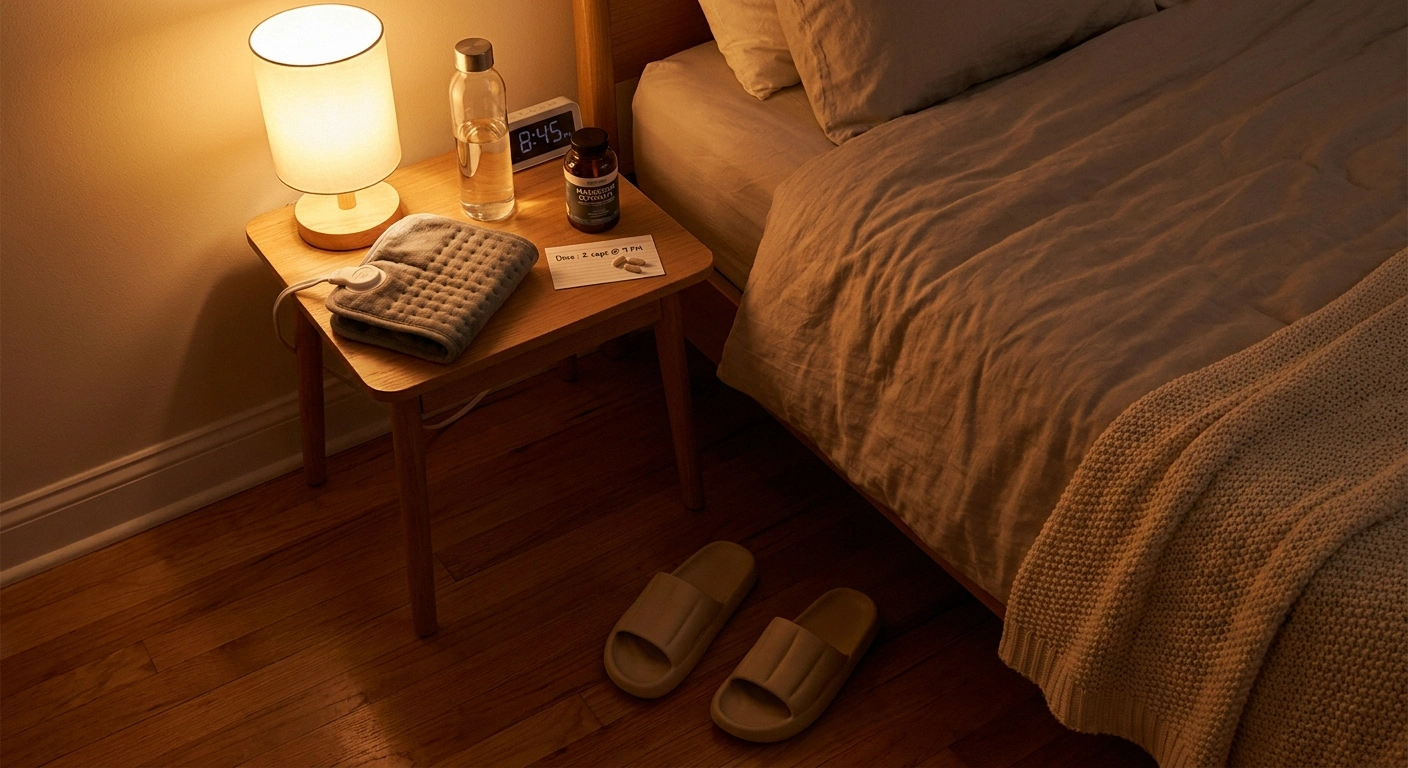
The bedside kit is the most-used part of any toolkit. Neuropathy pain is famously worse at night — most patients I talk to point to the hours between midnight and 4 a.m. as the worst stretch. By the time you're awake and aching, you don't want to be hunting for anything.
Research Says
A 2025 systematic review of self-initiated interventions for peripheral neuropathy found that the highest-impact home strategies cluster around three categories: thermal modulation (warm baths, heating pads), gentle physical activity, and structured pacing of daily tasks. Single-tool approaches consistently underperformed multi-modal kits used flexibly across the day.
What belongs there:
- A small heating pad with auto-off. The auto-off matters; you will fall asleep on it. Look for 1-hour or 2-hour timers.
- A water bottle, full, on the nightstand. Hydration during the night reduces cramping. Cap that you can open one-handed.
- Magnesium glycinate or magnesium citrate. Many people with neuropathy use evening magnesium for cramps and sleep. Read the full magnesium guide for dosing and what kinds work for nerve pain.
- A small lamp on a touch-base. Not a clicker switch you can't grip at 3 a.m. — a touch lamp or a smart bulb you can voice-activate.
- A pair of cushioned slippers right beside the bed. Not under it, beside it, oriented to step into. Falls happen most in the first 30 seconds of getting up.
- A printed card with rescue dose info. If your doctor has prescribed a “as needed” medication, write the dose, the time of last use, and the number not to exceed. Tape it inside the drawer. Pain brain doesn't remember.
If night pain is your worst symptom, the bedside kit is your highest-leverage investment. Spend an hour and $40 to $80 here before anywhere else. Pair it with the broader strategies in our guide to why neuropathy gets worse at night for the underlying explanation.
The Living Room: For the Long Stretches
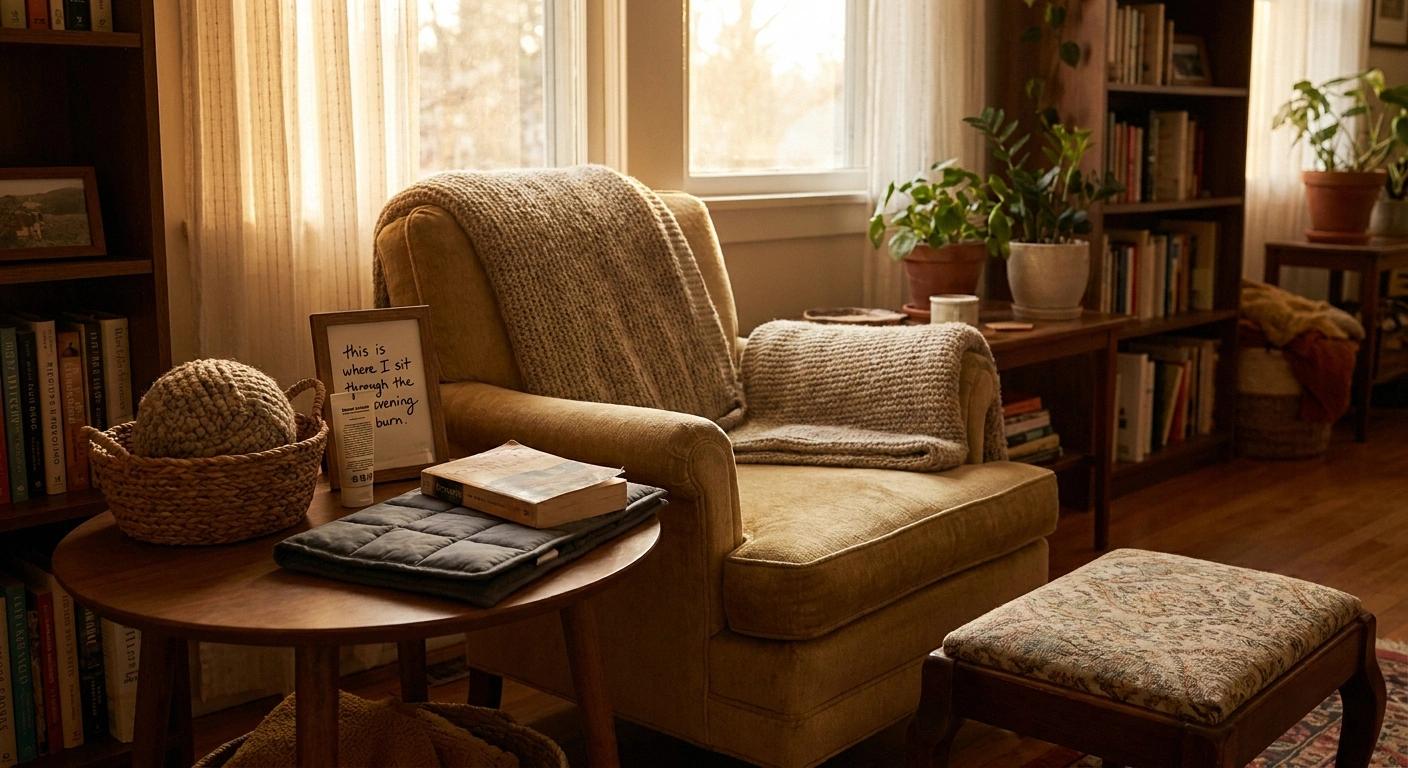
The living room or favorite chair is where the slow, grinding, “I just need to sit through this evening” hours happen. The kit here is less about emergencies and more about steady pacing.
What belongs there:
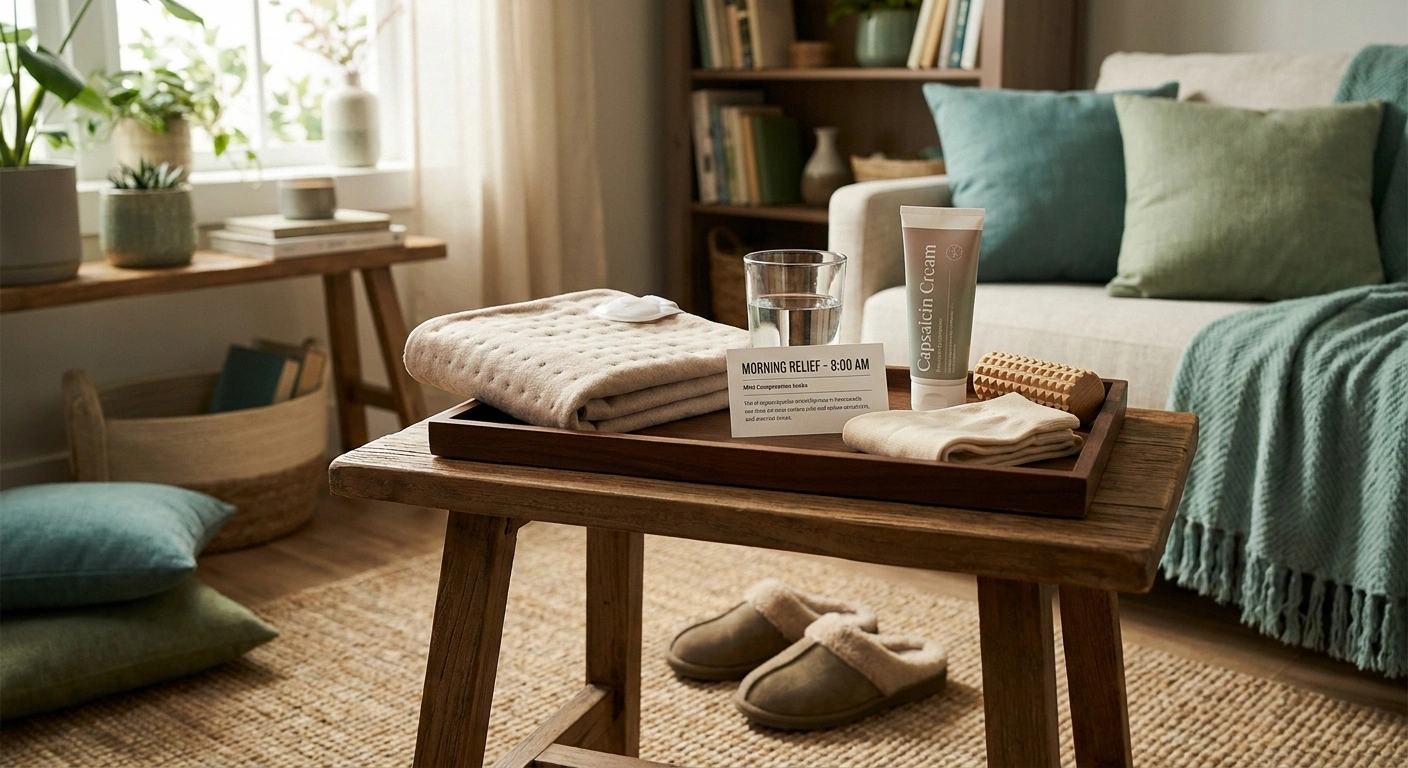
- A small basket or tray within arm's reach of your usual seat. Not on the coffee table where you have to lean forward. On a side table, at chair-arm height.
- A foot stool with a soft surface. Elevation reduces evening swelling and helps the burning. A small yoga block or rolled towel works if you don't want to buy a stool.
- A weighted lap pad or small weighted blanket. Many people with neuropathy report deep-pressure input is calming for restless legs and feet. Two to five pounds is usually enough.
- A textured ball or foot roller. Rolling a tennis ball or a knobby foot roller under the arches gives sensory input that competes with pain signals. Cheap and surprisingly effective.
- A soft throw or compression socks. Many evenings call for warmth on the legs. Mild graduated compression socks can reduce evening swelling and burning.
- A lidocaine patch or capsaicin cream within reach for spot application without getting up.
- A book, an audiobook on a phone, or a paperback you're already in the middle of. The cognitive-shift tool. The book has to be one you actually want to read — not a “should read.”
The living room kit is where most people overspend. You don't need a recliner with a built-in massager, an infrared lamp, and a $300 weighted blanket all at once. Start with the foot stool, the ball, and the lap pad. Add from there.
Kitchen and Bathroom: The High-Risk Rooms
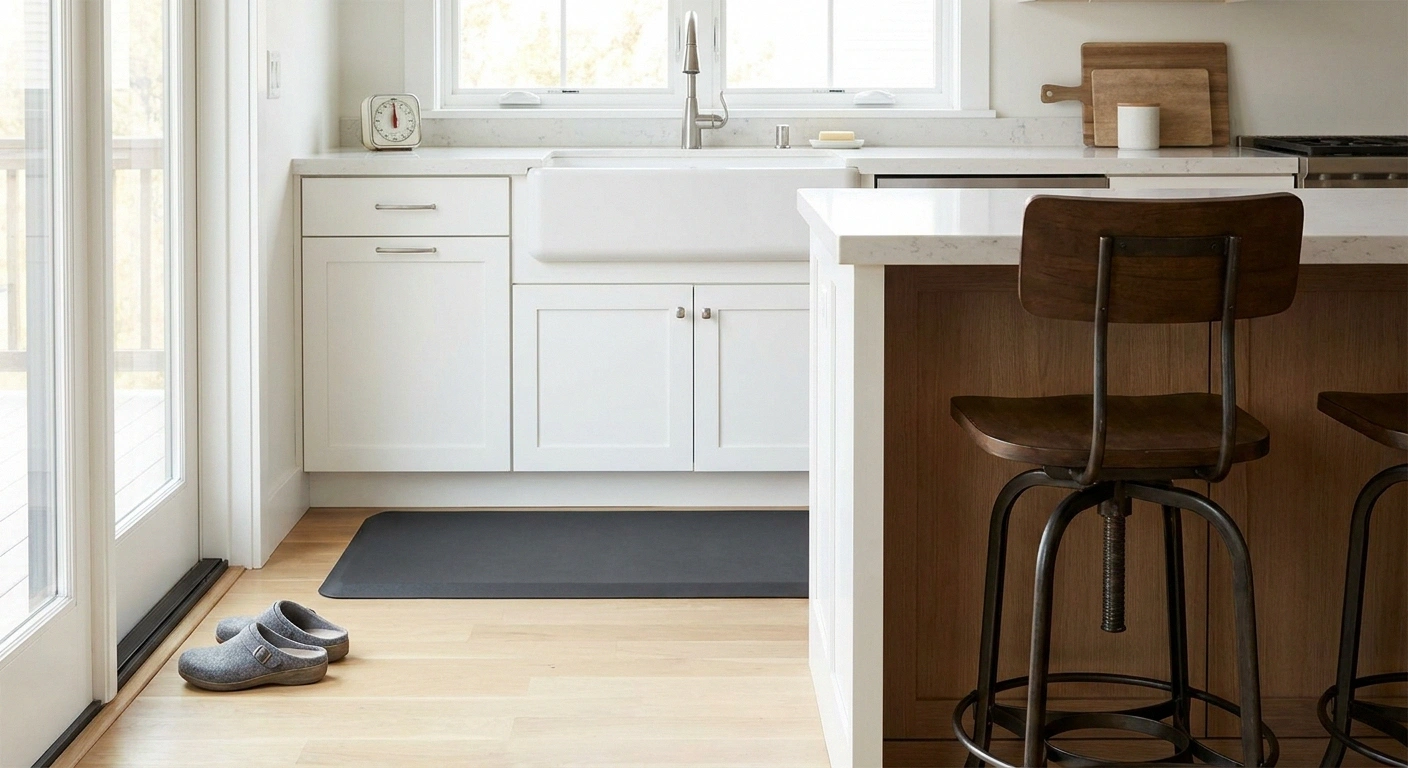
The kitchen and bathroom are the rooms where neuropathy quietly becomes dangerous. Hard floors, hot water, sharp edges, slick surfaces, long standing time. The toolkit here is half safety, half pain relief.
Bathroom & Kitchen Risk
More than half of all home falls for older adults happen in the bathroom or kitchen. For people with neuropathy, hard floors, hot water you may not feel, and slick surfaces multiply the risk. Grab bars, an anti-fatigue mat, a shower stool, and a 120°F water heater setting are the four highest-leverage purchases in either room.
Never test water temperature with hands or feet. Use a thermometer or the back of your wrist.
Kitchen:
- An anti-fatigue mat in front of the sink and stove. Cushioned standing surface. The single best $30 you can spend in the kitchen.
- A high stool with a back. Sit while chopping, sit while waiting for water to boil, sit while loading the dishwasher. Standing time is the enemy.
- A pair of indoor shoes or supportive house slippers kept by the kitchen entrance. Bare feet on a hard kitchen floor accelerate every neuropathy symptom you have. The right shoes for neuropathy matter at home, not just outside.
- A timer. Not for cooking — for you. Set 20-minute standing limits and sit when it goes off, before the burn escalates.
Bathroom:
- A grab bar inside the shower and another beside the toilet. Not optional if your balance is shaky. Fall prevention strategies covers placement in detail.
- A non-slip bath mat inside the tub. The cheap suction-cup mats from the drugstore work fine.
- A shower stool or bench. Even if you don't think you need one yet, it changes how long you can shower without your feet escalating. They're $30 to $60.
- A water-temperature thermometer or a single-handle mixer set for safety. Damaged nerves can fail to register dangerous water temperatures. Set the home water heater to a maximum of 120°F (the U.S. Consumer Product Safety Commission's recommended limit).
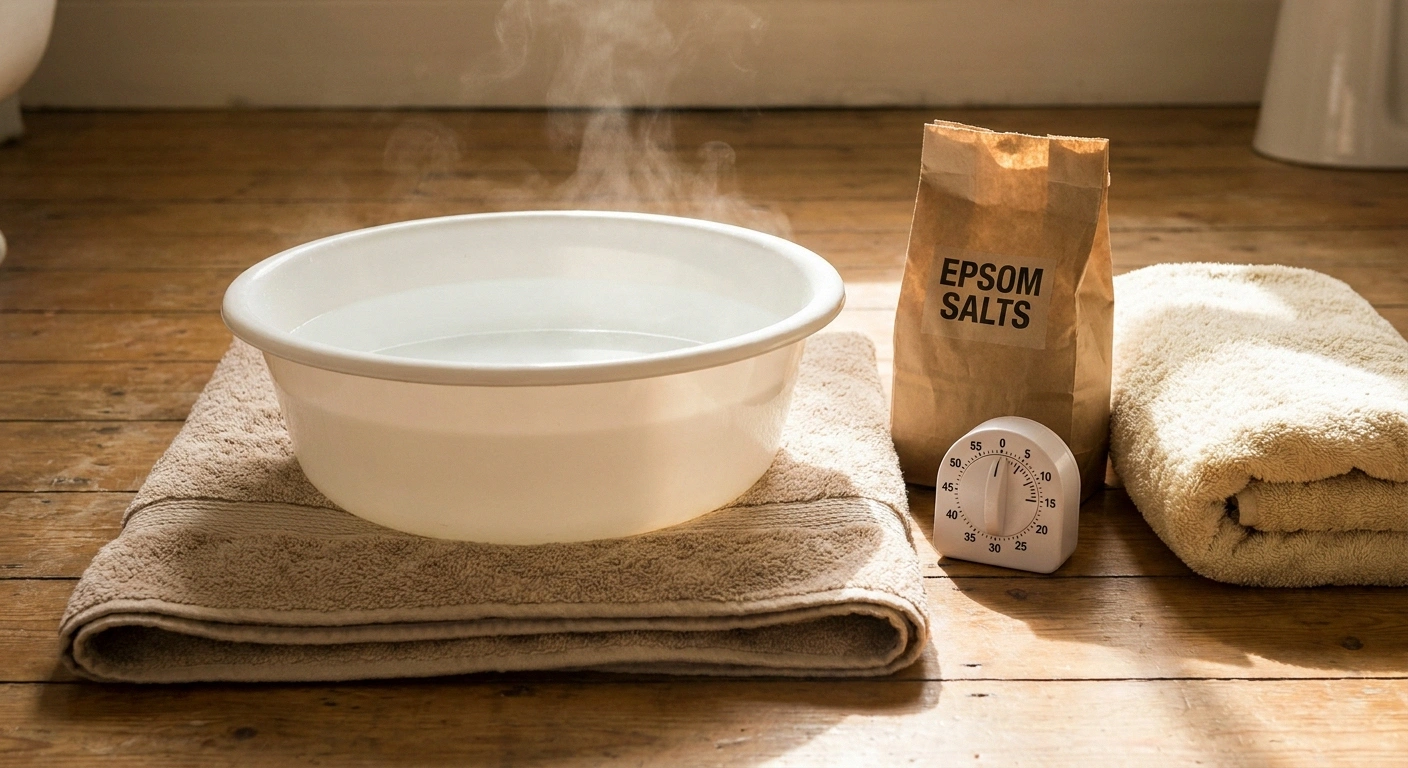
- A foot soak basin, towels, and Epsom salts in a small bin under the sink. Foot soaks are one of the cheapest, most effective tools in the kit. Keep them ready so it takes 30 seconds to set up.
Both rooms benefit hugely from the broader changes in our home safety modifications guide. The toolkit handles flare moments; the modifications handle the underlying setup.
The Travel Kit: For When You Leave the House
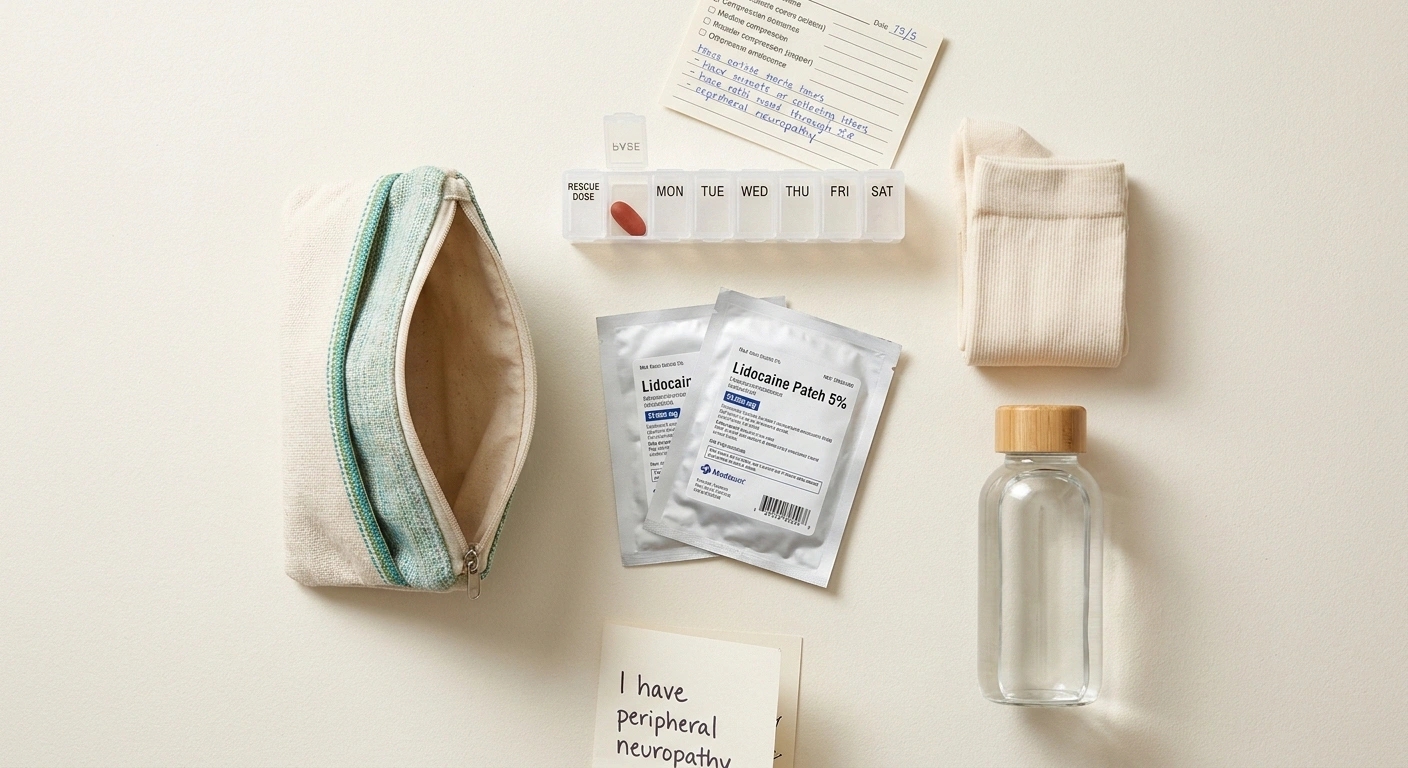
The flare you can't predict is the one in line at the grocery store, in a friend's car, in the doctor's waiting room, on the second day of a trip. A small purse-or-bag kit converts a “we have to go home now” event into a “give me ten minutes” event.
Travel Pouch Checklist (fits in any purse or bag)
What belongs in a travel kit:
- A small zip pouch. Anything bigger and you'll leave it in the car.
- A single dose of any approved rescue medication in a labeled pill case. Not the whole bottle.
- A few lidocaine patches or a small tube of capsaicin cream for spot relief.
- A pair of compression socks. Pull them on in the bathroom of wherever you are when feet start to burn.
- A small water bottle or refillable bottle.
- A printed medication card. List what you take, the doses, your doctor's name, and one emergency contact. If something unexpected happens, the card does the talking when you can't.
- A folded handwritten note about your neuropathy. “I have peripheral neuropathy. I may move slowly or need to sit suddenly. Thank you for your patience.” This is for the times when explaining feels harder than handing over a card.
The travel kit lives in the bag you actually carry, not the one you mean to. Refill it monthly so the meds don't expire on you.
What NOT to Buy (and What People Waste Money On)
I've watched a lot of friends in support groups spend hundreds of dollars on tools that didn't help them. Some of it is excitement — finally something might work — and some of it is desperation. Both lead to drawers full of unused devices. Three patterns to avoid:
An expensive TENS unit before you've used a basic one. A $25 TENS unit and a $400 TENS unit do the same thing for most people. The $400 model has more programs you'll never use. Try a basic TENS unit first, learn whether the modality helps you at all, and only then upgrade if there's a specific feature you need.
Heated foot baths with built-in massage. The marketing photos look soothing. The reality is the rollers are often too aggressive, the water cools too fast, and the basin is heavy to lift when full. A plain $15 plastic basin, a kettle of warm water, and a kitchen timer work as well or better.
Infrared light panels you don't have a protocol for. Red light therapy has some research support for neuropathy, but most people buy a $200 to $800 panel and use it inconsistently for two weeks. If you're going to invest, commit to a daily protocol for at least eight weeks. Otherwise the panel becomes a coat rack.
The general rule: buy the cheap version, use it for a month, and only upgrade if you've proved the modality works for you specifically.
Building the Kit on $50, $200, and $500 Budgets
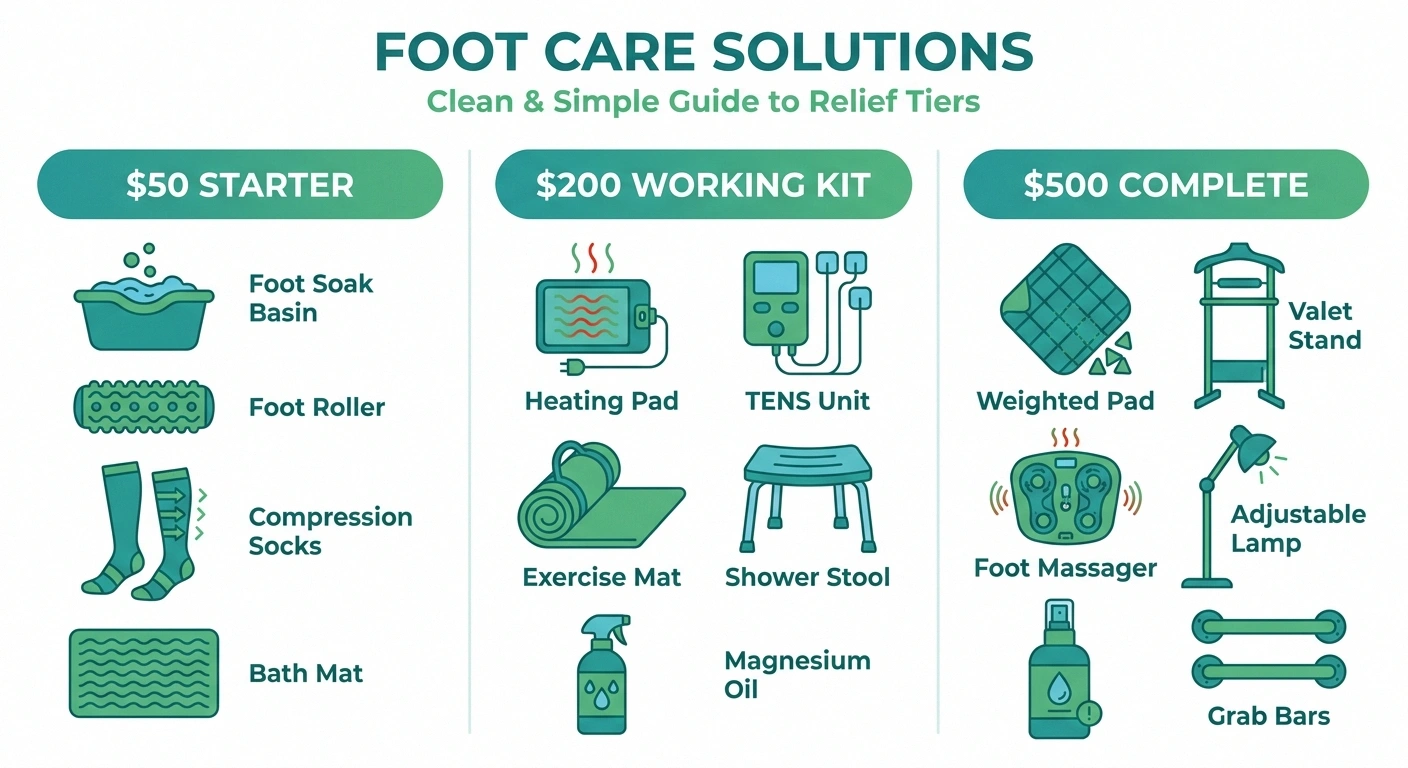
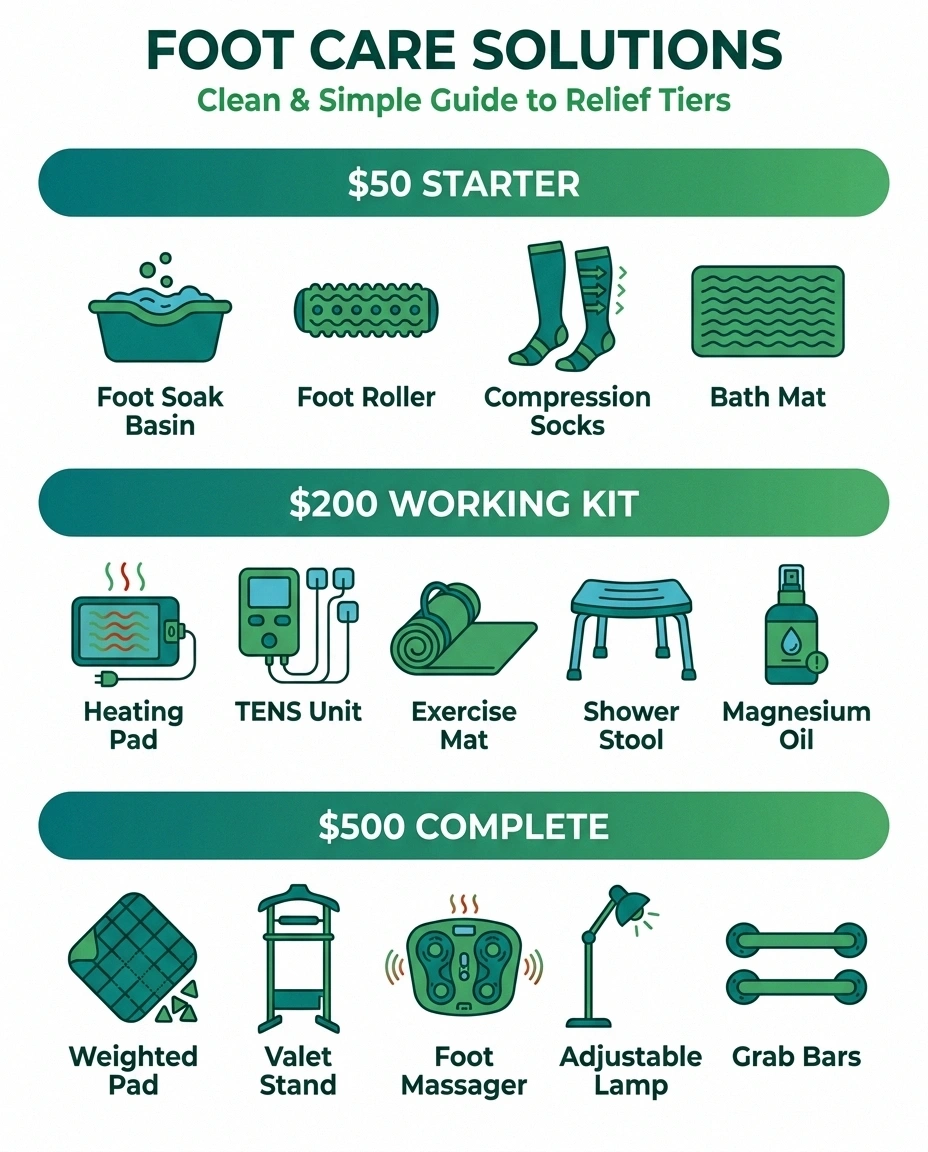
Most of what makes a toolkit work is small and inexpensive. If money is tight, here's how I'd build it in stages.
Build Your Toolkit by Budget
$50 — Starter Kit
Foot soak basin + Epsom salts ($18) · textured foot roller ($8) · mild compression socks ($12) · non-slip bath mat ($10). Covers physical relief, sensory rerouting, and bathroom basics.
$200 — Working Kit (most people)
Add: heating pad with auto-off ($30) · basic TENS unit ($30) · kitchen anti-fatigue mat ($30) · shower stool ($40) · magnesium glycinate ($25). Full bedside, kitchen, and bathroom kits.
$500 — Complete Kit
Add: weighted lap pad ($40) · clothing valet ($60) · foot massager you've test-driven ($80) · touch lamp ($30) · grab bars installed ($100) · travel pouch and refills.
Almost no one needs to spend more than $500. Daily relief comes from accessible small things, not expensive devices.
The $50 starter kit:
- Plastic foot soak basin ($10) plus Epsom salts ($8)
- A textured tennis-ball-sized roller for under the feet ($8)
- A pair of mild compression socks ($10-15)
- A drug-store bath mat with non-slip backing ($10)
That covers physical relief, sensory rerouting, the bathroom safety basics, and the foot-soak ritual that becomes most people's nightly anchor.
The $200 stage: Add a small heating pad with auto-off ($30), a basic TENS unit ($30), an anti-fatigue mat for the kitchen ($30), a shower stool ($40), and a quality bottle of magnesium glycinate ($25). You now have a full bedside, kitchen, and bathroom kit. This is what most people actually need.
The $500 stage: Add a weighted lap pad ($40), a clothing valet for the bedroom ($60), a quality foot massager you've test-driven first ($80), a programmable touch lamp ($30), grab bars installed by a handyman ($100 for materials and labor), and the small extras — a travel pouch, a few extra lidocaine patches, a second heating pad for downstairs.
Almost no one needs to spend more than that. The hyper-expensive devices in the catalogs — full-body infrared chambers, hyperbaric units, $4,000 nerve stimulators — are not where the daily relief comes from. The daily relief comes from a heating pad you can reach, a soak that's set up in 30 seconds, and a place to sit before the burn starts.
When the Toolkit Isn't Enough
A good toolkit handles the bad afternoons and the rough nights. It doesn't handle progressive nerve damage, new sudden symptoms, or pain that's escalating despite your best management. Knowing when to escalate is part of the kit too.
Call Your Doctor — Don't Wait for the Next Appointment
- New weakness, foot drop, or trouble lifting your toes
- Pain clearly worse than baseline for more than a week
- A wound, blister, or sore on a foot you can't feel
- Sudden balance changes or new falls
- Symptoms moving up the leg or into a new area
- Any sign of infection — redness, warmth, swelling, drainage
- Changes in bladder, bowel, or sexual function (possible autonomic involvement)
Call your doctor — don't wait for the next routine appointment — if any of the following happen:
- New weakness, foot drop, or trouble lifting your toes
- Pain that's clearly worse than your usual baseline for more than a week
- A wound, blister, or sore on a foot you can't feel — these can escalate fast
- Sudden balance changes or new falls
- Symptoms moving up the leg or into a new area
- Any sign of infection — redness, warmth, swelling, drainage
- Changes in bladder, bowel, or sexual function (these can signal autonomic involvement)
The toolkit is for daily management. It's not a substitute for diagnosis or treatment. If your pain isn't improving with the basics, ask your neurologist about adjusting medication, trying a referral to a pain specialist, or evaluating for one of the more intensive options like IVIG if your neuropathy has an autoimmune component, or photobiomodulation if you want to try a clinic-administered light therapy.
The point of the toolkit is to give you back the small daily moments — the cup of coffee, the evening with a book, the morning that doesn't start in pain. The harder questions belong to your medical team. Both, working together, is the system that actually works.
Frequently Asked Questions
What's the single most important item in a neuropathy toolkit?
If you can only buy one thing, buy a small heating pad with an auto-off timer and put it next to your bed. Night pain is the most common worst-time-of-day for neuropathy, and reaching for warmth in the dark without standing up or hunting for it is the highest-leverage moment in the entire kit. Everything else builds out from there.
How do I build a toolkit if I'm on a tight budget?
Start with the $50 starter kit: a plastic foot soak basin, Epsom salts, a textured roller for under the feet, mild compression socks, and a non-slip bath mat. That covers the four most common daily pain triggers — burning, restlessness, swelling, and bathroom fall risk — for under $50 total. Add a small heating pad next, then a TENS unit, then a kitchen anti-fatigue mat. Most of what makes a toolkit work is inexpensive.
Should I keep all my pain tools in one place?
No. Distribute small kits across the rooms where you actually live — bedside, favorite chair, kitchen, bathroom, and a travel pouch in your bag. The point is to reach during a flare, not search. Having three small heating pads spread through the house is more useful than one large one in a closet you can't get to during a 3 a.m. spike.
Are expensive TENS units, foot massagers, or infrared panels worth it?
Usually not as a first purchase. Buy the basic version of any modality first — a $25 TENS unit, a $15 foot soak basin, a $30 heating pad — and use it for at least a month. If you've proved the modality genuinely helps you, then upgrade to a better device. Most expensive equipment ends up unused because people bought it before they knew whether the underlying approach worked for their specific symptoms.
What's the difference between a toolkit and just having a lot of medication?
Medication is one tool of many, and it works on one job — pain signal suppression. A real toolkit covers four jobs: physical relief (heat, cold, compression), sensory rerouting (texture, vibration, sound), cognitive shift (something engaging to focus on), and emergency flare response. Patients who rely only on medication often miss the easier, faster, drug-free interventions that can prevent a flare from escalating in the first place.
How often should I update or refresh my toolkit?
Check your kits monthly. Replace expired medications and lidocaine patches, refill the magnesium and Epsom salts, restock the travel pouch, and notice which items you actually used in the last 30 days. Items that haven't been touched in three months either need to move to a more accessible spot or get retired. The kit should reflect what your symptoms actually look like now, not what you bought during the last flare-up panic.
When should I see a doctor instead of relying on the toolkit?
Anytime your pain is clearly worse than baseline for more than a week, you notice new weakness or foot drop, you find a wound or blister on a foot you can't feel, you have a sudden change in balance or new falls, your symptoms spread to a new area, you see signs of infection, or you have any change in bladder, bowel, or sexual function. The toolkit is for daily management — it doesn't replace evaluation when something genuinely changes.
About the Author