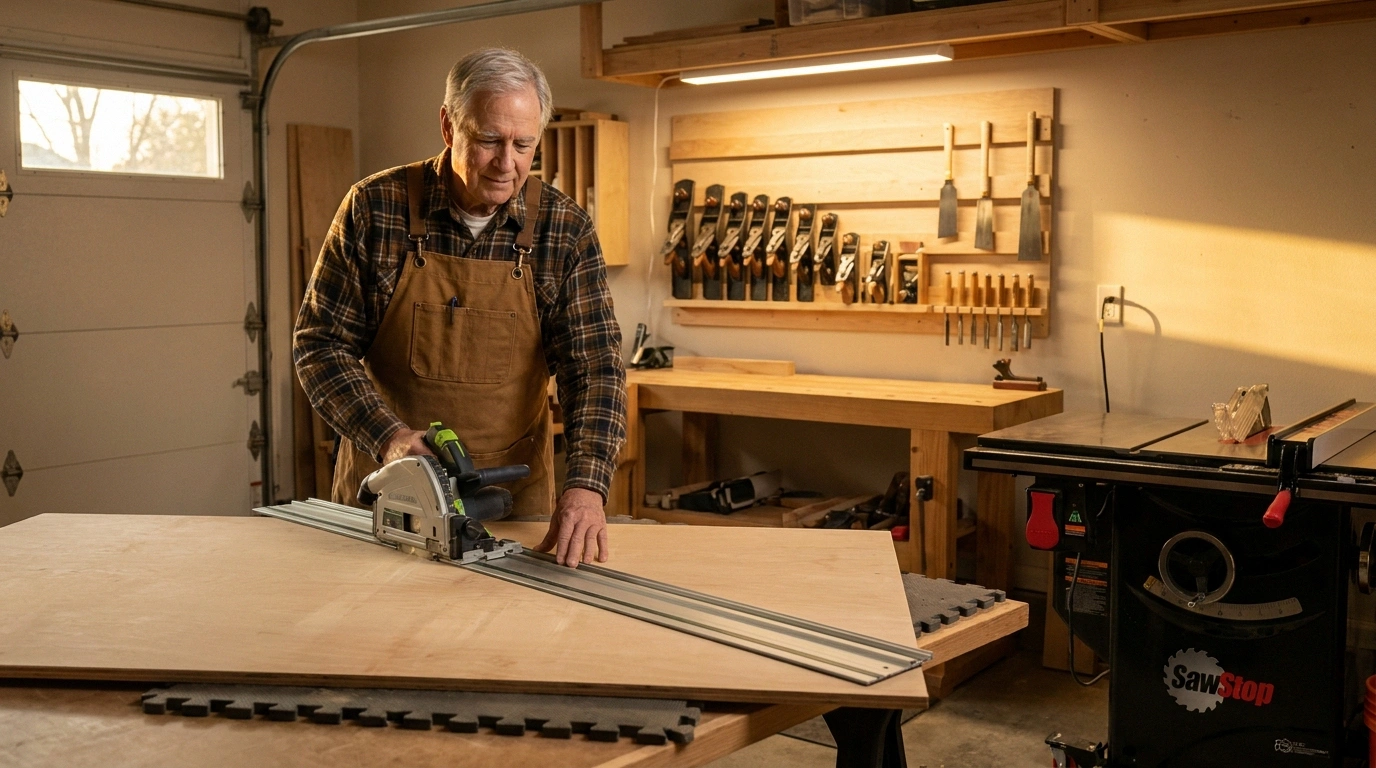
My brother-in-law Frank has been building furniture in his garage for forty years. Walnut jewelry boxes for his daughters, a maple cradle for his first grandbaby, a Shaker-style hall table that sits in my entryway. When his diabetic neuropathy hit his hands three years ago, the last thing he wanted to hear was that the shop was over.
Then one Saturday, ripping oak on his old contractor saw, the workpiece pinched. Kickback threw it back at him and pulled his left hand along the fence toward the blade. He said later the blade felt like a fingernail scratch. He looked down and his index finger had a cut across the pad an inch long. He didn’t feel it happen. He watched it happen. He bandaged himself in the kitchen sink, sat at the table for an hour, and by the end of the afternoon he had ordered a SawStop.
I’m Janet Ellis. I’m a patient advocate here, not a doctor, and Frank’s story is why this guide exists. If you have peripheral neuropathy in your hands and you still want to build things, the answer is almost always yes, you can. What changes are your habits, your tools, and your honesty with yourself about what your shop looks like now.
The Near-Miss That Bought Him a SawStop
Frank’s near-miss is not unusual. Table saws produce more than 30,000 emergency-room visits in the United States every year, and the hand is the most-injured body part. What’s unusual about Frank’s story is that he wasn’t doing anything reckless. Guard on. Push stick in hand. Fifteen-year veteran of that cut. His hands just couldn’t tell him the workpiece was binding until the blade was already in the meat.
Keep the hobby by changing the shop, not by white-knuckling the old routine. Three moves do most of the work: smart hand-tool substitutions where they belong (Japanese pull saw, hand plane, chisel, track saw), a SawStop with a GRR-Ripper for the cuts that stay on the table saw, and honest quit-signals so you know when to pivot to CNC, laser engraving, or hand-tools-only before neuropathy makes the call for you.
That’s the pivot every neuropathy woodworker faces. Nothing about the shop changed overnight, but something invisible has changed inside your hands, and the standard shop-safety advice was written for hands that still work. What follows is the map.
The Five Ways Numb Hands Change Shop Risk
Every standard shop-safety article assumes an operator with intact sensation. Neuropathy strips out that assumption.
Gloves get grabbed by rotating blades, router bits, and drill chucks. For an intact hand, the tug is a half-second warning that lets you pull back. For a numb hand, the first sensation is the arm going with the tool.
Use cut-resistant sleeves for forearm protection. Keep the hands bare, above the blade, guided by a GRR-Ripper or a purpose-built push block. Save gloves for sanding, chisel work, and handling rough lumber.
You cannot feel the start of a cut or a kickback. A woodworker with intact touch gets a warning right before an accident: a nick, a hot spot, a change in vibration. Small-fiber neuropathy takes that warning away. By the time you see blood, you’re already at tendon depth.
You cannot feel a rotating bit grabbing a sleeve, glove, or watchband. For an intact hand, the tug is a half-second warning. For a numb hand, the first sensation is the arm going with the tool.
Grip and fine-motor loss mean the workpiece slips at the worst moment. Neuropathy commonly damages motor and sensory fibers together. A workpiece sliding sideways into a spinning blade is the mechanism behind most kickback amputations.
A cut you don’t feel today can be a serious infection tomorrow. If you have diabetic neuropathy, the palm plays the same role the sole of the foot plays in the classic diabetic ulcer story. A shop cut left uncleaned overnight is a cellulitis waiting to happen.
Balance loss plus a spinning blade is a different injury category. Neuropathy is a leading cause of falls in older adults; our guide to neuropathy, balance, and falls covers that piece. Losing balance next to a running table saw is not the same as losing balance in the kitchen.
A 60-Second Pre-Shop Checklist
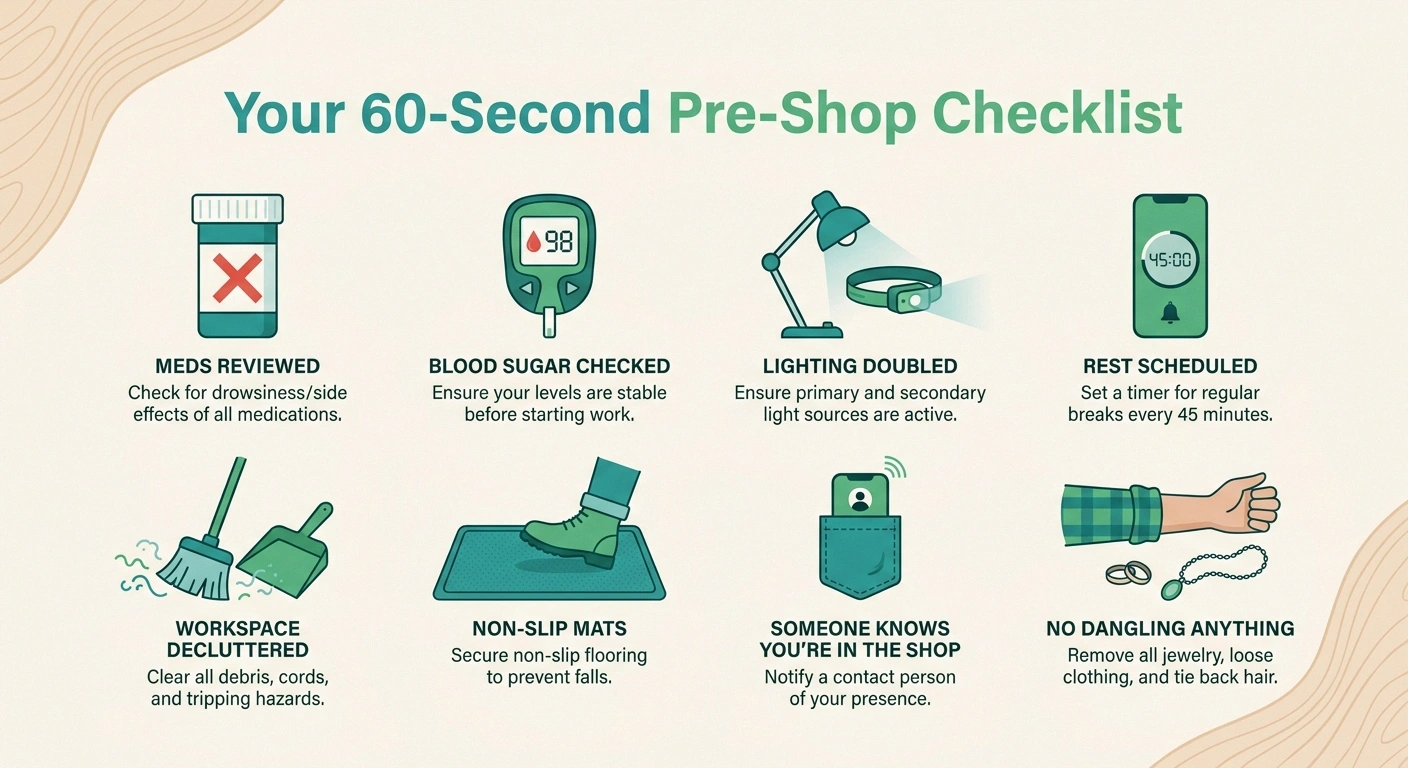
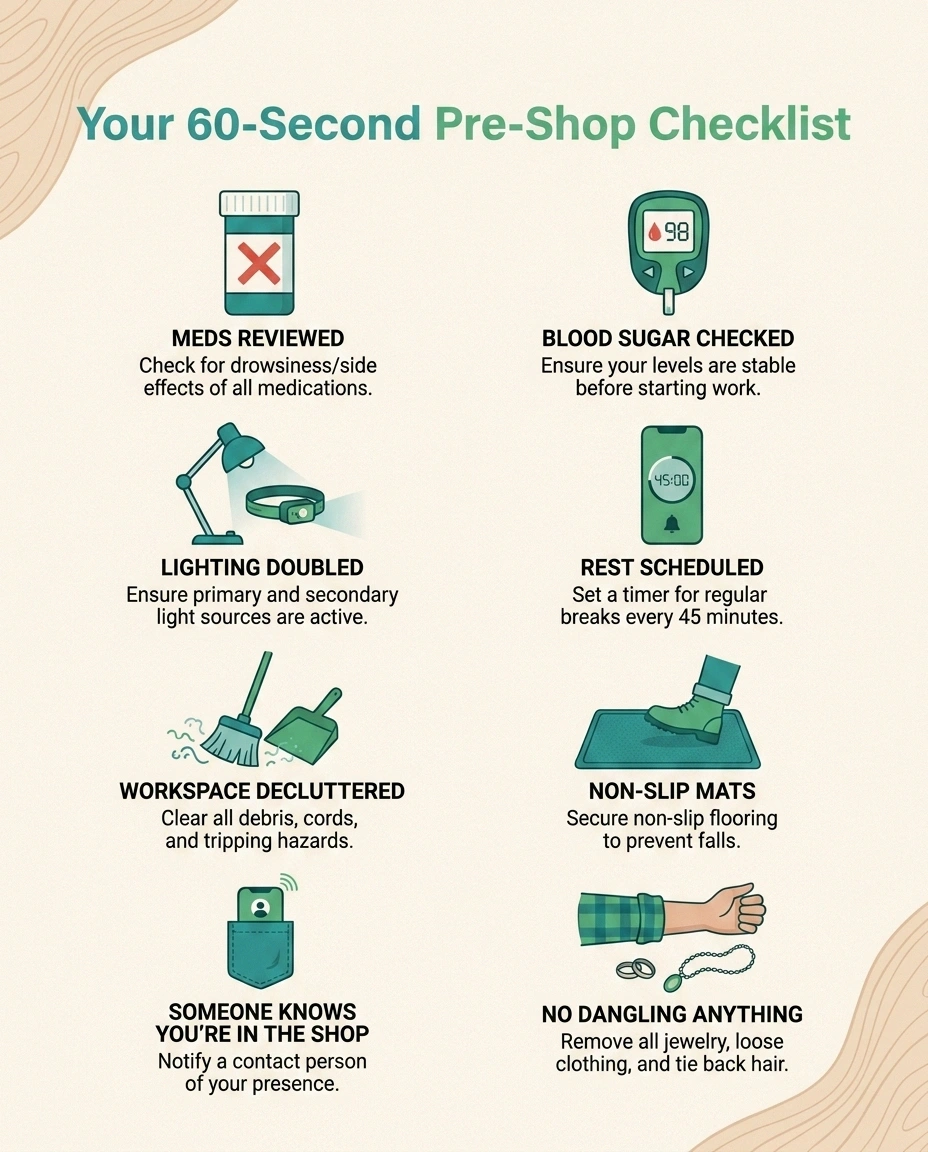
Before every session, run this list. Skip it and you’re gambling.
- Meds reviewed. Opioids, muscle relaxants, leftover sleeping pills, high-dose antihistamines, alcohol. Any one and today is not a shop day. Gabapentin and pregabalin can cause coordination issues; know your reaction pattern first.
- Blood sugar checked if you’re diabetic. Low brings tremor and confusion. Eat first.
- Workspace decluttered. Nothing on the floor to catch a foot. Cords routed away from where you stand. Sawdust swept.
- Non-slip mats at the primary station. Anti-fatigue foam reduces foot-position drift over a long project.
- Lighting doubled. Age plus neuropathy plus safety-critical work means the shop needs more light than it came with.
- Rest scheduled ahead. Phone timer for 45 minutes. When it buzzes, stop, sit, drink water. Fatigue is when the numb-hand feedback loop breaks worst.
- Someone knows you’re in the shop. Cell phone in your pocket, not on the far bench. A charged smartwatch with fall detection is legitimate insurance.
- Sleeves rolled, no dangling anything. No drawstrings, no watch band, no wedding ring on a hand operating a router or drill press.
The Dangerous Tools, Ranked
Every tool has a risk profile. Numb hands change the ranking, and knowing the ranking tells you which tools deserve upgrades and which deserve a hand-tool substitute.
1. Table saw. The single most dangerous tool in the average home shop, and the highest risk for a numb hand. Kickback pinches the workpiece, launches it back at the operator, and pulls the operator’s hand into the blade in the same motion. Studies found the blade guard had been removed in over half of injury cases. For a numb-hand woodworker this is not optional: guards and riving knives stay on, every cut.
2. Router. A bit spinning at 20,000 RPM will grab a sleeve, a glove, or a slipped fingertip and pull. There is no “let go quickly” for a numb hand. Handheld climb-cut kickback is silent and fast.
3. Jointer. The exposed cutter head at the infeed is where the classic jointer injury happens: a short board tips, the palm follows it across the cutter, no warning. Never joint stock shorter than about 12 inches or thinner than 3/8 inch without a sled and push blocks.
4. Miter saw. Lower risk than the table saw because the blade travels a fixed arc, but the “hold the workpiece three inches from the blade” habit assumes you’ll feel yourself creeping closer. A numb hand won’t. Use a fence stop or a hold-down clamp so the free hand is never near the blade path.
5. Band saw. The most forgiving power saw (no kickback, slow feed), but it still amputates fingers. Numb-hand risk is pushing a small piece through with the thumb in the blade line. Push stick under six inches wide.
Power Tools Ranked for Numb-Hand Risk
| Tool | Numb-Hand Injury Risk | Hand-Tool Substitute | Safer Upgrade |
|---|---|---|---|
| Table saw | Highest (kickback + blade contact) | Track saw for sheet goods, pull saw for small cuts | SawStop + GRR-Ripper + featherboard |
| Router | High (bit grabs sleeves and fingertips) | Chisel for mortises, rabbet plane for edges | Router table + featherboard + foot E-stop |
| Jointer | High (exposed cutter head, short-stock tip) | Hand plane for stock under 2 feet | GRR-Rip Block push, no stock under 12 inches |
| Miter saw | Moderate (fixed arc, but hand creep) | Japanese pull saw for trim and small crosscuts | Fence stop + hold-down clamp, hand never near path |
| Band saw | Moderate (no kickback, still amputates) | Coping saw for tight curves | Push stick under 6 inches, blade guard low |
| Drill press | Moderate (chuck-snag on cloth and sleeves) | Hand brace or eggbeater drill for small holes | Every workpiece clamped, no hand-holding |
6. Drill press. Low cut-injury risk, real snag risk. Long hair, loose sleeves, unclamped cloth all wrap up the chuck and pull the operator in. Clamp every workpiece.
The Smart Substitutions
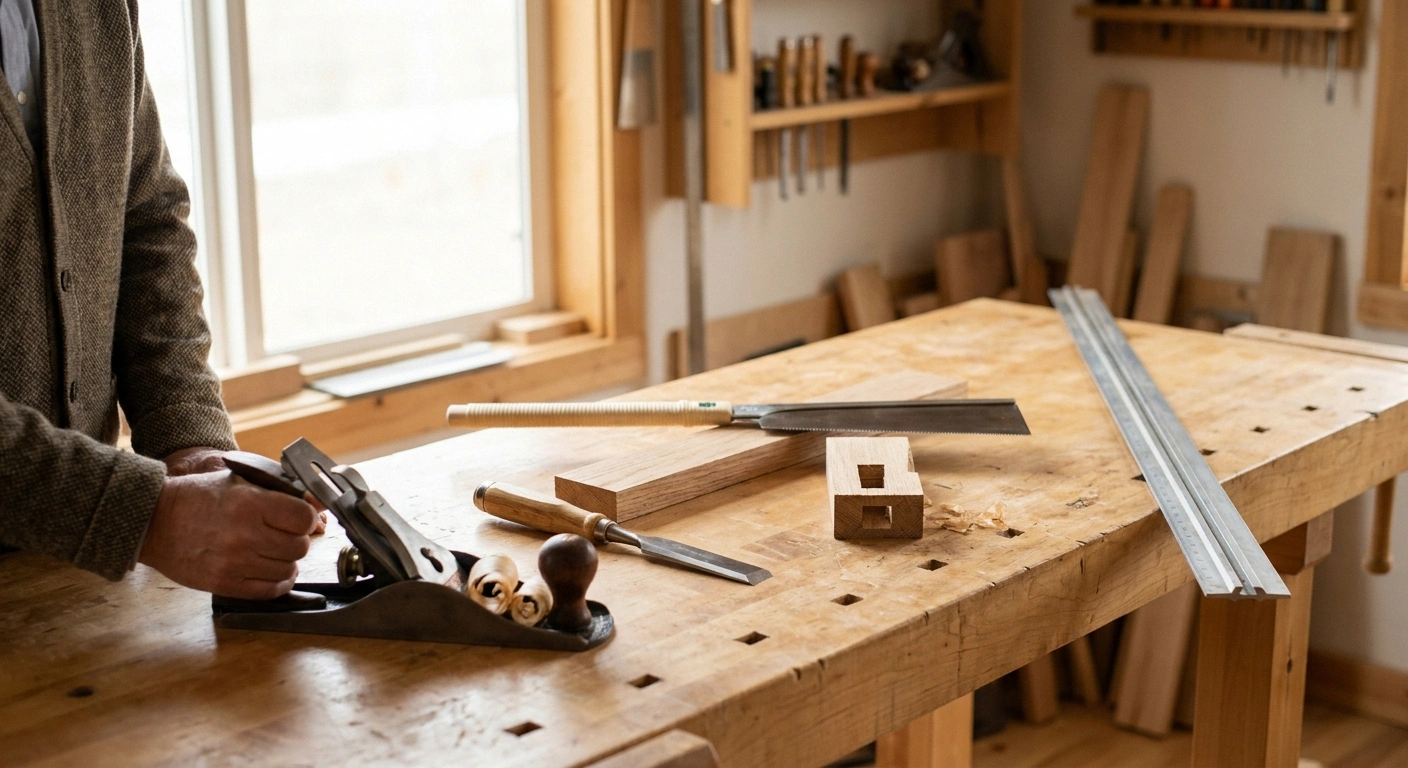
The most useful sentence in a neuropathy shop: this is a hand-tool job today. Trade the loudest tool for the right tool and you eliminate the mechanism most likely to hurt you.
- Small crosscut, use a Japanese pull saw. Cheap, quiet, no kickback, workpiece stays clamped. Crosscuts trim as accurately as the miter saw with no hand near a spinning blade.
- Flatten a short board, use a hand plane. Under a couple of feet, a sharp plane finishes faster than jointer setup, and it does not care whether you can feel it.
- Cut a mortise, use a sharp chisel. Slower, quieter, no bit-grabbing risk. A satisfying skill to develop late in life.
- Rip plywood, use a track saw on a foam base on the floor. Safer for anyone than muscling a full sheet across a table saw. The workpiece doesn’t move; the tool does.
- Anything two-handed, get a helper. Feeding an 8-foot board through the table saw solo is a bad idea for anyone and a very bad idea if your grip is compromised.
The Safety Upgrades Worth the Money
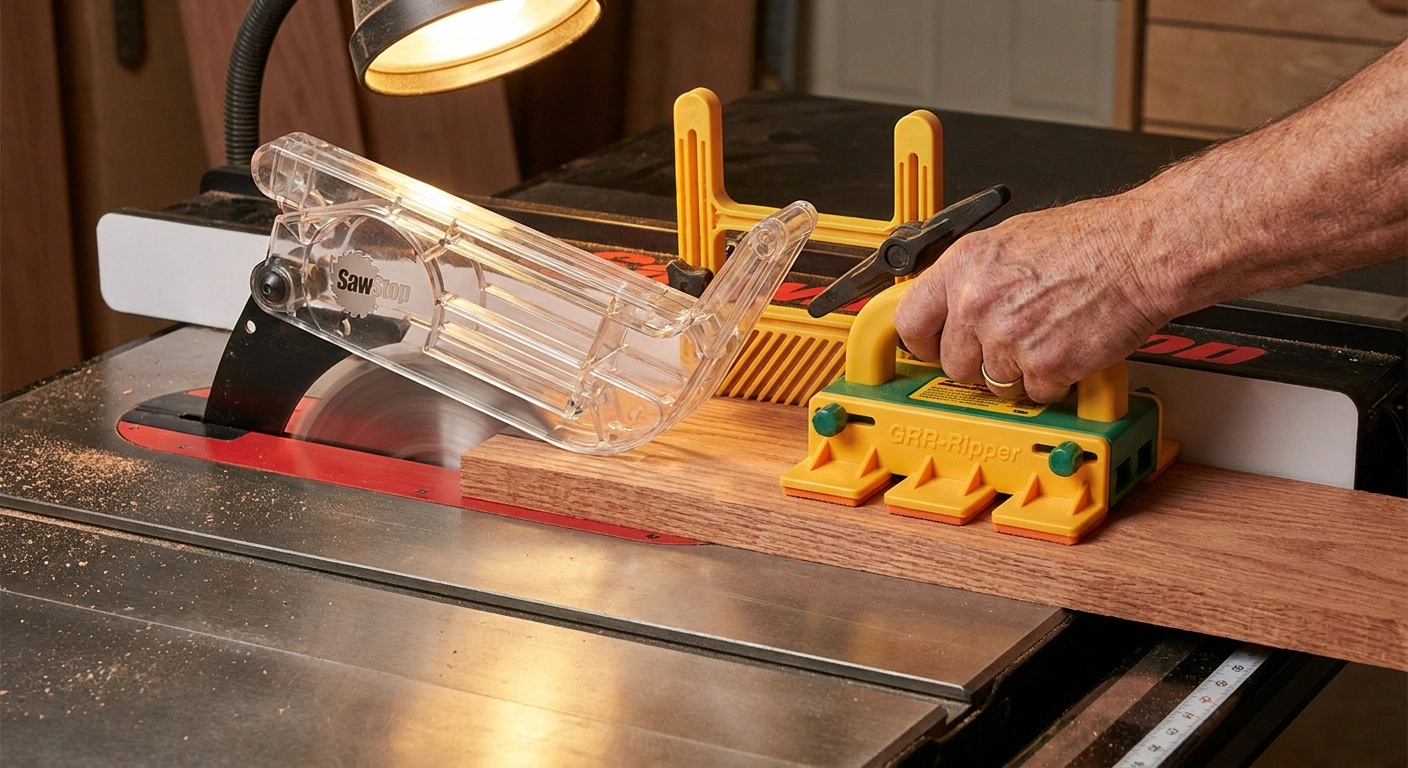
A shop full of the right upgrades still can’t undo neuropathy, but each of these does one specific thing that a numb hand needs done for it.
- A SawStop table saw. The blade carries an electrical signal; skin (which is conductive) changes that signal on contact, and an aluminum brake springs into the blade path, stopping and retracting the blade in under five milliseconds. The typical contact injury becomes a nick that needs a bandage. For a woodworker who can’t feel a mistake before it happens, this is the single highest-value tool in the shop. The saw costs more; the brake cartridge is a one-time replacement when it fires. Compare that to the surgical cost and lifetime function of a hand.
- A GRR-Ripper push block (MicroJig, around $60). Three directions of force at once: downward, inward against the fence to prevent kickback, and forward feed. Your hand stays safely above the blade.
- Featherboards on the table saw fence and router table. They hold the workpiece against the fence so a slipping hand doesn’t matter.
- Blade guard and riving knife installed, always. Not optional.
- Magnetic or paddle switches on every stationary tool. A big paddle you slap with a knee beats a small toggle you have to find with a numb finger under stress.
- Foot-operated E-stop on the table saw and router table. When something goes wrong you use your feet, not your hands.
- Grip additions on hand-tool handles. Anti-skid tape or aftermarket rubberized sleeves add bulk a weaker hand can control.
PPE That Actually Helps Numb Hands
Skip the boilerplate OSHA list. Here’s what a neuropathy shop actually needs.
- Cut-resistant sleeves (Kevlar blend, ANSI A5+) protect the forearm without the glove-in-blade problem.
- Cut-resistant gloves for hand-tool work only: chisels, rough lumber, moving stock. Never for power tools near a rotating cutter.
- Steel-toe or composite-toe shoes for dropped tools and stock. Numb feet mean you may not feel a bruise; you’ll see it two days later. See our best shoes for neuropathy for options that combine toe protection with cushioning.
- Wraparound safety glasses every session. Full stop.
- Hearing protection. Long-term shop noise causes hearing loss that further isolates a neuropathy patient from environmental cues.
- N95 or half-face respirator for sanding and cutting. Respiratory compromise on top of neuropathy is a worse combination than most people appreciate.
- Non-slip work shoes. Not sandals, not slip-ons, not shop crocs. Tie your laces before you touch a tool.
The Post-Shop Ritual: Inspect Under Bright Light
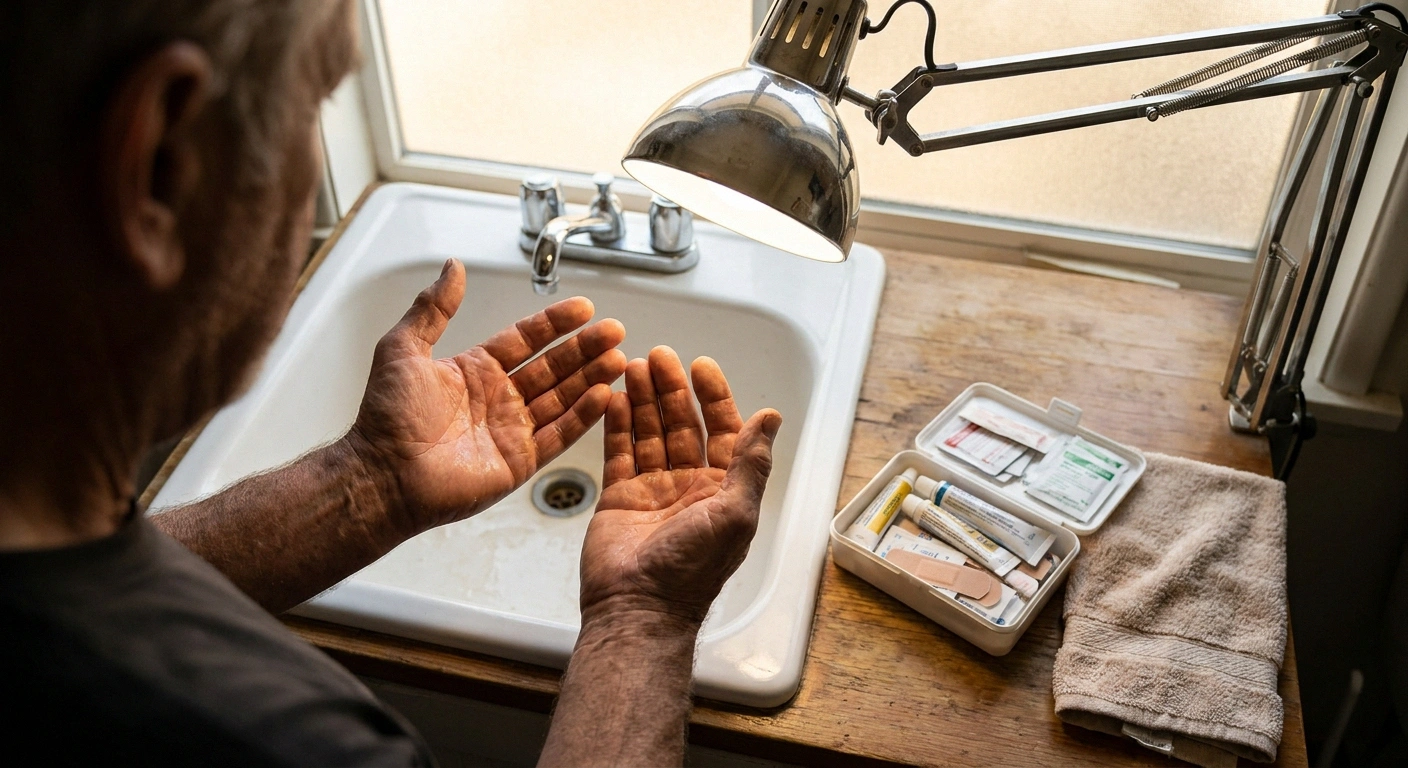
Five minutes at the sink after every session, done in this order, every time.
The 5-Minute Post-Shop Inspection
- Wash hands with soap and water at a bright sink. Sawdust hides small cuts.
- Inspect palms and fingers under a 500-lumen lamp. Pad of every finger, the web between thumb and index, the back of the hand near the knuckles. Those are the places you most commonly nick without feeling. Any break in the skin gets cleaned, ointment, bandage, and a phone photo for tomorrow’s comparison.
- Check forearms for cuts, burns from a hot blade guard, or splinters.
- Check feet if you stood for the session. Use our foot-care routine. A splinter through a shoe sole is possible, and you won’t feel it.
- Ice any hot or swollen joint immediately. Inflammation is easier to catch early than to reverse.
- Log every near-miss. Pocket notebook or phone note: “workpiece pinched on cut three, replace throat plate insert.” That turns one-off scares into concrete shop upgrades.
STOP Signals and When to Pivot to a Different Hobby
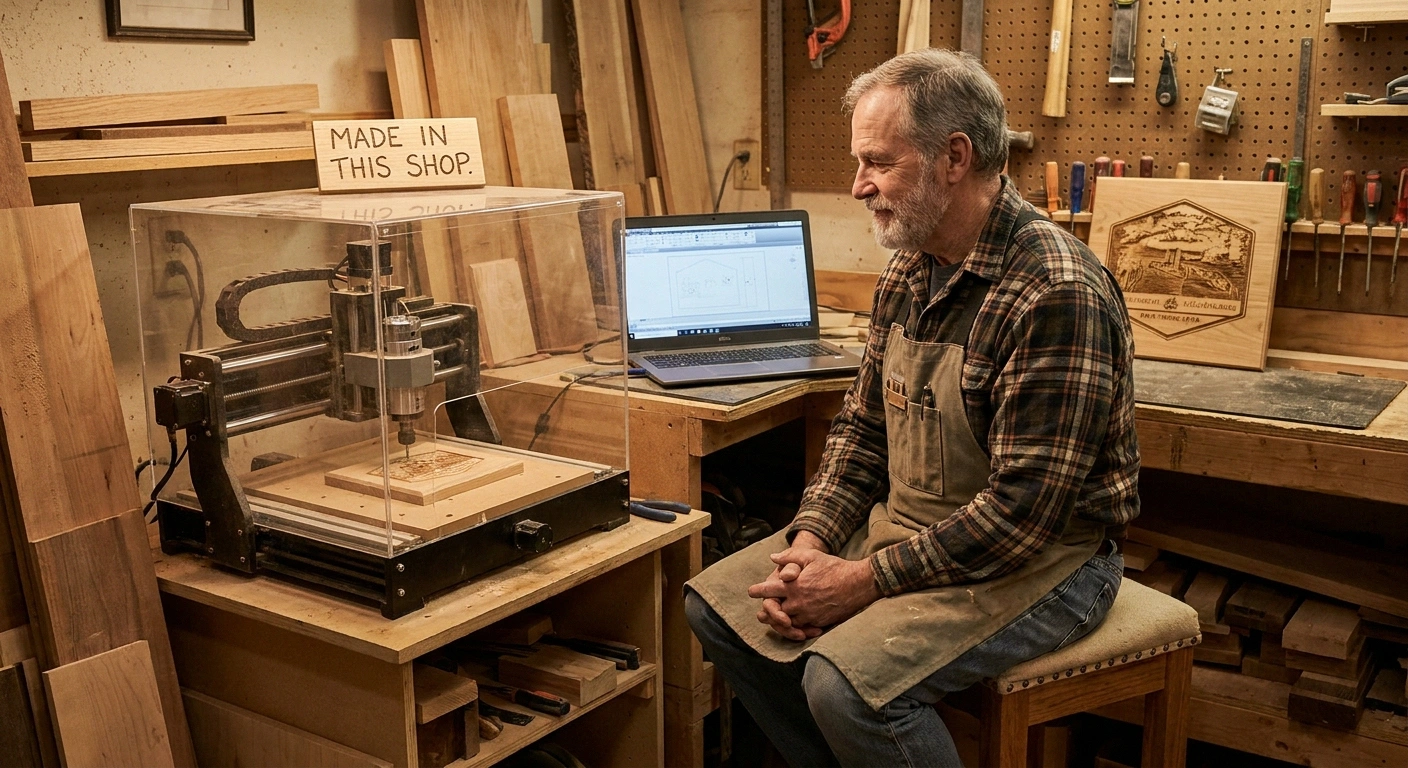
Two categories, and the honest distinction matters. You don’t want to be told to quit, but you need permission to know when it’s time.
Stop for today (finish the current cut safely, then walk out): dizziness or lightheadedness; hand cramps that don’t release within a minute; dropping a tool for the first time that session; uncontrolled shaking or a tremor spike above baseline; chest pressure, shortness of breath, or a racing heartbeat; fingers going white and cold; a “small mistake” you made, whether a slip, a bad cut, or a workpiece that got away. One mistake is a warning. Two mistakes in one session is your body telling you to stop.
Stop for good, or convert to hand-tools-only (talk to your PT or neurologist first; these are personal guardrails, not a diagnosis): an active cardiac issue such as uncontrolled arrhythmia, recent MI, or unstable angina; an open wound on the hand or an active foot ulcer; the point at which you can no longer grip a hand plane firmly enough to control it; vision not correctable to 20/40; cognitive changes such as forgetting to unplug the router before changing a bit, twice in a month.
Don’t leave yourself on “quit.” Give yourself the next hobby.
- CNC router or CNC mill. Button-driven; design in software, press start. Hobbyist tabletop machines exist under $1,500.
- 3D printing (filament or resin). Zero cutting forces, all software-driven, and the design skills transfer directly.
- Laser engraving. Plaques, signs, ornaments. Deeply satisfying gift work.
- Hand-tool-only woodworking. Slower, quieter, safer. The Krenov and Nakashima tradition, still producing heirloom pieces. If you want to know whether the underlying nerve damage has any chance of improving, read our piece on whether neuropathy can be reversed.
- Model building (planes, cars, dioramas) with clamps and jigs holding the tiny parts your hands can’t grip well.
Frank still builds in his garage. He built a rocking chair last winter, and it’s beautiful. The SawStop has fired once, ruining a $100 brake cartridge and saving a finger. Best money he ever spent, he says. If you’re standing at his crossroads, my job isn’t to pick the fork. My job is to tell you both forks are honest, and both let you keep making things.
The hobby is not the power tools. The hobby is the making. If the numbers on the checklist keep drifting the wrong way, or your PT tells you your grip has crossed the line, the honest move is not to gut it out on the table saw one more time. It’s to move the making one room over.
A tabletop CNC carves what your hands designed. A diode laser engraves plaques and cutting boards that grandkids fight over. A hand-tool bench with a Japanese pull saw, a sharp plane, and a set of chisels still builds heirloom furniture, just slower and quieter. None of that is a step down. It’s the same craftsman using different tools.
Frequently Asked Questions
Can you still do woodworking if you have peripheral neuropathy?
Yes, in most cases. The changes are behavioral (checklists, rest breaks, no shop time on certain meds), tool-choice (hand tools for small work, a track saw for sheet goods), and equipment upgrades (SawStop, GRR-Ripper, non-slip mats, better lighting). The hobby ends only when grip strength or cognition drops below the threshold for controlling a hand plane, and that’s a conversation to have with your PT or neurologist.
Is a SawStop worth the extra money for someone with neuropathy?
For most neuropathy patients who use a table saw regularly, yes. It detects skin contact and stops the blade in under five milliseconds. A life-changing amputation becomes a nick. Single highest-value safety upgrade for someone who cannot feel a mistake before it happens.
What’s the most dangerous power tool for someone with numb hands?
The table saw, by a wide margin, with over 30,000 ER injuries per year in the United States. Kickback and blade contact are the two mechanisms. Router (spinning bit, climb-cut kickback) and jointer (exposed cutter head, short-stock tip) come second and third.
Should I wear gloves when using a table saw?
No. Never wear gloves near a spinning blade or router bit. Gloves get caught and pull the hand into the tool. Wear cut-resistant sleeves on your forearms instead, and use a push block such as the GRR-Ripper to keep bare hands above the blade. Save gloves for hand-tool work, sanding, and handling rough lumber.
What medications shouldn’t I use before power-tool work?
Opioids, muscle relaxants, high-dose antihistamines, leftover sleeping pills, alcohol. Gabapentin and pregabalin can cause coordination issues in some people; know your reaction pattern first. When in doubt, save the cut for tomorrow.
What hobbies can replace woodworking if it’s no longer safe?
CNC routing, 3D printing, and laser engraving all keep the design-and-build satisfaction while removing hand-cutting forces. Hand-tool-only woodworking (Japanese pull saws, chisels, hand planes) is a valid middle path. Model building with clamps and jigs works for those who miss detailed handwork.
How do I know when to convert my shop to hand-tools-only?
When you can no longer grip a hand plane firmly enough to control it, when you’ve had two “small mistake” days in a row, when your neurologist or PT says your grip is below the safe power-tool threshold, or when you’ve started forgetting steps such as unplugging the tool before changing a bit. Any one is your signal.
About the Author