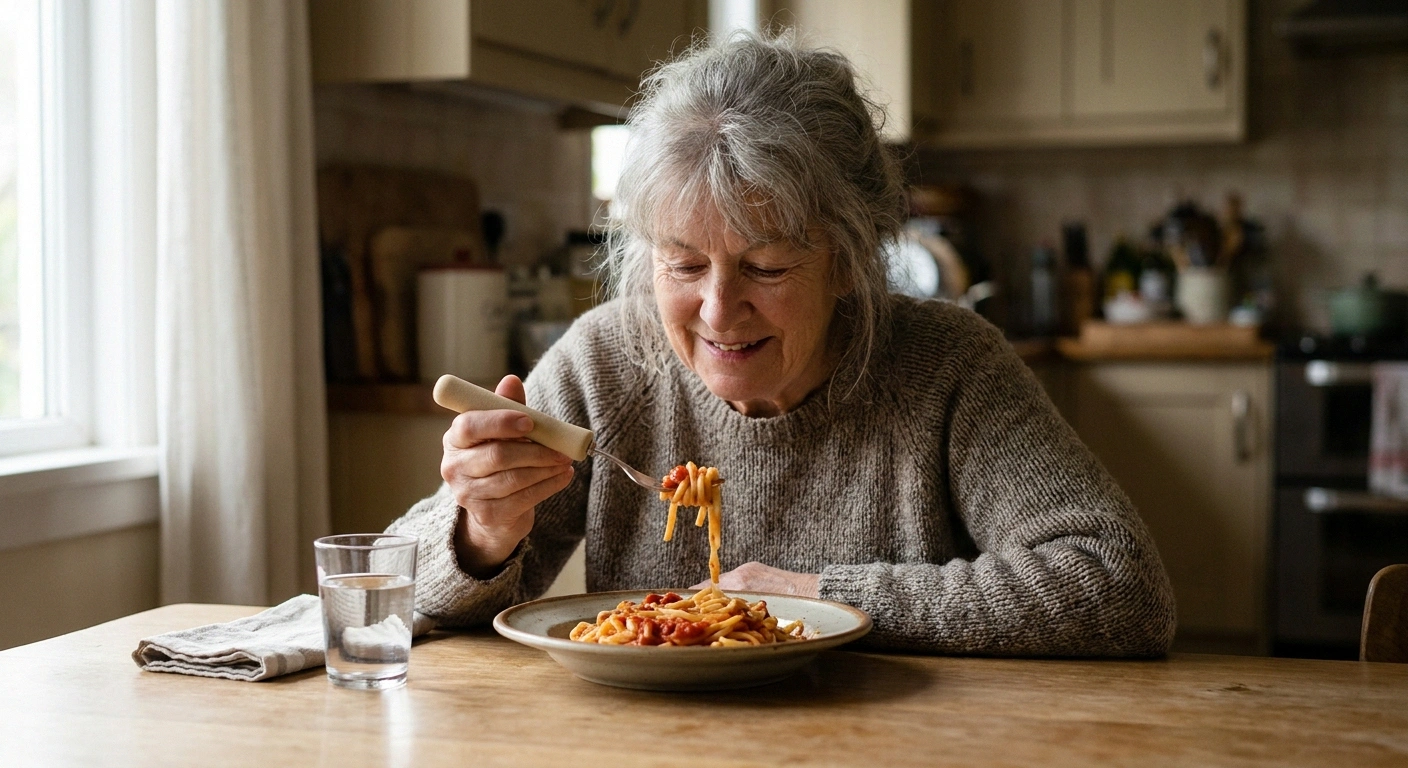
The fork problem nobody warns you about isn't dropping it. It's not knowing whether you're holding it — or how hard.
When your fingertips go numb, eating turns into a series of small guesses. Is there food on the spoon, or did it slide off on the way up? Am I squeezing this knife hard enough, or so hard my hand will ache in ten minutes? Is this bowl too hot to hold? Most of the adaptive-utensil advice online is written for tremor or arthritis, and it mostly boils down to “buy a thicker handle.” That helps. But numbness is a different problem, because the thing you've lost is feedback, not just grip.
This guide is about getting that feedback back, or working around its absence. Some of it involves tools. More of it — and this surprised me when I first worked it out — involves setup and a few techniques you can start at your next meal, most of them free.
Why Numb Hands Make Eating Harder Than It Looks
Holding a fork feels effortless because your fingertips are constantly reporting back to your brain: how much pressure you're using, where the handle sits, whether something just shifted. Your brain adjusts grip dozens of times a second without you noticing. Neuroscientists have shown that when fingertip sensation is blocked, people squeeze objects much harder than they need to — the brain's backup plan is simply to hold on tighter.
That's exactly what many of us with neuropathy in the hands end up doing. We white-knuckle the fork. It works, sort of, but it tires the small hand muscles fast, can make aching and cramping worse, and still doesn't tell us whether the peas made it.
Three separate problems hide inside “eating with numb hands”:
- Grip: keeping hold of the utensil without over-squeezing.
- Tracking: knowing where the food and utensil are without feeling them.
- Heat: not burning skin that can no longer warn you.
Each one has its own fixes. Let's take them in order.
Fixing Grip: Make the Handle Do the Work
Go bigger
A thin metal fork handle forces your fingers to close tightly and pinch, and pinching is the grip numb fingers do worst. A fatter handle lets you hold with the whole hand and much less force.
| If your hands are… | Try first | Watch for |
|---|---|---|
| Numb but strong | Built-up, textured handle | Squeezing harder than needed |
| Numb and shaky | One weighted spoon | Forearm ache by meal's end |
| Numb and weak | Light, fat handle or a utensil cuff | Heavy utensils that tire fast |
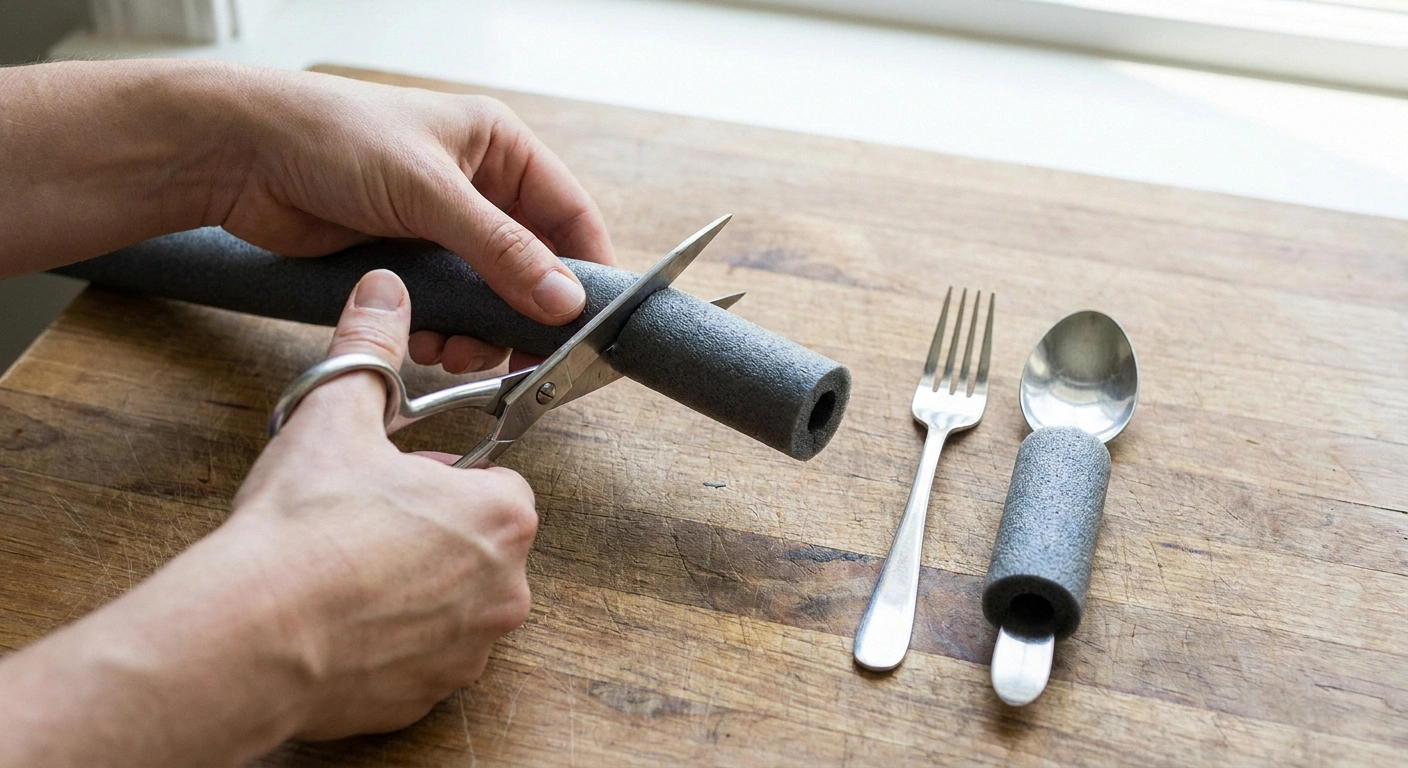
You don't have to buy a new set to test this. Foam tubing sold for this exact purpose (often called foam grip tubing or built-up foam) comes in lengths you cut with scissors and slide over your existing forks and spoons. It costs a few dollars — less than a single specialty fork — and lets you try different thicknesses before spending more. Many people end up happiest around the diameter of a thick marker. Too fat and the hand has to open wide, which gets tiring in its own way.
Ready-made built-up utensils are the next step. They're often rubberized, textured, and easier to clean than foam, which can get soggy and needs replacing every few weeks.
Add texture
Numb fingers often still sense ridges and texture better than smooth surfaces. A handle with raised ribs or a rubbery finish gives your remaining sensation something to grab onto. Wrapping a handle with a few turns of self-adhesive athletic grip tape is a cheap way to try it.
Think about weight — carefully
Weighted utensils are sold heavily for tremor, and for some people with neuropathy they're genuinely useful. The extra weight gives the hand more information about where the utensil is, and it steadies shaky movements if you have a tremor alongside the numbness.
But weight is a trade-off. If your hands are weak as well as numb, a heavy fork tires you out faster. My suggestion: try one weighted spoon before buying a whole set. If your hand feels more confident, great. If it aches by the end of the meal, go lighter and fatter instead.
Consider a strap
A utensil cuff or universal cuff is a simple strap that goes around the palm with a pocket for the fork or spoon. You don't need to grip at all — the strap holds it. These are especially helpful on bad days or for people whose grip strength has declined significantly. They look clinical, and some people resist them for that reason. I'd rather eat a hot meal comfortably than impress anyone with my silverware.
Fixing Tracking: Let Your Eyes Take Over
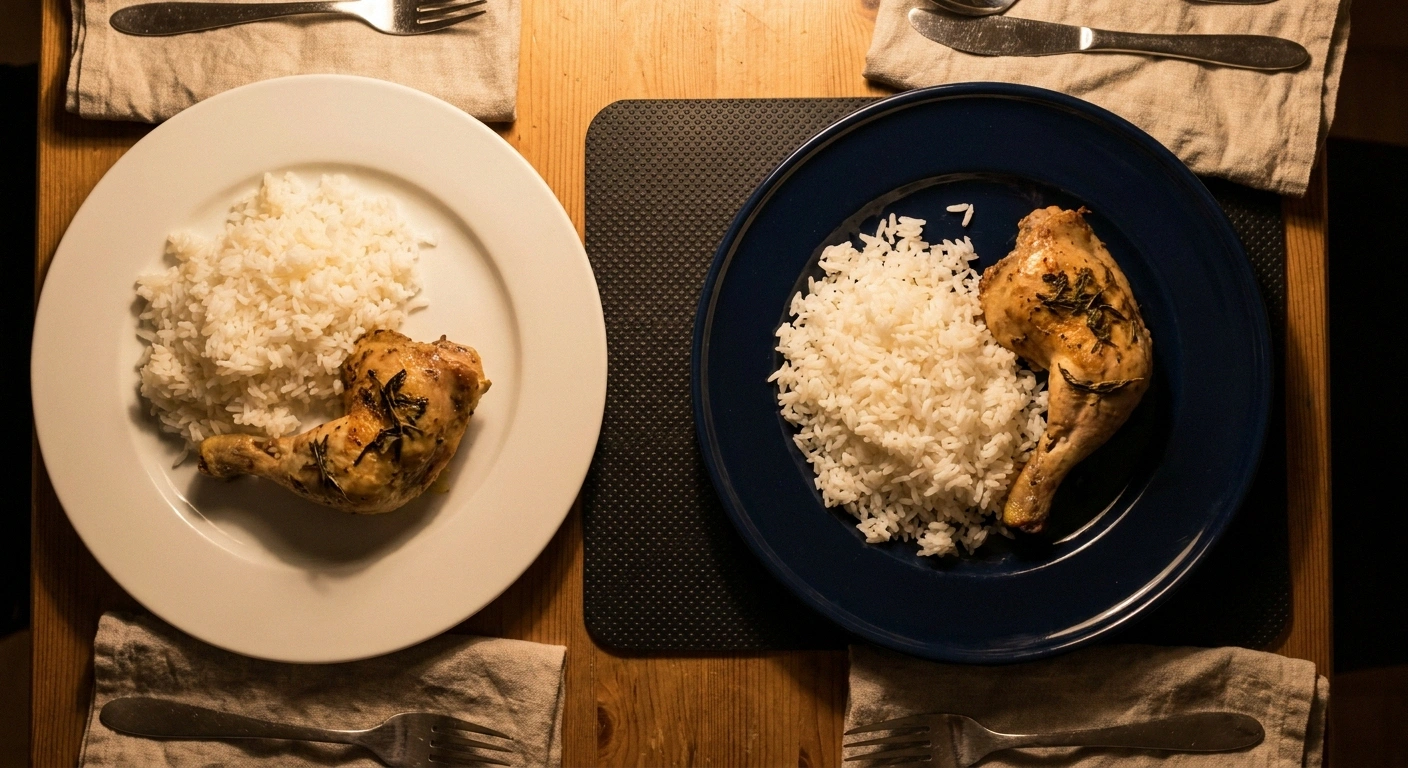
When touch goes quiet, vision has to pick up the slack. A few setup changes make that much easier.
Use contrast. White rice on a white plate is hard to track even with perfect hands. A plate that contrasts with your food (a dark plate for pale food, a light plate for dark food) makes it easier to see what's on the spoon. Solid-colored plates beat busy patterns.
Light the table well. Dim, romantic lighting is lovely and not especially helpful here. A good overhead light or a lamp that lights the plate without glare makes a real difference, especially in the evening when fatigue makes everything harder.
Watch the utensil on its way up. This sounds silly until you try it. For the first bite or two, follow the spoon with your eyes from plate to mouth. You'll learn quickly how your hand is actually moving it, and you'll catch the tilt that spills soup before it happens.
Choose bowls with walls. A scoop dish or a high-sided bowl gives your fork or spoon something to push food against, so you're not chasing a pea around a flat plate. A clip-on plate guard does the same for dishes you already own.
Anchor everything. A non-slip mat or a damp dish towel under the plate stops it from sliding when you push against it. It's one of the cheapest and most effective changes on this whole list.
Fixing Heat: The Part That Actually Matters Most
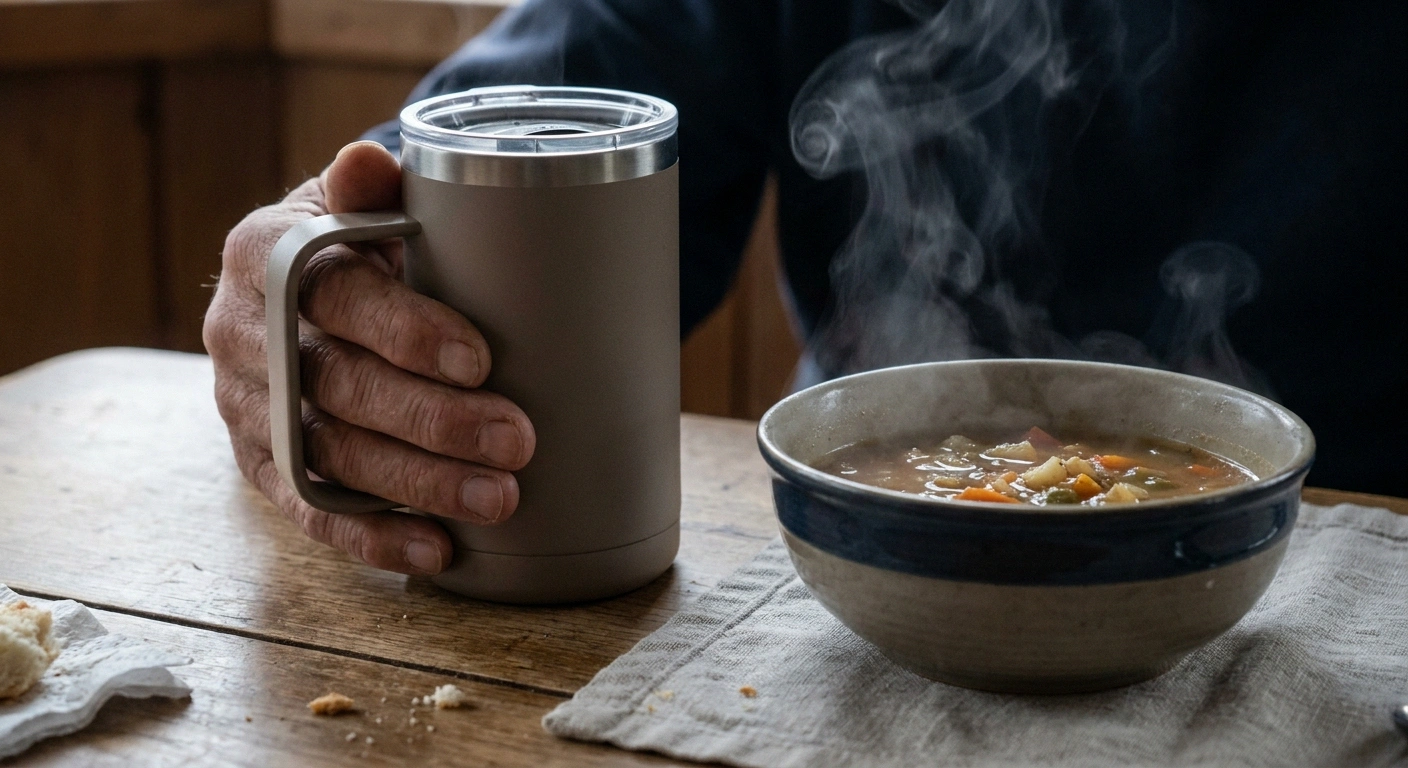
Everything above is about comfort and dignity. This section is about safety — please don't skip it.
- Stir anything microwaved and wait two minutes
- Hold the back of your wrist near the dish, not on it
- Pick up by an insulated handle or base only
- Glance at your fingertips after the meal
If your fingers can't sense temperature properly, you can hold a bowl, mug, or plate that's hot enough to burn and not know until you see the blister. People with neuropathy are burned this way every year, and hands heal slowly when circulation and sensation are both reduced.
- Don't cradle hot bowls. Set soup and hot cereal on the table and eat from them there. If you need to move them, use a bowl with an insulated base or a small tray.
- Pick mugs by the handle. An insulated mug with a large handle you can slide your whole hand through keeps fingers off the hot sides. Two-handled mugs spread the load.
- Test heat somewhere that can feel. Before you pick something up, hold the back of your wrist or forearm near it. Many of us still have better sensation there than in the fingertips, but only rely on this if you know that skin still senses heat normally. If your forearms are numb too, give food longer to cool or use an inexpensive kitchen thermometer.
- Let it cool. Microwaved food in particular has hot spots. Stir, wait a couple of minutes, then eat.
- Look at your hands after meals for any redness, especially while you're getting used to new habits.
The same logic applies at the stove. Our adaptive kitchen guide covers cooking with numb hands in more depth, and the heating pad safety guide explains why numb skin burns so much more easily than people expect.
Cutting Food Without a Fight
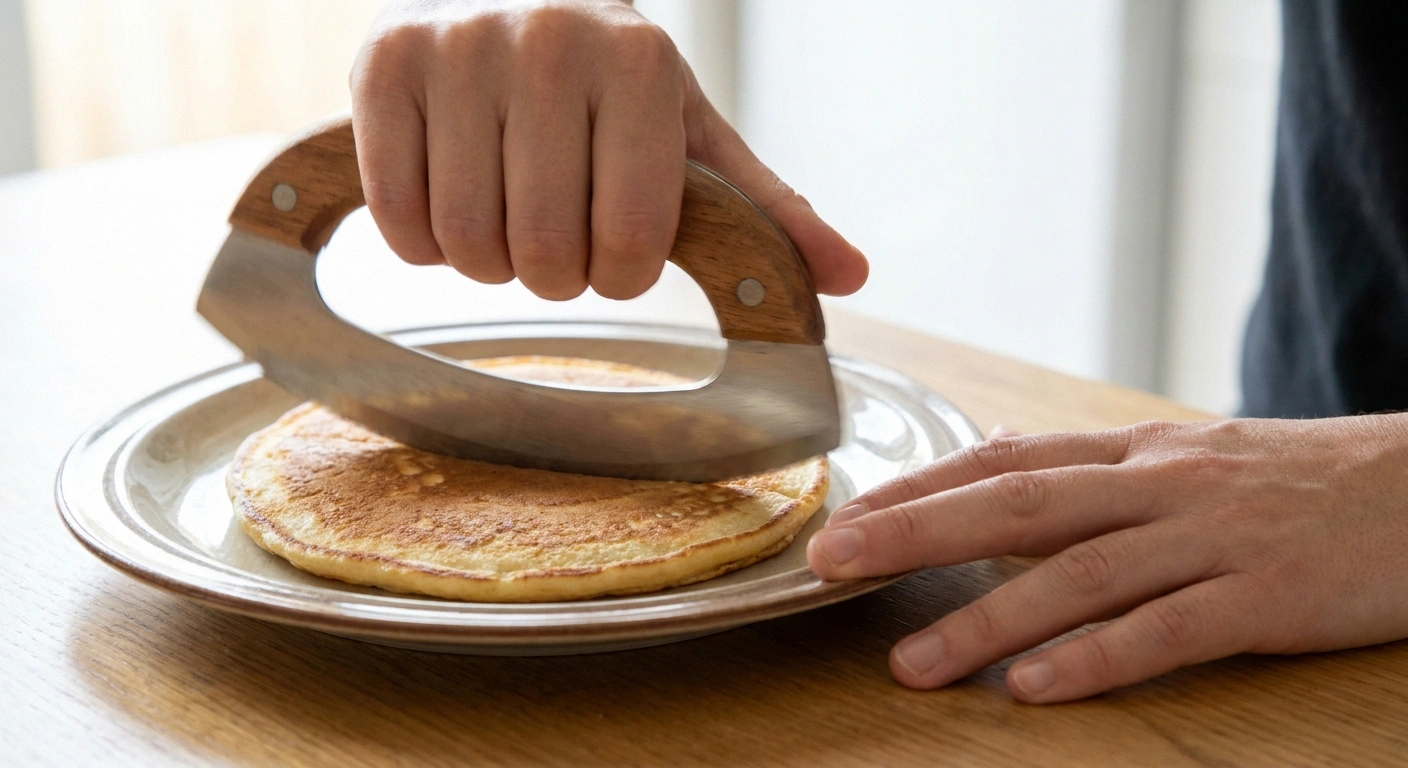
Cutting is often the task that pushes people to ask for help, because it combines grip, pressure, and coordination in both hands at once.
A rocker knife — sometimes sold as a rocking knife or rolling knife — has a curved blade you roll back and forth rather than saw with. It lets you cut with one hand and downward pressure instead of a firm two-handed grip. Many people find it a revelation for meat and pancakes.
Other options that take the fight out of it:
- Cut food in the kitchen before plating, at the counter where you can stand and use body weight.
- Use kitchen scissors for meat, pizza, and pancakes. Loop-handled scissors open themselves with a spring.
- Choose foods that don't need cutting on hard days: stews, casseroles, pasta shapes, fish that flakes.
- Let someone else cut without making it a thing. A partner who quietly cuts your steak in the kitchen is doing you a kindness, not taking your independence.
Drinking Without Spills
Glasses are surprisingly hard with numb fingers. They're smooth, often slippery with condensation, and a slight misjudgment tips them.
A few things help. Cups with a textured or rubberized outside are easier to hold. Lidded cups with a straw mean a tip becomes a nuisance rather than a flood. Heavier-bottomed glasses resist tipping. And putting drinks on the side of your stronger hand, a little farther from your plate, reduces the classic reach-and-knock accident.
For hot drinks, the insulated mug advice above applies. For cold drinks, a sleeve or koozie keeps condensation off your fingers.
Eating Out and at Other People's Tables
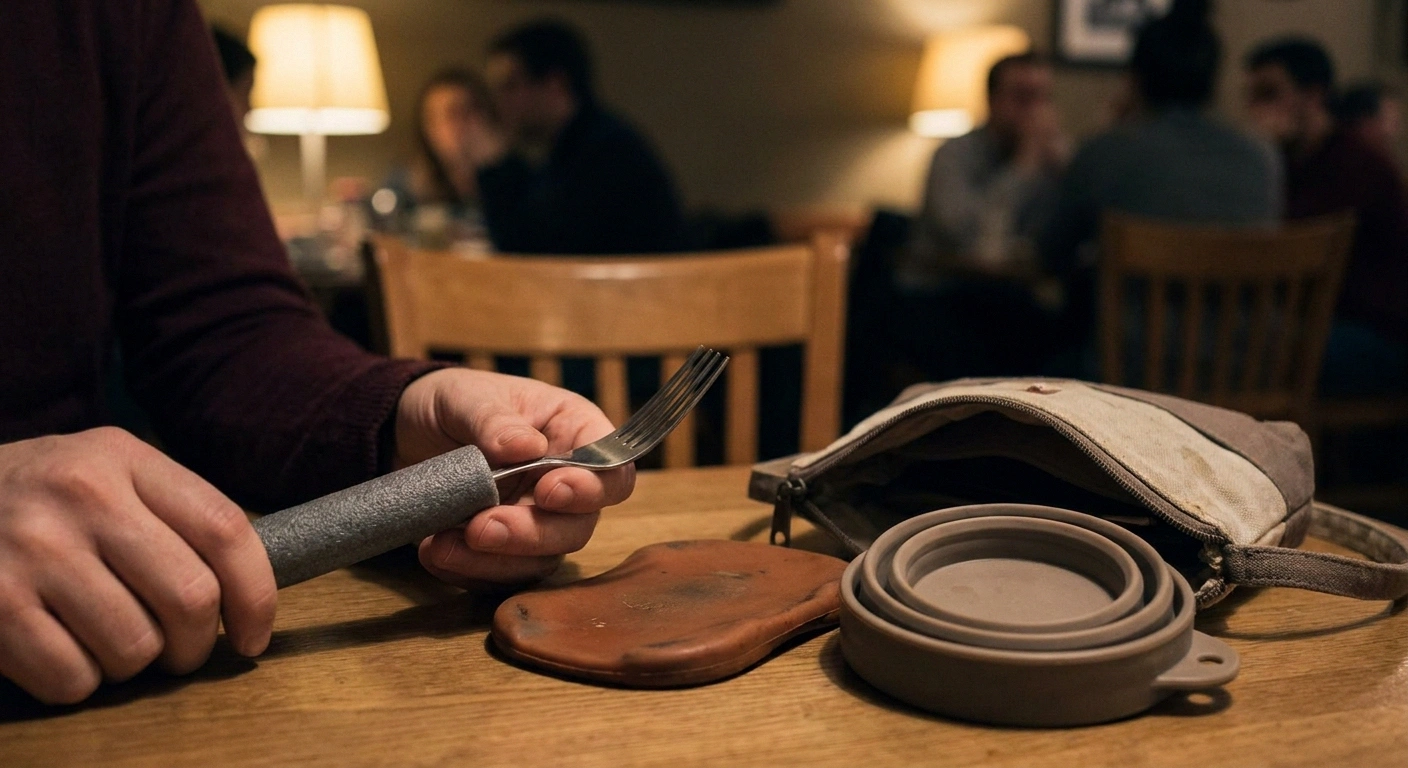
Home is where you control the setup. Restaurants and family dinners are harder, and that's where a lot of people quietly stop eating the foods they love.
- A 4-inch piece of foam tubing that slides onto any restaurant fork
- A palm-sized non-slip pad
- A collapsible lidded cup with a straw
A small kit helps: a folding built-up fork or a short length of foam tubing that slides onto a restaurant fork, a small non-slip pad, maybe a lidded travel cup. It fits in a purse or jacket pocket. Ordering foods that are easy to manage, and asking the kitchen to cut meat before it comes out, are both completely reasonable requests. Our guide to eating out with neuropathy has more on handling restaurants.
At family gatherings, it can help to tell one person ahead of time what you might need, so you're not explaining at the table. Pacing yourself through holiday meals covers the bigger picture of getting through long gatherings.
When to Bring In an Occupational Therapist
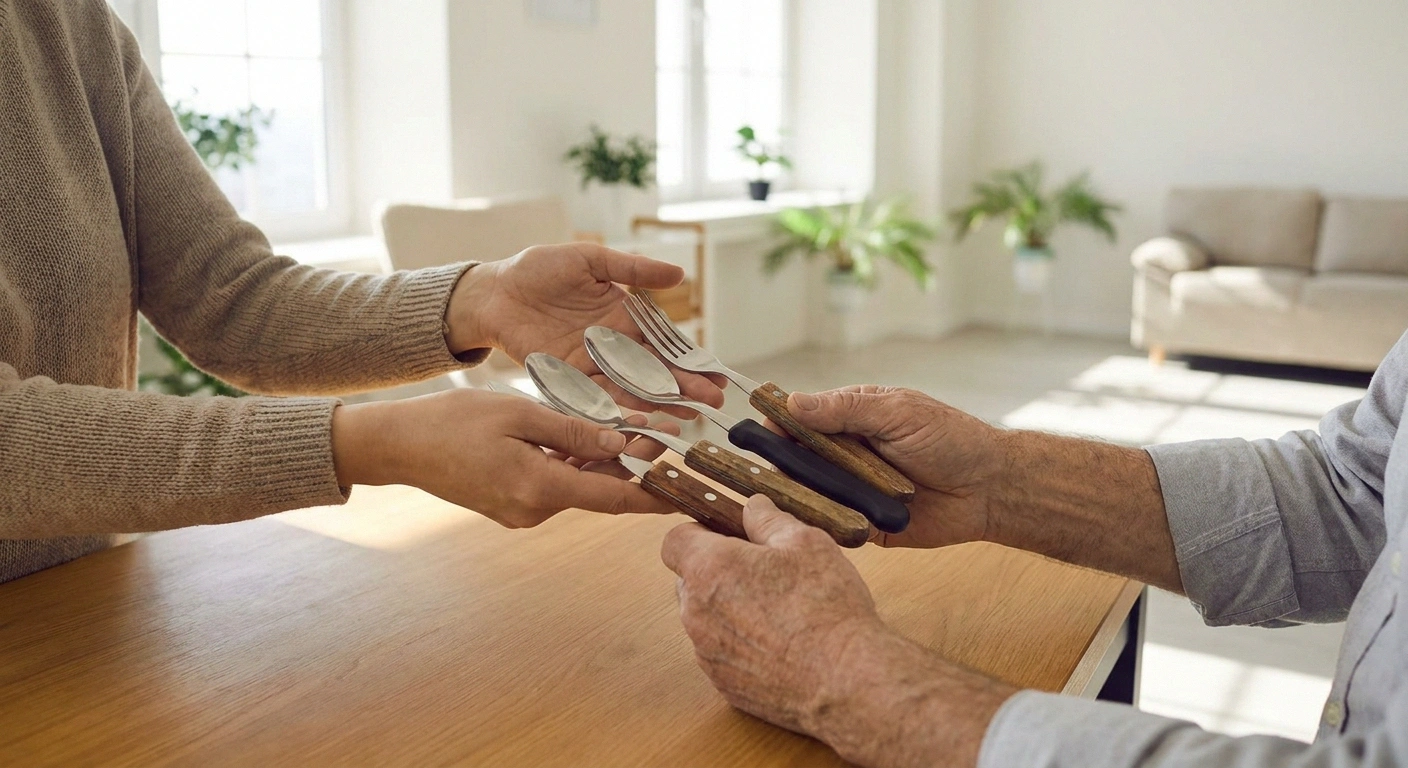
Everything here is a starting point. An occupational therapist can look at your specific hands (your grip strength, where you've lost sensation, whether there's a tremor) and match tools and techniques to them, instead of the trial-and-error most of us go through.
It's worth asking your doctor for a referral if eating has become slow, tiring, or messy enough that you're avoiding meals or certain foods, if you've had a burn, or if you've been losing weight without trying. Therapists can often lend equipment to try before you buy. More on what they do is in our guide to occupational therapy for neuropathy.
Meals are more than calories. They're family, habit, and one of the last pleasures that shouldn't be taken from us. With a few changes, most people can keep eating the way they want to. Start with one thing tonight: a non-slip mat, a contrasting plate, or a strip of foam on your favorite fork.
Frequently Asked Questions
What utensils are best for numb hands from neuropathy?
Built-up utensils with thick, textured handles are usually the best starting point because they need less grip force and give numb fingers more to feel. Weighted utensils help some people, especially with tremor, but can tire weak hands. Utensil cuffs help when grip strength is very limited.
Can I make my own adaptive utensils?
Yes. Foam grip tubing slides over ordinary forks and spoons and can be cut to length, and athletic grip tape can add texture. These are inexpensive ways to test what handle size and feel works before buying specialized utensils.
Are weighted utensils good for neuropathy?
They can be. Extra weight gives the hand more information about where the utensil is and steadies tremor. For people whose hands are also weak, the added weight can cause fatigue, so it is worth trying a single weighted utensil first.
How can I avoid burns when eating with numb hands?
Avoid holding hot bowls directly, use insulated mugs with large handles, stir and let microwaved food cool, and test heat with the back of the wrist or forearm, where sensation is often better. Check your hands for redness after meals.
How do I cut food with neuropathy in my hands?
A rocker knife lets you cut with one hand using a rolling motion instead of a firm two-handed grip. Cutting food in the kitchen before serving, using spring-loaded kitchen scissors, and choosing foods that need no cutting on difficult days also help.
Why do I drop things more since my hands went numb?
Fingertip sensation normally tells the brain how firmly to grip. Without it, the brain loses its feedback and grip becomes less reliable. Thicker, textured handles, watching what your hands are doing, and non-slip surfaces help compensate.
Should I see an occupational therapist for eating problems?
Consider it if meals have become slow, tiring, or messy, if you are avoiding foods, if you have burned your hands, or if you are losing weight unintentionally. An occupational therapist can match tools and techniques to your specific hands.
About the Author