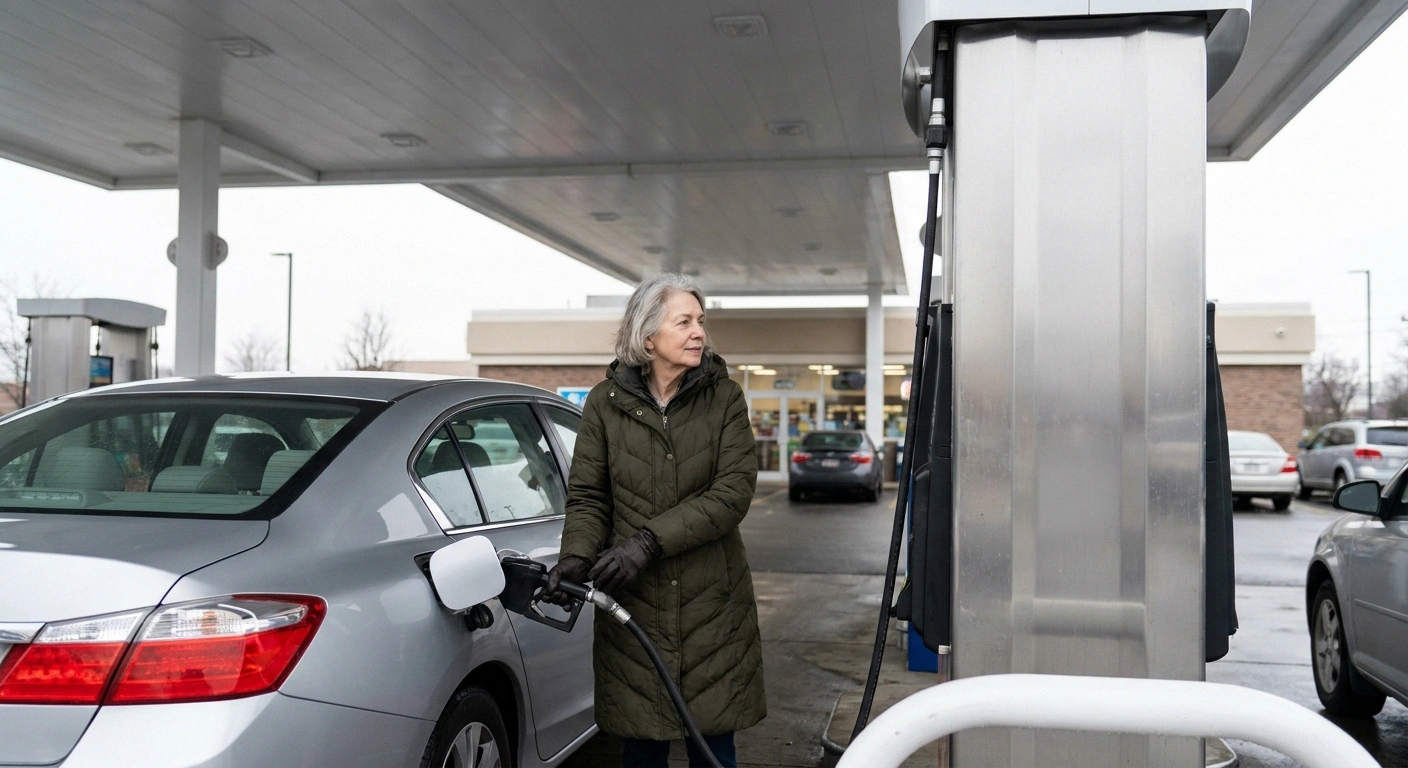
Last February I stood at the pump in my winter gloves, squeezing the nozzle and watching the numbers climb, and realized I couldn't have told you how hard I was gripping. The meter said fuel was flowing. My fingers weren't reporting anything at all. So I did what felt sensible on a raw, windy morning: I let go of the handle, climbed back into the warm car, and waited for the click.
I learned afterward that getting back in the car while the fuel flows is one of the few things fire-safety groups specifically ask you not to do. That sent me down a rabbit hole — and what I found surprised me. There's a federal rule about getting help at the pump that most of us have never heard of. A couple of states go further. And several of the everyday hazards at a gas station — from cold metal to a splash on your sleeve — matter more when your hands and feet have stopped giving you reliable news.
Here's what I'd want a friend with neuropathy to know before the next fill-up: how to get help, how to ask for it, and the habits that make doing it yourself safer.
Why a Routine Fill-Up Gets Harder
Think about what pumping gas actually asks of your body. You step down from the car onto a curb or an island. You grip a heavy nozzle and hold a trigger for a minute or more. You stand on concrete that may be wet, oily or icy, and on cold days you handle metal that has been sitting out all night.
Now line that up with the symptoms the National Institute of Neurological Disorders and Stroke lists for peripheral neuropathy: “Muscle weakness,” the “Inability to feel vibrations and touch, especially in the hands or feet,” a “Loss of position sense” that can affect walking and balance, and the “Inability to feel pain or changes in temperature (due to damage to small fiber nerves).” The National Institute of Diabetes and Digestive and Kidney Diseases adds “loss of balance, which could make you fall more often” and “loss of muscle tone in your hands and feet.” Every one of those shows up somewhere between the driver's seat and the pump. If your hands are the problem area, my piece on numbness and weakness in the hands goes deeper.
One detail I didn't expect: the 2010 federal accessibility standards, which apply to new and altered facilities, require at least one fuel dispenser of each type to have controls that work with one hand, without tight grasping or twisting, and with no more than 5 pounds of force. Gas pump nozzles, though, are specifically exempt from that force limit. A stiff trigger is simply how pumps are built — which is exactly why the right to ask for help matters.
You Can Ask the Station to Pump for You
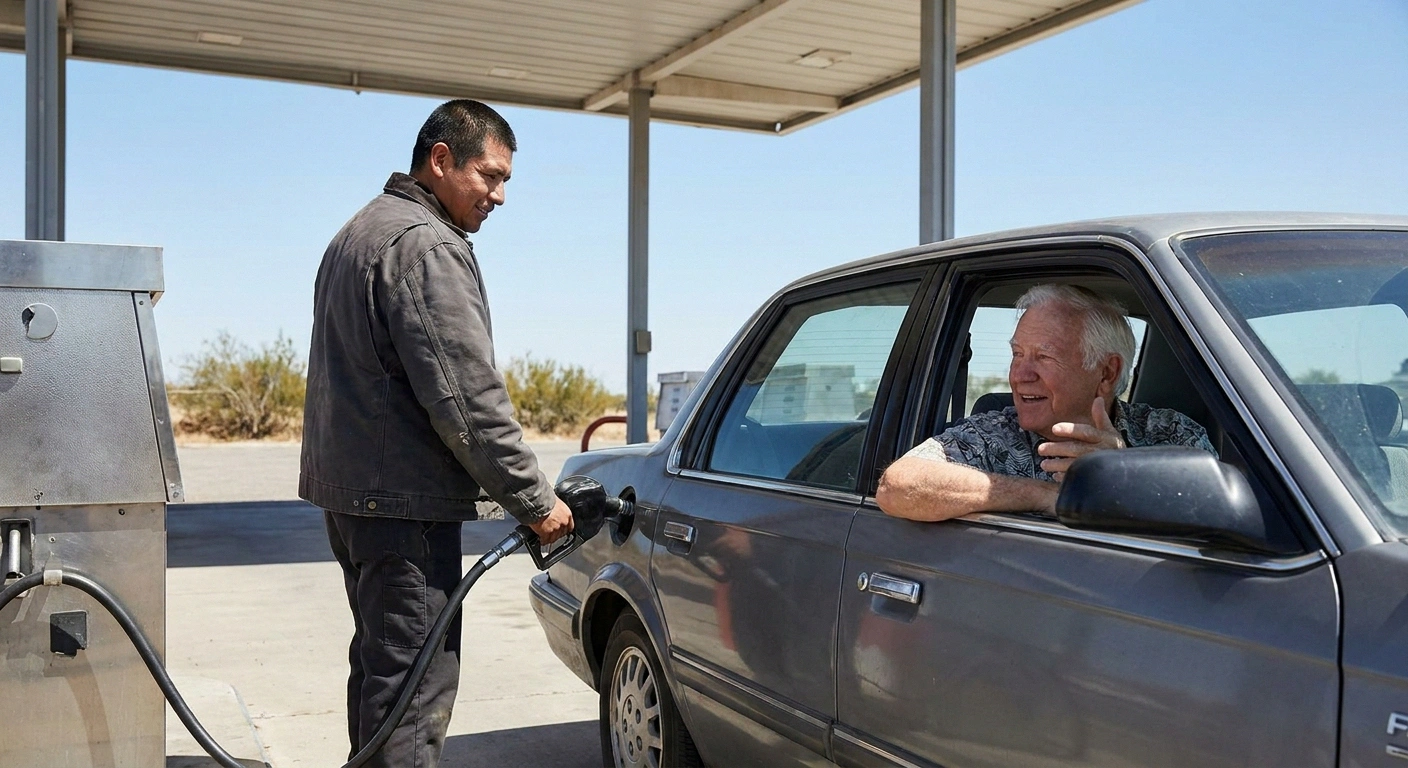
The U.S. Department of Justice spells this out in a business brief on its ADA website. It starts from the problem: “People with disabilities may find it difficult or impossible to obtain gas for their vehicle because they are unable to use the controls, hose, or nozzle of a self serve gas pump.” Its answer is that, “If necessary to provide access,” self-serve stations must “Provide refueling assistance upon the request of an individual with a disability.” The fine print, and how long the government has said this, is collected in this section's box.
The price rule is the part I love. The station must help “without any charge beyond the self-serve price, if the customer wants only fuel,” and that holds whether the attendant helps you at a self-service pump or a full-service one. You don't need a placard for any of this under federal law, either. A 1992 Justice Department letter said the ADA doesn't make an emblem the trigger; the question is whether you need the help because of a disability.
There's one big exception. A station “operating on a remote control basis with a single employee” doesn't have to leave the register to help, though the brief says it's “encouraged to do so, if feasible.” In plain terms, a lone clerk running the pumps from inside can say no.
You may have heard that the government dropped this rule in 2025. That's not quite what happened. On March 19, 2025, the Justice Department withdrew 11 older guidance documents, and one was a 1999 page called “Assistance at Self-Serve Gas Stations.” The separate business brief quoted here, last updated in 2005, was still posted on ADA.gov when I checked on September 29, 2026. The brief calls itself informal guidance with “no legally binding effect,” but the regulations behind it are still in force: one requires businesses to offer alternative methods, such as curb service, when they can't remove a barrier, and another bars surcharges for them. I'm not a lawyer, and none of this is legal advice.
How to Flag Down Help Without Leaving Your Seat
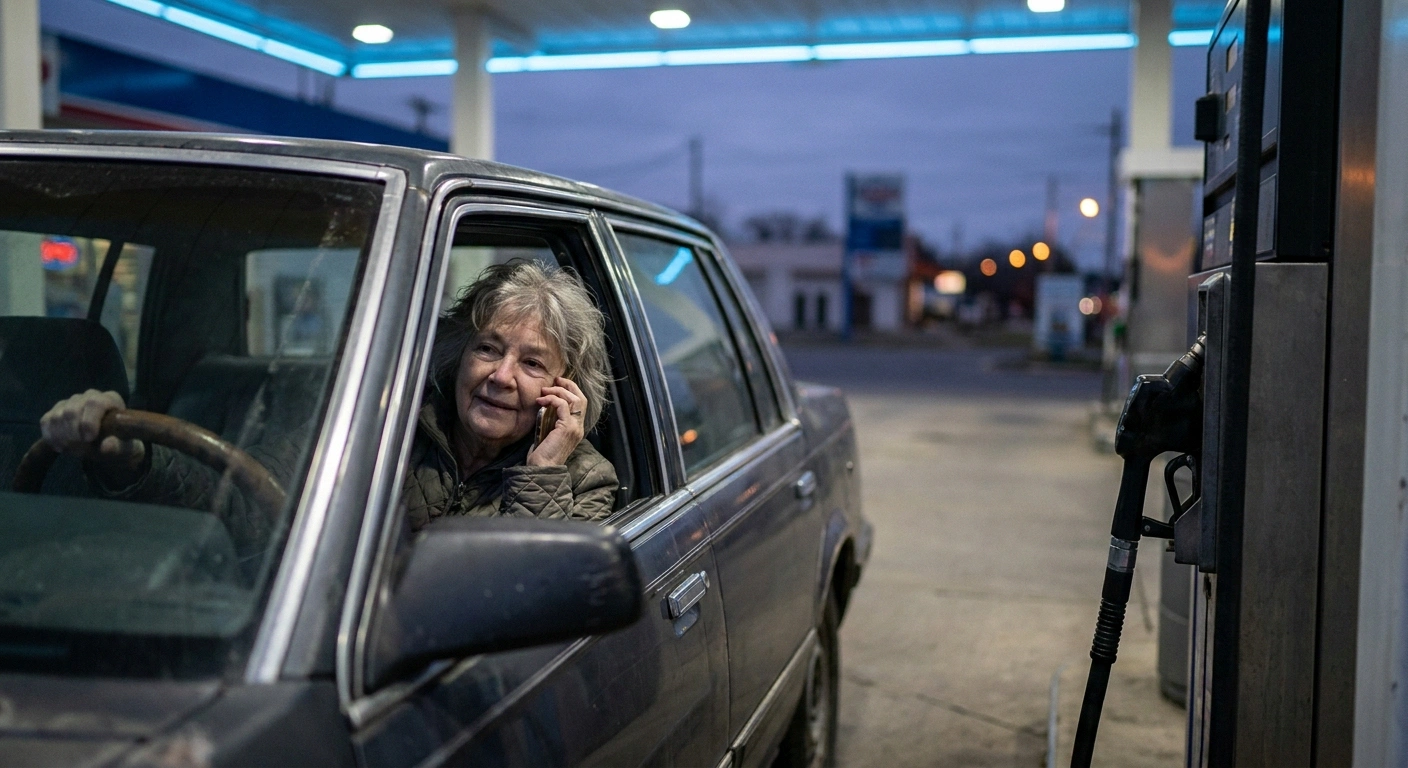
The brief tells stations to post signs or notices “on or near pumps” letting customers know they can get help “by honking their horn or otherwise signaling an employee.” It also notes that “Some stations provide a call button” on the pump. Some, not most — so it's worth looking before you need it.
Here's the routine I've settled into, and the reasoning behind each piece:
- Pull up to a pump near the store. The Federal Trade Commission suggests pumps near the front of the store because thieves tend to target pumps the attendant can't easily see. For us there's a second benefit: the staff can see your signal, and the walk inside is shorter if you decide to pay there.
- Look for the sign before you honk. Some stations post a phone number to call. Oregon's law, for example, lets a customer reach staff “at the telephone number provided in the sign.”
- Call ahead when you can. This is my own habit rather than anything official, but a quick call to ask when the station is best staffed saves a wasted trip to a one-clerk store.
- Keep it simple when they come out. “I have nerve damage in my hands and can't work the nozzle. Could you fill it up at the self-serve price?” is all anyone needs to hear.
If a station refuses and you believe it had the staff to help, the Justice Department's ADA Information Line at (800) 514-0301 answers questions about the law.
Where State Law Goes Further
Rules vary by state, and a few are worth knowing by name. As of September 29, 2026, the picture looks like this, and the table in this section has the details.
| State | What the law says |
|---|---|
| New Jersey | Attendants dispense all fuel; customers may not. A 2025 bill to allow self-service was introduced but has not become law. |
| Oregon | Since Aug. 4, 2023: self-service any time in 20 rural counties; in 16 others, at up to half of a station's pumps and only while an attendant is available. Same price either way, and no extra fee for disability help. |
| California | On request, stations must fuel a vehicle showing a disabled person's plate or placard, at no more than the self-serve price. Exempt when only one employee is on duty, or two when one only prepares food. Fines run $100, $200, then $500. |
| Florida | Full-service stations that also sell cheaper self-serve fuel must have an attendant fuel a vehicle displaying a disability parking permit. Look for a blue decal with the station's phone number and the words Call for Assistance. |
From each state's statute and, for Oregon's county split, the State Fire Marshal's summary. Other states may have rules of their own.
New Jersey still doesn't let customers pump their own gas at all. Its Retail Gasoline Dispensing Safety Act says no one may dispense fuel unless they're an attendant who has been instructed in how to do it. What caught my eye were the legislature's own findings: customers who leave their cars to pump gas face “significant inconveniences and dangers, including the risks of crime and fall-related personal injury, which are a special burden to drivers with physical infirmities, such as the handicapped and some senior citizens.” A bill to allow self-service was introduced in 2025, and a story in April 2026 claiming the ban had been lifted turned out to be an April Fools' joke. If you live there, the attendant does the work, full stop.
Oregon, the other long-time holdout, changed its law on August 4, 2023. Self-service is now allowed there, but with limits that depend on the county, and stations with staff on duty still have to help customers with disabilities.
California and Florida tie their own refueling-help laws to a disability plate or placard, which makes the placard more useful at the pump there than federal law alone would. If you've been putting off applying, here's my guide to getting a disability parking placard.
Stay Out of the Car While the Fuel Flows
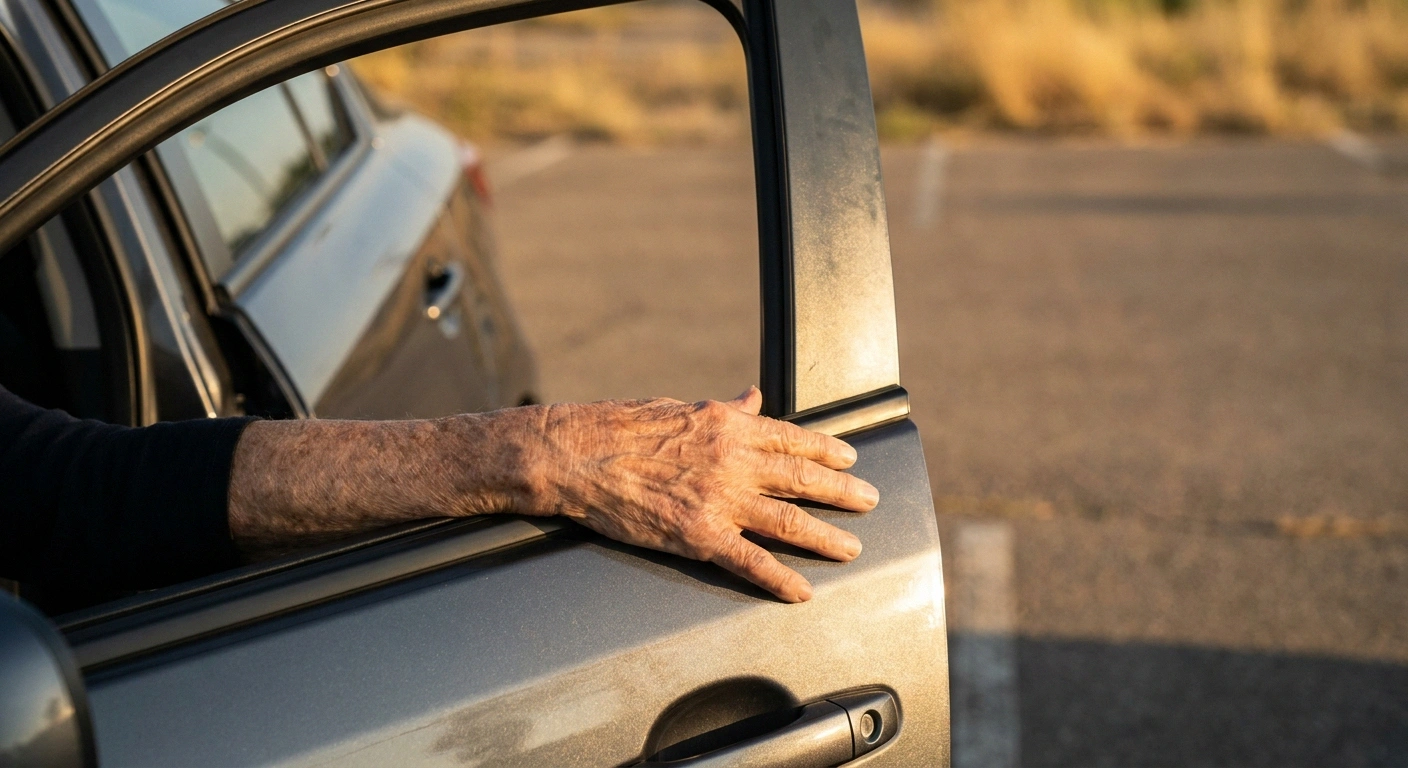
Back to my mistake at the pump. The Petroleum Equipment Institute, an industry group that tracks these incidents, says a static spark can ignite gasoline vapors at the pump and counts almost 200 reported incidents that appear related to static discharge. Its main rules are short: turn off the engine, don't smoke, and never get back into your vehicle while refueling.
- You already got back in the car
- When you get out, touch the outside metal of the car, away from the fuel door, before you touch the nozzle.
- A flash fire starts at the fill spout
- Leave the nozzle in the car and back away. Tell the attendant, or at an unattended station use the emergency intercom and the emergency shutdown button, and call 911.
- The pump clicks off
- Stop there. Topping off the tank invites spills.
- Your hand needs a rest mid-fill
- Stay beside the nozzle rather than walking away or sitting in the car, or stop and ask the staff to finish.
Steps from a Maryland Department of the Environment gasoline-safety fact sheet and a Purdue Extension handout. Nobody keeps a full count of static fires, so treat them as rare but real.
Why does getting back in matter? A Maryland Department of the Environment fact sheet explains that sliding back into your seat is one way static builds up, especially in cool or cold, dry weather, and that in rare cases a spark at the fill spout can cause a brief flash fire. I'd add my own observation: cold, dry days are exactly when numb hands make the warm car so tempting. If you've already climbed back in, or a fire starts, the steps are spelled out in this section.
Two more things I was glad to learn. The institute says it hasn't documented a single fire caused by a cell phone, though it still advises against anything that distracts you while fueling. And the same state fact sheet says to use only the hold-open latch built into the pump, if there is one, and never to wedge the trigger open with the gas cap or anything else. When your grip is weak, that shortcut is tempting. Don't take it. Asking for help is the better answer.
Splashes You Might Not Feel
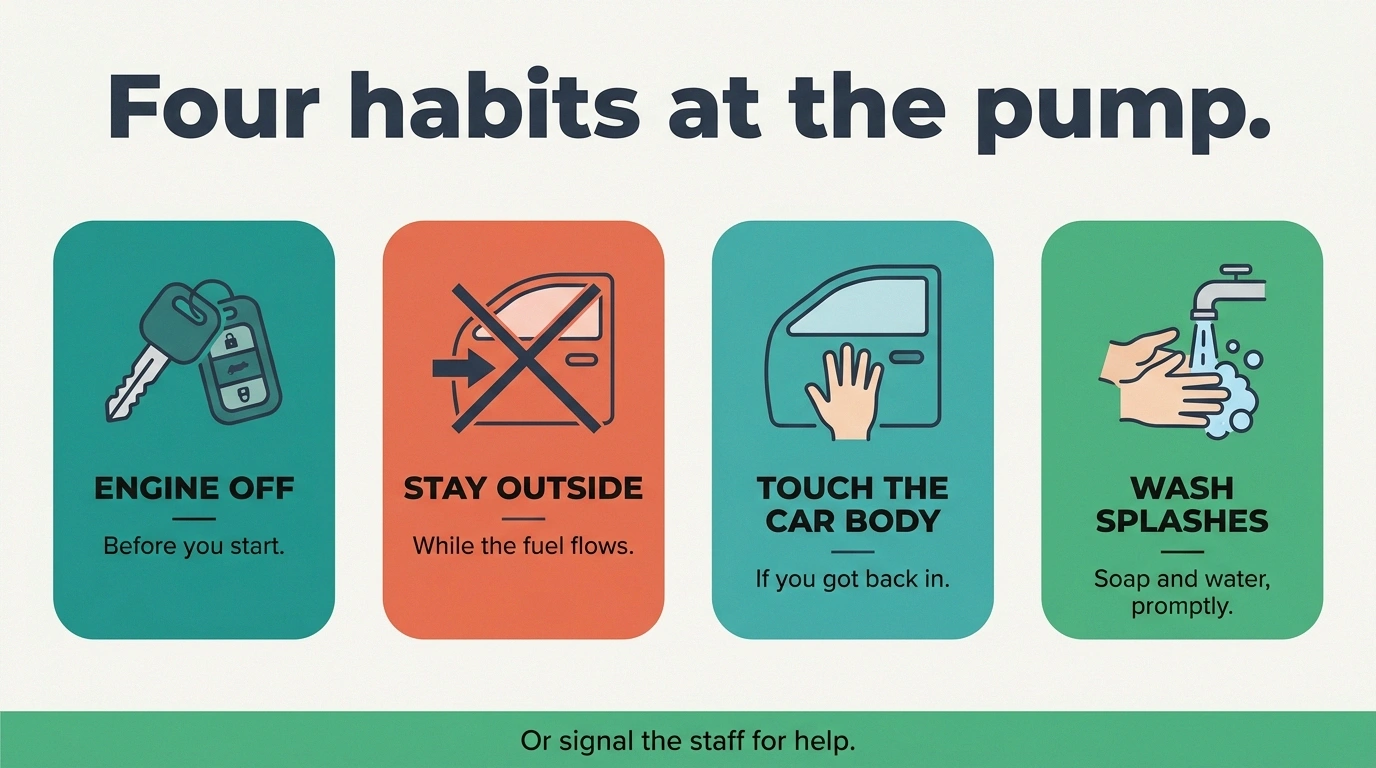
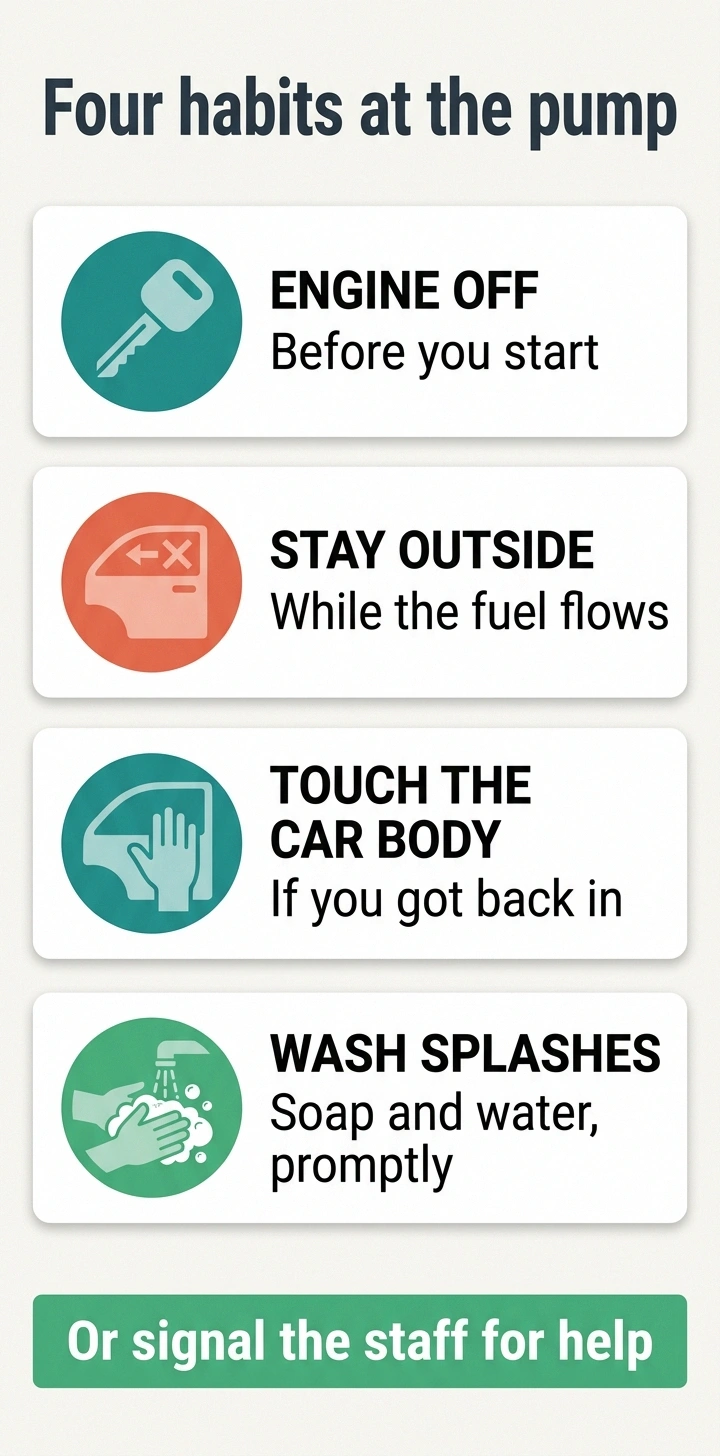
The CDC's toxic-substances agency says the pump is where most of us are exposed to gasoline, mainly by breathing the vapor while we fill the tank. It also calls gasoline “a skin irritant.” Its guidance for clinicians says that “When liquid gasoline contacts the skin, it may cause redness and blisters,” and that “Skin burns may result from prolonged contact with gasoline.” The same guidance notes that gasoline is “poorly absorbed by intact skin,” so this is about irritation and burns rather than poisoning.
The catch for us is the word “prolonged.” NIDDK warns that if you lose feeling in your feet, “you may not notice pressure or injuries that lead to blisters and sores,” and the same goes for numb fingers. A splash you can't feel is a splash that stays put. So after every fill-up I do a quick visual check of my hands and cuffs, and a sniff test of my gloves. If gasoline got on you, wash it off promptly with soap and water, and change out of any gasoline-soaked clothing or gloves. If it gets in your eyes or you swallow any, get medical help right away. The state fact sheet adds one more rule: never use gasoline to wash your hands.
Cold Mornings and Bare Metal
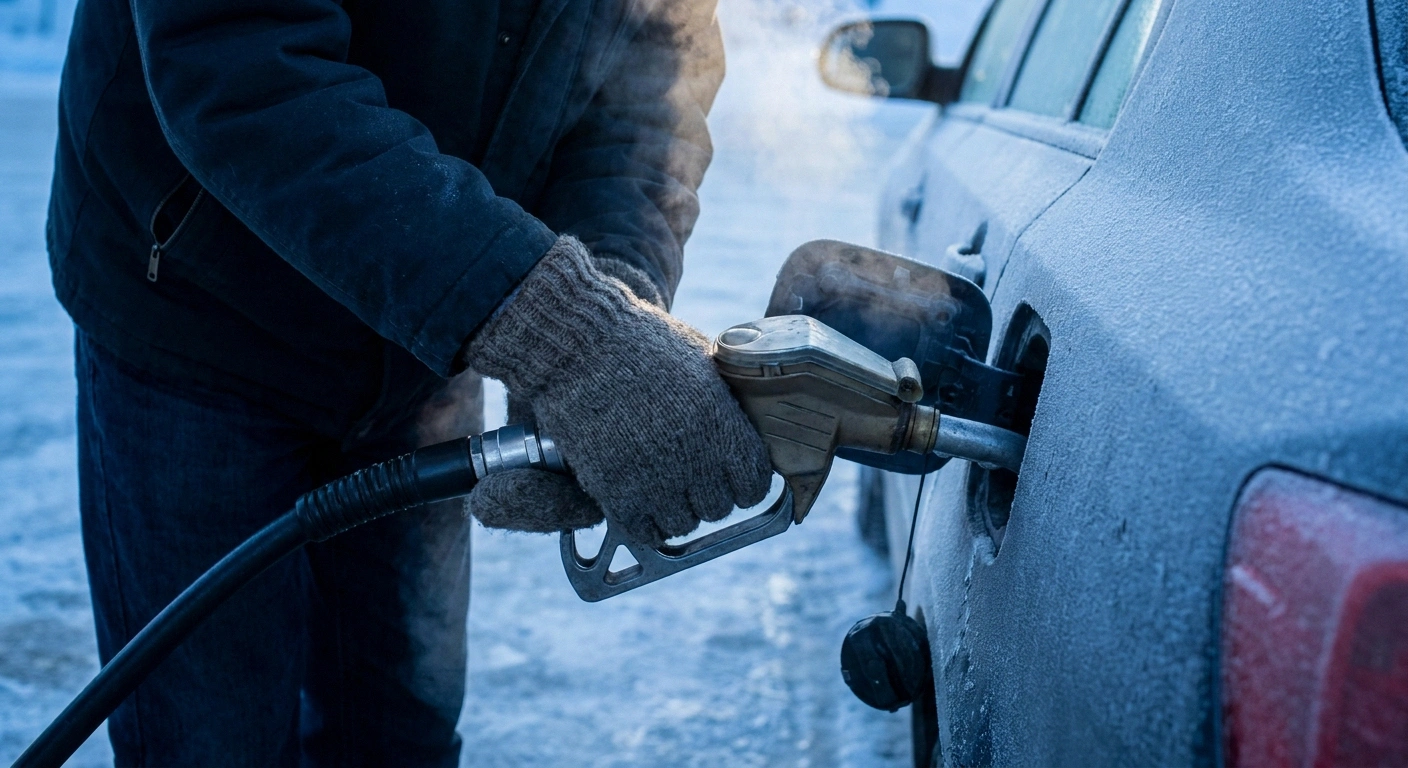
Winter adds a hazard that neuropathy is almost designed to hide. The CDC explains that frostbite causes “a loss of feeling and color” in the areas it affects, and that “A person who has frostbite may not know they have it until someone else points it out because the frozen parts of their body are numb.” Now stack that on top of fingers that were already numb.
- A warm blanket and extra cold-weather clothing, as the National Institute on Aging suggests
- A hat, a scarf, and both gloves and mittens (the National Weather Service says mittens beat gloves in the cold, but gloves are easier on a nozzle)
- A fully charged phone
- A tank kept near full, which the CDC recommends to help keep ice out of the fuel lines
The CDC's workplace-safety institute, NIOSH, is blunt about it: “Avoid touching cold metal surfaces with bare skin.” An Army cold-injury manual explains why. Skin cools fast against cold metal and liquids, “contact frostbite” can happen below freezing, and fuel that has chilled below freezing “can cause instantaneous frostbite” if it splashes onto skin. That manual was written for soldiers in extreme cold, but the principle holds at any pump on a freezing morning. Gloves stay on — the whole time. My tips for coping with neuropathy in cold weather cover the rest of the season.
One more CDC warning belongs here. If your fingers feel frozen, don't rewarm them against the car's hottest vent or a heating pad: “Affected areas are numb and can easily burn.” If skin turns red or painful in the cold, the CDC says to get out of the cold or cover it, and skin that looks white, grayish or waxy needs medical care. My car kit for November through March is listed in this section too.
Curbs, Hoses and Slick Concrete
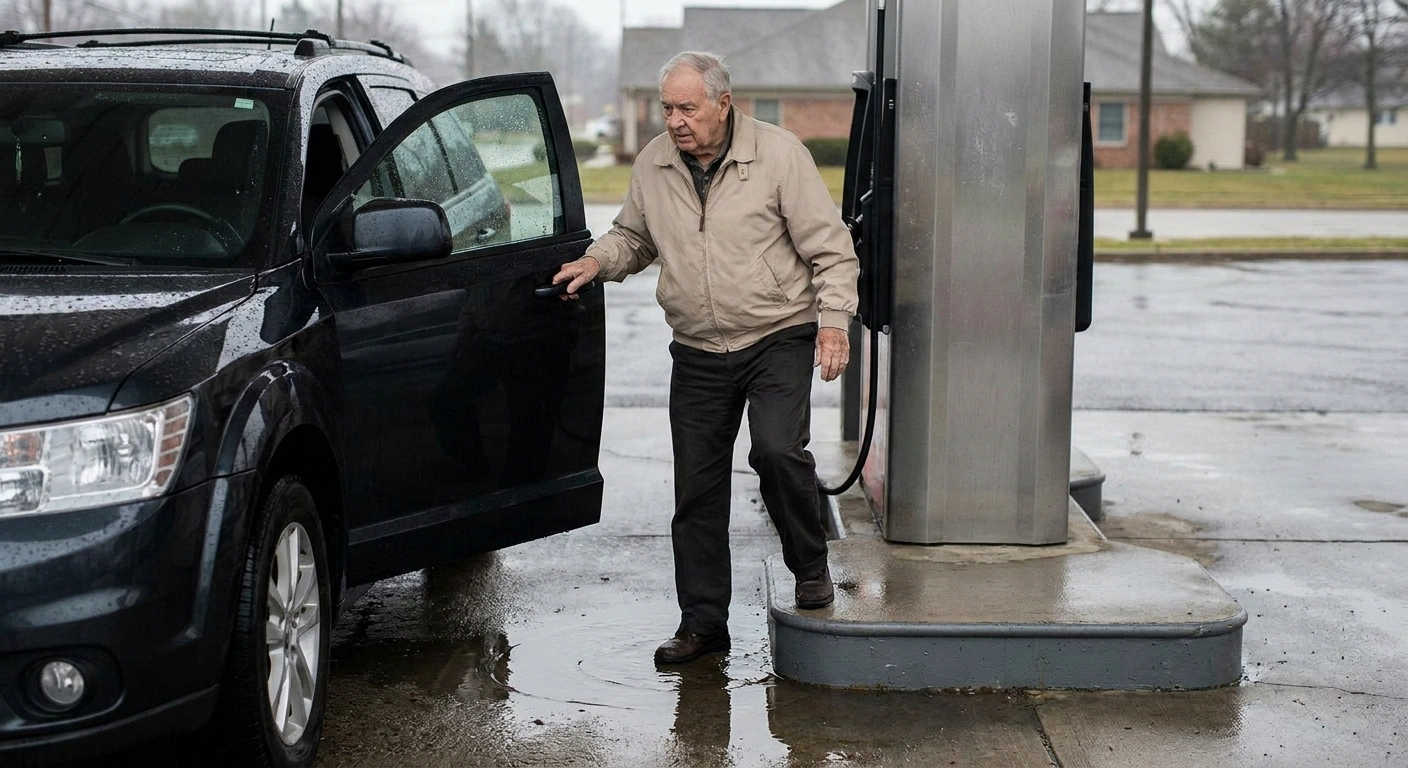
The CDC says “more than one out of four older people falls each year, but less than half tell their doctor,” and that one fall doubles the chance of another. In figures the CDC updated in September 2026, falls lead to about 4.5 million emergency department visits a year among older adults, and the fall death rate for people 65 and older rose 21% between 2018 and 2024. None of those numbers is specific to gas stations. But a pump island is a small obstacle course: a curb, a coiled hose, spilled fuel, and in winter, ice.
What helps — in my experience, anyway — is slowing the whole thing down. I swing both feet out and plant them before I stand, keep one hand on the open door until I'm steady, and step over the hose rather than across it while carrying anything. The National Institute on Aging's advice for winter footing applies year-round at the pump: “Wear nonskid, rubber-soled, low-heeled footwear.” If balance is your main struggle, these fall prevention strategies are a good next read, and my notes on walking on ice and snow cover the trip from the pump to the store door in January.
When Your Medicine Makes You Woozy
Several of the most common nerve-pain medicines carry label warnings that matter at the pump as much as behind the wheel. I'm quoting the official U.S. labels here, not giving advice, and the numbers are in this section's table.
| Medicine | Dizziness, drug vs placebo | Sleepiness, drug vs placebo | Also on the label |
|---|---|---|---|
| Pregabalin (Lyrica) | 30% vs 8% | 23% vs 8% | More frequent at higher doses; the label says not to drive until you know its effect on you |
| Gabapentin (Neurontin) | 28% vs 8% | 21% vs 5% | How long driving impairment lasts is unknown; raises the chance of falls |
| Duloxetine (Cymbalta) | Warns of sedation and dizziness | Blood pressure can drop on standing; falls and fainting reported, with fall risk highest in older adults | |
Pregabalin figures come from the label's pooled controlled trials in adults; gabapentin figures from its trials in nerve pain after shingles. Current U.S. labels as of September 2026.
The Neurontin (gabapentin) label says patients “should not drive until they have gained sufficient experience to assess whether NEURONTIN impairs their ability to drive,” and it's unusually frank that “The duration of driving impairment after starting therapy with NEURONTIN is unknown.” Its Medication Guide mentions “sleepiness and dizziness, which could increase your chance of having an accidental injury, including falls.” The Cymbalta (duloxetine) guide warns that it can “decrease your blood pressure when standing and cause dizziness or fainting, mostly when first starting Cymbalta or when increasing the dose.” Getting out of the car to stand at a pump is exactly that kind of moment.
If any of your medicines leave you lightheaded or drowsy, the labels' advice is not to drive, and that includes the trip to the pump. Bring it up with your prescriber or pharmacist, ask whether alcohol or your other medicines add to the drowsiness, and have someone else fill the tank on those days. For the bigger picture, see my article on whether it's still safe to drive with neuropathy.
Paying When Your Fingertips Can't Read the Reader
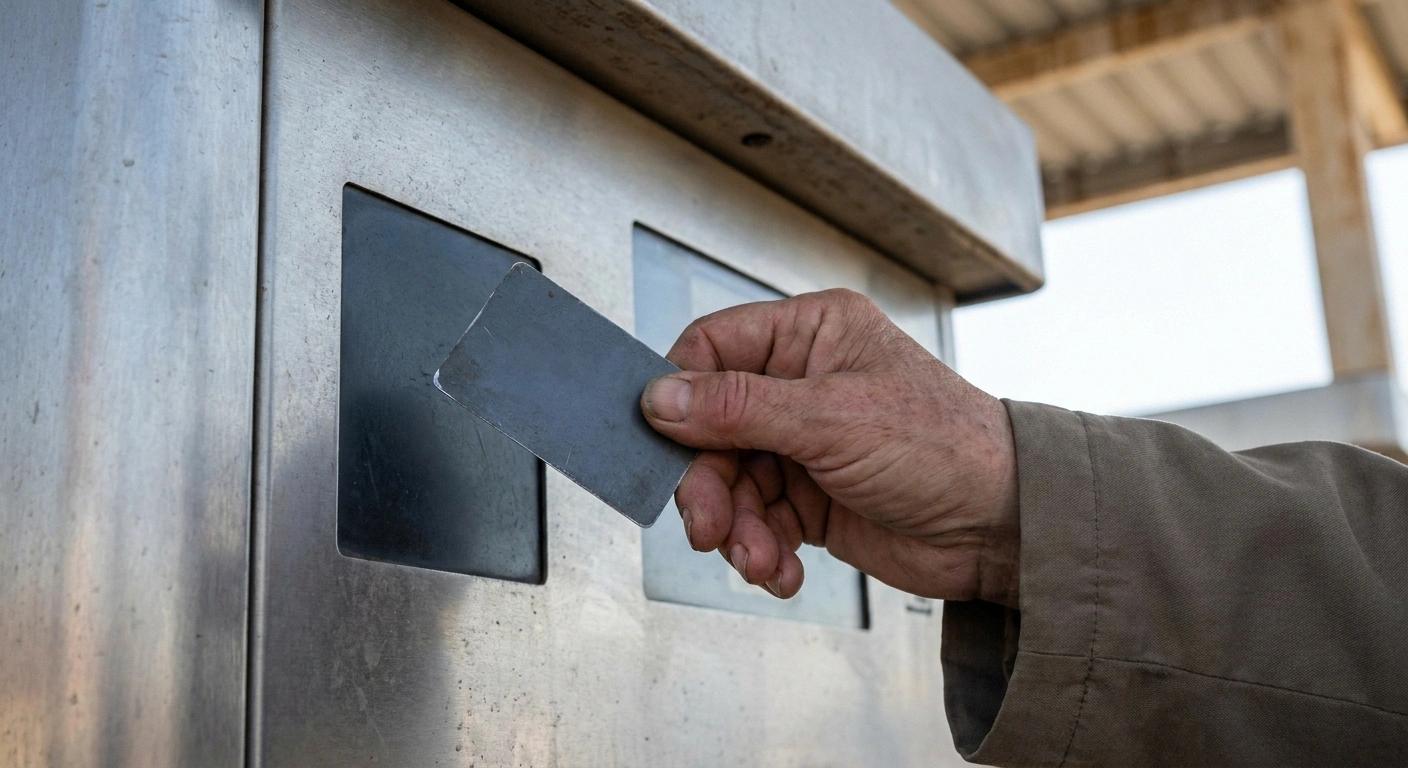
Card skimmers are “illegal card readers attached to payment terminals,” according to the Federal Trade Commission, and gas pumps are a favorite target. The FTC's checks are simple: make sure the pump's panel is closed and shows no signs of tampering, look for a security seal over the cabinet, and see whether the card reader looks different from the others at the station.
One of its tips is to “Try to wiggle the card reader before you put in your card,” which is a lot to ask of numb fingertips. I lean on my eyes instead, and when anything looks off I follow another FTC suggestion and “pay inside rather than at the pump.” If you use a debit card at the pump, the FTC suggests running it as credit rather than entering a PIN, and checking your accounts regularly either way.
Other Ways to Keep the Tank Full
You don't have to pump your own gas every time, and nobody should make you feel you do. A few options I've seen people in my support group use:
- Full-service lanes, where a station still offers them.
- A family member or friend who fills up when they drive you somewhere anyway.
- A fuel-delivery service, in areas where one operates, that fills the car in your driveway.
- Fewer, calmer fill-ups. Going in daylight, during staffed hours, when you're rested and feeling steady works better than running on fumes at night.
The CDC's winter storm advice also suggests keeping the tank near full to help avoid ice in the tank and fuel lines, which conveniently means fewer emergency stops on the worst days. On a long drive, a fuel stop can double as a movement break, as I describe in my guide to planning stops on a long drive. Just stretch your legs after the nozzle clicks off — not while the fuel is flowing.
Frequently Asked Questions
Do gas stations have to pump gas for people with disabilities?
Under the Justice Department's ADA guidance, a self-serve station must provide refueling help to a customer with a disability who asks, when that help is needed for access. A station run from the register by a single employee does not have to, although it is encouraged to help if it can.
Can a gas station charge me more for pumping my gas?
According to the Justice Department's guidance, no. If you want only fuel, you pay the self-serve price even when an attendant pumps it. Oregon and California laws also limit what stations may charge for this help.
Do I need a handicap placard to get help at the pump?
Federal law does not require one. Some states, including California and Florida, tie their own refueling-help laws to a disability plate or placard, so displaying yours can help in those states.
Which states do not let you pump your own gas?
As of September 2026, New Jersey still requires attendants to pump all gas. Oregon has allowed self-service since August 2023, with limits that vary by county.
Is it safe to get back in the car while pumping gas?
Safety groups advise against it, because getting back in can build up static electricity that may ignite gasoline vapors. If you must get back in, touch the outside metal of the car, away from the fuel door, before you touch the nozzle again.
What should I do if I get gasoline on my skin?
Wash it off promptly with soap and water and change out of any gasoline-soaked clothing. Gasoline can irritate skin and cause redness or blisters, and longer contact can burn, so check your hands and sleeves even if you did not feel a splash.
Can nerve pain medicine affect pumping gas and driving?
Yes. The labels for gabapentin, pregabalin and duloxetine warn about dizziness or sleepiness and say not to drive until you know how the medicine affects you. Duloxetine can also lower blood pressure when you stand up, which can cause dizziness or fainting.
About the Author