
You walk into a room and forget why you're there. You lose a word mid-sentence — a word you've used a thousand times. You read the same paragraph three times and still don't absorb it. You start to wonder: is this just aging, or is something else going on?
If you have neuropathy and you've noticed your thinking isn't as sharp as it used to be, you're not imagining it. Research increasingly confirms what millions of neuropathy patients already know from experience — nerve damage doesn't just affect your hands and feet. It can cloud your mind, slow your processing, and make it harder to concentrate, remember, and think clearly.
This is sometimes called “neuropathy brain fog,” and it's far more common than most doctors acknowledge. Here's what's actually happening in your brain, why it happens, and what you can do about it.
The Evidence: Neuropathy and Cognitive Decline Are Connected
This isn't speculation. Multiple research studies have established a clear link between peripheral neuropathy and cognitive impairment.
Neuropathy patients score significantly worse on memory and processing speed tests compared to people without nerve damage — even when other health conditions are accounted for
Frontiers in Endocrinology, 2024
A study published in the journal Aging Clinical and Experimental Research investigated the relationship between peripheral neuropathy and cognitive performance in elderly individuals and found a significant association — people with neuropathy performed worse on cognitive tests than those without it, even after accounting for age and other health conditions.
A 2024 study in Frontiers in Endocrinology specifically examined diabetic neuropathy patients and found they had significantly worse cognition in the domains of memory and processing speed compared to diabetic patients without neuropathy. The neuropathy itself — not just the diabetes — was independently associated with cognitive decline.
And a 2025 comprehensive review in Mitochondrion confirmed that individuals with diabetic neuropathy frequently exhibit impairments in memory, attention, and executive function — the brain's ability to plan, organize, and make decisions.
These aren't small studies or fringe journals. The connection between neuropathy and cognitive problems is real, measurable, and increasingly well-documented.
Why Neuropathy Affects Your Brain: Six Pathways
The brain fog you're experiencing doesn't have a single cause. It's typically the result of multiple factors stacking on top of each other — each one individually manageable, but collectively creating a significant cognitive burden.
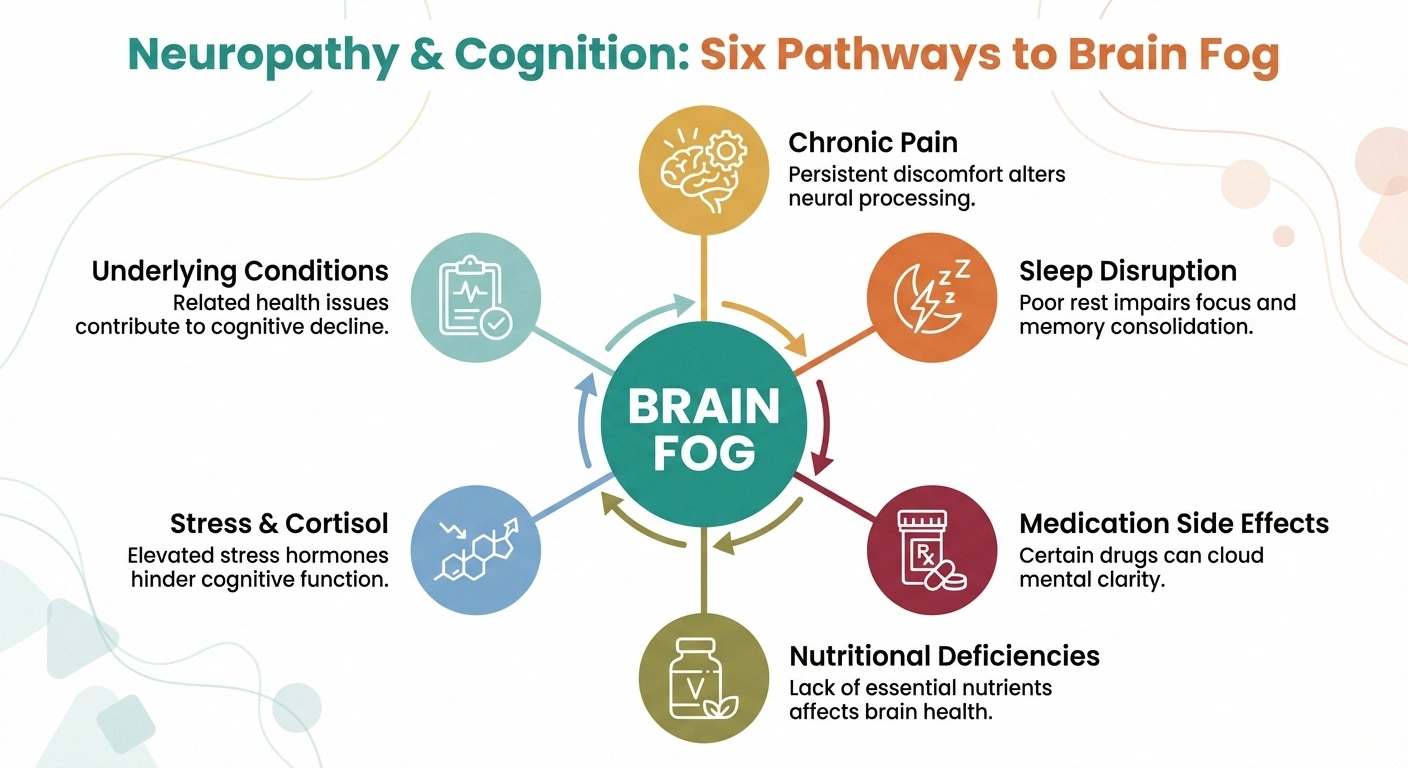
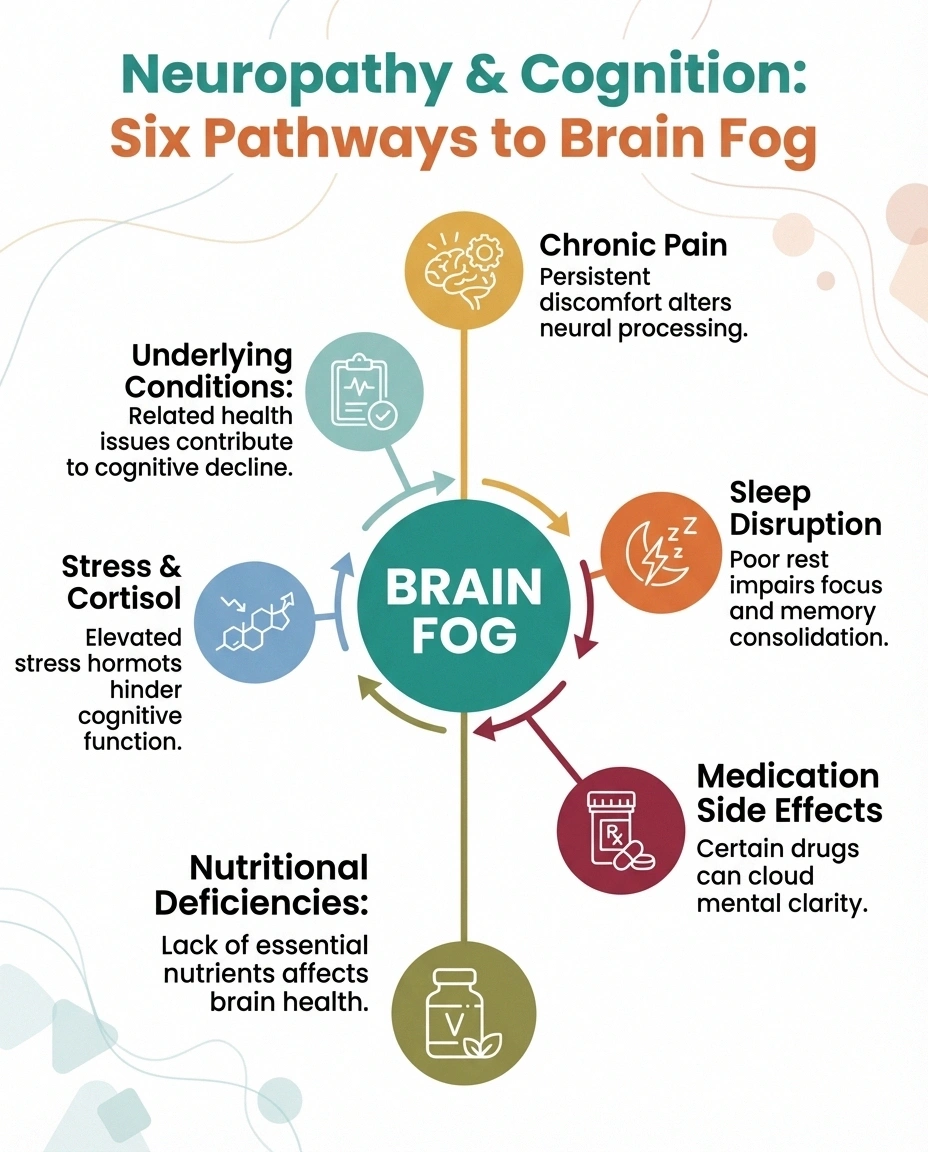
Chronic Pain Hijacks Your Brain's Processing Power
Your brain has a finite amount of processing capacity. When chronic neuropathic pain is running in the background 24 hours a day, it consumes a significant portion of that capacity. Think of it like running a resource-heavy program on your computer while trying to do other work — everything else slows down.
The Pain-Brain Connection
Chronic neuropathic pain increases TNF-alpha — an inflammatory marker — directly in your hippocampus, the brain's memory center. Your difficulty concentrating isn't a personal failing. It's a predictable biological consequence of your nervous system processing pain signals around the clock.
Research published in Neuropsychopharmacology demonstrated that peripheral nerve injury directly impaired working memory in animal models — and identified the mechanism: chronic pain increases TNF-alpha (an inflammatory marker) in the hippocampus, the brain's memory center. The pain literally inflames the part of your brain responsible for forming and retrieving memories.
This means your difficulty concentrating and remembering things isn't a personal failing — it's a predictable biological consequence of your nervous system processing pain signals continuously.
Sleep Disruption Compounds the Problem
Neuropathy pain intensifies at night, fragmenting the deep sleep stages your brain needs for memory consolidation, emotional processing, and cognitive restoration. When you don't get enough deep sleep, your hippocampus can't properly consolidate short-term memories into long-term storage. That's why you might remember events from twenty years ago but can't recall what you ate for lunch yesterday.
Sleep-deprived brains also show reduced activity in the prefrontal cortex — the region responsible for focus, decision-making, and filtering relevant information from noise. This explains the “I can't concentrate” and “everything feels overwhelming” experiences that neuropathy patients frequently describe.
Medication Side Effects on Cognition
Many of the most common neuropathy medications have documented cognitive side effects. This is one of the most actionable causes of neuropathy brain fog — and one your doctor can help with.
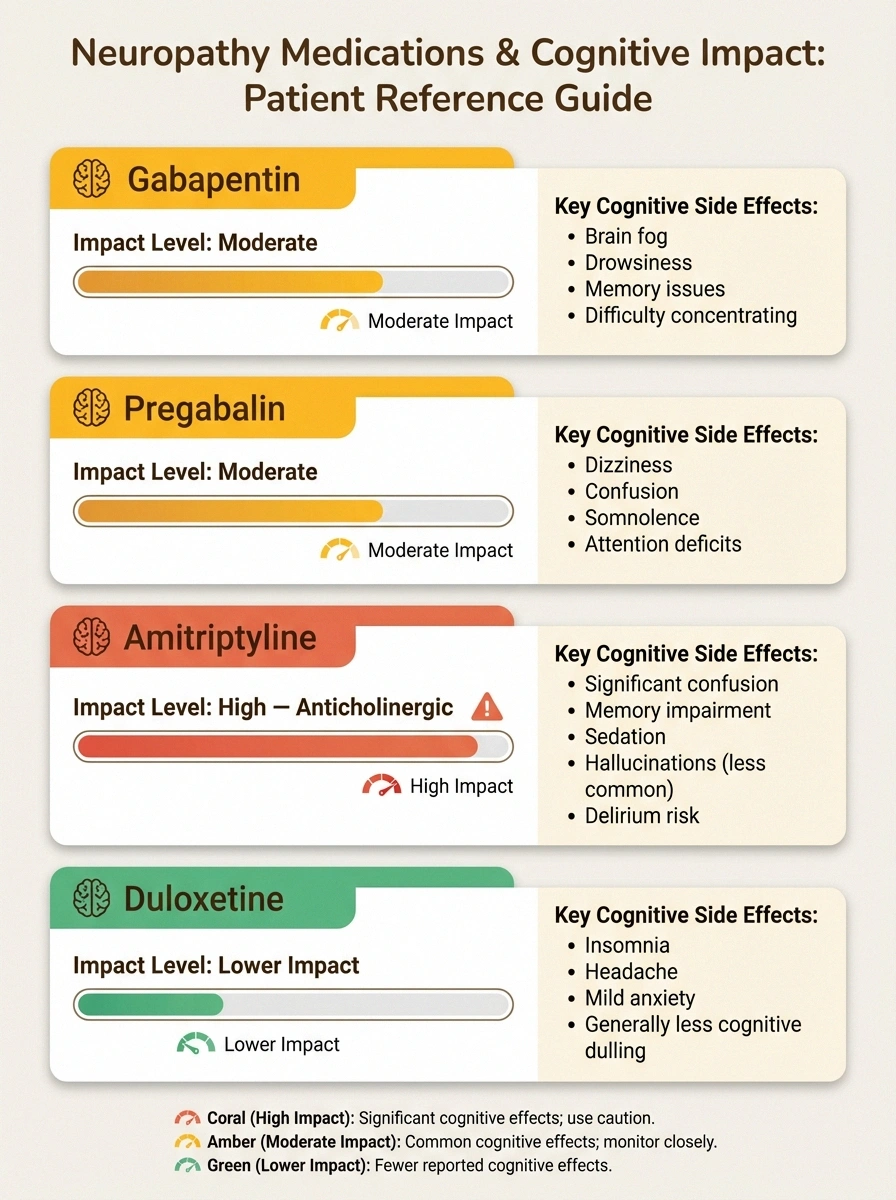
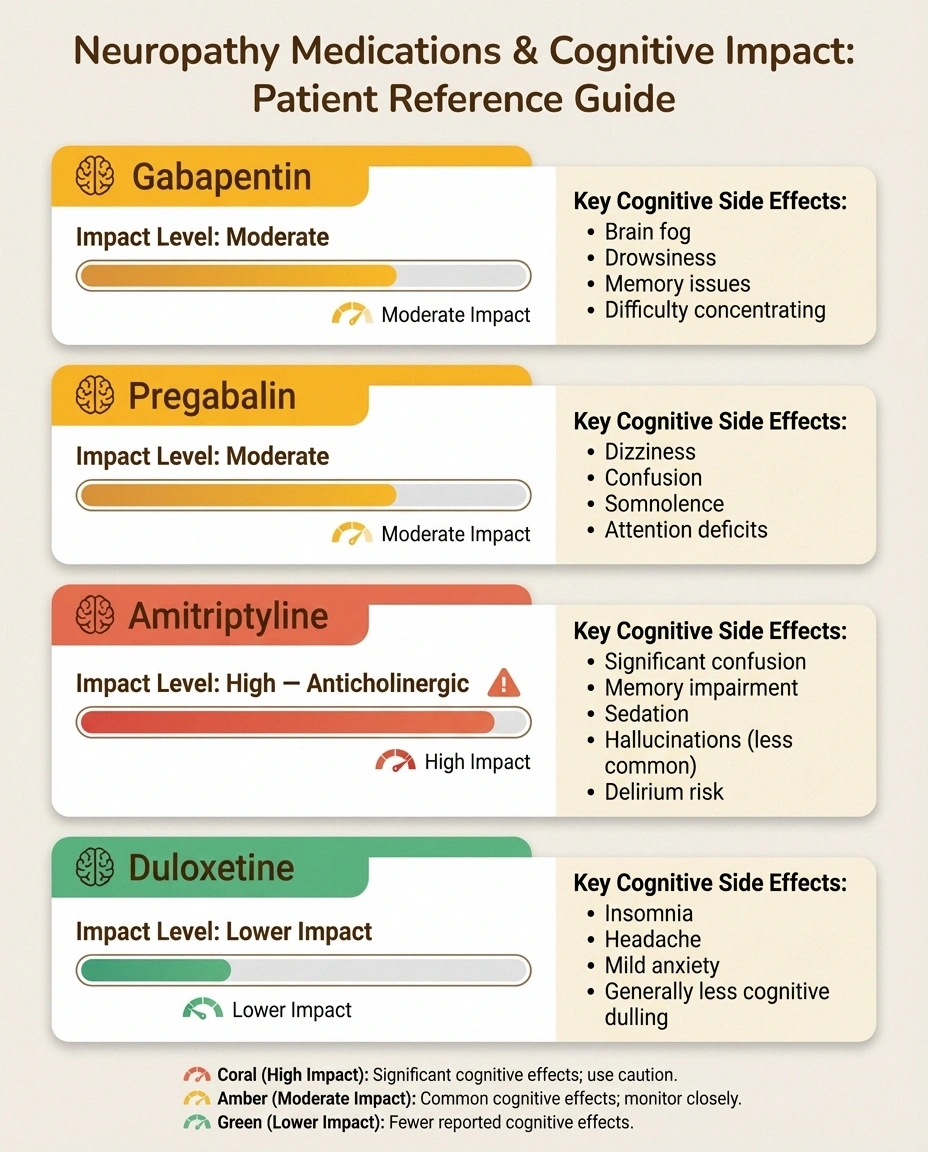
Gabapentin is widely prescribed for neuropathic pain and is one of the most common culprits. Side effects include drowsiness, difficulty concentrating, and “foggy” thinking. Studies show these cognitive effects are dose-dependent — higher doses cause more impairment.
Pregabalin (Lyrica) works through a similar mechanism and can cause similar cognitive blunting, including memory problems, slowed mental processing, and difficulty finding words.
Amitriptyline and other tricyclic antidepressants used for nerve pain have anticholinergic properties that can directly impair memory formation. This effect is particularly pronounced in older adults.
Opioids, when prescribed for severe neuropathic pain, significantly impair attention, processing speed, and memory. These effects persist even at stable, long-term doses.
If you suspect your medications are contributing to cognitive problems, don't stop taking them without medical guidance — but do have an honest conversation with your doctor about whether dose adjustments or alternative medications might preserve your cognitive function while still managing your pain.
Nutritional Deficiencies That Affect Both Nerves and Brain
Some of the same nutritional deficiencies that cause or worsen neuropathy also impair cognitive function. Vitamin B12 deficiency is the most significant — it damages both peripheral nerves and the central nervous system, causing memory problems, confusion, and difficulty concentrating alongside the classic neuropathy symptoms of tingling and numbness.
A review in Cureus found that low B12 levels are an underestimated cause of minimal cognitive impairment and even dementia, particularly in older adults. The overlap between B12-related neuropathy and B12-related cognitive decline is near-complete — which means getting your B12 levels checked (and supplementing if deficient) may improve both your nerve symptoms and your thinking.
Other nutrients that affect both nerve and brain function include vitamin D, folate, and magnesium. Deficiencies in any of these can contribute to the cognitive fog you're experiencing.
Stress, Anxiety, and the Cortisol Tax
Living with chronic neuropathic pain is stressful. That stress produces chronically elevated cortisol levels, which directly damage the hippocampus — shrinking it over time and impairing its ability to form new memories. Anxiety and depression, both common in neuropathy, further compound the cognitive burden.
A large body of research shows that chronic stress impairs working memory, executive function, and attention — precisely the cognitive domains neuropathy patients report the most trouble with. The stress isn't just an emotional response to pain — it's an independent biological contributor to your cognitive difficulties.
Underlying Conditions That Affect Both Nerves and Brain
Many conditions that cause neuropathy also independently affect brain function. Diabetes is the most prominent example — high blood sugar levels damage both peripheral nerves and brain blood vessels, impair insulin signaling in the brain (sometimes called “type 3 diabetes”), and increase the risk of cognitive decline and dementia.
Thyroid disorders, autoimmune conditions, and chronic kidney disease can all cause neuropathy and cognitive impairment simultaneously. Treating the underlying condition often improves both the nerve symptoms and the brain fog.
What Neuropathy Brain Fog Actually Feels Like
If you're wondering whether what you're experiencing qualifies as cognitive impairment, here's what neuropathy patients commonly report:

Do You Recognize These Cognitive Changes?
Words vanish mid-sentence — you know them, but they won't come
Walking into rooms and forgetting why you're there
Reading a page multiple times without absorbing the content
Mental fatigue hitting far earlier in the day than it used to
Needing much more time to make decisions or process information
- Word-finding difficulties — You know the word. It's on the tip of your tongue. It was there thirty seconds ago. But when you need it in conversation, it vanishes.
- Reduced short-term memory — Walking into a room and forgetting why. Losing track of what you were saying mid-sentence. Forgetting appointments or tasks you just confirmed.
- Difficulty concentrating — Reading a page and realizing you absorbed nothing. Starting a task and getting lost in the middle. Inability to follow complex conversations.
- Slowed processing speed — Needing more time to understand questions, make decisions, or react to situations. Feeling like your thoughts are moving through honey.
- Mental fatigue — Running out of cognitive energy far earlier in the day than you used to. Needing to “rest your brain” after mental tasks that previously felt effortless.
- Disorganization — Losing track of time, misplacing things, struggling to plan or sequence tasks that used to be automatic.
These experiences are distressing precisely because they affect your sense of self. Your body was already compromised by neuropathy — and now your mind feels like it's following. That fear is understandable, and naming what's happening is the first step toward addressing it.
Strategies to Protect and Improve Your Cognitive Function
The cognitive effects of neuropathy are real, but they're not a one-way street. Many of the contributing factors are modifiable, and targeted strategies can meaningfully improve your mental clarity.
Optimize Sleep Quality
Because sleep disruption is one of the primary drivers of neuropathy brain fog, improving sleep may produce the fastest cognitive improvement. Evidence-based strategies include maintaining a consistent sleep-wake schedule, keeping the bedroom cool (which can also help with burning feet), using melatonin strategically, and addressing nighttime pain with your doctor if current management isn't allowing restorative sleep.
Review Your Medications
Schedule a medication review specifically focused on cognitive side effects. Ask your doctor: “Are any of my current medications known to affect memory or concentration?” Some dose adjustments or medication swaps can significantly reduce brain fog while maintaining pain control. Never change medications on your own — but advocate for a review.
Check and Correct Nutritional Deficiencies
Request blood work for B12, folate, vitamin D, and thyroid function if you haven't had these checked recently. These are simple, inexpensive tests, and deficiencies are treatable. B12 supplementation in particular has shown the ability to improve both neuropathy symptoms and cognitive function in deficient patients.
Exercise Within Your Limits
Physical exercise is the single most evidence-supported intervention for cognitive health. It increases blood flow to the brain, promotes the release of brain-derived neurotrophic factor (BDNF) — which supports neuron health — and reduces inflammation and cortisol. Even gentle walking, swimming, or chair yoga can provide meaningful cognitive benefits. The key is consistency over intensity.

Manage Stress Deliberately
Chronic cortisol exposure damages the hippocampus. Anything that reduces your stress response — mindfulness meditation, deep breathing exercises, spending time in nature, creative activities, social connection — directly protects your cognitive function. This isn't optional self-care — it's neuroprotection.
Use Cognitive Compensation Strategies
While you work on the underlying causes, practical workarounds can reduce the daily frustration of brain fog:
5 Steps to Protect Your Cognitive Function
Fix Your Sleep
Address nighttime pain, keep consistent sleep-wake times, consider melatonin
Review Your Medications
Ask your doctor about cognitive side effects — dose adjustments may help
Check Your Nutrients
B12, folate, vitamin D, and thyroid function — simple blood tests, treatable deficiencies
Move Your Body
Even gentle walking boosts BDNF and brain blood flow — consistency matters more than intensity
Manage Stress Deliberately
Chronic cortisol damages your hippocampus — mindfulness, connection, and creative activities protect it
- Write everything down. Keep a small notebook or use your phone's notes app. Don't rely on memory for appointments, tasks, or things to discuss with your doctor.
- Establish routines. When daily tasks follow the same sequence, they become automatic and require less cognitive effort. Keys always go in the same spot. Medications are always taken at the same time in the same place.
- Batch cognitive tasks. If mornings are your clearest time, schedule appointments, manage finances, and handle complex decisions in the morning. Save lower-demand activities for when the fog is thickest.
- Reduce multitasking. Your brain's ability to juggle multiple tasks is one of the first things to decline with brain fog. Do one thing at a time, complete it, then move to the next.
- Set timers and reminders. External prompts take the burden off your memory. Use phone alarms for medications, calendar reminders for appointments, and timers for cooking.
When to Talk to Your Doctor About Cognitive Changes
Some level of brain fog is common and manageable with the strategies above. But certain cognitive changes warrant a medical evaluation to rule out other causes:

See Your Doctor If You Notice
Sudden cognitive decline over days or weeks, getting lost in familiar places, difficulty performing tasks you've done for years, personality changes noticed by family, or confusion about time, place, or people. These may be neuropathy-related, but they can also signal other treatable conditions that deserve evaluation.
- Sudden onset of significant cognitive decline (over days or weeks, not months)
- Getting lost in familiar places
- Difficulty performing tasks you've done for years (managing finances, following recipes)
- Personality changes noticed by family members
- Confusion about time, place, or people
- Cognitive decline that's clearly worsening over months despite addressing sleep, nutrition, and medication factors
These symptoms may still be related to neuropathy and its contributing factors, but they can also signal other conditions — including early cognitive impairment, medication interactions, or treatable metabolic problems — that your doctor should evaluate. A neurological evaluation may include cognitive screening tests that can establish a baseline and track changes over time.
The Encouraging Reality
Here's the part that doesn't get enough attention: much of the cognitive impairment associated with neuropathy is secondary — caused by treatable factors like poor sleep, medication effects, nutritional deficiencies, and chronic stress. This means a significant portion of your brain fog may be reversible.
The Good News
Much of neuropathy-related brain fog is caused by treatable, reversible factors: poor sleep, medication side effects, nutritional deficiencies, and chronic stress. Your brain isn't broken — it's overloaded, under-rested, and often under-nourished. Address these factors systematically, and many patients experience meaningful improvements in mental clarity within weeks.
Patients who optimize their sleep, correct B12 and vitamin D deficiencies, work with their doctors to minimize cognitively-impairing medications, incorporate regular gentle exercise, and manage their stress levels frequently report meaningful improvements in mental clarity — often within weeks to months.
Your brain isn't broken. It's overloaded, under-rested, and often under-nourished. Address those factors systematically, and you may be genuinely surprised by how much clearer your thinking becomes.
Frequently Asked Questions
Can neuropathy actually cause brain fog?
Yes. Research has established multiple pathways by which neuropathy contributes to cognitive difficulties, including chronic pain consuming brain processing resources, inflammatory markers like TNF-alpha affecting the hippocampus, sleep disruption preventing memory consolidation, medication side effects, nutritional deficiencies, and chronic stress from living with the condition. While neuropathy may not directly damage brain tissue in most cases, the secondary effects create a significant cognitive burden that is measurable on standardized testing.
Is neuropathy brain fog the same as dementia?
No. Neuropathy-related brain fog is typically caused by treatable, reversible factors like poor sleep, medication side effects, nutritional deficiencies, and chronic stress. Dementia involves progressive, irreversible damage to brain tissue. However, some conditions that cause neuropathy, particularly long-term uncontrolled diabetes, also increase the risk of vascular dementia. If your cognitive decline is rapid, progressive, or severe, see your doctor to rule out other causes. Most neuropathy-related cognitive symptoms are manageable and improvable.
Which neuropathy medications are worst for cognitive function?
Tricyclic antidepressants like amitriptyline have the strongest anticholinergic effects on memory, especially in older adults. Gabapentin and pregabalin commonly cause drowsiness, mental slowing, and concentration difficulties in a dose-dependent manner. Opioids significantly impair attention and processing speed. Duloxetine tends to have fewer cognitive side effects compared to these options. Talk to your doctor about your specific medication profile, as individual responses vary and dose adjustments can often reduce cognitive impact without losing pain control.
Will brain fog get worse as neuropathy progresses?
Not necessarily. Since most neuropathy-related brain fog comes from secondary factors rather than direct brain damage, addressing those factors can improve cognition even if your neuropathy itself progresses. People who improve their sleep quality, correct nutritional deficiencies, manage stress, and optimize their medication regimen often experience better cognitive function over time regardless of their nerve damage trajectory. The brain fog is more related to how well you manage the contributing factors than to the severity of the neuropathy itself.
What supplements help with neuropathy brain fog?
Only supplement to correct verified deficiencies, not speculatively. B12 supplementation has the strongest evidence for improving both nerve function and cognition when levels are low. Vitamin D supplementation may help when deficient. Omega-3 fatty acids have some evidence for supporting brain health. Alpha-lipoic acid, commonly used for neuropathy, has antioxidant properties that may support cognitive function. Avoid high-dose supplements without medical guidance, and always get blood work done first to identify what you actually need rather than guessing.
Should I get cognitive testing if I have neuropathy brain fog?
Formal cognitive testing can be valuable if your brain fog is significantly affecting your daily life, if it is clearly getting worse over time, or if you want a documented baseline to track changes. A neuropsychological evaluation tests specific cognitive domains — memory, attention, processing speed, executive function — and can help distinguish between normal age-related changes, neuropathy-related cognitive effects, medication side effects, and early signs of other conditions. Ask your neurologist for a referral if you are concerned about the severity or trajectory of your cognitive changes.
About the Author