
One of the most frustrating parts of living with neuropathy isn't the symptoms — it's navigating the insurance system to get the treatment you actually need covered. I've heard from so many patients who were denied coverage for physical therapy, had medications stepped through prior authorization hoops for months, or gave up on treatments they couldn't afford because they didn't know how to fight for coverage.
This guide is a practical roadmap. We'll cover what Medicare covers, how private insurance handles neuropathy treatment, which treatments are most commonly denied (and why), and exactly how to appeal a denial when your insurer says no. Because “no” from an insurance company is often not the final answer.
What Insurance Generally Covers for Neuropathy
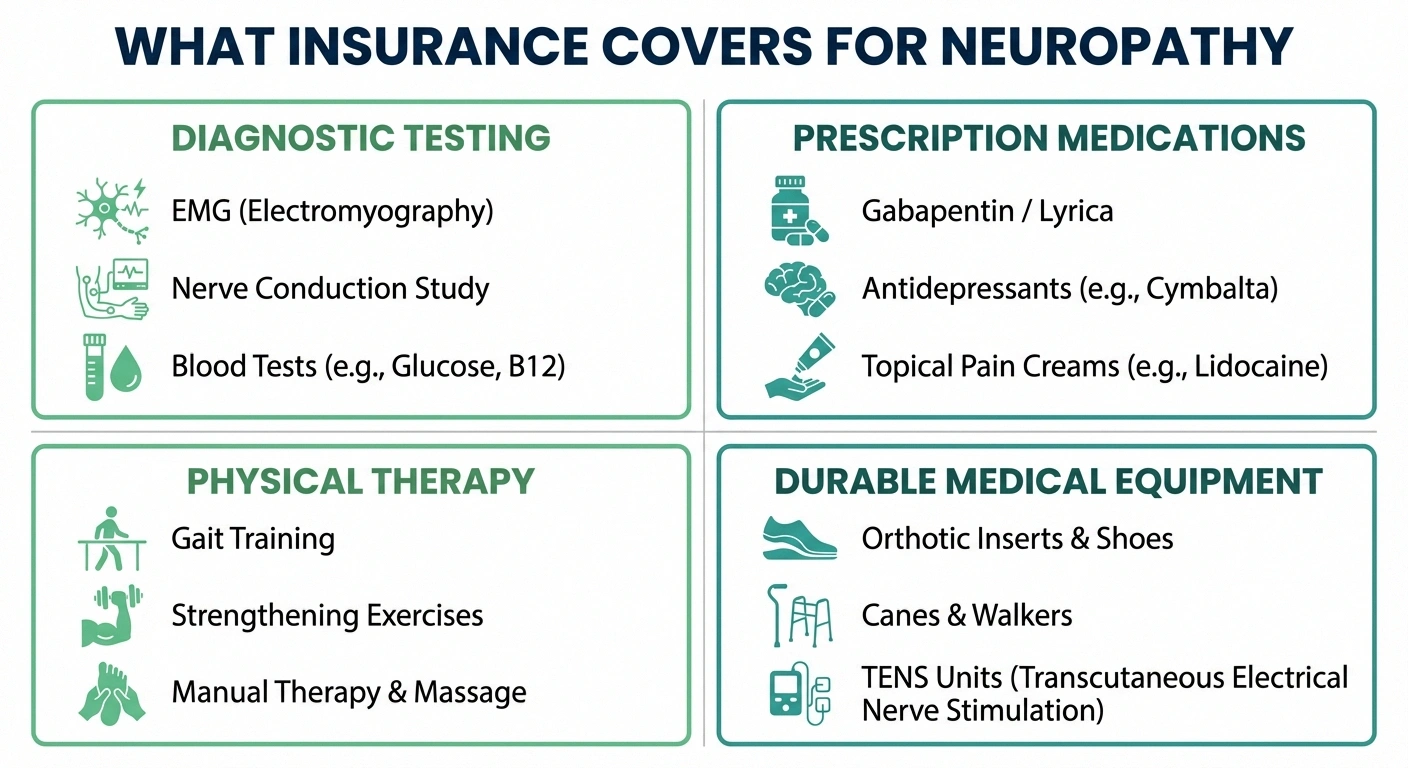
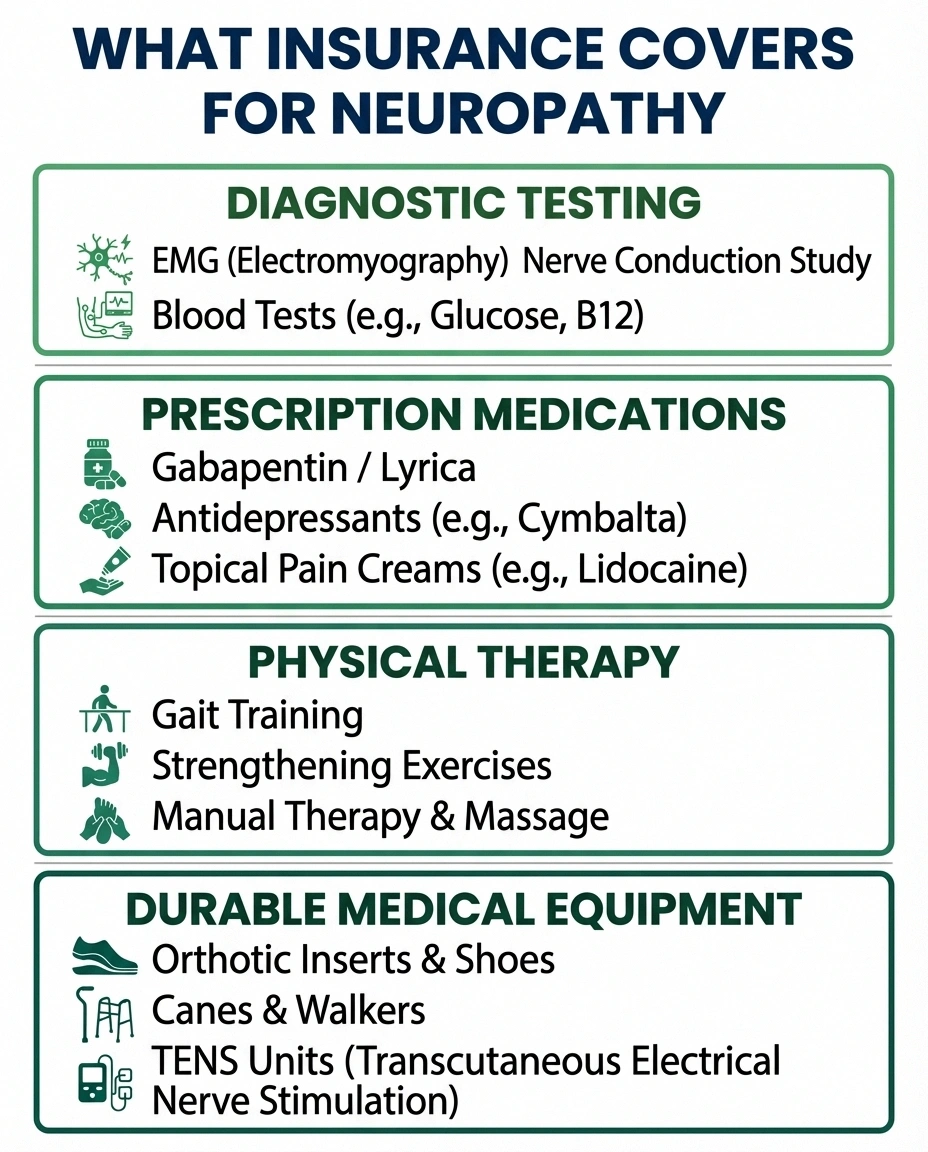
Insurance coverage for neuropathy treatment generally follows a “medically necessary” standard — meaning the treatment must be proven effective for your specific diagnosis and documented appropriately by your physician. Most insurance plans — including Medicare, Medicaid, and private insurance — cover the following when properly documented:
Diagnostic Testing
Nerve conduction studies (NCS) and electromyography (EMG) are typically covered when ordered by a physician to diagnose or evaluate neuropathy. Blood panels, imaging, and skin punch biopsies for small fiber neuropathy are also generally covered with appropriate diagnostic codes. Understanding the lab tests for neuropathy diagnosis helps you know what to expect and what your insurer will likely cover.
Prescription Medications
FDA-approved medications for neuropathic pain are covered by most plans under prescription drug coverage (Part D for Medicare, pharmacy benefits for private insurance). These include:
- Gabapentin — covered on virtually all formularies, often as a preferred generic
- Pregabalin (Lyrica) — covered but often requires prior authorization; generic versions have improved coverage
- Duloxetine (Cymbalta) — typically covered with or without prior authorization
- Tricyclic antidepressants (amitriptyline, nortriptyline) — widely covered as generics
- Topical lidocaine patches — often covered for localized neuropathic pain with documentation
- Capsaicin patches (Qutenza) — typically requires prior authorization and is administered in a clinical setting
If you're navigating medication options with your neurologist, reviewing the questions to ask before starting neuropathy medication can help you have a productive conversation about both effectiveness and coverage.
Physical and Occupational Therapy
Physical therapy for neuropathy — balance training, strengthening, gait work — is typically covered when prescribed by a physician with clear functional goals documented. Occupational therapy for hand or upper extremity neuropathy is also generally covered. The key is that your therapist must document measurable functional improvement with each session to justify continued coverage.
Durable Medical Equipment (DME)
Braces, orthotics, and certain assistive devices are covered under most plans' durable medical equipment benefit when prescribed and deemed medically necessary. For diabetic neuropathy patients, Medicare specifically covers therapeutic shoes and custom inserts — up to one pair per year — through the Therapeutic Shoe Bill.
Medicare Coverage for Neuropathy: What You Need to Know
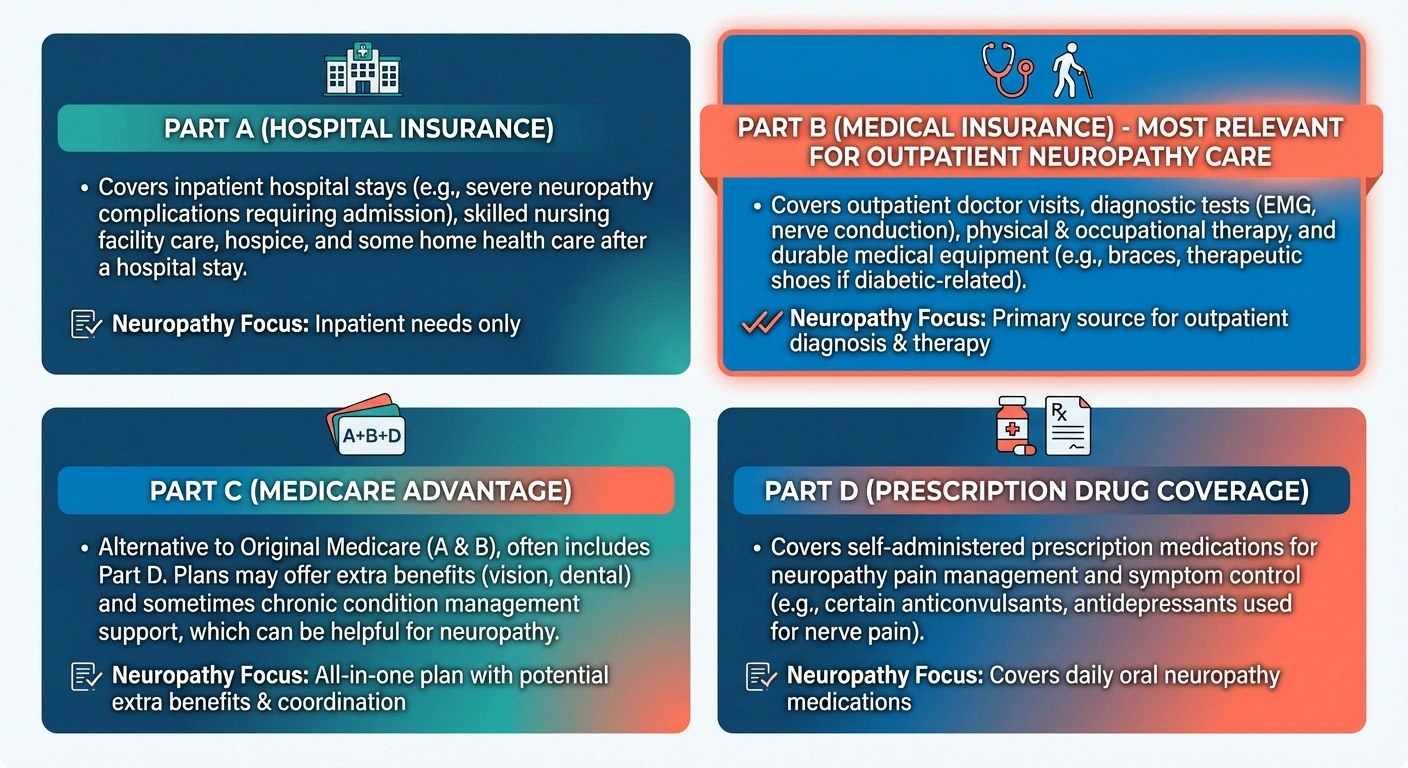
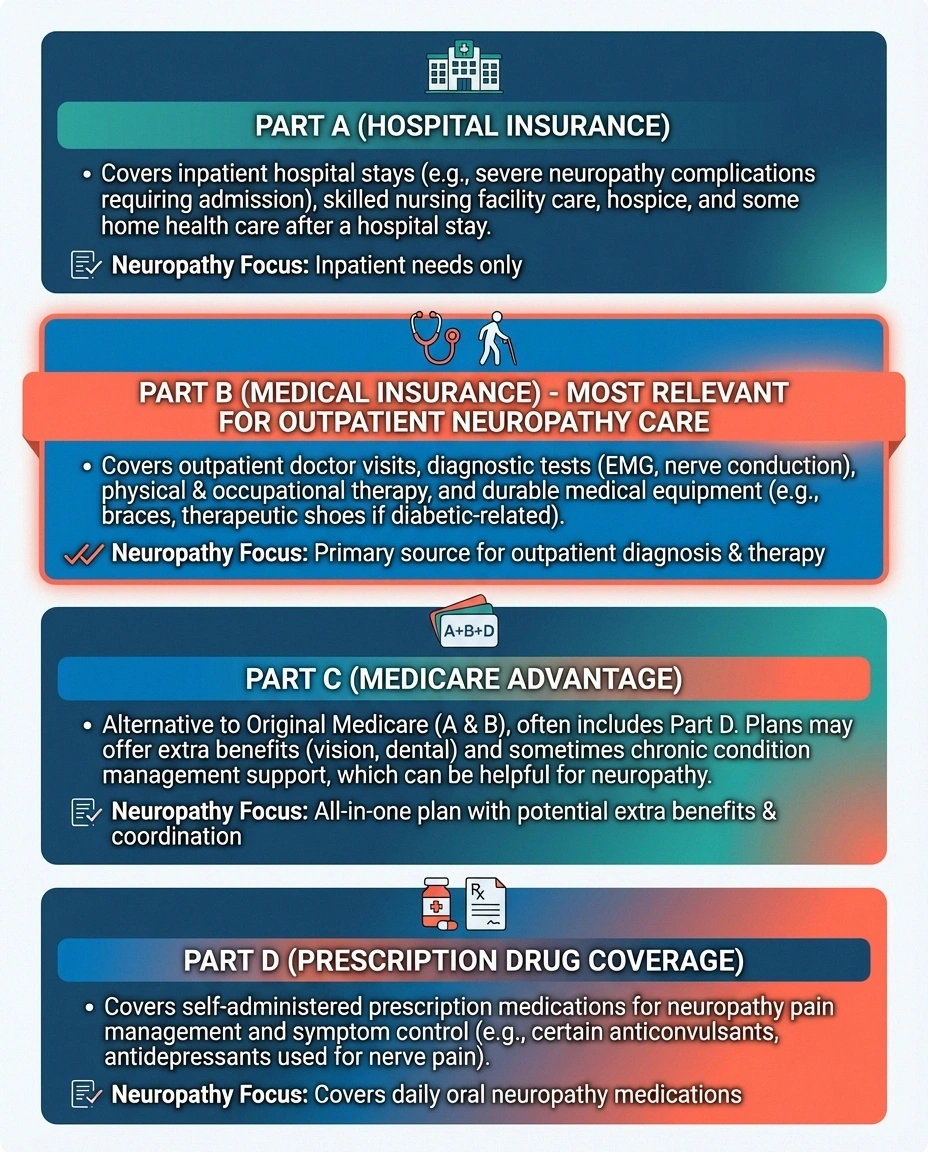
According to the NINDS, more than 20 million Americans have peripheral neuropathy, and a significant portion are Medicare-eligible. Here's how Medicare's four parts apply to neuropathy treatment:
- Inpatient hospitalization
- Skilled nursing facility care
- Acute neuropathy complications (GBS, severe infections)
- Neurologist visits
- NCS/EMG testing
- Physical therapy
- Diabetic therapeutic shoes
- All A + B benefits
- Often includes Part D
- May cover acupuncture, fitness, transportation
- Gabapentin (usually Tier 1)
- Pregabalin/Lyrica
- Duloxetine
- Tricyclic antidepressants
Medicare Part A (Hospital Insurance)
Part A covers inpatient hospitalization for neuropathy-related care — including hospitalization for acute conditions like Guillain-Barré Syndrome, or when neuropathy complications (like severe infection or diabetic foot ulcers) require inpatient treatment. You pay the Part A deductible for each benefit period.
Medicare Part B (Medical Insurance)
Part B is where most outpatient neuropathy care is covered. This includes:
- Neurologist visits and specialist consultations
- Nerve conduction studies and EMG testing
- Physical and occupational therapy (subject to medical necessity documentation)
- Outpatient diagnostic blood work
- Diabetic therapeutic shoes (through the Therapeutic Shoe Bill, if you have diabetic neuropathy with loss of protective sensation)
- TENS unit rental or purchase (with physician prescription and prior authorization)
After meeting your Part B deductible ($257 in 2025), you pay 20% of the Medicare-approved amount for covered services.
Medicare Part D (Prescription Drug Coverage)
Original Medicare does not cover prescription drugs. You need to enroll in a standalone Part D Prescription Drug Plan to get coverage for neuropathy medications like gabapentin, pregabalin, and duloxetine. Coverage and cost-sharing vary by plan — checking your plan's formulary annually is important, especially if your medication regimen changes.
Medicare Advantage (Part C)
Medicare Advantage plans must provide at least the same coverage as Parts A and B, but many offer additional benefits that can be valuable for neuropathy patients — including fitness benefits, transportation to appointments, and in some plans, coverage for acupuncture or massage therapy that original Medicare excludes. Compare your Advantage plan's extra benefits carefully during open enrollment.
What Insurance Typically Does NOT Cover for Neuropathy
Understanding coverage gaps helps you plan for out-of-pocket costs and know where to focus your advocacy energy:
💡 Tip: Some Medicare Advantage plans cover acupuncture and fitness benefits. Review your plan's supplemental benefits annually during open enrollment.
- Nutritional supplements — alpha-lipoic acid, B vitamins, acetyl-L-carnitine, and other neuropathy supplements are almost never covered by insurance, even when evidence supports their use
- Acupuncture — not covered by traditional Medicare; some private plans and Medicare Advantage plans are beginning to cover this for chronic pain
- Massage therapy — generally not covered, though some Advantage plans include limited sessions as a supplemental benefit
- Infrared or red light therapy devices — typically not covered as durable medical equipment
- CBD products — not covered regardless of evidence
- Experimental treatments — scrambler therapy and other newer interventions may not be covered until more clinical evidence exists
Prior Authorization: The Insurance Hurdle Most Patients Hit
Prior authorization (PA) is the process where your insurance company requires advance approval before they'll cover a treatment or medication. It's one of the most common barriers neuropathy patients face. Here's how to navigate it:

What Triggers Prior Authorization for Neuropathy Treatments
Common PA requirements for neuropathy patients include:
- Brand-name medications like Lyrica (pregabalin) before covering the name brand over generic
- Extended physical therapy beyond initial authorization periods (typically 4 to 8 weeks)
- High-cost procedures like spinal cord stimulation or Qutenza (capsaicin) patches
- Specialty medications and infusion therapies for inflammatory neuropathies
How to Support Your Prior Authorization Request
Your doctor's office typically submits the PA request, but you can significantly strengthen it by:
- Documenting treatment failures — if you need a specific medication, show that you've already tried the first-line alternatives and they failed or caused intolerable side effects
- Providing diagnostic support — NCS/EMG results, blood work, and physician notes establishing your diagnosis support medical necessity
- Functional documentation — showing how your neuropathy affects your ability to work, care for yourself, or perform daily activities strengthens the case
- Clinical guidelines — ask your doctor to cite relevant clinical guidelines in the PA request (e.g., AAN guidelines for neuropathy treatment)
How to Appeal a Neuropathy Treatment Denial
Receiving a coverage denial is not the end of the road. Insurance companies deny claims for many reasons — including administrative errors, missing documentation, or reviewers unfamiliar with neuropathy — and a significant percentage of appeals succeed. Here's how to fight back effectively:
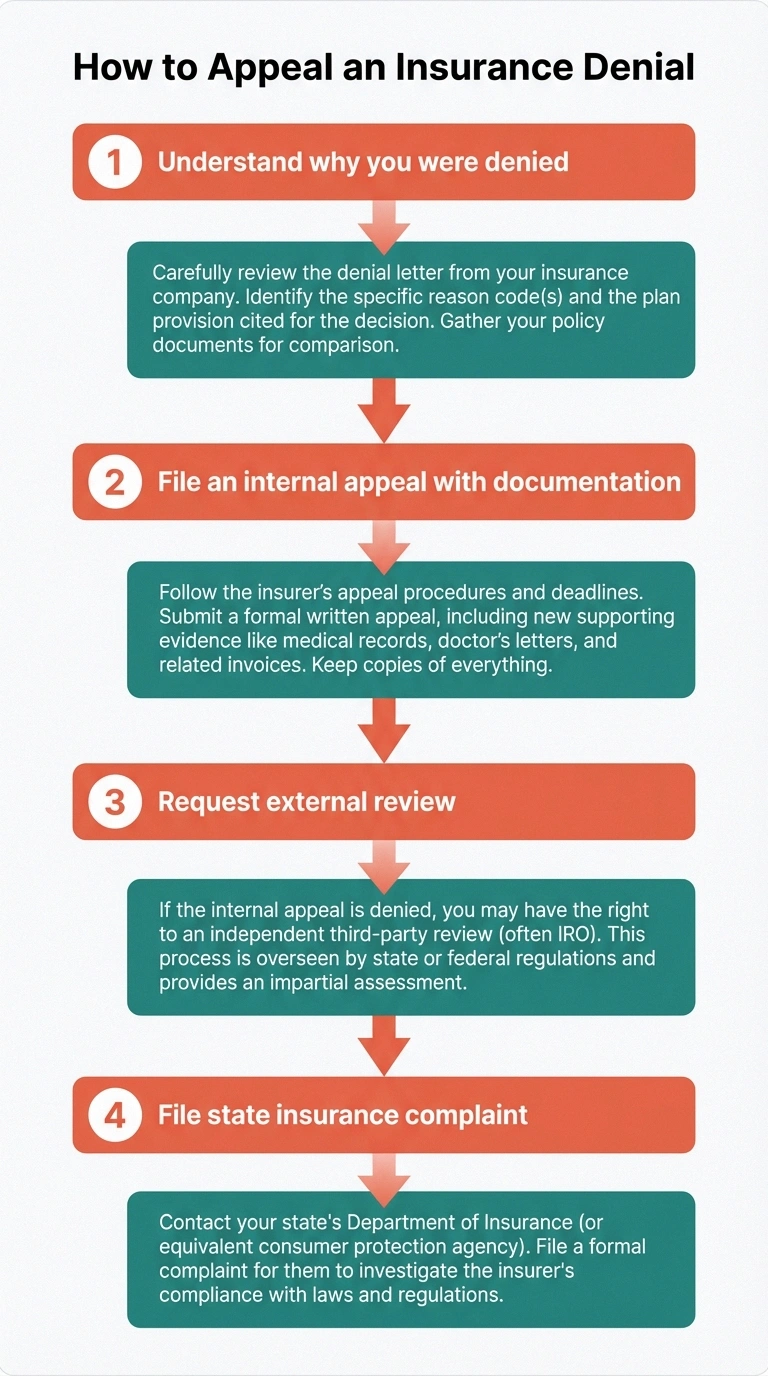
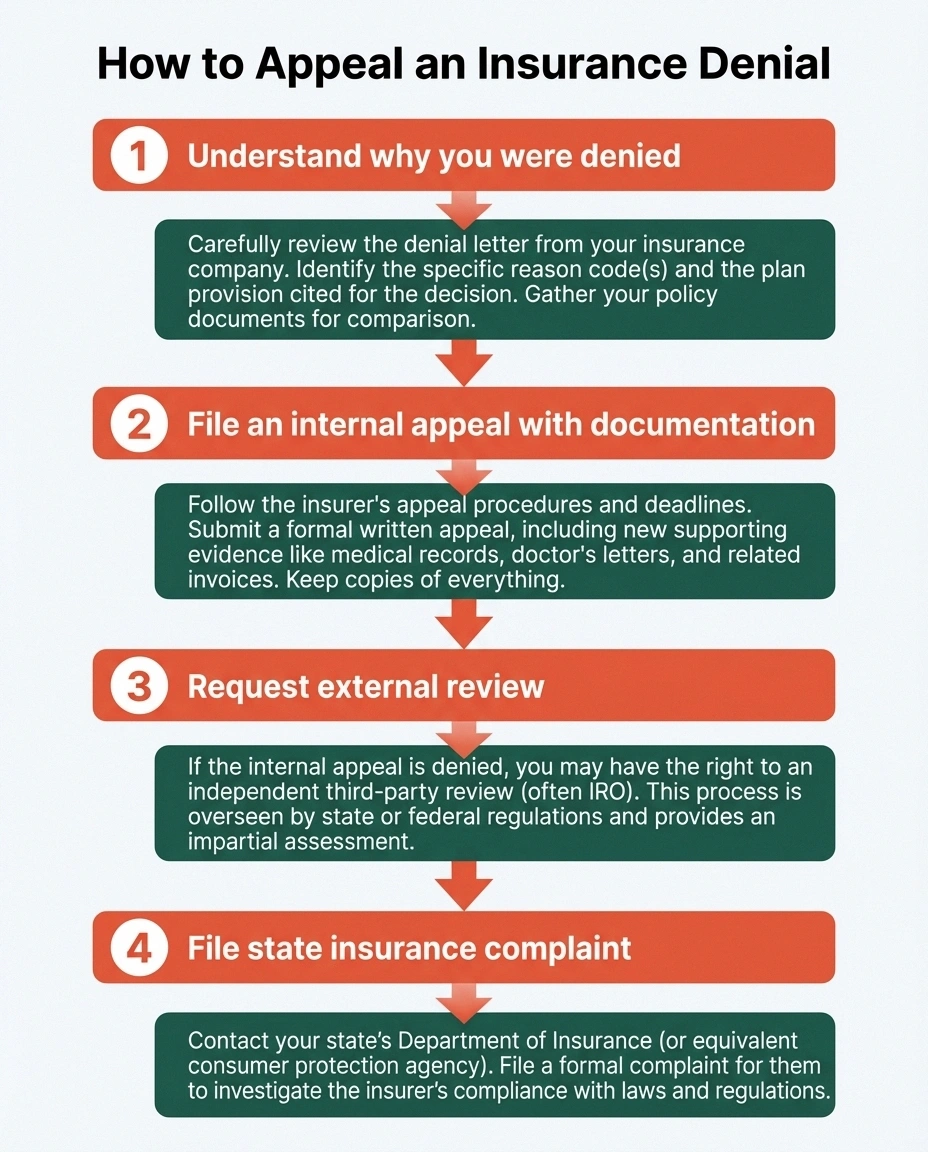
Get the Explanation of Benefits + denial letter. The reason determines your strategy.
Physician letter, medical records, clinical guidelines. Expedited (72hr) if urgent.
~40% of denials reversed. Guaranteed right under the ACA for most private plans.
If bad faith or regulatory violations. Often prompts insurer to reconsider.
Step 1: Understand Why You Were Denied
You have a legal right to a written explanation for any coverage denial. Request the Explanation of Benefits (EOB) and the denial letter if you haven't received one. The denial reason matters — “not medically necessary” requires a different response than “not a covered benefit” or “prior authorization not obtained.”
Step 2: File an Internal Appeal
All insurance plans must provide an internal appeals process. In your appeal letter:
- Clearly state you are appealing the denial of coverage for [specific treatment]
- Include your diagnosis, treating physician, and the date of service or request
- Provide medical justification — your physician's letter explaining why this treatment is necessary for your specific condition
- Include clinical documentation: test results, treatment history, and specialist notes
- Cite the specific policy language you believe supports coverage
- Reference clinical guidelines if applicable (AAN, NINDS, foundation guidelines)
Request an expedited appeal if your condition requires urgent treatment — plans are required to respond within 72 hours for urgent cases versus 30 to 60 days for standard appeals.
Step 3: Request External Review
If your internal appeal fails, you have the right to an independent external review by a third-party reviewer not affiliated with your insurer. This is guaranteed under the Affordable Care Act for most private insurance plans. External reviews reverse insurer decisions roughly 40% of the time for medical necessity denials — it's absolutely worth pursuing.
Step 4: File a State Insurance Complaint
If you believe your insurer is acting in bad faith or violating your state's insurance regulations, file a complaint with your state's Department of Insurance. Insurance commissioners take consumer complaints seriously, and the documentation burden of a regulatory complaint often prompts insurers to reconsider denials.
Disability Benefits for Neuropathy Patients
For patients whose neuropathy is severe enough to affect their ability to work, Social Security Disability Insurance (SSDI) and Supplemental Security Income (SSI) may be options. Neuropathy is recognized as a potentially qualifying disability by the Social Security Administration (SSA) when it meets specific criteria:

- Documented peripheral neuropathy with sensory, motor, or autonomic involvement
- Evidence that symptoms significantly limit your ability to perform work-related activities
- Medical documentation spanning at least 12 months (or expected to last at least 12 months)
The SSA evaluates neuropathy disability claims under Listing 11.14 (peripheral neuropathy) in their Blue Book. Meeting or equaling this listing can result in an approved claim without further analysis. If you don't meet the listing, the SSA also evaluates your residual functional capacity — what work-related activities you can still perform despite your limitations.
Working with a disability attorney who specializes in neurological conditions is strongly recommended. Most work on contingency (no upfront fee) and are paid only if you win.
Reducing Out-of-Pocket Costs When Insurance Falls Short
Even with good coverage, neuropathy treatment can be expensive. These strategies can reduce what you pay out of pocket:
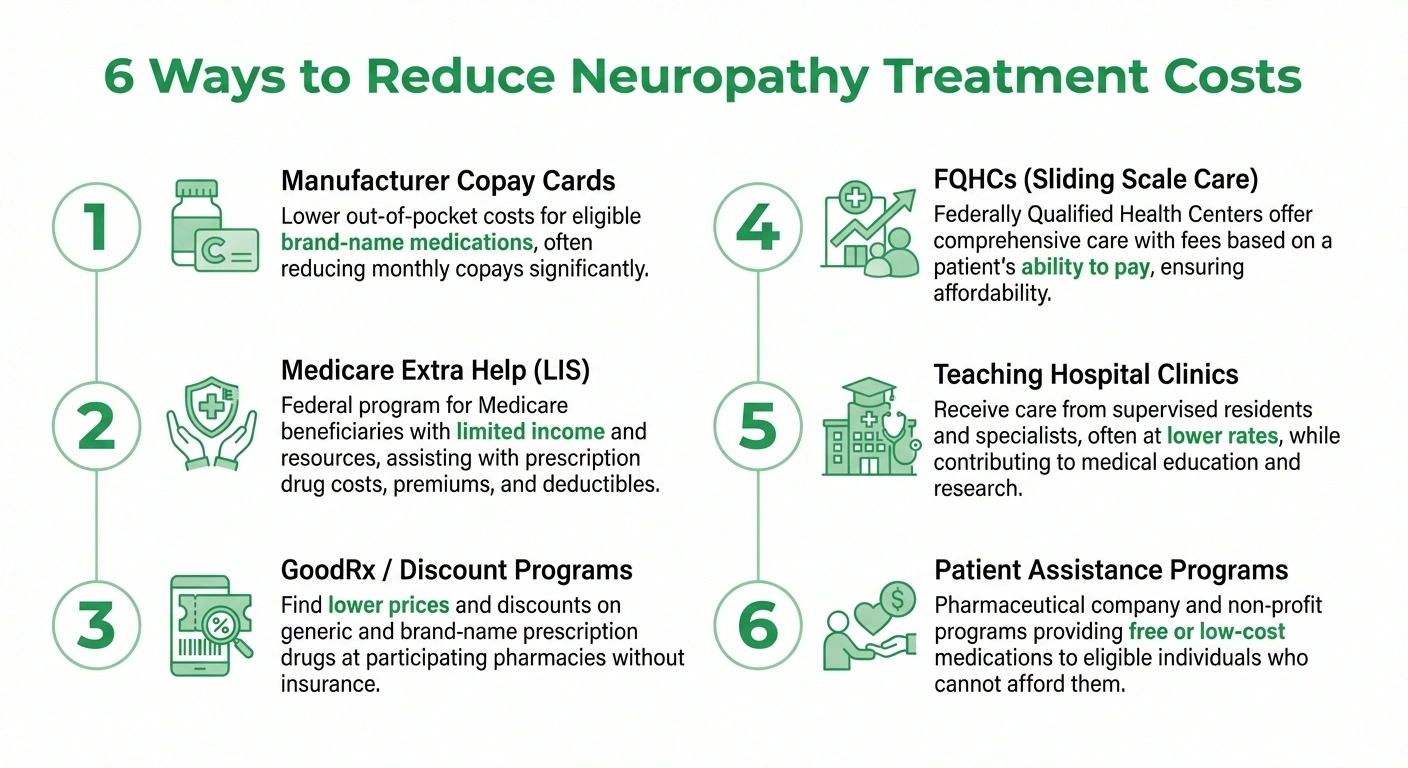
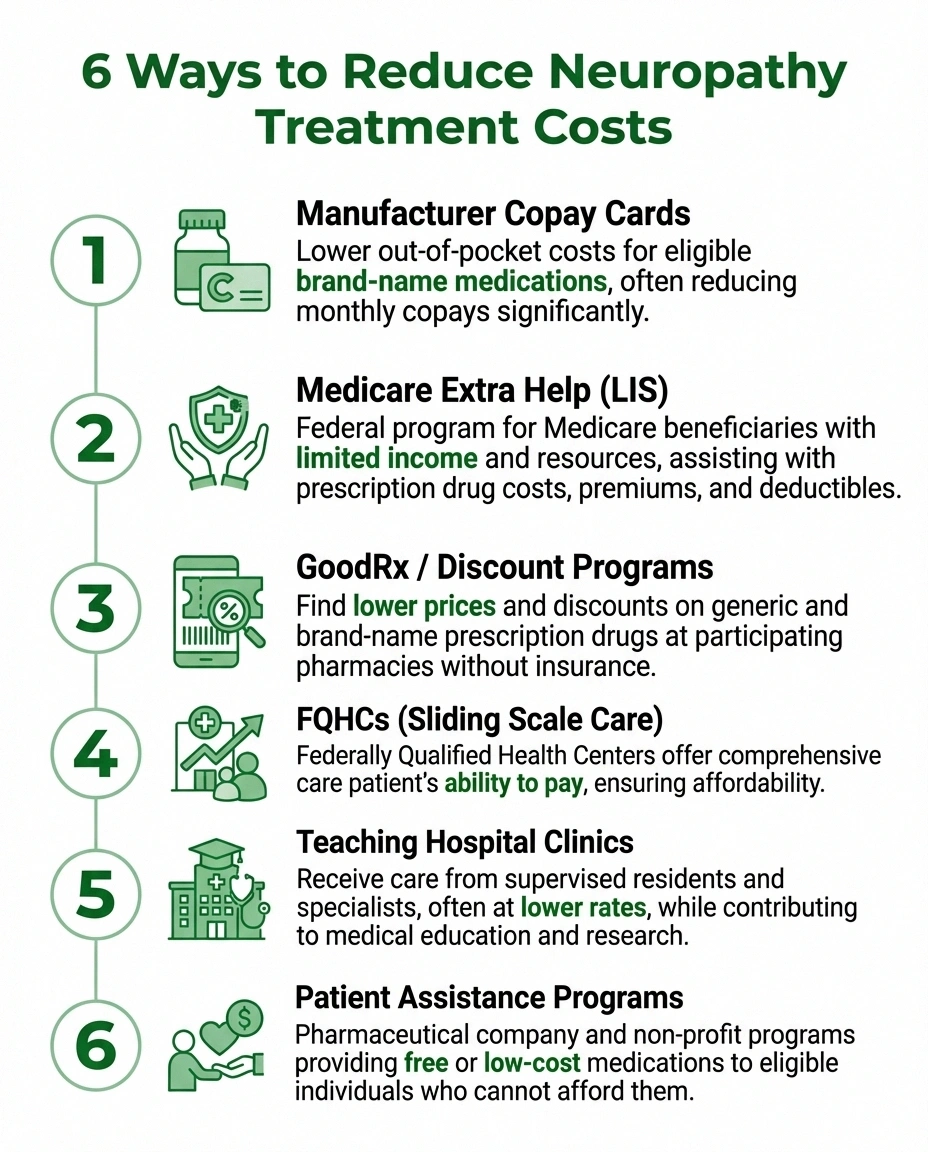
- Manufacturer copay assistance cards — for brand-name medications like Lyrica, the manufacturer often offers cards that reduce copays significantly. Ask your pharmacist or check the drug's official website.
- Medicare Extra Help (LIS) — if you have Medicare and limited income, the Low Income Subsidy program can dramatically reduce Part D prescription costs
- GoodRx and similar discount programs — for medications, often cheaper than your insurance copay for generics; compare before paying
- Federally Qualified Health Centers (FQHCs) — provide sliding-scale fee specialist care including neurology in many areas
- Teaching hospital neurology clinics — often lower-cost access to highly specialized neurologists
- Patient assistance programs — pharmaceutical companies offer free or reduced-cost medications to qualifying patients; NeedyMeds.org maintains a comprehensive database
Frequently Asked Questions
Does Medicare cover physical therapy for neuropathy?
Yes, Medicare Part B covers physical therapy for neuropathy when it is prescribed by a physician, deemed medically necessary, and progress is documented. There is no longer an annual dollar cap on Medicare therapy benefits, but your therapist must continue documenting functional improvement to justify ongoing coverage.
Does insurance cover gabapentin for neuropathy?
Yes, generic gabapentin is covered by virtually all insurance plans including Medicare Part D, typically at the lowest cost tier. It is one of the most-covered neuropathy medications available.
Can neuropathy qualify me for disability benefits?
Yes. The SSA recognizes peripheral neuropathy as a potentially qualifying disability under Listing 11.14. Qualification requires documented nerve damage with significant functional limitations lasting at least 12 months. Working with a disability attorney improves approval odds significantly, especially for initial applications that are often denied.
What should I do if insurance denies my neuropathy treatment?
Request the denial reason in writing, then file an internal appeal with supporting documentation from your physician. If that fails, request an independent external review — these are reversed approximately 40% of the time. Also consider filing a complaint with your state's Department of Insurance if you believe the denial is in bad faith.
Are neuropathy supplements covered by insurance?
Almost never. Supplements like alpha-lipoic acid, B vitamins, acetyl-L-carnitine, and magnesium are not covered by Medicare or most private insurance, even when recommended by a neurologist. These are typically out-of-pocket costs. Some HSA and FSA accounts can be used to purchase certain supplements if prescribed by a physician — check with your plan administrator.
Taking Control of Your Coverage
Insurance navigation is one of those unglamorous parts of chronic illness management that nobody teaches you. But it matters enormously — the difference between getting treatment covered and paying out of pocket can be thousands of dollars a year.

Know your rights: you can appeal denials, you can request external review, and you can file regulatory complaints. Work closely with your physician's office — their staff often have experience with prior authorization battles and know what documentation tends to work. And use the cost-reduction tools available to you even when coverage falls short.
For more on the treatment options you'll be navigating coverage for, explore our natural remedies guide and our neuropathy supplements overview. For ongoing daily management that doesn't require Medicare planning or clinical trials at all, see our neuropathy foot care guide and neuropathy exercises for seniors.
This article is for educational purposes only and does not constitute legal or financial advice. Insurance coverage details change frequently — verify specific coverage for assistive devices with your insurer and consult with a benefits specialist or attorney for complex cases.
About the Author