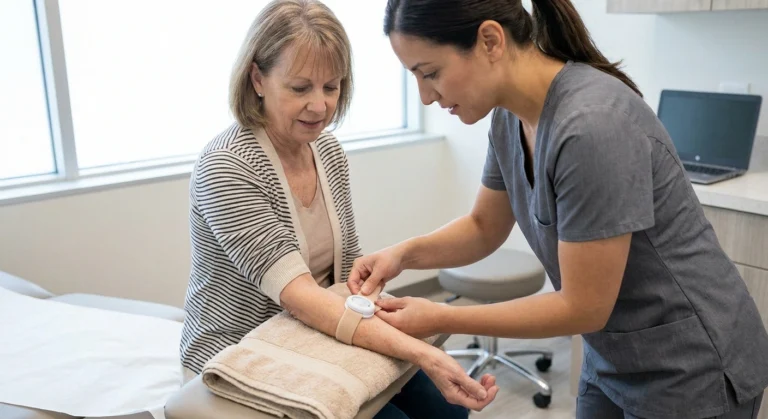
Finding the right doctor for neuropathy is one of the most consequential decisions you'll make in managing this condition — and one of the most frustrating. You might wait months for an appointment, feel rushed through your visit, leave with more questions than answers, and wonder if you just saw the right kind of doctor at all.
I've been there. My own path through the medical system in the early years of my neuropathy involved a general practitioner who was kind but out of his depth, a neurologist who ordered tests without explaining them, and a specialist who finally took the time to actually explain what was happening in my nerves. The difference between those experiences — in quality of information, treatment options, and my own sense of agency — was enormous.
This guide will help you understand who the right doctor is for your situation, what to look for when choosing a neurologist, how to prepare for the appointment, and what red flags suggest you may need a different provider or a second opinion.
What Kind of Doctor Treats Neuropathy?
The short answer: it depends on how complex your case is and what's causing your neuropathy.
Choosing Your Specialist Level
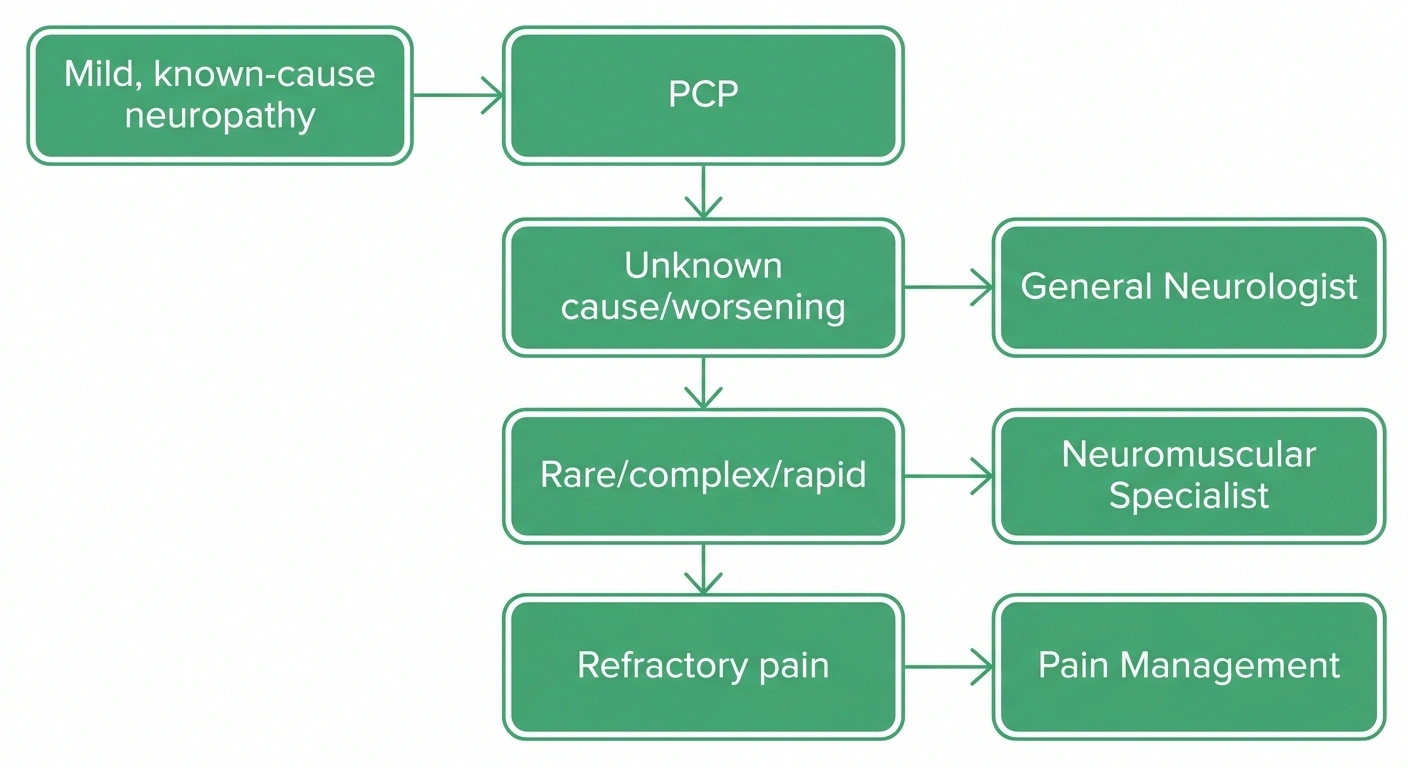
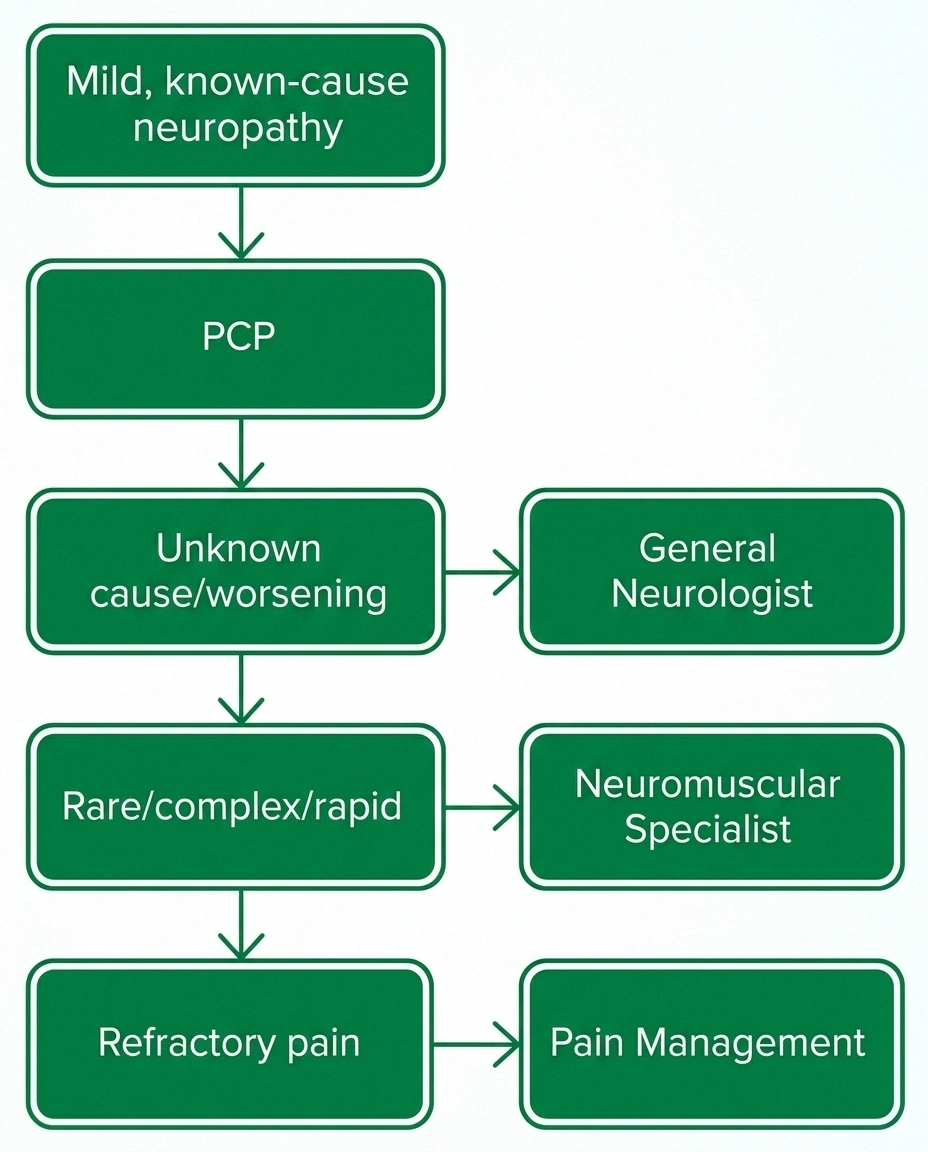
PCP: mild, known-cause neuropathy. General neurologist: most neuropathy cases. Neuromuscular neurologist: rare or complex cases, rapid progression, suspected hereditary or inflammatory causes. Pain management: refractory pain. The right level depends on your specific situation.
Primary Care Physician (PCP)
Your family doctor or internist can diagnose and manage mild, known-cause neuropathy. If you have diabetic neuropathy and you're already established with good blood sugar management, your PCP may be fully equipped to oversee your care. They can order basic neuropathy labs, prescribe common medications, and refer you to physical therapy. For many people, especially in the early stages, this is appropriate.
Neurologist
A neurologist is a physician who specializes in the nervous system — brain, spinal cord, and peripheral nerves. General neurologists handle a wide range of nerve and brain disorders: epilepsy, migraines, Parkinson's, stroke, and peripheral neuropathy. They can perform or order EMG/nerve conduction studies, interpret the results, and have more tools for diagnosis and treatment than a PCP.
A neurologist is appropriate when:
- The cause of your neuropathy is unknown
- Symptoms are worsening quickly
- Initial treatment from your PCP hasn't helped
- You have significant weakness in addition to sensory symptoms
- Your PCP suspects a complex or unusual cause
Neuromuscular Neurologist
Within neurology, there's a subspecialty called neuromuscular medicine — neurologists who focus specifically on diseases of the peripheral nerves and muscles. This is the most relevant subspecialty for neuropathy. Neuromuscular neurologists see conditions like CIDP, Charcot-Marie-Tooth disease, hereditary neuropathies, vasculitic neuropathy, and complex polyneuropathies every day. They're the people you want for rare or difficult-to-diagnose cases.
Pain Management Specialist
If the primary challenge is controlling pain rather than determining the diagnosis, a pain management physician may become part of your care team. They can offer interventional options (nerve blocks, spinal cord stimulation), complex medication management, and integrated pain care. They work best in conjunction with a neurologist who has established the diagnosis.
Other Specialists
Depending on the underlying cause of your neuropathy, other specialists may be involved: an endocrinologist for diabetic neuropathy, a rheumatologist for autoimmune causes, an oncologist for chemo-induced peripheral neuropathy, or a podiatrist for foot-specific complications.
When You Definitely Need a Neurologist (Not Just Your PCP)
While PCPs can manage straightforward cases, there are clear signals that you need neurological expertise:
When to Go to the ER, Not Wait for an Appointment
Rapidly progressing weakness over days to weeks may indicate Guillain-Barré syndrome or another acute inflammatory neuropathy requiring urgent hospital treatment. Loss of bladder or bowel control with neuropathy is also an emergency. Don't wait for an outpatient appointment if these symptoms appear.
Unknown cause. If you've had neuropathy symptoms and no one has determined why, you need a neurologist. Many neuropathy causes are treatable — but finding them requires a specific diagnostic workup that goes beyond basic labs. Up to 30% of peripheral neuropathy cases are labeled “idiopathic” (no known cause) without adequate specialist evaluation, when a cause actually exists and could be addressed.
Rapid progression. Neuropathy that's worsening quickly — over days to weeks — is a neurological emergency in some cases. Guillain-Barré syndrome, for example, can progress to life-threatening weakness. Rapid progression always warrants urgent specialist evaluation. Know the neuropathy emergency signs that warrant an ER visit rather than waiting for an appointment.
Motor weakness. If you're dropping things, have difficulty gripping, or your feet are dragging (foot drop), you have motor nerve involvement. This changes the diagnostic picture significantly and requires neurological assessment.
Treatment failure. If first-line medications — gabapentin, duloxetine — haven't provided adequate relief, a specialist may have access to additional treatment options and the expertise to optimize your regimen.
Autonomic symptoms. Dizziness when standing, bladder dysfunction, digestive issues, abnormal sweating — these suggest autonomic neuropathy, which requires specific testing and management beyond routine peripheral neuropathy care.
What to Look for in a Neurologist for Neuropathy
Not all neurologists are equally well-suited to manage neuropathy, and even within neurology, there's wide variation in focus areas and expertise. Here's what actually matters when choosing:
Finding a Neurologist: Step-by-Step
Get a referral from your PCP — specifically request a neurologist who focuses on peripheral neuropathy or neuromuscular disease
Check specialist directories — Foundation for Peripheral Neuropathy, NeuropathyCommons.org, AAN member directory
Verify insurance coverage — Call to confirm in-network status before booking
Review the practice — Check that they perform EMG/NCS in-house and list neuropathy as a specialty area
Prepare your appointment — Bring symptom timeline, all medications, and prior test results; write down questions in advance
Board Certification in Neurology
This is the baseline. You want a neurologist board-certified by the American Board of Psychiatry and Neurology (ABPN). This certification means they've completed an accredited neurology residency, passed comprehensive exams, and demonstrate ongoing competency. You can verify certification at certificationmatters.org.
Some neurologists also hold subspecialty certification in neuromuscular medicine — the most relevant subspecialty for neuropathy patients.
Listed Specialization in Peripheral Neuropathy or Neuromuscular Disease
Look at the neurologist's practice profile, hospital affiliation page, or listing on specialty directories. Do they specifically mention peripheral neuropathy, neuromuscular disorders, or nerve and muscle disease as areas of focus? This matters because general neurologists who primarily manage epilepsy or headache patients may be less current on the latest neuropathy treatments and diagnostic approaches.
Resources for finding specialists who focus on neuropathy:
- Foundation for Peripheral Neuropathy (foundationforpn.org) — specialist finder
- NeuropathyCommons.org — patient-focused specialist directory
- American Academy of Neurology member directory (aan.com)
- Your hospital system's neuromuscular clinic if there is one
In-House EMG and Nerve Conduction Studies
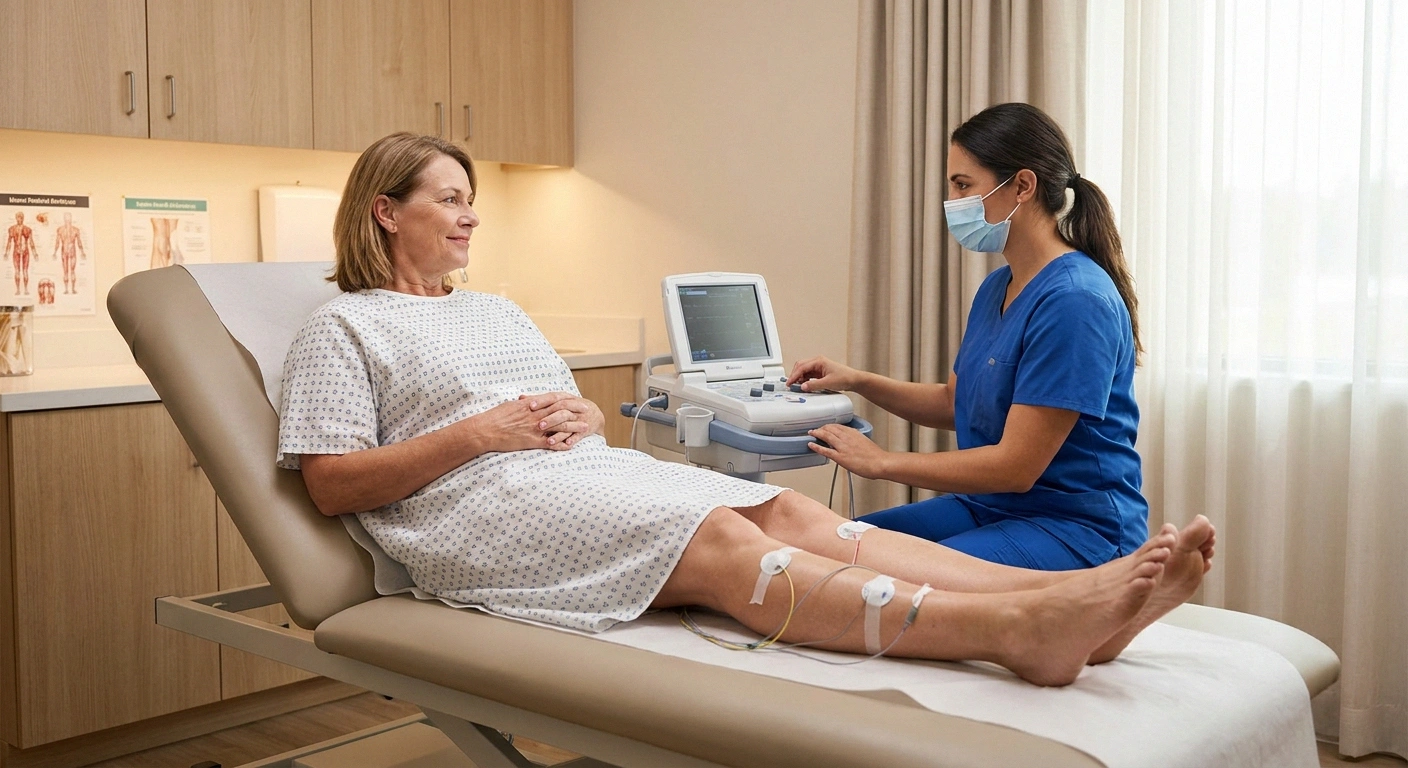
EMG (electromyography) and nerve conduction studies (NCS) are the cornerstone diagnostic tests for peripheral neuropathy. They characterize which nerve fibers are affected, the severity, and whether the damage pattern is axonal or demyelinating — information that directly guides diagnosis and treatment.
🔎 Why Specialist Volume Matters
Research in specialty medicine consistently shows that physicians who see higher volumes of a specific condition make more accurate diagnoses and have better patient outcomes. When asking a potential neurologist about their practice, asking “how many neuropathy patients do you see each week?” is a legitimate and useful question.
A neurologist who performs these studies in their own practice — rather than referring you elsewhere — has much more direct access to the results and their interpretation. When a specialist personally performs the test and reads the results, the clinical integration is tighter. Ask whether they do EMG/NCS in their office when you call to inquire about the practice. The full guide to what to expect from EMG and nerve conduction studies covers the procedure in detail.
Access to Skin Biopsy for Small Fiber Neuropathy
Standard EMG/NCS does not detect small fiber neuropathy — a common form that affects pain and temperature fibers while sparing the large fibers that show on routine nerve conduction testing. Diagnosing small fiber neuropathy requires a skin punch biopsy that measures intraepidermal nerve fiber density.
If your symptoms suggest small fiber neuropathy (burning pain, temperature sensitivity, autonomic symptoms, but normal EMG), you want a neurologist who can order and interpret skin biopsies. Not all neurology practices offer this — academic medical centers and neuromuscular specialty clinics are more likely to have this capability.
Multidisciplinary Connections
The best neuropathy care isn't a single physician in isolation. Look for a neurologist who has connections to:
- Physical therapy (for balance, fall prevention, exercise prescription)
- Pain management (for refractory pain)
- Podiatry (for foot care, wound prevention)
- Relevant specialists based on your cause (endocrinology, rheumatology, etc.)
Academic medical centers and integrated health systems are most likely to offer this — a significant advantage for complex cases.
Adequate Appointment Time and Communication Style
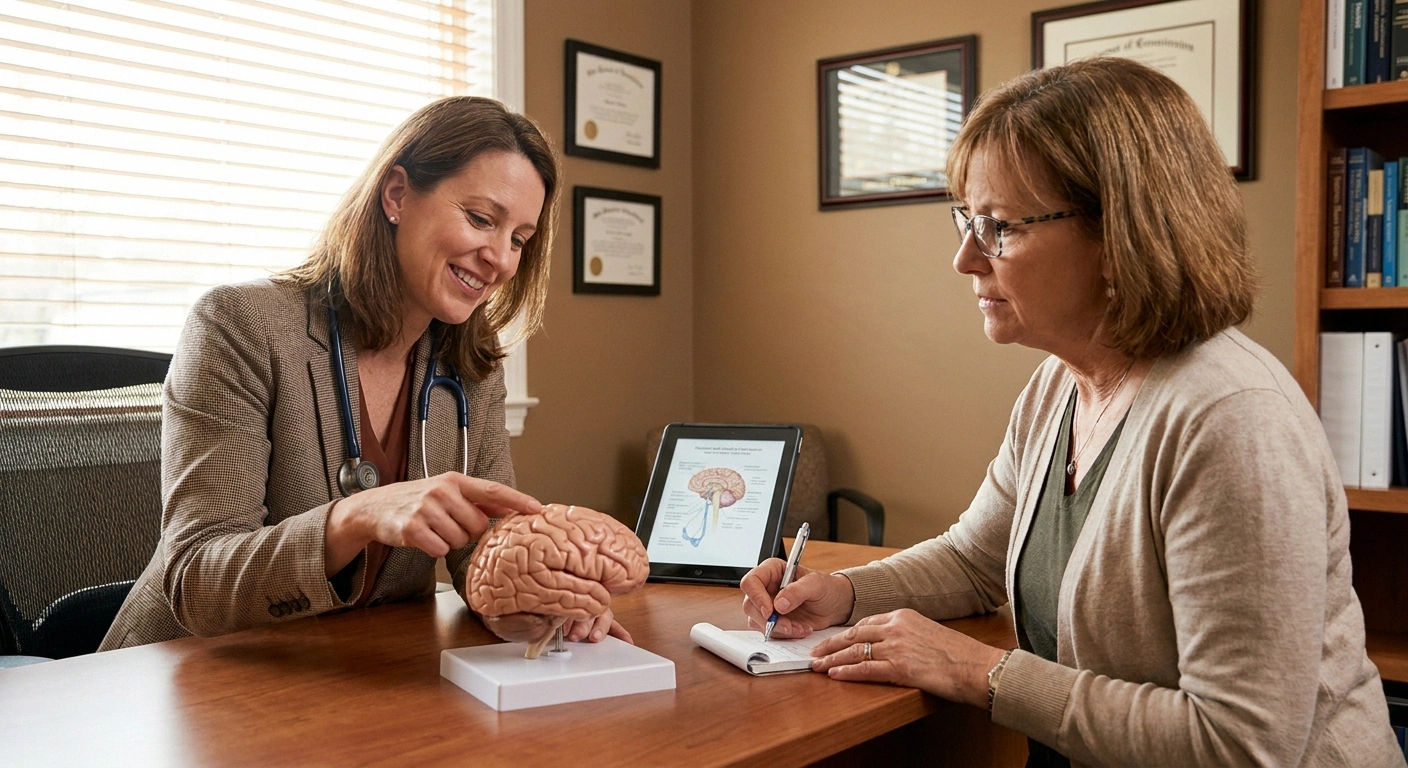
This is harder to assess in advance but matters enormously. Neuropathy requires time: a thorough history, physical examination, review of prior testing, and a conversation about treatment options. A 15-minute visit is insufficient for an initial neuropathy consultation.
When you call to make an appointment, ask how long the initial consultation is scheduled for. A practice that books 30-60 minutes for a new neuropathy patient signals that they understand the complexity of the evaluation.
Patient communication style matters too. You want a neurologist who:
- Explains what type of neuropathy you have (not just “peripheral neuropathy”)
- Describes what tests are being ordered and why
- Gives you a realistic prognosis
- Explains treatment options and involves you in decisions
- Has a pathway for you to reach them with follow-up questions
Red Flags: Signs You May Need a Different Provider
Not every neurologist is the right fit, and it's worth knowing the warning signs:
🚫 Red Flags: Consider a Second Opinion
- Dismisses symptoms as “just aging” without a diagnostic workup
- Doesn't order EMG/NCS
- Can't explain what type of neuropathy you have
- No individualized treatment plan
- No follow-up pathway or monitoring plan
- Rushes through the visit without listening to your symptom history
“It's just aging” or dismissiveness. While aging is a risk factor for neuropathy, progressive neuropathy symptoms are never simply inevitable aging. Dismissal without a diagnostic workup is a red flag.
No EMG ordered. A neurologist who isn't interested in characterizing your neuropathy with nerve conduction studies may not be equipped to guide your care effectively. EMG/NCS is the standard workup.
No explanation of the type of neuropathy. “You have peripheral neuropathy” isn't a complete diagnosis. At minimum, you should know whether it's axonal or demyelinating, which fiber types are involved, and whether the pattern suggests a cause.
One-size-fits-all treatment. Prescribing the same medication without asking about your specific symptoms, their severity, your other health conditions, and your preferences is a sign the treatment isn't individualized.
No follow-up plan. Neuropathy management requires monitoring — both to track whether treatment is working and to watch for progression. A provider who doesn't schedule follow-up or give you criteria for when to call is leaving you without a safety net.
If any of these describe your experience, consider seeking a second opinion. This is not disloyal to your doctor — it's appropriate medical advocacy.
Practical Steps for Finding a Neurologist
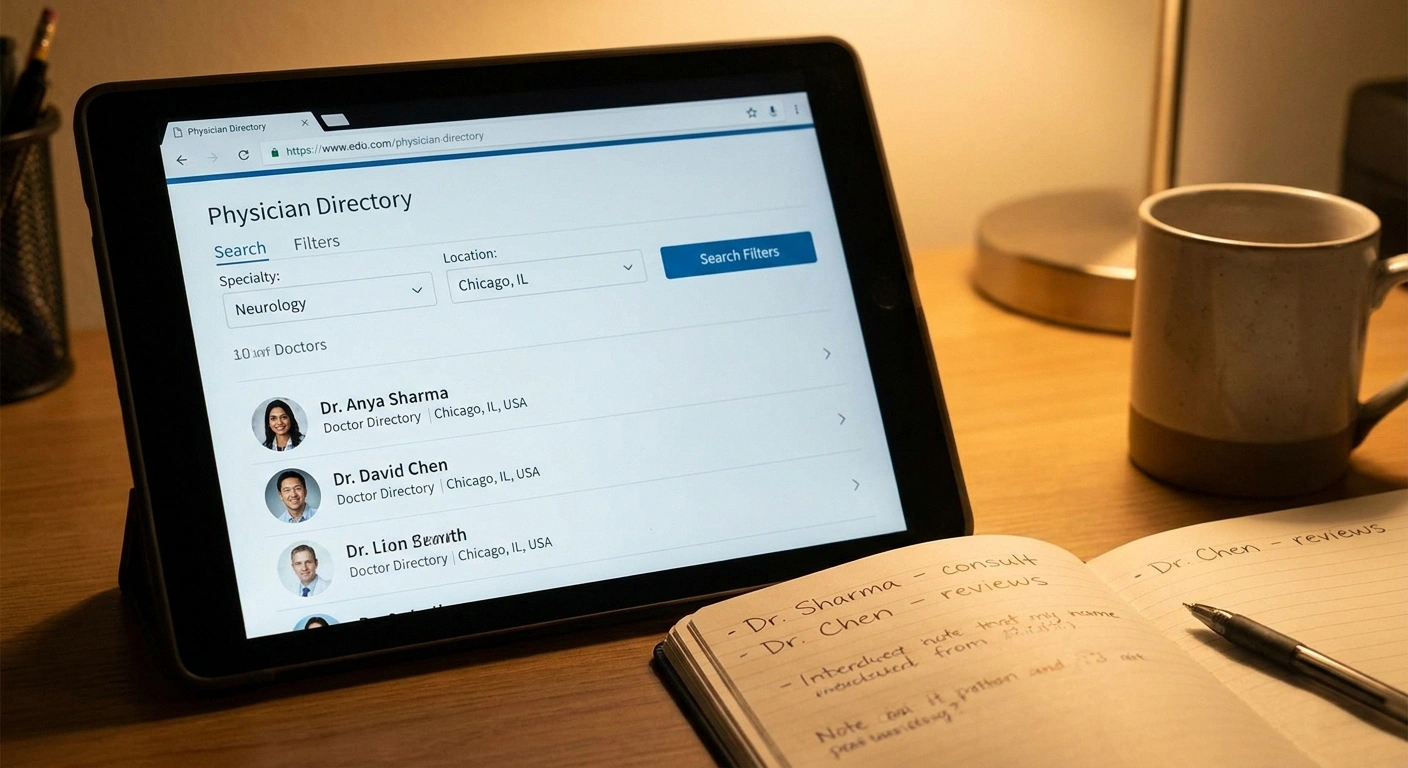
Here's how to actually find someone:
Step 1: Get a referral from your PCP. Most insurance plans require a referral to see a specialist. Your PCP's referral network may or may not include neuromuscular specialists — ask specifically for a neurologist who focuses on peripheral neuropathy if possible.
Step 2: Check specialist directories. The Foundation for Peripheral Neuropathy and NeuropathyCommons.org both maintain directories of neurologists who specialize in neuropathy. These can help you identify people in your area with the right focus.
Step 3: Consider academic medical centers. If you're within driving distance of a university hospital or major academic medical center, the neuromuscular clinic there is often the best option for complex or difficult-to-diagnose cases. Wait times may be longer, but the expertise and diagnostic capabilities are typically superior.
Step 4: Check insurance coverage. Call your insurance to verify the neurologist is in-network before making an appointment. Neurology consultations can be expensive out-of-network. Understanding your neuropathy insurance coverage can prevent unpleasant billing surprises.
Step 5: Review the practice's website or listings. Look for mentions of peripheral neuropathy, neuromuscular disease, EMG services, and multidisciplinary care. These signals tell you a lot before you even pick up the phone.
Questions to Ask at Your First Appointment

Getting maximum value from your first neurology appointment requires preparation. The article on how to prepare for your first neurology appointment covers this in detail, but these are the core questions to raise:
- What type of neuropathy do I have? Is it axonal, demyelinating, or mixed?
- Which fiber types are affected — large fiber, small fiber, or both?
- What tests will help determine the cause?
- Can we identify and treat an underlying cause?
- What is a realistic prognosis given what you're seeing?
- What treatment options are available, and what are the trade-offs?
- What should prompt me to call before the next appointment?
- When will we follow up, and what will we be monitoring?
Bring a written list of your symptoms (when they started, where they are, what they feel like), all current medications, and any prior test results. Seeing a new specialist with organized information makes the appointment dramatically more productive. If you can bring someone with you to help remember what was discussed, do that too.
Understanding When to Escalate to a Specialist

The seven warning signs that you should see a neurologist are worth knowing, but for this guide, the core message is: don't wait too long, especially if symptoms are worsening.
Don't Wait Too Long
There's a common tendency to manage neuropathy alone for years before seeking specialist help. But earlier specialist involvement typically means finding treatable causes before more damage accumulates. Many causes of neuropathy are addressable — but only if they're found.
There's a common tendency among people with neuropathy — I felt it myself — to manage by yourself for a long time, adapt to the symptoms, and only seek specialist help when things become unbearable. But earlier specialist involvement typically means better outcomes: finding treatable causes before damage accumulates, starting effective treatments sooner, and building a care relationship that can guide you as the condition evolves.
The blood tests and lab work your neurologist orders are one of the key tools for finding causes that might be treatable. Common neuropathy lab workups screen for vitamin deficiencies, thyroid disease, diabetes, inflammatory markers, and genetic causes — not all of which a PCP routinely orders.
Frequently Asked Questions
What kind of doctor should I see for neuropathy?
For mild, known-cause neuropathy (like well-controlled diabetic neuropathy), your primary care physician can often manage your care appropriately. For unknown causes, worsening symptoms, significant weakness, or treatment failure, you need a neurologist — ideally one who specializes in peripheral neuropathy or neuromuscular disease. Complex or rare cases may warrant a neuromuscular subspecialist at an academic medical center.
How do I find a neurologist who specializes in neuropathy?
Start with a referral from your PCP, then check the Foundation for Peripheral Neuropathy's specialist finder, NeuropathyCommons.org, and the American Academy of Neurology member directory. Look for neurologists who list peripheral neuropathy or neuromuscular disorders as a specific area of focus. Academic medical center neuromuscular clinics are often the best option for complex cases.
What tests should a neurologist order for neuropathy?
A complete neuropathy evaluation typically includes an EMG and nerve conduction study (to characterize nerve damage type and severity), blood tests to identify common causes (glucose, thyroid, vitamin B12, CBC, metabolic panel, inflammatory markers, and sometimes genetic or autoimmune panels), and may include a skin punch biopsy if small fiber neuropathy is suspected. The specific tests depend on your symptoms and history.
Is a podiatrist or neurologist better for foot neuropathy?
They serve different roles. A neurologist diagnoses and manages the underlying nerve disease. A podiatrist specializes in foot structure, wound care, footwear, and diabetic foot complications. For diagnosis and treatment of the neuropathy itself, you want a neurologist. For managing foot complications — blisters, calluses, ulcers, footwear — a podiatrist is valuable. Ideally, both are part of your care team if your neuropathy involves significant foot problems.
What are red flags that I should change neurologists?
Consider changing or getting a second opinion if your neurologist: dismisses your symptoms as aging without a workup, doesn't order EMG/NCS for diagnosis, can't explain what type of neuropathy you have, provides no individualized treatment plan, or offers no follow-up pathway. You deserve a provider who takes your symptoms seriously, explains their diagnostic reasoning, and has a plan for your care.
How long does it take to get a neuropathy diagnosis?
The timeline varies widely. A diagnosis can sometimes be reached at the initial neurologist visit if the history and exam are clear and supporting tests confirm it. More complex or unclear cases may require multiple appointments, additional testing (including specialized labs, skin biopsies, or genetic testing), and potentially consultation with multiple specialists. Idiopathic neuropathy — where no cause is found — is diagnosed after an adequate workup has ruled out known causes.
Do I need a referral to see a neurologist for neuropathy?
This depends on your insurance plan. HMO plans almost always require a referral from your PCP. PPO plans often allow direct specialist access, though you may pay more out-of-pocket without a referral. Call your insurance company to confirm before making an appointment. Your PCP can expedite a referral if you describe urgent or worsening symptoms.
About the Author