The shower is the single most dangerous room in the house for those of us with neuropathy. Slick tile, hot water, balance challenges, and feet that can’t always tell us what they’re standing on — it’s a perfect storm. The good news is that a couple of well-chosen pieces of equipment plus a few simple habits can turn that perfect storm into a perfectly safe ritual. I’ve been using a shower bench for nearly three years now, and I can tell you it changed how I feel about my daily routine entirely.
This guide walks through the three pieces of equipment that make the biggest difference — a shower bench or chair, a handheld showerhead, and grab bars — plus the small upgrades like floor mats, water-temperature controls, and bathroom layout tweaks that pull it all together. You don’t need to do it all at once. Even one of these makes a real difference. All of them together is the gold standard.
Why showers are so risky with neuropathy
The combination is genuinely brutal. Wet tile reduces friction. Water makes glass enclosures harder to grab. The hot water that feels good on aching feet can also burn skin you can’t fully feel. Standing for the length of a shower fatigues calf muscles that are already working overtime to keep you balanced. Closing your eyes to rinse shampoo eliminates the visual cues you rely on when your proprioception is off. And the moment you bend to wash your feet, your center of gravity shifts beyond what your numb soles can correct for.
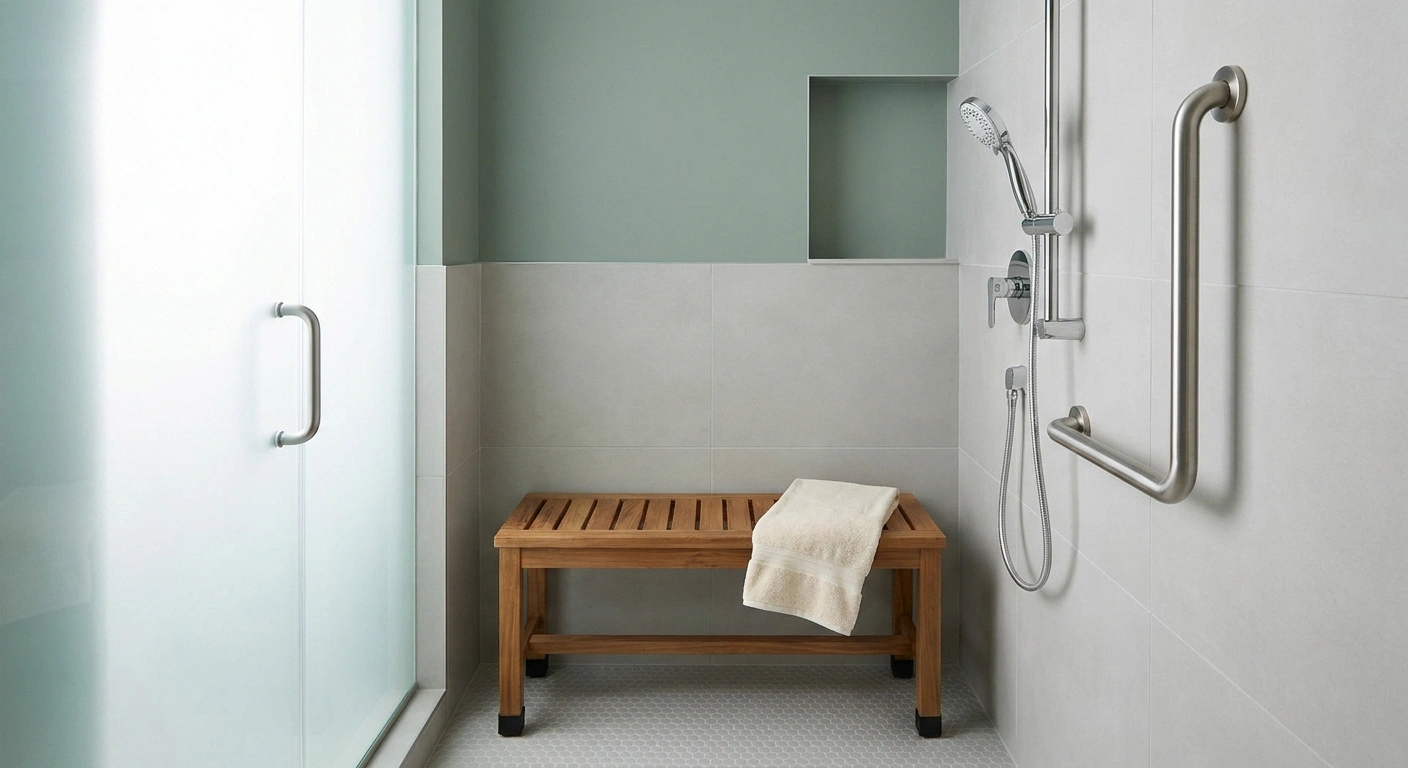
Three pieces of equipment cover ~90% of the risk: a bench with non-slip rubber feet, a handheld showerhead with slide bar, and real grab bars screwed into studs (not suction cups). Add water-temperature safety and a 5-minute pre-shower routine, and the most dangerous room in the house becomes one of the safest.
The CDC has tracked bathroom falls for decades, and the numbers are sobering: most occur within three feet of the tub or shower, most happen during or right after the shower, and bathing-related falls account for roughly a quarter of all bathroom injuries in older adults. Add reduced foot sensation to that picture and the risk climbs significantly. The encouraging thing is that bathroom falls are almost entirely preventable with the right setup. Our broader piece on bathroom safety with neuropathy covers the whole room; this article zooms in on the shower itself.
Choosing the right type of shower bench or chair
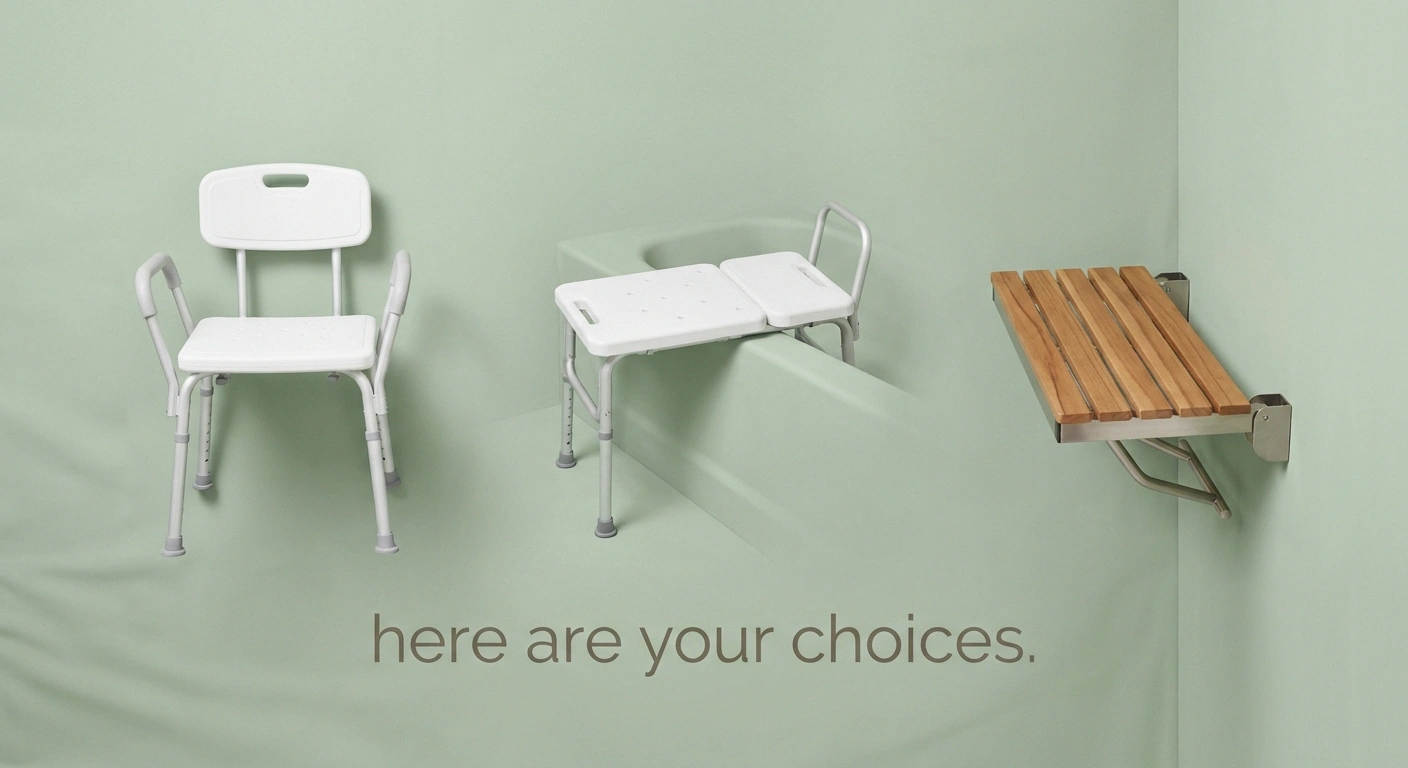
This is the single most important piece of equipment. A bench takes the standing out of standing in the shower — which removes most of the fall risk. There are four main types, and the right one depends on your bathroom and your mobility.
Standard shower chair with back. The workhorse. A sturdy plastic-and-aluminum chair with a backrest that sits inside a walk-in shower or a tub. Good for anyone who can step in safely but can’t stand for the full shower. Typically $50-100. Look for one with rubber-tipped legs, adjustable height, and drainage holes in the seat.
Shower stool without back. Smaller, lighter, easier to move. Best for people with good trunk control who want the option to lean side to side or rotate. Typically $25-50. Same key features apply — non-slip feet, drainage holes, adjustable height.
Tub transfer bench. Has two legs inside the tub and two legs outside, so it straddles the tub wall. You sit down on the dry outside half, swing your legs over, then slide across to the wet inside half. Excellent for anyone who can’t safely lift a leg over the tub wall. Typically $80-200. Check that the inside legs adjust separately from the outside legs (tubs are often deeper than the bathroom floor).
Folding wall-mounted bench. Permanently installed into the wall studs (no DIY shortcuts here), folds up when not in use. The most space-efficient option and often the most stable, but it requires installation in proper studs or with appropriate blocking. Typically $80-150 for the bench plus installation labor.
Features that matter regardless of which type you pick:
- Non-slip rubber feet. The legs themselves need rubber tips — not just sitting on a bath mat. Replace if cracked or worn.
- Drainage holes in the seat. Water pooling on the seat is uncomfortable, cold, and a temperature surprise on numb skin.
- Adjustable height. Your knees should bend at about 90° when seated. Bench too low = harder to stand up. Bench too high = feet dangle and your back works overtime.
- Weight rating well above your body weight. A 300-pound rating is standard; bariatric models go to 500+.
- Textured or padded seat. Better friction for thighs, less slipping when you reach for the soap. Some have a rubberized coating; others use molded ridges.
- Armrests (optional and situational). They help with sitting and standing but can interfere with transfer for some people. If you’re using a tub transfer bench, skip the armrests — they get in the way.
For more on choosing assistive equipment broadly, our guide to assistive devices for neuropathy covers options across the home.
Handheld showerheads — why they’re worth the upgrade
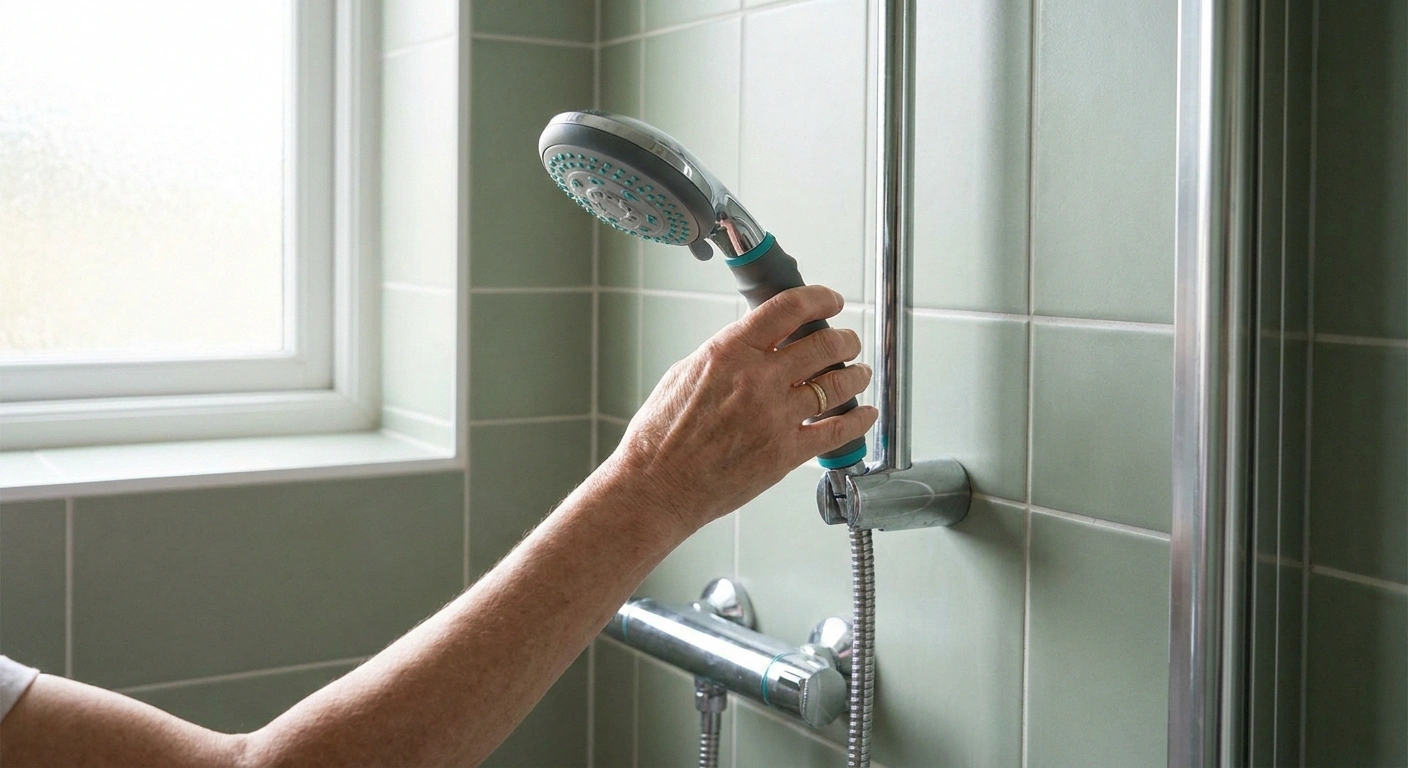
If you’ve never used one, a handheld showerhead changes everything once you’re sitting on a bench. You can direct water exactly where you need it without standing under a fixed stream, without twisting your body, and without leaning at awkward angles. For neuropathy patients especially, the ability to wash your feet without bending dramatically reduces fall risk during the most balance-vulnerable moment of any shower.
What to look for when you choose one:
A long, flexible hose. Sixty to seventy-two inches is the sweet spot. Shorter hoses force you to lean. Look for a metal-reinforced hose rather than pure plastic — they last longer and don’t kink.
A slide-bar mount. A vertical bar mounted to the shower wall lets you slide the showerhead to any height. Mounted at the high position when you stand for a moment to rinse, dropped to chest height when you’re seated. Most slide-bar kits include the bar, mount, and a holder, and run $40-80.
A pause/trickle button on the handheld. Lets you stop the spray briefly without retouching the temperature controls. Useful for washing sensitive feet or for caregivers helping with a shower.
Multiple spray settings. A gentle “mist” or “rinse” setting works much better for sensitive skin than a hard “massage” spray. Lower water pressure is generally kinder to neuropathy-affected feet, especially if you have any open areas or sensitive patches.
Easy-grip handle. A handle with a non-slip rubber grip is essential if your hands have any neuropathy too. Look for one with a wide, contoured grip rather than a smooth chrome cylinder.
Installation is usually straightforward — most handheld showerheads thread onto the same fitting as your existing fixed showerhead, no plumbing required. Slide bars need wall mounting, which is a 30-minute job for a handyman if you’d rather not DIY.
Grab bars — placement matters more than brand
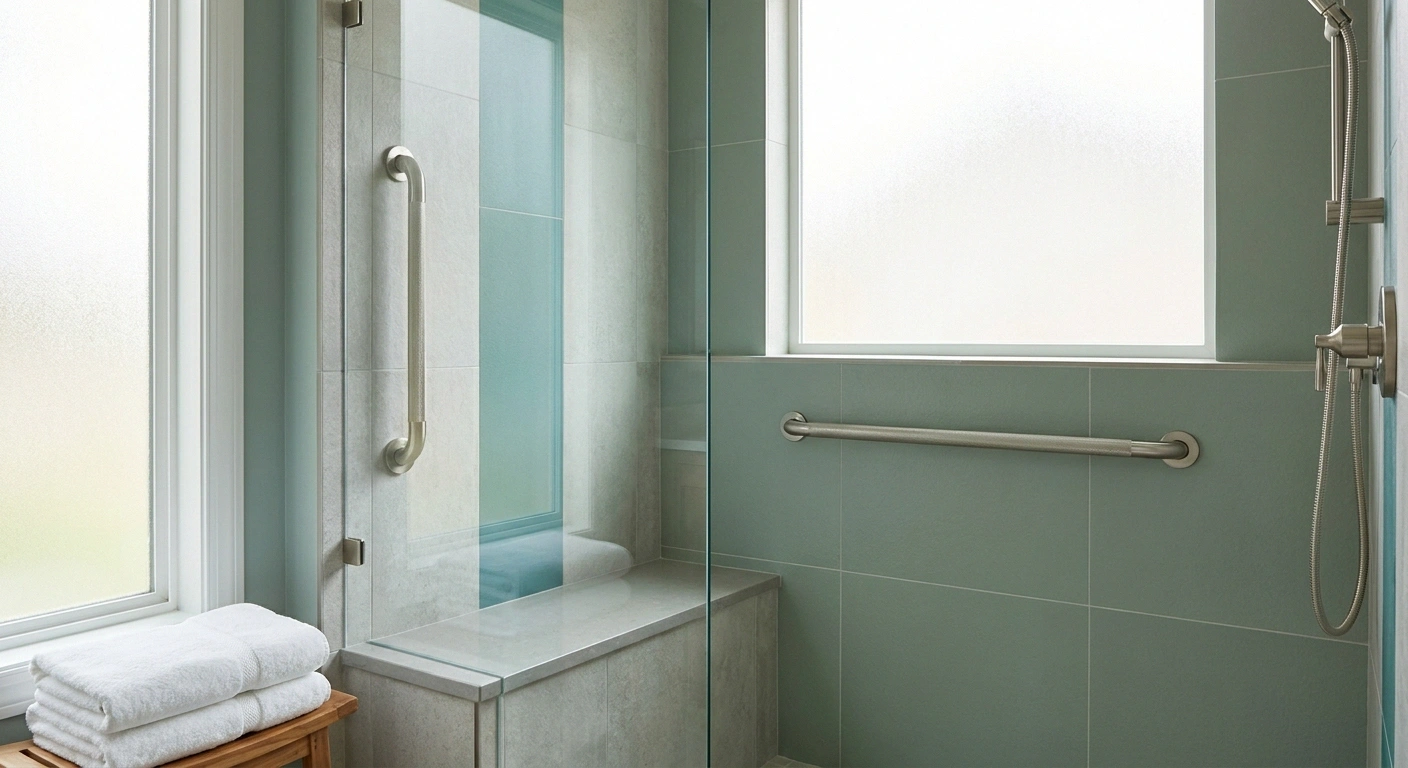
Grab bars are the third leg of the safety tripod, and the most common mistake people make is buying the wrong kind or putting them in the wrong place. Let me save you that headache.
They’re convenience handles, not fall-arrest equipment. They WILL pop off under real fall-weight, sometimes at the exact worst moment. Soap buildup, temperature changes, and surface texture all weaken them over time.
The only grab bars to trust are those screwed into wall studs or installed with load-rated blocking. If your DIY skills don’t include locating studs, hire a handyman for a $40 install — much cheaper than a $4,000 ER visit.
Suction-cup “grab bars” are not real grab bars. They’re convenience handles for towel storage or toiletries. They WILL pop off under real fall-arrest weight, sometimes at the worst possible moment. Don’t trust them for anything load-bearing. The only grab bars worth installing are those screwed into studs or anchored with proper blocking.
Where to put them. Three positions cover almost all transfer scenarios:
- Vertical bar at the entrance to the shower. Roughly 32-38 inches tall, mounted on whichever wall is on your “weaker” side. This is what you grab to steady yourself stepping in or out.
- Horizontal bar on the long wall, at chest height when seated. Roughly 33-36 inches off the floor. This is what you use to push yourself up to standing or to steady yourself while reaching for the showerhead.
- Second vertical or diagonal bar near the bench. Especially valuable if you have weakness on one side — it gives you a “good side” pull-up assist.
What to look for in a bar. A diameter of 1.25 to 1.5 inches fits most grip strengths. Textured finish (knurled metal, powder-coated, or rubberized) beats smooth chrome — chrome bars become slippery when wet. Bars rated for 250+ pounds of load are standard. ADA-compliant grab bars meet specific specs and are a safe choice.
Installation tip. Grab bars must be installed into studs or with proper blocking — not just drywall anchors. If your shower walls don’t have studs where you need bars, a handyman can install plywood blocking behind the tile (during a remodel) or use specialized toggle anchors rated for grab-bar loads. When in doubt, hire it out. A $40 install is much cheaper than a $4,000 ER visit.
Water temperature — the burn risk most people don’t think about
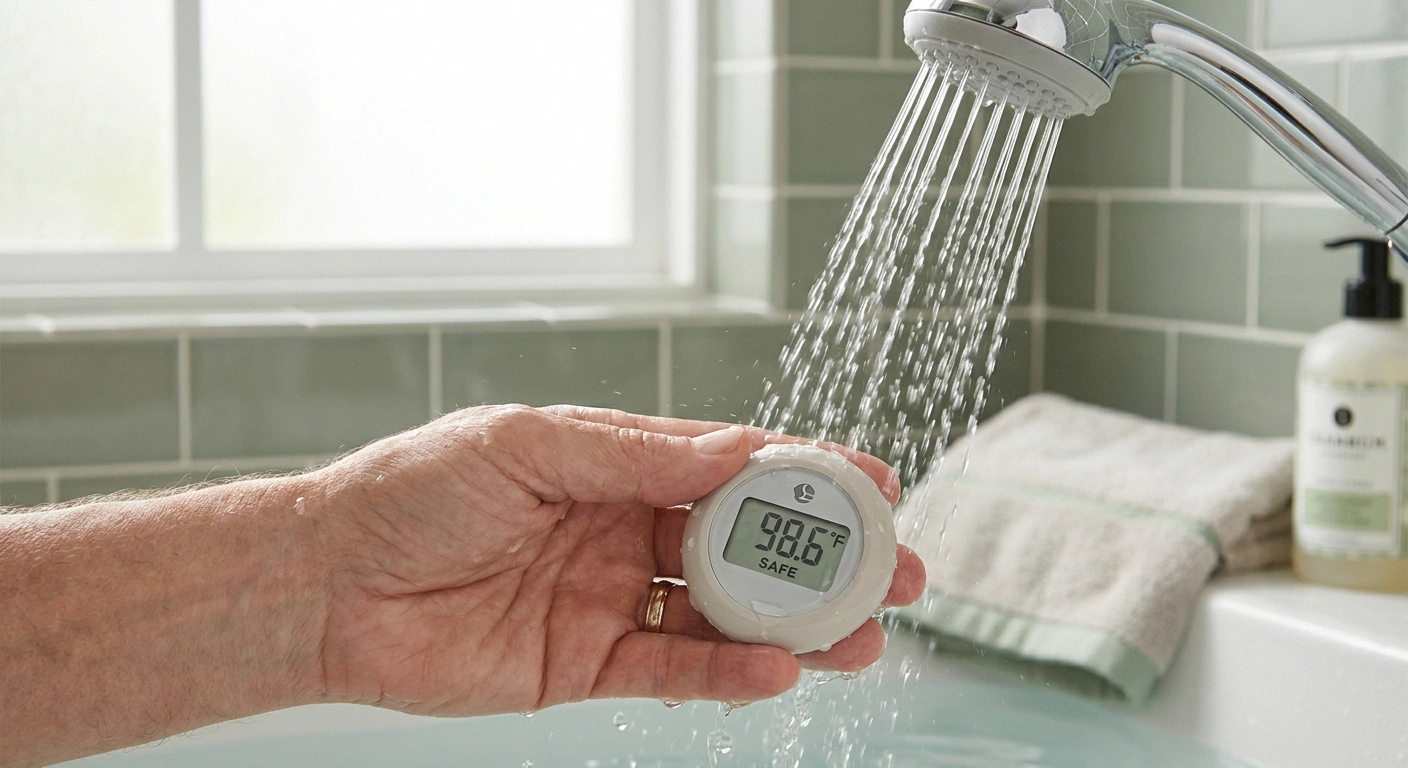
This is one of the most under-recognized dangers for people with neuropathy. When your feet can’t accurately feel temperature, you can soak in water hot enough to cause second-degree burns and not realize until the damage is done. Cleveland Clinic and other authoritative sources recommend keeping water under 95°F for anyone with significant sensation loss. That’s much cooler than the typical hot shower, and it takes some adjustment.
Three layers of protection that work together:
Set your water heater to 120°F or lower. Your water heater’s thermostat is your first line of defense. Most are factory-set to 140°F, which can cause third-degree burns in five seconds on intact skin and faster on neuropathy-affected skin. Lowering it to 120°F is recommended by the CDC, the AAP, and most aging-in-place guidelines. Your dishwasher and washing machine still work fine at 120°F.
Install an anti-scald (thermostatic mixing) valve at the shower. These valves limit the maximum temperature that reaches the showerhead even if the water heater is hotter. They cost $40-150 plus installation and are the gold standard for burn prevention. Many newer single-handle shower valves have anti-scald protection built in; older two-handle systems usually don’t.
Use a bath thermometer. A simple floating bath thermometer ($5-15) sits in your tub or near the drain and reads the water temperature. Use it. Don’t trust your feet or hands to tell you the truth about water temperature when your nerves are compromised. Our piece on warm baths for neuropathy covers temperature safety in more depth.
The general guidance for people with significant neuropathy: water should feel just warmer than your skin, not noticeably hot. If you’d describe it as “very pleasantly hot,” it’s probably too hot for your feet.
Floor surfaces and bath mats
What’s under your feet matters as much as what you’re sitting on. The shower floor is engineered to drain — which means it’s smooth, and smooth surfaces become slippery when wet.
Inside the shower or tub. A suction-cup bath mat with hundreds of small grippers covers most of the floor and provides reliable traction. Check the suction monthly — clean the surface beneath the mat occasionally so suction doesn’t fail from soap buildup. Replace the mat yearly or whenever the suction starts releasing too easily. Adhesive non-slip strips are an alternative for textured tubs, but they’re harder to clean and tend to peel at the edges. Most importantly, never put a bath mat where the bench legs will sit — the legs need direct contact with the floor for their rubber feet to grip.
Outside the shower. A cotton or microfiber bath rug with a rubber non-slip backing absorbs the drip-off and gives your feet a stable landing zone. Replace these as soon as the corners curl up or the rubber backing starts crumbling. Cheap thin rugs slide; don’t risk it. A heavier rug with a continuous rubber back is worth the few extra dollars.
Between the shower and the toilet/sink. Often forgotten. If the path to dry off involves several wet-tile steps, a second small non-slip rug bridges that gap and gives you a planned landing surface.
For broader home-safety upgrades, our piece on home safety modifications for neuropathy walks through the whole house room by room.
The pre-shower routine that prevents falls
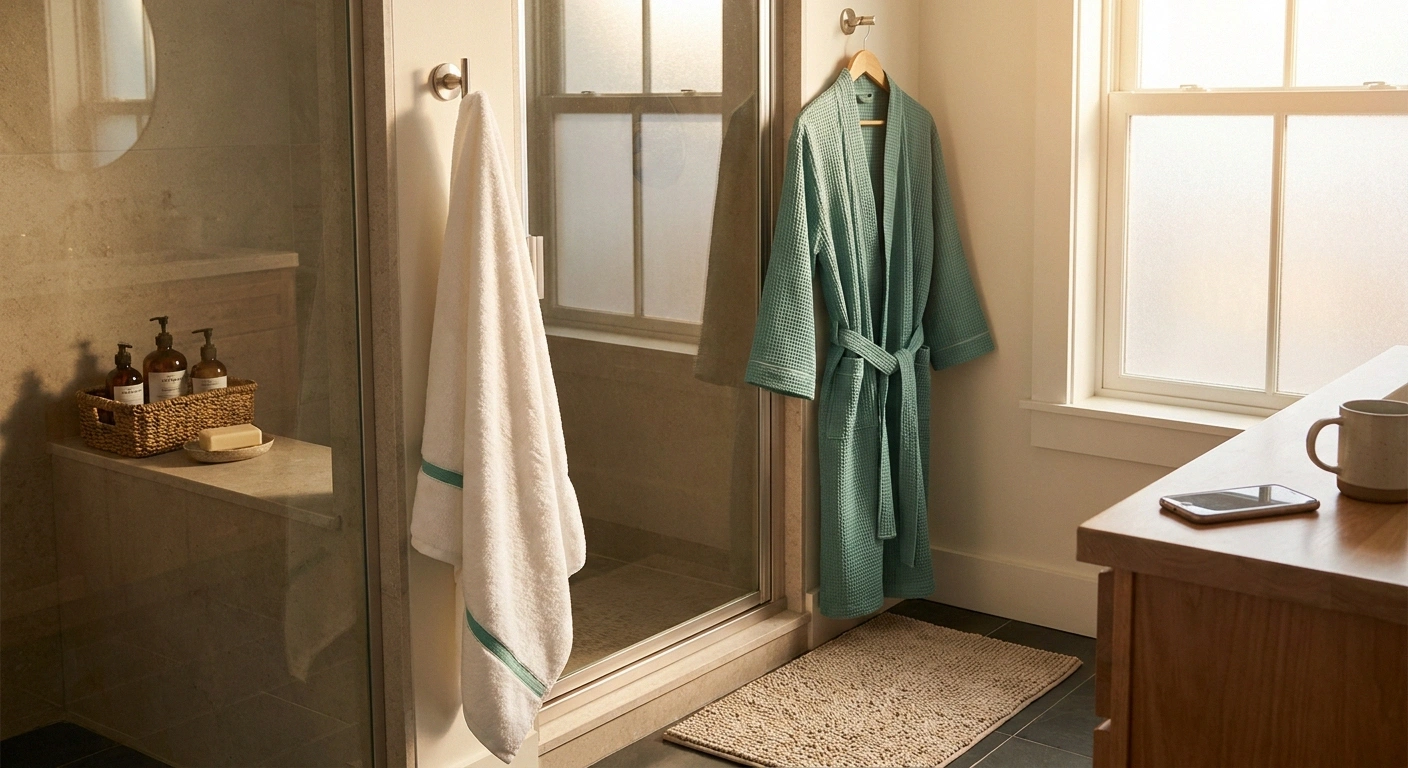
Equipment is half the battle. The other half is the five-minute setup that happens before you even turn the water on. This is the part most people skip — and it’s the part that turns a near-miss into a non-event.
My personal pre-shower checklist:
- Lay out everything you’ll need within arm’s reach. Towel on the hook or rack just outside the door. Robe nearby. Shampoo, conditioner, soap, and washcloth on the shower shelf — not on a faraway windowsill that requires standing and twisting to reach.
- Dry-mop or wipe the bathroom floor. Any water left from a previous shower is invisible-slick. A quick towel pass over the floor removes the surprise.
- Position your bath mat. Both inside the shower (if using a suction mat) and outside.
- Check your bench, grab bars, and handheld holder. Make sure the bench is dry, the grab bars are tight (give them a gentle tug), and the showerhead is in its mount.
- Set the water temperature first, before stepping in. Use your bath thermometer or anti-scald valve. Adjust until water comes out at your safe temperature consistently — usually 30-60 seconds of running. Letting the water reach steady temperature before you enter eliminates the “cold shock” or “scald surprise” moments.
- Bring your phone or a fall-detect wearable if you live alone. A phone in a shower-safe pouch on the rack, or a fall-detect feature on a smartwatch, gives you a way to call for help if something goes wrong. Some Apple Watches and Medical Alert systems detect falls automatically.
Five minutes of setup buys you decades of safer showers. Once the routine becomes habit, it doesn’t feel like extra work — it just feels like how you shower now.
During and after the shower — small habits that matter
While you’re showering, a few rules-of-thumb help:
- Sit for the whole shower if you can. Don’t stand “just for the rinse.” That’s where most slips happen.
- Keep one point of contact at all times. A hand on the grab bar, the bench, or the wall whenever you’re moving — bending, reaching, or shifting position.
- Close your eyes one at a time. When rinsing shampoo, tip your head back rather than closing both eyes — keeping at least one eye open preserves visual orientation.
- Slow down the transitions. Standing up from the bench, stepping out of the tub or shower stall, reaching for the towel — these are the high-risk moments. Take them deliberately.
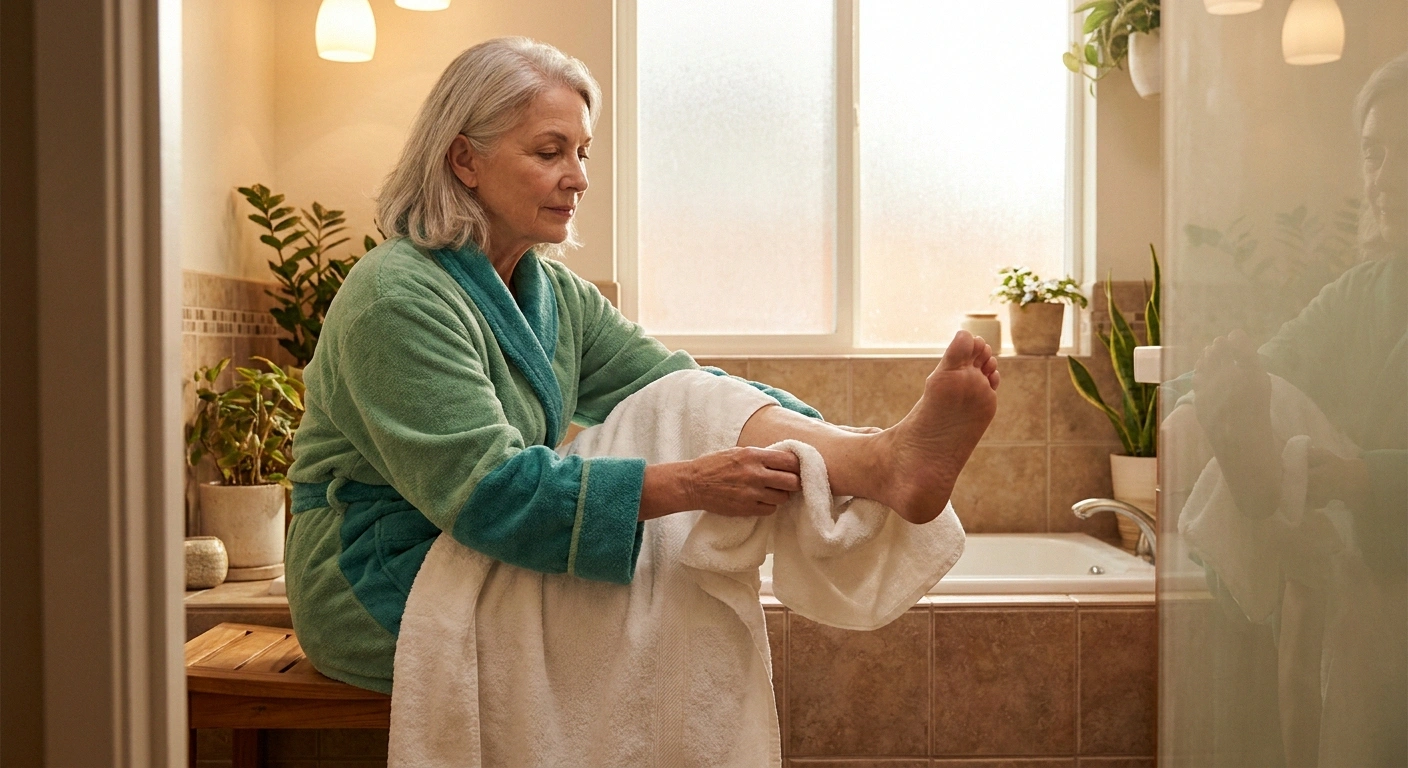
The first two minutes after a shower are also worth treating with care. Your skin is wet, the floor may have drips, and you’ve been doing balance work for 10 minutes. Sit on the bench (still inside) or on a closed toilet seat to dry off, especially your feet. Don’t try to towel between your toes while balancing on one leg — that’s a textbook fall scenario.
And while you’re already paying attention to your feet, this is the perfect moment for your daily foot check. Our 2-minute daily foot inspection routine fits naturally into the after-shower window — your feet are clean, you’re already looking at them, and any redness, blisters, or cuts will be most visible. Catching foot problems early prevents the cascade that ends in serious ulcers or infections. Our broader foot care guide covers the full daily routine.
Cost ranges and where to invest first
Here’s a realistic budget breakdown if you’re starting from scratch:
- Get the bench. Removes the highest-risk moment of every shower — standing on wet tile.
- Install grab bars (or hire someone to). Real ones, in studs, not suction cups.
- Add the handheld showerhead + slide bar. Converts a seated shower into a truly independent one.
- Add anti-scald protection — water heater to 120°F, mixing valve at the shower.
Bath mats and thermometer ride along on the same shopping trip — under $30 total for both.
- Basic shower chair without back: $25-50
- Standard shower bench with back: $50-100
- Tub transfer bench: $80-200
- Padded or textured shower bench: $100-200
- Wall-mounted folding bench: $80-150 plus installation ($100-200)
- Handheld showerhead with slide bar: $40-100
- Each grab bar: $25-60 plus installation ($30-80 each)
- Anti-scald valve: $40-150 plus installation ($75-200)
- Suction-cup bath mat: $15-30
- Bath thermometer: $5-15
- Non-slip bath rug: $15-40
If you can only do one thing this month, get the bench. It removes the single highest-risk moment of every shower — standing on wet tile. If you can do a second thing, install grab bars (or hire someone to). The third priority is the handheld showerhead and slide bar. The fourth is anti-scald protection. Bath mats and thermometers are the small inexpensive items that go on the same shopping trip.
Medicare Part B may cover some equipment with a physician’s prescription as durable medical equipment (DME) under certain circumstances — coverage is inconsistent and worth checking before assuming. Our piece on Medicare coverage for neuropathy goes into more detail on what’s typically reimbursed.
When to ask for a professional home assessment
If you’ve had a fall — even a “minor” one — or you’re noticing your balance getting worse, an in-home assessment by an occupational therapist is one of the best investments you can make. OTs are trained specifically in home safety and can spot risks you’ve gotten used to seeing every day. They’ll measure for grab-bar placement, evaluate your bathroom layout, recommend specific products, and sometimes coordinate with contractors for any structural changes.
- ▸You’ve had any fall, even a minor one — ask PCP for OT home safety assessment
- ▸Your balance is getting worse — Area Agency on Aging often does free assessments
- ▸Grab bars need to go where there are no studs — handyman with toggle-anchor experience
- ▸Anti-scald valve install or water-heater adjustment — plumber, $75-200
- ▸Tub-to-walk-in shower conversion — Certified Aging-in-Place Specialist (CAPS) contractor
How to access one:
- Through your primary care doctor. Ask for a referral for a home safety OT assessment. Medicare Part B and most insurance plans cover this with a referral.
- Through your local Area Agency on Aging. Many offer free or low-cost home assessments for older adults.
- Privately. Some OTs do private home assessments for $100-300. Worth it if insurance won’t cover.
If your bathroom needs structural changes — converting a tub to a walk-in shower, installing a curbless entry, adding a built-in bench during a remodel — a Certified Aging-in-Place Specialist (CAPS) contractor can help. Bathroom remodels for accessibility range from $3,000 for basics to $12,000+ for full walk-in shower conversions. Significant expense, but for people who plan to age in place, it often pays for itself by preventing a single hospitalization.
And as always, our guide to balance and fall prevention covers the broader picture of staying upright with neuropathy — strength, vision, footwear, lighting, all the pieces that work together with bathroom safety.
Frequently Asked Questions
What’s the best type of shower bench for neuropathy?
For most people, a standard shower bench with a backrest, non-slip rubber feet, drainage holes in the seat, and adjustable height is the right starting point. If you have a tub instead of a walk-in shower, a tub transfer bench is usually the better choice because it solves the “stepping over the tub wall” problem. Look for a weight rating of at least 300 pounds and a textured or padded seat for better grip.
Are suction-cup grab bars safe for neuropathy patients?
No. Suction-cup grab bars are convenience handles, not fall-arrest equipment. They can pop off under real weight, especially when suction weakens over time or the wall surface has soap residue. The only grab bars safe for fall prevention are those screwed into wall studs or installed with appropriate load-rated anchors and blocking.
How hot should my shower water be if I have neuropathy?
For people with significant sensation loss in the feet, water should be kept under 95 degrees Fahrenheit per Cleveland Clinic guidance, and water heaters should be set to 120 degrees or lower per CDC recommendations. Use a bath thermometer rather than relying on your hands or feet, and consider installing an anti-scald valve at the shower for an extra layer of protection.
Do I need a handheld showerhead if I have a shower bench?
Strongly recommended. A handheld showerhead lets you wash your feet, lower legs, and back without standing or twisting. Pair it with a slide bar so you can adjust the height. Both upgrades together are typically $40-100 and convert a seated shower into a genuinely independent one.
Where should grab bars be installed in the shower?
Three placements cover most situations: a vertical bar at the entrance for stepping in and out, a horizontal bar at chest-height along the long wall for pushing up from the bench or steadying yourself, and a second vertical or diagonal bar near the bench for extra support on your weaker side if you have one. All bars must be installed into studs or with proper load-rated anchors.
Will Medicare cover a shower bench or grab bars?
Coverage varies. Medicare Part B may cover certain durable medical equipment with a physician’s prescription, but shower benches and grab bars are inconsistently covered because they’re often classified as “home modifications” rather than DME. Check with your plan before purchasing and ask your doctor to write a prescription if the item might be eligible.
How do I prevent slipping when I step out of the shower?
Use a non-slip bath rug with a rubber backing immediately outside the shower or tub. Sit down to dry off — either on the shower bench itself before standing up, or on the closed toilet seat. Don’t try to towel your feet while balancing on one leg. Replace bath rugs as soon as the corners curl or the rubber backing starts crumbling.
Should I bathe at a particular time of day with neuropathy?
Many people in our community find morning showers safer than evening ones — balance tends to be best after a night’s rest, and you have the rest of the day to recover if you do feel shaky. Avoid showering right after taking sedating medications, after alcohol, or when you’re unusually fatigued. If you live alone, bathing when someone else is in the house (or available by phone) adds a layer of safety.
About the Author