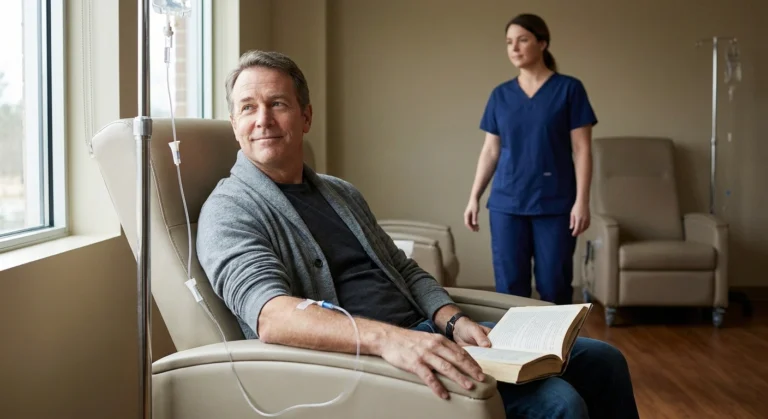
Two very different people type “rituximab neuropathy” into a search box.
One has just been offered rituximab for a nerve condition and wants to know whether it works. The other is already on rituximab for lymphoma or rheumatoid arthritis, has developed numbness in their hands, and wants to know whether the drug caused it.
Both questions are reasonable. Both have answers. They just happen to be opposite answers, which is why most of what you find on this topic feels like it was written for someone else.
This covers both. The treatment question first, because it is the larger and more complicated one, and the causation question near the end.
What Rituximab Is Doing
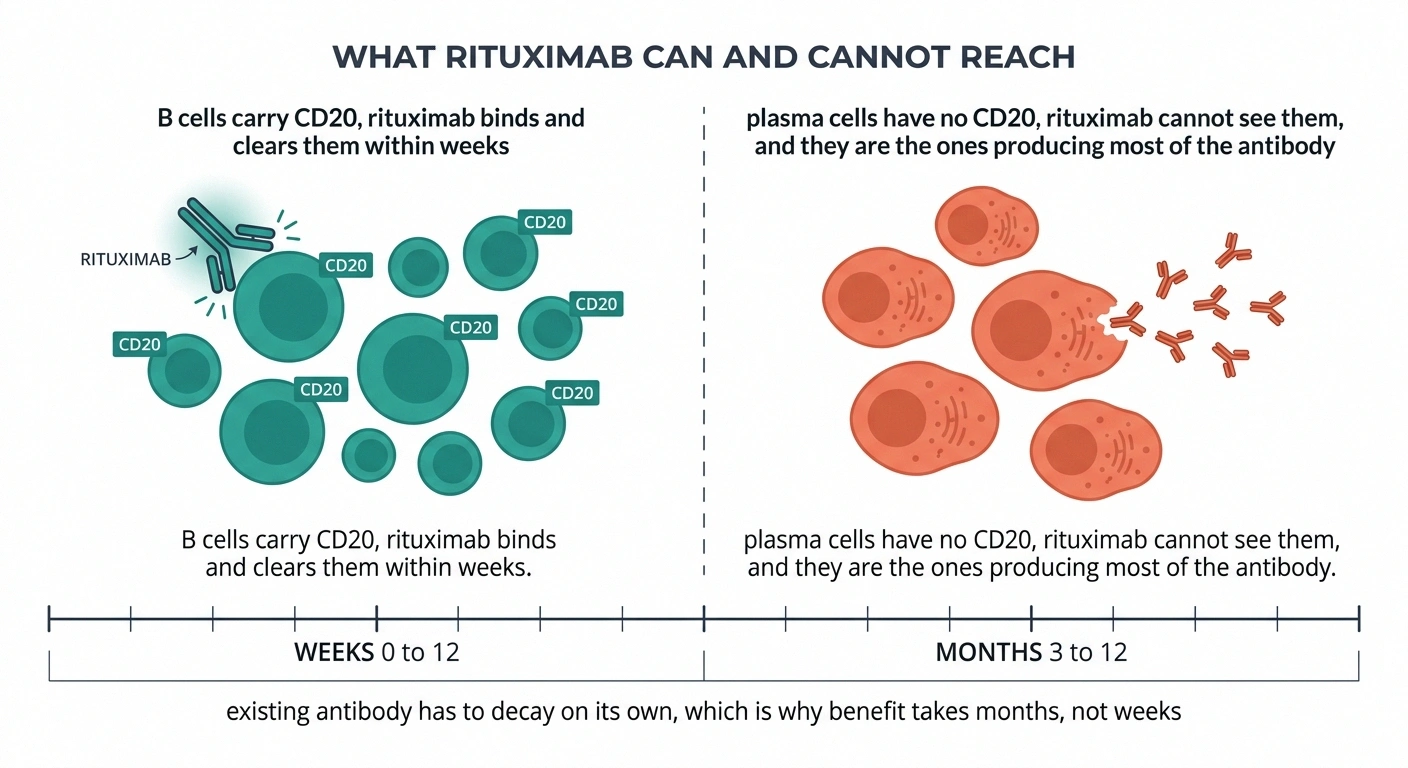
Rituximab is a monoclonal antibody that targets a protein called CD20. CD20 sits on the surface of B cells and essentially nowhere else. When rituximab binds it, the immune system destroys that cell, and within weeks the circulating B-cell population is largely gone.
Five terms worth knowing before the consent conversation
- CD20
- A protein on the surface of B cells. It is the address rituximab is aimed at, and its absence from plasma cells is the reason the drug works slowly.
- Plasma cell
- A matured B cell that has become a dedicated antibody factory. It drops CD20 on the way, which puts it out of rituximab's reach.
- Anti-MAG
- An IgM antibody against myelin-associated glycoprotein. Its signature is imbalance and tremor that outstrip the weakness, because the large position-sense fibres take the damage.
- Paranodal antibodies
- Antibodies against neurofascin-155 or contactin-1, proteins that anchor myelin to the axon. Finding them often reclassifies a diagnosis and changes the treatment.
- Hypogammaglobulinemia
- Low immunoglobulin levels after B-cell depletion. Detectable on routine blood work, and the reason baseline levels are worth having on record.
B cells are the immune system's antibody factories. In several neuropathies, antibodies are the problem. The immune system has produced antibodies that mistakenly target components of your own peripheral nerves, and those antibodies attack the insulating myelin sheath or the structures that anchor it. The rationale for rituximab is direct: remove the factories and production stops.
That logic is strongest when a specific antibody has been identified. It is weaker in conditions driven primarily by T cells or by other immune mechanisms, where B-cell depletion addresses a bystander rather than the culprit. Which is a large part of why the results across different neuropathies vary as much as they do.
If the terminology around myelin is new, our explainer on the myelin sheath and why it matters is a useful companion to this article.
Why Nothing Happens for Months
This is the single most useful thing to understand before starting, and it prevents a great deal of unnecessary discouragement.
The clock this drug actually runs on
Weeks 2 to 6. Circulating B cells are largely gone. Nothing about your symptoms has changed, and nothing should have.
Months 2 to 4. Existing antibody decays as the surviving plasma cells reach the end of their lifespan without replacements. This is the part that cannot be hurried.
Months 3 to 12. If benefit appears, it appears here, and nerve repair adds its own delay on top.
The trap. Concluding failure at week six, or stopping an existing treatment early because rituximab is expected to have taken over by then.
Agree the assessment date and the measure before the first infusion. A date set in advance is far harder to argue with than an impression formed in month two.
B cells mature into plasma cells, and plasma cells are the ones actually pumping out antibody in volume. Plasma cells do not display CD20. Rituximab cannot see them.
So rituximab removes the supply of new antibody-producing cells while leaving the existing producers alive. The antibody already circulating in your blood has to decay on its own schedule, and the long-lived plasma cells have to reach the end of their own natural lifespan without replacements arriving.
That process takes months. Benefit in antibody-mediated neuropathy typically appears somewhere between three and twelve months after the infusions, not three weeks. Nerve repair then adds its own delay on top, because damaged myelin and axons regenerate slowly.
People who judge rituximab a failure at week six are judging it before the mechanism has had time to operate. People who stop other treatments too early in the expectation that rituximab has taken over run into the same timing problem from the other direction.
Anti-MAG Neuropathy: A Genuinely Split Verdict
Anti-MAG neuropathy is where rituximab has been studied most specifically, and the results depend on which studies you read.
The condition itself: some people produce an IgM antibody against myelin-associated glycoprotein, a component of peripheral nerve myelin. It typically accompanies an IgM monoclonal gammopathy. The resulting neuropathy is slowly progressive, heavily sensory, and characteristically produces imbalance and tremor out of proportion to the weakness, because the large sensory fibers carrying position information take the brunt of it.
Rituximab is the most commonly used immune treatment for it. Here is what the evidence shows.
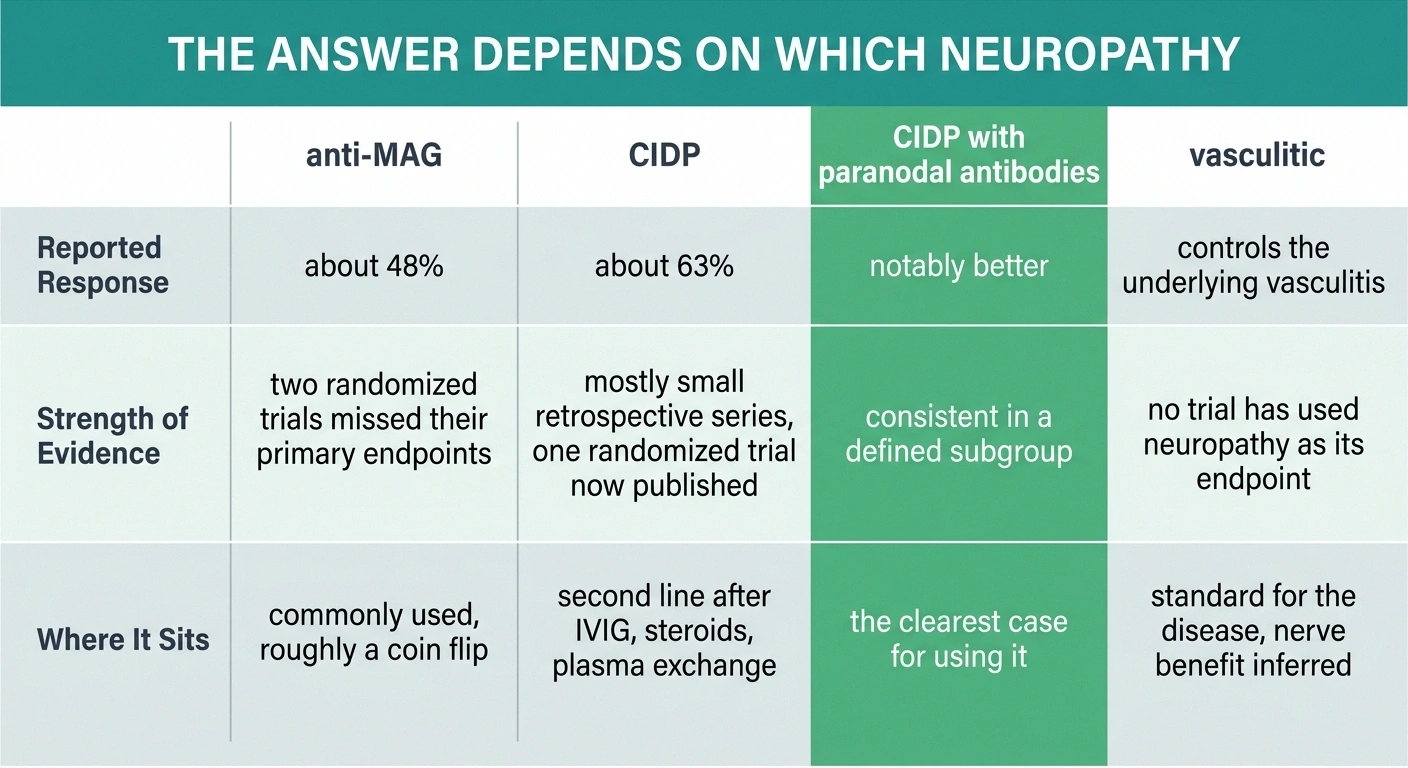
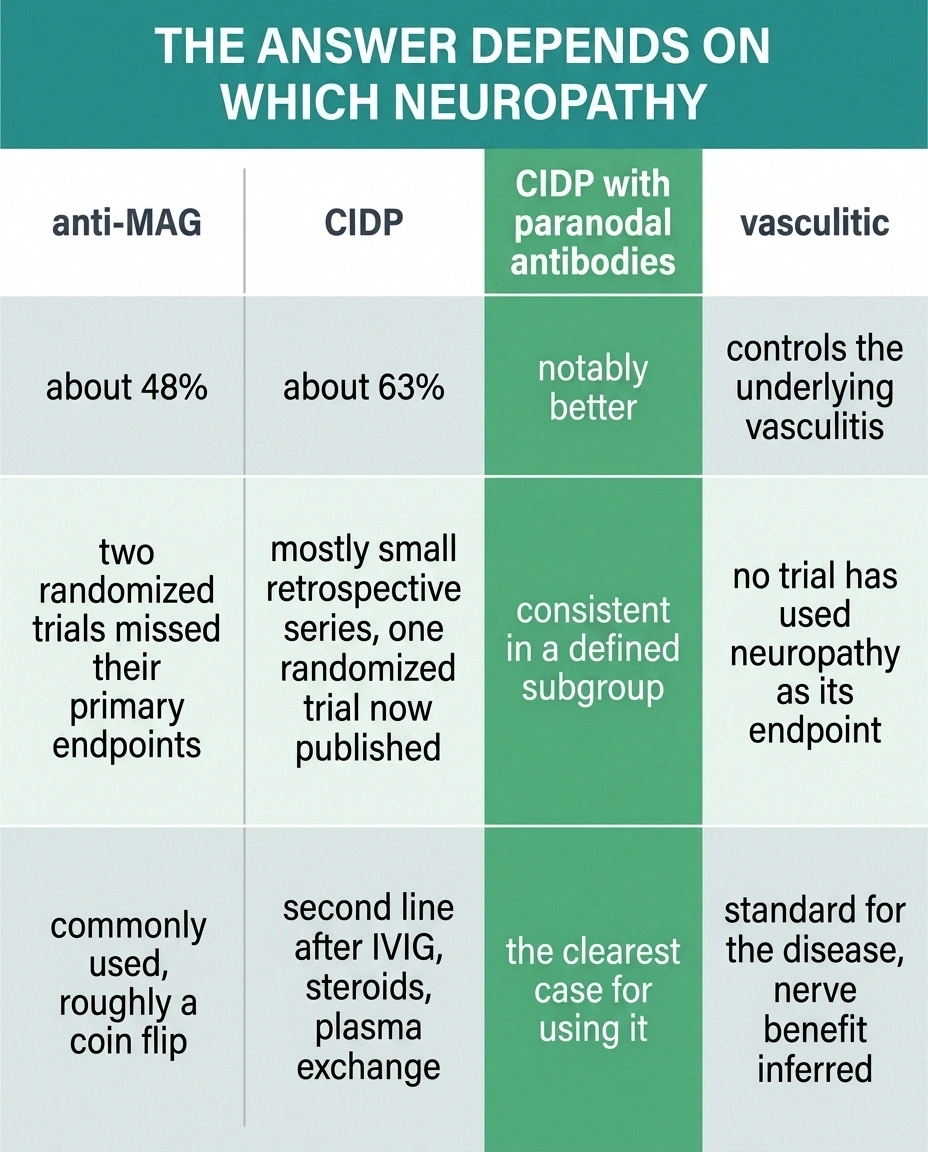
Across pooled observational data, rituximab was effective in roughly 48 percent of anti-MAG patients, with measurable improvement on nerve conduction studies in about 40 percent. A long-term bi-center experience following patients treated with a single cycle of rituximab monotherapy, with an average follow-up around eleven years, documented durable responses in a subset.
Then there are the randomized trials. Two double-blind, placebo-controlled studies, published by Dalakas in 2009 and Léger in 2013, evaluated rituximab in IgM anti-MAG demyelinating neuropathy. Neither showed a statistically significant benefit on its primary endpoint by intention-to-treat analysis.
That gap is the honest headline, and it is worth sitting with rather than resolving too quickly. Several explanations are plausible: the trials may have been too short for a mechanism that operates over many months, the primary endpoints chosen may have been insensitive to the kind of improvement that occurs, and mixing responders and non-responders in one analysis dilutes a real effect in a subgroup. None of those explanations is proven, and the possibility that observational studies overstate the benefit is also on the table.
What this means practically is that rituximab in anti-MAG neuropathy is a reasonable attempt with an honest coin-flip of a success rate, not an established therapy. Newer options are being investigated, including BTK inhibitors such as zanubrutinib, which target the IgM-producing clone through a different route and are now in trials for this specific condition.
CIDP: Second Line, With One Clear Exception
Chronic inflammatory demyelinating polyneuropathy is the other major place rituximab comes up, and the framing here is different because effective first-line treatments already exist.
For most people with CIDP, the standard approach starts with corticosteroids, intravenous immunoglobulin, or plasma exchange. Those have solid evidence behind them and most patients respond to at least one. Rituximab enters the conversation when they have not worked, or when the burden of ongoing IVIG has become impractical.
Pooled data across studies put the response rate around 63 percent, with neurophysiological improvement in about 58 percent. Encouraging figures, tempered by the fact that most of the underlying studies are small retrospective case series, which is the weakest tier of clinical evidence.
A randomized placebo-controlled trial of rituximab in CIDP has now been published in Brain, which moves the field forward considerably by giving it something other than case series to reason from. Trials in a condition this heterogeneous are difficult to run and difficult to interpret, and the field's overall verdict on rituximab in unselected CIDP remains unsettled.
The exception is much sharper. A subgroup of patients previously labeled treatment-resistant CIDP turn out to have antibodies against paranodal proteins, most commonly neurofascin-155 and contactin-1. These proteins hold the myelin sheath attached to the axon at critical junction points. Patients in this group tend to respond poorly to IVIG, which is often what flags them, and they respond notably well to rituximab.
Many neurologists now consider these conditions distinct from classic CIDP rather than a variant of it. If you carry a CIDP diagnosis and IVIG has not helped, asking whether paranodal antibody testing has been done is one of the highest-value questions available to you, because it can change both the diagnosis and the treatment.
Vasculitic Neuropathy
In vasculitic neuropathy, inflammation of small blood vessels cuts off the blood supply to nerves, producing nerve damage through infarction rather than through direct immune attack on myelin. The pattern is often asymmetric and stepwise, with individual nerves failing one at a time.
Rituximab is established in systemic vasculitis, particularly ANCA-associated vasculitis, where it is a standard option for induction and maintenance. The complication for our purposes is that no trial has ever used neuropathy as its primary endpoint. The neuropathy benefit is inferred from disease control.
One trial provides more direct evidence. In cryoglobulinemic vasculitis with vasculitic neuropathy, rituximab was superior to conventional therapy, with a drug retention rate of 64.3 percent versus 3.5 percent, a difference significant at P less than .001, and a lower rate of serious adverse effects. Drug retention is a composite measure of both working and being tolerable, and that gap is large.
Vasculitic neuropathy also occurs in the context of connective tissue diseases including lupus, rheumatoid arthritis, and Sjögren's syndrome. In those settings rituximab is generally directed at the underlying disease, and nerve improvement follows or does not follow along with everything else.
Reading the Evidence Without Being Misled
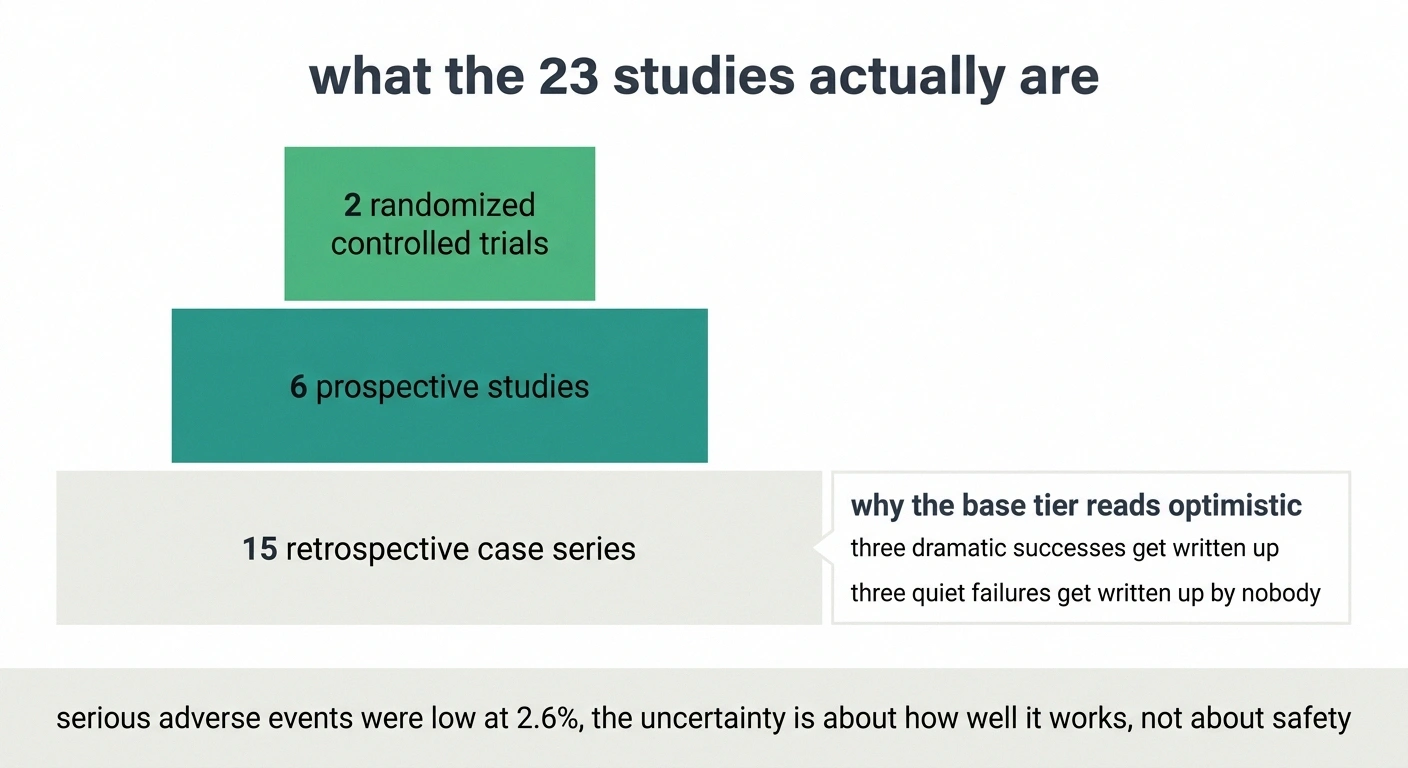
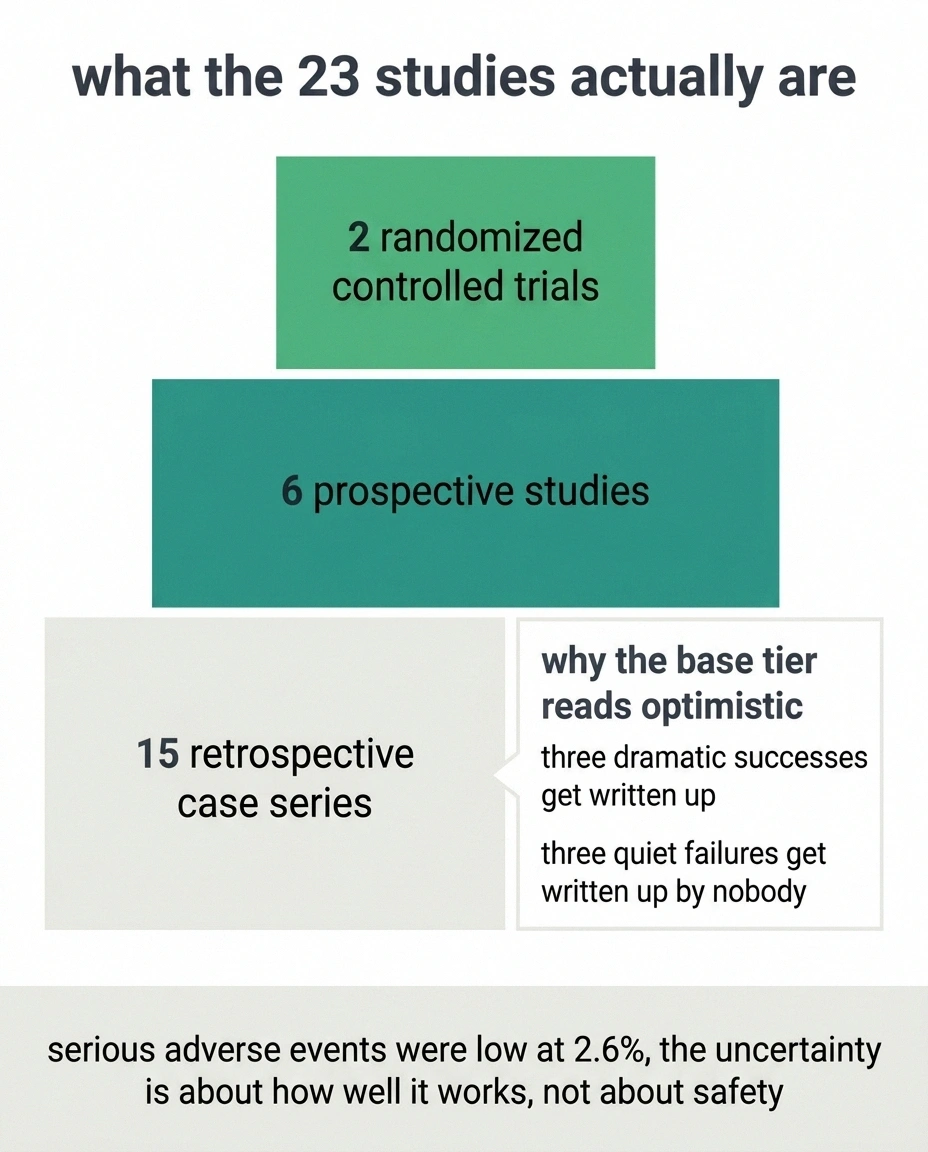
A systematic review of rituximab in chronic immune-mediated neuropathies gathered 23 studies. Two were randomized controlled trials. Six were prospective. Fifteen were retrospective.
Serious adverse events occurred in 2.6 percent, which is a genuinely reassuring safety figure. The review's conclusion about efficacy was more measured: rituximab shows potential in immune-mediated polyneuropathy, but the quality of evidence supporting its use is poor.
Retrospective case series carry a structural bias that is easy to miss. Cases that responded get written up more often than cases that did not. A physician with three dramatic successes has a paper. A physician with three quiet failures has nothing to publish. Aggregate enough of the former and the pooled response rate drifts upward without anyone doing anything dishonest.
This does not make rituximab a bad option. It makes it an option with an uncertain success rate, offered in situations where the alternatives have already been tried or are impractical to continue. That is a reasonable place for a treatment to sit. It is just a different thing from a treatment with established efficacy, and the difference is worth knowing when you are the one deciding.
What the Infusions Are Actually Like

For autoimmune conditions, rituximab is generally given as an intravenous infusion at 500 to 1000 mg, either weekly for four doses or as two doses two weeks apart, with repeat cycles depending on the protocol and on how long B-cell depletion lasts.
First infusion versus the ones after it
Almost everything people warn you about belongs to day one. Planning for the difference makes the rest of the course unremarkable.
| First infusion | Later infusions | |
|---|---|---|
| Time in the chair | Four to six hours, rate stepped up gradually | Usually shorter |
| Reaction likelihood | Highest of the course | Much lower |
| Premedication | Acetaminophen, antihistamine, often a steroid, 30 to 60 minutes before | Same, usually continued |
| Bring | Layers, a meal beforehand, something to read, a driver | Layers and a driver, at minimum |
| Plan the next day as | Light | Light |
The antihistamine is why the driver is on the list. Chills are from the premedication and the room temperature as often as from the drug.
The first infusion is the one to prepare for. Most reactions happen during or shortly after it, and they become much less common with subsequent doses. Reported effects include chills, fever, flushing of the face, itching, rash, nausea, headache, runny nose, shortness of breath, a sensation of throat or tongue swelling, dizziness, and fatigue. Severe reactions including cardiac events are rare but are more common with the first infusion than with later ones.
Premedication with acetaminophen and an antihistamine such as diphenhydramine is standard, given 30 to 60 minutes beforehand, often with a corticosteroid. The first infusion runs slowly, with the rate increased in steps if you tolerate it, which is why it can take four to six hours. Later infusions are usually faster.
Practical notes from people who have done it: bring layers, because infusion suites run cold and the premedication can cause chills. Expect drowsiness from the antihistamine, and arrange a ride. Eat beforehand. Plan the following day as a light one.
One item to raise well before the first infusion is vaccination. Vaccines work by prompting B cells to produce antibody, and depleting B cells blunts that response for months. Any vaccines you are due for are best given before starting, and live vaccines are generally avoided during and after treatment.
The Side Effect That Arrives Late

Infusion reactions are the visible risk. Hypogammaglobulinemia is the one that matters more over time and gets discussed less.
Four things to get on record before the first dose
- Baseline immunoglobulin levels. Without them, a low result in a year is uninterpretable.
- A vaccination review. Vaccines rely on the B cells about to be depleted, so anything due works better given now. Live vaccines are generally avoided from here.
- The agreed measure of success. Grip strength, walking distance, a nerve conduction study, or a disability score. Something countable.
- The plan if it does not work. Immune-mediated neuropathies usually have another option, and knowing it in advance turns a disappointing month into a planned step.
Ask how often immunoglobulins and blood counts will be rechecked afterward. Low levels and late-onset neutropenia are both found on routine testing and both have options once they are seen.
With B cells suppressed, immunoglobulin levels gradually fall. In many people they recover as B cells return. In some they do not, and prolonged hypogammaglobulinemia, defined in the literature as persisting more than eleven months after exposure, is associated with a meaningfully increased risk of infection.
Late-onset neutropenia is a separate recognized complication, appearing weeks to months after treatment.
Both are detectable with routine blood work, which is the reason monitoring matters. Identifying low immunoglobulins early opens options: adjusting the timing of further doses, antibacterial prophylaxis, planning vaccinations around the treatment cycle, or immunoglobulin replacement therapy. There is a certain irony in receiving IVIG as a rescue for a treatment given partly to avoid ongoing IVIG, and it does happen.
Ask what your immunoglobulin levels were before starting, and how often they will be rechecked. Without a baseline, a later low result is hard to interpret.
Progressive multifocal leukoencephalopathy, abbreviated PML, is a rare brain infection reported with rituximab and carried as a boxed warning. It is genuinely rare, and it is disproportionately reported in patients receiving rituximab alongside other immunosuppression for cancer. It is worth knowing the name so that encountering it in a package insert does not derail a reasonable decision, and worth reporting new confusion, vision changes, personality change, or worsening weakness promptly.
The Other Question: Can Rituximab Cause Neuropathy?
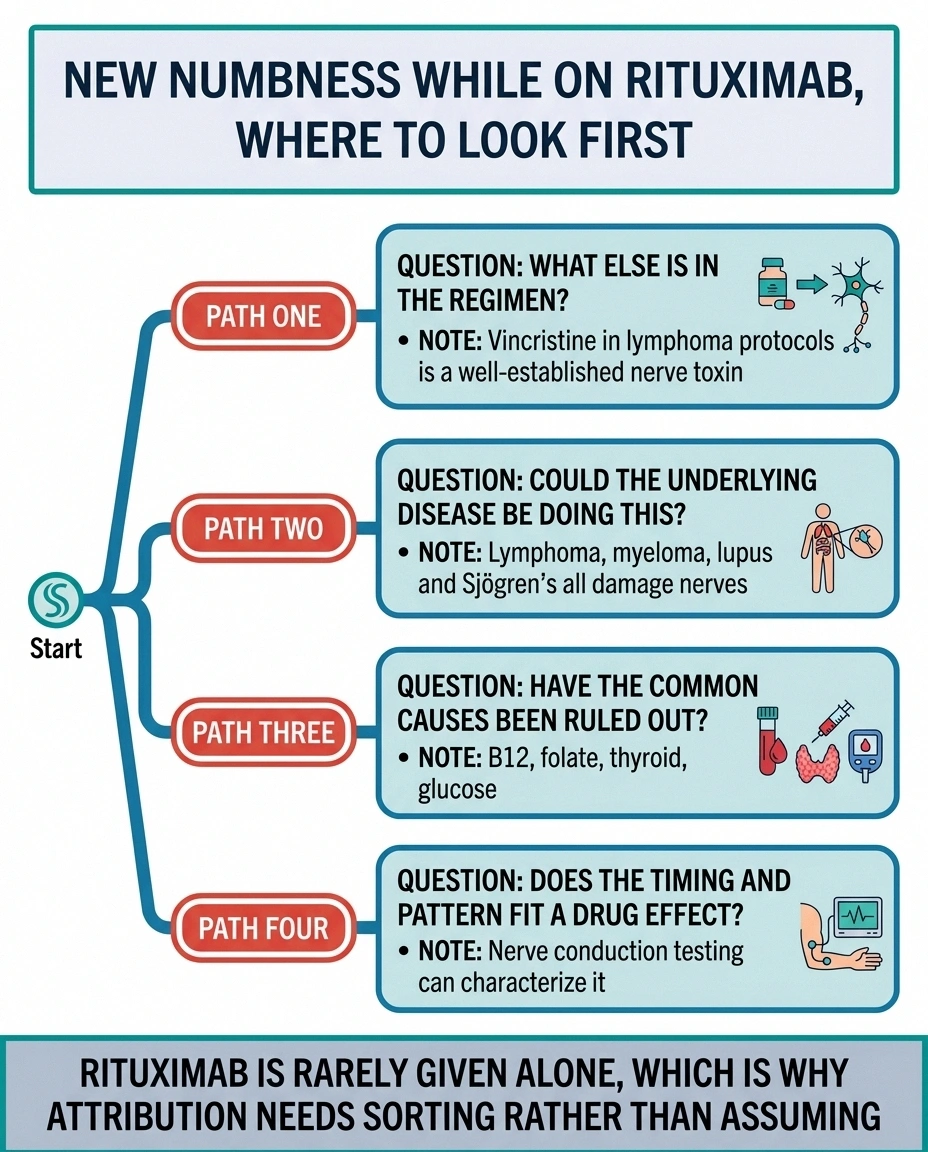
For the person who arrived here from the opposite direction, this section is for you.
Nerve-related symptoms including numbness, pain, and loss of motor or sensory function appear in the adverse effect listings for rituximab. So the answer to whether it can cause neuropathy is technically yes, and practically complicated.
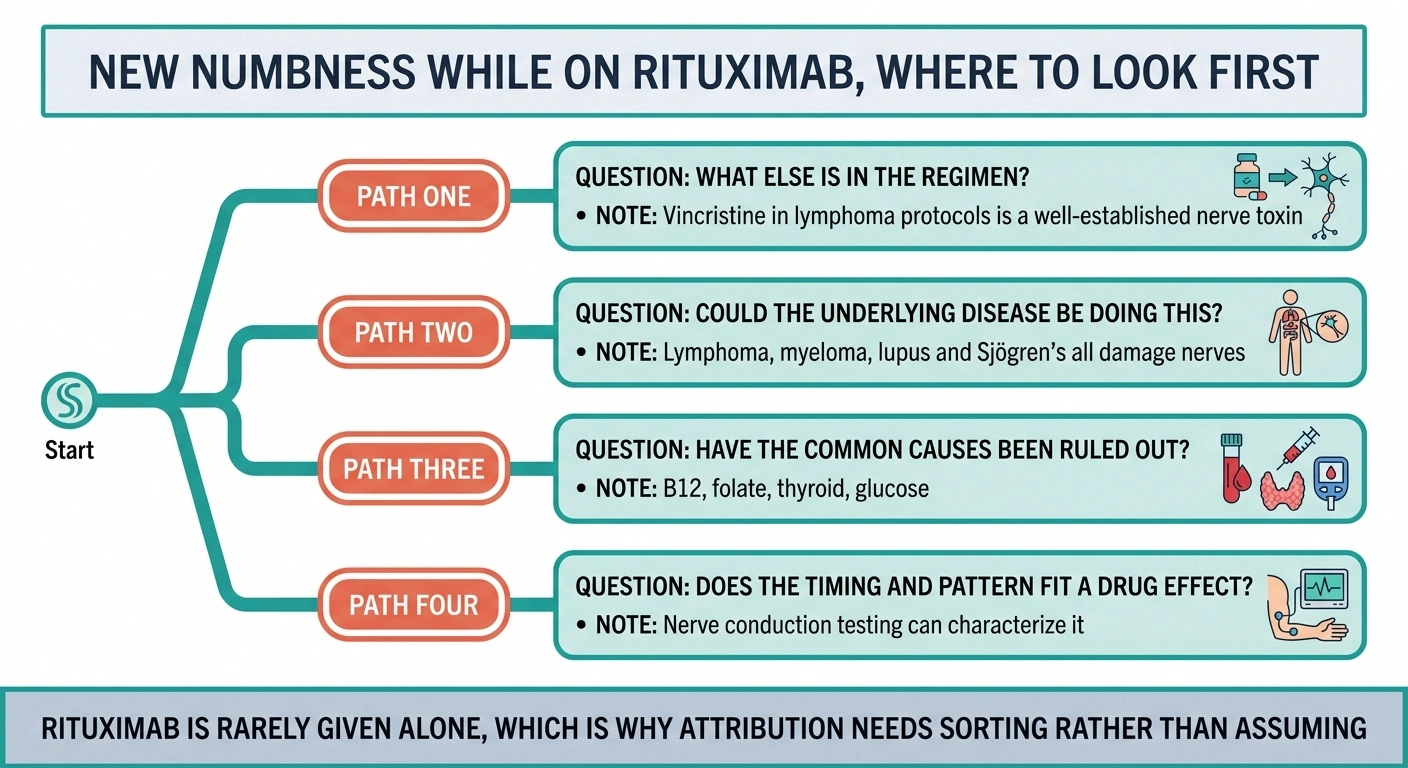
The complication is that rituximab is almost never given alone. In lymphoma it is combined with chemotherapy agents including vincristine, which is strongly neurotoxic and a well-established cause of peripheral neuropathy. In autoimmune disease it is given to people whose underlying condition can itself damage nerves. Sorting the contribution of any one component is difficult.
If you have developed neuropathy while on rituximab, useful questions to pursue:
- What else is in the regimen, and is anything in it a known neurotoxin?
- Could the underlying disease be causing this, particularly with lymphoma, myeloma, lupus, or Sjögren's?
- Have B12, folate, thyroid function, and glucose been checked, since the common causes remain common?
- Does the pattern and timing fit a drug effect, or something else?
Neuropathy that develops during cancer treatment is more often attributable to accompanying chemotherapy than to rituximab itself. The nerve damage seen in multiple myeloma illustrates how tangled this gets, with the disease, the treatment, and pre-existing conditions all plausibly contributing at once. Nerve conduction studies can help characterize what is happening, and our guide to reading EMG results covers what those reports mean.
Questions Worth Asking Before You Decide
- What specifically makes you think my neuropathy is antibody-mediated?
- Have I been tested for anti-MAG and for paranodal antibodies including neurofascin-155 and contactin-1?
- What response rate do you expect in someone with my particular diagnosis?
- How long before we would know whether it worked, and what will we measure?
- What happens to my current treatment while we wait?
- Will my immunoglobulin levels be checked before starting and monitored afterward?
- Are there vaccines I should receive first?
- If this does not work, what is next?
That last question does more work than it appears to. Knowing the sequence in advance turns a disappointing result into a planned step rather than a dead end, and immune-mediated neuropathies usually have more than one option left.
Frequently Asked Questions
Does rituximab work for neuropathy?
It depends heavily on the specific condition. In anti-MAG neuropathy, pooled observational data show around 48 percent response, but two randomized placebo-controlled trials did not meet their primary endpoints. In CIDP, pooled data show around 63 percent response, though mostly from small retrospective series. The clearest benefit is in CIDP associated with antibodies against paranodal proteins such as neurofascin-155 and contactin-1, where response is notably better. In vasculitic neuropathy it is used to control the underlying vasculitis.
How long does rituximab take to work for nerve symptoms?
Months rather than weeks. Rituximab destroys B cells but not the mature plasma cells that produce most circulating antibody, so existing antibody has to decay on its own before levels fall. Nerve repair then adds further delay. Benefit typically appears between three and twelve months after treatment. Judging the result at six weeks is judging it too early.
Is rituximab approved for CIDP?
It is not approved specifically for CIDP and is used off-label. Standard first-line treatments are corticosteroids, intravenous immunoglobulin, and plasma exchange. Rituximab is generally considered when those have failed, are not tolerated, or have become impractical to sustain, and it has the strongest case in patients found to carry paranodal antibodies.
Can rituximab cause neuropathy?
Nerve symptoms including numbness and pain appear in its adverse effect listings, so it is possible. In practice, rituximab is usually given alongside other drugs or for diseases that themselves damage nerves. In lymphoma regimens it is frequently combined with vincristine, a well-established cause of peripheral neuropathy, which is a more likely culprit. Investigating other causes including B12 deficiency, thyroid dysfunction, and glucose abnormalities remains worthwhile.
What are the most common side effects?
Infusion reactions are most common and cluster around the first infusion: chills, fever, flushing, itching, rash, nausea, headache, shortness of breath, and fatigue. Premedication reduces these substantially. Over the longer term, low immunoglobulin levels and late-onset neutropenia are the effects that warrant monitoring, since both raise infection risk and both are detectable on routine blood work. Serious adverse events occurred in 2.6 percent across a systematic review.
What is hypogammaglobulinemia and why does it matter?
It means low levels of immunoglobulins, the antibodies that defend against infection. Because rituximab depletes the cells that produce them, levels can fall and sometimes stay low. Persisting more than eleven months after exposure, it is associated with increased infection risk. It is identified through routine blood testing, and options when it appears include prophylactic antibiotics, adjusted dosing intervals, vaccination planning, and immunoglobulin replacement.
How is rituximab given for autoimmune neuropathy?
Typically as an intravenous infusion of 500 to 1000 mg, given either weekly for four doses or as two doses two weeks apart, with repeat cycles depending on the protocol and on B-cell recovery. Premedication with acetaminophen, an antihistamine, and often a corticosteroid is given 30 to 60 minutes before. The first infusion runs slowly and can take four to six hours; later ones are usually quicker.
Should I get vaccines before starting rituximab?
Where possible, yes. Vaccines rely on B cells to produce protective antibody, and depleting B cells blunts the response for months afterward. Reviewing your vaccination status before the first infusion allows anything due to be given while it can still work properly. Live vaccines are generally avoided during and after treatment.
About the Author