
If your chin or lower lip has gone numb and you have not had recent dental work, an injection, or an injury to your jaw, arrange to be seen within days rather than weeks. Not the emergency room, unless the numbness came with sudden weakness, drooping on one side of the face, or trouble speaking. But a real appointment, soon, with someone who will take it seriously.
That is the entire message of this article, placed first on purpose. Everything below explains why a symptom this small carries that much weight, and what a proper evaluation looks like so you can tell whether you got one.
What Numb Chin Syndrome Actually Is
Numb chin syndrome is a sensory neuropathy affecting the mental nerve or the inferior alveolar nerve that feeds it. In clinical writing you will also see it called mental nerve neuropathy or mental neuropathy, and the word mental here refers to the chin rather than to the mind. The Latin root is mentum.
Six details to establish before you are asked for them
Work these out at a mirror tonight. Each one narrows the differential, and each is much harder to recall accurately in a ten-minute appointment.
- The exact border. Run a fingertip slowly outward in every direction and mark where normal feeling returns. Note whether it stops at the midline of your chin or crosses it.
- One side or both. Compare left to right directly rather than estimating.
- Whether the gum is involved. Run a fingertip along the gum in front of your lower teeth. This tells a clinician how far back along the nerve the problem sits.
- The date it started, as precisely as you can, and whether it appeared over hours, days or weeks.
- Whether it is total or partial. Complete absence of sensation reads differently from reduced or altered sensation.
- Anything else new, including jaw ache, difficulty chewing, a loose lower tooth with no dental explanation, or a change in taste.
A loose lower tooth alongside chin numbness, with no dental cause, is a specific pairing worth naming out loud. It points at the bone the nerve runs through.
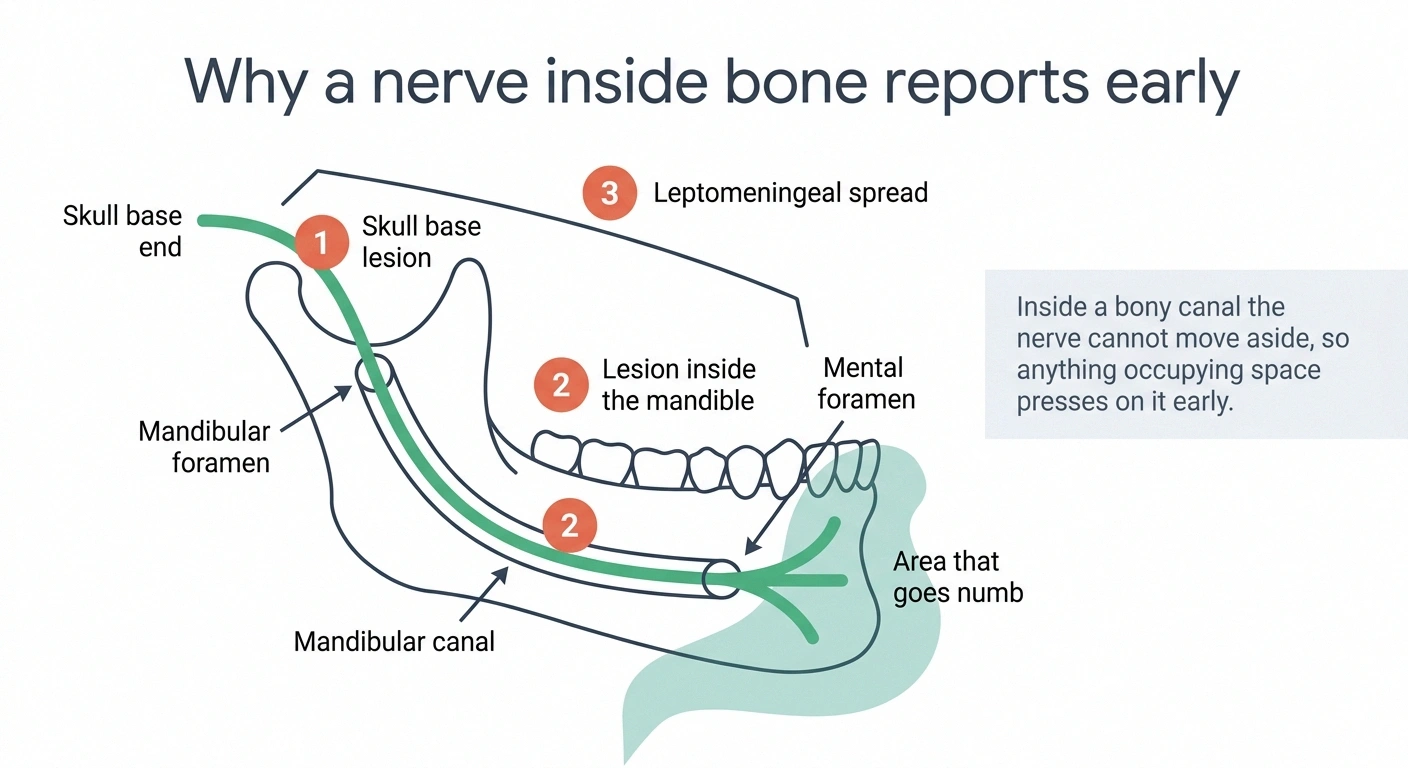
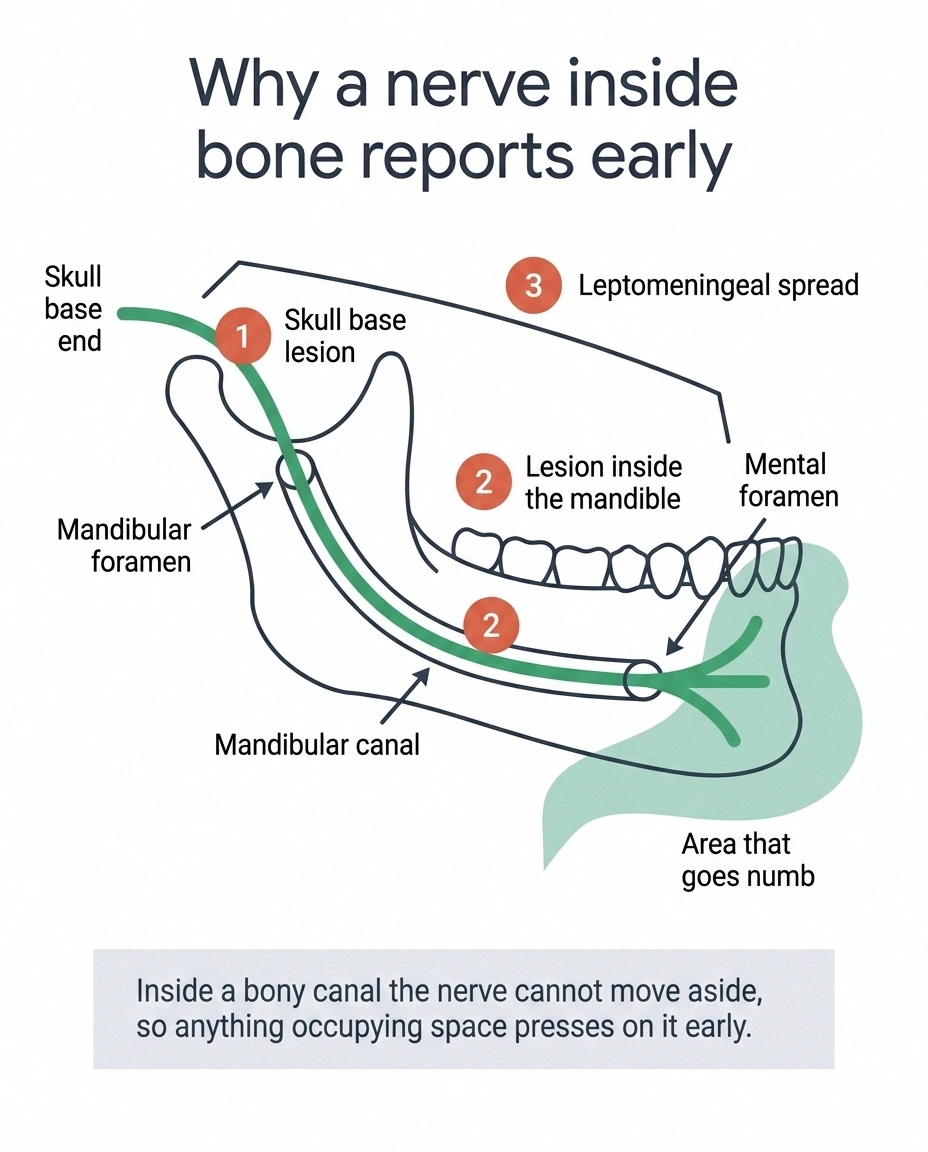
The mental nerve is a small terminal branch. The inferior alveolar nerve travels through a channel inside your lower jawbone, gives off branches to your lower teeth along the way, and exits through a small opening on the front of the mandible called the mental foramen, just below the corner of the mouth. From there it supplies sensation to the skin of the chin, the lower lip, and the gum in front of the lower teeth.
That is the whole territory. Numbness in exactly that patch, and normal sensation everywhere else on the face, is the pattern.
What people describe varies. Complete numbness in some cases, a persistent tingling or pins-and-needles in others, a feeling that the lip is swollen when it is not, or the sense of lingering dental anesthetic that never wore off. Pain is uncommon here. Most people report absence of feeling rather than an unpleasant one, and that absence is exactly why the symptom gets dismissed as too minor to mention.
Why a Small Symptom Gets Urgent Handling
Because of where that nerve runs and what it runs through.
The inferior alveolar nerve spends most of its length inside bone. Nerves in soft tissue can be pushed aside by something growing near them. A nerve inside a bony canal has nowhere to go, so anything occupying space in the mandible presses on it early, which makes this nerve an unusually sensitive detector of a problem in the jawbone.
The second reason is what tends to occupy that space. The mandible is a site where cancer metastasizes. Reviews of the published literature find numb chin syndrome associated with malignancy in somewhere between 29 and 53 percent of reported cases, and one comparison found the prevalence of numb chin syndrome running at 23 percent among patients with metastatic cancer against 4 percent among those with benign disease.
Read those numbers carefully, because taken at face value they are frightening in a way that is not accurate.
Reading Those Percentages Honestly
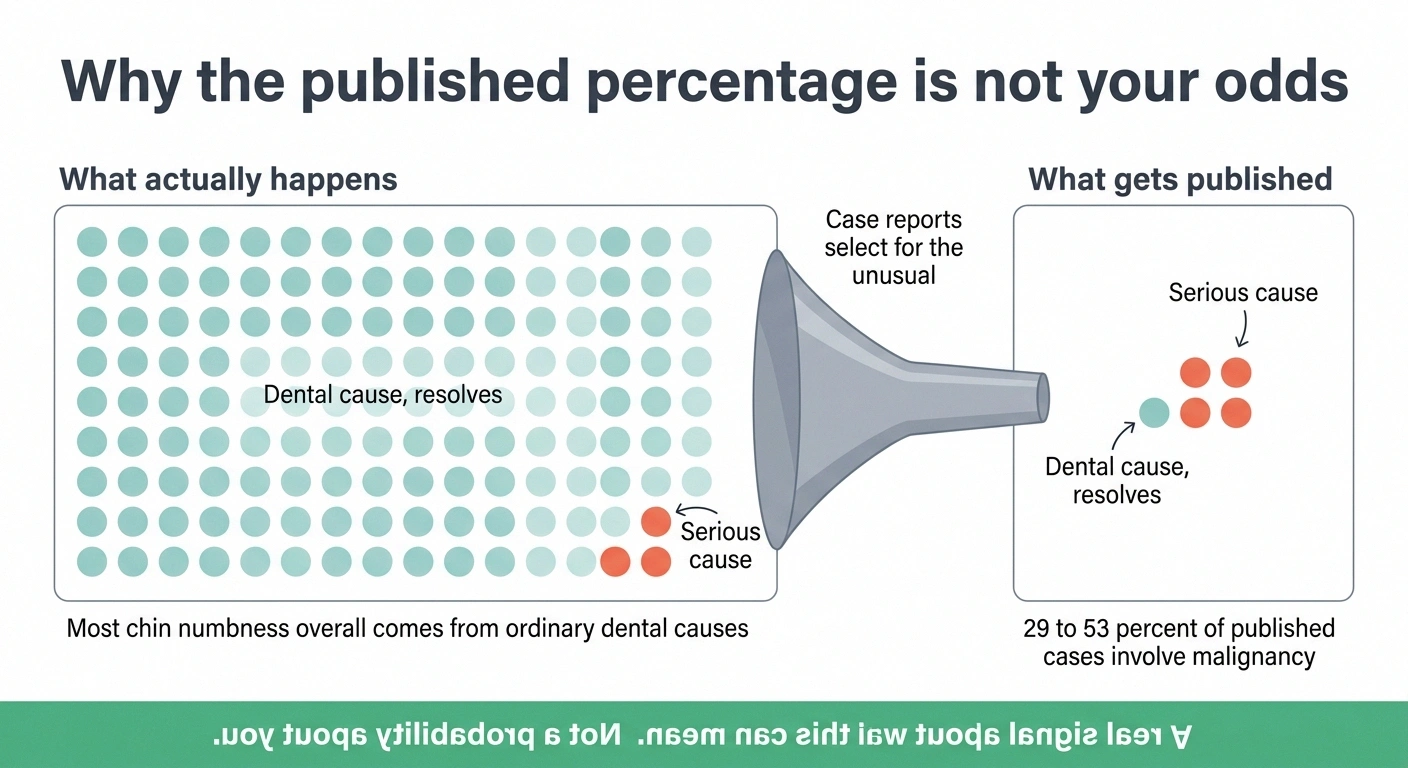
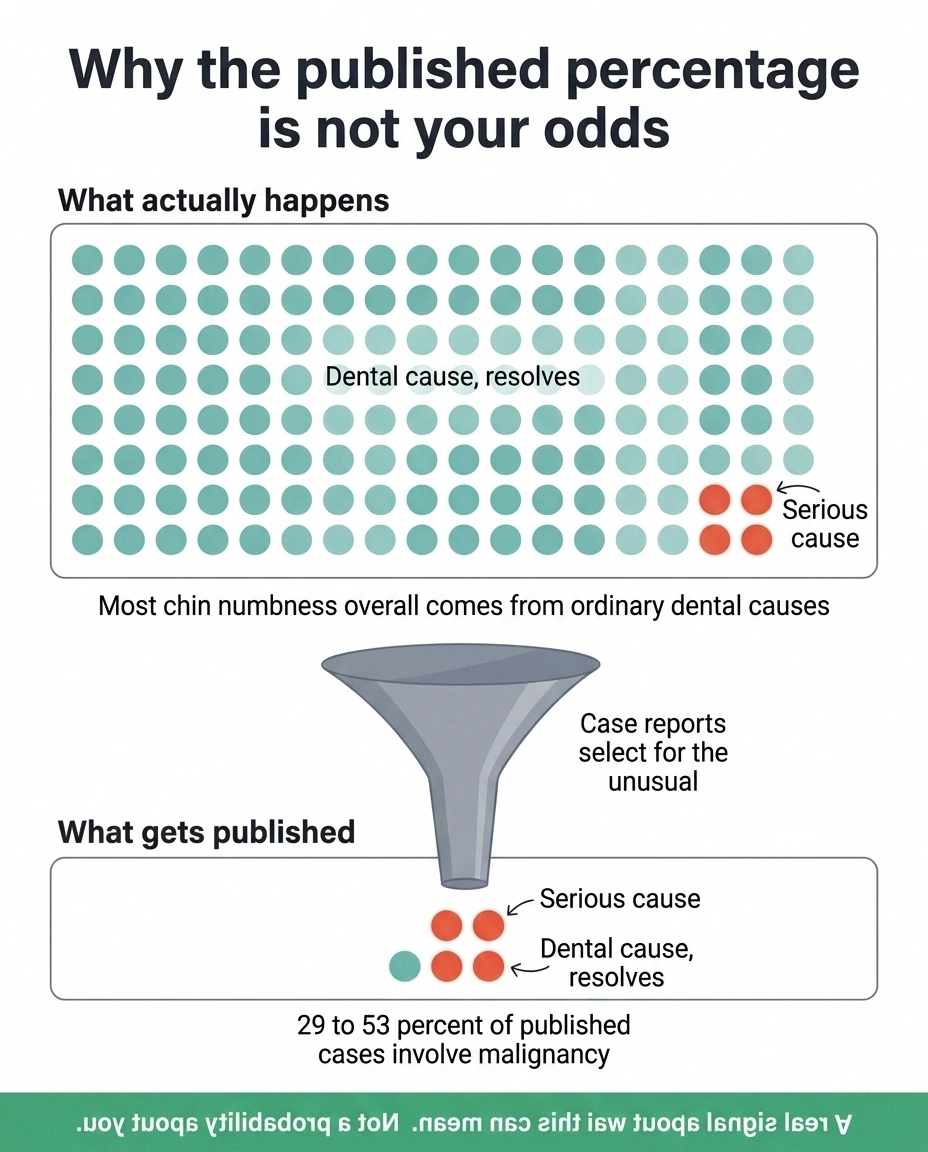
The 29 to 53 percent figure comes from published case reports and case series. Publication selects for the unusual and the instructive. A dentist who sees chin numbness resolve on its own six weeks after a wisdom tooth extraction does not write it up, because nothing happened. A physician whose patient’s numb chin turned out to be the first sign of lymphoma very much does write it up, because the case teaches something.
So the published record over-represents serious outcomes by design. It is a real signal about what numb chin syndrome can mean. It is not your personal probability, and anyone presenting it as one is misusing it.
The honest version is this. Most cases of chin numbness, counted across everyone who ever gets it, come from ordinary dental causes: extractions, local anesthetic injuries, abscesses, jaw trauma, implants placed close to the nerve canal. Those are common and the serious causes are rare. But the serious causes are serious enough, and treatable enough when caught early, that the symptom warrants a real look rather than a wait-and-see.
The urgency here is not about likelihood. It is about the size of the difference that early detection makes.
The Question That Sorts Most Cases
One branch does most of the triage work, and you can assess it yourself before any appointment.
Go to an emergency department now if any of these are also true
Everything else on this page is about arranging an appointment within days. This list is different. Numbness arriving alongside any of the following points at a separate, time-critical problem rather than at numb chin syndrome:
- Drooping on one side of the face, or an eyelid that will not lift
- Weakness or numbness in an arm or leg, particularly on one side
- Slurred speech, or difficulty finding words
- Sudden loss or blurring of vision, or double vision
- A sudden severe headache unlike your usual
- Confusion or difficulty staying alert
Note the time the symptoms started before you leave. For several time-critical conditions that single piece of information changes which treatments remain available.
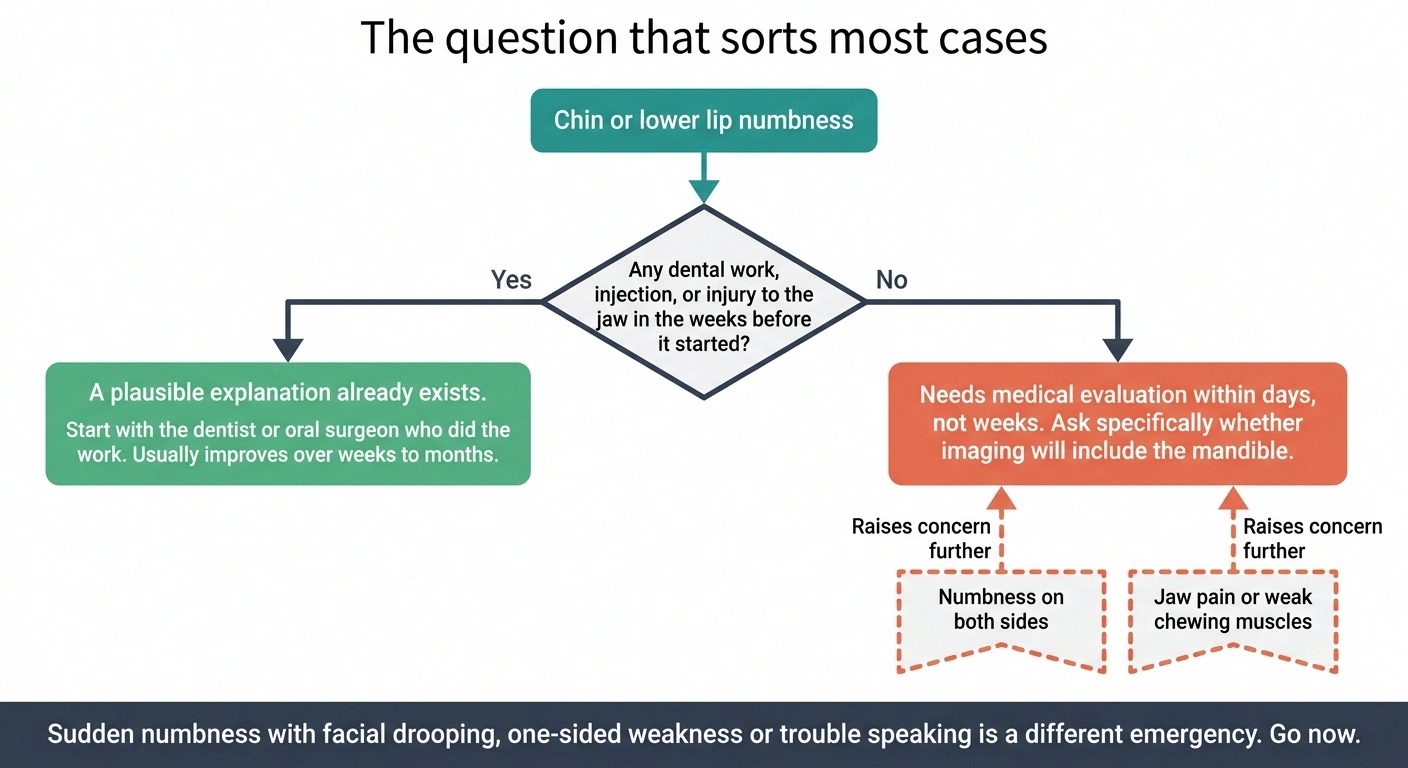
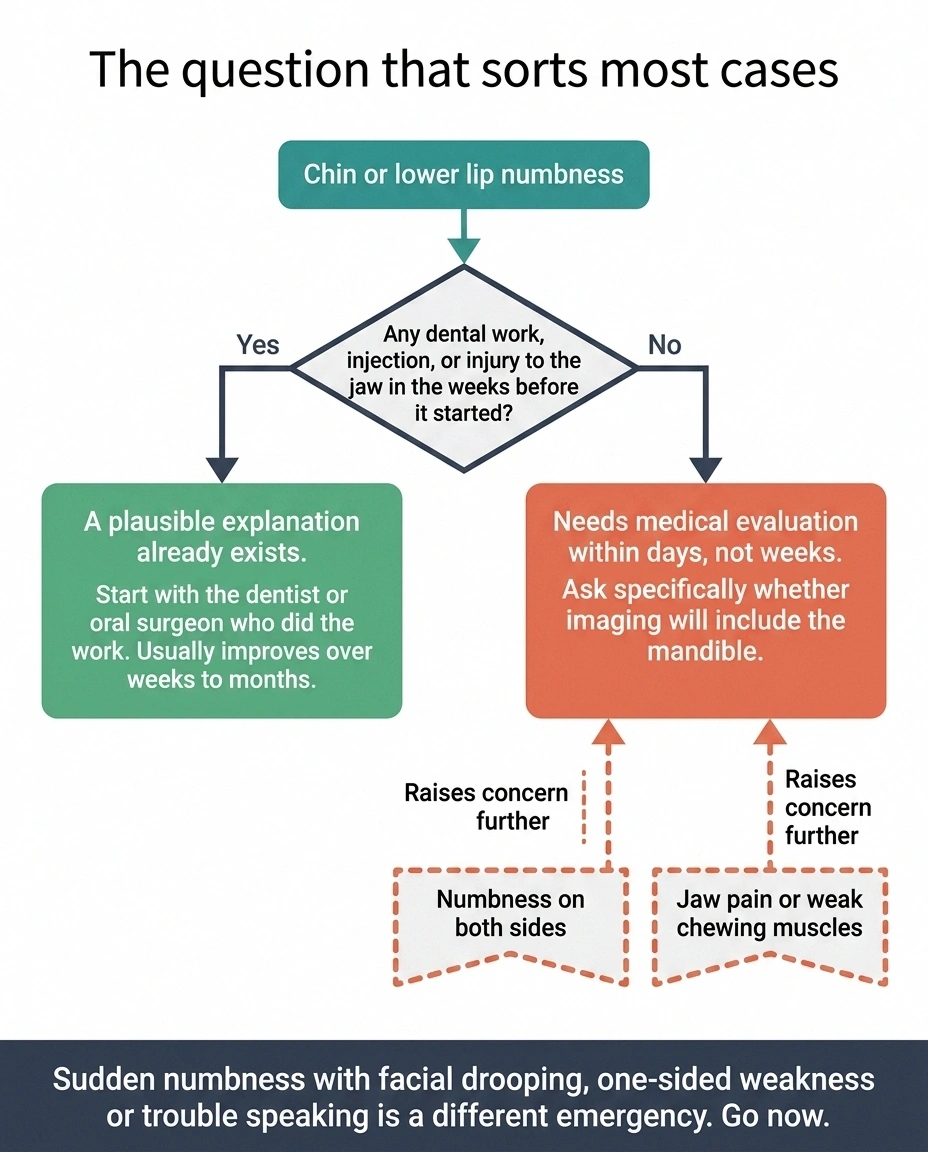
Did something happen to your jaw or mouth in the weeks before the numbness started?
If yes, a plausible explanation is already on the table. A lower molar extraction, a root canal, a dental implant, a mandibular block injection, a fall or a blow to the jaw, or a dental infection can all injure the inferior alveolar nerve directly. Numbness following any of these is common, usually improves over weeks to months as the nerve recovers, and belongs first to the dentist or oral surgeon who did the work. Mention it to them regardless, since documentation matters and since not all injuries recover fully.
If no, the picture changes. Chin numbness appearing with no dental history, no injection, no trauma and no obvious dental disease is the presentation that carries weight, and the medical literature is consistent on this point: a numb chin in a patient with no history of maxillofacial trauma or obvious dental cause is more often the first sign of metastasis than of a benign condition.
Two features raise concern further. Numbness on both sides of the chin, since a single local dental injury does not usually produce bilateral symptoms. And numb chin accompanied by jaw pain or weakness of the chewing muscles, a combination reported as a stronger indicator of systemic malignancy than numbness alone.
The Benign Causes Worth Knowing
Not everything without a dental history is cancer, and several benign conditions genuinely produce this.
Dental and jaw causes, the largest group overall: extraction injury, dentoalveolar abscess, osteomyelitis of the jaw, implant placement near the canal, local anesthetic injury, and mandibular fracture.
Multiple sclerosis. A demyelinating lesion positioned along the trigeminal pathway in the brainstem can produce isolated chin numbness, and there are documented cases where this was the first presenting symptom of MS.
Sickle cell disease. Vaso-occlusive crisis can infarct the nerve’s blood supply. This is well enough described to have its own systematic review and management recommendations.
Diabetes. Can cause cranial mononeuropathies, and it matters here for a specific reason. Many people reading this already have diabetic neuropathy and will reasonably assume the numb chin is more of the same. It usually is not, and that assumption is the most likely way this symptom gets ignored. Diabetic neuropathy is length-dependent: it starts in the toes, works upward slowly and symmetrically, and does not skip to an isolated patch of chin. Having diabetes does not explain this pattern away, and if anything it should raise your suspicion rather than lower it.
Sarcoidosis and amyloidosis, both of which can infiltrate nerves. Our pages on sarcoidosis and neuropathy and amyloid neuropathy cover those mechanisms.
Giant cell arteritis, an inflammatory condition of medium-sized arteries that can compromise the nerve’s blood supply.
These belong to the family of cranial neuropathies, which behave differently from the peripheral neuropathy most readers of this site are managing. Different nerves, different mechanism, different evaluation.
The Malignancies Associated With It
Worth naming plainly, because vagueness here is its own kind of alarming.
Two categories account for most cases. Solid tumours metastasizing to the mandible or skull base: breast, lung, kidney, thyroid, prostate and stomach are the primary sites reported. Haematological malignancies: acute lymphocytic leukaemia, Hodgkin and non-Hodgkin lymphoma, and multiple myeloma. There are documented cases of diffuse large B-cell lymphoma and Burkitt’s lymphoma announcing themselves this way.
Three mechanisms are described: a metastasis in the mandible compressing the nerve directly, a metastasis at the skull base affecting the nerve higher up its course, and leptomeningeal spread, where cancer cells travel in the fluid surrounding the brain and spinal cord.
Two things are worth holding onto. In people already diagnosed with cancer, a new numb chin is a recognized sign of progression and should be reported to the oncology team the same week. And in people with no cancer history, this is occasionally the first symptom of anything at all, which is precisely what makes it valuable rather than merely worrying. A symptom that arrives early is a symptom that arrives while there is still time.
The Imaging Mistake That Sends People Home Wrongly Reassured
This is the most important practical section on the page, and it is the part most likely to change what happens to you.
Three sentences that get the right area scanned
Say these plainly. None of them second-guesses a clinician, and all three are answerable in a sentence.
Before the scan: “Will this study cover the mandible and the skull base, or only the brain?”
Asked before the appointment, this is a scheduling question. Asked after, it is a repeat scan.
On the request form: “Please note on the referral that the symptom is numbness in the mental nerve distribution.”
Radiologists read against the clinical question they are given. A referral saying facial numbness produces a different read from one naming the nerve.
After a normal result: “The scan was normal, but was the jaw inside the field of view?”
Ask for a copy of the radiology report itself rather than a verbal summary. The report states what was imaged.
Keep your own copy of every report and every image disc from the start. If this needs a second opinion later, having the originals in hand saves weeks of retrieval.
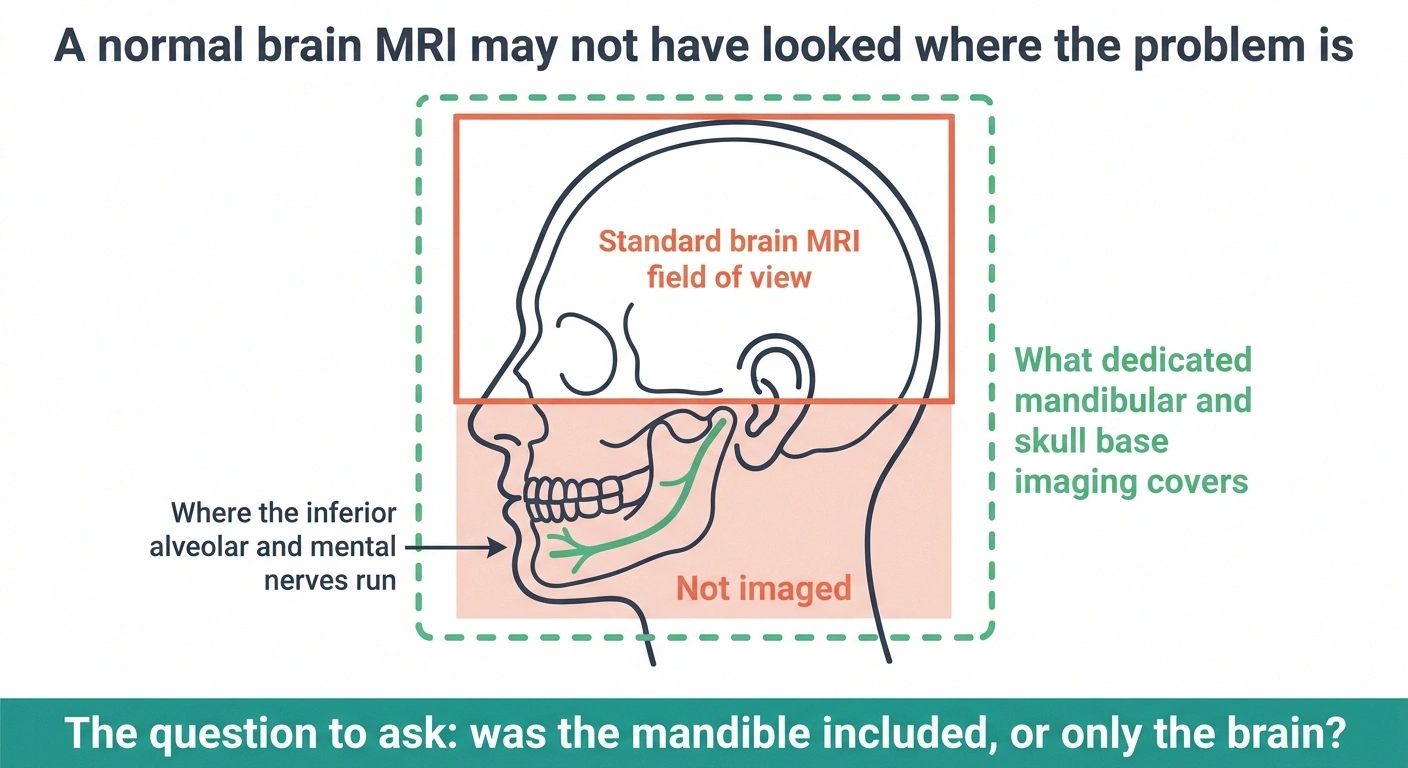
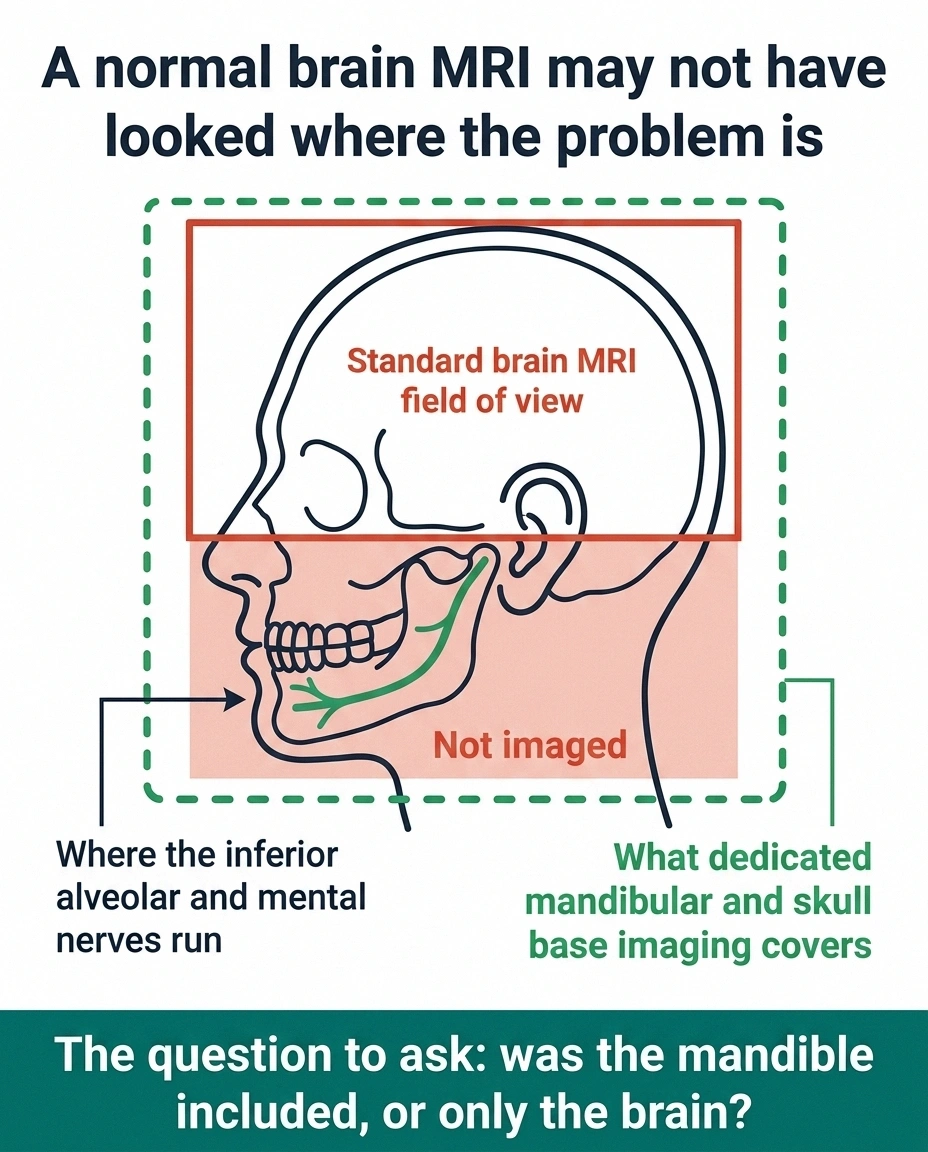
A standard brain MRI does not image the area where this nerve lives.
A routine brain protocol covers the brain. It does not extend down through the oromandibular region where the inferior alveolar nerve travels inside the jaw and exits at the mental foramen. This is documented in the neurology literature as a specific pitfall: brain MRI can return false negatives in skull base and maxillo-mandibular lesions, and dedicated mandibular imaging has to be requested to localize the problem.
The practical failure mode writes itself. A patient reports a numb chin, a brain MRI is ordered, the brain MRI is normal, and everyone relaxes about a lesion that was never inside the field of view.
If you have had a normal brain MRI and your chin is still numb with no dental explanation, the correct question is not whether to worry. It is: was the mandible imaged?
The wider workup, where malignancy is suspected, generally includes dedicated imaging of the mandible and skull base, brain MRI with contrast, plain radiographs of the jaw, bone scan, blood work including a full blood count and protein studies, and cerebrospinal fluid analysis if leptomeningeal disease is a consideration. Panoramic dental radiographs and plain CT have limited sensitivity for early lesions here, so a clear panoramic film is reassuring but not conclusive.
Getting Taken Seriously

The obstacle is usually that the symptom sounds trivial when described casually. These phrasings tend to produce a different response.
Lead with the absence of a dental cause. “I have numbness of my chin and lower lip. I have had no dental work, no injections and no injury to my jaw.” That sentence contains the entire reason for concern and puts it in the first ten seconds.
Name the syndrome. Saying “I have read that this is called numb chin syndrome and that it can be associated with malignancy” is not overstepping. It signals that you know why you are there and it retrieves a specific clinical association from memory.
Map the numb area with your finger during the appointment. Demonstrating that it stops at the midline, or covers both sides, or extends to the gum, gives more useful information than any adjective.
Ask the imaging question directly. “Will this study include the mandible and the skull base, or only the brain?”
Give your full history, including any past cancer even if treated years ago and considered resolved, and any weight loss, night sweats, bone pain or fatigue. These are the details that reframe a small neurological finding entirely.
Our guides to preparing for a neurology appointment and to when to see a neurologist cover the general version of this conversation. If you are told to watch and wait without any imaging and without a dental explanation, seeking a second opinion is reasonable and not rude.
How This Differs From the Neuropathy You May Already Have
For readers managing peripheral neuropathy, the contrast is worth stating directly.
Two kinds of numbness that behave nothing alike
If you already live with neuropathy, this is the comparison that stops a focal symptom being filed under a familiar heading.
| Your usual neuropathy | Numb chin syndrome | |
|---|---|---|
| Where it starts | The longest nerves first, so the toes | One small patch, nowhere near the feet |
| Symmetry | Both sides, roughly equally | Often one side only |
| Onset | Gradual, over months or years | Often over days, sometimes hours |
| Spread | Creeps slowly upward from the feet | Confined to one nerve’s territory |
| What it usually means | A metabolic or systemic process already known about | Something occupying space along one specific nerve |
Any new numbness that is focal, one-sided and fast is a different question from the numbness you have learned to live with, wherever on the body it appears.
Peripheral neuropathy of the usual kind is length-dependent, symmetrical, and slow. It begins in the longest nerves, which reach the toes, spreads gradually upward, and typically involves both feet at once. Our page on what causes tingling and numbness describes that pattern in detail.
Numb chin syndrome is none of those things. It is focal, often one-sided, frequently sudden, and confined to a small territory served by a single nerve branch. It does not follow from the process that numbed your feet, and a new focal numbness anywhere is a different question from a gradual one, which is why it appears on our list of neuropathy symptoms that need prompt attention.
The overlap creates the risk. Someone who has spent three years learning that numbness is their normal is exactly the person most likely to file this one under the same heading.
What Happens After the Workup

Two broad outcomes.
If a benign cause is identified, treatment addresses it. A dental infection is treated, an abscess drained, an inflammatory condition managed. Nerve recovery after a dental injury is measured in months rather than weeks, and it is often partial. There is no specific treatment that speeds regeneration, and the sensation may return incompletely.
Practical adaptations matter more than most people expect while sensation is absent. You cannot feel food on the numb lip, so check a mirror after eating. You cannot feel heat there reliably, so test hot drinks before sipping. Biting the lip or the inside of the cheek without noticing is common, and repeated bites become ulcers. Mention the numbness at dental visits, since dental care with reduced sensation requires the same care you would give a numb foot.
If the evaluation is entirely negative and no cause is found, the numbness may still resolve on its own. But a negative workup for an unexplained numb chin usually comes with an interval follow-up rather than a discharge, because some lesions become visible on imaging only after a period of growth. If your symptom is unexplained and nobody has scheduled you a follow-up, ask for one.
Frequently Asked Questions
Is numb chin syndrome always cancer?
No, and most cases are not. Ordinary dental causes such as extractions, injections, abscesses and jaw injuries account for the majority of chin numbness overall. The reason the symptom is taken seriously is that published case series find a malignancy association in roughly 29 to 53 percent of reported cases, and while that figure is inflated by the fact that serious cases are the ones that get written up, it reflects a real and well-documented association that is worth ruling out promptly.
How long does chin numbness last after a tooth extraction?
Most nerve irritation from a dental procedure improves over weeks to a few months as the nerve recovers, and recovery from a stretched or bruised nerve is usually gradual rather than sudden. Numbness that persists beyond about six months is less likely to resolve completely. Report it to the dentist or oral surgeon who performed the work either way, both so it is documented and so the possibility of an unrelated cause is not overlooked.
Should I go to the emergency room for a numb chin?
Isolated chin numbness that has come on gradually does not usually require emergency care, but it does require an appointment within days rather than months. Go to the emergency department if the numbness arrived suddenly alongside facial drooping, weakness on one side of the body, difficulty speaking, or sudden vision change, since that combination points at a different and time-critical problem.
What kind of doctor should I see for a numb chin?
If there has been recent dental work, start with the dentist or oral surgeon who did it. Without a dental explanation, a physician who can order imaging and blood work is the right starting point, and that is usually your primary care doctor or a neurologist. Say clearly that there has been no dental procedure and no trauma, because that single fact is what determines how the symptom gets handled.
Can numb chin syndrome be the first sign of cancer?
Yes, and this is documented across the literature in cases where the numbness preceded any other symptom, including presentations of lymphoma, breast cancer metastasis and multiple myeloma. That is precisely why the symptom is worth acting on quickly. In someone already diagnosed with cancer, a new numb chin can indicate progression and should be reported to the oncology team the same week.
Why did my MRI come back normal if something is wrong?
Because a standard brain MRI does not cover the region where this nerve runs. The protocol images the brain, not the jaw, and the neurology literature specifically describes brain MRI returning false negatives in skull base and maxillo-mandibular lesions. If the numbness has no dental explanation and remains unexplained after a normal brain scan, the question to raise is whether the mandible and skull base were included in the imaging.
Can diabetes cause a numb chin?
Diabetes can cause cranial mononeuropathies, so it is possible, but it is not the assumption to rest on. Diabetic peripheral neuropathy is length-dependent and symmetrical, beginning in the toes and progressing slowly upward, and it does not produce an isolated numb patch on the chin. Having diabetes does not account for this pattern, and treating it as an explanation is the most common way this symptom gets dismissed.
Can stress or anxiety cause chin numbness?
Anxiety can produce tingling sensations, usually spreading, symmetrical, and accompanied by rapid breathing and other symptoms during an episode. Persistent numbness confined to the precise territory of one nerve branch is a structural finding rather than a functional one, and attributing it to stress before the anatomy has been evaluated risks missing something that has a physical cause.
About the Author