Four hours at a fundraiser cost me two days.
That’s the whole arithmetic, and I didn’t do it until much later. I’d said yes to helping at a church rummage sale, spent most of a Saturday on my feet on a concrete floor sorting donations, and drove home pleased with myself. Sunday I couldn’t do anything — Monday wasn’t much better. And somewhere in there I decided, quietly and without examining it, that I probably couldn’t volunteer anymore.
That conclusion was wrong, and it was wrong in a specific way worth naming. The problem was never volunteering. It was four hours standing on concrete. I could have done six hours at a desk that same weekend and been fine on Sunday.
Which is the thing nobody tells you: the question isn’t whether you can volunteer. It’s which role, in which posture, for how long — and almost nobody sorts opportunities that way, so people try one badly matched thing, pay for it, and quit the whole category.
The Arithmetic Nobody Does
Volunteer roles get described by cause. Animal shelter, food bank, literacy program, hospital, museum. That’s how they’re advertised and that’s how people choose, usually by what they care about.
Fill this in for any role you are considering. It takes two minutes and it is the calculation that would have saved me a wasted year of assuming I was finished with this.
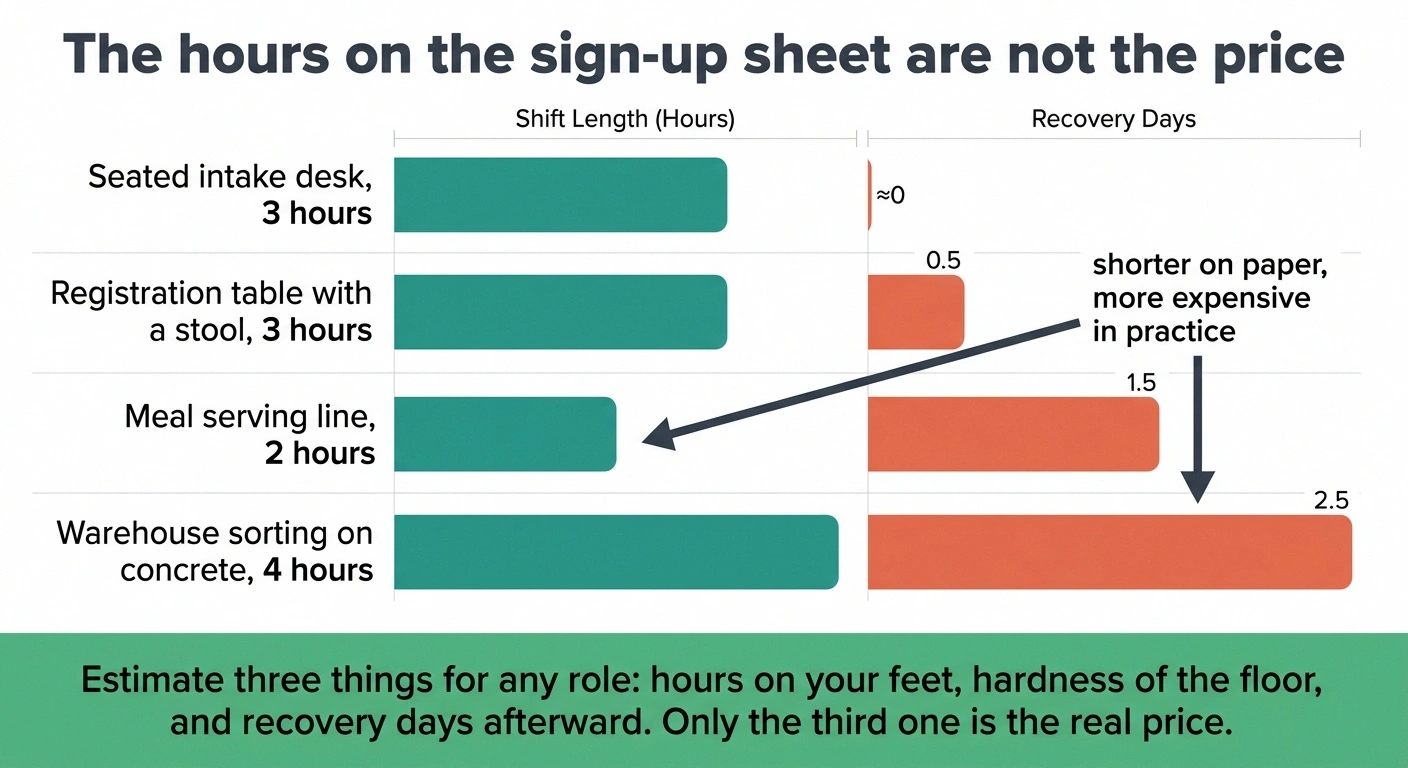
That last line is the actual commitment. A three-hour seated shift costing zero recovery days is smaller than a two-hour standing shift costing one, even though the second looks shorter on the sign-up sheet. After a month of real shifts, replace your estimate with what actually happened.
Cause tells you nothing at all about whether your feet can do it.
The variables that actually determine that are boring and nobody lists them: how much of the shift is spent standing, what the floor is made of, whether you can sit when you need to without asking, how far the parking is, and whether you can leave early without wrecking the operation.
So the first move is to stop asking “what do I want to help with” and start asking “what does my body do during this.” Those are different questions. The good news is that most causes have roles at every posture. A food bank needs people standing at sorting tables, and it also needs someone sitting at a desk doing intake. Same mission — wildly different Sunday.
Here’s the cost accounting I wish I’d done years earlier. For any role, estimate three things: hours on your feet, hardness of the surface, and recovery days afterward. That third one is the number that matters, because it’s the real price, and it’s the one that never appears in the description. A three-hour seated shift with zero recovery days is a smaller commitment than a two-hour standing shift that costs you the next day, even though the second one looks shorter on paper.
Sort Roles by Posture, Not by Cause
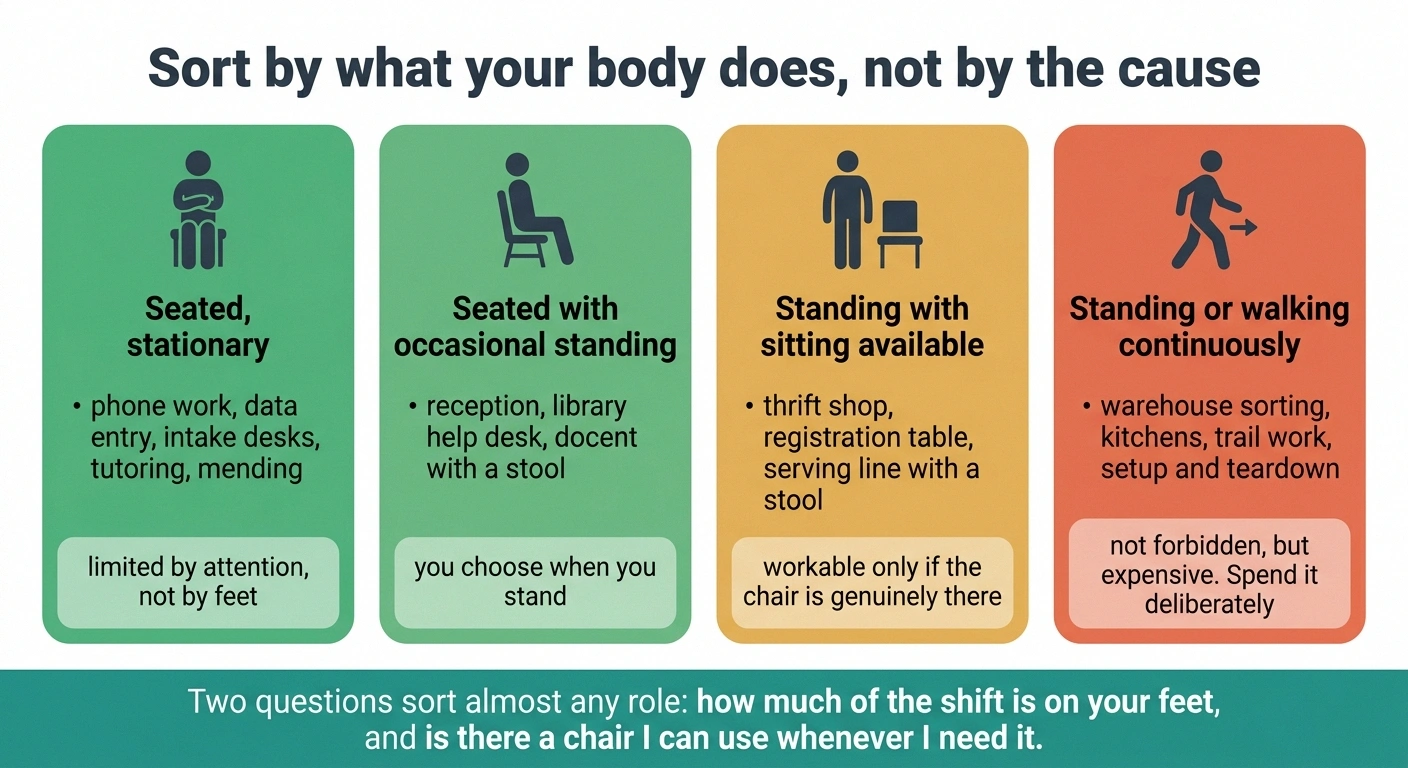
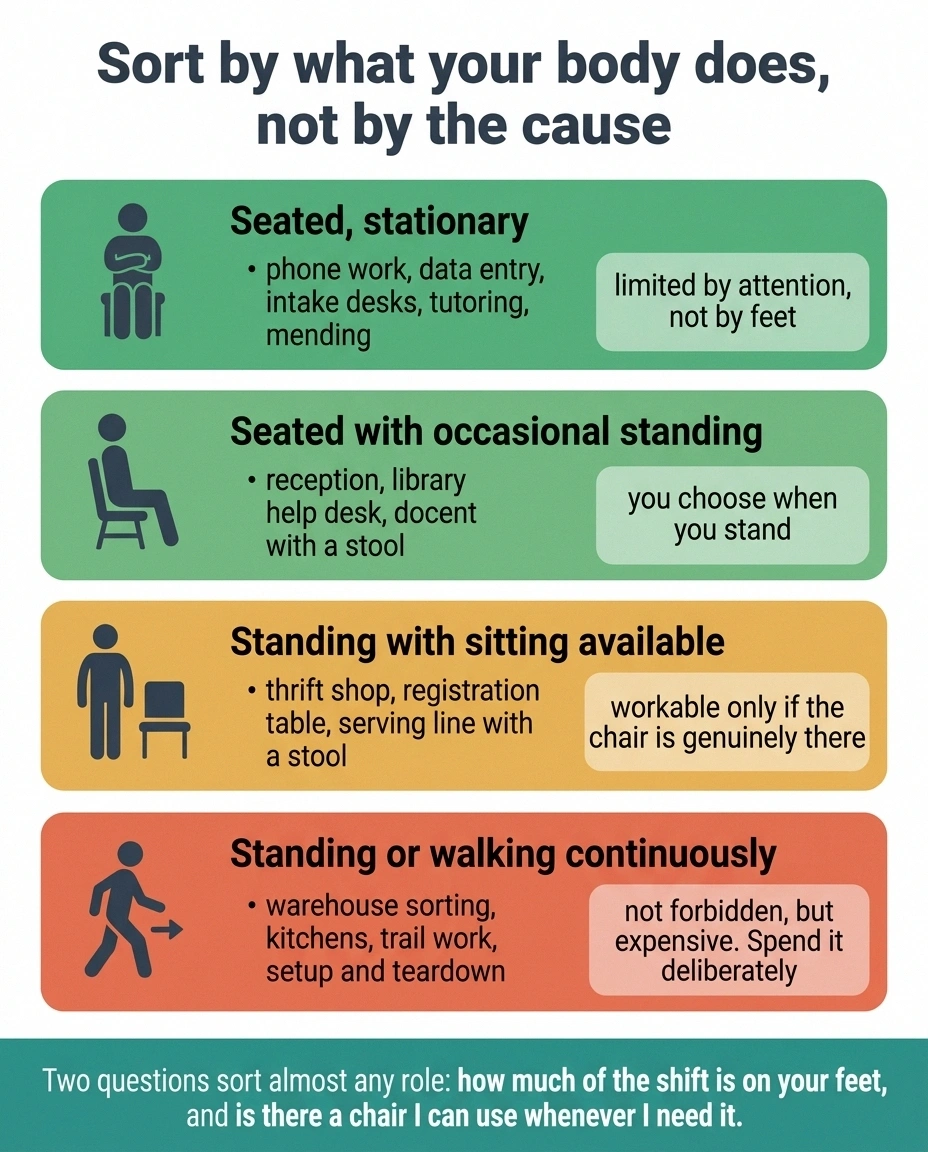
Every volunteer role falls into one of four postures, and this is the sorting that makes the whole thing manageable.
Seated, stationary. Phone work, data entry, intake desks, tutoring, mending, sorting small items at a table, making calls. You’re in a chair the entire time. Duration is limited by your attention rather than your feet — which is a much more generous ceiling.
Seated with occasional standing. Reception, library help desks, museum docent with a stool, greeter with a chair. Mostly sitting, standing briefly when needed, and crucially you choose when.
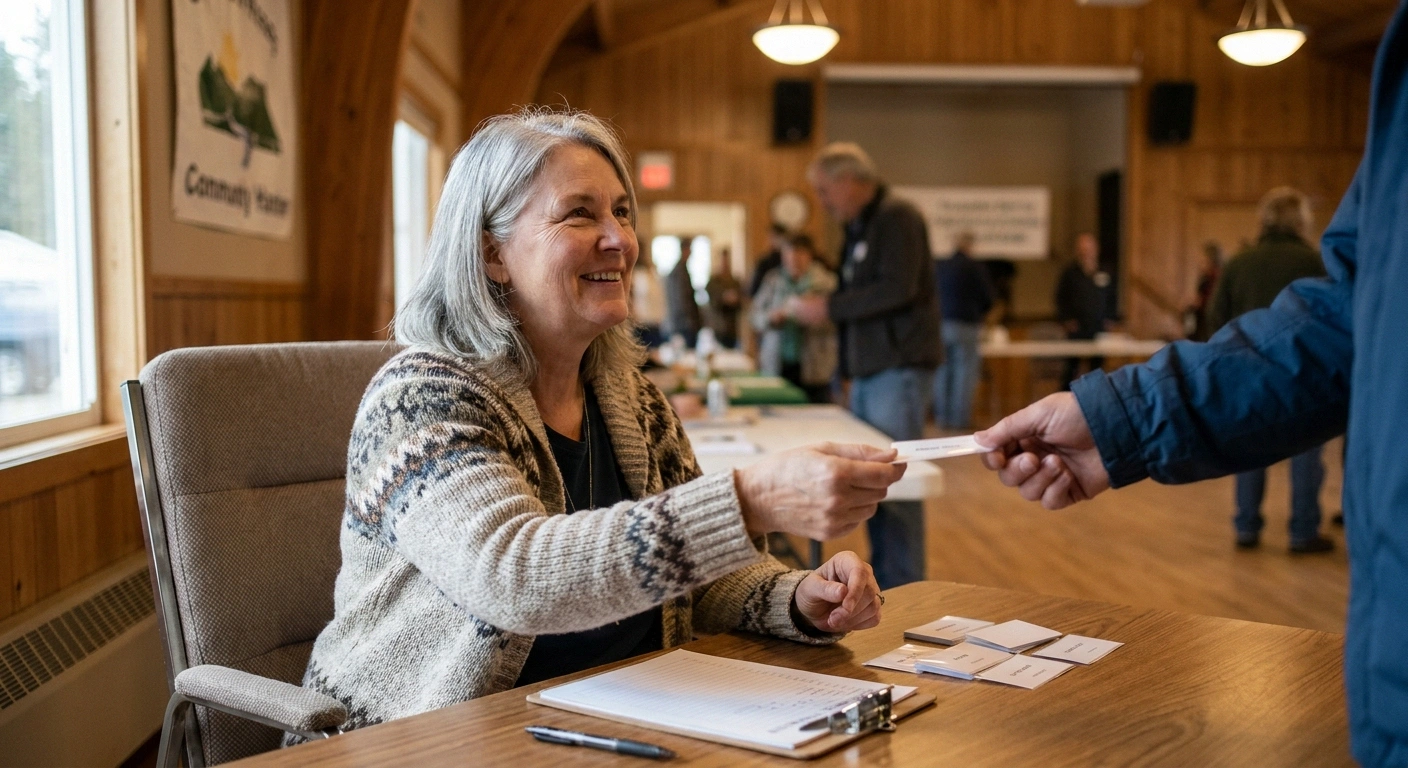
Standing with sitting available. Retail-style thrift shop work, event registration tables, serving lines where a stool is permitted. Workable — but only if the sitting is genuinely available rather than theoretically available.
Standing or walking continuously. Warehouse sorting, most kitchen work, trail maintenance, setup and teardown crews, anything on concrete. This is where I got caught.
That fourth category isn’t forbidden. It’s just expensive, and it should be spent deliberately on something you genuinely want rather than absorbed by accident because nobody mentioned the floor was concrete.
Two questions sort almost any role into a category, and you can ask both in one email: “Roughly how much of the shift is on your feet?” and “Is there a chair I can use whenever I need it?” Neither one requires explaining a thing about your health.
Roles That Tend to Work
These come up repeatedly among people I know with foot pain and numbness, and they share the same structure: seated, predictable, and easy to leave without leaving anyone stranded.
| Role | Where to ask | Typical commitment |
|---|---|---|
| Check-in and reminder calls | Area agency on aging, senior centers, clinics, animal shelters | 1 to 2 hours weekly, often from home |
| Reading with a child | Public library, elementary schools, literacy councils | 1 hour weekly on a fixed term schedule |
| Intake or reception desk | Food pantry, free clinic, shelter, museum | 2 to 3 hours, usually a fixed weekly slot |
| Peer support | Hospital patient groups, condition-specific charities, online communities | Monthly meeting, or flexible online |
| Administrative support | Almost any small nonprofit, which will not have advertised it | Flexible, frequently remote |
| A skill you already have | Offer it directly rather than waiting for a listing | Project-based, highest value per hour |
One tactic worth more than any listing site: email a small organization directly and describe the shift you can reliably do. Most are short-staffed enough that a specific, dependable offer beats a general one, and the seated roles are rarely posted because nobody thinks to advertise a desk.
Phone and check-in work. Appointment reminder calls, membership renewals, wellness check-in calls to isolated seniors. Nearly every nonprofit needs this, almost nobody wants to do it, and it’s entirely seated.
Tutoring and reading programs. Schools and libraries want adults who’ll sit with one child and read. You’re in a chair, the sessions are short, and the schedule is fixed weeks ahead.
Intake and reception. Food pantries, clinics and shelters all need someone at a desk taking names and answering the same eight questions kindly. It’s genuinely useful and it’s a seated job.
Peer support. This one deserves its own mention. Research on volunteer peer supporters in chronic pain found the benefit runs both directions: people who coached others reported it strengthened their own self-management and gave them what one described as a positive distraction. Your experience with neuropathy is the qualification. Our page on finding neuropathy support groups is a reasonable place to start, and groups nearly always need people more than they advertise.
Administrative and behind-the-scenes work. Mailings, spreadsheets, grant research, social media, thank-you notes. Unglamorous, chronically short-staffed — and done entirely sitting down.
Skilled work you already have. Bookkeeping, translation, photography, legal or HR knowledge, sewing. Small organizations pay for these or go without. Offering one is high value per hour, which means fewer hours for the same contribution — the best trade available to anyone rationing energy.
Roles That Look Manageable and Are Not
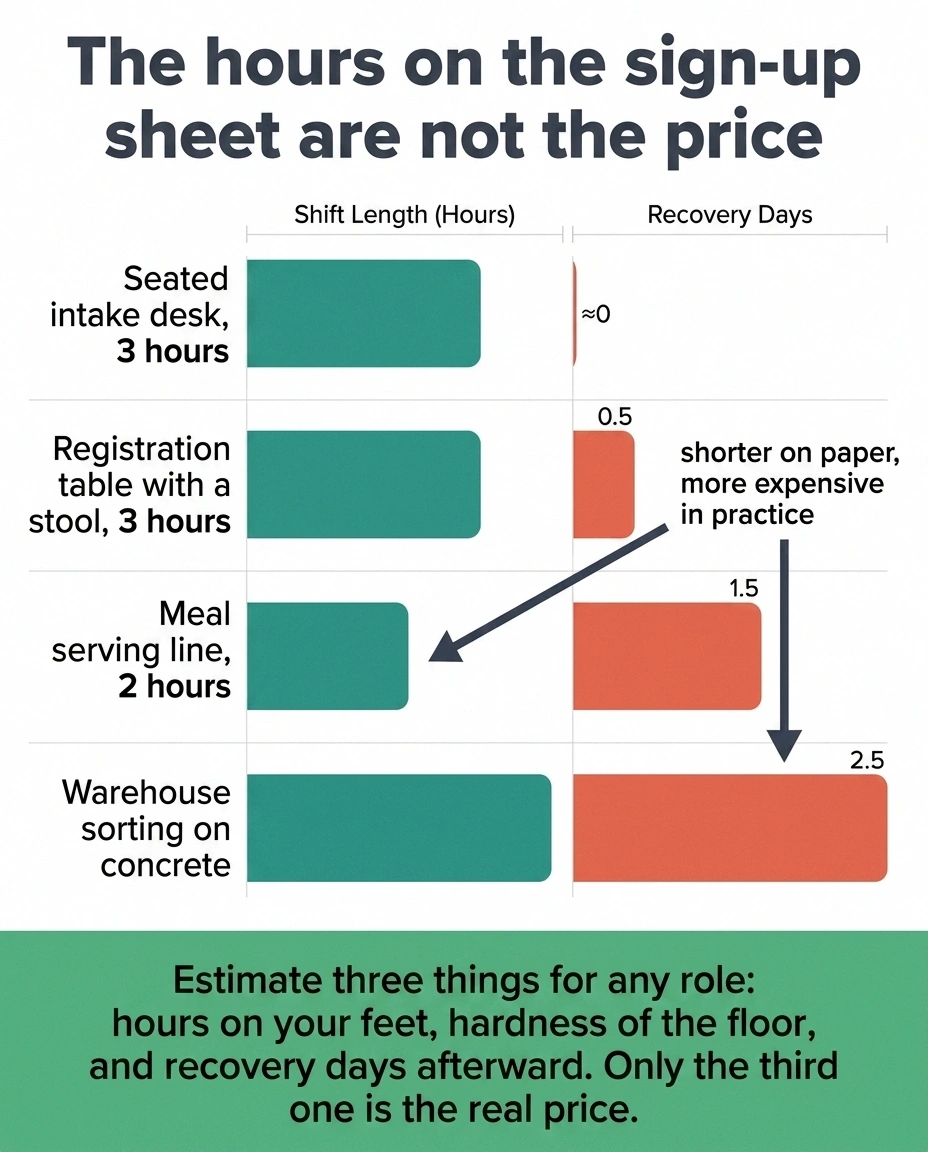
Not to talk you out of these. To make sure you choose them knowingly rather than discovering the cost at hour three.
Anything on a concrete floor. Warehouses, commercial kitchens, church halls, gymnasiums. Concrete has no give, and standing on it with sensitive feet is a different activity from standing on carpet or wood. If the role is otherwise perfect, an anti-fatigue mat solves a surprising amount, and most places will find one if you ask.
Event setup and teardown. These bracket the event and they’re the most physical parts of the day. You can often volunteer for the middle only, and coordinators are usually glad to have anyone for the shift nobody else wants.
Serving lines. A meal service sounds like two hours. It’s two hours of continuous standing, usually on a hard floor, with no natural pause. The seated alternative at the same event is often the sign-in table.
Roles with no natural exit. Driving a route, staffing a booth alone, supervising children. The issue isn’t the posture; it’s that you can’t stop when you need to. Pair up if you want one of these, so leaving early doesn’t collapse the whole thing.
Outdoor work on uneven ground. Trail work, community gardens, park cleanups. Uneven ground demands the position sense that neuropathy takes away, which makes it a fall risk rather than merely a tiring one. Our guide to balance and fall prevention covers why uneven surfaces are harder than they look. Seated garden work at a raised bed is a genuinely different proposition, and many programs have it.
Saying What You Need Without a Medical Explanation
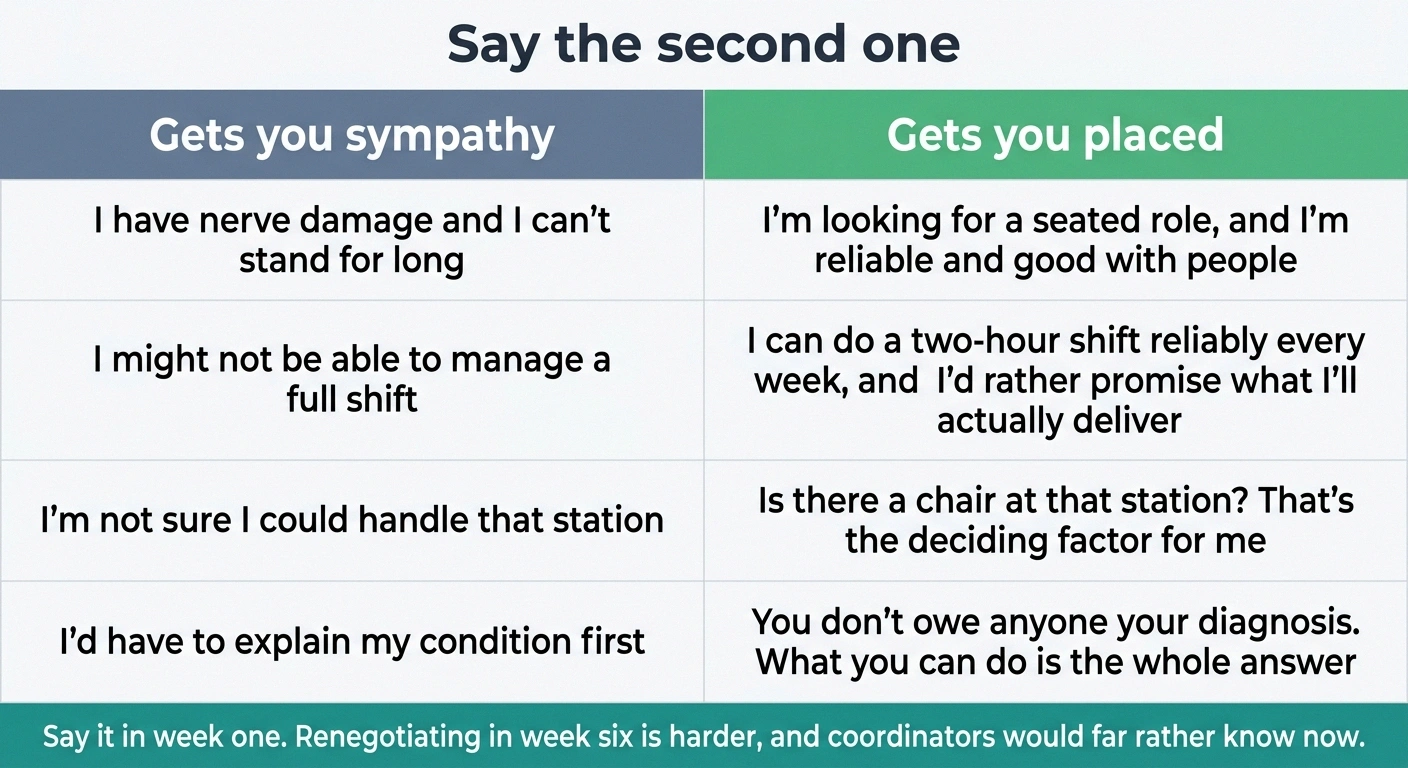
This is where people get stuck, and I understand why. Asking for accommodation feels like asking to be treated as less useful, so most of us skip it and then pay for the silence.
Two things make it easier.
The first: you don’t owe anyone your diagnosis. Coordinators need to know what you can do, not why. “I’m best in a seated role” is complete. It needs no follow-up and you’re not obliged to supply one.
The second: frame it as fit, not as limitation. There’s a real difference between “I have nerve damage and can’t stand for long” and “I’m looking for a seated role, and I’m reliable and good with people.” The second sentence gets you placed. The first gets you sympathy, and sympathy doesn’t hand out shifts.
Some wording that works:
“I’d love to help. I’m looking for something seated, or where I can sit when I need to. What do you have along those lines?”
“I can do a two-hour shift reliably every week. Longer than that gets unpredictable, and I’d rather promise something I’ll actually deliver.”
“Is there a chair at that station? That’s the deciding factor for me.”
Say it at the start. Renegotiating in week six is far harder than setting the terms in week one, and coordinators would overwhelmingly rather know now. They’re managing a roster, and a volunteer who shows up for a well-matched shift for two years is worth vastly more to them than one who burns out in a month doing something unsuitable. If you’re weighing how much to explain, the same reasoning we lay out for declining invitations without over-explaining applies almost word for word here.
Building the Shift So There Is a Next One
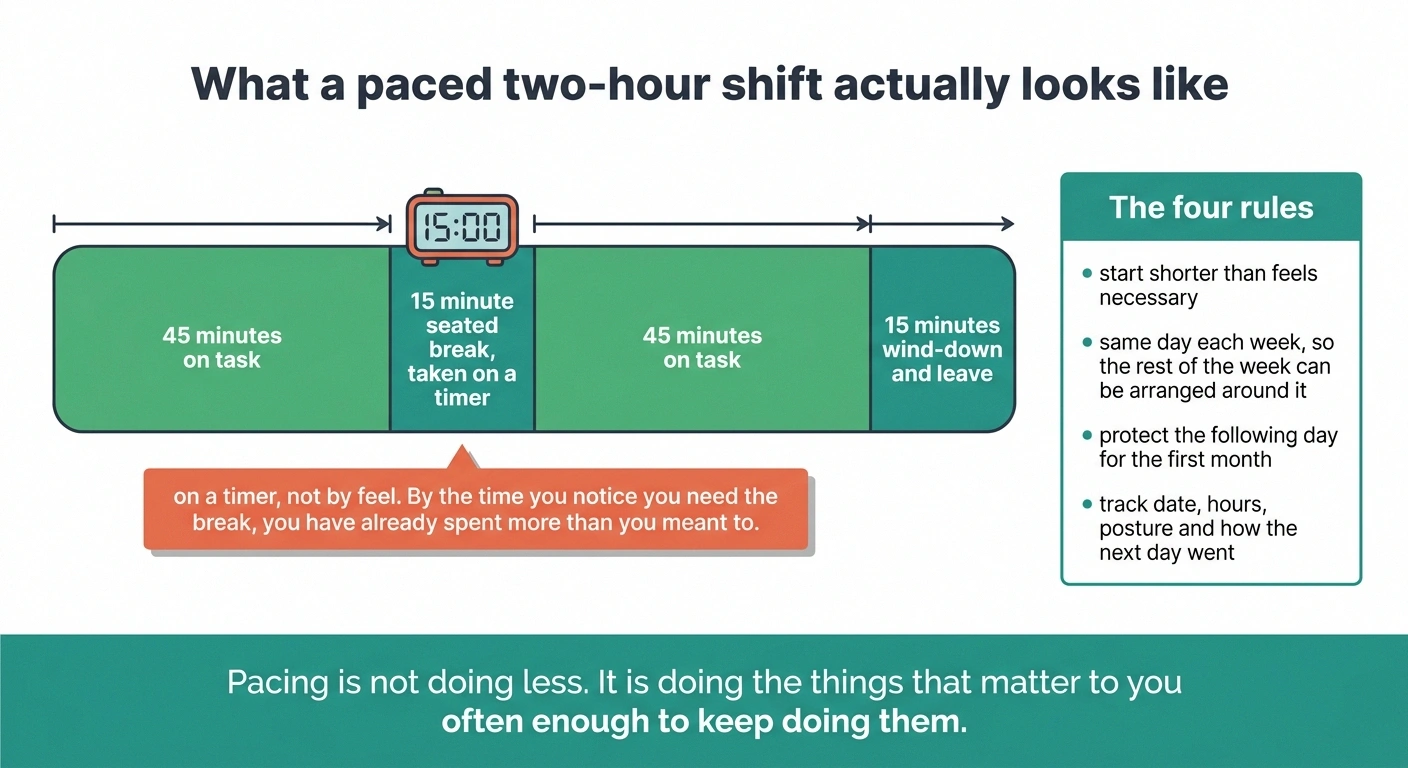
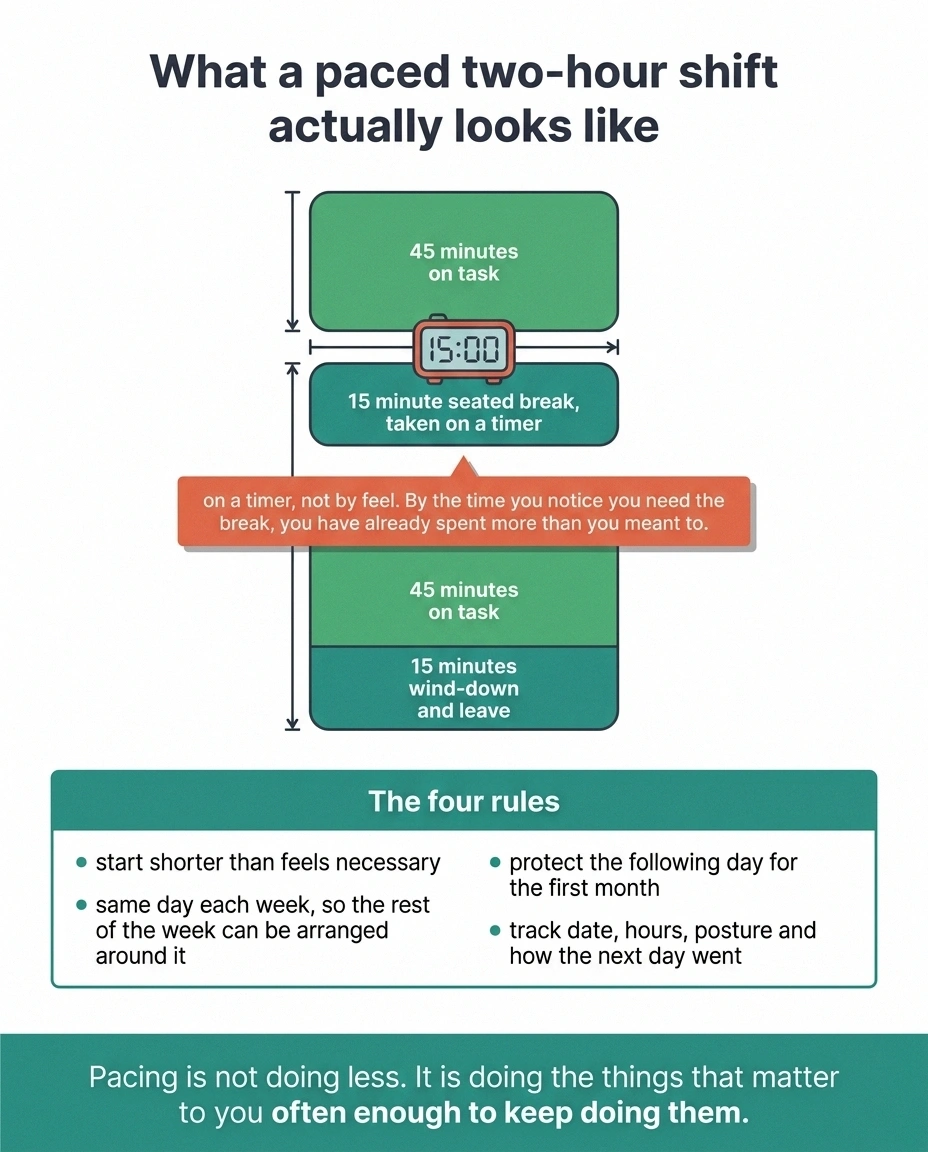
Pacing gets misunderstood as doing less. It isn’t. In the rehabilitation literature the point of pacing is to increase the activities that matter to you, sustainably, rather than to avoid symptoms by shrinking your life. The distinction is everything, and volunteering is a good place to practice it.
Start shorter than you think you should. Two hours, not four. You can add later — adding is easy, while cutting back is awkward.
Break the shift into blocks. Breaking tasks down is the single most consistently endorsed pacing technique among clinicians who work with chronic pain. In practice: two 45-minute stretches with a real sitting break between them, taken on a timer rather than when you notice you need it. By the time you notice, you’ve already spent more than you meant to.
Put it on the calendar the same day each week. Predictability lets you arrange the rest of the week around it. A Tuesday shift means Monday stays light.
Protect the day after, at least at first. If you don’t need it, you’ve gained a free day. If you do, you’ve already got it.
Track it for the first month. Date, hours, posture, and how the next day went. Four entries and you’ll know your actual capacity rather than your guess at it, and that number is what lets you say yes to things confidently. If fatigue rather than pain is your limiting factor, our guide to pacing and spoon theory goes deeper into budgeting a week.
From Home, If Leaving Is the Hard Part
Sometimes the barrier isn’t the shift. It’s the parking, the walk in, the weather, and a bad-feet week arriving without warning. Remote volunteering solves all of that, and there’s more of it than there was.
The honest tradeoff: remote work is lonelier, and if contact with people is part of what you wanted, a screen will not supply it. A workable middle is one remote commitment plus one short in-person thing a month.
Phone-based check-in programs for isolated older adults. Crisis and warmline support, which trains you properly and is done from your own chair. Transcription and description work for accessibility archives. Online tutoring. Translation. Bookkeeping for small nonprofits. Moderating a patient community, where lived experience is the credential. Writing newsletters or grant applications.
The honest tradeoff is that remote work is lonelier, and if part of what you want from volunteering is people, a screen won’t deliver it. Loneliness is its own health problem and it deserves treating as one, not as a personal failing — our piece on isolation and chronic pain takes that seriously. A workable middle path is one remote commitment plus one short in-person thing a month, which keeps the contact without the exposure.
What to Bring, and the Half Hour After
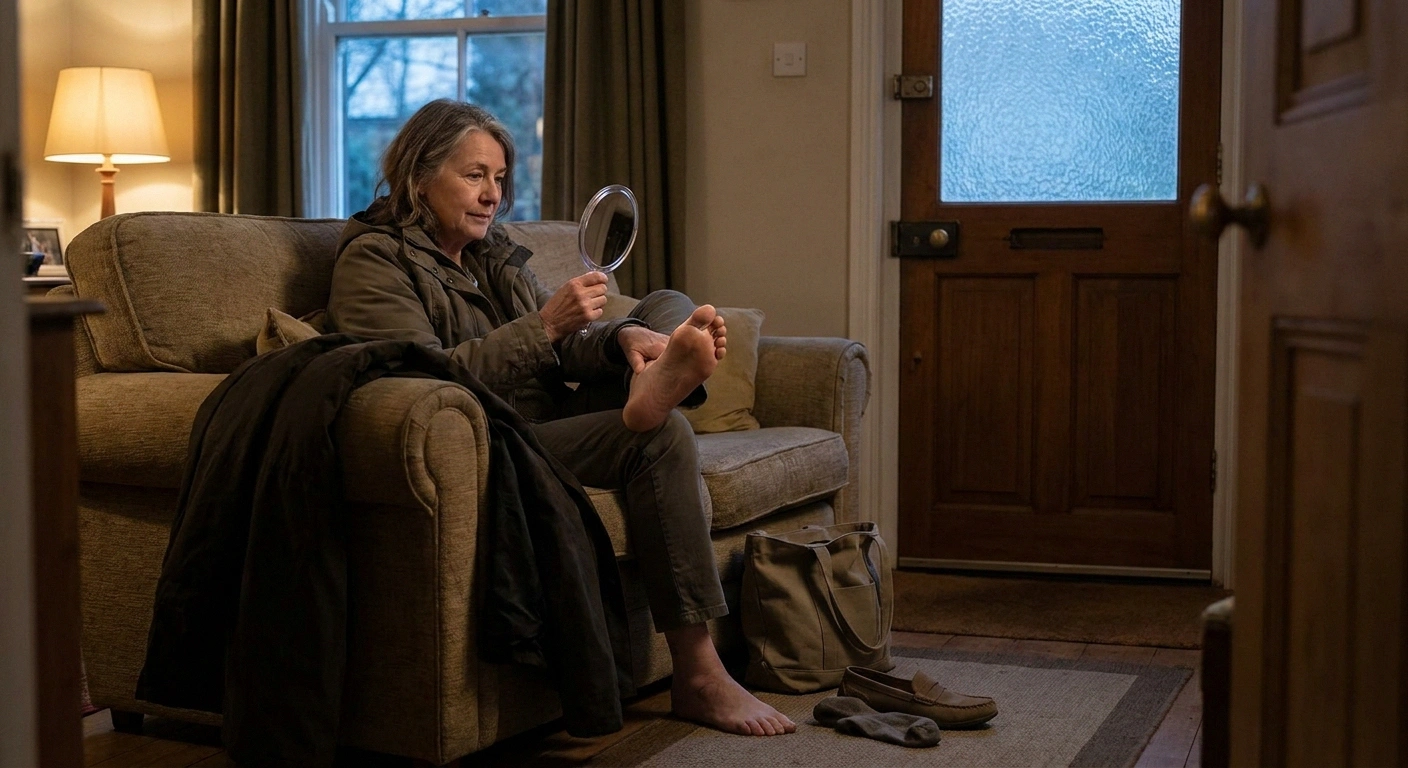
Small logistics, and they decide more than they should.
In the bag: the shoes you would wear for a long day rather than the ones that suit the setting, a spare pair of socks, water, any medication you might need at the four-hour mark, and a small mirror if your bathroom at home does not have a low one.
Ask on arrival, not later: where the nearest chair is, where the bathroom is, and who to tell if you need to step away. Asking at the start is logistics. Asking at hour two feels like an admission, which is why people stay put instead.
Park close, even if it costs a few dollars. The walk from the far lot is part of the shift whether or not anyone counts it as one.
Within half an hour of getting home: shoes and socks off, and look at both feet properly. Tops, soles, heels, between every toe. An unfamiliar floor plus shoes worn longer than usual is precisely when a blister forms without announcing itself, and finding it the same evening is the difference between an inconvenience and a wound.
Wear the shoes you’d wear for a long day, not the ones that look right for the setting. This is the same reasoning behind choosing footwear for neuropathy generally, and a volunteer shift is exactly the situation where people override it and regret it. Bring a second pair of socks. Bring water, because dehydration makes cramping worse and nobody drinks enough during a shift.
Ask where the bathroom and the nearest chair are before you start, not when you need them.
Park close, even if it costs a few dollars. The walk from the far lot is part of the shift whether or not anyone counts it.
And then the part people skip: when you get home, shoes and socks off, and actually look at your feet. Tops, soles, heels, between the toes. A shift on an unfamiliar floor in shoes worn longer than usual is precisely when a blister forms without announcing itself, and a two-minute foot check is what catches it while it’s still nothing.
One last thing, because I think it’s the actual point. I went back to volunteering. Not to the rummage sale — I run the check-in table at our support group now, which is two hours, seated, once a month, and I’m useful for every minute of it. The version of me who decided she couldn’t volunteer anymore wasn’t being realistic. She just had one bad data point and drew a line through it.
Frequently Asked Questions
Can I still volunteer if I can’t stand for long?
Yes. A large share of volunteer work is seated, including phone outreach, tutoring, intake and reception, administrative support, and peer support. Roles are usually advertised by cause rather than by posture, so seated options exist at most organizations but are rarely described that way. Asking directly what proportion of a shift is spent on your feet is the fastest way to find them.
What volunteer jobs can you do sitting down?
Common fully seated roles include making reminder or check-in calls, tutoring and reading with children, staffing an intake or reception desk, data entry and administrative work, mending and small-item sorting at a table, online moderation, translation, and bookkeeping for small nonprofits. Skilled work you already have tends to be the highest value per hour, which means a meaningful contribution in fewer hours.
How do I tell a volunteer coordinator about my limits?
State what you can do rather than what you cannot, and frame it as fit rather than limitation. Something like “I’m looking for a seated role, and I’m reliable and good with people” is complete and requires no medical detail. You are not obliged to disclose a diagnosis. Raising it when you first sign up is considerably easier than renegotiating a role weeks later.
How long a shift should I commit to at first?
Shorter than feels necessary, typically around two hours, broken into two blocks with a genuine seated break between them taken on a timer rather than by feel. Protect the following day for the first month while you learn your actual capacity. Increasing a commitment later is straightforward; reducing one after you have promised it is awkward for everyone.
Which volunteer roles are hardest on painful feet?
Anything involving prolonged standing on concrete, including warehouse sorting, commercial kitchens and church halls; event setup and teardown; meal serving lines with no natural pause; and outdoor work on uneven ground, which adds a fall risk because it demands position sense that neuropathy reduces. None are automatically off limits, but each carries a real recovery cost that should be chosen deliberately.
Can volunteering actually help my symptoms?
It will not repair nerve damage. Research on volunteer peer supporters in chronic pain does report benefits to the volunteers themselves, including reinforcement of their own self-management, a sense of purpose, and distraction from pain. Re-engaging with valued roles is also a recognized goal in chronic pain rehabilitation rather than an optional extra, and social contact addresses isolation, which carries its own health consequences.
What if I have to cancel at the last minute?
Choose roles that tolerate it. Paired shifts, tasks with flexible deadlines and remote work all absorb a cancellation without leaving anyone stranded, while solo booths, driving routes and childcare supervision do not. Telling a coordinator at the outset that you occasionally have unpredictable days lets them place you where that is manageable, which is far better than discovering the problem when it happens.
About the Author