The rug in my hallway was a gift from my sister. Wool, deep red, about four feet long, and it sat outside the bathroom door for eleven years.
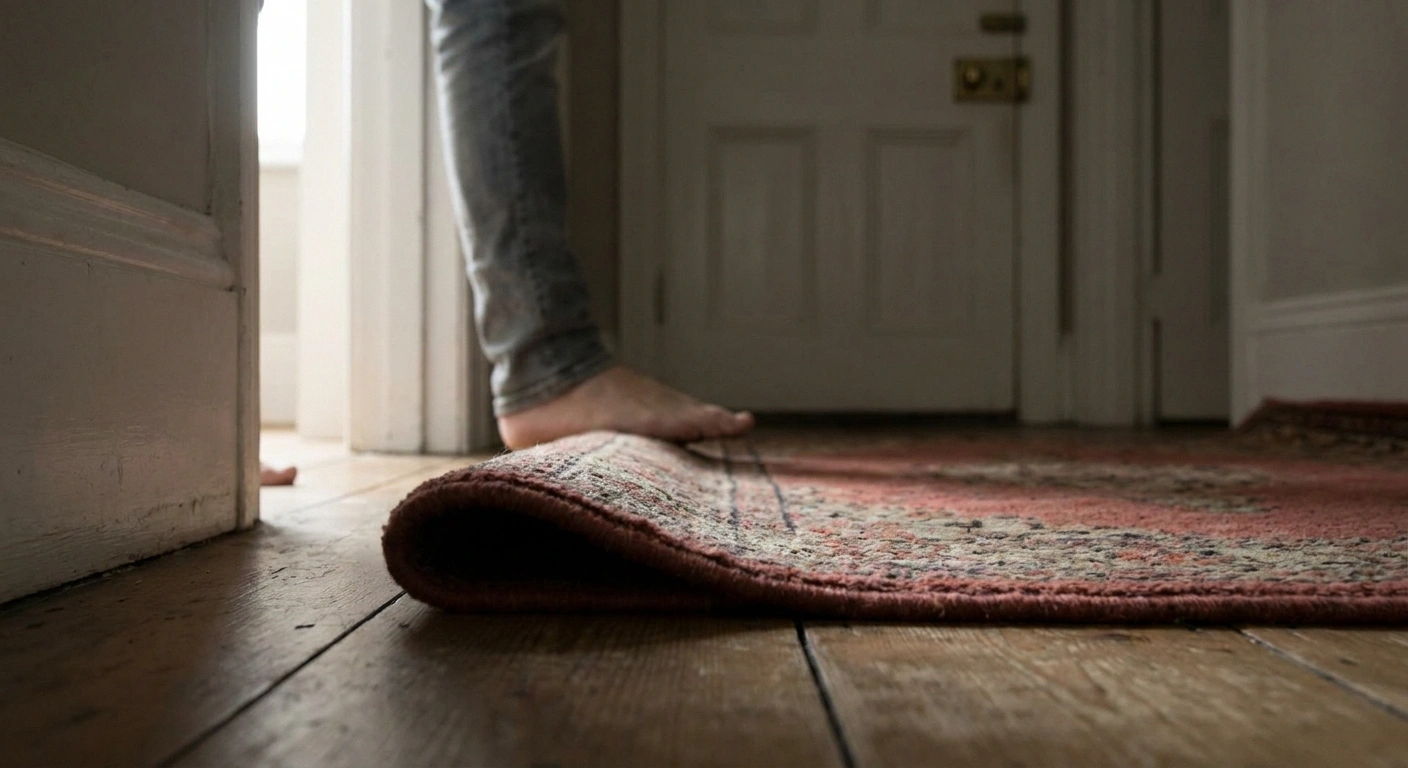
I got rid of it on a Tuesday afternoon after catching my toe on the edge for the third time in a month. Not falling — just that lurch where your body works out something has gone wrong a half second before you do.
What bothered me wasn’t the catching. It was realising I hadn’t felt the edge at all. Not once. My foot found it, and the first I knew about it was already being off balance — which is a very strange thing to say out loud about your own leg.
That’s the thing about rugs when you have neuropathy, and it’s why the standard advice doesn’t quite fit us.
Why Rugs Are Different When You Can’t Feel the Floor
Everyone trips on rugs. It’s the single most common hazard in older adults’ homes — one study found loose throw rugs in nearly 78% of homes surveyed, and curled carpet edges in more than a third.
A normal trip has three stages. Your sole registers the edge. Your ankle and hip correct automatically. You carry on, often without consciously noticing any of it happened. The whole sequence takes under a second and you were never involved in it.
Sensory loss removes the first stage and proprioception loss weakens the second. What is left is the third, which by itself is not a recovery. It is a fall in progress.
This is why “just be careful around it” is not workable advice for us. Care operates at conscious speed, and this sequence finishes long before conscious speed arrives.
The injury data isn’t gentle either. Case-control studies have linked floor mats in hallways and bathmats to increased hip fracture risk, and loose rugs turn up repeatedly among the household objects involved in falls that broke a hip.
For us, though, three things stack on top of that.
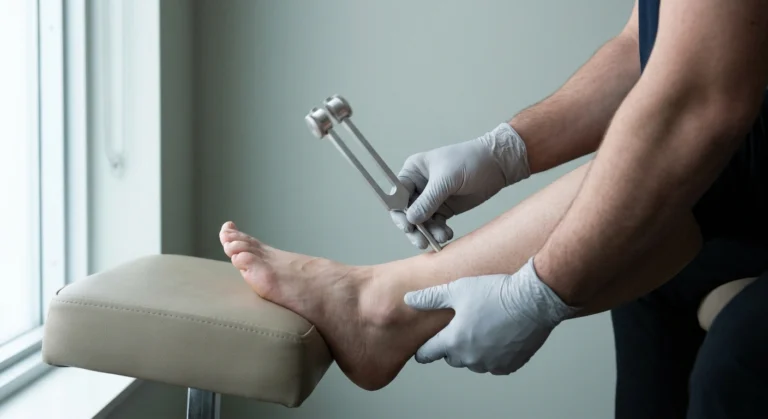
Your foot doesn’t report the edge. Someone with normal sensation feels the change in texture and height through their sole, usually without noticing they’ve felt it. That warning is a fraction of a second, and it’s enough to lift the foot. With sensory loss, the information simply isn’t sent.
The save doesn’t fire in time. When your toe catches, the recovery is an automatic ankle and hip correction, and it depends on your body knowing precisely where your foot is in space. Proprioception loss makes that correction slower and weaker. So a catch that a neighbour would absorb without breaking stride becomes a genuine fall.
Your gait has already changed. Most of us shuffle a bit, whether or not we’ve noticed. Less lift, less toe clearance. That drops the height needed to catch you from a couple of inches to almost nothing.
Put together, a rug edge is doing something quite specific to us: it’s a hazard with no warning and no recovery. That’s a different category from a hazard you can see coming.
The One Rule to Walk Your House With
Most advice says remove all your rugs. Almost nobody does it — so the advice ends up achieving nothing.
| If the rug is… | Verdict | Because |
|---|---|---|
| Under three feet, anywhere you walk | Remove | Too light to stay put, nothing holding it down |
| In a doorway or on a turn | Remove | Turning shifts your weight sideways, the worst moment to catch a foot |
| Laid on top of carpet | Remove | Never lies flat, and nothing grips carpet reliably |
| Already slid or rucked once | Remove | It has shown you what it does. Believe it |
| Large, with furniture legs standing on it | Keep | Held by weight, which never needs maintaining |
| Low pile, full rubber backing, flat corners | Keep, check monthly | Grips across its whole surface rather than at points |
Six decisions, one pass through the house. Anything you genuinely cannot decide about goes in the remove pile, because uncertainty about a rug is itself information.
Here’s the rule I actually use, and it takes about twenty minutes to apply to a whole house:
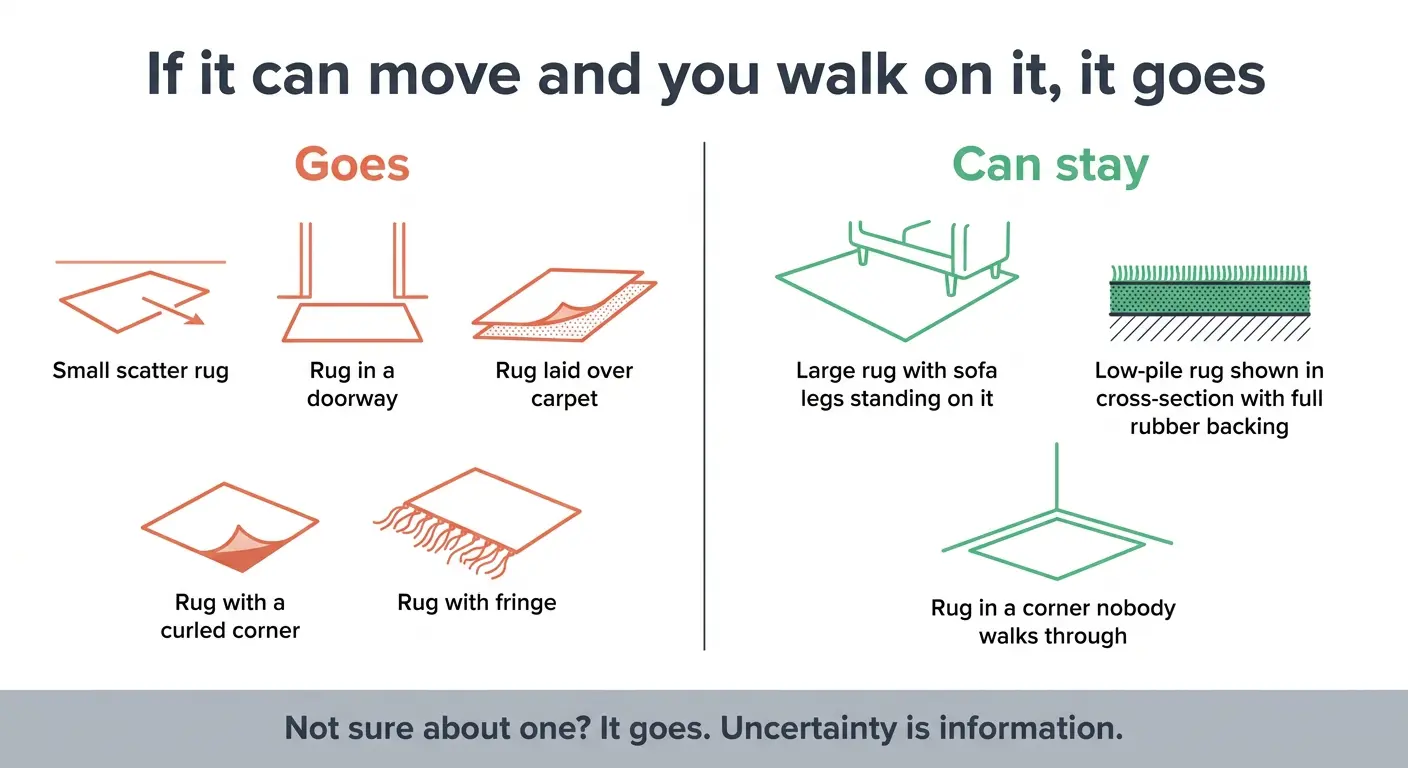
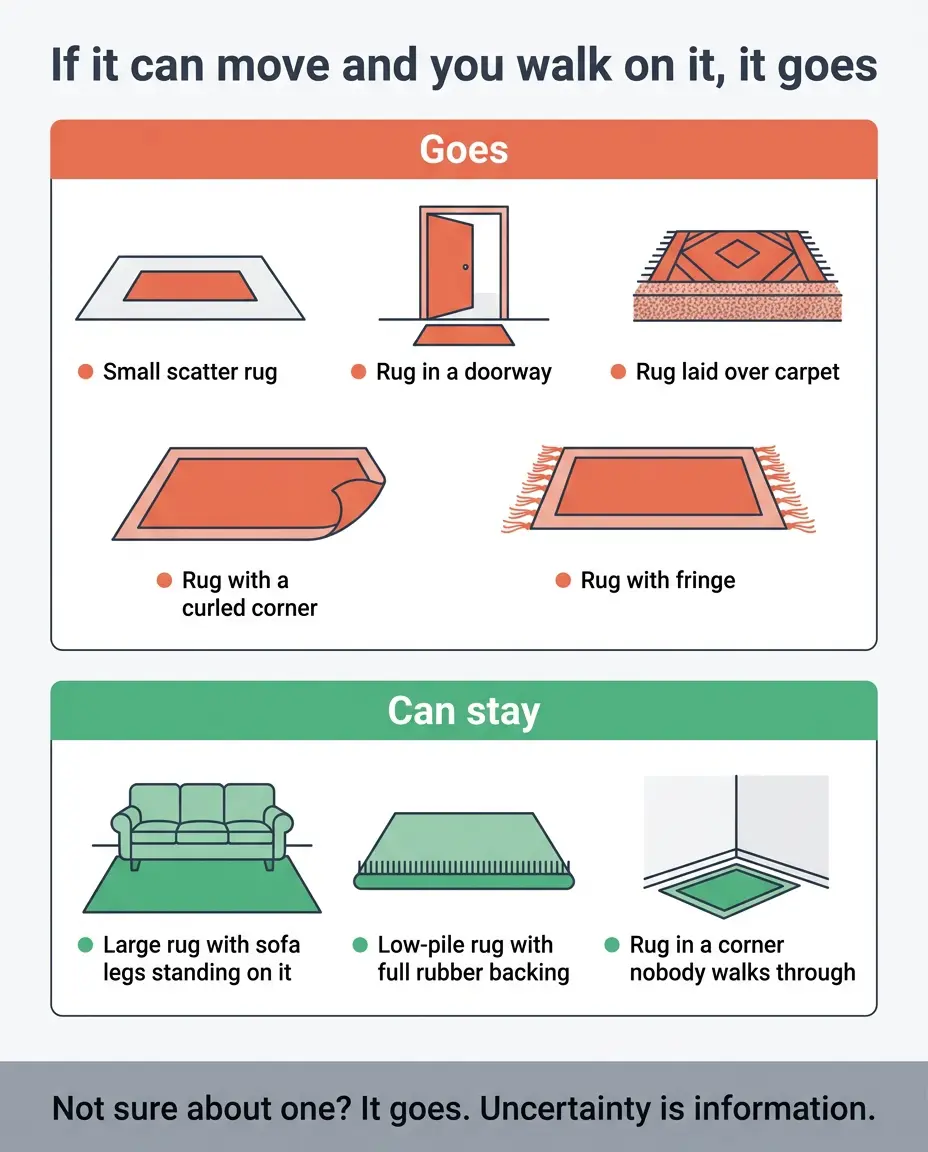
If it can move, and you walk on it, it goes.
Not “secure it” — goes. Because securing a small rug is a maintenance job that depends on you noticing when the tape has lifted, and noticing is exactly the thing sensory loss takes away from you.
Rugs that pass the rule and can stay: large ones with furniture legs standing on them, which are held in place by weight rather than adhesive. Low-pile with a proper rubber backing that grips the whole surface, not just the corners. Anything you don’t actually walk across on the way to somewhere.
Rugs that fail, no matter how much you like them: anything under about three feet. Anything in a doorway or on a turn. Anything that has already slid or rucked once, ever. Anything on top of carpet, which never sits flat. Anything with a fringe or a curling corner.
The blunt test, if you’re unsure: push it hard with your foot. If it moves, it will move under you.
Room by Room, in the Order That Matters
Not every room carries equal risk, so start where the falls happen.
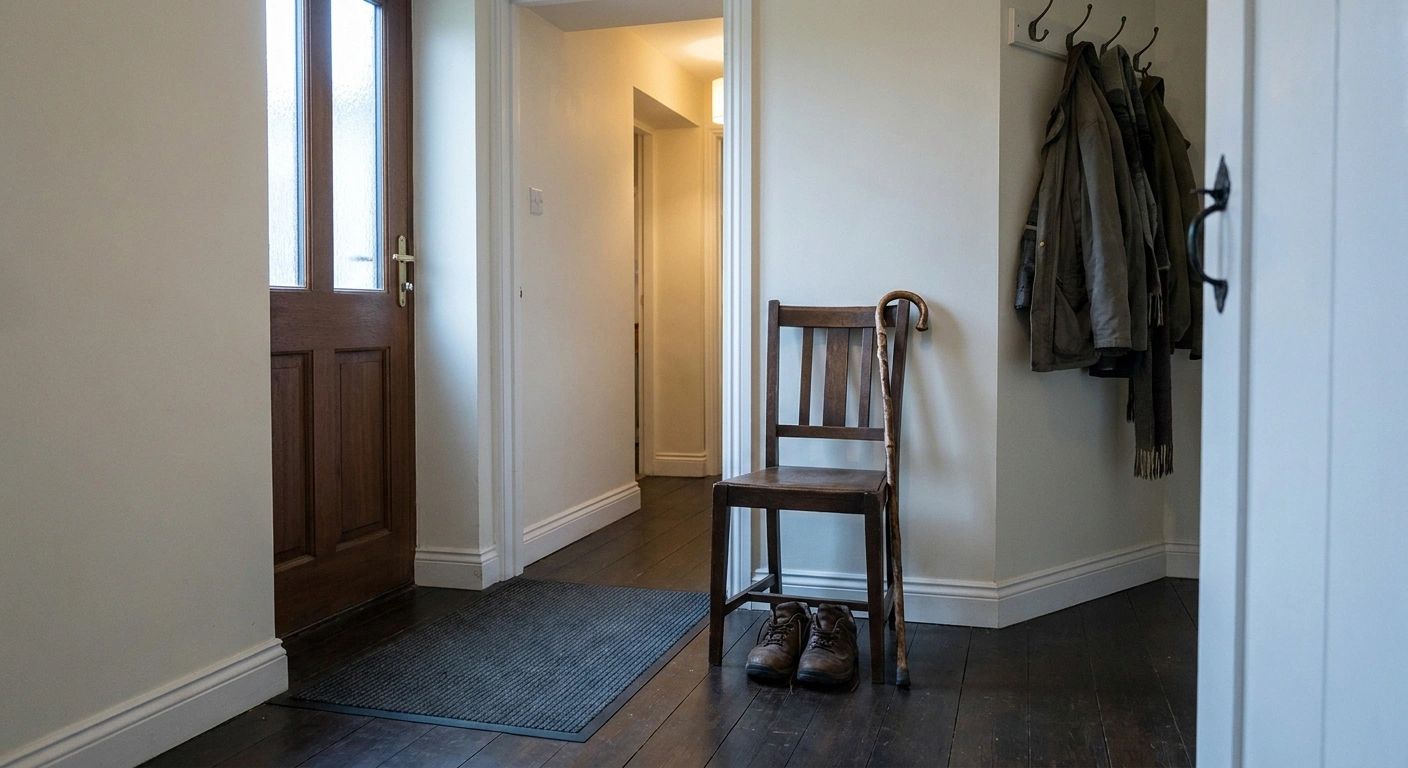
The entryway. Worst spot in the house, and the one people defend hardest. Wet shoes, a rug that’s damp underneath, and you arriving with your arms full. If you need something at the door, use a low-profile mat with a full rubber underside that sits flush, and put a chair beside it so you can sit to take shoes off rather than balancing on one leg.
The bathroom. Two separate problems that get muddled. Inside the tub or shower, you want traction: adhesive strips or a suction mat that genuinely holds. Outside it, you want something that will not slide when you step out with wet feet. A small loose bathmat is the worst possible answer to a problem that deserves a good one. There’s more on the whole room in the guide to bathroom safety with neuropathy, along with grab bar placement, which matters more than the mat does.
Hallways. Runners are tempting and are the classic bunching rug, because you walk their length rather than across them and every step nudges them along. If you want one, it has to be secured across its entire underside, not just at the ends.
The kitchen. Anti-fatigue mats are genuinely useful if you stand to cook, and genuinely hazardous if they have a lip. Look for one with a bevelled edge that tapers to nearly nothing, and check that the corners still lie flat every few weeks, because they curl with age.
Beside the bed. This one deserves particular care because you step onto it half asleep, in the dark, often on your way to the bathroom. Sensation is at its worst first thing. If you keep a bedside rug at all it needs to be large enough that the bed legs stand on it. The nighttime bathroom trip is where a surprising share of falls happen, and a rug in that path is doing you no favours at all.
If You’re Keeping It, Secure It Properly
Some rugs are staying. A gift, a colour that makes the room, a floor that’s cold and hard. Fine. Then do it properly, because the wrong product creates false confidence, which is worse than no product.
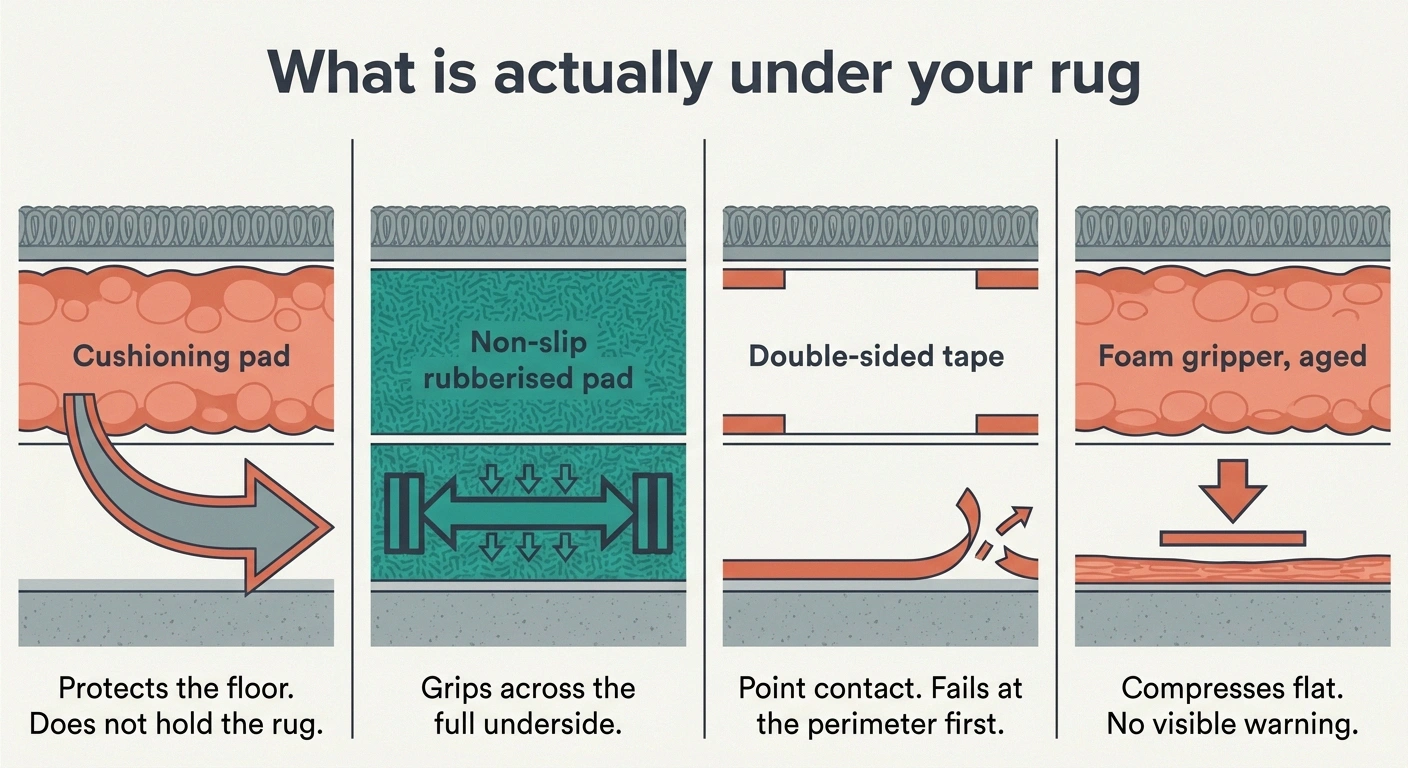
- Cushioning rug pad
- Protects the floor and adds softness. Does not anchor anything. The most commonly bought and the most commonly misunderstood.
- Non-slip rubberised pad
- The one you want. Grips across the entire underside. Cut it about an inch smaller than the rug on every side so no pad shows at the edge.
- Double-sided carpet tape
- Strong on the right surface, unreliable on laminate and vinyl, and capable of lifting a hardwood finish on removal. Run it along the whole perimeter, never just the corners, and inspect monthly.
- Foam gripper sheet
- Works for a while, then compresses flat and stops gripping with no visible sign that anything changed. Replace on a schedule rather than on appearance, or choose rubber instead.
Every one of these fails quietly rather than obviously. Put a monthly reminder on the calendar to push each kept rug hard with your foot; that ten-second check is the whole maintenance routine.
A rug pad is not a gripper. This trips people up constantly. Most rug pads are cushioning, meant to protect the floor and stop the rug sliding on itself. That is not the same as anchoring it to the floor. Look specifically for a non-slip pad with a rubberised underside, sized about an inch smaller than the rug all round.
Double-sided tape is a mixed bag. It can hold well on the right surface. It can also leave residue on hardwood, lift the finish when removed, and fail silently on laminate or vinyl. If you use it, run it along the full perimeter rather than dabbing it at the corners, and check it monthly. If it isn’t holding, that isn’t a warning — it’s already a hazard.
Foam pads compress. The cheap white foam ones flatten and stop gripping within a year or two, usually without any visible change. Rubber lasts considerably longer.
Corners are where it starts. A rug almost always begins curling at a corner, and a corner curls upward, which is precisely the height a shuffling foot catches. Once a corner won’t lie flat on its own, the rug is finished — no amount of tape fixes a rug that has learned a shape.
The Thing Nobody Mentions: Your Cane and Walker
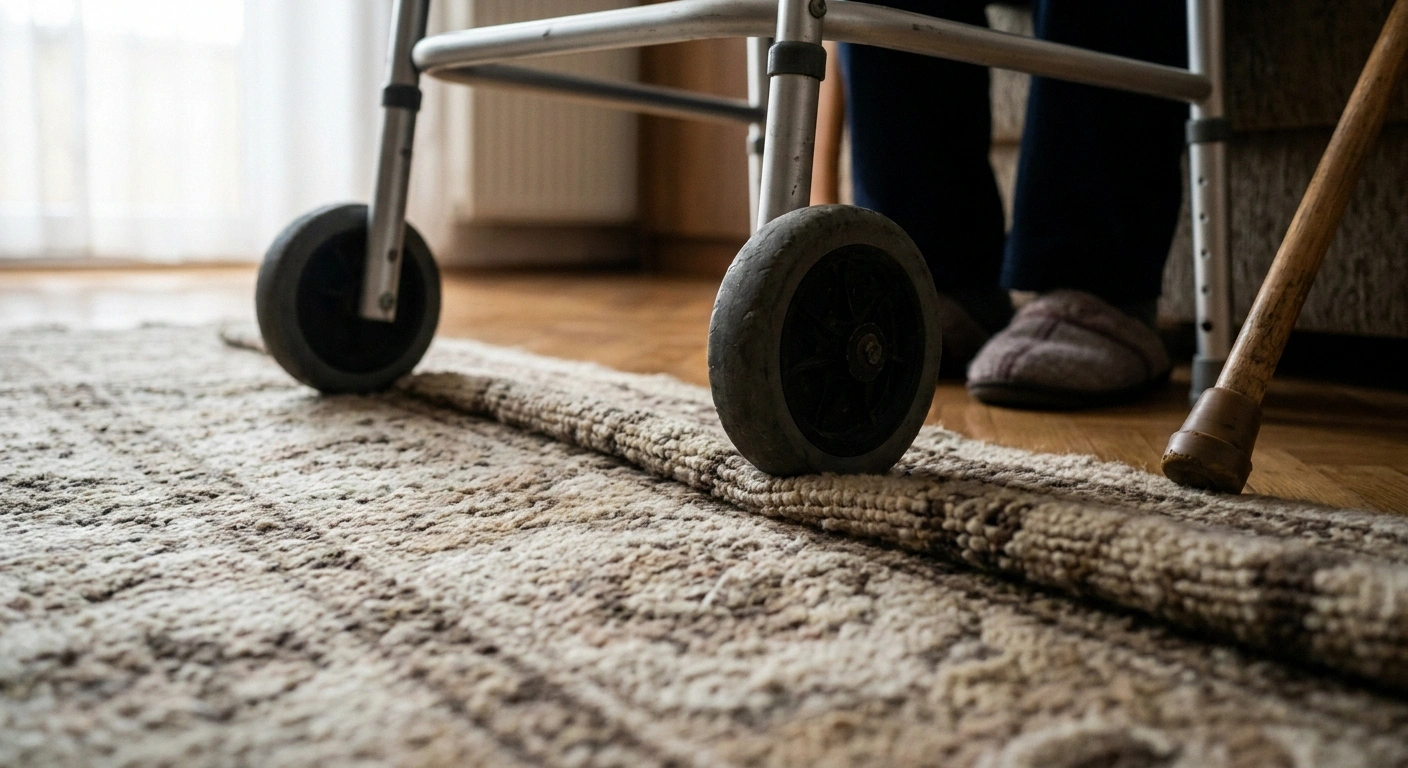
This one I learned from a woman in my support group, and I’ve never seen it written anywhere.
Rugs interact badly with mobility aids in ways that have nothing to do with tripping.
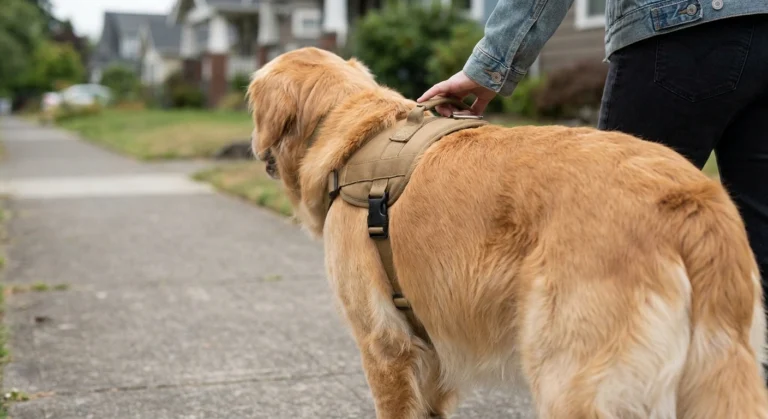
A cane tip lands on a rug edge and slips sideways instead of gripping. A rollator’s front wheels hit a thick pile and stall while the rest of you keeps going forward, which is a genuinely nasty way to fall. Walker feet snag on fringe. And a rug that shifts under a walking aid takes away the one stable thing you were relying on.
If you use anything to walk with, the rug question is no longer about your feet. Push your cane or walker across every rug you own before deciding to keep it, and pay attention to what the wheels or tips do at the edge. The guide to walking aids and canes covers tip choice, which makes a real difference on transitions.
What to Put Down Instead
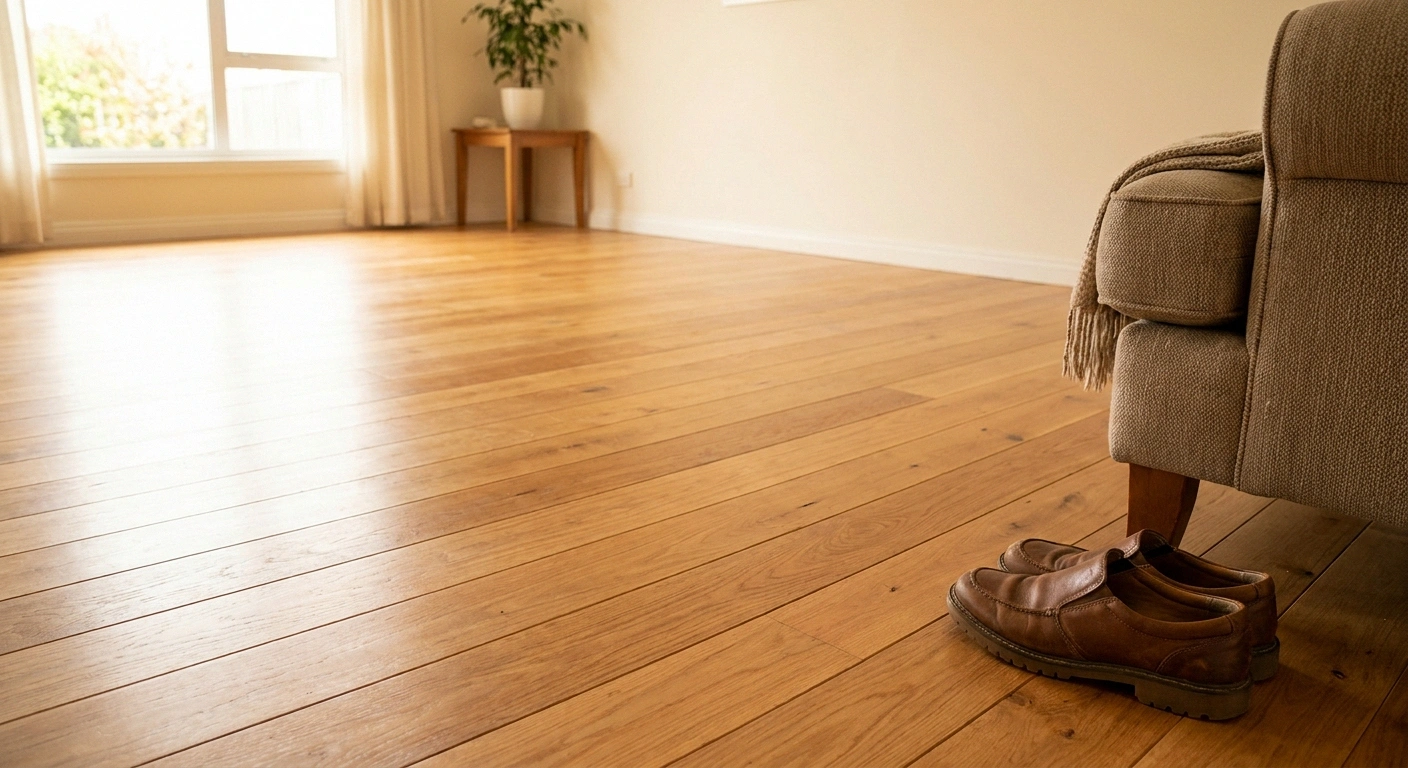
The honest first answer is nothing at all. A bare floor is safer than any rug you can buy — and once you’ve lived with it for a fortnight you stop noticing the absence.
If bare floor won’t do, three options that don’t add a trip edge:
Wall-to-wall low pile, properly fitted and stretched. It’s fixed, there’s no edge, and it’s warmer and quieter. It’s also expensive and a real commitment.
A proper transition strip where two floor types meet. If you removed a rug that was covering an awkward join, this is the fix — a tapered metal or wood strip screwed down flush.
Better footwear indoors. If the rug was there because the floor is cold, the rug is not the right solution. Supportive indoor shoes with a firm sole give you warmth, protection and traction all at once, and they don’t move. Going without is its own risk, which I’ve written about in going barefoot at home, and the wrong slippers are close behind.
While You’re Down There
You’ll be on the floor doing this anyway, so deal with the two things that behave exactly like rugs.
Cords. Lamp cords, phone chargers, extension leads crossing a walkway. Same hazard, thinner, harder to see. Run them along the wall behind furniture, or use adhesive cord channels.
Pet beds and food bowls. Low, soft, movable, and they migrate. A dog bed that started against the wall ends up eighteen inches into the walkway by Thursday, and your dog moved it while you weren’t looking. Give it a fixed spot outside any path you actually walk.
The broader room-by-room pass, if you want to do the whole house properly rather than just the floors, is in the guide to home safety modifications for neuropathy. Lighting is the other half of this particular problem, and worth pairing with it: what you cannot feel, you had better be able to see. That’s covered in the piece on night lights and home lighting.
Do the Hallway This Week
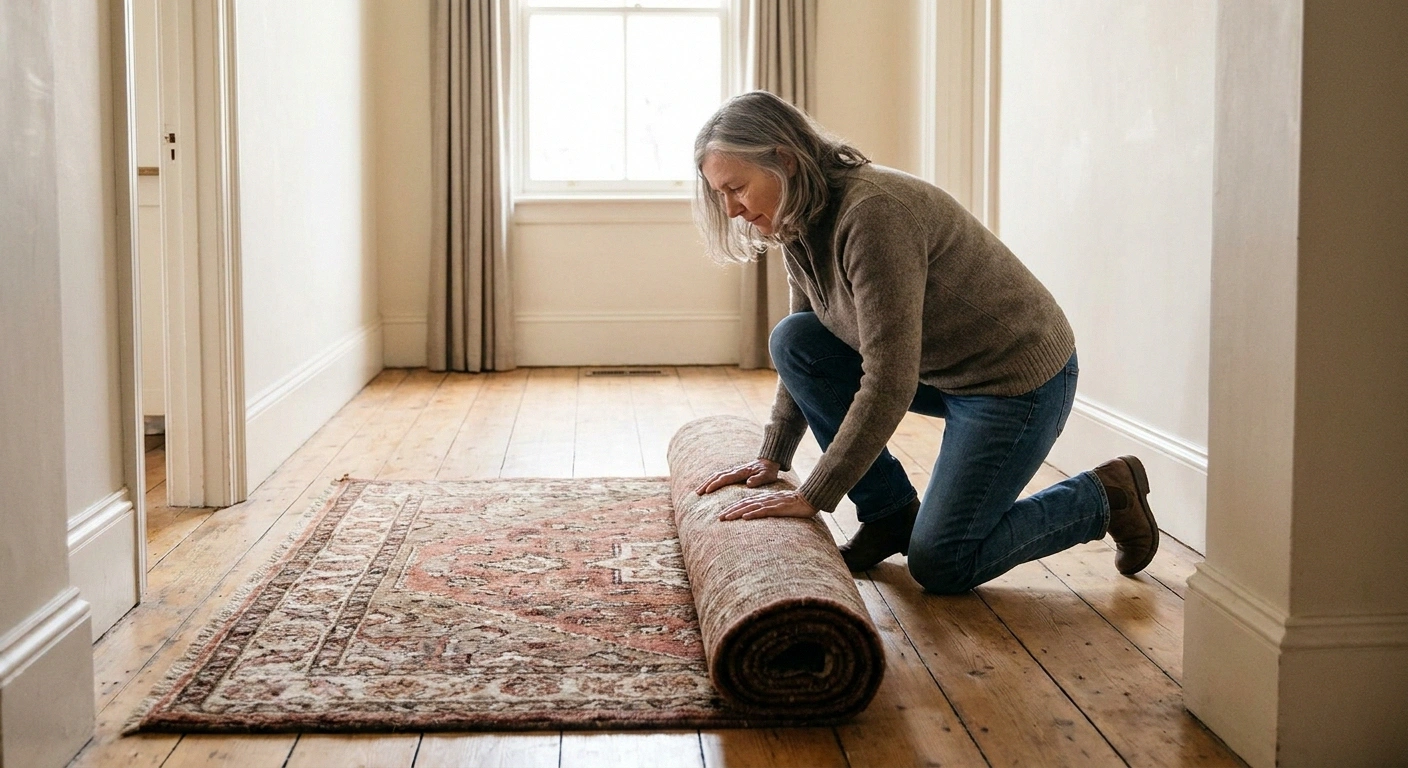
You don’t need to do the whole house today. Pick the single rug you walk across most often — usually the hallway one, or the one by the bed — and deal with that one.
Roll up the single rug you cross most often and put it in a cupboard. Do not throw it out, do not replace it yet, and do not touch any of the others.
Two weeks is long enough to stop noticing an absence and long enough to find out whether the floor underneath is actually cold, loud, or slippery in socks. Those are solvable with footwear rather than with textiles.
Most people who try this never take the rug back out. The few who do at least know exactly what they are buying a replacement for, which is a much better position than guessing.
Roll it up. Live without it for two weeks. If you genuinely miss it after that, buy a properly backed replacement in a size the furniture can hold down.
I gave my sister’s red rug to my niece, who has a flat with no sensation problems and a large hallway. It looks better there than it did in mine. And my hallway, which I was quietly worried about for a year before I did anything, is simply not a thing I think about any more.
Frequently Asked Questions
Are throw rugs really dangerous?
Yes, and the evidence is consistent. Loose rugs and carpets are among the most common environmental hazards in older adults’ homes, found in nearly 78% of homes in one survey, and case-control studies have linked hallway mats and bathmats to increased hip fracture risk. The National Institute on Aging recommends avoiding throw rugs and small area rugs, and making sure any carpeting is firmly secured.
How do I stop an area rug from moving?
Use a non-slip pad with a rubberised underside, cut about an inch smaller than the rug on all sides, rather than a plain cushioning rug pad, which is designed to protect the floor rather than anchor the rug. Double-sided carpet tape works on some surfaces but can leave residue and fails silently on laminate and vinyl. Whatever you use, check it monthly, and place furniture legs on large rugs so weight does the work.
What size rug is safe with neuropathy?
Larger is safer. A rug big enough for furniture legs to stand on is held down by weight and rarely shifts. Anything under about three feet is a scatter rug and should go, particularly in doorways, on turns, and anywhere you walk regularly.
Should I remove every rug in my house?
Not necessarily. A workable rule is that any rug which can move and which you walk on should go, while large rugs anchored by furniture and low-pile rugs with full rubber backing can stay. The reason for removal rather than securing is that secured rugs need ongoing checking, and sensory loss removes the early warning you would otherwise get when one starts to lift.
Do rug pads actually prevent falls?
Only the right kind. A non-slip rubberised pad genuinely reduces sliding. A standard foam cushioning pad does not anchor a rug to the floor and compresses over a year or two without any visible change, so it can create confidence that is no longer earned.
What should I use instead of a bathmat?
Treat the two problems separately. Inside the tub or shower, use adhesive non-slip strips or a suction mat that genuinely holds to the base. Outside it, use a mat with a full rubber underside rather than a small loose bathmat, or skip the mat entirely and keep a towel to dry your feet while seated. Grab bar placement does more for bathroom safety than any mat does.
Are rugs a problem if I use a cane or walker?
Very much so, and in ways that have nothing to do with tripping. Cane tips can slip sideways at a rug edge, rollator front wheels can stall on thick pile while your body continues forward, and walker feet catch on fringe. Push your walking aid across any rug before deciding to keep it, and watch what happens at the edge specifically.
Why do I catch my foot on rug edges I never used to notice?
Two changes combine. Sensory loss means your sole no longer reports the change in height and texture, so the usual split-second warning never arrives. And reduced proprioception slows the automatic ankle correction that normally recovers a catch. Gait also tends to shift toward a shuffle with less toe clearance, so a lower edge is enough to catch you.
About the Author