The first time I heard the phrase “non-length-dependent small-fiber neuropathy” was in a support-group meeting. A woman named Carol had spent four years being told her burning face wasn't neuropathy because, as one specialist put it, “neuropathy starts in the feet.” She finally got a diagnosis after a skin biopsy at a teaching hospital, and her whole story sat there in the room as a kind of warning: when our nerves don't read the textbook, we end up paying for the textbook's gaps.
If you've found this article, there's a decent chance you're in Carol's shoes. Maybe the burning is in your chest, your cheeks, your scalp, your back, your forearms. Maybe it jumps around — patches that show up, fade, migrate. Maybe a doctor has shrugged and called it “atypical” or even “anxiety,” and you've started wondering if you're imagining it. You're not. There's a real, recognized pattern of small-fiber nerve damage that does exactly this. It has a name, it has a workup, and it has a name for the autoimmune conditions that often drive it. Let's walk through it together.
What “non-length-dependent” actually means
Most peripheral neuropathy follows a length-dependent pattern. The longest nerves in the body run from the spine down to the toes, and they're the most vulnerable to slow metabolic insults — diabetes, B-vitamin shortages, age-related axon attrition. The classic textbook picture is stocking-glove: feet first, then up the calves over months or years, then eventually the fingertips. If you'd like a deeper dive into that mechanism, I wrote about it in our piece on length-dependent neuropathy and why feet are affected first.
Non-length-dependent small-fiber neuropathy (NLD-SFN) breaks that rule. Instead of starting at the longest nerves and creeping inward, NLD-SFN damages the sensory cell bodies themselves — the small neurons that sit in the dorsal root ganglia along your spine, and in the trigeminal ganglion behind your face. When those cell bodies degenerate, every nerve branch coming off them suffers simultaneously, regardless of length. The result is a pattern that looks nothing like the textbook: patchy, asymmetric, often migrating, and often hitting “wrong” places like the face, scalp, chest, back, or proximal limbs while the feet stay relatively untouched.
Researchers reviewing case series in 2007 and 2010 described it bluntly as a small-fiber ganglionopathy. The 2021 review article in European Journal of Neurology went with an even punchier title: “Not a matter of stockings and gloves.” That's the heart of it. If your symptoms haven't behaved like socks-and-mittens, that doesn't mean you don't have small-fiber neuropathy. It may mean you have this kind.
Where it shows up — and why those places matter
The most-reported locations in NLD-SFN case series are:
- Face — burning cheeks, scalded-lip sensation, scalp tingling, “sunburn that won't go away”
- Trunk — chest wall, mid-back, abdomen — often described as “patches of skin that feel raw”
- Proximal limbs — thighs, upper arms, shoulders
- Asymmetric distal — one foot, one hand, one finger, instead of mirror-image stocking-glove
- Mouth and tongue — burning mouth syndrome overlaps significantly with NLD-SFN
The symptoms themselves are the same family you'd see in any small-fiber problem: burning, prickling, pins-and-needles, cold-air-feels-like-fire, itching with nothing to scratch, electric-zap sensations, or numbness mixed with hypersensitivity in the same patch. What's different is where they show up and how they behave over time. Many of my friends in the support community describe symptoms that come and go — “it was my left cheek for two months, now it's my right collarbone” — which is exactly the migrating pattern researchers describe. If the strange-place sensations are new to you, our overview of paresthesia and what causes those tingling, pins-and-needles feelings may help you put words to what you're experiencing.
One thing worth saying out loud: the patchy, jumping quality of NLD-SFN is why so many of us are told it's anxiety or “in our head.” Real nerve damage often does migrate, intensify with stress, and improve unpredictably. That's not psychogenic — it's the natural behavior of damaged sensory neurons firing on their own schedule.
How NLD-SFN differs from the classic stocking-glove pattern

If you've already been reading about general small-fiber neuropathy on our small-fiber neuropathy guide, you'll recognize a lot of overlap. Both involve the thin, unmyelinated C fibers and lightly myelinated A-delta fibers that carry pain, temperature, and itch signals. Both share the same symptom vocabulary. The differences sit in five specific places.
Non-length-dependent small-fiber neuropathy attacks the sensory cell bodies themselves — not the longest nerves. That's why it shows up in patches on the face, trunk, scalp, or proximal limbs while the feet may stay relatively quiet. If your symptoms haven't followed the classic stocking-glove pattern, this may be why.
1. Distribution. Length-dependent SFN follows nerve length: feet, then calves, then fingers. NLD-SFN follows nerve-cell-body health: face, trunk, anywhere, in any order.
2. Onset age. Length-dependent SFN clusters in the 60s and beyond, riding alongside aging, diabetes, and metabolic disease. NLD-SFN shows up earlier — often the 40s and 50s, sometimes in the 30s — and it skews female by roughly two to one.
3. Underlying cause. Length-dependent SFN is dominated by metabolic and toxic causes: diabetes, prediabetes, alcohol, B12 deficiency, chemotherapy, statins. NLD-SFN is dominated by autoimmune and inflammatory causes: Sjögren's syndrome, sarcoidosis, paraneoplastic syndromes, celiac disease, post-viral (including post-COVID), and exposure to certain TNF-inhibitor biologics like adalimumab or etanercept. About 30% of NLD-SFN cases stay idiopathic even after a thorough workup.
4. Diagnostic approach. Standard nerve-conduction studies and EMG are usually normal in any small-fiber neuropathy because those tests measure large myelinated fibers. The difference is where you take the skin biopsy. A standard distal-calf biopsy may miss NLD-SFN because the calf isn't where the damage is. Specialists who suspect NLD-SFN biopsy multiple sites — thigh, calf, sometimes back or arm — to capture the proximal involvement.
5. Treatment focus. Length-dependent SFN gets symptomatic management plus aggressive metabolic control. NLD-SFN treatment tilts toward finding the autoimmune driver and treating that — sometimes with immunomodulating therapies like IVIG, plus the same symptomatic toolkit.
The causes that drive NLD-SFN

Here's where it pays to push for a thorough workup. About two-thirds of NLD-SFN cases have an identifiable, treatable cause. Missing the cause means missing your best shot at slowing or reversing the damage. The most-reported associations:
About two-thirds of NLD-SFN cases have an identifiable underlying cause when the workup is thorough — most commonly Sjögren's syndrome, sarcoidosis, paraneoplastic syndromes, celiac disease, or post-viral processes.
Finding and treating the cause is the single biggest lever for slowing or reversing the damage. That's why a basic nerve-conduction study alone isn't enough.
Sjögren's syndrome. The dry-eye/dry-mouth autoimmune condition is the single most common identifiable driver of NLD-SFN, especially in women. The dryness can be mild enough to go unnoticed for years while the nerves take damage. If you have any history of gritty eyes, dry mouth, swollen salivary glands, or unexplained fatigue, the antibody panel (anti-SSA/Ro, anti-SSB/La) belongs in your workup. Our piece on Sjögren's syndrome and neuropathy walks through the connection in detail.
Sarcoidosis. This inflammatory disease can quietly affect small fibers anywhere in the body. ACE level, calcium, chest imaging, and sometimes biopsy of involved tissue make up the workup. The sarcoidosis and neuropathy page covers the broader picture.
Paraneoplastic syndromes. A rapidly progressive small-fiber neuropathy — especially in someone with weight loss, fatigue, or other systemic symptoms — can be the first sign of an underlying cancer. A paraneoplastic antibody panel is appropriate when onset is fast and aggressive.
Celiac disease and gluten sensitivity. Small-fiber involvement is one of the recognized neurological manifestations of celiac disease, sometimes appearing without classic gut symptoms. A simple TTG-IgA blood test screens for it.
Post-viral and post-COVID. Cases of NLD-SFN following EBV, HIV, hepatitis C, and SARS-CoV-2 are well-documented. The post-COVID variant has been receiving research attention since 2021 — many long-COVID patients with burning skin, autonomic symptoms, and patchy sensory changes meet criteria.
TNF-inhibitor exposure. Adalimumab, etanercept, and infliximab — common biologics for rheumatoid arthritis, psoriasis, and IBD — can occasionally trigger NLD-SFN. The 2015 PMC review on TNF-inhibitor neuropathy documented both length- and non-length-dependent presentations.
Other contributors: Lupus, mixed connective tissue disease, vitamin B12 deficiency (yes, even in NLD-SFN), thyroid disease, fibromyalgia overlap, and idiopathic in roughly a third of cases despite a full workup.
Getting diagnosed — what an honest workup looks like
This is where many of us get stuck for years. Standard neurologic exams and standard nerve conduction studies often come back normal because they aren't testing the right fibers. Here's the workup pattern that NLD-SFN specialists generally follow, in roughly the order it makes sense to ask for:
Standard nerve-conduction studies measure large myelinated fibers — they almost always miss small-fiber neuropathy entirely. A “normal NCS” does not rule out NLD-SFN. If you have persistent burning, prickling, or patchy sensory symptoms, ask specifically about a skin biopsy at the thigh (not just the calf) and an autoimmune blood-work panel.
1. Detailed sensory exam. A clinician who knows what to look for will test pinprick, temperature, and vibration in not just the feet but also the face, trunk, and proximal limbs — and will map where sensation is normal vs. altered. Our overview of how neuropathy is diagnosed covers the standard exam pieces.
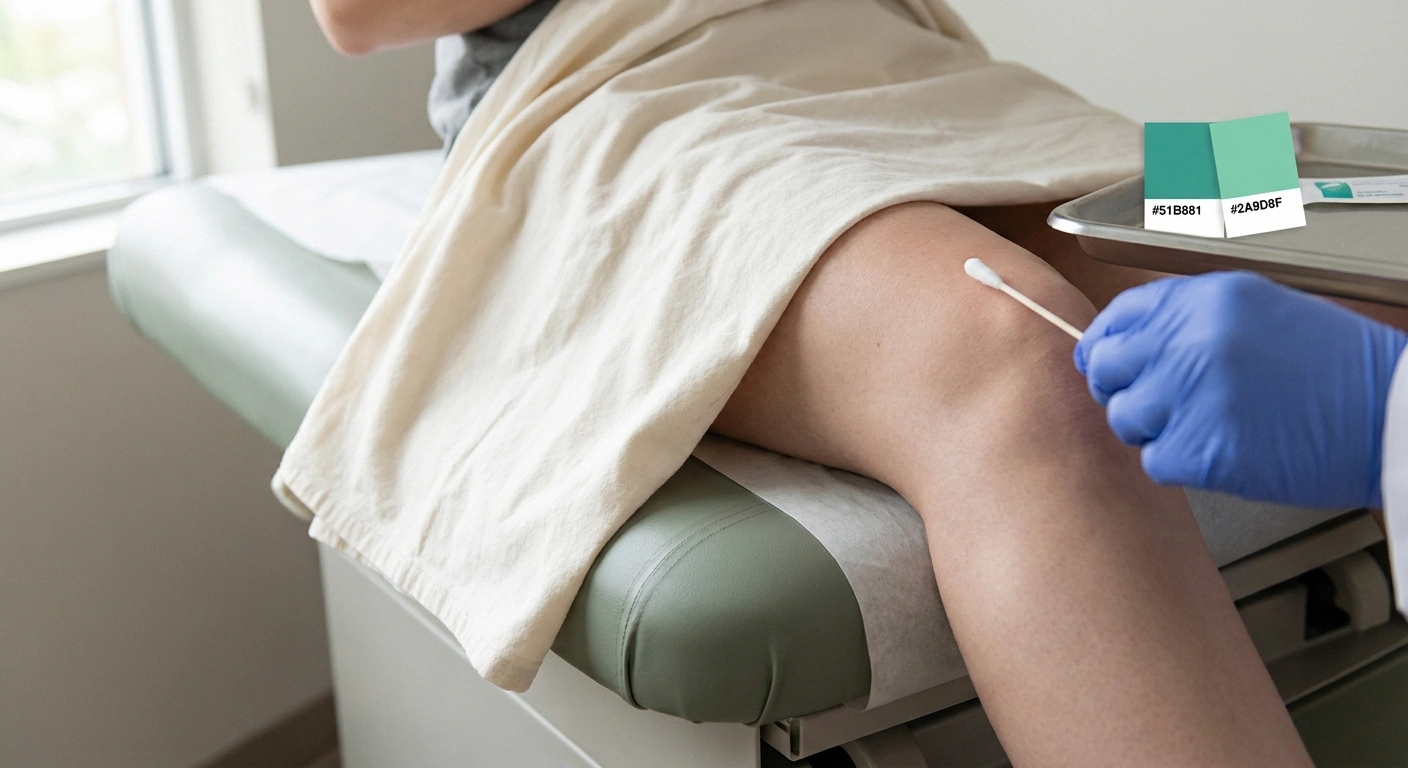
2. Skin biopsy with IENFD measurement. This is the gold-standard test for any small-fiber neuropathy. A 3-millimeter punch biopsy of skin is stained and the intraepidermal nerve fiber density (IENFD) is counted under a microscope. For NLD-SFN, the request matters: ask the clinician to biopsy at least the thigh in addition to the calf, since proximal-only reductions are the signature pattern. Some centers also biopsy the trunk or face if symptoms are prominent there.
3. Autoimmune workup. ANA, anti-SSA/SSB (Sjögren's), ACE (sarcoid), TTG-IgA (celiac), thyroid panel, and paraneoplastic antibodies if onset is rapid. Sjögren's antibodies are especially important because the disease is so commonly missed.
4. Metabolic and nutritional screen. Fasting glucose, HbA1c, B12 with methylmalonic acid, folate, vitamin B6 (both low and high can cause neuropathy), copper, vitamin D, and an iron panel. The neuropathy lab tests guide has a complete list you can bring to your appointment.
5. Autonomic testing. QSART (quantitative sudomotor axon reflex test), tilt-table testing if you have lightheadedness on standing, and HRV testing if heart-rate irregularities show up. Autonomic involvement is common in NLD-SFN because the small fibers are also responsible for sweating, blood-pressure regulation, and gut motility.
6. Imaging if cause unclear. Chest CT for sarcoid, brain MRI if cranial nerve involvement is suspected, body imaging for paraneoplastic concerns.
If your neurologist isn't ordering tests beyond the basic nerve-conduction study, it's reasonable to ask for a referral to a small-fiber neuropathy specialist or an academic peripheral-nerve clinic. The diagnostic delay for NLD-SFN averages five to seven years in some series — and most of that delay is missing-test time, not impossible-puzzle time.
What treatment looks like once you have a diagnosis

NLD-SFN treatment works on two parallel tracks: treat the underlying cause when one is found, and treat the symptoms so you can live in your body in the meantime. Both matter, and you don't have to wait for one to address the other.
Cause-directed treatment.
- Sjögren's-driven NLD-SFN — some patients respond to IVIG (intravenous immunoglobulin), with case series and small trials showing meaningful improvement in pain and IENFD over months. Hydroxychloroquine, low-dose steroids, or rituximab are used in some centers.
- Sarcoid-driven — typically corticosteroids first, then steroid-sparing immunosuppressants if needed.
- Paraneoplastic — treating the underlying cancer is the priority; small-fiber symptoms may improve as the cancer is addressed.
- Celiac — strict gluten-free diet; neurologic symptoms can improve slowly over 12-24 months.
- Post-COVID — supportive and symptomatic; some clinics are using low-dose IVIG and graded exercise; this remains an active research area.
- Nutritional — B12 replacement, B6 dose correction (both deficiency and toxicity cause neuropathy — see our piece on vitamin B6 toxicity), copper replacement.
Symptom-directed treatment. The same medications used for any neuropathic pain — gabapentin, pregabalin, duloxetine, amitriptyline or nortriptyline, topical lidocaine, capsaicin — are first-line. Our neuropathy treatment comparison guide walks through the evidence on each. Lifestyle pieces — sleep, gentle aerobic exercise, glycemic control even in non-diabetics, stress reduction — all measurably reduce small-fiber pain.
One honest note: NLD-SFN treatment is more often about stabilization than dramatic reversal. Many of us see partial improvement, some plateau, some keep slowly progressing. That's true for most chronic neuropathies, and it's why finding and treating any reversible cause is the most important move you can make.
Living with the patchy, migrating version of nerve pain

I'll be honest — living with NLD-SFN is different in some ways from living with the stocking-glove kind. The unpredictability wears on you. Pain that moves makes pacing harder. Pain on your face affects how you talk to people, smile, sleep on a pillow. Pain on your chest can make you fear it's your heart every single time. Validation matters, both from clinicians who believe you and from peers who get it.
That's the gap reported in published case series between symptom onset and an NLD-SFN diagnosis. Most of it isn't a hard puzzle — it's missed tests and unfamiliarity with the non-stocking-glove pattern. The diagnosis is findable when you know what to look for.
The day-to-day toolkit that helps most of us:
- Keeping a symptom journal — what was the patch today, what aggravated it, what helped. After a few months you'll see patterns. Our neuropathy symptom diary guide has a simple template.
- Temperature management — air conditioning, fans, cool packs for burning patches, soft non-binding clothing in cotton or merino.
- Sleep hygiene — the cleaner your sleep, the lower your baseline pain. Worth more than most supplements.
- Gentle, consistent exercise — walking, swimming, recumbent bike, gentle yoga. Exercise improves IENFD in studies — it's slow, but it's real.
- Mental health support — therapy, support groups, sometimes medication. Chronic patchy nerve pain takes a toll, and getting help with the emotional load isn't a luxury. Our piece on neuropathy and mental health covers what's worked for many in our community.
- Anti-inflammatory eating pattern — Mediterranean-style or low-glycemic approaches are the best-studied for nerve health. Not magic, but consistently helpful.
And from one patient to another: get the right diagnosis, find a clinician who keeps looking when the first round of tests is normal, and don't let anyone tell you nerve pain on your face or chest “doesn't make sense.” It makes perfect sense once you know what NLD-SFN is. Validation, then strategy, then living your life — in that order.
When to push for more workup or a second opinion
If your story includes any of these features, it's worth asking your clinician about NLD-SFN specifically:
- ▸Burning started in your face, scalp, mouth, or trunk — not your feet
- ▸Symptoms migrate and feel patchy, not symmetric
- ▸Nerve-conduction study came back normal but symptoms persist
- ▸You've had dry eyes, dry mouth, swollen glands, or any autoimmune flags
- ▸You're under 60 — especially if you're a woman with new burning skin
- Burning, tingling, or numbness that started in the face, scalp, mouth, or trunk — not the feet
- Patchy, asymmetric symptoms that don't follow a clean stocking-glove pattern
- Symptoms that migrate from one area to another over weeks or months
- “Normal” nerve conduction studies despite real, persistent symptoms
- A skin biopsy at the calf that came back normal, but symptoms persist
- Any history of dry eyes, dry mouth, swollen glands, recurrent fevers, or other autoimmune signs
- A new burning-mouth or burning-scalp problem with no dental or dermatologic explanation
- Onset under age 60, especially in women
If multiple of these fit, asking for a referral to a peripheral-nerve specialist, an academic small-fiber center, or a neuro-rheumatology clinic is reasonable. Our piece on how to choose a neurologist for neuropathy can help you find the right person.
A few warning signs that warrant a faster route — same-week neurology appointment or, in some cases, the ER — are covered in our neuropathy emergency signs guide. Rapid progression over days to weeks, severe weakness, breathing or swallowing changes, or significant unexplained weight loss all belong in that “don't wait” bucket.
Frequently Asked Questions
What is non-length-dependent small-fiber neuropathy in plain terms?
It's a kind of nerve damage that affects the small sensory fibers — the ones that carry pain, temperature, and itch — in a pattern that doesn't start at the feet and move up. Instead, it shows up patchily in the face, trunk, proximal limbs, or asymmetrically in the extremities. It happens when the cell bodies that feed those fibers degenerate, often because of an autoimmune or inflammatory cause.
Can small-fiber neuropathy really affect the face?
Yes. The trigeminal ganglion behind the face contains the same kind of small sensory neurons as the dorsal root ganglia along the spine. When those neurons are affected by an autoimmune process or a paraneoplastic syndrome, the face is fair game — burning lips, scalded cheeks, scalp tingling, even burning mouth syndrome are all recognized presentations.
How is non-length-dependent SFN diagnosed?
Skin biopsy showing reduced intraepidermal nerve fiber density is the gold-standard test, and it's important that the biopsy includes a proximal site like the thigh rather than only the standard distal-calf location. The workup also includes autoimmune blood tests (Sjögren's antibodies, ANA, ACE, celiac panel, paraneoplastic antibodies), B12 and other nutritional labs, glucose tolerance testing, and sometimes autonomic function testing.
Is non-length-dependent SFN autoimmune?
Often, yes. Sjögren's syndrome, sarcoidosis, lupus, paraneoplastic syndromes, celiac disease, and post-viral processes account for the majority of identifiable causes. About a third of cases remain idiopathic even after thorough workup. That's why a careful search for an autoimmune trigger is one of the most important steps in diagnosis.
Can non-length-dependent SFN be reversed?
It depends heavily on the cause. When an underlying autoimmune disease is found and treated effectively, intraepidermal nerve fiber density can recover and symptoms can improve significantly over months to a couple of years. Idiopathic cases more often stabilize than reverse, but symptomatic treatment plus lifestyle measures still make a meaningful day-to-day difference for most people.
Why are women diagnosed with NLD-SFN more often than men?
The leading hypothesis is the overlap with autoimmune disease, since most of the conditions associated with NLD-SFN — Sjögren's, lupus, mixed connective tissue disease — themselves skew strongly female. NLD-SFN also tends to appear at younger ages, again paralleling autoimmune-disease onset patterns.
Is fibromyalgia the same as non-length-dependent SFN?
They overlap significantly but aren't identical. A meaningful subset of patients diagnosed with fibromyalgia have measurable small-fiber neuropathy on skin biopsy — often in a non-length-dependent pattern. Some researchers argue that those patients are misdiagnosed; others view fibromyalgia as a spectrum that includes small-fiber involvement. If you have a fibromyalgia label and the workup never included a skin biopsy, asking about one is reasonable.
What kind of doctor should I see for suspected NLD-SFN?
A peripheral-nerve neurologist or an academic small-fiber neuropathy clinic is ideal. Neuro-rheumatology and autonomic-disorders clinics are also strong options because of the autoimmune overlap. A general neurologist who runs only nerve-conduction studies and stops there may miss the diagnosis entirely.
About the Author