
The first time my neurologist mentioned mexiletine, I thought I had misheard her. We were sitting in her office talking about a friend of mine from my support group, a woman named Eleanor who had been through gabapentin, pregabalin, duloxetine, and amitriptyline without finding any of them either tolerable or effective. The neurologist had brought up the name in passing, almost as an aside, and I asked her to repeat it. “Mexiletine,” she said. “It's an old heart medication. We use it off-label for nerve pain that won't respond to anything else.”
I had not heard of it. Most people I have spoken with since have not heard of it either, which is part of why I want to write this. Mexiletine is one of those medications that sits in a quiet corner of the neuropathy treatment world—used by neurologists who specialize in pain, not commonly mentioned in patient-facing information, and reserved for a very specific situation. It is not for everyone. For the right person, in the right circumstances, it can be a meaningful option when the first-line and second-line options have run out.
What Mexiletine Is
Mexiletine is an oral sodium-channel blocker that was originally developed in the late 1960s and approved in the United States in 1986 as an anti-arrhythmic drug—a medication for irregular heartbeats. Chemically, it is a close cousin of lidocaine, the same numbing medication your dentist uses. The crucial difference is that lidocaine is destroyed by the liver almost completely when taken by mouth, which is why we only get it as an injection, a patch, or a topical cream. Mexiletine was specifically engineered to survive the trip through the liver and reach the bloodstream, so it can be taken as a pill three times a day.
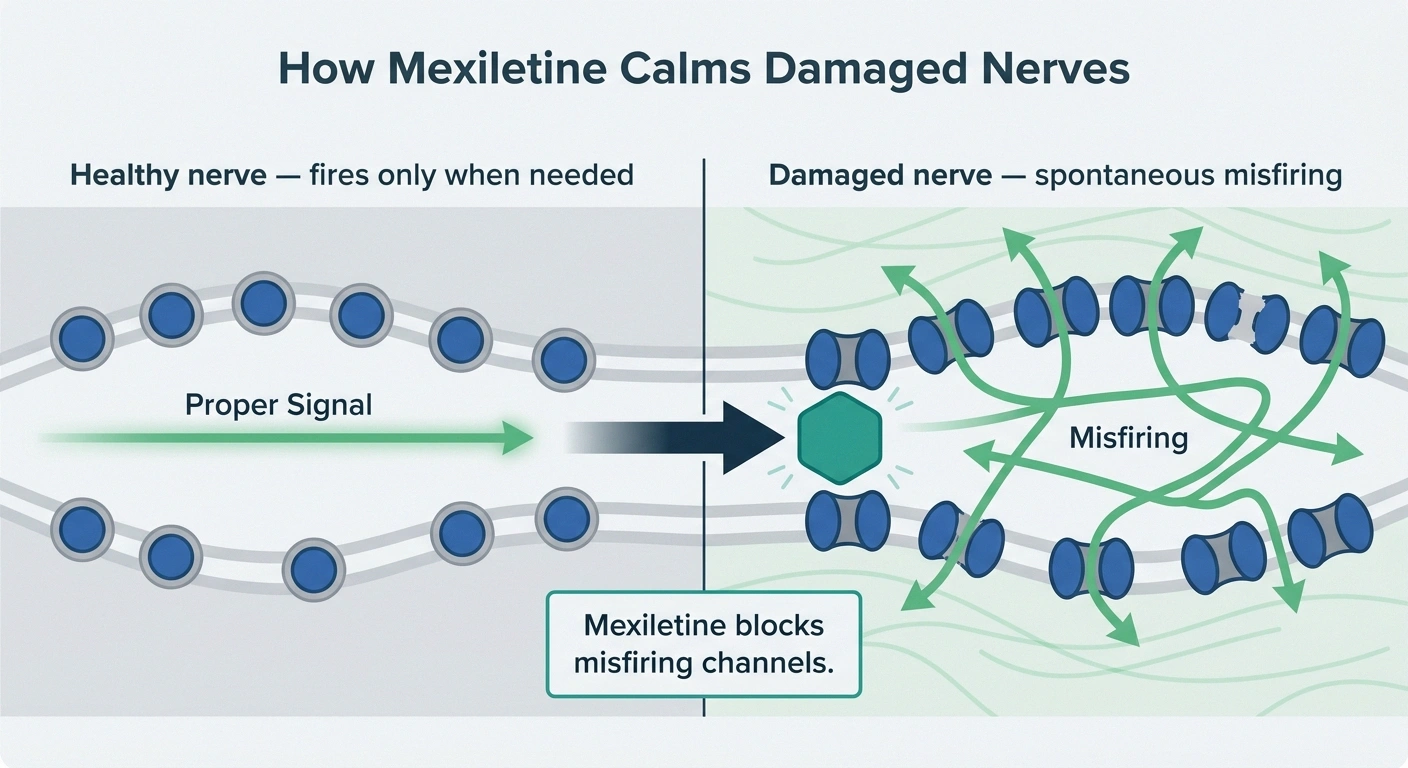
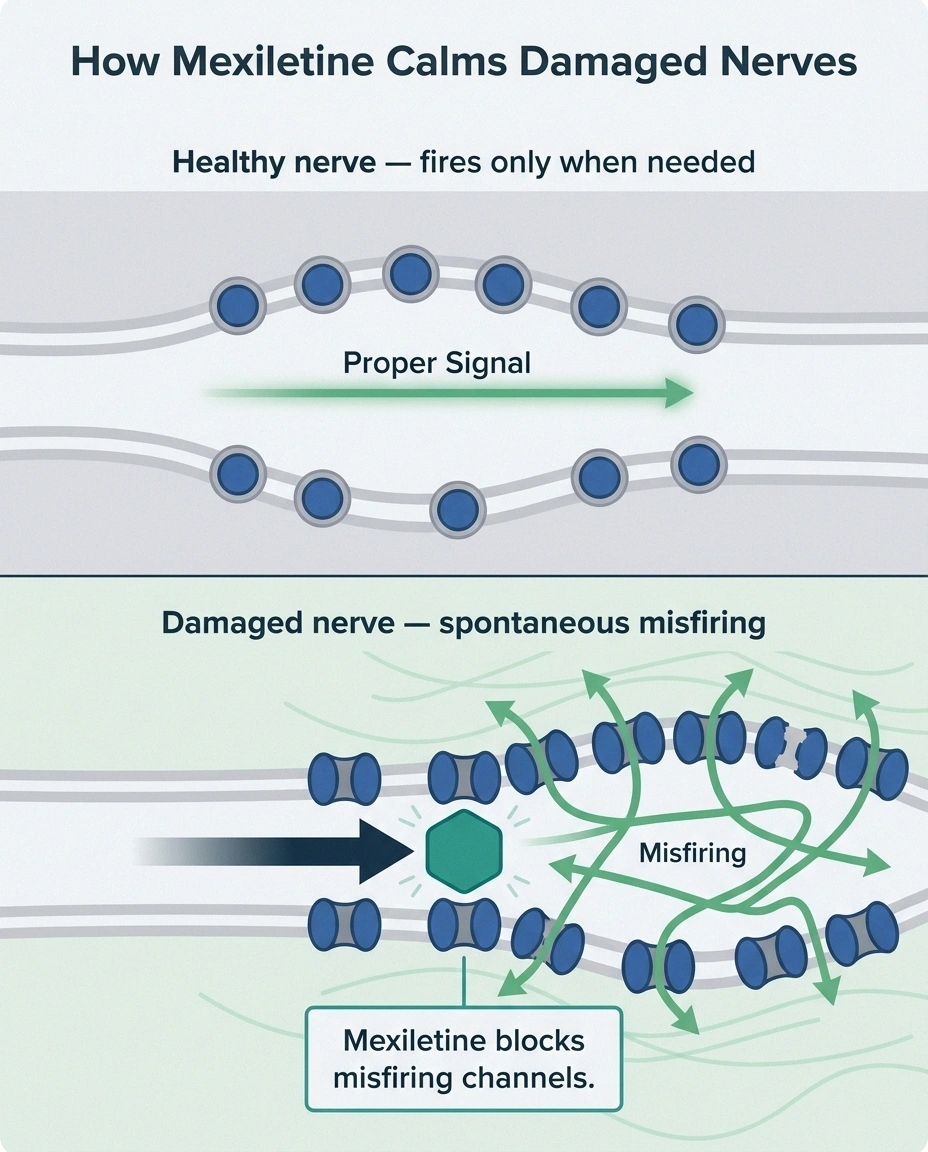
Its career as a heart medication has been mostly eclipsed by newer drugs over the past three decades, but in the same period, it found a second life as an off-label treatment for difficult neuropathic pain. The reason is mechanism. Mexiletine blocks the same voltage-gated sodium channels in damaged peripheral nerves that misfire and generate the burning, electric-shock, and shooting sensations of chronic nerve pain. When nerves are healthy, they fire only when something real is happening. When nerves are damaged, the sodium channels in them can become hyperactive and fire spontaneously—producing the kind of pain that feels like it is coming from nothing. Blocking those channels takes the edge off that spontaneous firing.
If that mechanism sounds familiar, it should. The same sodium-channel science underlies several of the newest drugs in the neuropathy pipeline, including suzetrigine (Journavx) and pilavapadin. Those newer drugs target individual sodium-channel subtypes more selectively. Mexiletine targets several at once. The newer drugs aim for fewer side effects. Mexiletine has been around long enough that we know exactly what those side effects are. Different tools, same general toolbox.
Where Mexiletine Fits in the Treatment Sequence
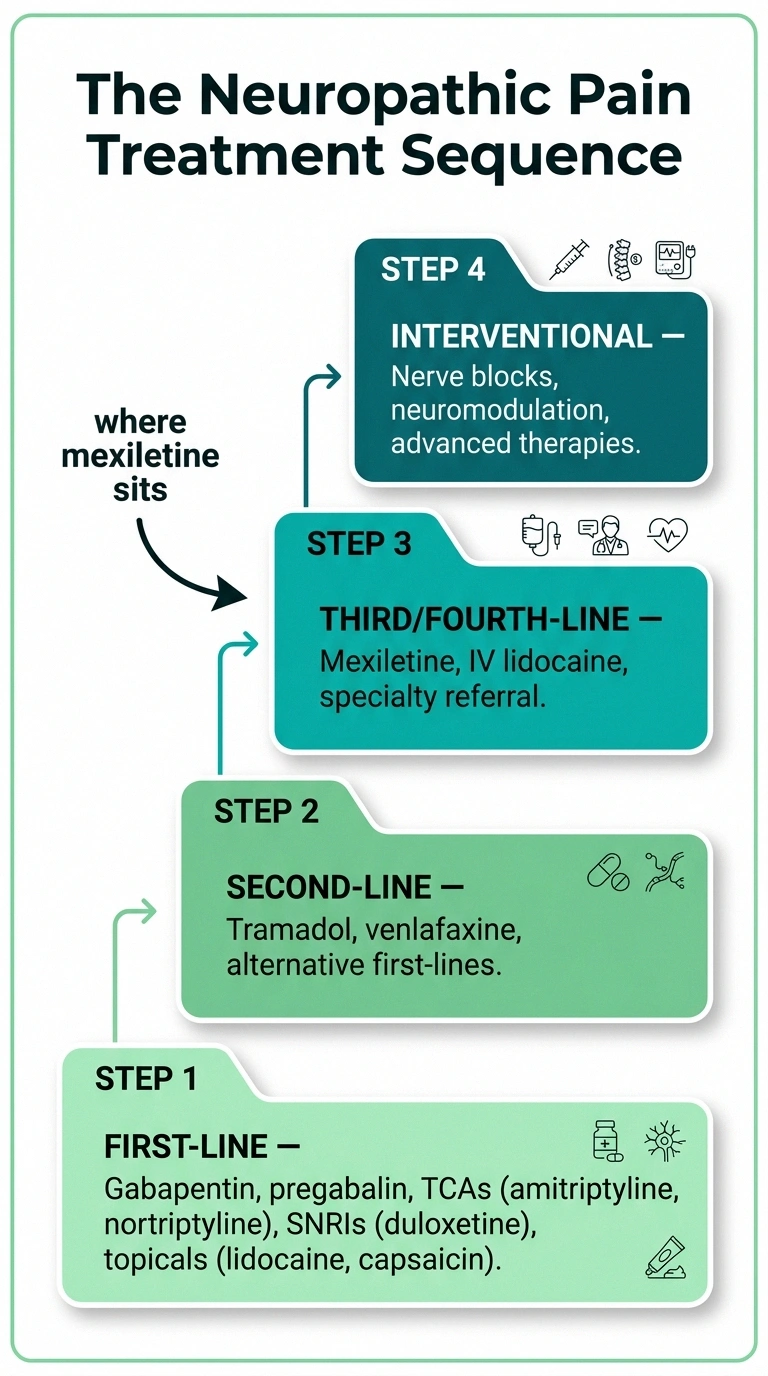
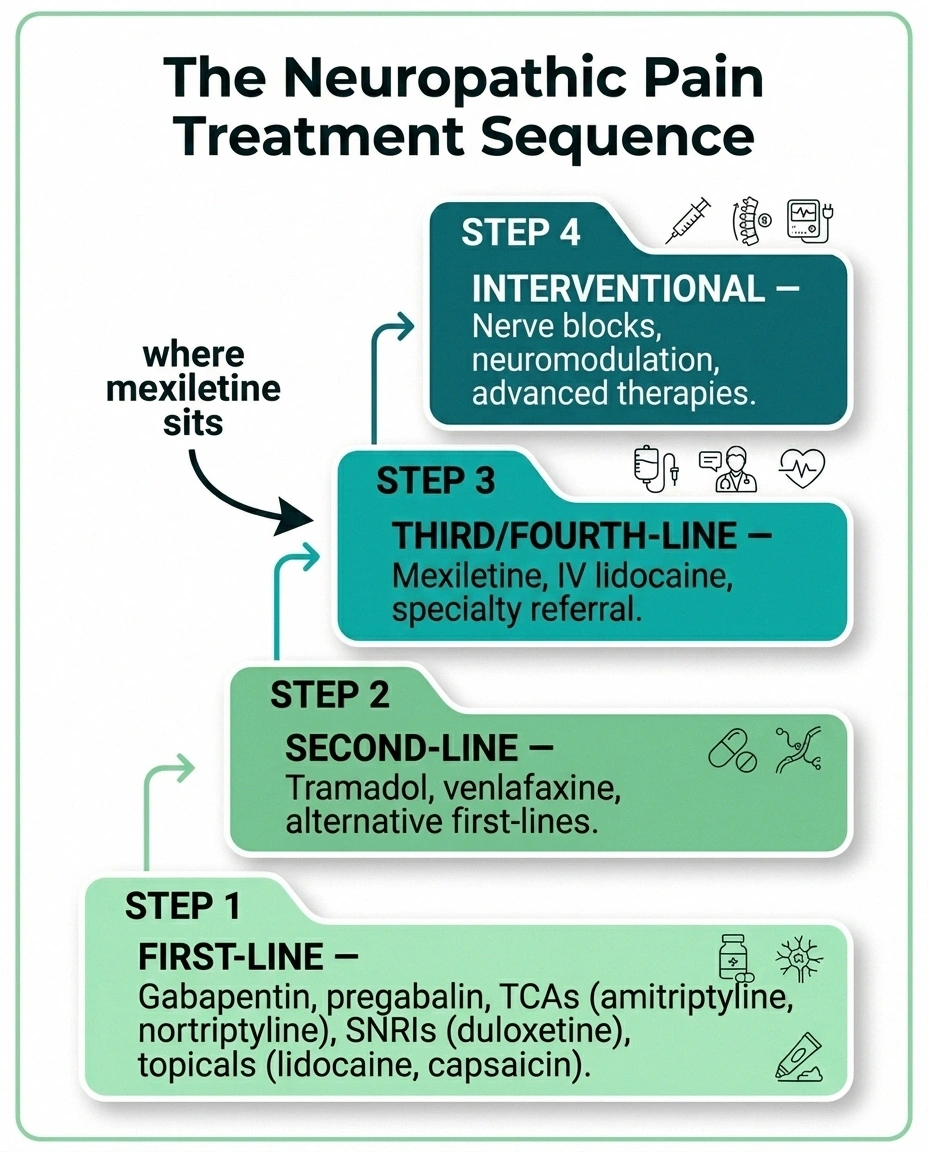
Let me put this plainly so there is no confusion. Mexiletine is not a first-line treatment for nerve pain. It is rarely a second-line treatment. It usually shows up in the conversation when the first-line and second-line options have either failed to help or have caused side effects the patient could not tolerate.
The standard sequence for most patients with painful neuropathy looks something like this. First-line agents are usually gabapentin or pregabalin, a tricyclic antidepressant like amitriptyline or nortriptyline, or an SNRI like duloxetine. Topical options like lidocaine patches or capsaicin cream are often added or tried first depending on the pain distribution. If the first attempt does not work, the doctor usually rotates to another first-line option. Second-line options include things like tramadol or venlafaxine. If none of those have helped enough, and only then, do we typically start talking about mexiletine.
The reason for putting it this far down the list is not that mexiletine does not work. For some people it works very well. The reason is that it requires more careful patient selection and more monitoring than the first-line agents, and the side effects tend to be more bothersome at therapeutic doses. The first-line drugs have a higher chance of helping more people with fewer hassles. Mexiletine has a lower batting average but, for the patients it does help, can be one of the only options that gives real relief.
What the Evidence Actually Shows
The honest summary of mexiletine's evidence base is that it is modest and it is mixed. The strongest signal comes from a small, often-cited 1988 randomized controlled trial in patients with painful diabetic neuropathy. Sixteen patients were given mexiletine at 10 milligrams per kilogram per day versus placebo. The mexiletine group had statistically significant reductions in pain, dysesthesia, paresthesia, and the nighttime pain that disturbs sleep. Sleep quality improved. The effect was real.
Subsequent trials have been smaller and less consistent. A long-term retrospective survival analysis published in the Journal of Pain and Symptom Management in 2008 looked at 89 patients prescribed mexiletine for various chronic pain conditions. Roughly a third had sustained, meaningful pain relief at one year. About half stopped the medication, mostly because of side effects rather than lack of effect. The pattern that emerges across the literature is that mexiletine is a “tolerator's drug”: the patients who can tolerate it often report substantial benefit; the patients who cannot tolerate it stop within the first few weeks.
Cochrane reviews and the international NeuPSIG (Neuropathic Pain Special Interest Group) guidelines do not rank mexiletine in their first or second tier of recommended agents. It typically appears as a third- or fourth-line option to be considered after the better-evidenced options have failed. That ranking reflects the limited evidence and the side-effect profile, not a claim that mexiletine does not work for anyone.
The Cardiac Workup Before You Start

This is the part of the conversation that separates mexiletine from gabapentin and the other first-line options, and it is the part that I most want to make sure you understand if your doctor brings it up. Because mexiletine started life as a heart medication, it can affect the electrical conduction system of the heart. In most patients with structurally normal hearts, this is not a problem at neuropathy-relevant doses. But the doctor cannot know whether your heart will tolerate it without checking first.
Before starting mexiletine, expect your doctor to order at minimum:
- A baseline electrocardiogram (ECG). The doctor is looking for any pre-existing conduction abnormalities, particularly second- or third-degree AV block, which are absolute contraindications unless you have a pacemaker. The QT interval also matters.
- A careful cardiac history. Have you had a heart attack? A history of structural heart disease, heart failure, or significant arrhythmias? Mexiletine is generally avoided in patients with a prior myocardial infarction because of findings from older trials with related drugs that showed increased mortality in that population.
- Baseline liver function tests. Mexiletine is metabolized by the liver. Any pre-existing liver impairment changes the dosing or the decision.
- A complete medication list. Several common medications interact with mexiletine, including theophylline, caffeine in significant quantities, ciprofloxacin, certain antidepressants, and many others. The drug list comes first, then the prescription.
If any of these red flags show up, mexiletine is usually off the table. If they are all clear, your doctor will likely want to repeat the ECG after you have been on the medication for a few weeks at therapeutic dose to make sure your heart is still happy with the drug. Some clinicians also check serum mexiletine levels, aiming for the therapeutic window of roughly 0.5 to 2.0 micrograms per milliliter. Levels much above 2 are associated with toxicity.
How It Is Typically Started and Titrated
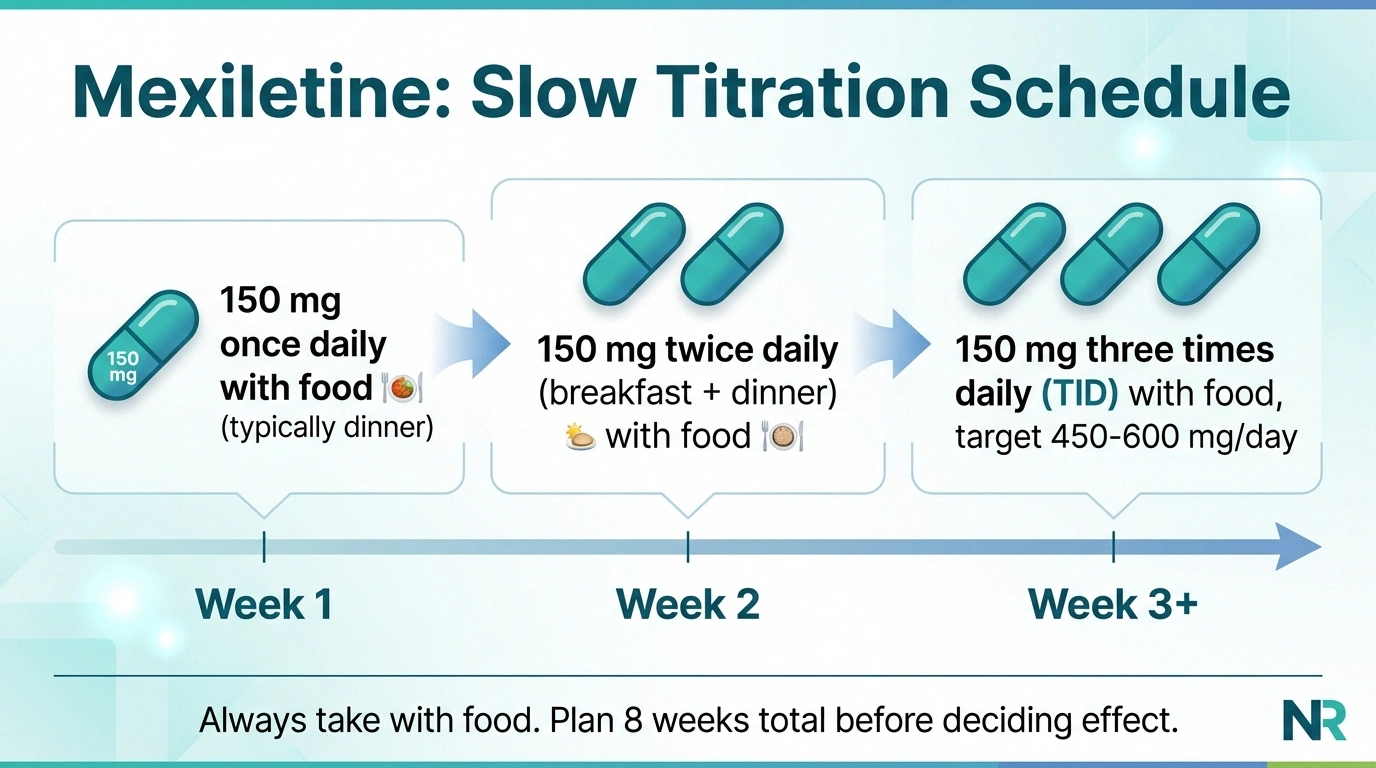
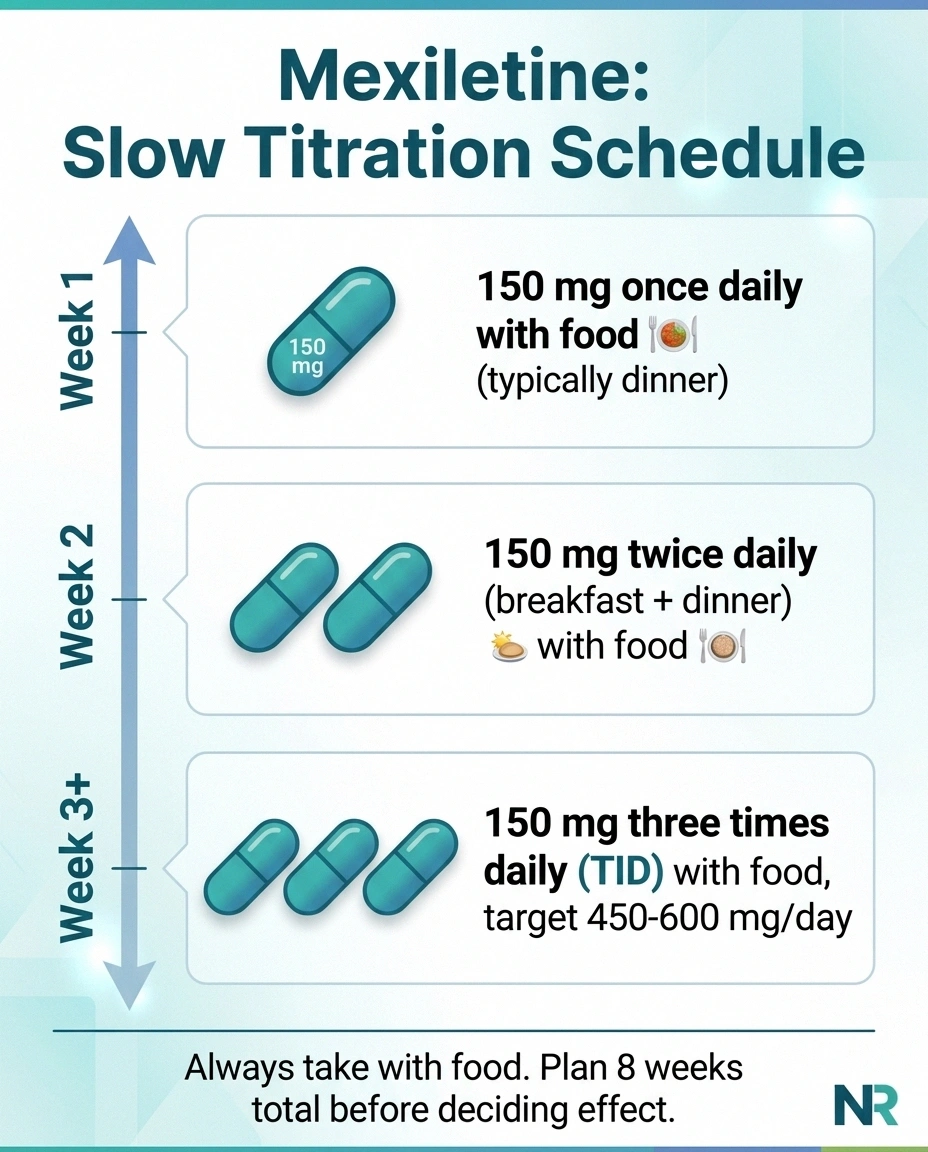
Mexiletine is one of those medications that has to be started low and increased gradually. Jumping straight to a therapeutic dose is a recipe for the nausea, dizziness, and tremor that drive patients off the drug. A common starting approach looks like this.
- Week 1: 150 milligrams once daily, taken with food. Food is not optional—it meaningfully reduces the gastrointestinal side effects.
- Week 2: 150 milligrams twice daily, morning and evening, with food.
- Week 3 onward: Increase to 150 milligrams three times daily if tolerated. Some patients need to titrate even more slowly.
- Plateau: The most common effective dose range is 450 to 600 milligrams per day, divided into two or three doses. Some refractory patients are pushed to 900 or even 1200 milligrams per day under close specialty supervision.
The reason the doctor wants you to take it with food is not just stomach comfort. Mexiletine on an empty stomach hits its peak blood level fast and sharp, which produces dizziness, lightheadedness, and tremor as the level peaks. Food slows absorption and smooths the curve. Taking it consistently with the same kind of meal also keeps blood levels more predictable.
You are not likely to notice a clear pain benefit for the first two to four weeks while you are still titrating. Once you reach a therapeutic dose, give it another four weeks at that dose before making a judgment about whether it is helping. The total time from “starting mexiletine” to “knowing whether mexiletine is going to work” is typically about eight weeks. Tracking your pain with a symptom journal during this period is one of the highest-value things you can do.
The Side Effects in Practice

The thing that makes or breaks a patient's experience with mexiletine is tolerance. Let me walk you through what the most common side effects actually feel like in the day-to-day, so you know what to expect.
Nausea is the single most common reason people stop the drug, particularly during titration and at higher doses. It is usually described not as the violent kind of nausea but as a persistent, low-grade queasiness, like the early stage of motion sickness. Taking the pill with food helps. Taking it with a more substantial meal helps more. Some patients find that pairing the dose with ginger tea or a small piece of crystallized ginger reduces it further. If nausea persists past the first three weeks, the doctor will usually slow the titration or hold the dose.
Dizziness and lightheadedness tend to peak in the first one to two hours after a dose, then settle. If they remain bothersome, taking the dose right before sitting down for a meal helps. Some patients also describe a kind of fuzziness or feeling of being slightly disconnected from their surroundings for the first hour or two after each dose.
Tremor is usually a fine hand tremor, like the kind that some people get from too much coffee. It is dose-related, meaning it gets worse at higher doses and better at lower ones. If you notice a new tremor, mention it. The doctor may want to back the dose down a step.
Other side effects include headache, blurred vision, ataxia (a slightly off balance feeling), and occasionally heartburn or reflux. Less common but more serious are liver enzyme elevations, blood count abnormalities (very rare), and proarrhythmia, which is why the baseline cardiac workup and follow-up ECG matter.
If you find yourself in the second or third week and feeling worse than before you started, the answer is almost never to push through. Call the prescribing doctor. The dose can be backed down, the timing can be adjusted, the food situation can be reviewed. Many patients who would have stopped the drug entirely end up doing well after one of these adjustments.
Drug Interactions Worth Knowing
Mexiletine has a manageable but specific interaction profile, and it deserves a real conversation with your pharmacist before you start.
- Theophylline. Mexiletine raises theophylline levels significantly. If you take theophylline for asthma or COPD, the doses of both may need adjustment.
- Caffeine. Mexiletine slows the breakdown of caffeine, so a normal cup of coffee may hit you harder. If you notice yourself feeling jittery after your usual morning coffee, this is why.
- Ciprofloxacin and fluvoxamine. Both inhibit the liver enzyme (CYP1A2) that metabolizes mexiletine, raising its blood levels. Dose adjustments may be needed if these are added.
- Other antiarrhythmic medications. Combining mexiletine with another Class I or Class III antiarrhythmic should only happen under cardiology guidance.
- Methadone. Can interact and may require methadone dose review.
- Liver-inducing drugs. Phenytoin, rifampin, and similar drugs lower mexiletine levels, potentially blunting the effect.
This is also a moment to review whether your other medications might be contributing to neuropathy in the first place. Sometimes a medication review at the same time as a mexiletine consideration finds an upstream contributor that no one had focused on.
Who Is a Good Candidate?
From what I have seen in my own circle and what the literature suggests, the patients who tend to do well on mexiletine share a few features. They have neuropathic pain that has not responded adequately to two or three of the first-line oral options. Their pain has a strong “lancinating” or “shock-like” quality, the kind that comes in sharp bursts rather than constant aching. They have a structurally normal heart and no history of significant cardiac issues. They are willing to do a slow titration and to tolerate some initial side effects in exchange for a possible benefit. They have a prescribing doctor who is familiar with the drug and willing to monitor them.
The patients who do not do well are usually the ones who are pushed up to dose too quickly, who do not take the medication with food, who are not warned about the early-week nausea, or who have an underlying cardiac issue that should have been caught and was not. Almost all of these are preventable with the right setup.
What I Would Suggest if Your Doctor Brings It Up

If a neurologist or pain specialist mentions mexiletine to you, here is what I would suggest you do.
- Ask why now. Not in a hostile way—just to understand what about your specific pattern is making them reach for this drug. The answer should make sense in the context of what you have already tried.
- Confirm the baseline workup. ECG, LFTs, medication review. If they are not ordering these, ask why.
- Understand the titration plan. Get it in writing or have them write it on the script. “Start 150 mg with dinner for one week, then add 150 mg with breakfast, then add 150 mg with lunch.” Confusion at the pharmacy is a real problem with this drug because it is not commonly prescribed.
- Establish the check-in schedule. When will you call to report progress? When will the follow-up ECG happen?
- Know the trial period. About eight weeks. If it has not helped meaningfully by then, the plan is to stop, not to keep escalating indefinitely.
- Keep a symptom diary. Pain, sleep, side effects. This is how you and the doctor will know whether to continue.
And if the doctor has never brought it up but you have hit a wall with the standard options and have a healthy heart, it is reasonable to ask whether mexiletine is something worth trying. Not every doctor is comfortable prescribing it; some will refer you to a pain specialist or neurologist who is. That is fine. The goal is to get the medication from someone who knows what they are doing with it.
The Honest Bottom Line
Mexiletine is not a miracle, and it is not a first move. It is an old, generic, reasonably affordable oral medication with a real mechanism for neuropathic pain, a modest evidence base, a specific patient profile where it can shine, and a side-effect picture that requires patience and a careful start. For the right person, it has been the medication that finally took the edge off pain when nothing else did. For the wrong person, it is several weeks of nausea and dizziness for no benefit.
The line between those two outcomes is usually patient selection, baseline cardiac safety, slow titration, taking it with food, and giving it the full eight weeks before deciding. If those pieces are in place, mexiletine is worth considering when the easier options have not worked. If those pieces are not in place, it is a recipe for a bad experience. The good news is that you are now part of the conversation, not just on the receiving end of it.
Frequently Asked Questions
Is mexiletine FDA-approved for nerve pain?
No. The FDA-approved indication for mexiletine is the treatment of certain ventricular arrhythmias—irregular heartbeats. Its use for neuropathic pain is off-label, meaning your doctor is prescribing it for a use that has clinical support but is not on the official label. Off-label prescribing is legal, common, and often the right thing to do; many of the medications we use for nerve pain (including some of the tricyclics) are used in this off-label way.
How is mexiletine different from gabapentin or pregabalin?
Different mechanism entirely. Gabapentin and pregabalin work on calcium channels and reduce the release of certain neurotransmitters. Mexiletine works on sodium channels and reduces spontaneous firing in damaged nerves. Because the mechanisms are different, mexiletine can work for some patients in whom gabapentin or pregabalin has failed, and vice versa. The side-effect profiles are also different: gabapentinoids tend to cause sedation, weight gain, and swelling, while mexiletine tends to cause nausea, dizziness, and tremor.
Can I take mexiletine with my heart medications?
Sometimes yes, sometimes no—this is exactly the conversation to have with your cardiologist and the prescribing doctor together. Mexiletine should not be combined with other Class I or Class III antiarrhythmics without specialty oversight. It is generally compatible with blood pressure medications, statins, and many heart medications, but the specific combination needs to be checked. Bring your complete medication list to every visit.
How long do I need to be on mexiletine to know if it's working?
Plan on a full eight weeks. The first two to four weeks are usually titration, during which the side effects can mask any benefit. Once you reach a therapeutic dose, give it another four weeks at steady state before making the call. If at the end of eight weeks you have not noticed meaningful improvement, the standard plan is to taper off rather than push the dose higher in hopes of finding a response.
What if the nausea is unbearable?
First, confirm you are taking every dose with food, ideally with a substantial meal. Second, try moving the dose to right after the largest meal of the day. Third, call your doctor and ask about slowing the titration—holding at 150 mg twice daily for an extra week or two, then trying to increase again. If nausea persists despite these adjustments, mexiletine may not be the right drug for you, and that is useful information rather than a failure.
Is mexiletine addictive or habit-forming?
No. It is not a controlled substance and has no dependence or abuse liability. That said, you should not stop it abruptly without talking to your doctor, because if you have had good pain control, the pain will likely return when you stop. A gradual taper is usually preferred over sudden discontinuation.
Will my insurance cover it?
Mexiletine is generic and generally inexpensive—often less expensive than the brand-name newer medications. Most insurance plans cover it without a prior authorization for cardiac indications. For off-label neuropathic pain use, some plans require a prior auth letter from the prescribing doctor documenting the failure of first-line agents. This is usually straightforward to obtain. If you are paying cash, GoodRx and similar services typically list mexiletine in the low double digits per month.
Are there natural alternatives that work the same way?
No supplement matches the sodium-channel-blocking mechanism of mexiletine. That said, several supplements with evidence for general neuropathy support can be reasonable adjuncts to whatever prescription strategy you are on. Our roundup of the best neuropathy supplements walks through which ones have meaningful evidence behind them. The right framing is “add to,” not “replace.”
About the Author