The most important conversation you can have about your neuropathy medications is not with your neurologist. It's with your pharmacist.
I learned this the hard way. Several years into managing my own neuropathy, I had three doctors prescribing things, an old habit of taking a Benadryl before bed, an occasional half-glass of wine with dinner, a daily multivitamin, and what I considered a perfectly innocent supplement for my mood. None of them — not the multivitamin, not the wine, not the Benadryl, not the supplement — would have raised an eyebrow on its own. Together, with my prescription medications, they were a problem.
I'm Janet Ellis, and I write here as a community advocate, not a medical professional. What follows is what your pharmacist watches for when you walk in with a bag of prescription bottles for your neuropathy. Read it, then go have the conversation. The brown-bag visit could be the most useful thirty minutes you'll spend on your nerve health this year.
Why Pharmacist Conversations Matter More Than You Think
The doctor-patient relationship is built around diagnosis and treatment selection. The pharmacist-patient relationship is built around what happens when the medication actually meets your body, your other medications, and your day. In a typical year, your neurologist sees you for forty-five minutes total. Your pharmacist sees you twelve times when you pick up refills.
Your pharmacist sees every bottle. Your doctor doesn't. A free annual brown-bag medication review catches the four big risks neuropathy patients run into — additive sedation, serotonin overload, anticholinergic burden, and bleeding stacking. Thirty minutes a year is the highest-leverage thing you can do for your medication safety.
Pharmacists are trained specifically to spot:
- Drugs that increase or decrease each other's effects
- Combinations that increase the risk of dangerous side effects (like serotonin syndrome or respiratory depression)
- Drugs that need dose adjustment for your kidneys, liver, or age
- Over-the-counter medications and supplements that quietly change the picture
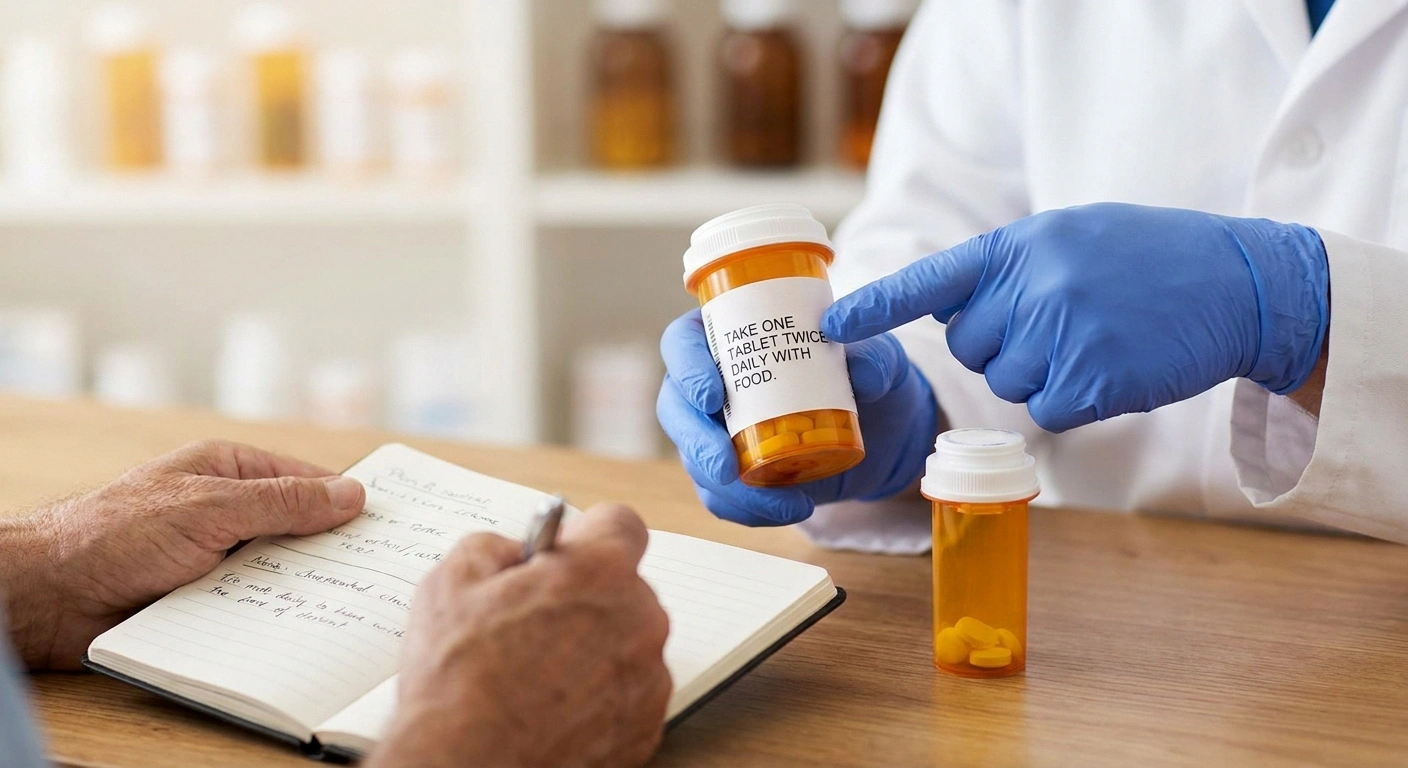
Most pharmacies offer a service called a Medication Therapy Management (MTM) review, often free, where the pharmacist sits down with you and goes through everything you take. If yours doesn't, ask. Bring every bottle — prescription, over-the-counter, herbal, vitamin. This is the brown-bag visit, and it's worth doing once a year, plus any time you start a new medication.
The Big Concerns: What Pharmacists Watch For
The interactions that matter most fall into a few categories. Knowing these by name helps you understand why your pharmacist might frown at a combination, and what to ask about.
The Four Big Interaction Categories
Central Nervous System Depression
This is the most serious category for neuropathy patients, and it's also the most common. The medications most often used for nerve pain — gabapentin, pregabalin, duloxetine, amitriptyline, tramadol — all act on the central nervous system. Stack them with other CNS depressants and you get additive sedation, slowed breathing, confusion, and an increased risk of falls.
The combination that the FDA has flagged most loudly is gabapentin or pregabalin with opioids. Both gabapentin and pregabalin carry warnings about respiratory depression — your breathing can slow dangerously when they're taken with opioids, especially in older adults or people with lung disease. If you're prescribed both for any reason, this needs to be a deliberate, monitored decision, not an accidental overlap from two different doctors.
Other CNS depressants that quietly add to the burden:
- Benzodiazepines — Xanax (alprazolam), Ativan (lorazepam), Valium (diazepam), Klonopin (clonazepam)
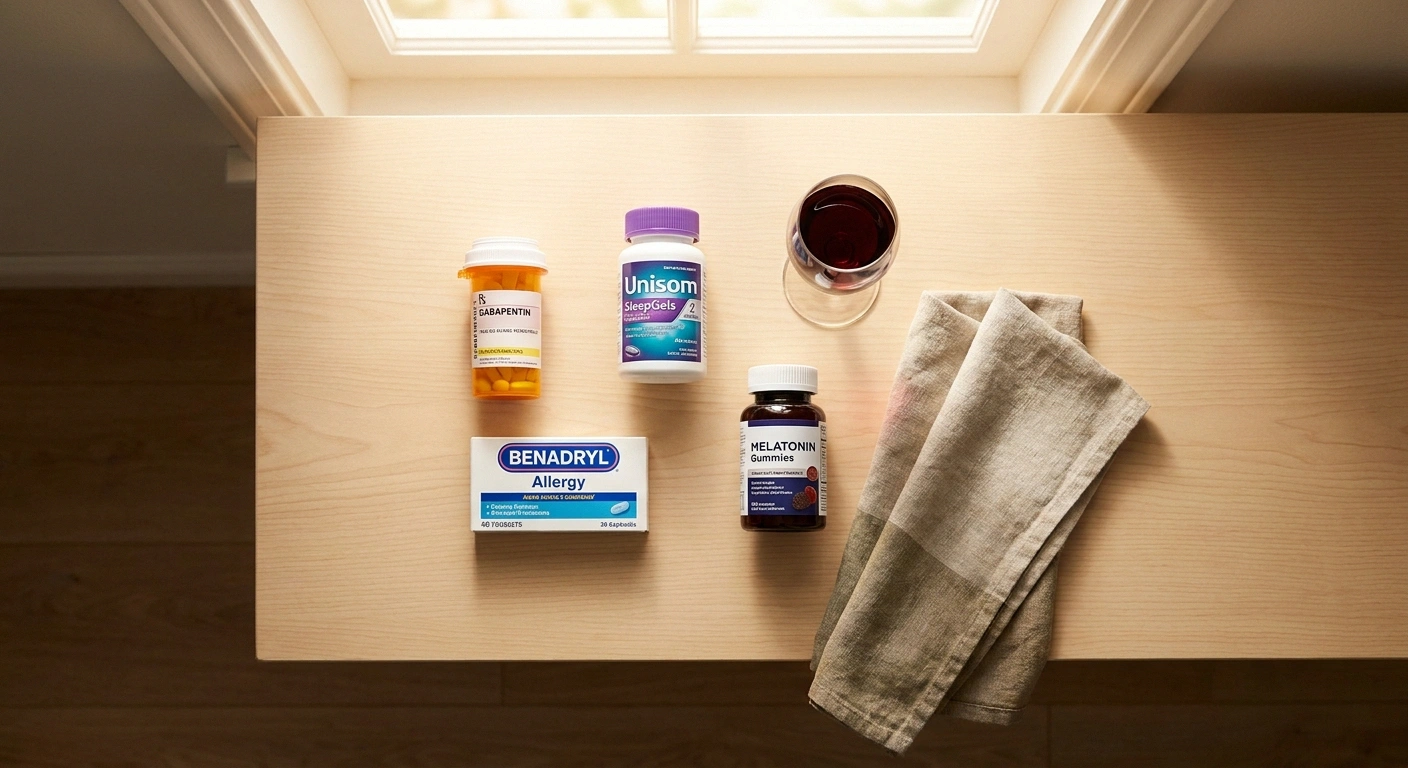
- Sleep medications — Ambien (zolpidem), Lunesta (eszopiclone), Restoril (temazepam), and over-the-counter doxylamine and diphenhydramine
- Muscle relaxers — cyclobenzaprine (Flexeril), baclofen, tizanidine
- Alcohol — yes, even a glass with dinner counts
- Antihistamines — Benadryl (diphenhydramine), Unisom, allergy meds with “PM” or “Nighttime” on the label
If you take gabapentin for nerve pain, a Benadryl for allergies, and a glass of wine with dinner, you've stacked three sedating substances. Your pharmacist would want to know.
Serotonin Syndrome
This is the second-biggest concern, and it specifically involves duloxetine (Cymbalta) and a few other neuropathy medications. Serotonin syndrome happens when too much serotonin builds up in the nervous system, and it can range from mild (agitation, sweating, tremor) to life-threatening (high fever, seizures, unconsciousness).
The combinations that worry pharmacists most:
- Duloxetine + tramadol — both raise serotonin. Tramadol is sometimes prescribed for breakthrough pain on top of duloxetine, and the combination needs careful management.
- Duloxetine + venlafaxine — both are SNRIs. Should not normally be combined.
- Duloxetine + tricyclics — adding amitriptyline or nortriptyline for sleep on top of duloxetine increases the load.
- Duloxetine + triptans — migraine medications like sumatriptan (Imitrex) and rizatriptan (Maxalt) raise serotonin too.
- Duloxetine + linezolid — this antibiotic is on the contraindication list. Always make sure prescribers know you're on duloxetine before starting any antibiotic.
- Duloxetine + St. John's Wort — a common over-the-counter herbal supplement that quietly raises serotonin.
- Duloxetine + 5-HTP or SAMe — both are over-the-counter mood supplements that act on serotonin.
If you're on duloxetine, every new prescription and every new supplement is worth a thirty-second pharmacist check.
Anticholinergic Burden
This is one most patients have never heard of, but it matters tremendously, especially for older adults. “Anticholinergic” describes any drug that blocks the neurotransmitter acetylcholine. The effects include dry mouth, constipation, urinary retention, blurred vision, confusion, and an increased risk of falls. Several individually-mild medications can stack into a serious problem when combined.
Among neuropathy patients, the usual culprits are amitriptyline, nortriptyline, and other tricyclic antidepressants — they have moderate to strong anticholinergic effects. Add a Benadryl every night for sleep, plus a bladder medication for urinary urgency (oxybutynin, tolterodine), plus an allergy medication, plus a stomach medication (some have anticholinergic effects too), and the cumulative load can cause real cognitive problems.
Pharmacists use a tool called the Anticholinergic Cognitive Burden (ACB) score to flag these stacks. If you're an older adult on a tricyclic for nerve pain, ask your pharmacist to run an ACB review. There are often safer substitutes for one or two of the supporting medications.
Bleeding Risk
Duloxetine can increase bleeding risk on its own — a fact most patients never hear. When combined with blood thinners (warfarin, apixaban/Eliquis, rivaroxaban/Xarelto, dabigatran/Pradaxa) or with NSAIDs (ibuprofen, naproxen), the risk goes up further. Many neuropathy patients take a daily aspirin for cardiovascular reasons or a NSAID for joint pain — both raise the bleeding risk when added to duloxetine.
This doesn't mean you can't take them together. It means your pharmacist and prescriber should know, and you should watch for unusual bruising, nosebleeds, blood in stool or urine, and bleeding gums.
QT Prolongation
Some medications affect the heart's electrical rhythm in a way called QT prolongation, which in rare cases can trigger a dangerous arrhythmia. Both duloxetine and amitriptyline can have mild effects. The concern grows when they're combined with other QT-prolonging medications: methadone (sometimes used for severe nerve pain), certain antibiotics (azithromycin, levofloxacin), some antifungals, and some antipsychotics. If you have a history of heart rhythm problems or are on multiple QT-prolonging drugs, an EKG before and during therapy is reasonable.
Specific Combinations Worth Knowing
Some neuropathy combinations come up so often they're worth flagging individually.
Common Combinations: Risk at a Glance
Gabapentin and Duloxetine
Generally safe and frequently co-prescribed. The two medications work through different mechanisms and don't have major pharmacokinetic interaction. The main consideration is additive sedation and dizziness — both can make you sleepy or unsteady, especially when starting either or after a dose increase. If you're going to combine them, your prescriber will usually start one, stabilize the dose, and add the second gradually.
Gabapentin and Pregabalin
Usually NOT combined. Both work the same way. Stacking them just increases side effects without much added benefit. If your nerve pain isn't controlled on one, the right move is usually to optimize the dose or switch to the other (with a careful taper) — not run both at the same time. There are rare exceptions in specialized pain clinics, but for most patients this combination should raise a question.
Tramadol and Duloxetine
High serotonin syndrome risk. Best avoided. If you absolutely need both, the dose of each should be carefully managed and you should watch for signs of serotonin excess.
Lidocaine Patches and (Almost) Anything
Topical lidocaine is one of the safest options on the neuropathy menu — it has minimal systemic absorption and almost no drug interactions of consequence. For older adults on a long medication list, it's often the easiest add to manage. Capsaicin cream is similarly low-interaction.
Amitriptyline and Other Anticholinergics
The single biggest reason to be cautious with amitriptyline in older adults. The combined anticholinergic load with antihistamines, bladder meds, and motion-sickness drugs can produce real confusion. Nortriptyline is somewhat better tolerated than amitriptyline for older patients in terms of anticholinergic burden, though it's not zero.
Over-the-Counter Medications That Quietly Matter
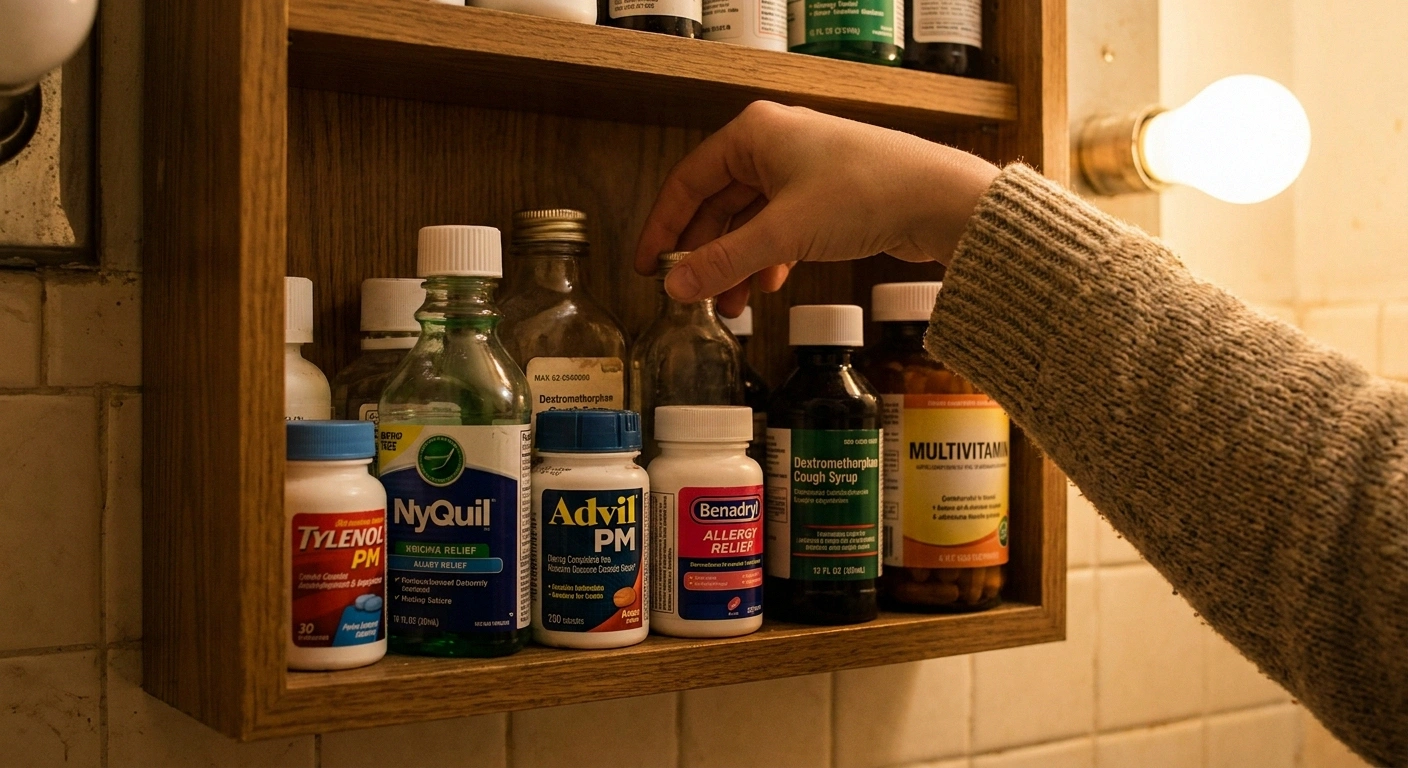
The medications most patients forget to mention are the ones they bought without a prescription. Here are the ones most worth flagging.
- Diphenhydramine (Benadryl, Tylenol PM, Advil PM) — anticholinergic + sedation stacking
- Dextromethorphan (cough syrups) — raises serotonin, conflicts with duloxetine
- NSAIDs at high dose — bleeding risk with duloxetine, kidney stress with gabapentin/pregabalin
- Cold/flu combos — usually contain pseudoephedrine + DXM + antihistamines all at once
- Melatonin — sedation stacking, start low (0.5–1 mg)
Diphenhydramine (Benadryl, Tylenol PM, Advil PM, Unisom). Heavy anticholinergic, heavy sedation. A nightly Benadryl on top of a tricyclic is a classic problem combination. If you need help sleeping, talk to your prescriber about safer options.
NSAIDs (ibuprofen, naproxen, aspirin). Generally fine in moderation, but bleeding risk increases with duloxetine, and kidney stress matters in patients on gabapentin or pregabalin (which are renally cleared). High-dose NSAIDs combined with kidney disease can shift gabapentin or pregabalin levels.
Cold and flu medications. Many contain pseudoephedrine, dextromethorphan (DXM), and antihistamines, all of which can interact. Dextromethorphan can also raise serotonin. Read every label carefully if you're on duloxetine.
Acid reducers. Generally fine, but some can affect medication absorption when taken at the same time as other pills. Space them an hour apart.
Melatonin. Considered low-risk, but it can increase sedation when stacked with neuropathy medications, particularly tricyclics or pregabalin. Start with the lowest dose (0.5 mg or 1 mg) rather than the high doses commonly sold.
Supplements and Herbal Products

This is the category most often missed in conversations between patients and prescribers.
Supplement Risk Snapshot
St. John's Wort. Probably the single most important herbal interaction to know. Raises serotonin, lowers blood levels of many medications by inducing liver enzymes, and interacts with duloxetine, tramadol, and a long list of cardiovascular medications. If your friend recommends it for mood, please do not start it without checking.
5-HTP and SAMe. Both raise serotonin. Avoid combining with duloxetine, tramadol, or tricyclic antidepressants.
Kava. CNS depressant, additive with neuropathy medications. Also has some liver concerns.
Valerian root. CNS depressant, additive sedation.
Fish oil and turmeric. Both have mild blood-thinning effects. Generally fine, but worth noting if you're on duloxetine or anticoagulants.
Alpha-lipoic acid. Often used as a neuropathy supplement (see alpha-lipoic acid for neuropathy) and generally safe. Can lower blood sugar slightly, which matters for diabetic patients on insulin or other glucose-lowering drugs.
Magnesium. Generally safe and often helpful (see magnesium for neuropathy). Can affect absorption of certain antibiotics and thyroid medications if taken at the same time — space them apart.
Vitamin B6. An important one. Too much B6 can actually cause neuropathy. The upper limit recommendation is around 100 mg per day for adults, though some people develop symptoms at lower doses. If you're taking a B-complex, a multivitamin, and a separate B6 supplement, check the total.
The principle: every supplement gets disclosed to the pharmacist, even the ones that “shouldn't matter.” Many of them do.
Kidneys, Liver, and Age

Three patient factors change how medications behave and need to be part of every drug-interaction conversation.
Kidney Function
Both gabapentin and pregabalin are cleared by the kidneys. In patients with reduced kidney function, the dose needs to be lowered to prevent accumulation. Your pharmacist can calculate the right dose adjustment based on your most recent kidney labs (eGFR or creatinine clearance). If you have chronic kidney disease and you've been on the same neuropathy dose for years without monitoring, ask for a dose review at your next appointment.
Liver Function
Duloxetine is metabolized in the liver and carries warnings for patients with significant liver disease. Patients with hepatitis, cirrhosis, or heavy alcohol use need to discuss duloxetine carefully. The same is true for tricyclic antidepressants. Acetaminophen safety also matters — the maximum daily dose is lower for patients with liver impairment.
Age
Older adults are more sensitive to anticholinergic effects, more prone to falls from sedation, and process drugs more slowly. The Beers Criteria, a list maintained by the American Geriatrics Society, flags amitriptyline as potentially inappropriate for older adults specifically because of these risks. That doesn't mean it's never used — it means it's used cautiously, often at low doses, and with awareness of the trade-offs.
Stopping Neuropathy Medications: A Word About Discontinuation
Several of these medications cannot be stopped abruptly. Withdrawal effects are real and sometimes severe.
Gabapentin, pregabalin, duloxetine, and tricyclic antidepressants all have real discontinuation effects when stopped abruptly. Brain zaps, anxiety, sweating, flu-like symptoms, and rarely seizures (gabapentin/pregabalin) can follow. Always taper under your prescriber's supervision — usually 25% per week or slower for established doses.
Gabapentin and pregabalin. Stopping abruptly can cause anxiety, agitation, sweating, nausea, and (rarely) seizures. The standard taper is to reduce the dose by about 25% per week.
Duloxetine. Has a well-documented “discontinuation syndrome” — dizziness, brain zaps, irritability, flu-like symptoms — when stopped abruptly. A taper over several weeks is the right approach.
Tricyclic antidepressants. Tapering is also recommended.
If you're considering stopping a neuropathy medication for any reason — side effects, cost, feeling like it's not working — talk to your prescriber and pharmacist about a taper plan. Don't just quit. For more on this, see questions to ask before starting neuropathy medication.
The Brown-Bag Visit Protocol

Once a year, plus any time something significant changes, do this:
7 Steps to a Useful Pharmacist Visit
- Gather everything you take into a bag — every prescription bottle, every over-the-counter medication, every supplement, every vitamin, every herbal product. Yes, including the ones you take “only sometimes.”
- Write down what you actually take versus what's prescribed. Sometimes they differ. Honest is better than tidy.
- Note the alcohol — how much, how often. The pharmacist isn't judging.
- Bring your most recent kidney and liver labs if you have them, or know roughly when they were last checked.
- Make an appointment with your pharmacist — many pharmacies offer free Medication Therapy Management reviews. If yours doesn't, ask. Some Medicare Part D plans cover MTM as a benefit.
- Walk through every item with the pharmacist. Ask: any interactions? Any duplications? Any I should consider stopping or switching?
- Bring the recommendations back to your prescriber. Don't change anything unilaterally — but a pharmacist's review often surfaces conversations your prescriber should have.
Thirty minutes once a year. Worth more for your health than most things you'll do this month.
What I Want You to Take Away
The doctor who prescribes your gabapentin probably doesn't know you also take Benadryl every night. The doctor who prescribes your blood thinner probably doesn't know you started St. John's Wort last month. The doctor who prescribes your duloxetine probably knows you take tramadol but might not be tracking the daily dose closely. None of this is anyone's fault. It's the structure of how care works.
The pharmacist sees every bottle. They are the one professional in your medical life who can connect the dots, and they will, if you let them. Make the appointment. Bring the bag. Be honest about the wine and the supplements and the OTC sleep aid you've been taking for a decade.
Then come home and have a different relationship with your medications — one where every pill makes sense in the context of all the others, and where the adjustments your body actually needs get made. That's how nerve pain medication is supposed to work.
Frequently Asked Questions
Can I drink alcohol while taking gabapentin or pregabalin?
Both medications cause sedation and slowed thinking, and alcohol adds to those effects. The combination increases the risk of falls, accidents, slowed breathing, and impaired judgment. An occasional drink with food may be tolerated by some patients, but daily drinking on top of these medications is something to discuss with your pharmacist or prescriber. If you have liver issues or are over 65, the safer answer is to avoid alcohol entirely while taking them.
What over-the-counter medications should I avoid with duloxetine?
The biggest watch-outs are St. John's Wort (raises serotonin), 5-HTP and SAMe (raise serotonin), dextromethorphan in cough syrups (raises serotonin), and high-dose NSAIDs (bleeding risk). Antihistamines and sleep aids add sedation. Always check with your pharmacist before starting any new over-the-counter product, even ones that seem benign.
Is it safe to take gabapentin and duloxetine together?
Yes, this is a common and generally safe combination. The two medications work differently and are often co-prescribed for nerve pain. The main consideration is additive sedation and dizziness, especially when starting either or increasing a dose. Go slow, take them at consistent times, and tell your pharmacist if you feel unusually drowsy or unsteady.
Can I take Benadryl for sleep if I am on amitriptyline?
This combination is not ideal. Both medications have anticholinergic effects, and stacking them increases the risk of dry mouth, constipation, urinary retention, confusion, and falls, especially in older adults. The combined anticholinergic burden can cause real cognitive problems. Talk to your prescriber about a sleep aid that does not add to the anticholinergic load.
Why does my pharmacist ask about supplements?
Because supplements interact. St. John's Wort, 5-HTP, kava, valerian, fish oil, turmeric, magnesium, and even high-dose B6 can all change how prescription medications work, sometimes significantly. The pharmacist is not judging your choice to take supplements — they are checking whether the combination is safe.
Do I need to space my pills throughout the day?
Some yes, some no. Magnesium and certain antibiotics and thyroid medications need to be separated to avoid absorption interference. Acid reducers can affect timing of other pills. Iron supplements have similar issues. A pharmacist can build you a simple schedule that maximizes absorption and minimizes interactions. If you take more than five medications, this conversation is worth having.
What is the brown-bag medication review?
It is a service offered by many pharmacies, often free, where you bring in every bottle of every medication and supplement you take, prescription and over-the-counter alike, and the pharmacist sits down with you to review the whole picture. They look for interactions, duplications, dose problems, and items that may no longer be needed. Most experts recommend doing this once a year and any time you start a new medication. Ask your pharmacist by name for a “comprehensive medication review” if “brown-bag” doesn't ring a bell.
Can I just stop a neuropathy medication if I do not like the side effects?
Most neuropathy medications should not be stopped abruptly. Gabapentin, pregabalin, duloxetine, and tricyclic antidepressants all have discontinuation effects that can include anxiety, dizziness, sweating, brain zaps, flu-like symptoms, and rarely seizures. The right approach is a taper, usually over several weeks, supervised by your prescriber. If side effects are bad enough that you want to stop, call your prescriber the same day and start a taper plan rather than quitting cold.
About the Author