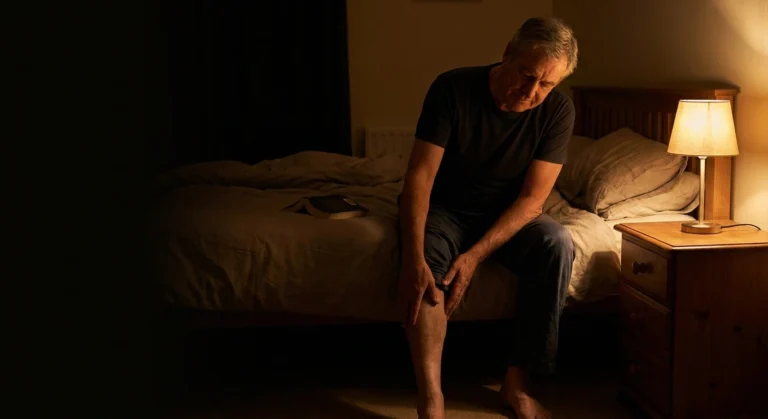
A man in our support group described it once in a way I’ve never forgotten. He said, “I can walk fine when I can see the floor. The trouble is closing my eyes in the shower. The second the water hits and my eyes shut, the bathroom starts spinning, and I’m grabbing for the wall.” He didn’t have an inner-ear problem. His blood-sugar numbers were under control. What was happening to him is called sensory ataxia, and it’s one of the most disorienting — and least talked-about — symptoms of nerve damage.
I’m Janet, a patient advocate (not a medical professional), and sensory ataxia is the kind of symptom that gets dismissed as “just feeling unsteady” until someone falls in a dark hallway and lands in the ER. It deserves its own honest conversation. This is what it is, why it happens, how doctors test for it, and the practical adaptations that keep people on their feet.
What Sensory Ataxia Actually Is
Ataxia is the medical word for poor coordination — the body doesn’t move the way the brain intends. There are several kinds, and they come from different parts of the nervous system. Cerebellar ataxia comes from damage to the cerebellum, the brain’s coordination center. Vestibular ataxia comes from inner-ear problems. Sensory ataxia comes from damaged peripheral nerves that can no longer tell the brain where your body is in space.
Key Takeaway
Sensory ataxia is balance loss from damage to the large nerve fibers that tell your brain where your body is in space. The signature: you walk fine in good light, but the moment vision is removed — in the dark, in the shower with eyes closed — your balance collapses. Several causes are reversible. The Romberg test takes 30 seconds in the office. Push for the full workup.
That sense of “where your body is” without looking is called proprioception. It’s the sixth sense most people don’t realize they have. Close your eyes right now and you know where your right foot is, whether your knees are bent, whether your hand is over the table or in your lap. That information travels from special receptors in your joints, muscles, and skin up the largest, fastest, most heavily-insulated sensory fibers in your peripheral nervous system, then up the back of your spinal cord (a tract called the dorsal columns) to your brain.
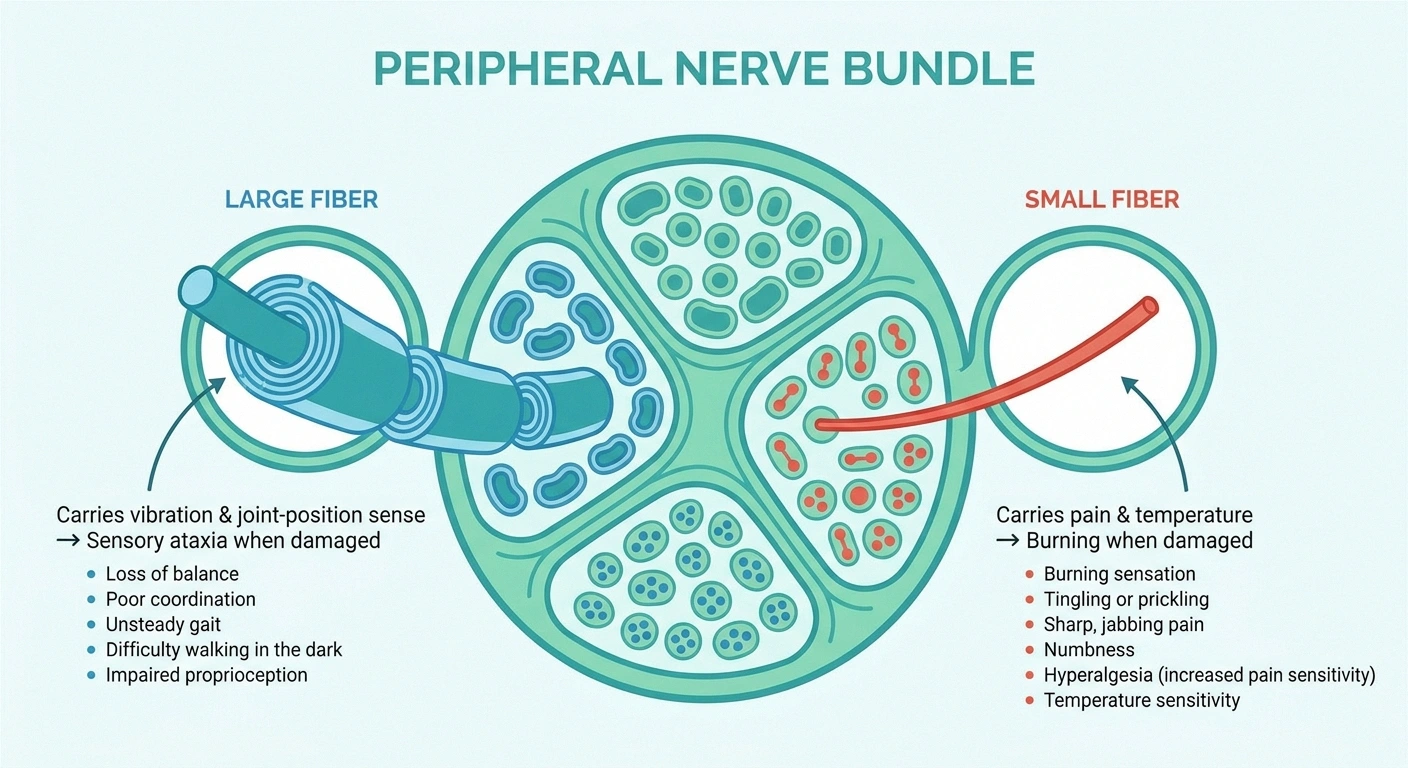
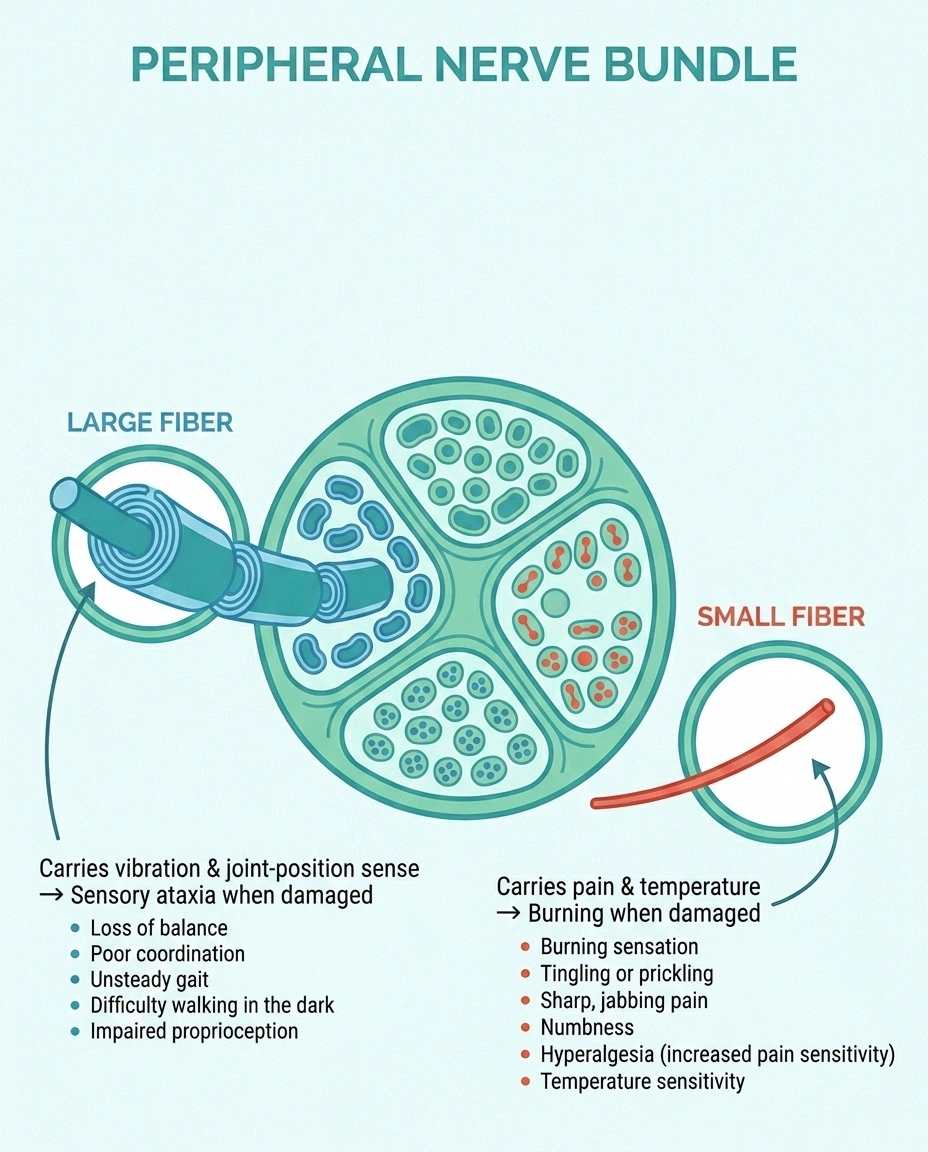
When neuropathy damages those large fibers, the messages stop arriving. Your brain still tries to coordinate movement, but it’s working blind. As long as you can see your feet, your vision substitutes for the missing proprioception and you can compensate. The moment vision is removed — in the dark, in the shower with eyes shut, on uneven ground where your feet are not in your line of sight — the coordination falls apart. That sudden vulnerability when vision goes away is the signature of sensory ataxia.
What It Feels Like — The Symptoms Patients Describe
Sensory ataxia announces itself in a handful of very recognizable ways. If several of these sound familiar, it’s worth bringing them up with your doctor.
- “Walking on cotton” or “walking on marshmallows.” The feet feel disconnected from the floor. Patients can’t tell exactly when their heel has touched down. Some describe it as feeling like there’s a layer of foam between the foot and the ground.
- Worse in the dark. The most consistent feature. Walking to the bathroom at night, navigating a dim hallway, or showering with eyes closed produces an immediate unsteadiness that doesn’t exist in good light.
- The “slapping” or “stomping” gait. Because patients can’t feel where their feet are landing, they often lift the foot higher and bring it down with extra force — both to clear the ground and to feel the impact when it lands. From across a room, the walking can look almost like a high-step march.
- Trouble on uneven ground. A grass lawn, a gravel driveway, a beach, or a slightly tilted sidewalk produces sudden instability that flat indoor floors don’t.
- Catching the edge of doorways. Hands and arms can be affected too. People describe knocking into door frames with their elbows, missing the rim of a coffee cup, or fumbling buttons.
- Pseudoathetosis. A dramatic but classic finding — when someone with severe sensory ataxia holds their hands out with eyes closed, the fingers slowly drift and wander on their own, as if the hand has forgotten what it’s supposed to be doing. Doctors look for this in the office.
- Falls, especially at night or in the bathroom. The combination of darkness, hard surfaces, and water turns a routine 3 a.m. trip into the highest-risk movement of the day. Our piece on why neuropathy gets worse at night covers the bigger picture of how darkness changes the body’s coping options.
What’s typically not present is the burning, electric, or shooting pain that small-fiber neuropathy is famous for. Sensory ataxia primarily damages the large, fast, myelinated fibers — not the small ones that carry pain and temperature. Many patients with sensory ataxia have surprisingly little pain, which is one reason the condition often goes undiagnosed for years.
The Romberg Test — A Simple Bedside Tell
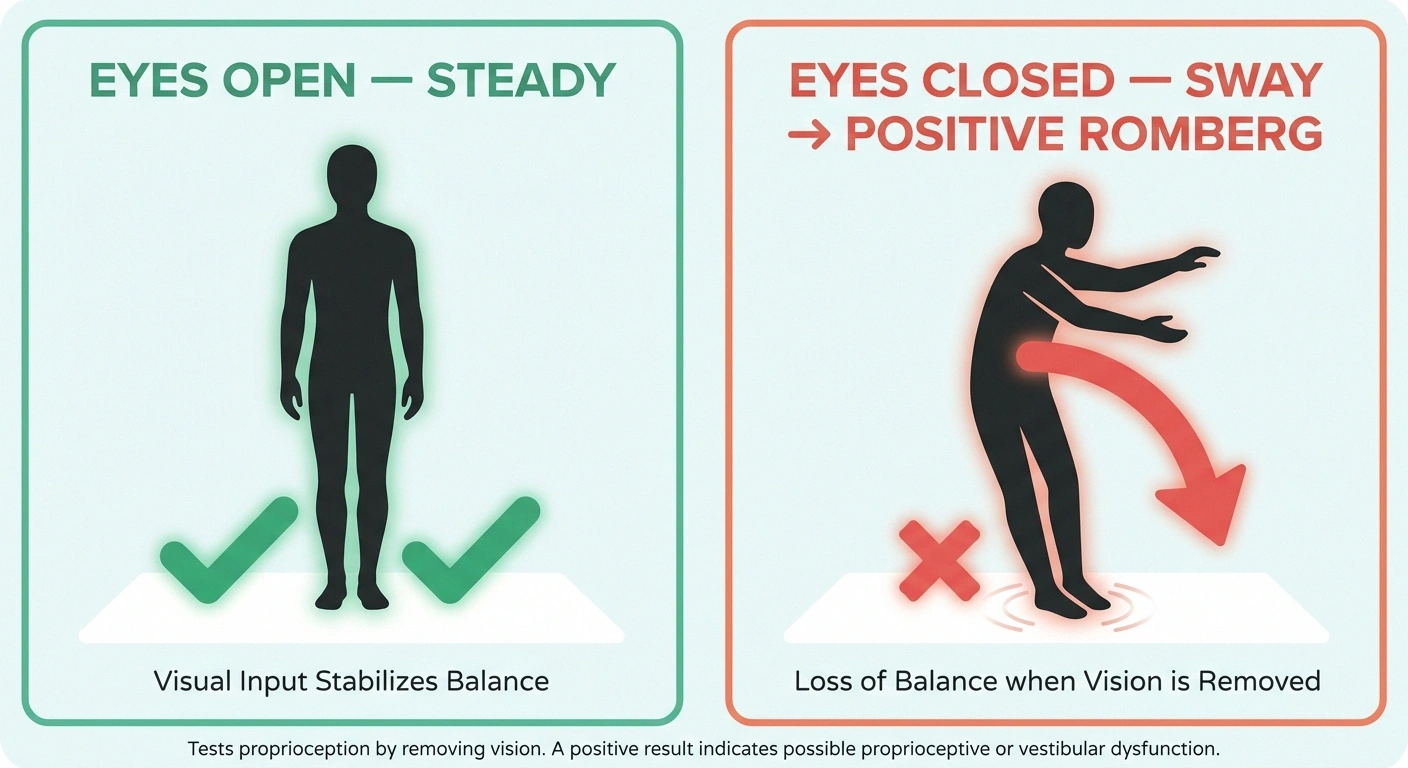
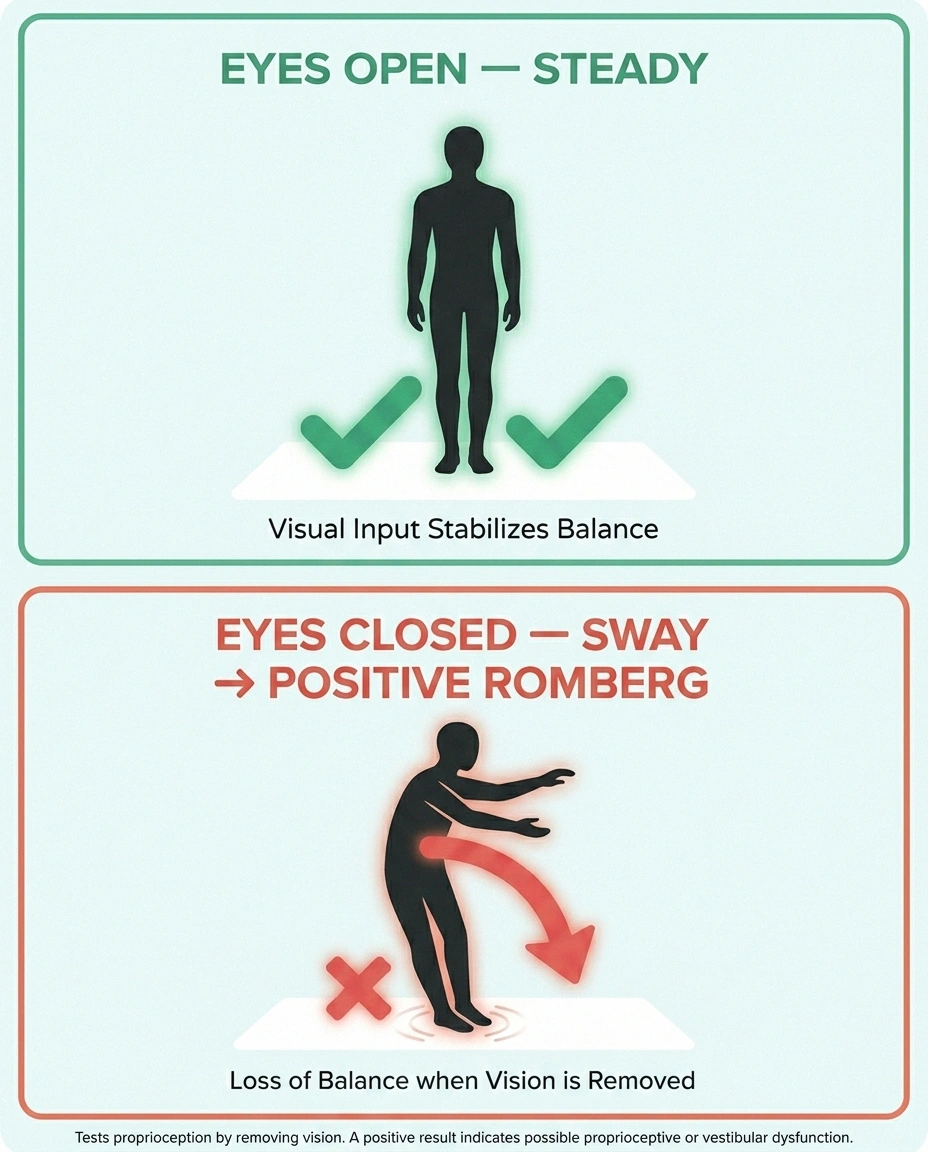
One of the oldest physical exam tests in neurology is also one of the most useful for sensory ataxia: the Romberg test. It’s named after the 19th-century neurologist Moritz Romberg, who first formalized it.
The Romberg Test in 30 Seconds
The test is simple. Stand with your feet together. Hold the position with your eyes open — most people, even those with mild balance problems, can do this. Then close your eyes. Someone with normal proprioception will sway slightly but stay upright. Someone with sensory ataxia will start to lose their balance almost immediately, often grabbing for support.
The Romberg test isolates proprioception by removing two of the three balance systems: vision (eyes closed) and vestibular input (the inner ear can’t tell which way is forward if the head is still). Only proprioception is left. If proprioception is damaged, balance collapses.
If you’ve never been given this test by a neurologist and you suspect sensory ataxia, ask. It takes 30 seconds and is one of the most informative tests in the office. Combined with a careful sensory exam — testing vibration with a tuning fork on the toes, joint position sense on the big toe — it can localize the problem to the large fibers and the dorsal columns. Our overview of tests your doctor may order for neuropathy walks through the full diagnostic workup, including the EMG/NCS that follows the bedside exam.
What Causes Sensory Ataxia — The Important Differential
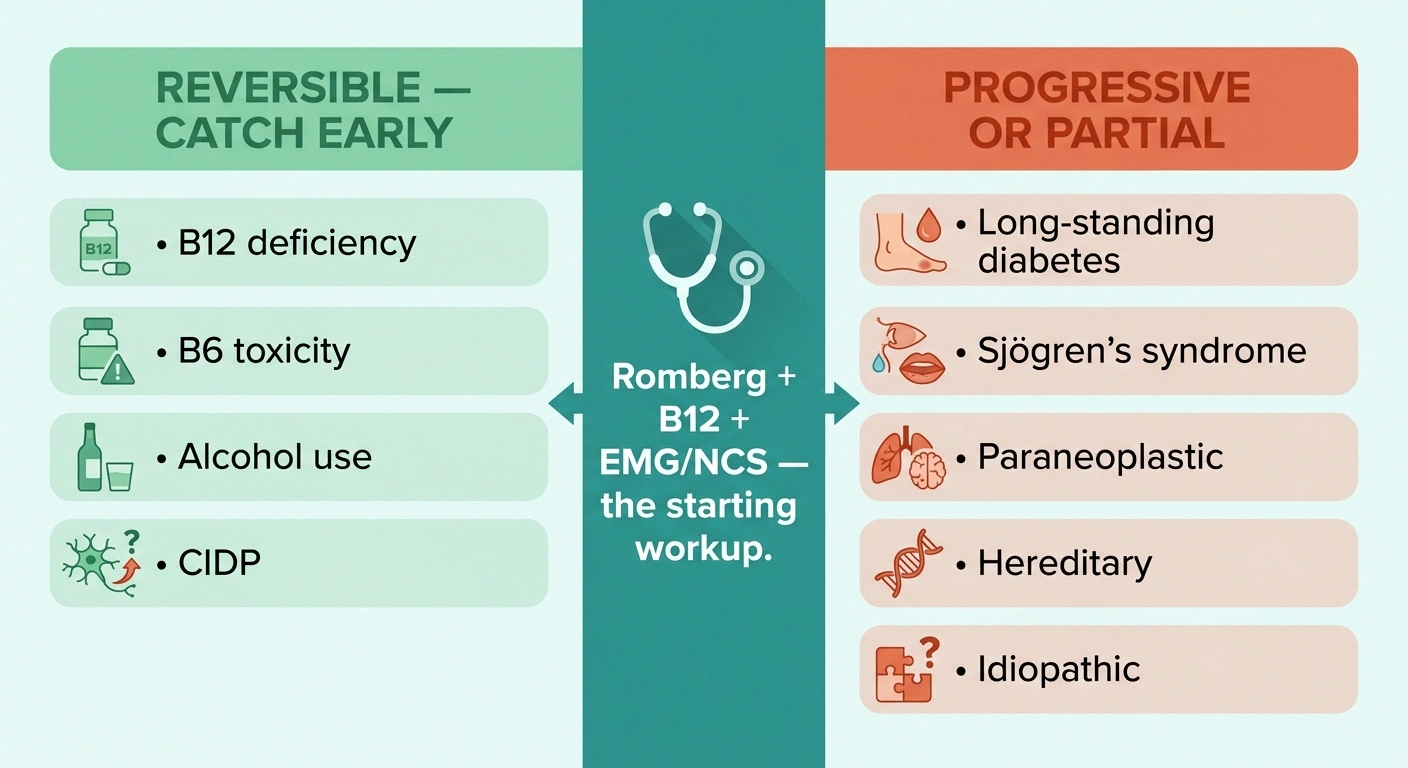
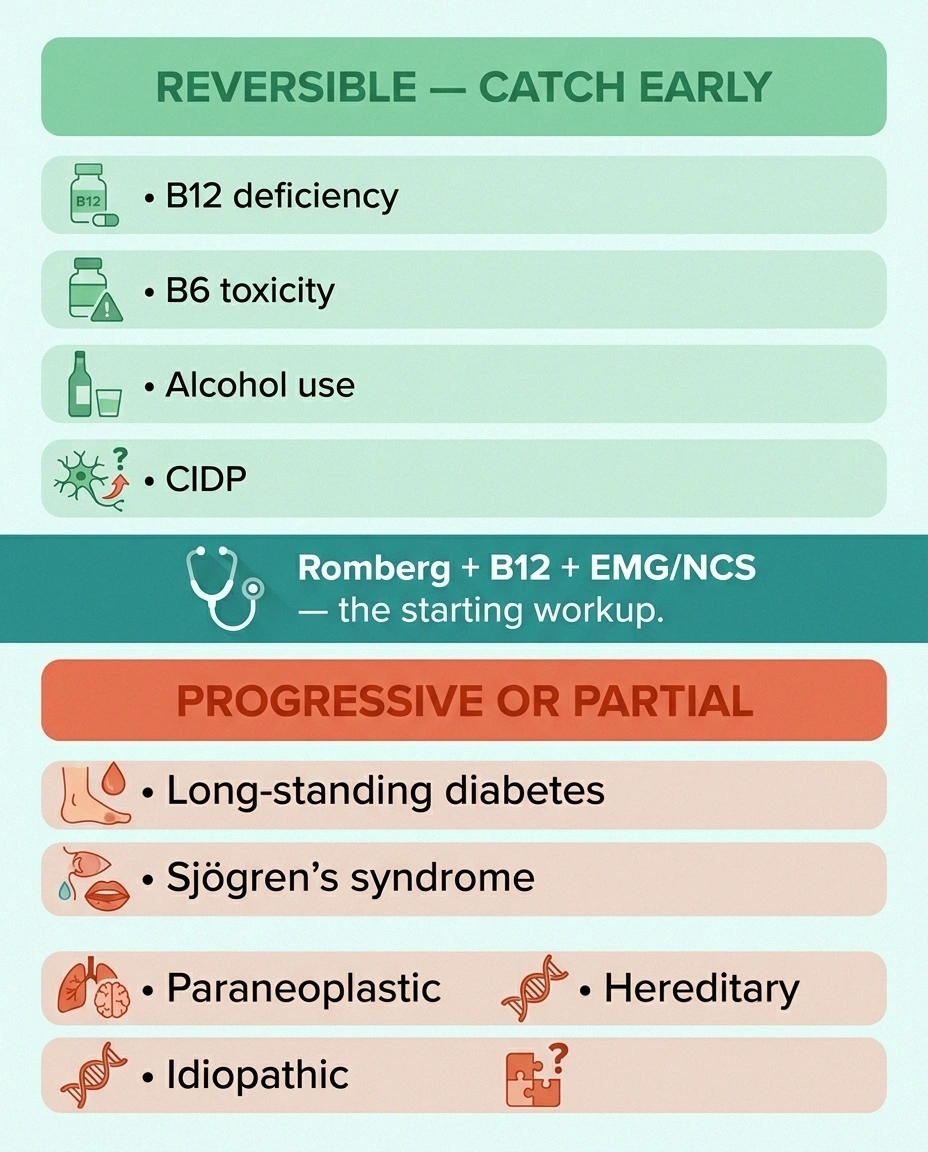
Sensory ataxia is a pattern, not a diagnosis. Many different conditions can damage the large sensory fibers or the dorsal columns. Sorting out the cause is essential because some are reversible and a few are urgent.
Check the B6 Dose on Your Supplements
High-dose vitamin B6 — above 100 mg/day for months — can paradoxically cause sensory neuropathy and ataxia. Many “nerve support” supplements contain dramatically more than the body needs. Look at the label of every supplement you take:
- Safe range: 1.3-1.7 mg/day (RDA), or a standard B-complex
- Yellow flag: 25-50 mg/day for short periods
- Red flag: 100+ mg/day chronic use
If you’ve been taking high-dose B6, ask your doctor to check a B6 (pyridoxine) blood level. Stopping the supplement can produce slow but meaningful recovery.
Diabetic neuropathy, severe stage. Long-standing diabetes can damage large fibers, especially after small-fiber symptoms (burning, pain) have already been present for years. The progression from a “burning feet” presentation to a balance-impaired presentation is unfortunately common in untreated diabetic nerve disease. Our piece on diabetic neuropathy covers the broader progression.
Vitamin B12 deficiency. One of the most important causes to catch because it’s reversible. B12 deficiency causes a specific pattern called subacute combined degeneration, which damages both the peripheral nerves and the dorsal columns of the spinal cord. Patients often have a positive Romberg, vibration loss, and sometimes brisk reflexes (an unusual combination). A B12 level and methylmalonic acid test should be on the workup of every patient with sensory ataxia. If you’d like to read more on the supplementation side, our piece on B12 injections vs. oral supplements for neuropathy covers the treatment options, and our broader article on vitamin-deficiency neuropathy covers the full picture.
Alcohol-related nerve damage. Heavy chronic alcohol use damages large fibers along with the small. The mechanism includes direct nerve toxicity plus thiamine and B-vitamin deficiencies that accompany heavy drinking. See our article on alcoholic neuropathy for the broader picture.
CIDP (chronic inflammatory demyelinating polyneuropathy). An autoimmune attack on the myelin sheath of large fibers. CIDP responds to treatment with IVIG, plasmapheresis, or steroids — making it another diagnosis you don’t want to miss.
Sjögren’s syndrome and other autoimmune conditions. Sjögren’s particularly can attack the sensory nerve cell bodies in the dorsal root ganglia, producing one of the more dramatic forms of pure sensory neuropathy with prominent ataxia.
Paraneoplastic syndromes. A small number of cancers — most notably small-cell lung cancer — can trigger an autoimmune attack on the sensory ganglia. The neuropathy may appear before the cancer is diagnosed, making it one of the harder workups in neurology.
Vitamin B6 (pyridoxine) toxicity. Yes, taking too much can cause it. Doses above 100 mg/day for months can damage the dorsal root ganglia and produce a profound sensory ataxia that improves slowly after stopping the supplement. This is why high-dose B6 in “nerve health” supplements is a real concern.
Hereditary neuropathies. Some genetic conditions, including certain forms of Charcot-Marie-Tooth disease and Friedreich’s ataxia, produce predominantly sensory ataxia.
Idiopathic. In some cases, no clear cause is found despite a thorough workup. These cases are grouped under idiopathic neuropathy and treated symptomatically.
How It’s Diagnosed
The workup for sensory ataxia is more thorough than the workup for a typical small-fiber neuropathy because the differential is wider and includes several reversible conditions. A reasonable evaluation includes:
B12 Deficiency Is Often Missed
Studies of patients presenting with unexplained sensory ataxia have repeatedly found that 10-15% have an unrecognized B12 deficiency. Standard B12 testing can miss borderline cases, which is why a methylmalonic acid (MMA) test alongside the B12 level is more sensitive. People at higher risk include vegetarians and vegans, those over 65, anyone on long-term acid blockers (PPIs) or metformin, and post-bariatric-surgery patients. A reversible cause caught early is much more recoverable than the same cause caught after years.
- Bedside neurological exam. Romberg test, vibration sense with a 128 Hz tuning fork at the great toe, joint position sense, reflex check, and a careful look for the high-stepping gait.
- EMG and nerve conduction study (NCS). Sensory ataxia from peripheral nerve damage typically shows reduced or absent sensory nerve action potentials with relatively preserved motor function on the NCS. This pattern strongly suggests a sensory neuronopathy or large-fiber neuropathy.
- Bloodwork. Vitamin B12, methylmalonic acid, homocysteine, vitamin B6 level (yes, to check for toxicity), thyroid function, A1C, fasting glucose, paraprotein screen (SPEP, IFE), antinuclear antibody, anti-SSA/SSB for Sjögren’s, and screening for paraneoplastic antibodies in selected cases.
- MRI of the cervical and thoracic spine. To look for damage to the dorsal columns from B12 deficiency, MS, or compression.
- In some cases, a lip biopsy (for Sjögren’s) or a nerve biopsy (rare, in cases where the workup is otherwise unrevealing).
This is not a one-visit workup. Plan on two or three visits to a neurologist, blood draws, and possibly imaging.
Treatment — Two Tracks, Pursued in Parallel
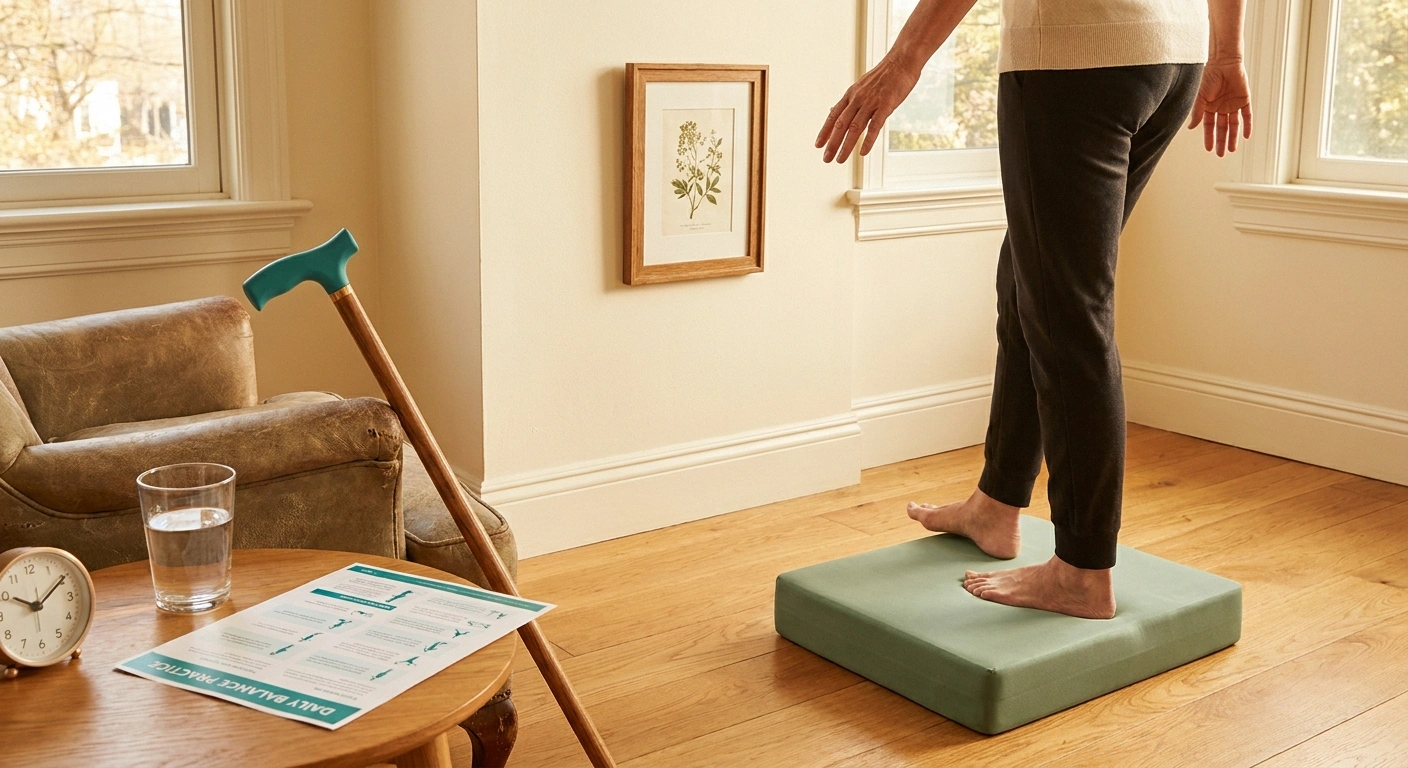
Treatment for sensory ataxia runs on two parallel tracks. One is treating the underlying cause; the other is rehabilitating balance and preventing falls. Both matter.
Track 1 — Treat the cause. If B12 deficiency is the issue, replacement (often by injection initially, then oral or sublingual) reverses much of the damage. If alcohol is the cause, sobriety stops the progression. If CIDP is the diagnosis, IVIG or steroids can dramatically improve function. If diabetic, tighter blood-sugar control reduces further large-fiber loss. If B6 toxicity is found, stopping the supplement and time are the treatment.
Track 2 — Rehabilitate balance. This track applies to every patient, regardless of cause. Balance retraining works in sensory ataxia because the brain can be trained to rely more heavily on the two remaining balance systems — vision and the inner ear — to compensate for the missing proprioception. A physical therapist trained in vestibular rehab and balance retraining can teach:
- Visual cueing — actively scanning the floor and watching the feet land
- Gaze stabilization — keeping the eyes on a fixed target during head movement
- Wide-base standing and gradual narrow-base training
- Tandem walking (heel-to-toe) with hand support
- Foam-pad standing with eyes open, progressing to eyes closed under supervision
- Tai chi-style slow movement work, which has reasonable evidence for fall prevention in older adults with balance impairment
For most patients, three to six months of consistent balance work — not just at appointments, but daily at home — produces meaningful improvement. The rule of thumb is that gains from balance training plateau without daily practice; ten minutes a day for months beats one big session a week.
For a deeper look at the day-to-day balance and fall-prevention work, our piece on neuropathy and balance: fall prevention strategies that work covers the practical exercises and home modifications. And for general low-impact strengthening that supports the balance work, neuropathy exercises for seniors offers gentle movement that complements the proprioception retraining.
Practical Adaptations — The Daily Survival Kit

While the cause is being treated and the balance work is building, life still has to happen. A few practical adaptations make a substantial difference in safety and confidence:
High-Leverage Daily Adaptations
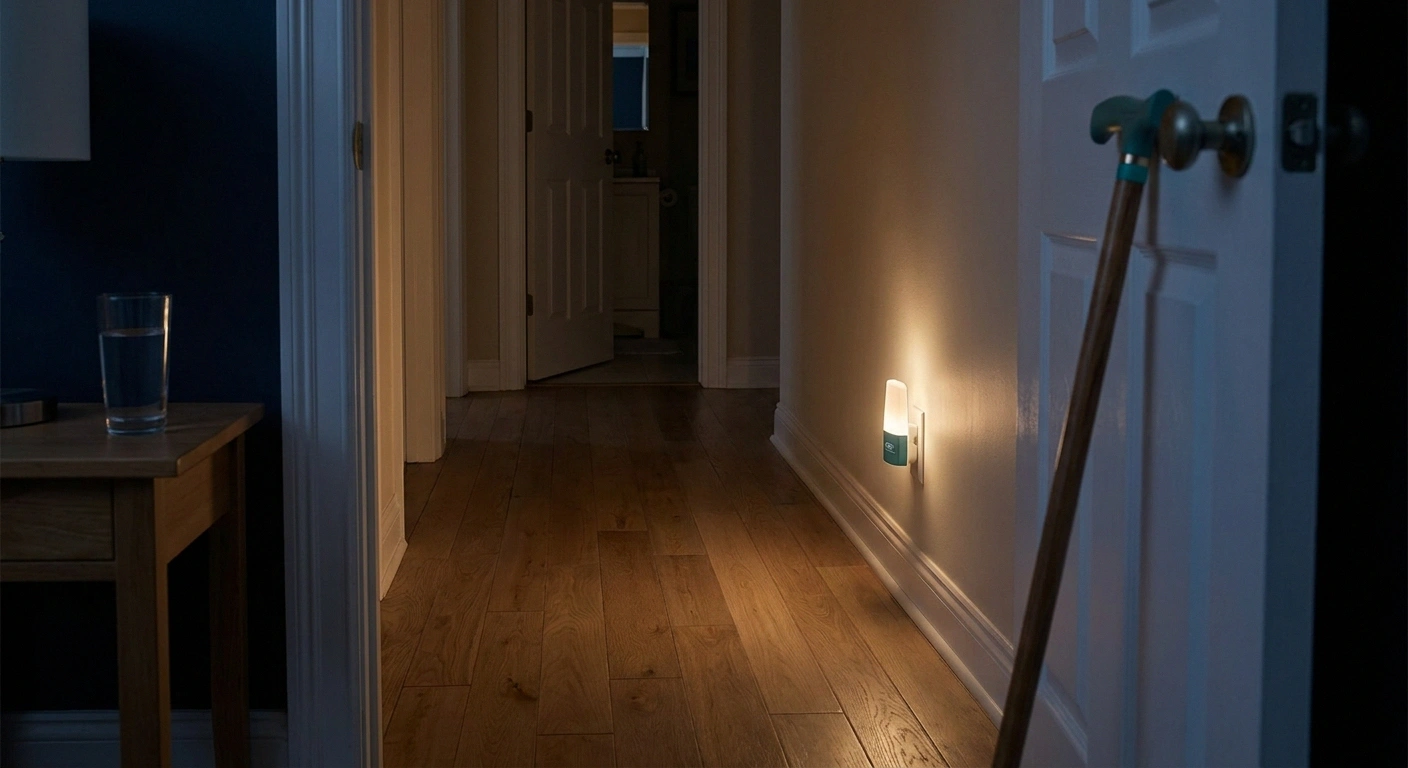
Light up the path between bed and bathroom. Plug-in motion-activated nightlights along the floor in the hallway and bathroom turn the highest-risk movement of the day — the dark middle-of-the-night walk — into something manageable. Don’t rely on the overhead light switch by the bed; by the time you’re reaching for it, you’ve already taken your first uncertain steps.
Use a cane sooner than you think you need one. A cane is not a failure. For sensory ataxia, a cane gives your arm a second source of position information — through the pressure transmitted up the shaft — and a stabilizing third point of contact. Many people put off using one for years out of pride, then are grateful within a week of starting. A walker may eventually be helpful for steeper terrain or longer distances.
Choose shoes with a wide base and good ground feel. Soft, cushiony soles paradoxically make sensory ataxia worse — they reduce the small amount of ground-contact information your feet are still able to send. A firmer, flatter sole with a wide base is often better. Our guide to the best shoes for neuropathy covers the trade-offs in detail.
Treat the bathroom like the highest-risk room in the house. A grab bar in the shower, a non-slip mat, a shower bench if you tend to close your eyes when you shampoo, and a raised toilet seat all reduce the chance that a bathroom is where your next fall happens.
Daily foot care. Because sensory ataxia often comes with reduced sensation in the feet, a foot you can’t feel is a foot you can’t easily monitor for injury. A short daily foot check is one of the highest-leverage habits anyone with peripheral neuropathy can build. See our piece on neuropathy foot care for the daily routine.
Outdoor caution after dark. If you have to go out at night, carry a small flashlight that lights the ground in front of you, even in a familiar neighborhood. Uneven sidewalks, dropped curbs, and lawn edges are where sensory ataxia turns ordinary walking into falls.
The Realistic Prognosis
The honest answer to “will this get better?” depends entirely on the cause and how long it’s been present.
If a reversible cause is identified and treated early — B12 deficiency caught within a few months, B6 toxicity stopped early, sobriety in alcohol-related cases, CIDP treated promptly — substantial recovery is possible. Function often improves dramatically over six to twelve months.
If the cause is identified but the damage has been present for years, partial improvement is realistic but full recovery is less likely. The dorsal columns and large peripheral fibers regenerate slowly, and some axons may not recover at all.
If the cause is idiopathic or progressive (such as some hereditary neuropathies or paraneoplastic syndromes that don’t respond to cancer treatment), the goal shifts from reversal to maintenance — keeping function stable, preventing falls, and adapting the home and routine to support a person with reduced proprioception. Our broader piece on whether neuropathy can be reversed covers the wider conversation about realistic expectations across different nerve conditions.
When to Push Harder for a Workup
If you’ve been told you have “just balance issues” or “diabetic neuropathy” without a careful sensory examination and reversible-cause workup, push for more. A B12 level and a methylmalonic acid test cost almost nothing. A Romberg test takes 30 seconds. An EMG/NCS that shows the pattern of pure sensory loss can change the diagnostic direction entirely.
The Three-Question Self-Check
Bring these to your next neurology appointment if any answer is yes:
- Is my balance dramatically worse in the dark than in light?
- Have I had a B12 level AND methylmalonic acid test in the last 12 months?
- Has anyone performed the Romberg test on me with a careful sensory exam?
Specifically, ask your doctor to consider sensory ataxia and a wider workup if you have:
- Falls or near-falls in the dark when daytime balance is fine
- Worsening balance over weeks to months, not years
- Numbness and unsteadiness without much pain
- A history of bariatric surgery, vegetarian or vegan diet, chronic acid-blocker use, or heavy alcohol use (all B12 deficiency risk factors)
- A new neurologic symptom alongside the balance issue — particularly weakness or vision changes
Reversible causes caught late are much less recoverable than reversible causes caught early. This is a workup worth being firm about.
Frequently Asked Questions
What is the difference between sensory ataxia and small-fiber neuropathy?
They affect different parts of the peripheral nerve. Small-fiber neuropathy damages the thin, unmyelinated fibers that carry pain and temperature, producing burning, electric, and shooting sensations. Sensory ataxia damages the large, heavily-myelinated fibers that carry vibration and joint-position sense, producing unsteadiness, especially in the dark, with little or no pain. Many patients have a mix of both, but the patterns are distinct on exam and on nerve conduction testing.
Why is my balance so much worse in the shower?
Two reasons combine. First, water on your face often forces your eyes shut, removing the visual compensation you rely on. Second, the shower floor is hard, slick, and confined, leaving little margin if balance fails. A shower bench or chair, a non-slip mat, a grab bar, and washing your hair with eyes open as much as possible all reduce the risk. Some people with significant sensory ataxia find that a handheld shower wand used while seated is the only reliably safe way to bathe.
Can sensory ataxia be reversed?
It depends entirely on the cause. B12 deficiency, B6 toxicity, alcohol-related cases caught early, and CIDP can all improve substantially or fully with treatment. Long-standing diabetic large-fiber damage, hereditary neuropathies, and idiopathic cases tend to be more permanent, though balance training still produces real functional gains by teaching the brain to rely more on vision and the inner ear.
Should I be taking high-dose vitamin B6 for nerve health?
Generally no. Vitamin B6 doses above 100 mg per day taken for months can paradoxically cause a sensory neuropathy with prominent ataxia. Many over-the-counter “nerve support” formulas contain dramatically higher doses than the body actually needs. A standard B-complex with normal RDA-level B6 (around 1.3-1.7 mg/day) is safe. Stand-alone B6 megadoses are a risk, not a benefit. Always check the label.
Why does my doctor keep tapping my big toe?
That’s a joint-position sense test. Holding the toe at the sides and moving it slightly up or down with the patient’s eyes closed tests whether the large sensory fibers are working. If you can’t tell which direction the toe was moved, your dorsal-column pathway has significant damage. Together with vibration testing using a 128 Hz tuning fork, this is one of the quickest ways to document sensory ataxia at the bedside.
Is sensory ataxia the same as cerebellar ataxia?
No. Cerebellar ataxia comes from damage to the cerebellum (a part of the brain) and typically does not improve when the eyes are open. Sensory ataxia comes from peripheral nerve or dorsal column damage and improves substantially with visual input. The Romberg test is the classic way to distinguish them at the bedside: a positive Romberg (collapse on closing the eyes) points to a sensory cause; a patient who is equally unsteady with eyes open and closed points to a cerebellar cause.
What kind of doctor should I see for this?
A neurologist is the right starting point, ideally one who treats peripheral nerve disorders. A primary care physician can order the initial bloodwork (B12, methylmalonic acid, B6 level, A1C, thyroid panel) but the workup typically benefits from a neurologist coordinating the EMG/NCS and the autoimmune and paraneoplastic screens. A physical therapist trained in vestibular and balance rehab is the second key team member.
Will a cane really help — I don’t have weak legs?
Yes, often more than you’d expect. The cane isn’t compensating for weakness in sensory ataxia. It’s giving you a stable third point of contact and feeding pressure and position information through your arm that your feet can’t reliably provide. People often discover they walk more confidently, faster, and more upright with the cane than without — even though their strength is fine.
About the Author