When I was first diagnosed with neuropathy, one of the hardest social adjustments was figuring out what to drink. My neurologist told me to cut back on alcohol — or better yet, cut it out entirely — and suddenly every dinner party, holiday gathering, and Friday night felt different. I was standing there with a glass of water while everyone else had wine.
If you're in that same boat, I want you to know: giving up alcohol doesn't mean giving up delicious, satisfying drinks. In fact, some of the best beverages for people with neuropathy actually support nerve health with anti-inflammatory ingredients, blood sugar stability, and essential nutrients your nerves need to heal.
This guide is packed with alcohol-free drink recipes specifically designed for people managing neuropathy — drinks that taste wonderful and may actually help your symptoms rather than making them worse.
Why Alcohol and Neuropathy Don't Mix
Before we get to the good stuff, let's talk briefly about why your doctor probably suggested cutting back. Alcohol is directly toxic to nerve tissue. Even moderate drinking can worsen neuropathy symptoms by depleting B vitamins (especially B1 and B12), increasing inflammation, and destabilizing blood sugar — three things that are terrible for damaged nerves.
Key Takeaway
Alcohol is directly toxic to nerve tissue, depletes B vitamins, increases inflammation, and destabilizes blood sugar — four mechanisms that worsen neuropathy. Cutting it out is one of the most impactful lifestyle changes you can make for your nerve health.
According to the National Institute of Neurological Disorders and Stroke, alcohol-related nerve damage is one of the most common causes of peripheral neuropathy in the United States. But even if your neuropathy isn't caused by alcohol, drinking can still accelerate nerve damage. If you want the full picture, our guide to neuropathy and alcohol limits covers this in detail.
The good news? Cutting out alcohol is one of the most impactful things you can do for your nerve health. And these recipes make it a lot easier.
What Makes a Drink “Nerve-Friendly”?
Not all alcohol-free drinks are created equal. A sugary mocktail loaded with simple syrup might be alcohol-free, but it's going to spike your blood sugar — which is just as bad for your nerves as the alcohol itself. According to research published in Diabetes Care, blood sugar spikes damage the small blood vessels that supply your peripheral nerves.
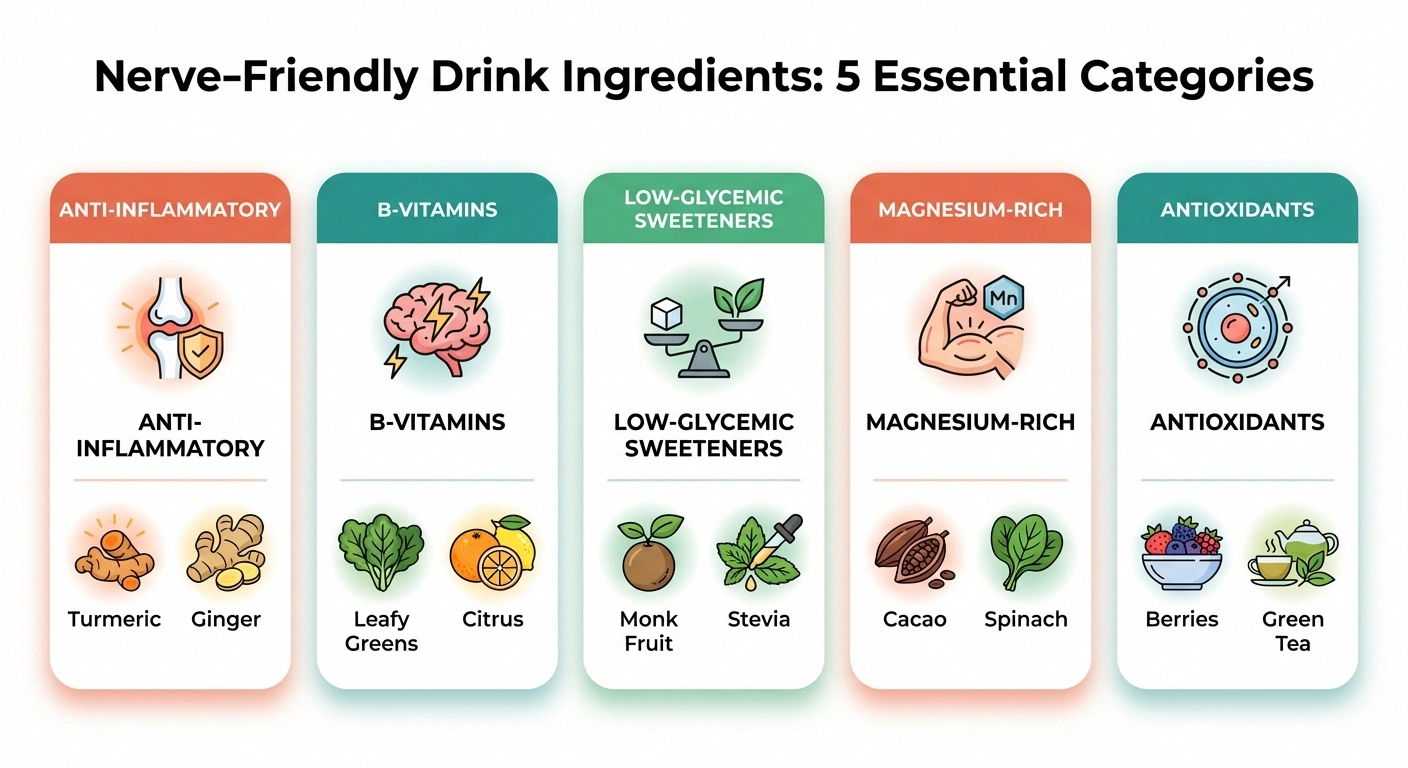
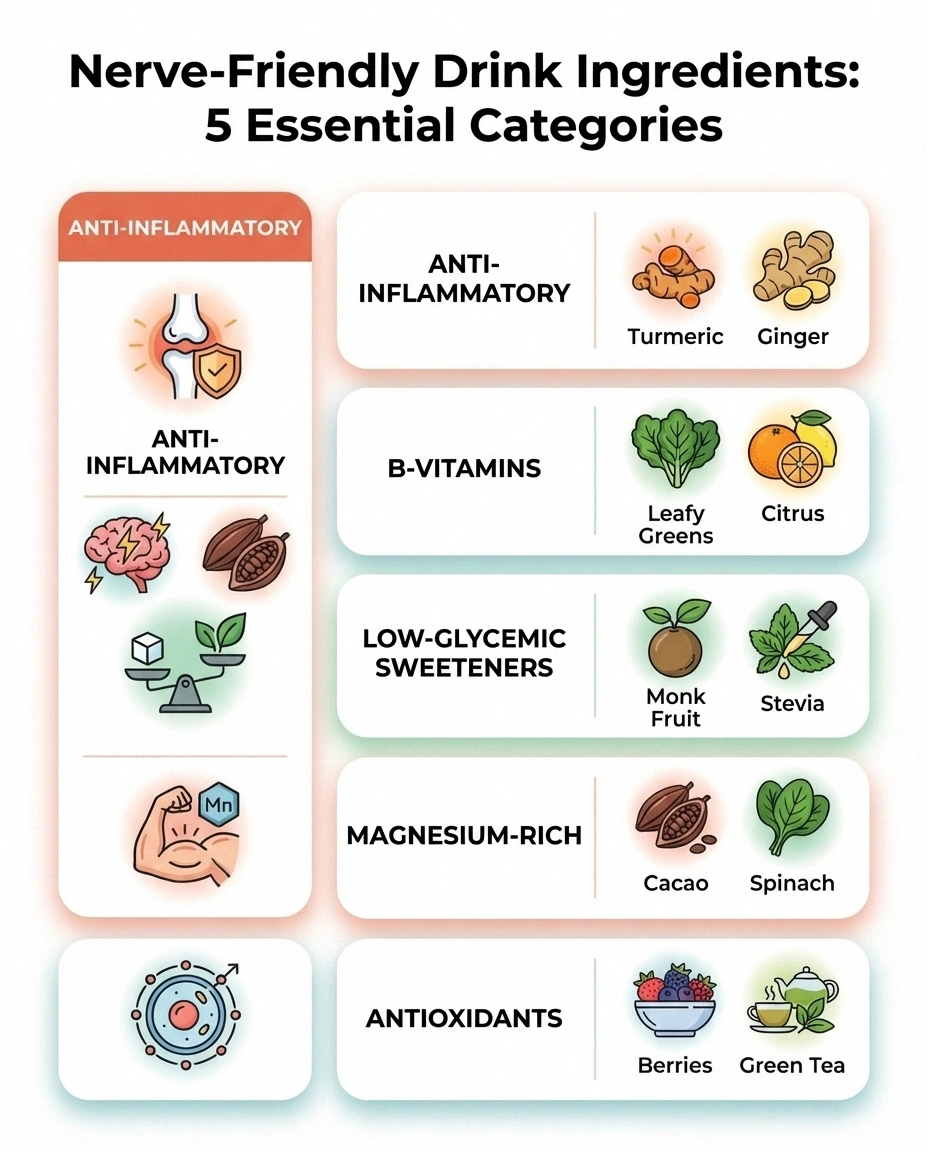
The drinks in this guide are built around ingredients that may actively support nerve health:
- Anti-inflammatory ingredients — turmeric, ginger, tart cherry, green tea — that may help calm the chronic inflammation driving nerve pain
- B-vitamin sources — certain fruits, nutritional yeast, leafy greens — that support the nutrients your nerves need for repair
- Low-glycemic sweeteners — raw honey in small amounts, stevia, monk fruit — that won't send your blood sugar on a roller coaster
- Magnesium-rich ingredients — dark leafy greens, cacao — that support nerve signaling and may help reduce pain
- Antioxidants — berries, pomegranate, green tea — that help protect nerve cells from oxidative stress
For more on how diet affects your nerves, check out our complete neuropathy diet guide.
Anti-Inflammatory Mocktails for Nerve Pain
These mocktails are built around ingredients with studied anti-inflammatory properties. They're the drinks I reach for when my neuropathy is flaring and I want something that feels like a treat but might actually be helping.
🍹 Quick-Start Mocktail Guide
Pain Flaring?
Try the Golden Turmeric Tonic or Ginger-Tart Cherry Spritzer — anti-inflammatory powerhouses.
Can't Sleep?
Reach for Chamomile-Lavender or the Tart Cherry Sleep Elixir — calming + natural melatonin.
Social Event?
The Berry-Basil Smash or Watermelon-Rosemary Refresher look stunning in a wine glass.
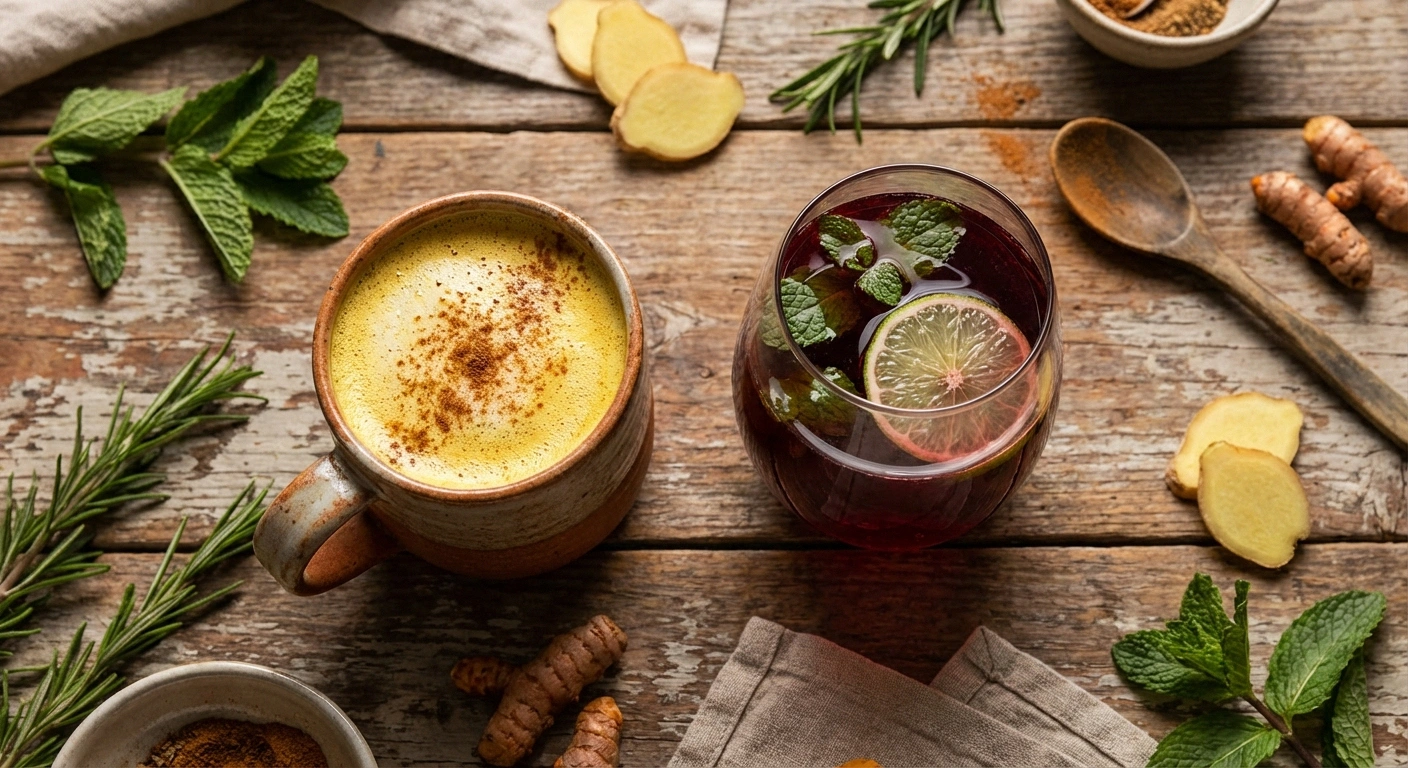
Golden Turmeric Tonic
Turmeric contains curcumin, a compound that has shown anti-inflammatory and neuroprotective properties in multiple studies. This warm, spicy drink is like a hug for your nervous system.
Ingredients:
- 1 cup unsweetened oat milk (or any plant milk)
- 1 teaspoon ground turmeric (or 1 inch fresh turmeric, grated)
- ½ teaspoon ground cinnamon
- ¼ teaspoon ground ginger
- Pinch of black pepper (helps your body absorb curcumin)
- 1 teaspoon raw honey or maple syrup (optional)
Instructions: Warm the milk in a small saucepan over medium heat. Whisk in the turmeric, cinnamon, ginger, and black pepper. Heat until steaming but not boiling — about 3 minutes. Pour into your favorite mug and stir in honey if using. The black pepper is important: a 1998 study in Planta Medica found that piperine (from black pepper) increases curcumin absorption by up to 2,000 percent.
Ginger-Tart Cherry Spritzer
Tart cherry juice is rich in anthocyanins — powerful antioxidants that research suggests may reduce inflammatory markers. A 2019 study in Nutrients found that tart cherry concentrate reduced C-reactive protein, an inflammation marker, in adults. Combined with ginger's anti-inflammatory properties, this is a drink that works as hard as it tastes.
Ingredients:
- ¼ cup unsweetened tart cherry juice concentrate
- 1 tablespoon fresh ginger juice (or ½ teaspoon ground ginger)
- 1 cup sparkling water
- Juice of half a lime
- Ice
- Fresh mint leaves for garnish
Instructions: Combine the cherry juice concentrate, ginger juice, and lime juice in a glass. Add ice, then slowly pour in the sparkling water. Stir gently and garnish with mint. This one looks gorgeous in a wine glass — nobody at the dinner table needs to know it's alcohol-free.
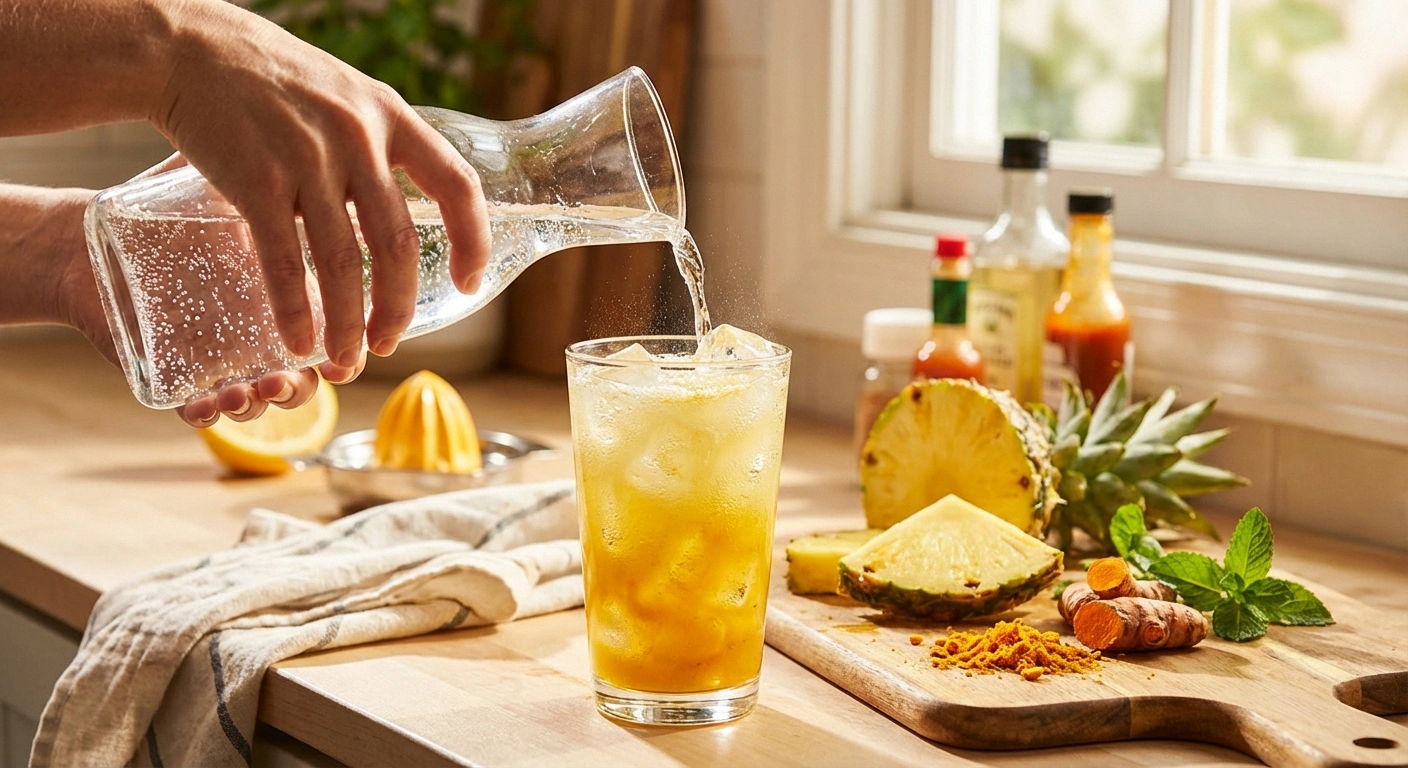
Pineapple-Turmeric Anti-Inflammatory Punch
Pineapple contains bromelain, an enzyme with anti-inflammatory properties that may help reduce swelling and pain. Combined with turmeric and a touch of cayenne, this is a vibrant punch that's perfect for sharing.
Ingredients:
- 2 cups fresh pineapple juice (not from concentrate)
- 1 teaspoon ground turmeric
- Tiny pinch of cayenne pepper
- 1 cup coconut water
- Juice of 1 lemon
- Sparkling water to top off
Instructions: Blend the pineapple juice, turmeric, cayenne, coconut water, and lemon juice together. Strain if desired. Pour over ice and top with sparkling water. Makes 2-3 servings — great for a batch at a gathering.
Soothing Warm Drinks for Nighttime Nerve Pain
If your neuropathy is worse at night — and for most of us, it is — these warm drinks are designed to help you wind down. Several contain ingredients that may support sleep while calming inflammation.
Chamomile-Lavender Nerve Soother
Chamomile has been used for centuries as a calming herb. Research published in Molecular Medicine Reports suggests chamomile's apigenin compound may have neuroprotective effects. Add lavender for an extra layer of relaxation.
Ingredients:
- 1 chamomile tea bag (or 1 tablespoon dried chamomile flowers)
- ½ teaspoon dried food-grade lavender buds
- 1 cup hot water (not quite boiling)
- 1 teaspoon honey (optional)
- Splash of warm oat milk (optional)
Instructions: Steep the chamomile and lavender in hot water for 5-7 minutes. Strain and add honey and warm milk if desired. Drink 30-60 minutes before bed.
Warm Cacao Magnesium Elixir
This is nothing like the sugary hot chocolate you grew up with. Raw cacao is one of nature's richest sources of magnesium — a mineral that plays a critical role in nerve function and pain modulation. One tablespoon of raw cacao powder contains about 27 milligrams of magnesium.

Ingredients:
- 1 tablespoon raw cacao powder (not cocoa — raw cacao has more nutrients)
- 1 cup unsweetened almond or cashew milk
- ½ teaspoon cinnamon
- ¼ teaspoon vanilla extract
- 1 teaspoon maple syrup or monk fruit sweetener
- Pinch of sea salt
Instructions: Warm the milk over medium heat. Whisk in the cacao powder, cinnamon, vanilla, sweetener, and salt until smooth and steaming. The salt brings out the chocolate flavor — trust me on this one.
Tart Cherry Sleep Elixir
Tart cherry juice is one of the few natural food sources of melatonin. A 2018 study in the American Journal of Therapeutics found that tart cherry juice increased sleep time by an average of 84 minutes. For people with neuropathy who struggle with sleep disruption from nerve pain, this is worth trying.
Ingredients:
- ½ cup unsweetened tart cherry juice
- ½ cup warm water
- 1 teaspoon honey
- ¼ teaspoon vanilla extract
- Pinch of cinnamon
Instructions: Warm the cherry juice and water together. Stir in honey, vanilla, and cinnamon. Drink 1-2 hours before bed.
Refreshing Summer Drinks That Won't Spike Your Blood Sugar
Summer is especially tricky for people with neuropathy — heat can worsen symptoms, and most summer drink options (lemonade, sweet tea, frozen cocktails) are loaded with sugar. These recipes keep things cool and refreshing without the blood sugar bomb.
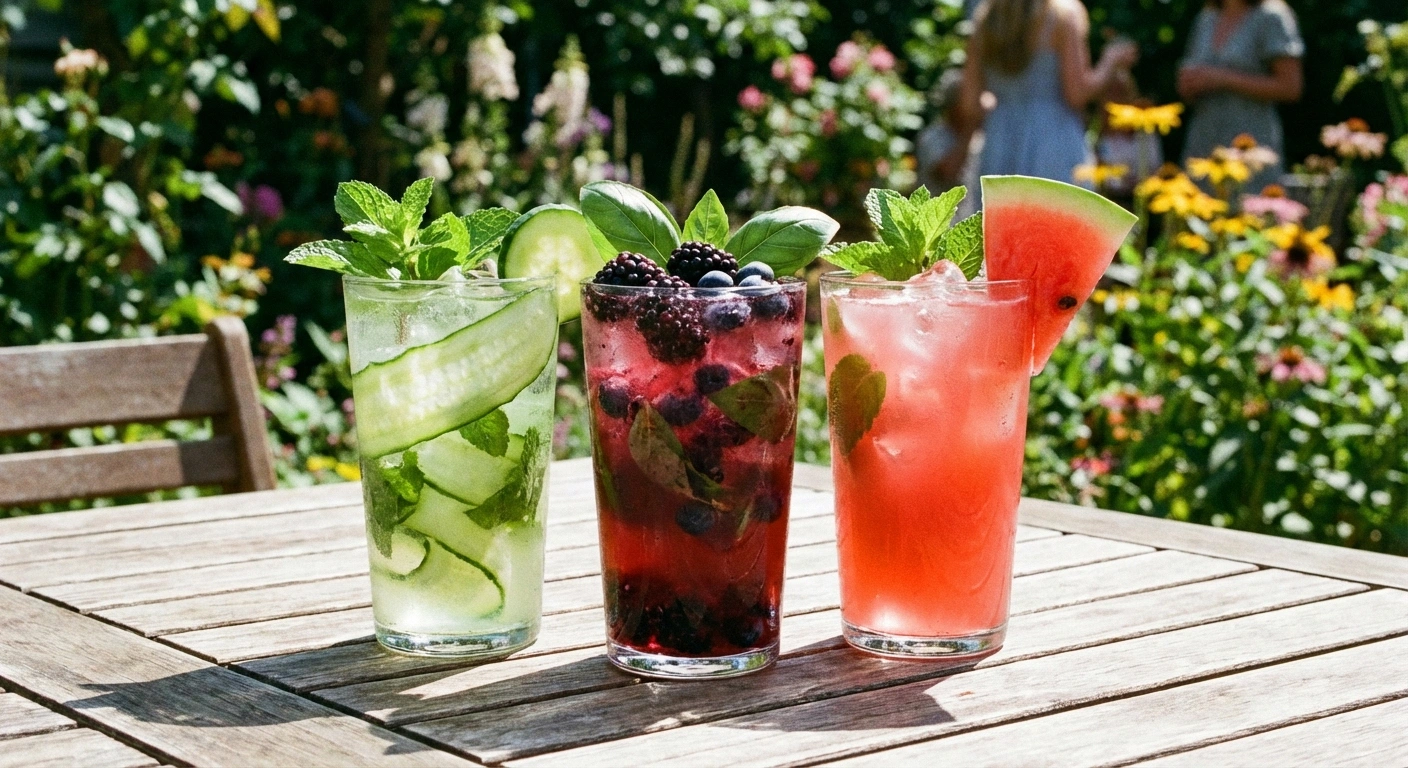
Cucumber-Mint Cooler
Ingredients:
- ½ cucumber, sliced
- Handful of fresh mint leaves
- Juice of 1 lime
- 2 cups sparkling water
- Ice
- Stevia or monk fruit sweetener to taste (optional)
Instructions: Muddle the cucumber and mint leaves in a pitcher. Add lime juice and sparkling water. Stir, add ice, and serve. This is incredibly refreshing and essentially zero sugar.
Berry-Basil Antioxidant Smash
Berries are among the highest-antioxidant foods available, and antioxidants help protect nerve cells from oxidative damage. Blueberries in particular are rich in anthocyanins that research suggests may support neurological health.
Ingredients:
- ½ cup mixed berries (blueberries, raspberries, strawberries)
- 4-5 fresh basil leaves
- Juice of half a lemon
- 1 cup sparkling water
- Ice
Instructions: Muddle the berries and basil leaves together in a glass. Add lemon juice and ice, then top with sparkling water. Stir gently. The basil adds an unexpected sophistication that makes this feel like a proper cocktail.
Watermelon-Rosemary Refresher
Ingredients:
- 1 cup fresh watermelon, cubed
- 1 sprig fresh rosemary
- Juice of half a lime
- 1 cup sparkling water
- Ice
Instructions: Blend the watermelon until smooth and strain through a fine mesh sieve. Pour into a glass with ice, add lime juice, and top with sparkling water. Garnish with the rosemary sprig — rub it between your fingers first to release the oils.
Nerve-Nourishing Smoothies and Blended Drinks
Smoothies are one of the easiest ways to pack nerve-supporting nutrients into a single glass. These recipes focus on ingredients that provide B vitamins, magnesium, alpha-lipoic acid precursors, and anti-inflammatory compounds.
The Nerve Repair Smoothie
Ingredients:
- 1 cup spinach (rich in B vitamins and magnesium)
- ½ banana (frozen for thickness)
- ½ cup blueberries
- 1 tablespoon ground flaxseed (omega-3 fatty acids)
- 1 tablespoon raw cacao powder
- 1 cup unsweetened almond milk
- 1 teaspoon alpha-lipoic acid-friendly foods like broccoli sprouts (optional handful)
Instructions: Blend everything until smooth. The spinach disappears into the berry flavor — you won't taste it, but your nerves will benefit from the magnesium and folate.
Tropical Anti-Inflammation Blend
Ingredients:
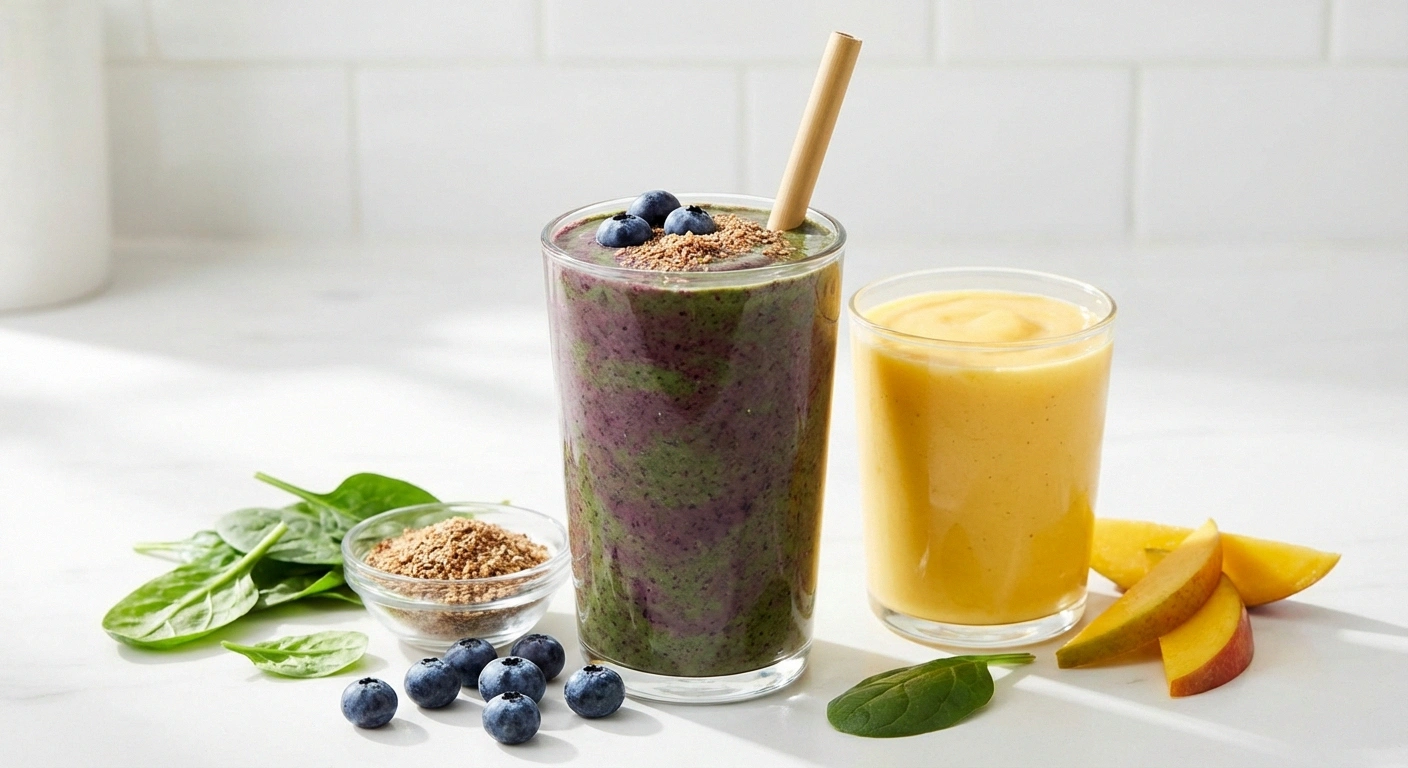
- ½ cup frozen mango chunks
- ½ cup frozen pineapple
- 1 inch fresh ginger, peeled
- ½ teaspoon turmeric
- 1 cup coconut water
- 1 tablespoon chia seeds
Instructions: Blend until smooth. The mango and pineapple mask the turmeric and ginger, making this taste like a tropical vacation. Chia seeds add omega-3 fatty acids and help stabilize blood sugar by slowing digestion.
Drinks to Avoid with Neuropathy
While we're focused on what you can drink, it's worth knowing what to limit. These drinks can worsen neuropathy symptoms even though they're technically alcohol-free:
Sugar Warning
A single can of regular soda contains about 39 grams of sugar — enough to cause a blood sugar spike that damages peripheral nerves. Even “healthy” fruit juices from concentrate can contain 30+ grams of sugar per serving. Always check labels, and when in doubt, dilute with sparkling water.
- Sugary sodas and fruit juices from concentrate — the blood sugar spikes damage nerves over time. A single can of regular soda contains about 39 grams of sugar.
- Energy drinks — high caffeine plus sugar is a double hit. Some energy drinks also contain ingredients that may interact with neuropathy medications like gabapentin.
- Non-alcoholic beer and wine — these still contain trace amounts of alcohol (up to 0.5 percent ABV). If your neuropathy is alcohol-related, even small amounts may matter. They also tend to be high in sugar.
- Sweetened coffee drinks — a large flavored latte can contain 50-plus grams of sugar. Black coffee or coffee with a small amount of unsweetened milk is fine in moderation.
- Excessive caffeine — while moderate caffeine is generally okay, too much can worsen anxiety and sleep disruption, both of which intensify neuropathy symptoms.
For a complete breakdown of foods and drinks that trigger neuropathy pain, check our dedicated guide.
Tips for Navigating Social Situations
One of the hardest parts of cutting out alcohol isn't the drinks — it's the social pressure. Here's what has worked for me and other members of our neuropathy support community:

- Bring your own drinks. Show up with a batch of one of these mocktails and suddenly you're the interesting one at the party, not the person who “can't drink.”
- Order sparkling water with lime. At restaurants and bars, this looks exactly like a cocktail. Nobody asks questions.
- You don't owe anyone an explanation. “I'm not drinking tonight” is a complete sentence. You don't need to disclose your health condition.
- Host gatherings yourself. When you control the menu, you control the options. Make a mocktail bar with 3-4 of these recipes and watch everyone — not just you — enjoy them.
- Find your go-to order. Having one reliable drink you can order anywhere (mine is sparkling water with muddled cucumber and lime) removes the decision stress.
Building a Nerve-Friendly Drink Routine
Rather than thinking about what you're giving up, consider building a daily drink routine that actively supports your nerve health:
Morning
Green tea or nerve repair smoothie
Afternoon
Sparkling water with fruit infusion
Evening
Chamomile-lavender or warm cacao
Social
Berry-basil smash or any mocktail recipe
- Morning: Green tea (rich in L-theanine and EGCG, both with neuroprotective properties) or a nerve repair smoothie
- Afternoon: Sparkling water with fruit infusion — keeps you hydrated without sugar
- Evening: One of the warm nighttime drinks — chamomile-lavender or warm cacao — as a wind-down ritual to replace the “evening glass of wine” habit
- Social events: Whichever mocktail recipe fits the occasion
The ritual matters as much as the drink itself. Many people who drank alcohol daily find that it was the habit — the act of making a special drink, sitting down, signaling to their body that the day is winding down — that they actually missed. These recipes let you keep that ritual.
Staying hydrated is particularly important for nerve health. Dehydration can worsen neuropathy symptoms by reducing blood flow to peripheral nerves. Aim for at least 8 glasses of fluid daily — and these recipes make that much more enjoyable than plain water. For more on how diet choices affect your nerves, browse our full collection of nerve-friendly recipes.
Frequently Asked Questions
Can I drink non-alcoholic beer or wine with neuropathy?
Non-alcoholic beer and wine still contain up to 0.5 percent alcohol by volume. For most people with neuropathy, this trace amount is unlikely to cause additional nerve damage. However, if your neuropathy is directly caused by alcohol use, your neurologist may recommend avoiding even trace amounts. These beverages also tend to be higher in sugar than the homemade mocktails in this guide, which is another consideration for nerve health.
How much caffeine is safe with neuropathy?
Most neurologists consider moderate caffeine intake — about 200 to 400 milligrams per day, or roughly 2 to 4 cups of coffee — to be safe for people with neuropathy. However, caffeine can interfere with sleep and increase anxiety, both of which may worsen neuropathy symptoms. If you notice your symptoms flare after caffeine, try cutting back gradually rather than quitting cold turkey to avoid withdrawal headaches.
Does green tea help neuropathy?
Green tea contains EGCG (epigallocatechin gallate), a polyphenol with antioxidant and anti-inflammatory properties that has shown neuroprotective effects in animal studies. While human clinical trials specifically for neuropathy are limited, green tea's combination of moderate caffeine, L-theanine for calm focus, and potent antioxidants makes it one of the more promising beverages for nerve health. Two to three cups daily is a reasonable amount.
Are fruit juices good or bad for neuropathy?
It depends on the juice. Freshly pressed juices with no added sugar can provide beneficial antioxidants and vitamins. However, most commercial fruit juices are high in sugar and stripped of fiber, which means they cause rapid blood sugar spikes that can worsen nerve damage over time. If you enjoy fruit juice, dilute it 50/50 with water or sparkling water, and choose tart varieties like cherry or pomegranate over sweeter options like apple or grape.
Can turmeric drinks actually reduce nerve pain?
Curcumin, the active compound in turmeric, has shown anti-inflammatory and neuroprotective effects in multiple studies. A 2020 review in the journal Phytotherapy Research found that curcumin may reduce neuropathic pain through its effects on inflammatory pathways. However, curcumin is poorly absorbed on its own — adding black pepper (which contains piperine) can increase absorption by up to 2,000 percent. While turmeric drinks alone are unlikely to replace medical treatment, they may be a helpful part of a nerve-friendly diet.
What is the single best drink for neuropathy?
There is no single best drink for neuropathy, but green tea is arguably the most well-supported option for daily consumption. It provides antioxidants, anti-inflammatory compounds, moderate caffeine for alertness without overstimulation, and L-theanine for relaxation. If you prefer something without caffeine, chamomile tea is an excellent alternative, especially in the evening. The most important thing is staying well-hydrated and avoiding sugary drinks and alcohol.
The Bottom Line
Giving up alcohol with neuropathy doesn't mean giving up good drinks. It means trading beverages that damage your nerves for ones that may actually support healing. Every recipe in this guide was chosen because it combines great taste with ingredients that have documented anti-inflammatory, antioxidant, or nerve-nourishing properties.
Start with one or two recipes that appeal to you. Make them part of your routine. Bring them to gatherings. Over time, you may find — like I did — that you don't miss alcohol at all. You just miss having something special in your glass. These drinks are that something.
As always, talk to your doctor or neurologist about dietary changes, especially if you're managing diabetes or taking medications that may interact with certain herbs. And if you're looking for more ways to support your nerve health through diet, explore our anti-inflammatory diet guide for neuropathy and our complete supplement guide.
About the Author