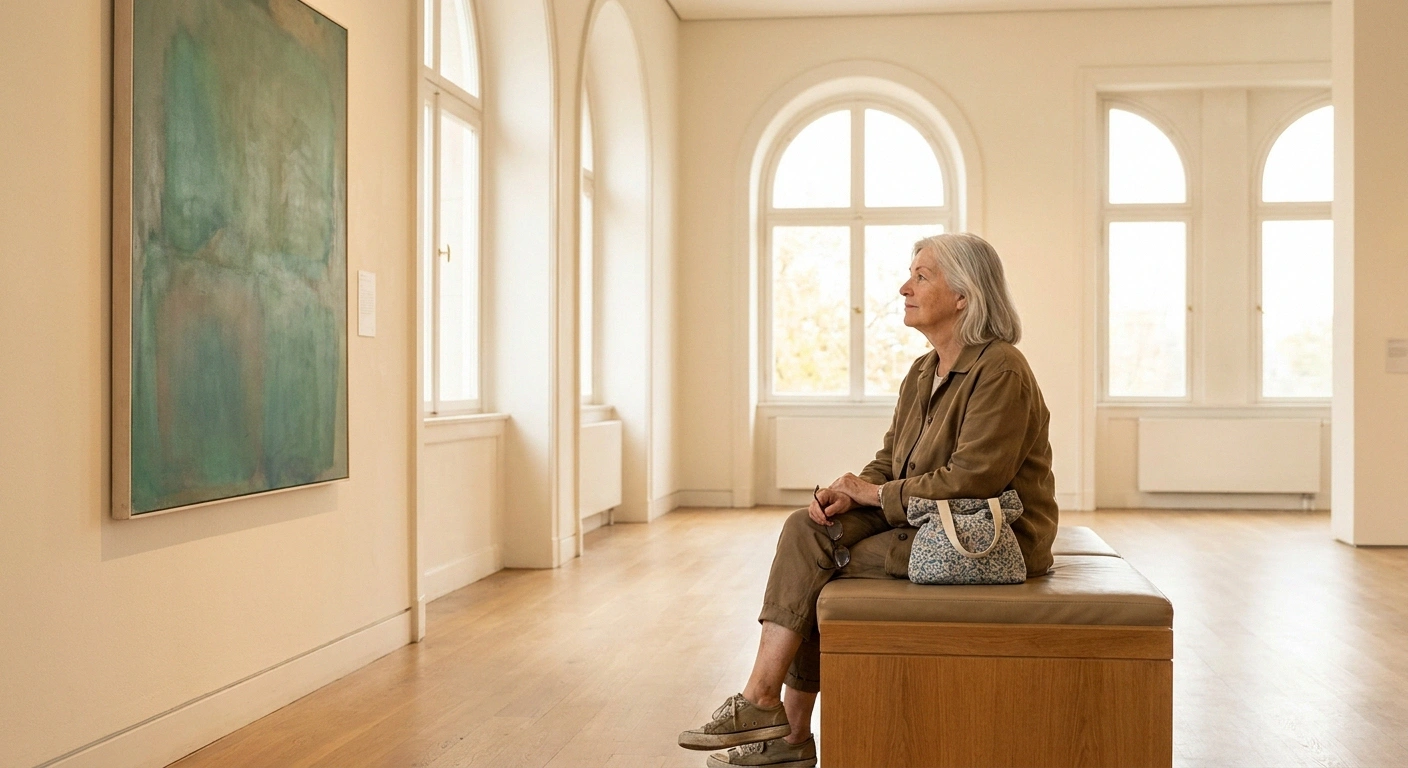
Museums used to be one of my favorite ways to spend a slow Saturday. A big airy room, a wall of paintings, a bench in the middle, and the kind of quiet you can't get anywhere else. Then the neuropathy came along, and suddenly a museum visit felt like an endurance sport — endless polished floors, long lines, cold air-conditioning, and a bench that always seemed to be one gallery too far away.
I want to share what has worked for me and for the people in my support group who've figured out how to keep going to museums with peripheral neuropathy. Some of it is planning ahead. Some of it is what to bring. And some of it is giving yourself permission to see less and enjoy more.
Why Museums Are Uniquely Hard on Neuropathic Feet
Before we get to solutions, it helps to name why museums are such a specific challenge. It's not just the walking — it's the combination:
- Hard, unforgiving floors. Museums are almost always marble, terrazzo, or polished concrete. These are the least forgiving surfaces for sore feet.
- Slow, stop-and-start pacing. You stand in front of a painting for two minutes. Then walk twelve feet. Then stand again. That's harder on the feet than continuous walking.
- Cold air-conditioning. Museums keep temperatures low to protect the art. If you have temperature-sensitive neuropathy, that alone can bring on symptoms.
- Long hallways with limited seating. Older museums especially were not designed with rest in mind.
- Ticket and coat lines. Standing still in a slow line is often worse than walking.
- The all-or-nothing expectation. You paid for admission, so you feel obligated to see everything. That mindset is what does most of us in.
Call Ahead — This Is the Move Nobody Tells You About

The single biggest game-changer for me was learning that most museums have accessibility services that are genuinely helpful — but you usually have to call ahead a few days in advance to use them.
Call visitor services 2-3 days before your visit and say:
“Hi, I have peripheral neuropathy and I have trouble standing for long periods. Can I reserve a manual wheelchair for Thursday? And do you have a cane-seat I can borrow? Also, is there an accessible entrance I should use to skip the general line?”
Most major museums have some version of the following available, often free:
- Loaner wheelchairs. The Smithsonian, the Metropolitan Museum, the Field Museum, the American Museum of Natural History, the Brooklyn Museum, and many mid-sized museums all offer manual wheelchairs on a first-come, first-served basis. Some also have loaner scooters or rollators.
- Cane stools and portable seats. These are life-changing — small folding stools you can carry into any gallery and sit on for a minute in front of a favorite painting. The Metropolitan Museum's Burke Hall and the Brooklyn Museum's coat check both loan them free.
- Skip-the-line accommodations. Many museums allow visitors who can't stand for extended periods to use member or accessible entrances rather than the general line. You often have to ask, sometimes in advance.
- Companion admission. Some museums allow a caregiver or companion in free with a visitor who has a disability. Ask about this — it can meaningfully reduce the cost of a family visit.
Here's the phone call I make: “Hi, I have peripheral neuropathy and I have trouble standing for long periods. I was hoping to visit on Thursday. Can I reserve a manual wheelchair for the day? And do you have a cane stool I can borrow? Also, is there an accessible entrance I should use?”
You'd be surprised how helpful the response is. Museum visitor services are staffed by people who genuinely want you to enjoy your visit. Give them the chance to help.
Downloading the Floor Plan Before You Go
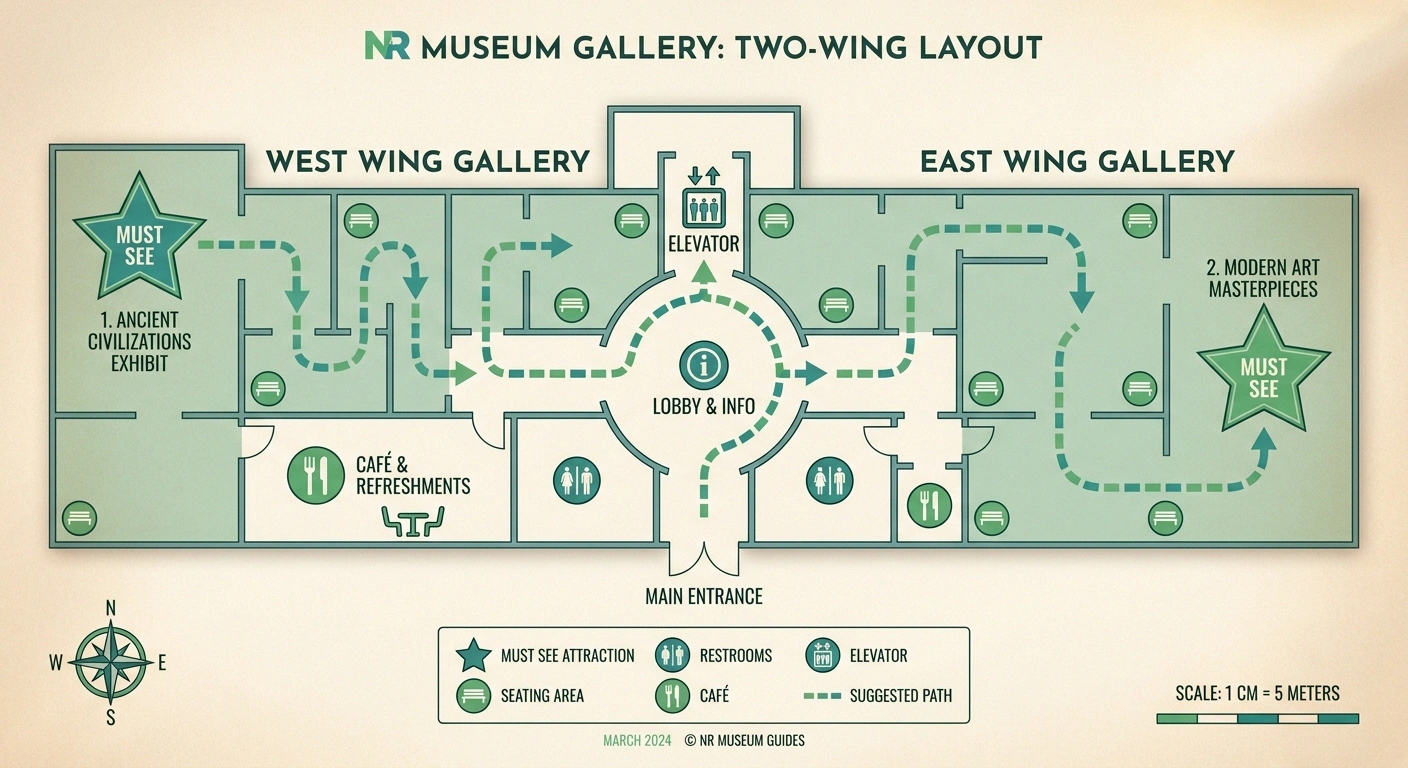
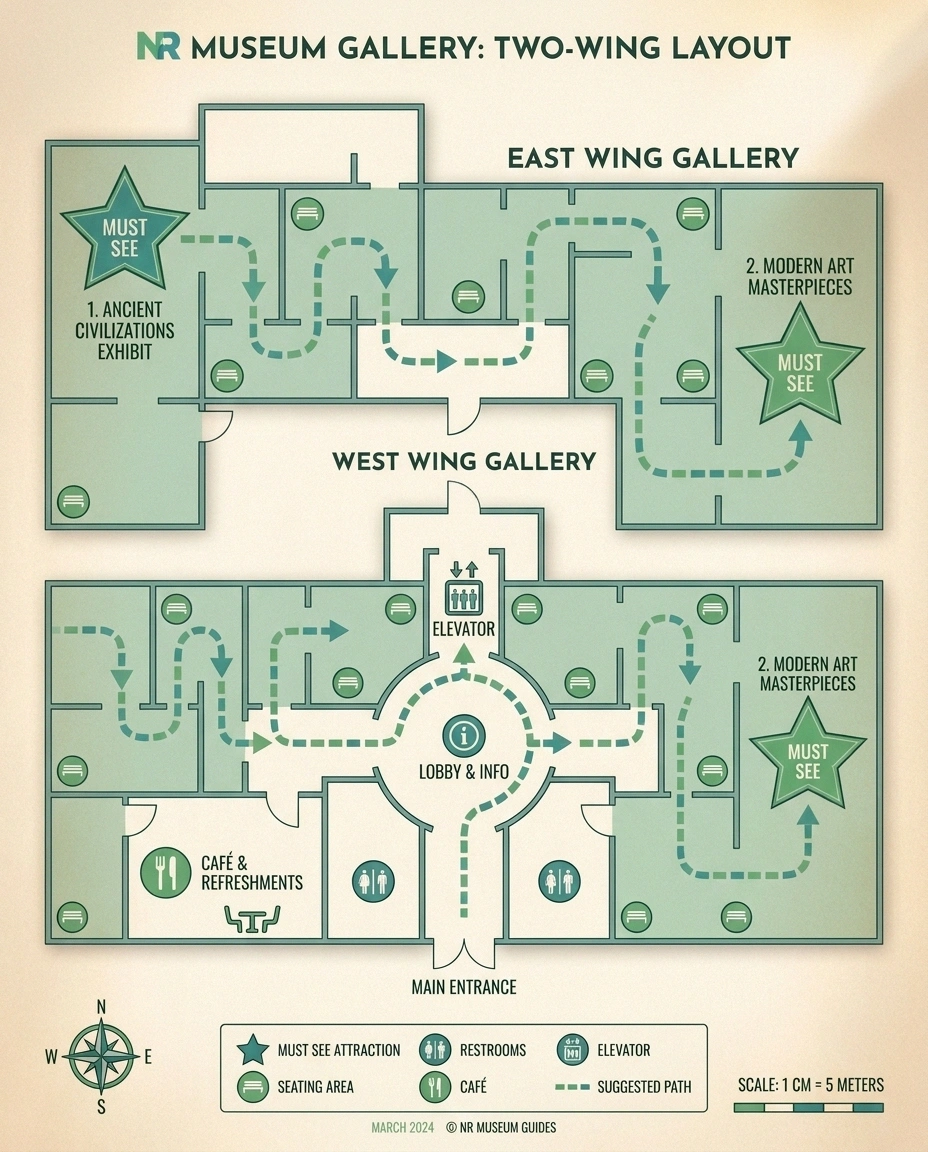
Most museums have downloadable floor plans on their websites. I download and study mine the night before like I'm planning a road trip.
What I mark:
- Every bench and seating area in the galleries I care about
- Bathroom locations on each floor
- The café and any rest lounges
- The elevator locations (in case I want to change floors without stairs)
- The one or two exhibits I really want to see, and the shortest path between them
Then I plan what I call a “bench route.” I never plan to walk more than one gallery between resting places. It sounds excessive until you try it and realize how much longer you can stay when you don't burn out your feet in the first thirty minutes.
What to Wear
The right outfit for a museum visit is not the outfit you'd wear to look nice at a museum. It's the outfit that gets you through three hours on marble floors without your feet screaming.
Shoes: Your best pair. Broken-in, cushioned, with the orthotic insert if you use one. Not the new pair you've been meaning to try. Not the pair that “look great with this outfit.” The pair that has never betrayed you. If your museum has coat check, a second pair of socks in your bag to change into halfway through is a small luxury with a big payoff.
Layers: A light cardigan or scarf you can throw on when you hit a cold gallery. Museums keep humidity and temperature tightly controlled and it's often colder than you'd expect.
Compression socks under pants: If you tolerate them well, they can genuinely reduce the “heavy feet” feeling by the end of a long visit. Not everyone finds them helpful, so don't try them for the first time on museum day.
Comfortable pants and a bag with a cross-body strap. Anything that keeps your hands free and your movement unrestricted.
What to Bring in Your Bag
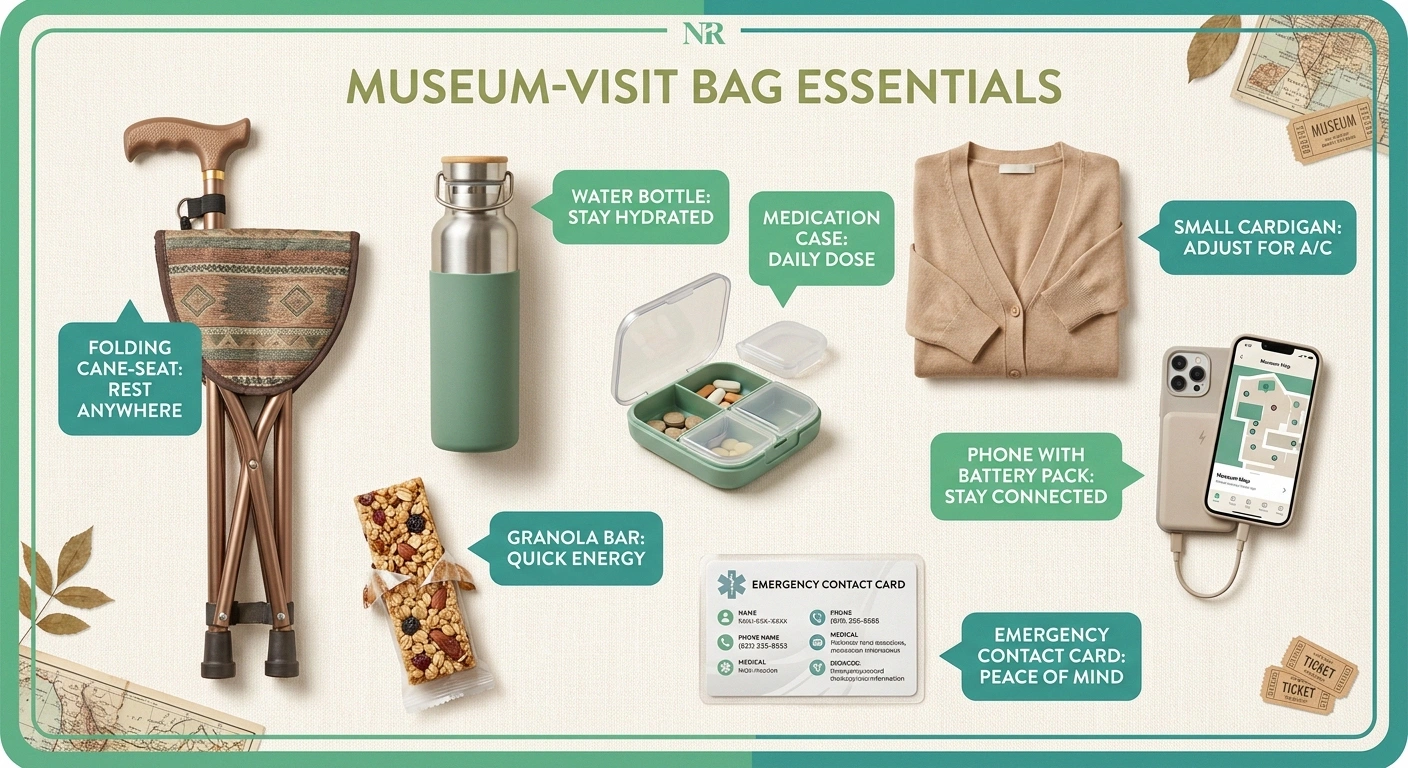
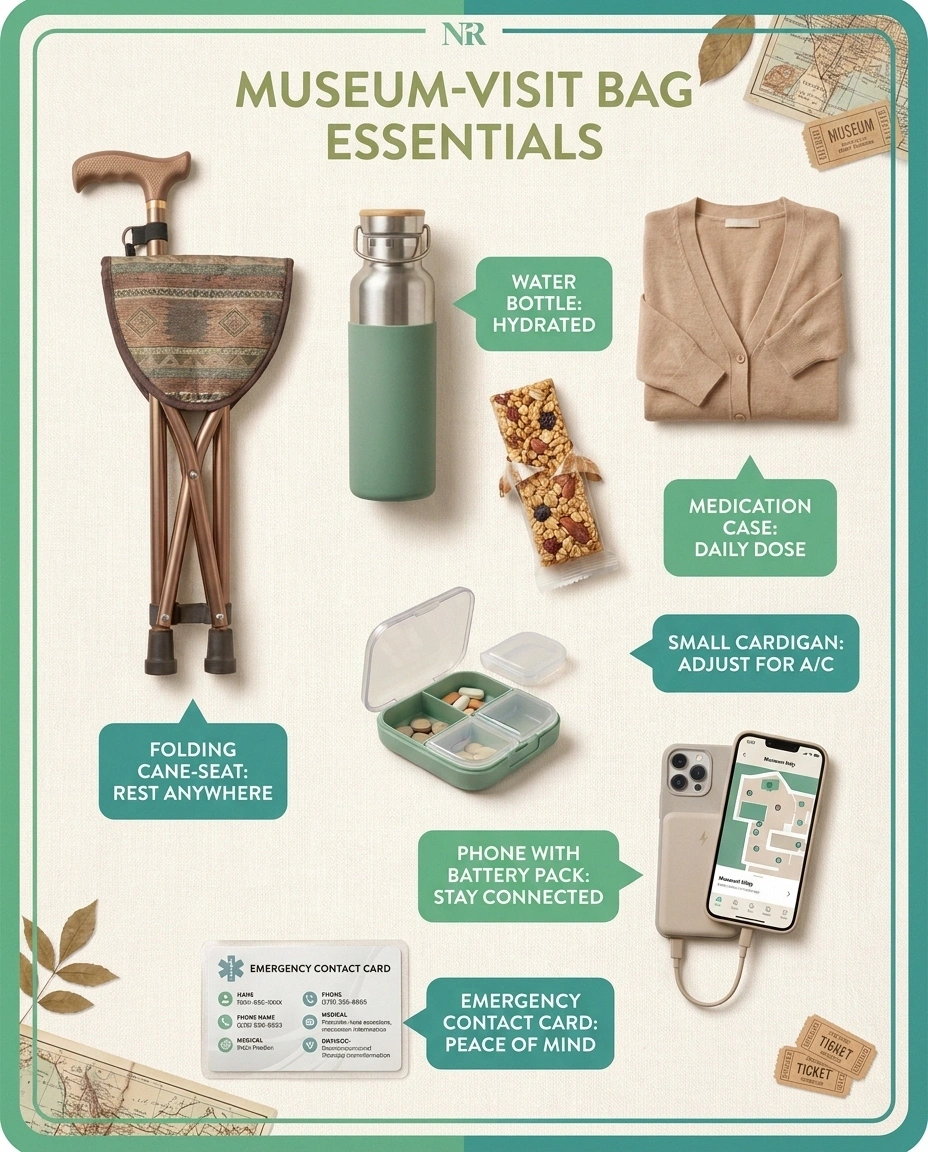
My museum bag is small but it saves the day every time. What goes in:
- A folding cane-seat. Even if the museum has stools, having your own means never wondering if one is available. A basic aluminum tripod cane-seat weighs about a pound and fits in a tote.
- A water bottle. Most museums allow refillable water bottles now, though check the specific museum's rules. Hydration matters more for neuropathy than most people realize.
- A snack. Something small, something that travels well. Trail mix, a granola bar, an apple. Low blood sugar makes neuropathy symptoms feel worse.
- Your medications — anything you take at scheduled times, plus your rescue medication if you have one.
- A light layer for the cold rooms.
- A phone with battery. Charged and with the museum's app or map downloaded.
- Small emergency contact card in your wallet with your name, your medical conditions, and someone to call. Simple and worth having.
When to Go
Timing matters enormously. The wrong time turns a nice visit into an ordeal.
- Weekday mornings 10:00-11:30
- Last 90 minutes of the day
- Rainy or snowy weekdays
- Early in a new exhibition (not opening week)
- Saturday afternoons
- Free-admission days
- Blockbuster exhibition opening weeks
- School-holiday weeks at family-friendly museums
Weekday mornings, 10 to 11:30 a.m. Almost always the sweet spot at major museums. School groups haven't arrived yet, weekend crowds aren't a factor, staff is fresh and helpful.
The last 90 minutes of the day. Crowds have thinned. You can move at your own pace through galleries that were three-deep with people at 2 p.m.
Rainy or snowy days. Counterintuitive, but excellent — locals stay home, tourists still come but in smaller numbers, and you often have entire galleries almost to yourself.
What to avoid: Saturday afternoons. Free-admission days at big museums. Blockbuster exhibition opening weeks. Anything during a school-holiday week if the museum is popular with families.
The 90-Minute Rule
This is the rule I wish someone had told me years ago: cap your visit at 90 minutes. Set an actual alarm on your phone.
Set an alarm on your phone. Cap the visit at 90 minutes.
Past 90 minutes, most of us with neuropathy stop enjoying the art and start counting how much longer. Same-day re-entry (offered at most major museums) lets you do two shorter visits with a long lunch break in between — exponentially better than one exhausting three-hour marathon.
You know why? Because past 90 minutes, most of us with neuropathy stop enjoying it. We're focused on how much longer, not on what's in front of us. Our feet are talking louder than the art. The visit stops being restorative and starts being an obligation.
Many big museums (the Met, the Smithsonian, the National Gallery) allow same-day re-entry with your ticket. That means you can spend 75 minutes seeing one wing, leave for a long lunch and rest, and come back for another 60 minutes in the afternoon. Two shorter visits, one ticket, exponentially more enjoyable than one exhausting three-hour marathon. See our guide to pacing and the spoon theory for neuropathy fatigue for the broader philosophy — it applies here perfectly.
Rest Bench Strategy Inside the Galleries
When I'm inside a gallery, I use benches strategically. Not just when I'm tired — before I'm tired.
My rule is: every 15-20 minutes of standing/walking, I sit for 3-5 minutes. Even if I don't feel like I need it yet. That preventive sitting is what keeps me from hitting the wall.
When I sit, I do a quiet foot check under my pants leg — wiggle toes, roll ankles, check that I can still feel my feet. If sensation is getting muted (a warning sign for me), I sit longer or head for the café.
Cafés and Rest Lounges Are Your Friends

Every major museum has at least one café. Some have several. These are not just for lunch — they're strategic rest points.
A 20-minute coffee break in the middle of a visit reduces total foot fatigue more than most people expect. You get off the hard floor. You warm up (they're often warmer than the galleries). You hydrate. You have time to check your feet and reset. And the café gives you a low-stakes excuse to pause without feeling like you're wasting time.
Some museums also have quieter “member lounges” that are open to all visitors during off-peak hours. Ask visitor services if there's a quiet room where you could sit for 15 minutes. Often there is.
Using a Wheelchair or Rollator Without It Feeling Like Defeat
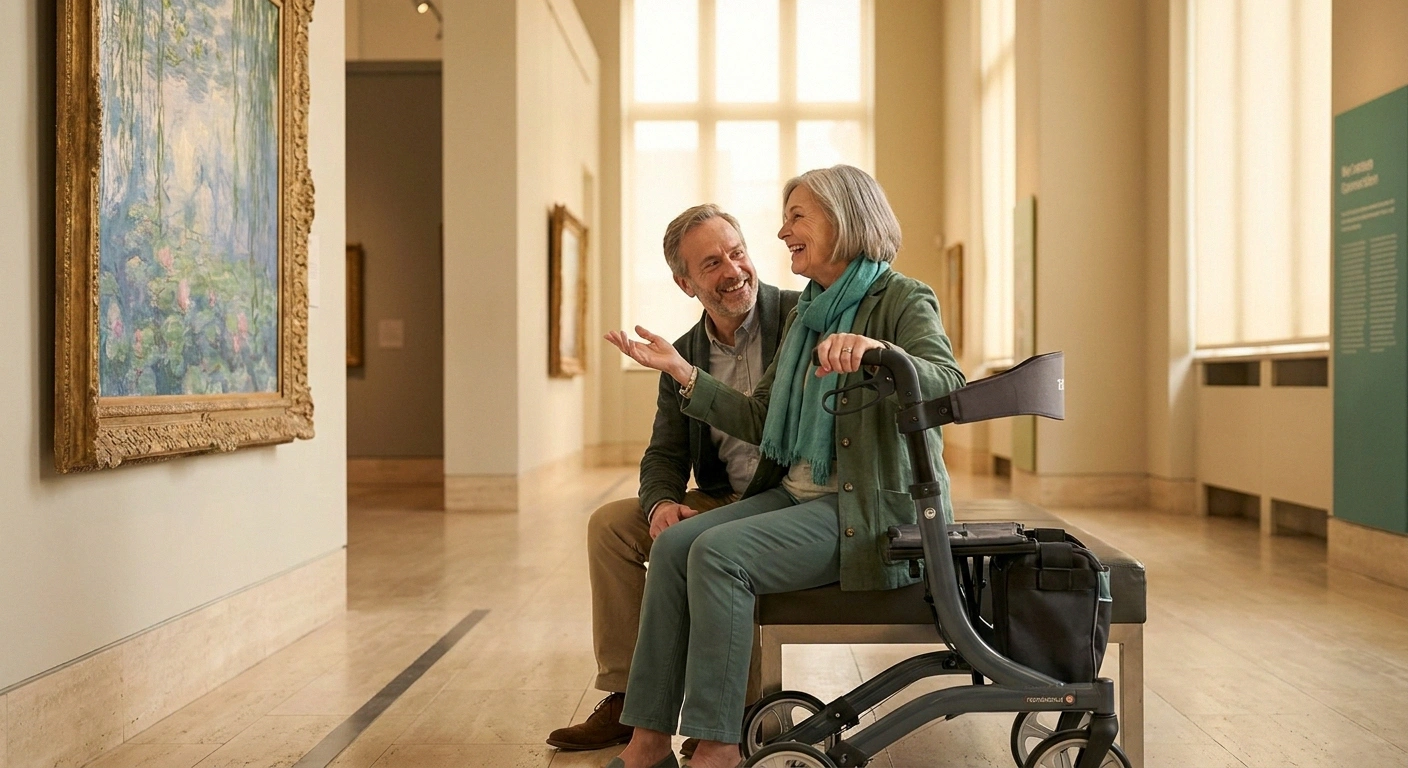
This is the part I want to speak to honestly, because it's where a lot of us get stuck emotionally.
Borrowing a museum wheelchair is not giving in. It is choosing to spend three hours enjoying beautiful things instead of two hours suffering through them while thinking about your feet. Nobody at the museum is looking at you. They are looking at the art.
Borrowing a wheelchair at a museum, or using a rollator you already own, is not giving in. It is not “letting the neuropathy win.” It is a tool that lets you spend three hours engaging with beautiful things you love, instead of two hours suffering through those things while thinking about your feet.
I used to worry about what other people would think. I don't anymore. Nobody at the museum is looking at me. They're looking at the art. And even if they were looking at me, they'd think exactly what I'd think about someone else in a wheelchair at a museum: good for them, out enjoying their day.
If you're still on the fence, try a rollator with a built-in seat as a middle path. Our guide to using a rollator or walker with neuropathy covers picking one that works for you.
Outdoor Museums and Sculpture Gardens Have Their Own Rules
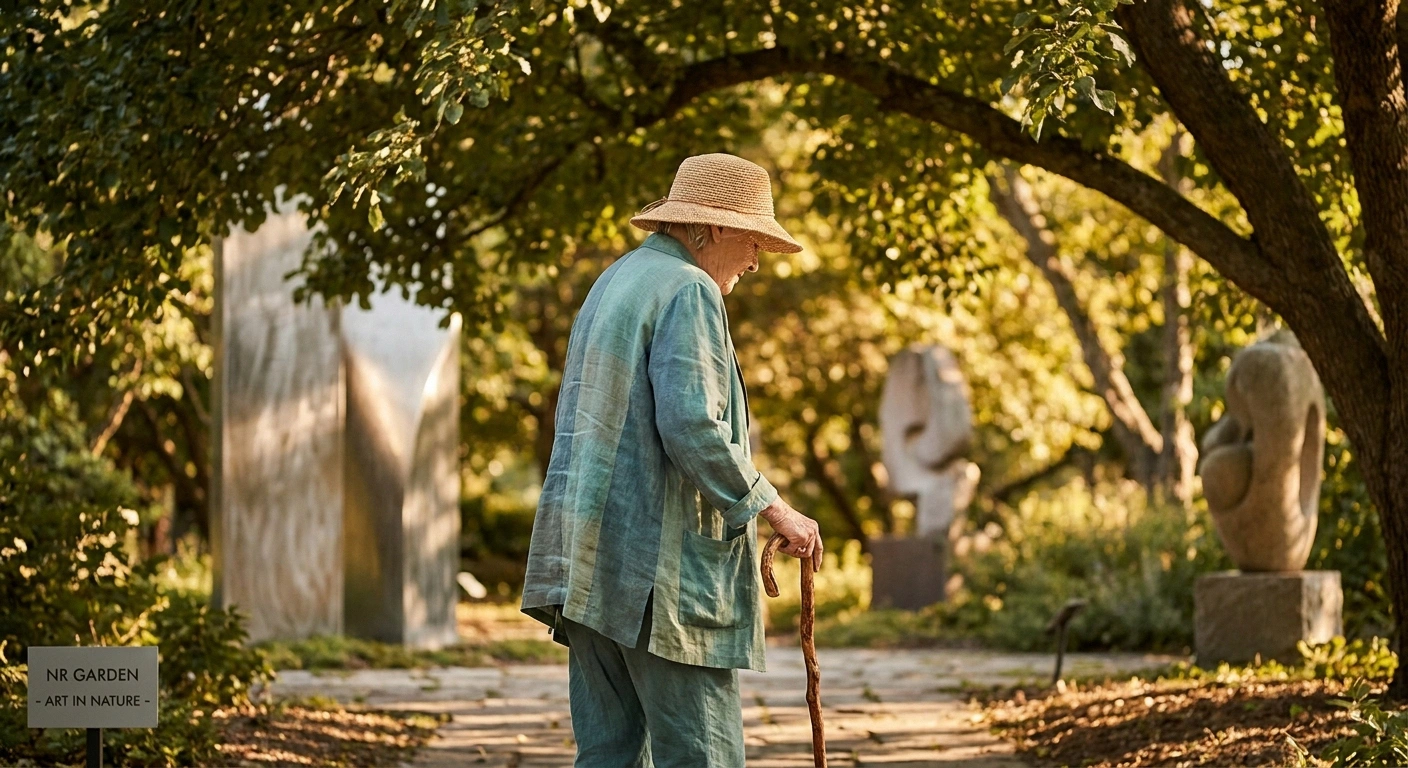
If your museum visit includes an outdoor component — a sculpture garden, a courtyard, an outdoor sculpture park — a few extra considerations:
- Weather matters more. Cold weather can worsen neuropathy symptoms; heat can too. Check the forecast.
- The ground is uneven. Gravel paths, cobblestones, grass — all more challenging than the indoor floors. If you have balance issues from your neuropathy, use trekking poles or a cane even if you don't normally.
- Shade and seating are harder to find. Outdoor sculpture gardens often have fewer benches than indoor galleries. Bring the cane-seat.
- Sun exposure adds fatigue. Even a mild 75-degree day in full sun is more tiring than a shaded 75-degree day. Hat, sunglasses, water.
The Special Case of Traveling to a Museum
Sometimes the museum visit is the entire point of a trip — a big exhibition, a museum in a city you rarely visit, a bucket-list Louvre or Prado moment. When travel is part of the equation, extra planning pays off.
- Don't visit the museum on your travel day. Fly in Wednesday, museum on Thursday. Your feet remember flights and long car rides for a full day.
- Hotel choice matters. Book something within walking distance or an easy taxi ride of the museum. The extra $30 a night is worth avoiding a 20-minute walk-and-transit day.
- Timed tickets change the math. Blockbuster exhibitions with timed entry mean you can't just show up when your feet are ready. Book the earliest slot of the day and be prepared for the possibility of skipping something else.
- Half-visit is a legitimate visit. If you've traveled to Paris and only make it through half the Louvre before you have to stop, that half was still Paris and still the Louvre. You didn't fail. See our tips on planning neuropathy-friendly vacations for more on setting realistic travel expectations.
What My Museum Days Look Like Now
Here's my typical routine, if it helps to see it laid out.
The night before, I download the floor plan, mark my two must-see exhibits, and identify three benches on my route between them. I lay out my best shoes, a fresh pair of socks, my folding cane-seat, and my usual bag with water bottle, snack, medications, and a light cardigan.
Morning of, I have a real breakfast (nothing worse than doing a museum on empty). I take my medications on my normal schedule. I aim to arrive right at 10 a.m. opening, weekday if I can.
Once inside, I head straight to my first must-see exhibit before the crowds arrive. I stay 45-60 minutes there, using benches every 15 minutes. Then I take a real break — sit in the café, warm up with a coffee, do a foot check.
Second stint is 30-45 minutes at my second must-see exhibit. If I have energy left, I might wander one small adjacent gallery. If I don't, I head for the exit — cheerfully.
Home by 1 p.m. Feet up for an hour. And an actual sense of having enjoyed the museum, rather than survived it.
That's it. Not glamorous. Not thorough. But it's given me back an activity I used to think I'd lost. If neuropathy has been keeping you away from museums you used to love, I hope some of this gives you a way back in. Not to seeing everything. To seeing one beautiful thing, on your own terms, and coming home glad you went.
Frequently Asked Questions
Do I need to prove I have a disability to borrow a wheelchair?
Almost never. Most major museums loan wheelchairs on a first-come, first-served basis with no documentation required. You just ask at visitor services or coat check. Some smaller museums may ask about the reason, but even then, a simple explanation (“I have peripheral neuropathy and can't stand for long periods”) is all that's needed.
Are cane-seats allowed inside galleries?
Yes, at nearly every museum I'm aware of. They're small, they don't damage anything, and they're a common accessibility tool. If a specific museum has a rule against them, staff will let you know.
Can I get a discount as a person with a disability?
Many museums offer reduced admission for visitors with disabilities, and some allow a companion or caregiver in free. Ask when you buy tickets or check the accessibility page on the museum's website. Some regional museum passes also have disability-related programs.
What if I need to leave suddenly because of a flare?
Most museums allow same-day re-entry with your ticket. If you have to leave, hold onto your ticket stub. Even if you don't return the same day, some museums offer a rain-check policy — always worth asking about at visitor services before you exit.
Should I try a virtual museum tour instead if my neuropathy is severe?
Virtual tours are a wonderful supplement but not really a substitute for the in-person experience. If in-person feels too hard right now, try a 30-minute low-goal visit — one small gallery, one exhibit — rather than skipping entirely. Even a very short in-person visit can be more restorative than a long virtual one.
What if the bathroom is far from where I'm resting?
Plan bathroom breaks like a highway road trip. Use them before you need them, whenever you happen to be near one. Never assume you'll be able to make it to a specific one across the museum.
Any tips for very large museums like the Louvre or the Met?
Pick one wing or one collection. Ignore the rest. Truly. These museums are built to be experienced in fragments over multiple visits or over many years, not all at once. Choosing a small, meaningful slice is not settling — it's how anyone with any physical limitation actually enjoys these places.
Museums are still one of the great pleasures of a slow afternoon, and neuropathy doesn't have to be the thing that takes them away. A little planning, a small cane-seat in your bag, a 90-minute clock, and permission to see less than you used to — that's most of the game. I hope you find yourself back in a favorite gallery soon.
About the Author


