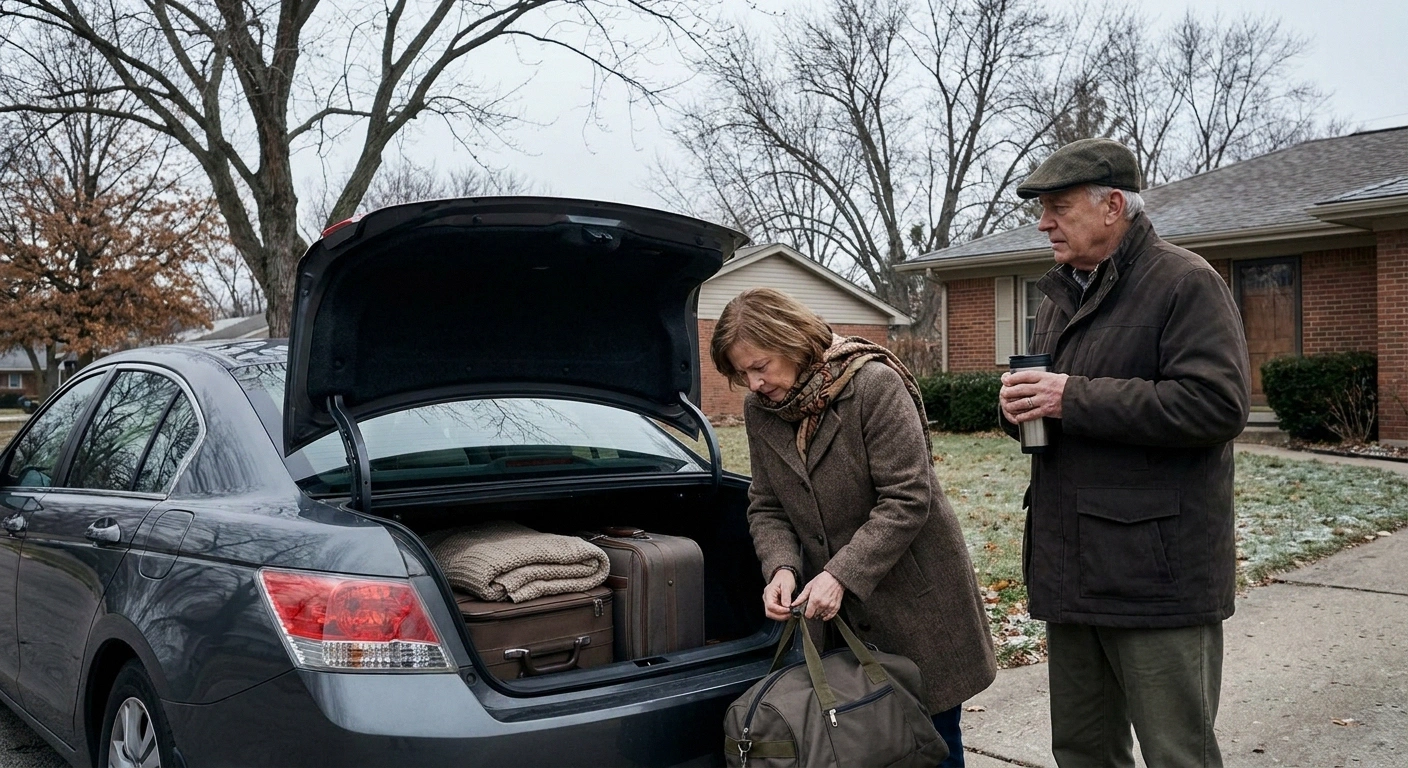
My neighbors leave the second week of November and come back around the first of April, and for years I watched them load that car with a kind of admiration. Then Marilyn mentioned, almost offhand, that the drive down wasn’t the hard part. The hard part was the four or five days after they arrived — when her feet had opinions about the new floors and she couldn’t remember which cabinet held anything.
That stuck with me, because it’s the piece nobody writes about. There’s plenty of advice out there for snowbirds, and plenty of advice about neuropathy and weather. What almost nobody puts together is the actual situation — two houses that are hazardous in completely different ways, a body that reacts to both climates, and a care team split across a thousand miles.
Here’s how to make that arrangement work instead of merely survive it.
Two Houses, One Body
The core problem is that you’ve doubled your environment without doubling your familiarity with it.
Think about how much of your safety at home runs on autopilot. You know that one floorboard. You know the bathroom in the dark. Your feet know where the rug edge is — which matters enormously when those feet report back unreliably. That knowledge takes months to build and it doesn’t transfer between houses.
Every October and every April, you hand yourself an unfamiliar building and ask reduced sensation to navigate it. Twice a year, every year. The good news is that the fix is mostly one-time work — set both houses up properly once, and the transition stops being a hazard window and becomes just a drive.
What the Climate Swing Actually Does
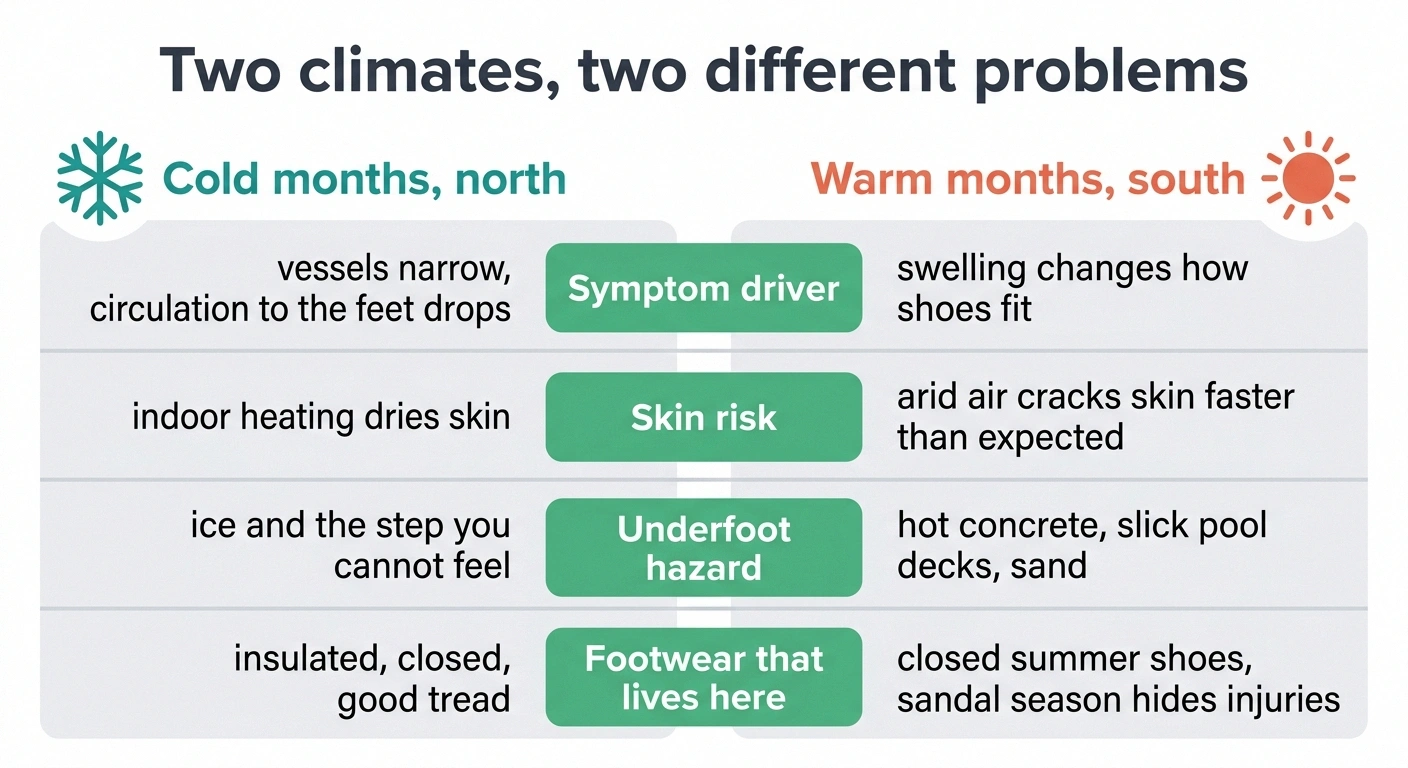
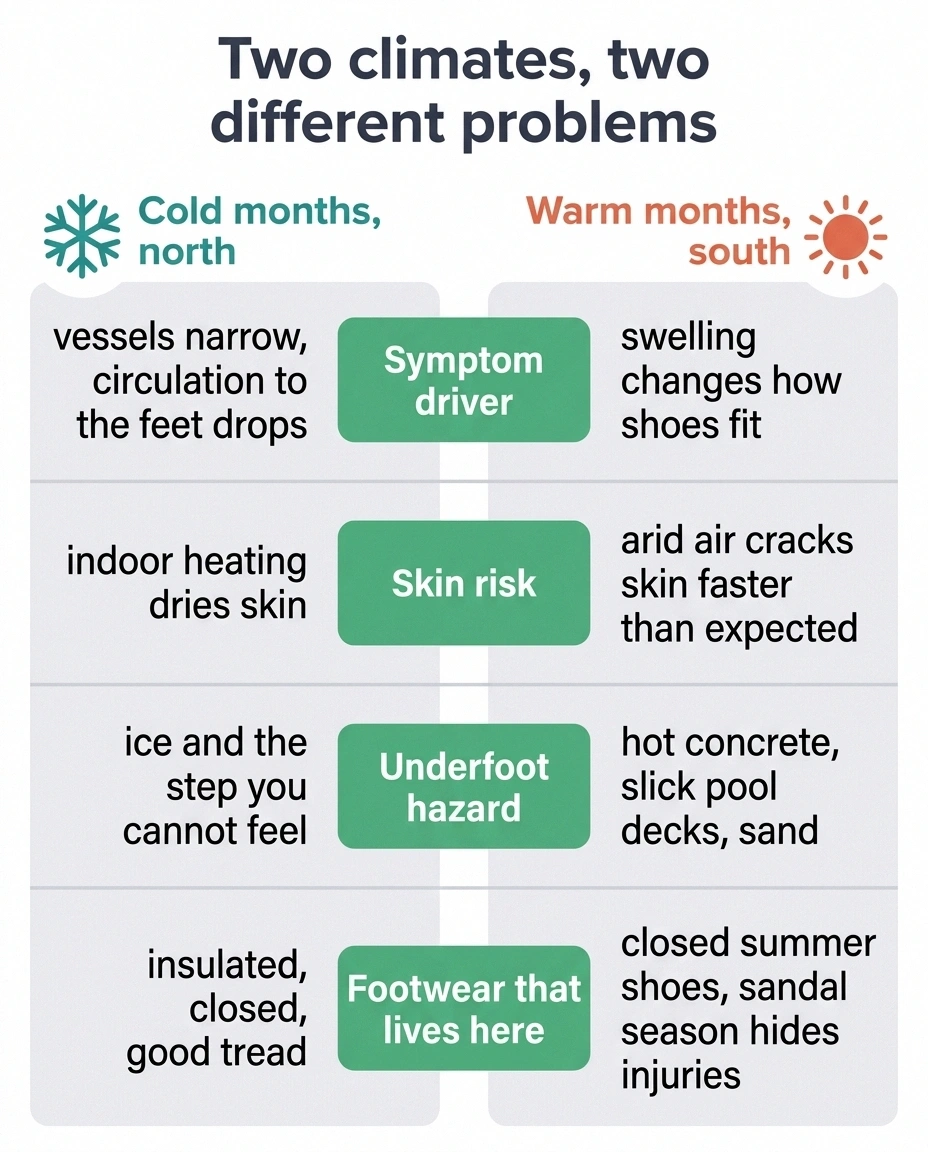
Most people going south are doing it partly for their symptoms, and that instinct is usually sound. Cold makes nerve pain worse for a great many people, and the reasons are straightforward enough — blood vessels narrow, circulation to the extremities drops, and already-struggling nerves like that even less than healthy ones do.
Neither destination is the easy one. They just fail in different directions, and the countermeasures do not overlap.
| Cold months, north | Warm months, south | |
|---|---|---|
| Main symptom driver | Vessels narrow, circulation to the feet drops | Swelling changes how shoes fit |
| Skin risk | Indoor heating dries skin | Arid air cracks skin faster than most expect |
| Underfoot hazard | Ice, and the step you cannot quite feel | Hot concrete, slick pool decks, sand |
| Footwear that lives there | Insulated, closed, good tread | Closed summer shoes. Sandal season hides injuries. |
But warm isn’t automatically better, and going in expecting relief and getting something else is discouraging in a way that’s worth heading off.
Heat has its own problems. Plenty of people find their symptoms flare in high heat, and swelling in the feet and ankles gets worse in warm weather, which makes shoes fit differently and pressure points appear where they weren’t. The heat sensitivity guide covers the pattern, and the summer tips are worth reading before the first hot week rather than during it.
Dry air is an underrated problem. Desert destinations dry the skin out fast, and dry skin cracks. On a foot that can’t feel a crack forming, that’s a genuine risk — not a cosmetic complaint. If you’re wintering somewhere arid, daily moisturizing stops being optional.
The transition itself takes a couple of weeks. Blood pressure, sleep and skin all adjust to a climate change, and pushing into full outdoor activity on day two is how people end up sore for a fortnight.
The reasonable expectation is that a warmer winter helps many people but not everyone, that some people genuinely do worse in heat, and that the first two weeks in each direction will be the worst of the season either way. Knowing that in advance takes most of the sting out of it. The cold weather guide covers the northern half of the year.
Stop Hauling It: The Duplicate Kit
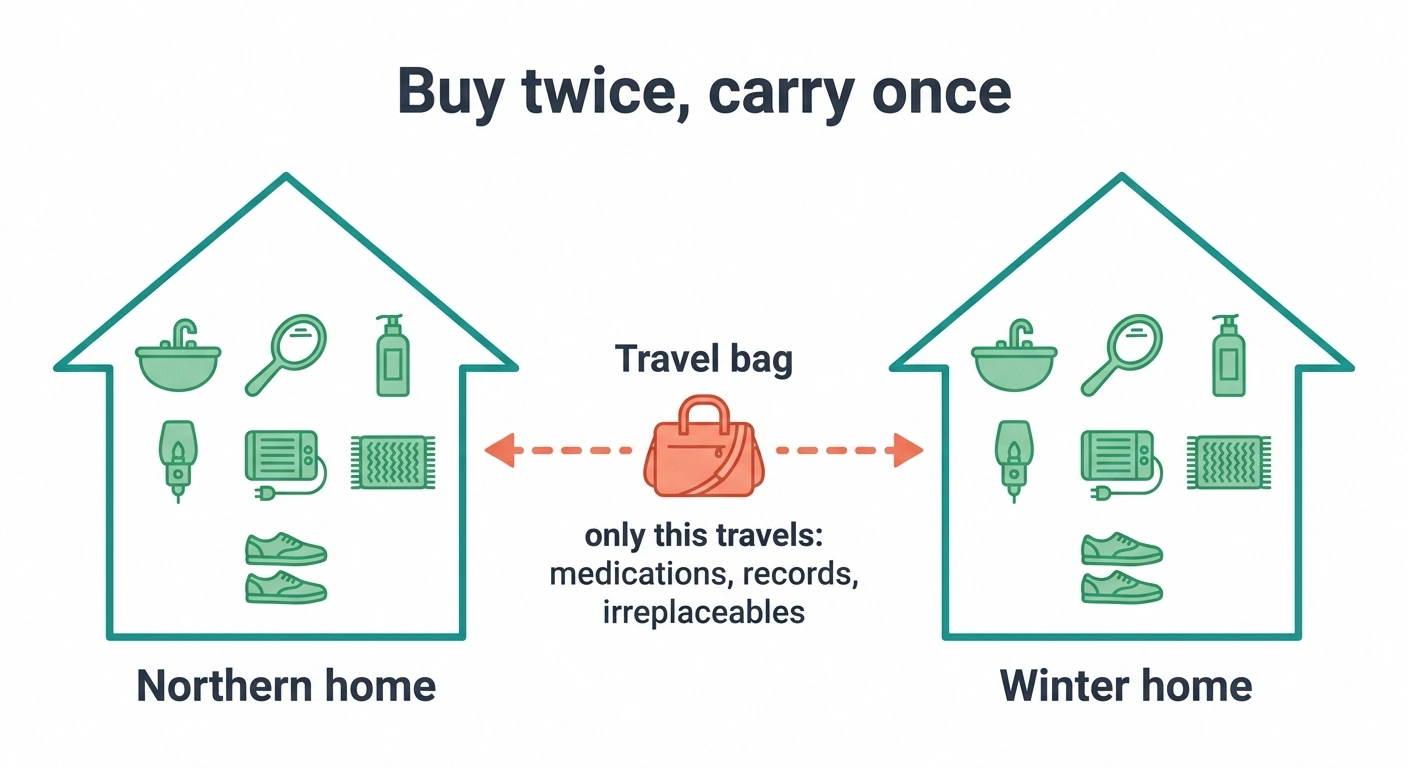
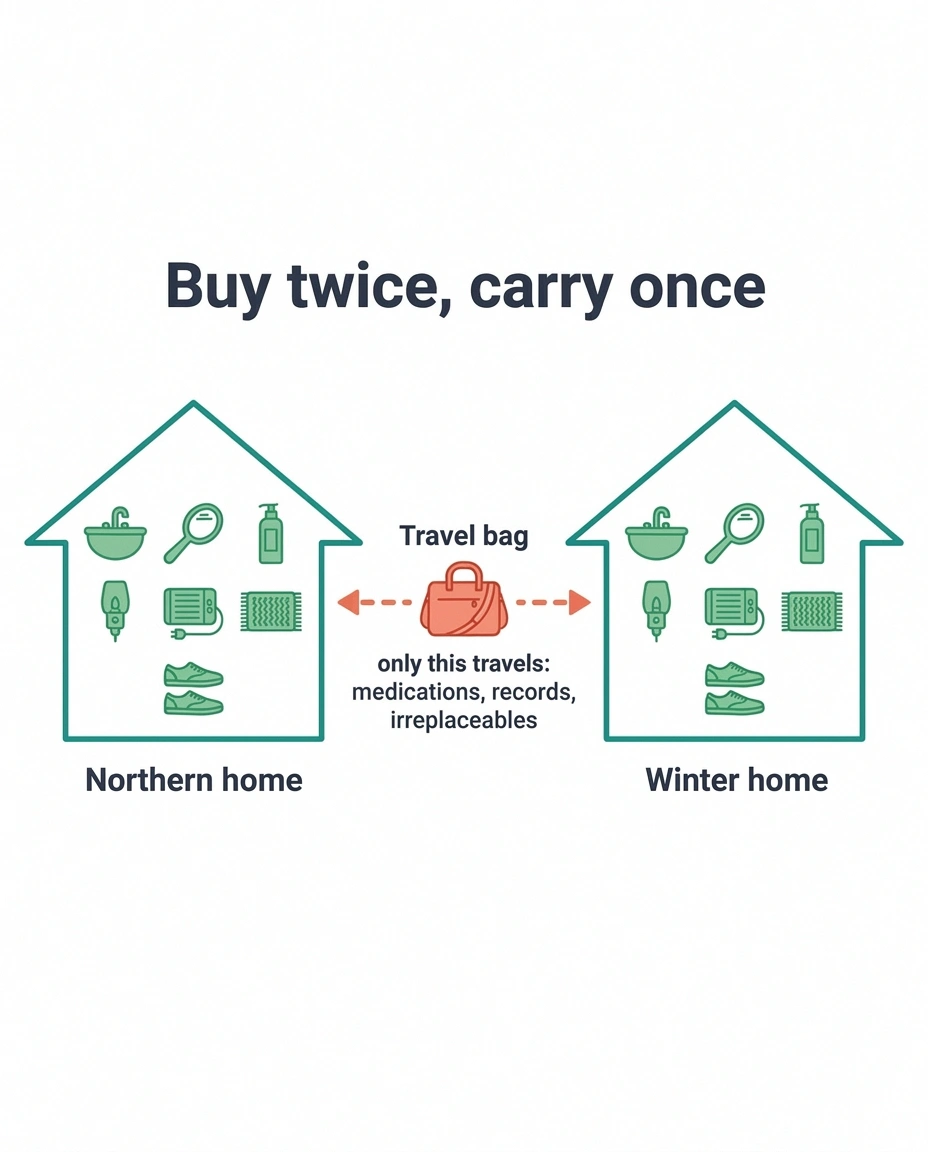
This is the single change that makes the biggest difference, and it’s almost embarrassingly simple: buy two of everything and stop moving it.
Total cost of duplicating the whole left column runs somewhere around one to two hundred dollars, once. Set against twice-yearly hauling and the item that inevitably gets left behind, it pays for itself in the first season.
Long-handled inspection mirror
Cream or lotion, full bottle
Nightlights for the whole night path
Heating pad or cooling wrap, auto-shutoff type
Bath mats, grab bars, shower stool
A complete footwear rotation for that climate
The records packet, paper and phone
Anything genuinely irreplaceable
Most snowbirds haul a carload of equipment twice a year, and every item in that car is one more thing that can be forgotten, damaged, or left behind. Worse, hauling encourages leaving things behind on purpose to save space, and what gets cut is invariably the comfort gear that turns out to matter.
Own two of these, one set at each house:
A foot soak basin. Cheap, bulky, and used constantly.
A long-handled mirror for foot checks. Costs almost nothing and is the item most likely to get left in a drawer nine hundred miles away.
Your preferred cream or lotion. Two full bottles, one per house, restocked before you leave rather than after you arrive.
Nightlights, enough for the whole path. Bedroom to bathroom in both houses. Buy a bulk pack and split it.
A heating pad or a cooling wrap, whichever helps you. These are heavy and they get skipped. Buy the kind with an auto-shutoff and a low setting, use it over clothing rather than bare skin, and never sleep on one — feet that cannot report heat accurately are exactly the feet that get burned by a pad that felt fine going on.
Good bathroom mats, grab bars, and a shower stool if you use one. Fixtures, so obviously they stay.
Your everyday footwear, in the right kind for that climate. Winter shoes live north, sandals and closed summer shoes live south. Two complete rotations means you’re never wearing something inappropriate because the right pair is in the other state.
What travels: medications, medical records, and anything genuinely irreplaceable. That’s it. That list fits in one bag.
The Safety Audit You Have to Do Twice
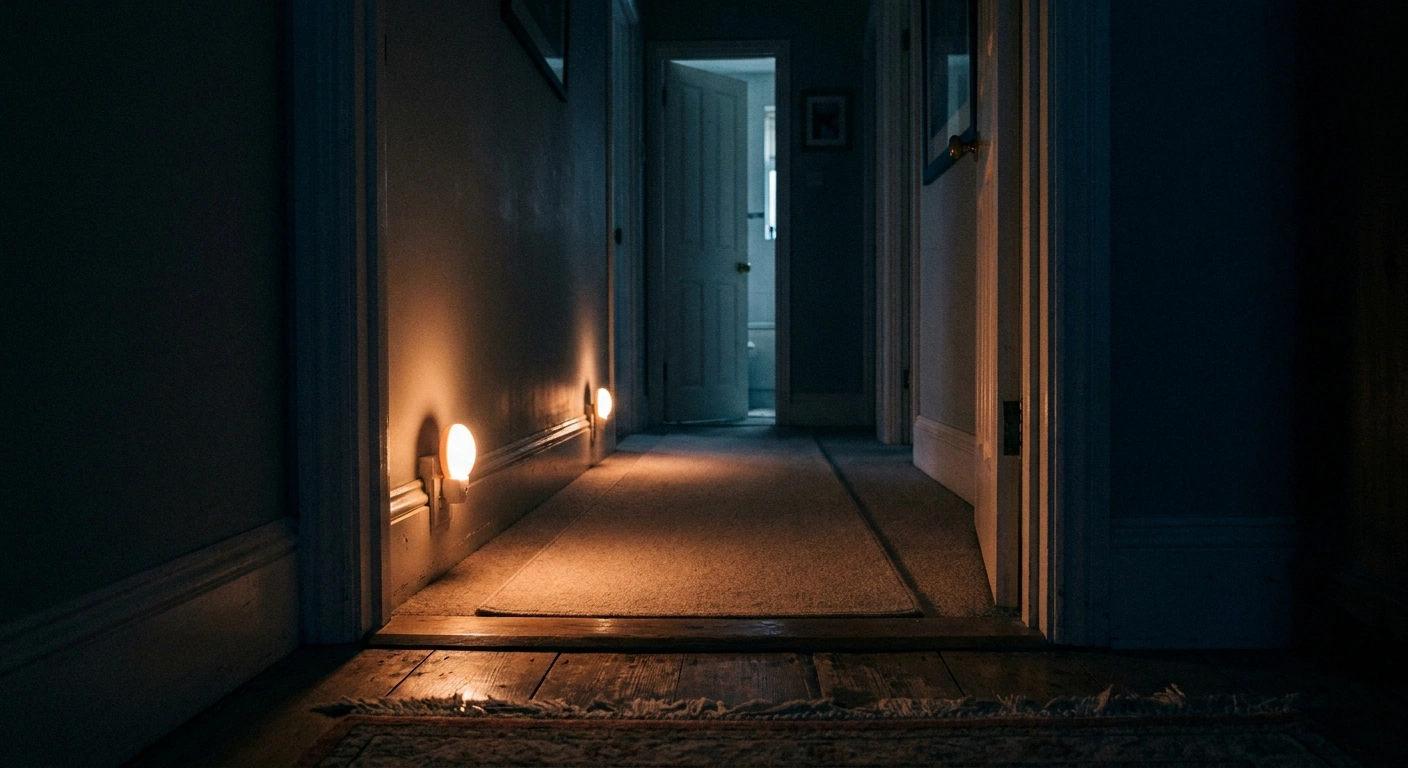
Both houses need the same walkthrough, and the southern house usually needs it more, because it gets less attention and often has surfaces the northern house doesn’t.
Do it while you are still alert and still looking at the house as unfamiliar. By tomorrow you will have stopped seeing it.
The water heater is the one people skip, and it is the one that causes a burn nobody feels happening.
Do this on arrival day, before you unpack, while you’re still paying attention. A room-by-room modification list covers the full version, but these are the items that specifically matter for a house you’ve been away from.
Walk every path you use at night, with the lights on first. Bedroom to bathroom, bedroom to kitchen. Note every threshold, every rug edge, every piece of furniture that’s crept into the path. Then walk it again with only the nightlights.
Check the water heater temperature before the first shower. A house that’s been closed may have been set higher, or the thermostat may have drifted. Numb feet and hot water is the combination that produces burns people don’t notice until later — set it to 120 degrees.
Sweep the floors before walking barefoot anywhere. Six months closed means grit, dead insects, and whatever the cleaning service missed. Better yet, don’t walk barefoot at all, in either house.
Look at outdoor surfaces specifically. Pool decks get slick. Concrete gets hot enough in southern summers to burn a foot that can’t report temperature accurately. Sand is unstable footing and hides sharp objects. Northern houses have their own version of this, namely ice on the walk and the step you can’t quite feel.
Test the lighting in the closet and the pantry. Bulbs die while you’re away and nobody notices until you’re reaching into a dark space.
Check that grab bars are still tight. Fixtures loosen. Twist each one.
Keeping the Medical Side Continuous
This is the part that goes wrong quietly — usually in February, usually with a prescription.
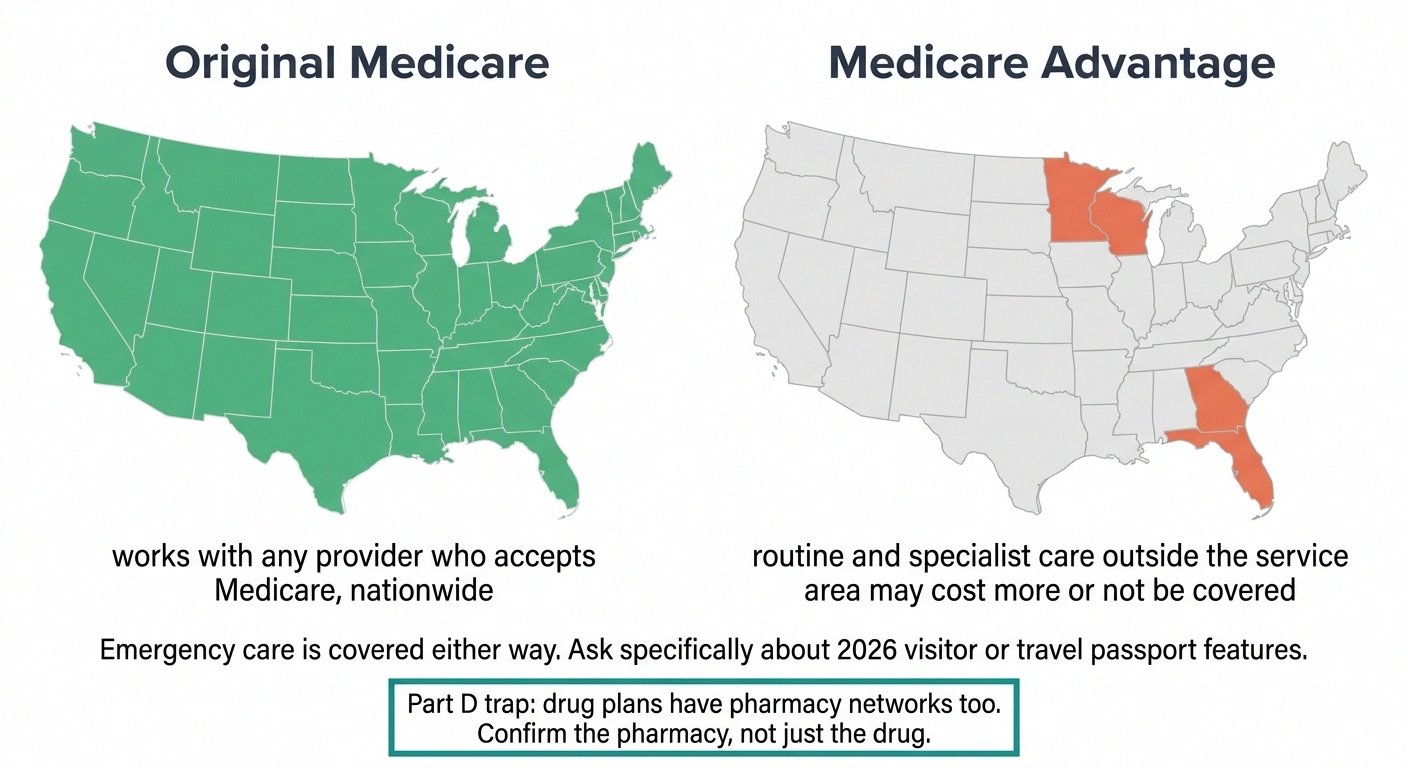
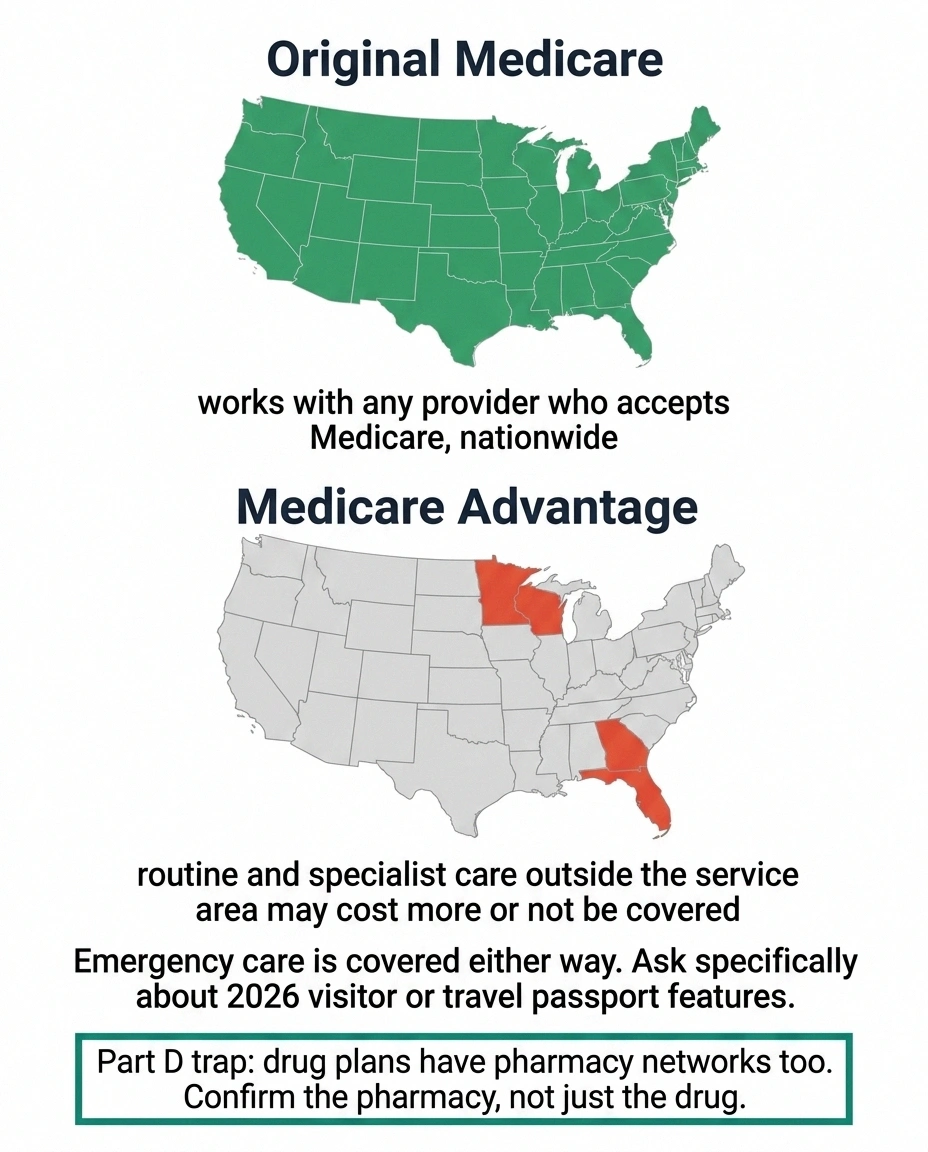
Emergency care is covered either way. It is routine and specialist care that separates these two, and that is most of what neuropathy needs.
Know which kind of Medicare you have, precisely. Original Medicare works nationwide, which makes seasonal living straightforward. Medicare Advantage plans usually have a service area, and an HMO based in one state may have no in-network providers at all in the other. Emergency care is always covered, but routine and specialist visits out of network may cost significantly more or not be covered. Plans vary enough that none of this substitutes for reading your own plan documents or calling the number on the card. If you’re on Advantage and you spend five months elsewhere, confirm the specifics before you need them.
Some 2026 plans now include visitor or travel passport features that extend in-network rates to a secondary location for a defined period. Ask about that specifically, by name, because it isn’t always volunteered.
Check your Part D pharmacy network, not just your drug list. Drug plans have pharmacy networks, and a plan built around one state’s pharmacies may not include the chain across the street from your winter house. The fix is straightforward: use a national chain that operates in both places, or use mail order.
Set up refills that don’t depend on geography. Ninety-day supplies, auto-refill, and mail order between them solve most of this. Time your last refill before departure so you aren’t arriving with four days left.
Have a doctor in both places, or a clear plan for not having one. Establishing with a primary care practice at the winter location is worth the one visit it takes, because becoming a new patient during a problem is considerably harder than becoming one during a quiet week. Telehealth covers a lot of the gap for routine check-ins and refill questions.
Carry a records packet. Current medication list with doses, recent lab work, your diagnosis and its codes, contact details for both sets of providers, and any recent nerve testing. Paper plus a copy on your phone. This is the single most useful thing you can hand a new provider.
Book the appointments that anchor the year before you go. A foot check and your regular monitoring, scheduled in the weeks before departure, means you leave with a current baseline rather than a question mark. If seasonal living is part of a larger set of changes, the retirement planning guide is worth a look.
The Trip Itself
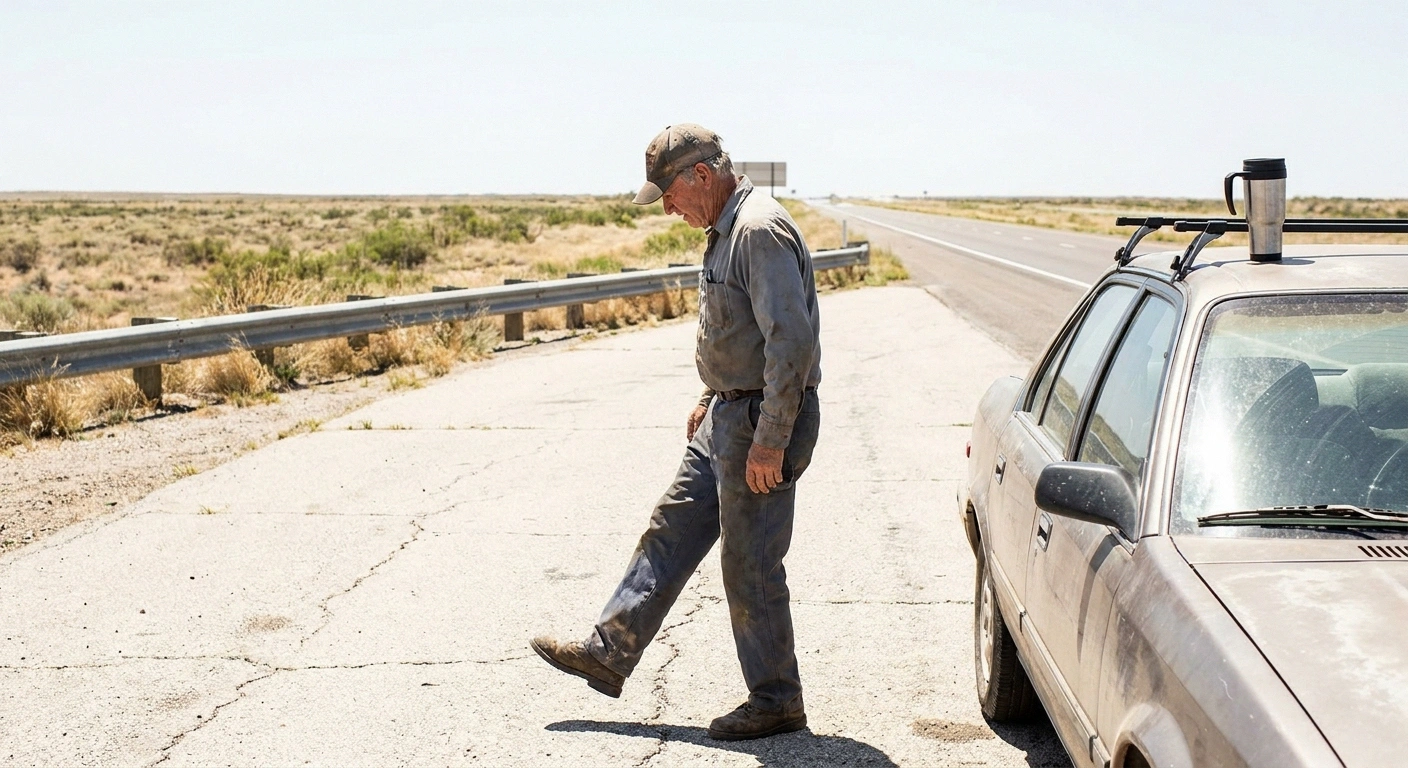
Two long legs a year, and they’re both hard on nerves in different ways.
Driving. Sitting still is the problem here: circulation drops, feet swell, and symptoms build over hours. Stop every ninety minutes and actually walk for five — not just stand at the pump. Shoes come off never, but loosen them after the first few hours as swelling starts. Cruise control lets you shift ankle position. The long-drive guide covers positioning in more detail.
Flying. Less time seated, but a security line to walk in whatever shoes come off easily, and a cabin that’s cold and dry. Compression socks help more on a plane than in a car. The flying guide and the broader travel guide both apply.
One thing either way: keep medications in the bag that stays with you, never in the trunk, never checked. A carload of luggage that gets delayed is an inconvenience. Medications that get delayed are a different category of problem entirely — and one you can rule out with a single decision at packing time.
The First Week After You Arrive
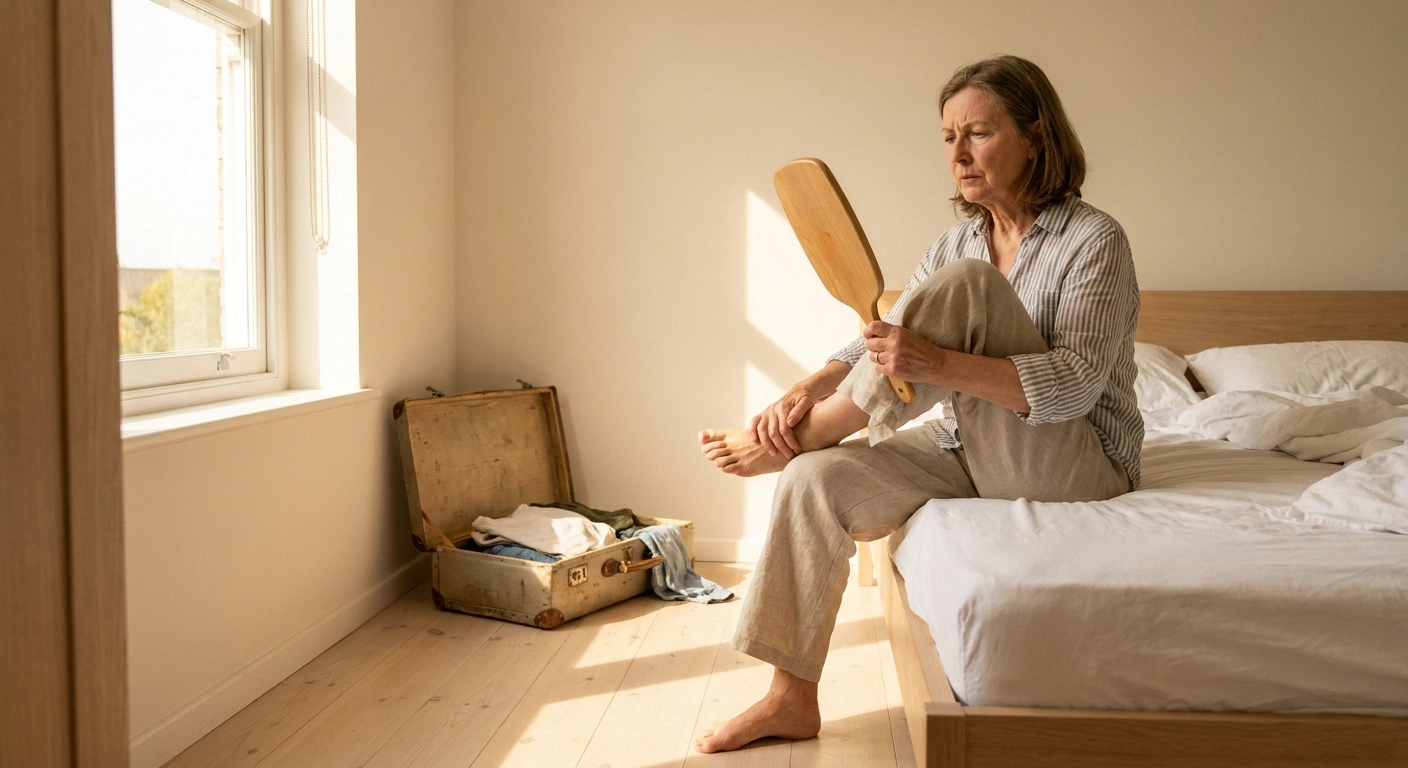
This is what Marilyn was talking about, and it’s the part that’s easiest to fix once you name it.
Day one is for the safety walkthrough and nothing else. Unpack the medications, do the audit above, get the nightlights in. Then stop.
Give yourself two weeks to acclimatize. Increase outdoor time gradually rather than spending six hours outside on the first nice day. Drink more water than feels necessary, particularly in dry or hot climates.
Check your feet every single day for the first week. New floors, new shoes, new surfaces — plus feet that don’t report reliably. This is exactly when a blister or a small cut goes unnoticed, and it’s the highest-value habit in this whole article.
Expect symptoms to be worse for several days. Travel, climate change and disrupted sleep all contribute, and then it settles. Judging your winter destination by how you feel on day three isn’t fair to the destination.
Rebuild the autopilot on purpose. Walk the night path a few times while it’s light out. Open the cabinets and put things where they live at the other house, as closely as the layout allows. The goal is to make the two houses as similar as you can — so your feet only have to learn one map.
Frequently Asked Questions
Does Medicare cover me in another state?
Original Medicare works nationwide with any provider who accepts Medicare, so seasonal living causes no coverage problem. Medicare Advantage plans generally have a defined service area, and routine or specialist care outside that network may cost more or not be covered, though emergency care is always covered. Some 2026 Advantage plans offer visitor or travel programs that extend in-network rates at a secondary location, which is worth asking about directly.
How do snowbirds handle prescriptions in two states?
The reliable approaches are mail-order pharmacy, a national chain operating in both locations, or ninety-day supplies timed around travel dates. The trap is that Part D plans have pharmacy networks, so a pharmacy convenient at your winter home may be out of network for a plan built around your primary state. Check the network, not just whether the drug is covered.
Is warm weather better for neuropathy?
For many people cold worsens symptoms, since narrowed blood vessels reduce circulation to the extremities, so a warmer winter often helps. It is not universal. Some people flare in heat, swelling worsens in warm weather and changes how shoes fit, and very dry climates cause skin cracking that is genuinely risky on feet with reduced sensation. Expect improvement rather than resolution.
What should I do first when I arrive at my seasonal home?
Before unpacking, walk every path you use at night and note thresholds, rug edges and obstacles. Check the water heater is set to 120 degrees. Sweep the floors before walking on them. Confirm nightlights work along the bedroom-to-bathroom route, and twist every grab bar to check it is still tight. This takes about twenty minutes and covers the highest-risk items in a house that has been closed.
Should I bring my equipment or buy duplicates?
Buy duplicates for anything bulky or cheap: foot basins, inspection mirrors, creams, nightlights, heating pads, bath mats, and a full footwear rotation appropriate to each climate. Only medications, medical records and irreplaceable items should travel. Hauling equipment twice a year guarantees that something important gets left behind eventually.
How long does it take to adjust to the new climate?
Roughly two weeks for blood pressure, sleep and skin to settle. Symptoms are commonly worse for the first several days after arrival because of travel, disrupted sleep and the climate change together. Increasing outdoor activity gradually rather than all at once makes the adjustment noticeably easier.
Do I need a doctor at my winter home?
Establishing with a primary care practice there is worthwhile if you spend several months a year at that location. Becoming a new patient while something is wrong is much harder than doing it during a quiet week. Telehealth handles routine check-ins and refill questions well, but an in-person relationship is valuable for anything requiring examination.
What records should I carry between homes?
A current medication list with doses, recent lab results, your diagnosis and its coding, recent nerve testing results, and contact information for providers in both locations. Keep a paper copy and a copy on your phone. This packet is the fastest way to bring a new provider up to speed.
About the Author